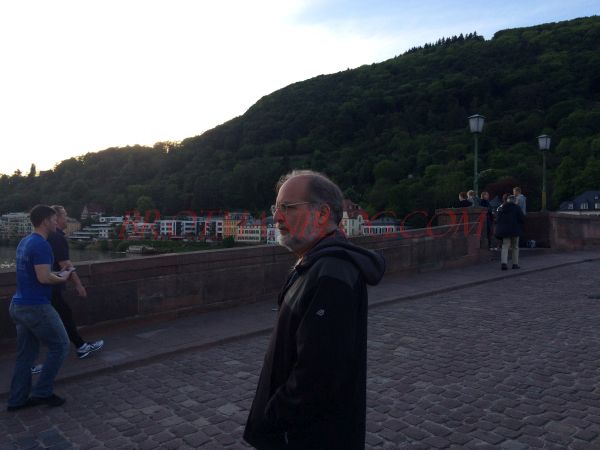
Six Days in Merry Old England

We just returned from a wonderful trip to England where our daughter Maddy ran her eighth marathon and her first one outside of the United States. It was, as it always is,  a bit nerve-racking to think of her running 26.2 miles, especially alone and in a foreign country, but as always she came through, despite the unusually warm weather and the unknown city. We were delighted to see her at Mile 6 and then after she finished in St. James Park.

We are so grateful to Maddy for getting us to go to England, our first trip outside the country since COVID (and England was the last place we visited outside the US before COVID in 2019). We kept this tour focused on fun and new adventures, a tour of Notting Hill (and we’d watched the movie this winter together to refresh our memories) and a pub tour of SoHo.

Notting Hill tour:

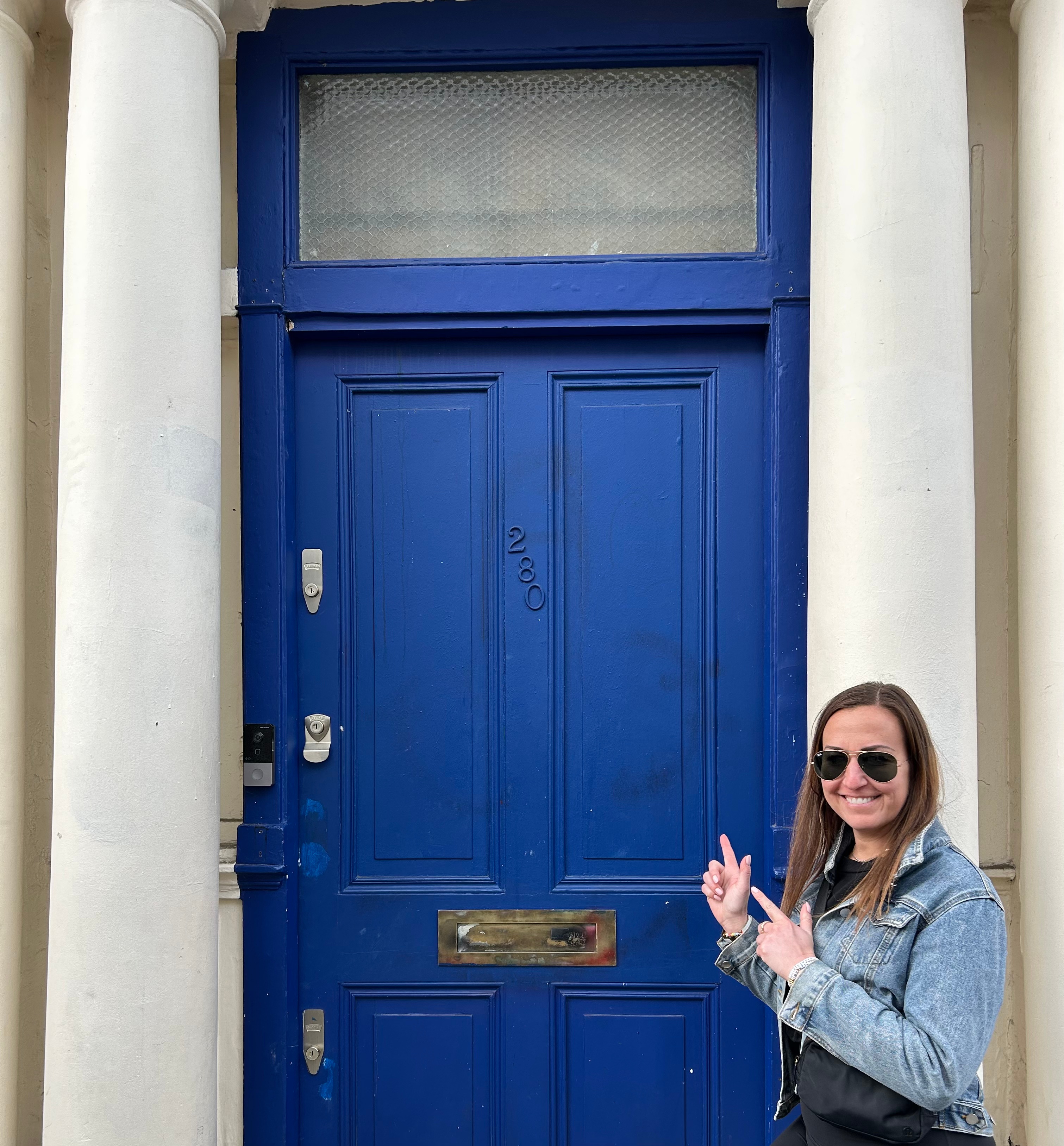
Ben, our guide, in front of George Orwell’s house in Notting Hill

Banksy art in Notting Hill

Notting Hill—where parts of the Paddington Bear movies were filmed

Alas, Hugh Grant and Julia Roberts were not around…

SoHo pub tour:

Carlos, our guide, and most of the tour group enjoying one last beer

After Maddy left to return to Boston, we traveled north to Liverpool, fulfilling a definite bucket list item for me. I fell in love with the Beatles in February 1964 when I was eleven, and that love has never faded. Seeing where the four young teenagers lived and met and first played together was heartwarming and exciting. Little eleven year old Amy could not believe she played Paul’s piano or stood in the churchyard where Paul and John first met or met Pete Best’s nephew, who gave us a tour of the Casbah where the Beatles (with Pete, not Ringo) first played together as a band.

Mural dedicated to Ringo down the alley from where he grew up

St Peter’s Church where Paul first met John playing with the Quarrymen at a church festival

Did you know there was a real Eleanor Rigby? She is buried in the graveyard at St Peter’s where John was a choirboy and where he first met Paul

John’s childhood home

The kitchen in John’s home

Outside John’s home

Paul’s childhood home

Paul’s backyard and outhouse

Paul’s piano (which I played!) where he and John wrote many of their early songs

George’s childhood home

Alley where George lived

Gate to Strawberry Fields

There are stones with quotations from John’s songs throughout Strawberry Fields

Inside the Casbah on a tour with the nephew of Pete Best, the original drummer for the Beatles

The Casbah stage

If you know the lyrics to Penny Lane, you’ll know what this store is.

Some of you have likely seen some of these photos on Facebook, but I wanted to share these with those blog readers who may not be on Facebook with me.

Special thanks to my cousin Mark Morreau, who met us in Notting Hill and helped us navigate the Underground back to our hotel, and to our tour guides in London and Liverpool, Ben, Carlos, and Dave.

My Grandson’s Bar Mitzvah

This past weekend I had the overwhelming pleasure of watching my grandson Nate become a bar mitzvah. His utter joy in participating as an adult in a Jewish service—reading the prayers, the Torah, and the haftorah—was infectious. He didn’t just do this to fulfill his parents’ expectations or to please his grandparents; he did it with a full heart. His smiles, the vibrato in his voice, the way his body swayed to the music and the prayers all revealed just how much this all meant to him.

Although I could do little more than marvel and smile and cry a bit while I shared these moments in real time, in the aftermath as I processed it more deeply, I thought of all of Nate’s ancestors going back hundreds of years—all those for whom Jewish practice had been an anchor of safety and meaning in times of oppression, poverty, dislocation, and isolation.

Nate was carrying forward that thread of meaning, that connection to history and to community. He lives in a world where antisemitism still exists and where culture wars make identity even more fraught with danger, but also a world where he has more choices than his ancestors did. And he has chosen to embrace their traditions and carry them forward into the next generation not in a strictly traditional way, but in his own way, investing them with what is meaningful to him. I am both proud of him and excited for him as he now ventures forth into adulthood.

Watching Nate and being moved by his joyful adoption of these traditions and rituals has reminded me of my purpose in doing this research and in writing this blog: to honor and remember all those who came before me and to keep that history alive so that future generations will also honor and remember them and the traditions and rituals they followed.

Nate wearing the tallit that belonged to his great-grandfather Nathan, for whom he is named. Standing behind him is his grandfather Harvey, Nathan’s son.


England, Part V: The Final Day

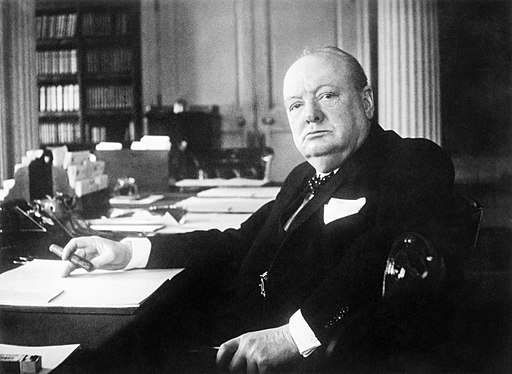
Our last day in England was as action-packed as our first two days in London. We had planned to go to Churchill’s War Rooms. Several friends had recommended it, and after seeing The Darkest Hour, we were both very interested in learning more about Winston Churchill and his role in World War II. We had passed the site the day before and noted the very, very long line of people on the sidewalk and decided that we’d better get there as early as we could.

We showed up at 9:10, knowing that the museum didn’t open until 9:30. There was already a line ahead of us—perhaps about thirty people. What we hadn’t realized was that it would have been possible to buy tickets ahead of time for a set time on the priority line, but now it was too late. As we stood outside waiting, the line behind us grew longer and longer, stretching down the block almost to the corner by the time the doors opened at 9:30. Then we had to wait as the priority ticketholders entered. Every ten minutes or so they would allow in more people, including a few from the regular line.

We finally entered at 10:20, saying to each other, “This had better be worth the wait.” It was. Without question.

We spent two hours underground at the exhibit. The audioguides were excellent, providing clear directions on where to go and lots of information about what we were seeing as well as interviews with some of those who worked in the war rooms with Churchill. It was a fascinating tour. Seeing the spaces that were recreated in the movie and realizing that these men and women had spent days and nights during the long years of the war burrowed beneath the ground, doing intelligence work and collecting information about the war’s progress, made us appreciate even more Churchill’s leadership and commitment to winning the war.

There is one very large gallery devoted to an exhibit about Churchill’s life. For some reason they decided to start with the war years, then the post-war years and his death, and then his early years as a child, a young adult, and a politician. I found that room a bit confusing and overwhelming. Maybe because I am such a linear person and like things to be in chronological order. I most enjoyed hearing some of Churchill’s speeches in his own voice and also seeing pictures of him and his family as a boy and then as a father and husband.

We finally emerged from the dark around noontime and were grateful to see sunlight, although it was a cloudy and gray day. We walked over the Westminster Bridge. Well, we tried to walk. The throngs of people made it as crazy as being in Times Square before theaters open. You could barely move. We were heading to the Tate Modern, which is on the other side of the Thames. When we finally managed to get away from the crowds, it was quite a relief.

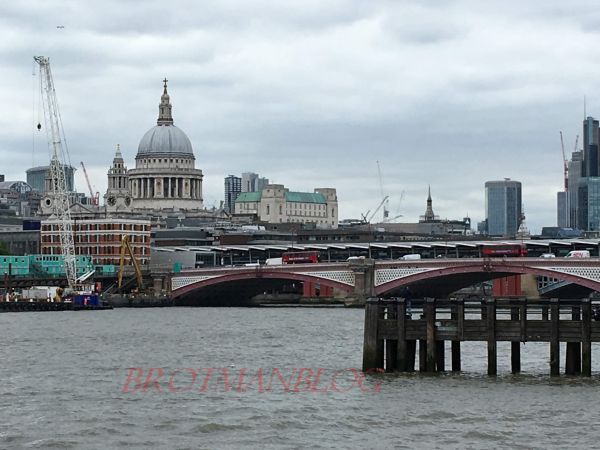
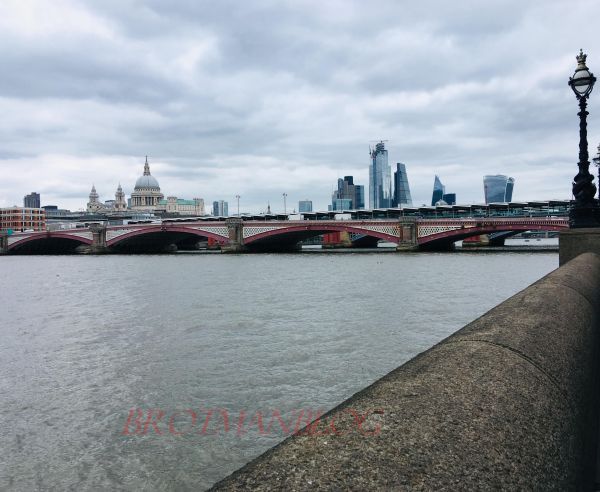
After a quick lunch, we continued our walk to the Tate Modern. We enjoyed the walk along the river with the London skyline in view—we could see St Paul’s Cathedral and all the modern skyscrapers that we had seen the day before, but now from a distance with the river in the foreground.

We finally reached the Tate Modern, and it is an imposing structure. Once a power station, it was converted to a museum and opened in 2000. I can’t say that I found it a terribly inviting building—it still looks more like a power station than a museum, although there are glass additions on top of the old building.

Entering the building felt a bit like entering a huge train station—a very large open hall descending down towards the ticket booth and museum itself.

We went to two of the exhibits, the first being Artist and Society, which focused on how artists use their art to comment on society. Some of those works were very provocative—like the collection of firehoses attached to each other to evoke the hoses used to spray African American protesters during the civil rights movement in the US or a series of photographs showing the demolition of buildings in the name of urban renewal. But some just left me cold, like the one of strange large forms just strewn on the floor.

The second exhibit we saw was more traditional and included works of artists who were more familiar, such as Picasso, Dali, and Rothko. It focused on the artistic process itself. I enjoyed that exhibit more than the first because I tend to be more conventional in my idea of what is art and prefer art that is more about aesthetics than politics.

We wanted to take the elevator up to see the observatory on the tenth floor. But the lines were too long, and we gave up. I think we’d just had enough of crowds for the day.

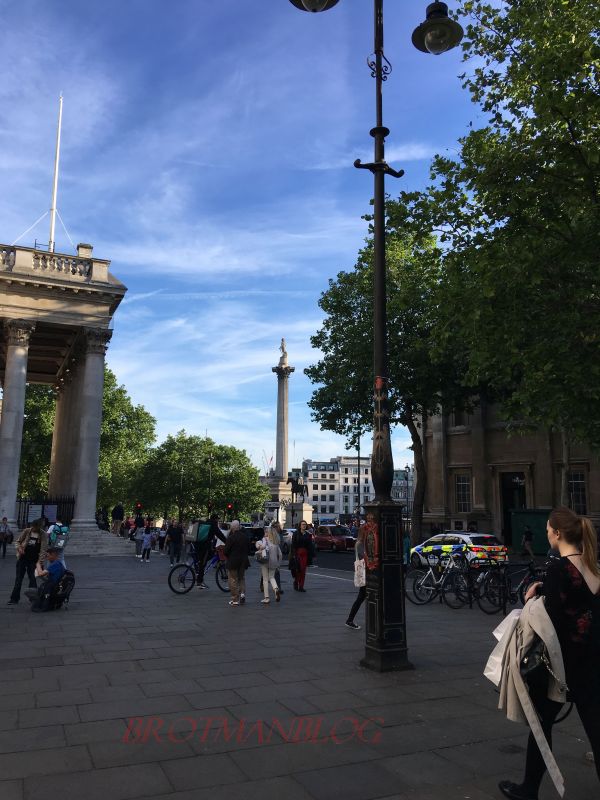
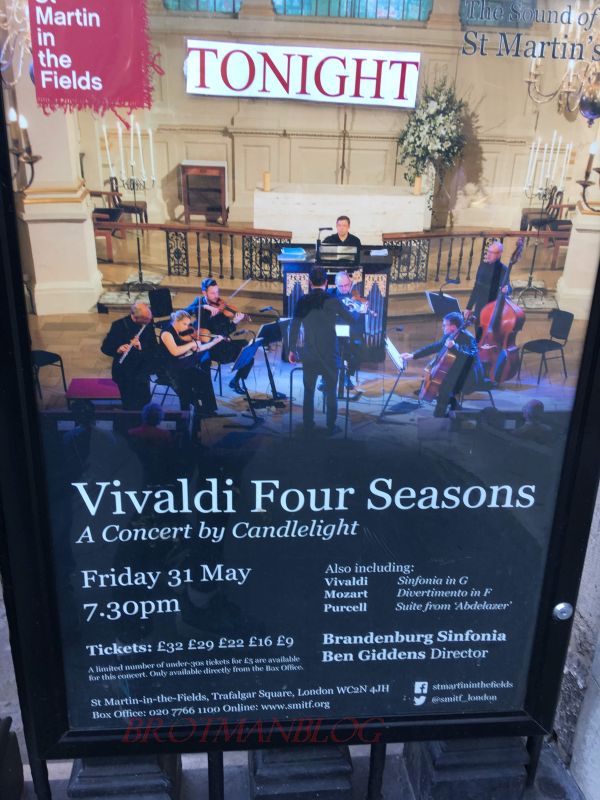
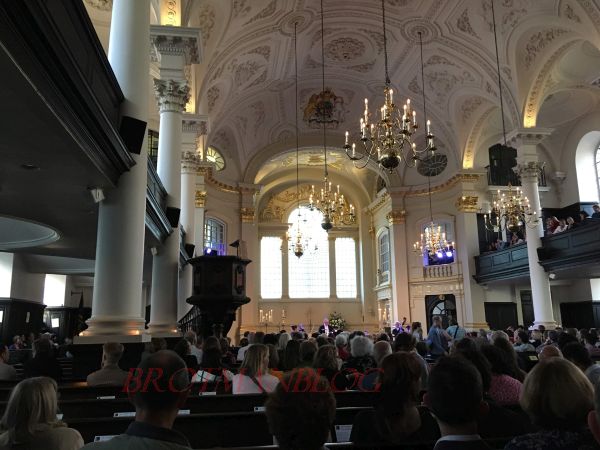
Our last evening in London was much less hectic than the day. We took an Uber to Covent Garden and had a fabulous sushi dinner at Sticks and Sushi. Then we walked from there to St Martin-in-the Fields Church for a concert of Vivaldi, Mozart, and Purcell. The music was soothing and relaxing, and the setting quite beautiful.

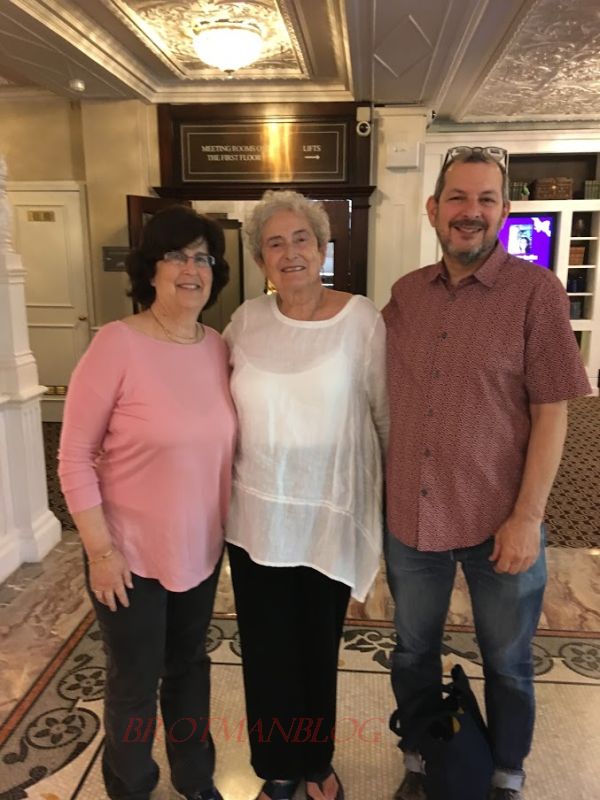
For our last morning in England, we had the wonderful treat of meeting two of my cousins—Annette, my fourth cousin, once removed, and Mark, my fifth cousin. Annette and Mark are related to me through my Seligmann family. We are all descended from Jakob Seligmann and Martha Mayer, my four-times great-grandparents. Mark and Annette descend from Jakob and Martha’s daughter Caroline who married Moses Morreau, and I descend from Jakob and Martha’s son Moritz. We had a delightful time together—sharing family history and our own stories. Mark and I have now continued to share and explore our mutual family history.

And after saying goodbye to my cousins, we packed our bags and headed for Heathrow for the flight back to the US. I was quite sad to leave. It had been a perfect vacation with the right mix of relaxation, exercise, gorgeous views, art and culture, history, and friendly people. I was in no way ready for it to end.

But it did, and now I have found great pleasure in recreating and remembering it all through my blog. I hope you have enjoyed my travelogue as well. Thanks for coming along.

Next—a return to the story of the children of Henry Goldsmith.


England, Part III: London and Come from Away

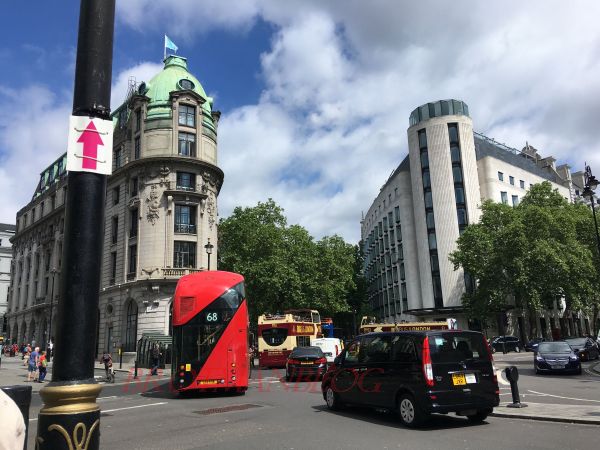
The final three days of our trip to England were spent in London. We’d visited London for a week back in 1995 and had seen most of the major attractions then—the British Museum, Parliament, Buckingham Palace and the changing of the guards, Westminster Abbey, Big Ben, Piccadilly Circus, the Tower of London, Hampstead Heath, and so on. So we decided to focus our three days on some sites we had not seen in 1995.

We stayed at the St Ermin’s Marriott hotel in the Westminster section of London. It is a gracious old hotel built in 1899 that Marriott took over and renovated. It was originally built as residential apartments and later used during World War II as a base for British espionage and intelligence operations. Churchill is said to have frequented its bar when meeting with officials there.

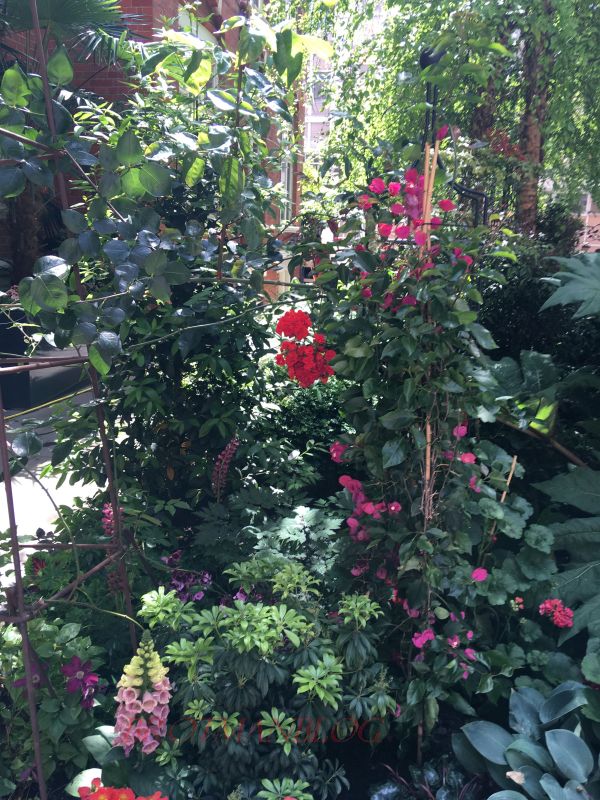
You enter the hotel after passing through a beautiful passageway lined with flowers, and the lobby is also quite magnificent with a white double staircase and reliefs on the ceilings and walls. We took a tiny, narrow elevator to our sixth floor room. The room itself was very small. The bed was perhaps eight inches from the outer wall, and there were no dressers for our clothes or space to tuck away our suitcases. But the room was clean and the bed comfortable, and the staff at the hotel was very friendly and helpful.

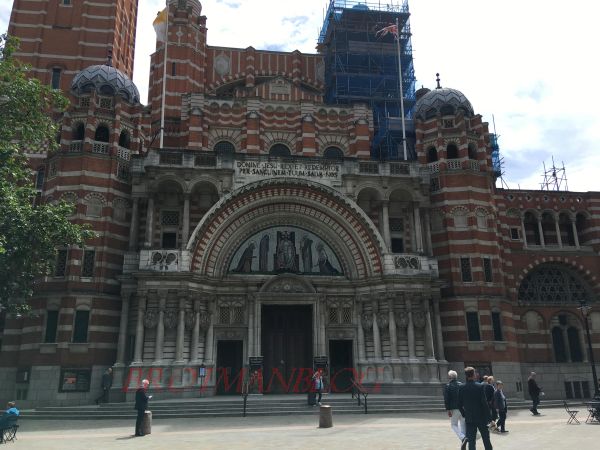
We spent our first day mostly strolling through the neighborhood near the hotel. We stopped at Westminster Cathedral and then passed Buckingham Palace where the queen was apparently hosting a garden party and there was a line of people dressed to the nines waiting to enter the palace grounds. The men were in morning coats and the women in bright dresses with elaborate hats. I wanted to take a picture, but it seemed a bit tacky, so I resisted.

Westminster Cathedral

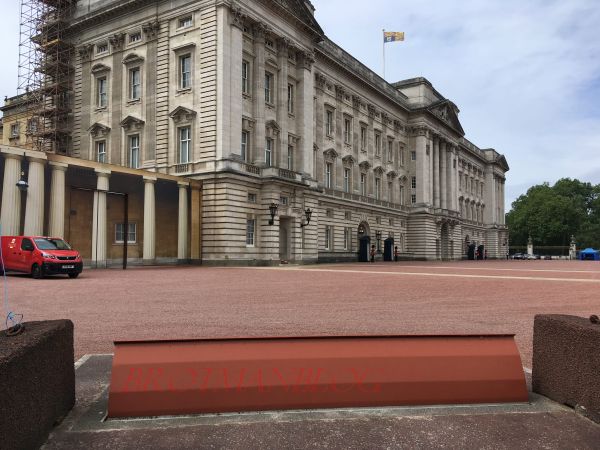
Buckingham Palace

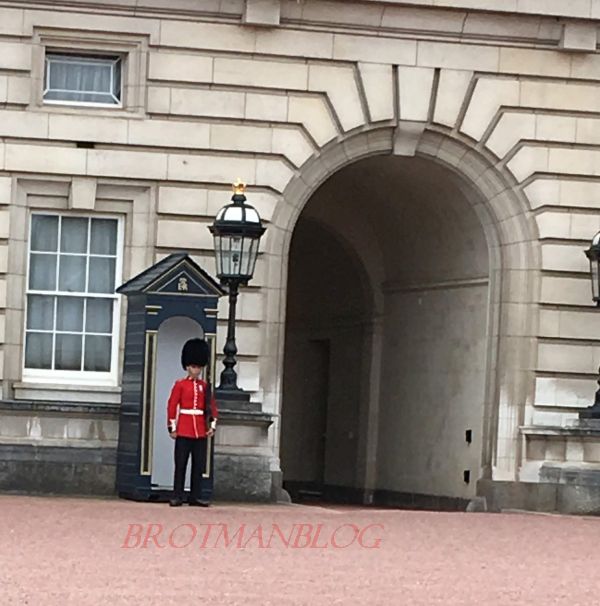
We weren’t sure this guard was real until we saw him move.

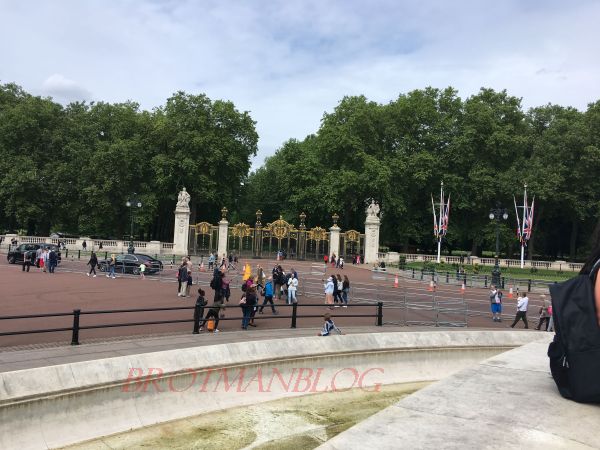
The Mall, the street that runs from Buckingham Palace to Trafalgar Square

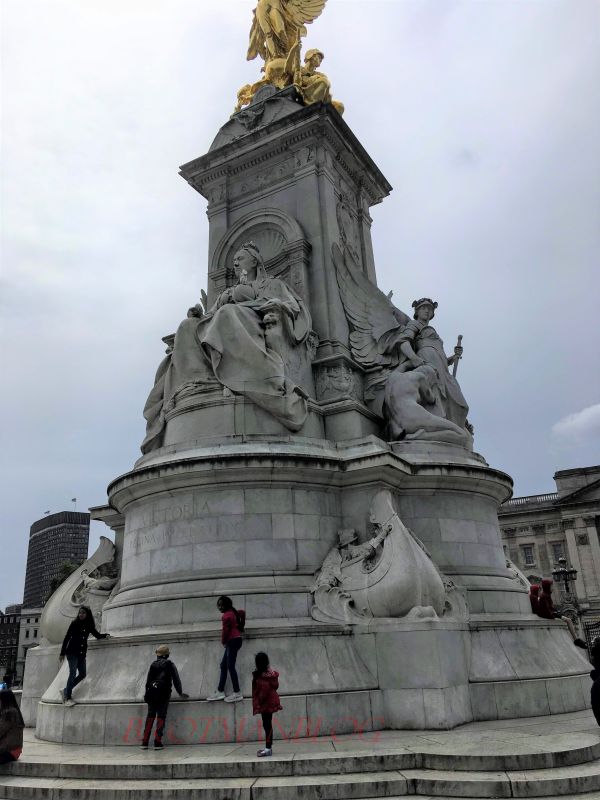
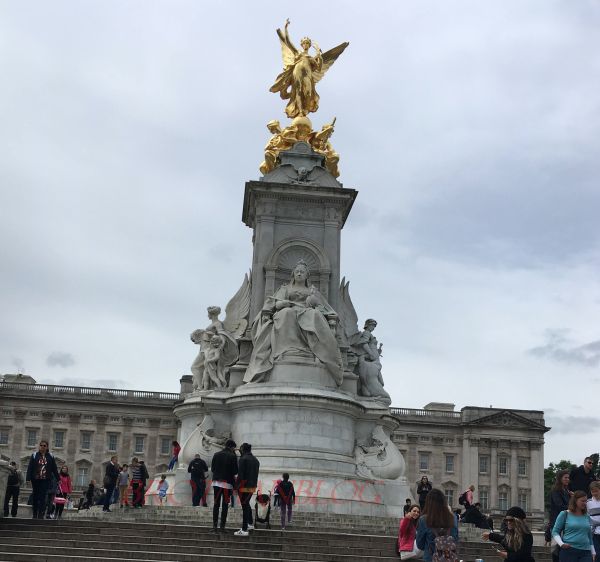
We admired the monument dedicated to Queen Victoria that stands right in front of the palace. I kept hearing the theme song from Victoria as we studied the monument from all angles and read about the significance of the various sculptural features.

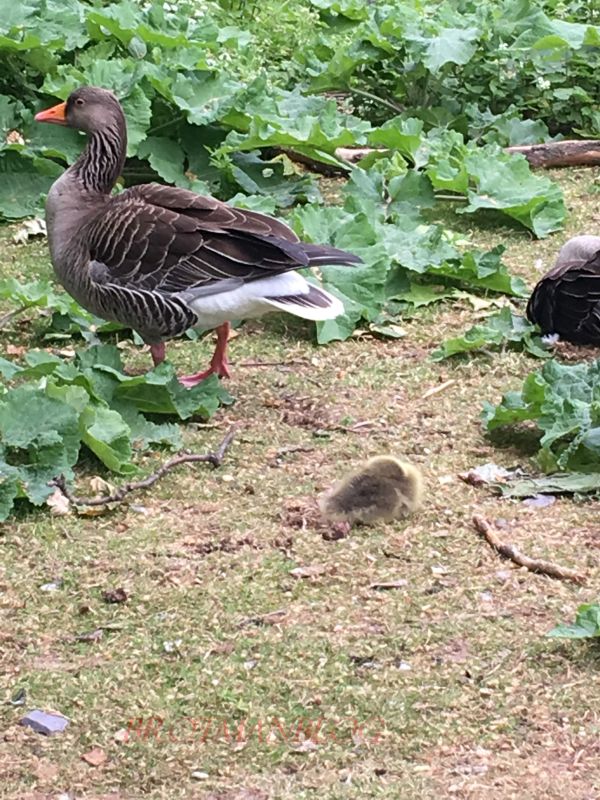
From there we took a lovely walk through St. James Park. The gardens and the birds and ducks and geese and pelicans make it a true oasis in the middle of a city where there are far too many cars, taxis, tourist buses, and people.

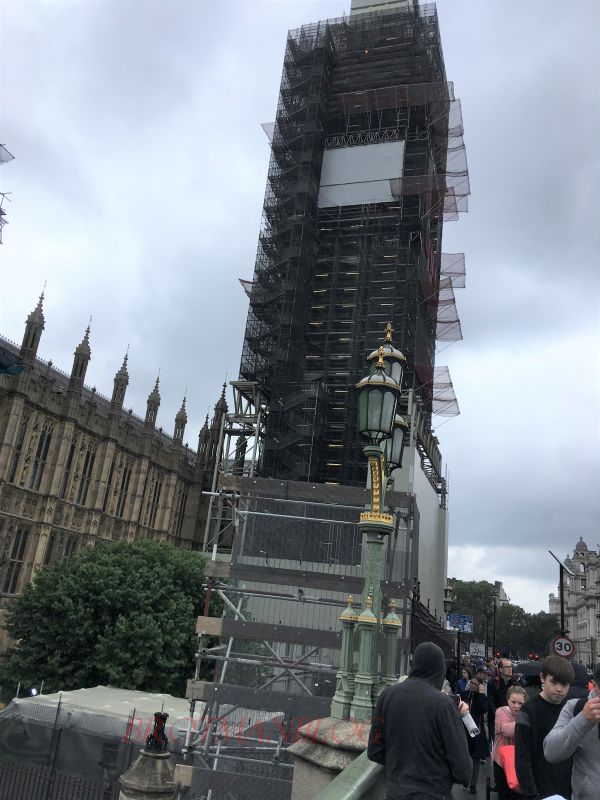
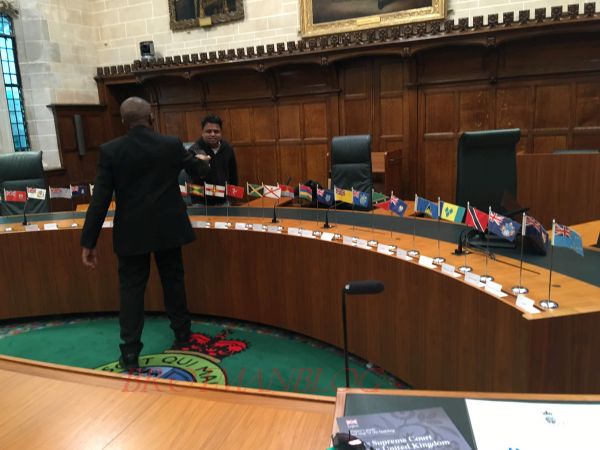
We then walked over towards Westminster Abbey and Big Ben (which is currently being renovated and is wrapped in scaffolding as is much of the Parliament building) and noticed that the Supreme Court was having an educational open house for the public that day. So we spent some time there, looking at the court rooms. No court sessions were being held, so we did not get to see any judges in wigs and robs.

St Margaret’s at Westminster Abbey

The London Eye (and no, we did not ride it)

Harvey at Westminster Bridge with Parliament behind him

Poor Big Ben

Supreme Court library

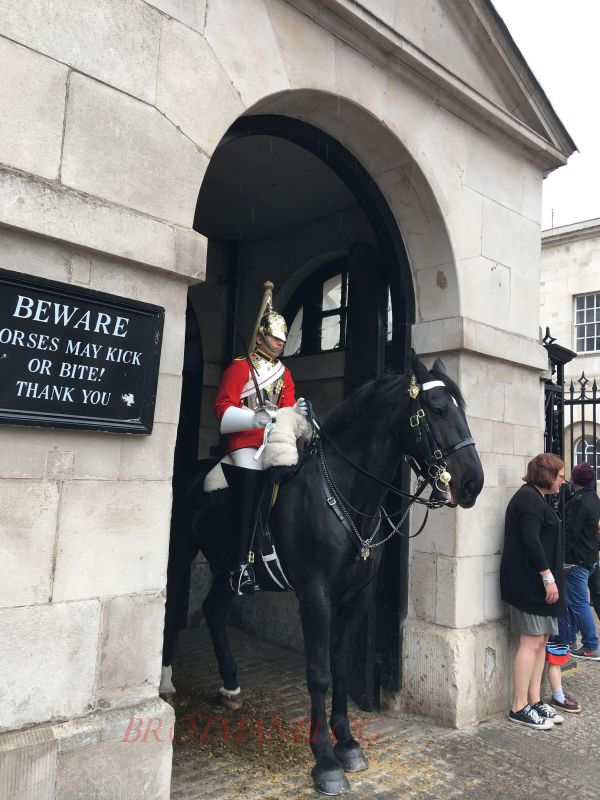
We also passed the Royal Horse Guards and avoided being kicked or bitten by the horses as we made our way to Trafalgar Square and the National Gallery, where we spent an hour or so enjoying the galleries devoted to 19th and 20th century paintings.

By then it was time to head back to the hotel because we had theater tickets that night in the West End. After a short rest, we walked from the hotel to Sartori, a very good Italian restaurant in the West End just a block or so from the theater.

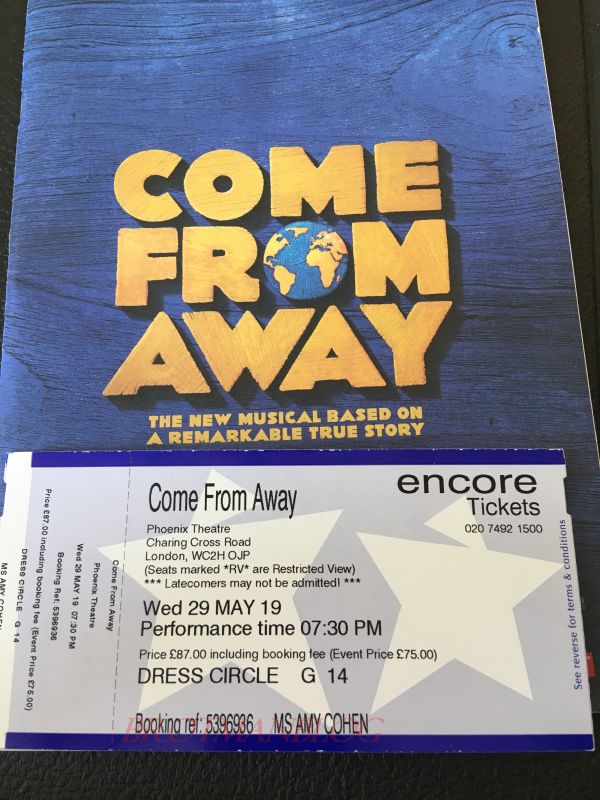
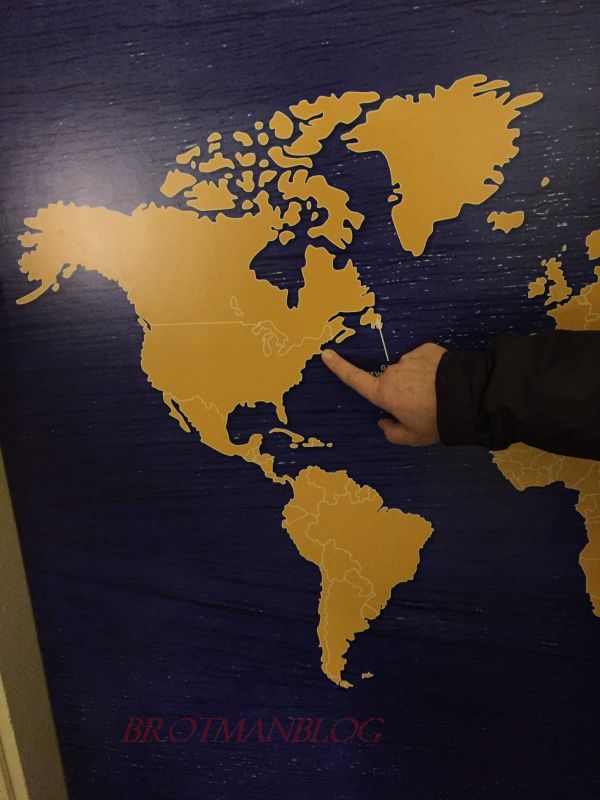
And then we saw what I believe is the best theater I have ever seen. If you haven’t seen Come From Away yet, you are missing a true masterpiece. The music, the staging, the acting are all excellent, and the writing and the story are so moving and effective. I rarely cry at live theater (though often at movies and television) because I am usually too aware that what I am watching is “just” theater and thus I am somewhat emotionally removed from it. But this play grabbed me from the beginning and kept me emotionally engaged throughout. I cried, I laughed, I was there with them all in Gander, Newfoundland. Will the play stand the test of time when those who lived through 9/11 are no longer in the audience? I would think that its universal themes of human decency, kindness, and the need for hope and love will sustain it.

Our second day in London started with a walk from the hotel to Covent Garden, a neighborhood of lots of upscale shops and restaurants and a big market that resembles Fanueil Hall Market in Boston—aisles and aisles of food and stores and restaurants and street performers. And St Paul’s Church (not to be confused with St Paul’s Cathedral discussed below).

St Paul’s Church

Street performers in front of St Paul’s Church, Covent Garden

Our walk continued along the Strand and Fleet Street where the Royal Courts of Justice are located as well as many law firms and publishing companies. The streets were crowded with young men in suits and women dressed in business clothing—presumably many of them lawyers or business people. We went into the court building, but it was lunch hour so no courts were in session. We did pass a number of lawyers sitting with clients, so there were likely hearings scheduled for the afternoon.

Somerset House

Royal Courts of Justice

After a quick lunch, we reached St. Paul’s Cathedral, the Christopher Wren landmark that is still one of the tallest buildings in London.  You can see its dome from many vantage points in the city. When we saw what they were charging to enter the cathedral (twenty pounds each or about $26 each), we opted not to go inside.

St Paul’s in the distance on Fleet Street

Facade of St Paul’s Cathedral

The Dome of St Paul’s

Temple Bar, also designed by Christopher Wren

Here’s a map showing all the places we saw on the first day and a half in London. Our hotel is the circle at the lower left on Caxton Street and St Paul’s is at the upper right.

We decided to take “the Tube” or the Underground the rest of the way to Whitechapel, where we had arranged for a guided walking tour of London’s Whitechapel and Spitalfields neighborhoods, the neighborhood where my Cohen ancestors lived between about 1800 and 1851 before immigrating to the US. More on that in my next post.

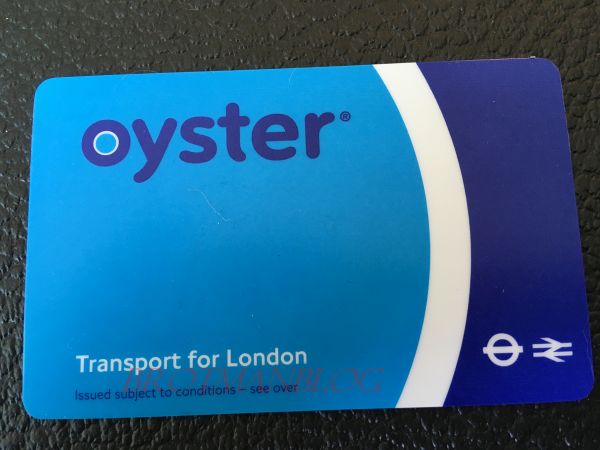
The Oyster Card—London’s public transport pass


England Part II, The Cotswolds and Oxford

The morning we left Cornwall for the Cotswolds was the only really rainy time we had during our entire trip. While packing for the trip, we’d prepared for the worst after hearing how damp and cold England can be this time of year, but we had almost no rain and lots of sunshine during our entire stay. And that one rainy morning was spent traveling to the Cotswolds. (No, we didn’t drive—we decided that would be too stressful, and the train connections were not workable, so we hired a driver to take us.)

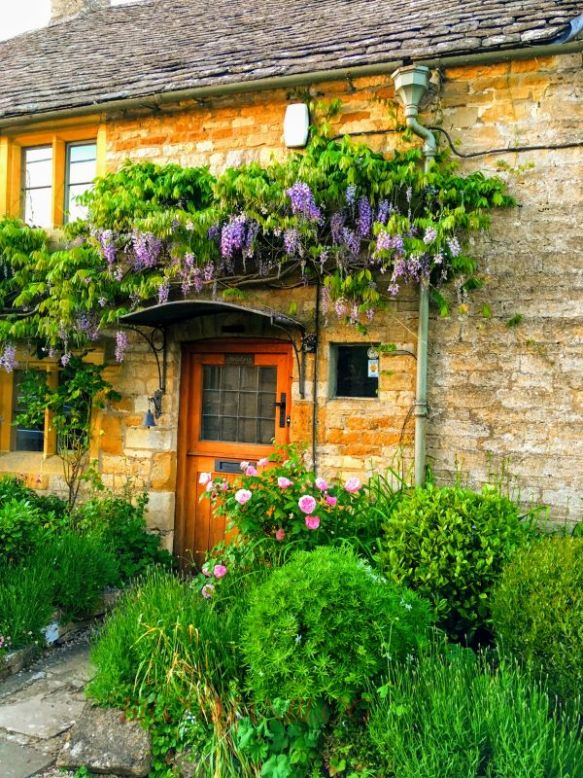
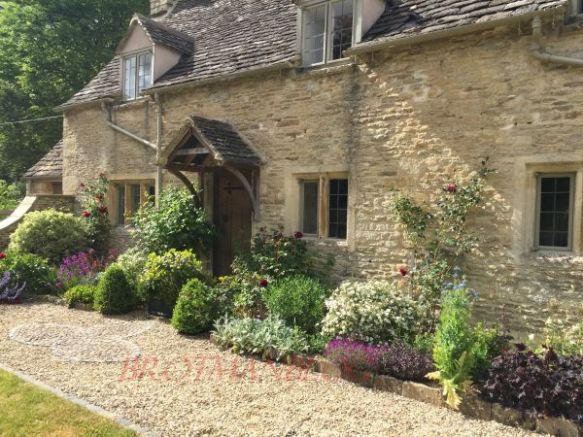
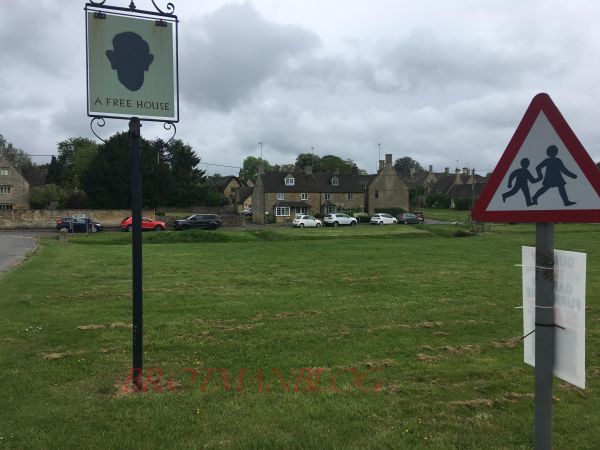
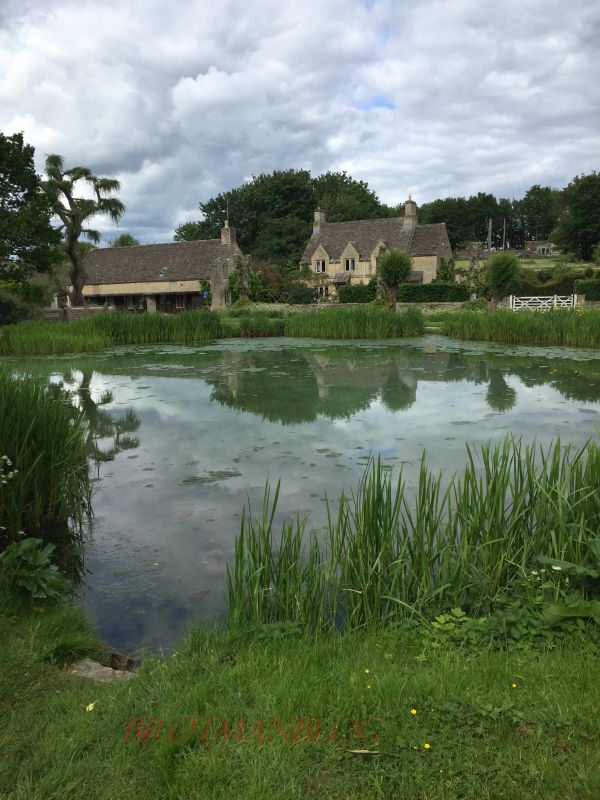
We arrived at the Kings Head Inn in Bledington around 1 pm, just in time for lunch.  And the rain stopped. The whole area was just charming.  Bledington is a tiny little hamlet, and, like all over the Cotswolds, all the houses and buildings are made of the same beige-colored stone.  According to Wikipedia, there are about 490 people in the village. The only commercial building we saw was the inn itself.

The Inn described itself as more a pub/restaurant with rooms than a hotel, so we weren’t sure what to expect. But our room was certainly adequate. It was in a separate building across a lovely courtyard from the actual inn. The room was small and somewhat dark, but nevertheless comfortable. And although we were a little concerned about noise—especially from the rooster who spent much of the day strutting around and crowing—we slept well, and the rooster had the decency not to start crowing until about 7 am.

During our first afternoon, we decided to take the “easy” walk suggested on a brochure distributed by the inn.  It was easy in the sense of not being physically challenging, but following the instructions turned out to be quite a challenge. Truly, it was not the fault of the person writing the directions, but rather the person who was interpreting them, i.e., me. Somehow I misread the first step in the directions and ended up walking the trail backwards! But I didn’t realize that until we were nearly done with the two hour walk. It’s not worth explaining how or why, but despite following the steps backwards, we ended up finding our way without any trouble, thinking we were doing the walk in the right direction. I am still mystified by how that could be!

For example, the directions included a step that described going under an archway formed by trees.  I thought this was what they meant.
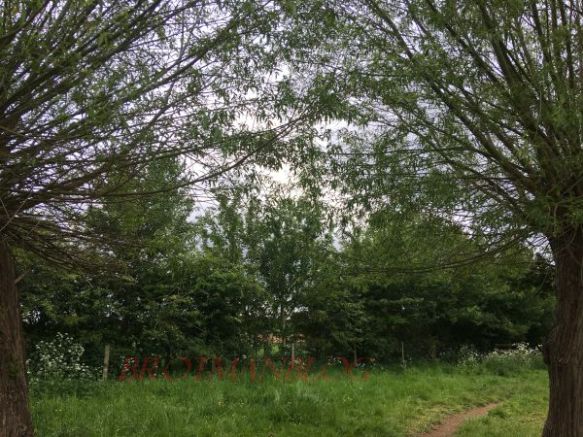
Only when we passed the actual archway much later and were almost done with the walk did I realize that something was off.

Making it even more embarrassing was the fact that another woman had joined us on the walk, thinking I knew what I was doing. I kept acting like I did, and neither she nor my husband suspected anything. I only confessed to my husband after we were safely back at the inn. (As my good friend Art would say, “Frequently wrong, but never uncertain.”)

Even though we did it backwards, it was still a scenic and enjoyable walk, passing through fields with cows and sheep, going along a lovely little creek, and walking along an abandoned railroad path.

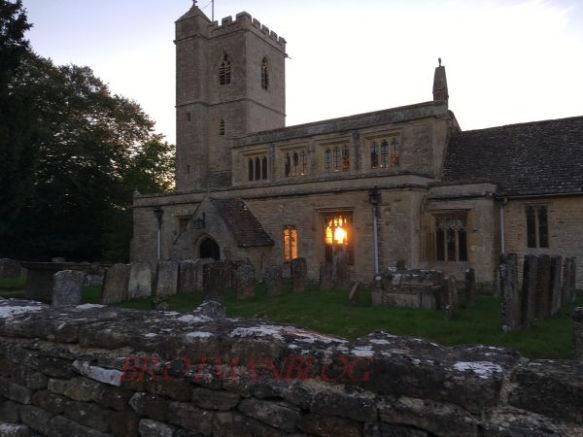
After dinner at the inn, we took another shorter walk, enjoying the light on the houses and the church from the late-setting sun. That time I knew what I was doing.

The next morning we were picked up by Peter of Cotswold Electric Bike Tours for our day of bicycling around the Cotswolds. We drove to Burford, which is about eight miles south of Bledington. It is a much larger town than Bledington with lots of shops and a big church, but also all in the same beige-colored stone. We met up with three other people joining us for the day—Carolyn and her adult daughters Meghan and Rachel from Salt Lake City (which, of course, led to a conversation about the Family History Library). After a quick lesson on how to use an electric bike, we were off on our thirty-mile trip around the area.

This was our first time on e-bikes, and we loved them. What a pleasure it was to get that “assist” going up some of the steeper hills. But for the most part the ride was relatively flat (or so it seemed after walking in Cornwall) and extremely scenic. We traveled from Burford to Windrush to Sherborne to Northleach to Bibury to Westwell and back to Burford.

Here are some of the images we captured during our almost seven-hour ride:
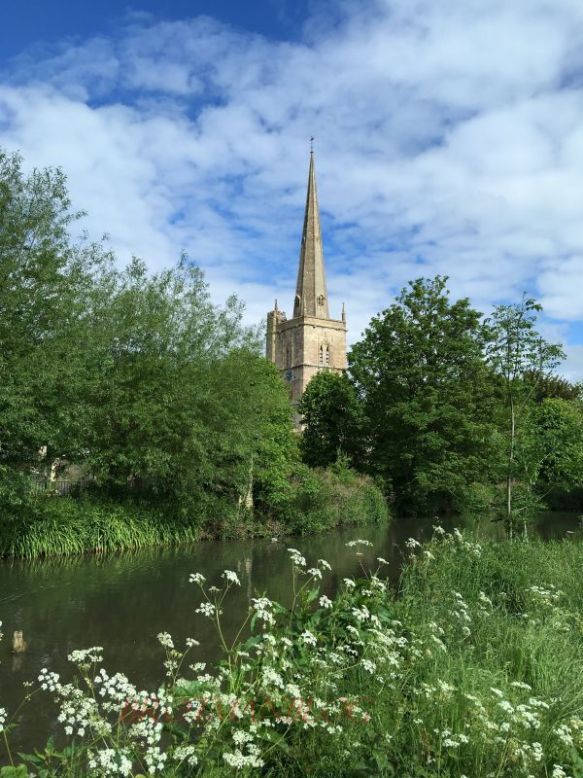
Burford

Flowers along the way

Norman doorway in the church in Windrush

Interior of Windrush church with Romanesque and Gothic features

Church graveyard, Windrush

Windrush

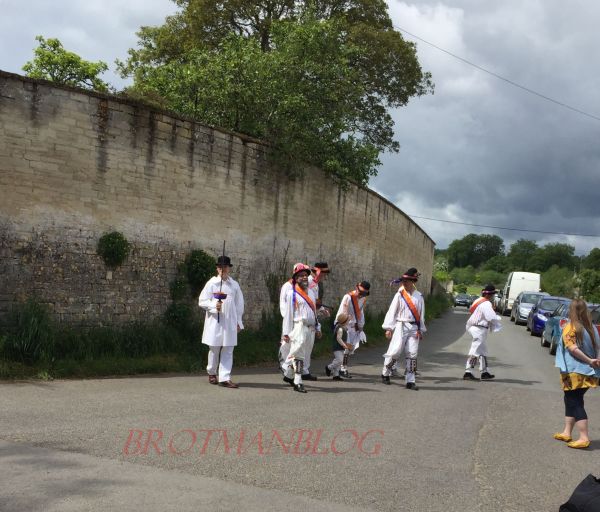
In Sherborne we saw some Morris dancers, a form of English folk dancing dating back to the fifteenth century. We also stopped for a short tea and cake break in Sherborne.  .

We continued on our way, going through Northleach and seeing its beautiful church.
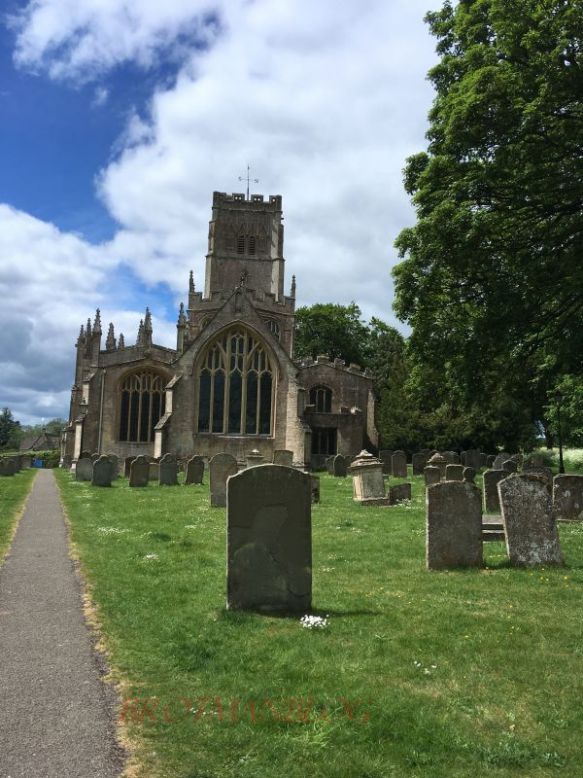
Northleach

We stopped for a late lunch in Bibury, a town once described as the most beautiful in England and thus packed with many tour buses and tourists. It is beautiful, but the crowds and buses and traffic made that harder to appreciate.

Bibury


After lunch we continued on to Westwell before returning to Burford and the end of our tour.

The six of us all had a wonderful time with lots of laughs and good conversation, and Peter also taught us a great deal about English history and the history of the region, pointing out the architectural characteristics of each era as seen in some of the churches we visited. It was a fun and educational day and gave us a good overall view of the Cotswolds.

The next day we decided to take the train to Oxford, which is only half an hour by train from Kingham, the town next to Bledington. We walked the mile to the station, itself a pretty walk.

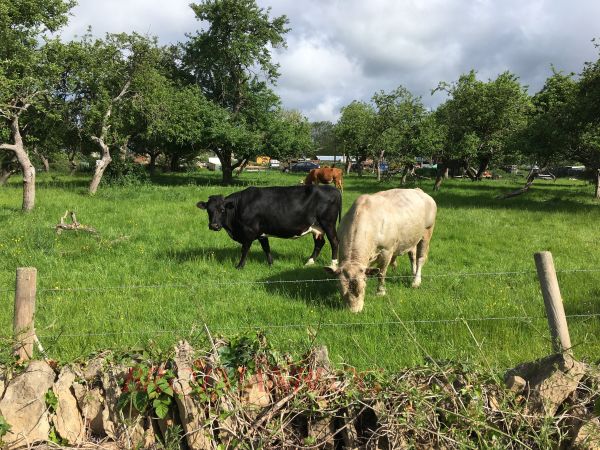
Cows in someone’s yard. Really.

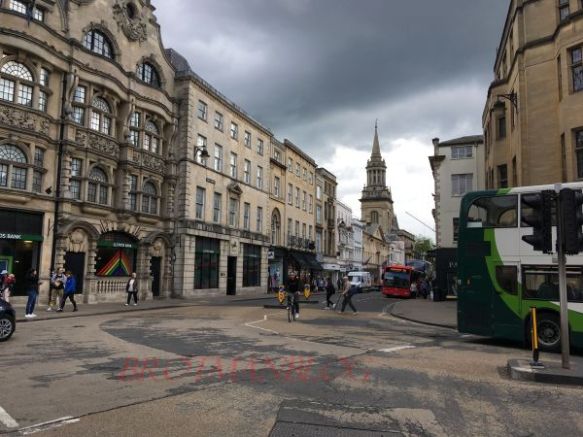
We arrived in Oxford at 10:30 and signed up for a 1 pm walking tour. We then spent the rest of the morning walking through the city.  The city was filled with young people—university students and teenagers coming to tour the university. Everywhere we went there were large groups of teens touring together. And lots of impressive architecture.

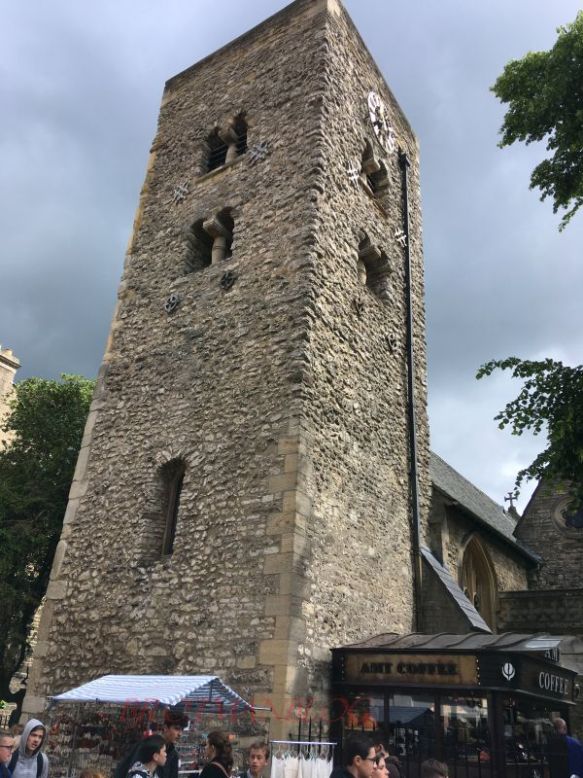
The tower from the old northern wall of the city

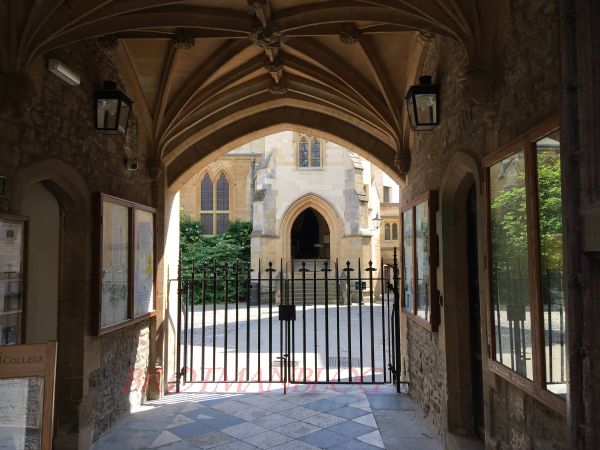
We walked to the south end of the city to Christchurch—which is both a college within Oxford University and a church. Some of the scenes in the Harry Potter movies were filmed at Christchurch, we were told. It certainly has the feel and appearance of a proper English school.

Exterior of Christchurch, a college at Oxford


Grounds of Christchurch

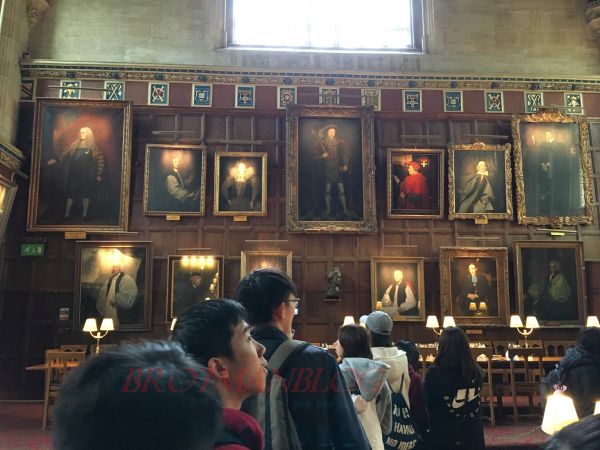
Refectory at Christchurch

Refectory

Quadrangle at Christchurch

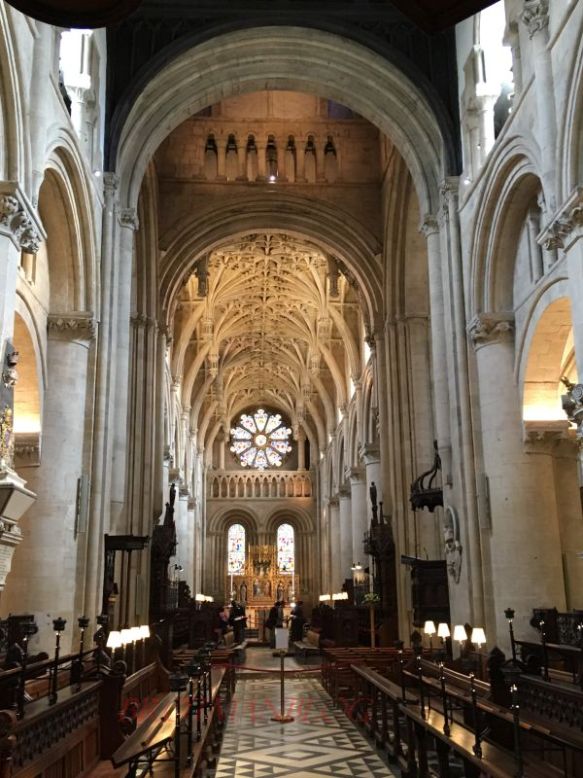
The church at Christchurch was magnificent, especially the stained glass windows.

At 1, we met up with our guide and a group of fellow tourists—about sixteen in total. Out of that group, we were the only Americans. There were people from Germany, France, Scotland, England, Australia, and India. The guide was very knowledgeable, and the tour focused on Oxford University and its unusual (by US standards anyway) college-university system.

I am still not sure how it all works, but from what we were able to understand, students apply to individual colleges within Oxford and study in tutorials with a tutor and just one or two other students in that college for their three years of undergraduate study. They produce papers each week for the tutors and have exams at the end of their first year and then at the end of their third year. Every college has its own library, church, and faculty, and the students eat and learn and live in their chosen college. But there are also some university-wide courses. I may have this all wrong. I still don’t know whether students have distribution requirements across several fields as in US schools. I also am not sure whether they take only one tutorial at a time or multiple courses in different subjects each semester. So if there are any Oxford experts out there who can explain this all, please let me know.

Our guide showed us many of the different colleges as well as some of the main libraries and other buildings.

House where Shakespeare stayed when he visited Oxford
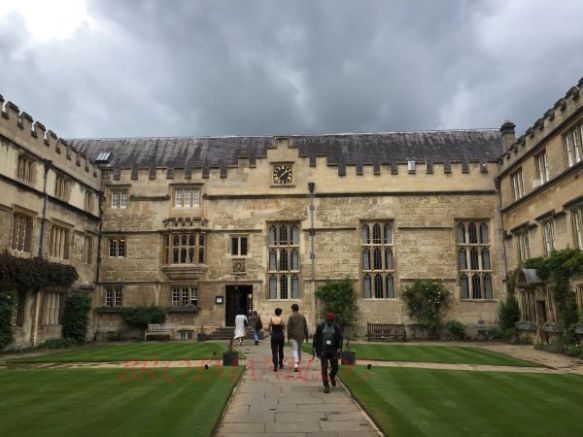
Jesus College

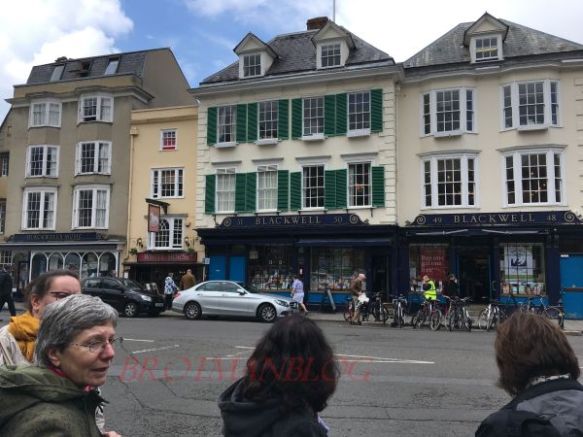
Old bookstore

Sheldonian Theater

We enjoyed the comment about Bill Clinton
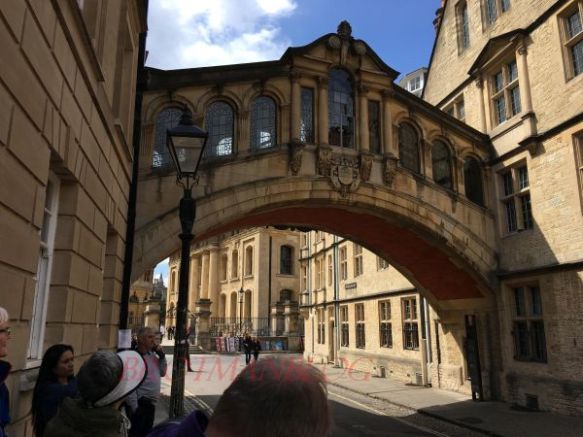
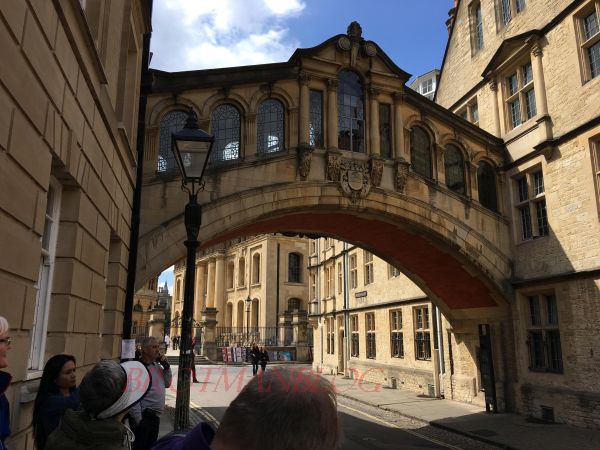
Bridge joining two parts of Hertford College

New College

Merton College
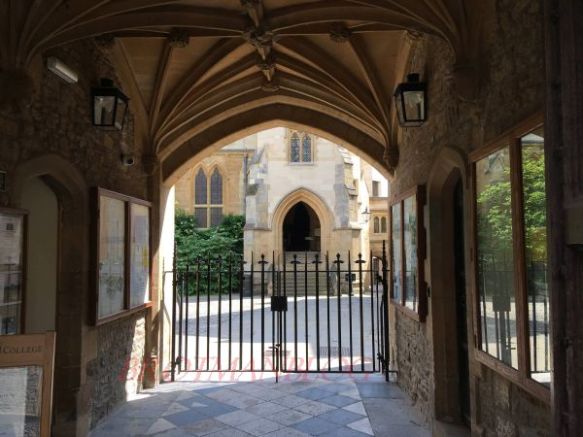
Corpus Christi College

Corpus Christi College

Radcliffe Camera
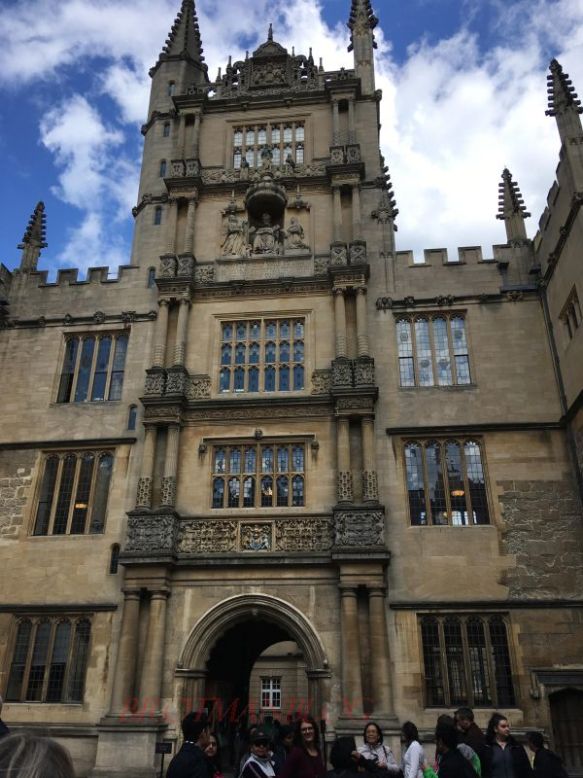
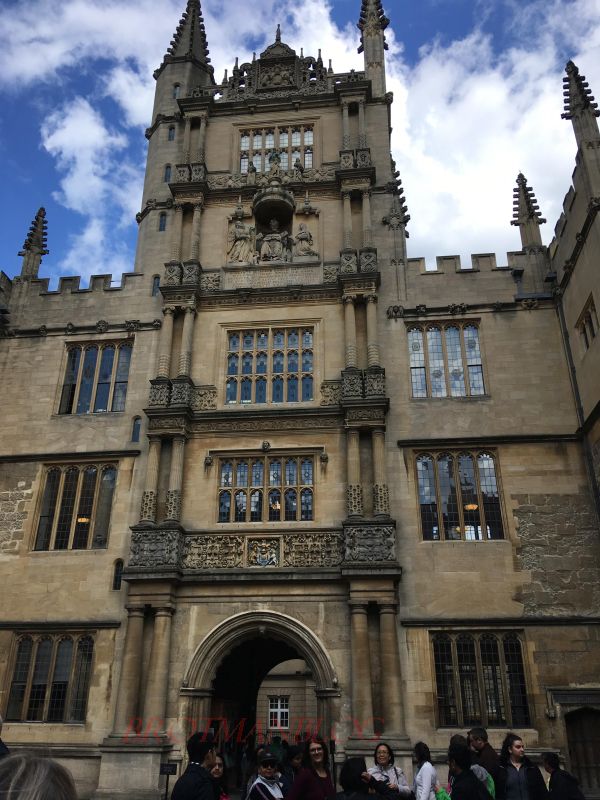
Bodleian library

Our guide pointed out the students who were finished with their last exam and the wild way they decorated themselves to celebrate the completion of their studies at Oxford.

When the tour ended, we walked a bit more and then made our way back to the train station, back to Kingham, and back to Bledington and the Kings Head Inn.  The following morning we left Bledington for the last stop on our trip to England, London.

England, 2019: Cornwall

Almost ten years ago my husband and I started watching Doc Martin, the British television series about a London surgeon who develops a fear of blood and is forced to retire from surgery and become a country doctor in a small fishing village in Cornwall called Port Wenn. We were immediately taken not only by the story and the eccentric characters and humor, but also by the gorgeous scenery—the rocky cliffs surrounded everywhere by deep blue water.

We decided that someday we would have to visit Cornwall and specifically Port Isaac, the real name for the village where Doc Martin is filmed.  Since then I have watched and re-watched Doc Martin enough times that I know most of the dialogue by heart. It has been a wonderful way to escape and have a laugh and enjoy a good love story and a great diversion while riding my exercise bike.  So my interest in visiting Port Isaac only intensified over the years, and last year we started making plans for our visit.

We arrived on Tuesday, May 21, after landing at Heathrow that morning. We took a bus to Reading, a bustling small city where we had a quick breakfast and a short walk before boarding the Great Western Railway train to Bodmin Parkway.

I had made arrangements with Lyn, a taxi driver, to meet us at the station, and she was there waiting for us when we arrived.  She gave me a warm hug when we met—a wonderful welcome to England. On our half-hour drive to our hotel, she entertained us with stories of her family, her dog, and life in Cornwall as we tried to adjust to being on the left side of the increasingly narrow roads she maneuvered. It was quite an adventure.

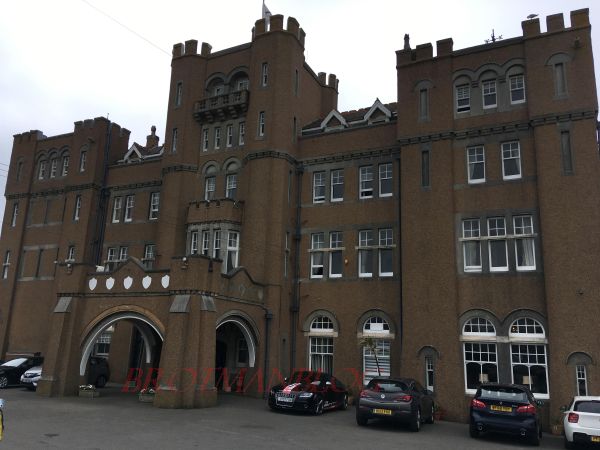
I cannot say enough good things about our hotel, the Longcross, a small hotel about a mile outside of Port Isaac. It is an elegant older building with lots of Victorian details but with all the modern amenities—wifi, flat screen tvs, and comfortable and spacious rooms. From our room we could see miles of open farmland, the bright blue sea in the distance, and magnificent sunsets.

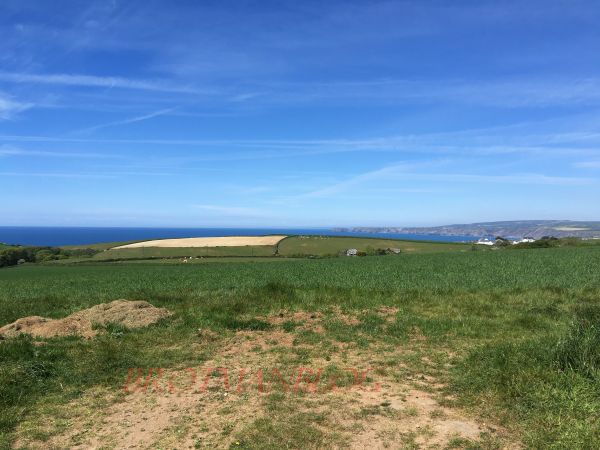
The view from our room

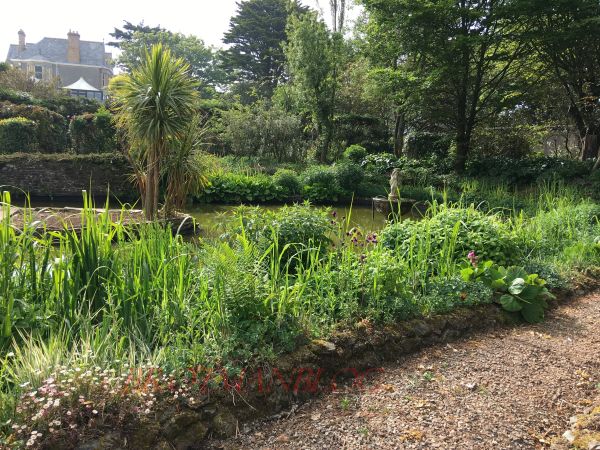
Outside the hotel was a lovely English garden with arched walkways and a pond and an array of flowers and trees.

But what really made the Longcross my favorite hotel of all time was the service and the food. When we arrived, we met with Jamie, the general manager, and with Julia, who runs the dining room and whose husband Andy is the chef and runs the kitchen. We explained our long list of dietary restrictions (especially mine)—no meat, no shellfish, no dairy, no onions. Julia quickly said that there was no problem—she would create a menu just for us for each night that we were there using a different fresh fish each night depending on what was available in the market. And she and Andy created dinners for us that were just incredible—beautifully presented and made from all fresh ingredients. I still cannot believe how accommodating and gracious the staff at the Longcross was.

I didn’t take pictures of the food, but here are some of the menus Julia typed up for us.

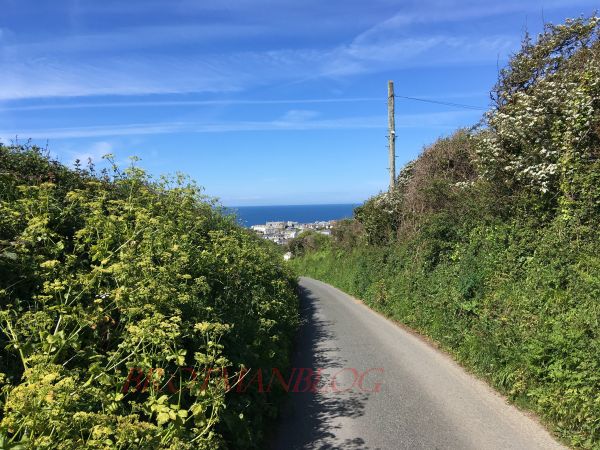
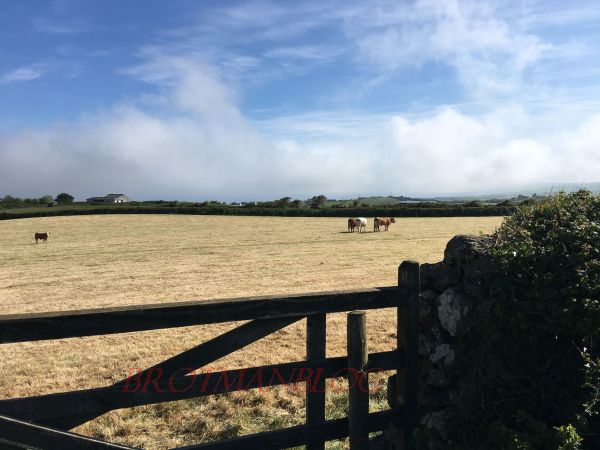
Of course, we didn’t go to Cornwall just to eat! We went for the scenery and for the opportunity to see some filming of the next season of Doc Martin. Each morning we walked the mile or so into the village, passing cows and fields and those iconic Cornish hedges while trying not to get killed as cars sped by, passing each other on the narrow and winding one-land roads.

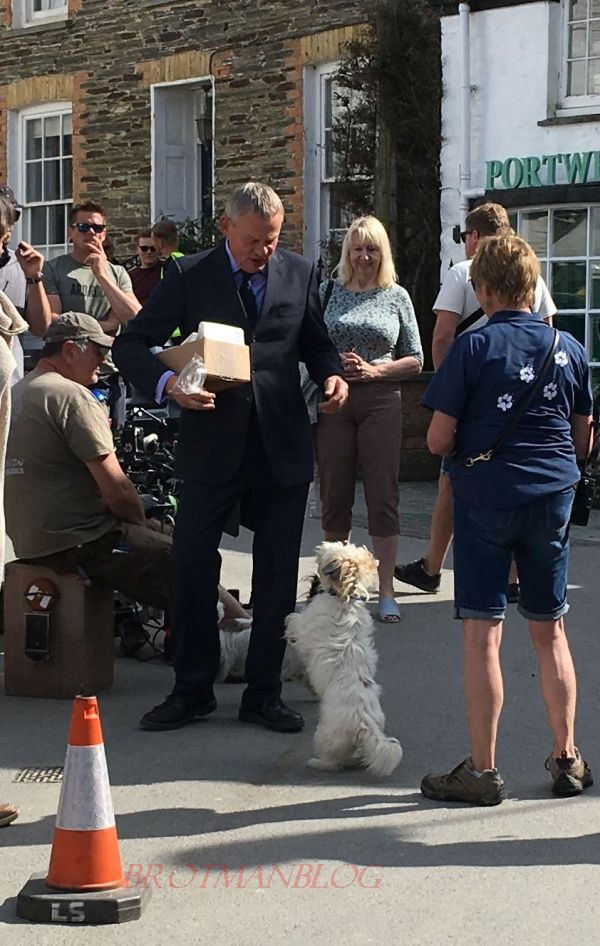
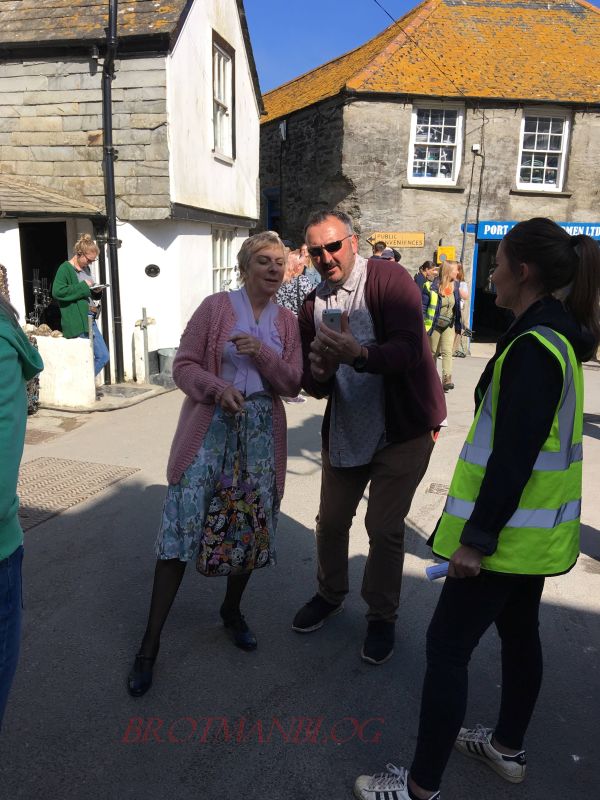
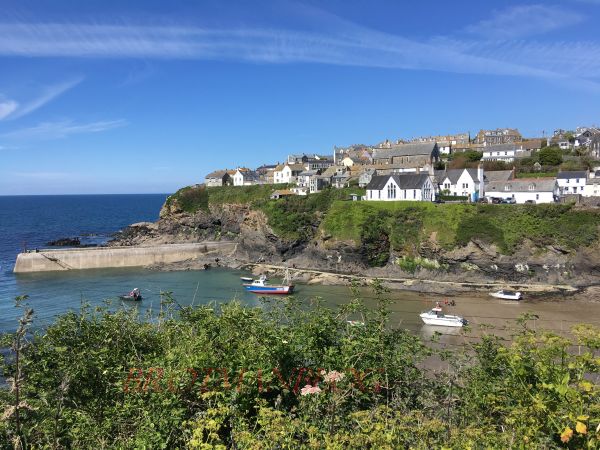
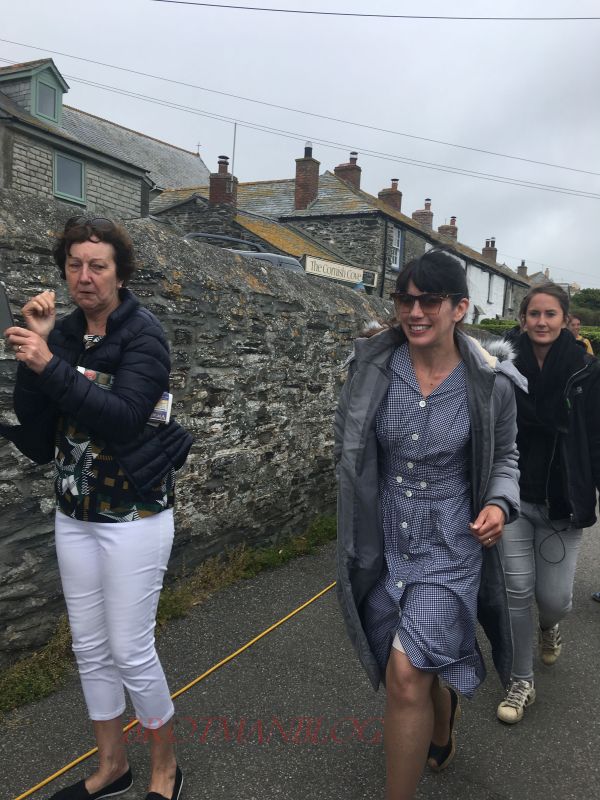
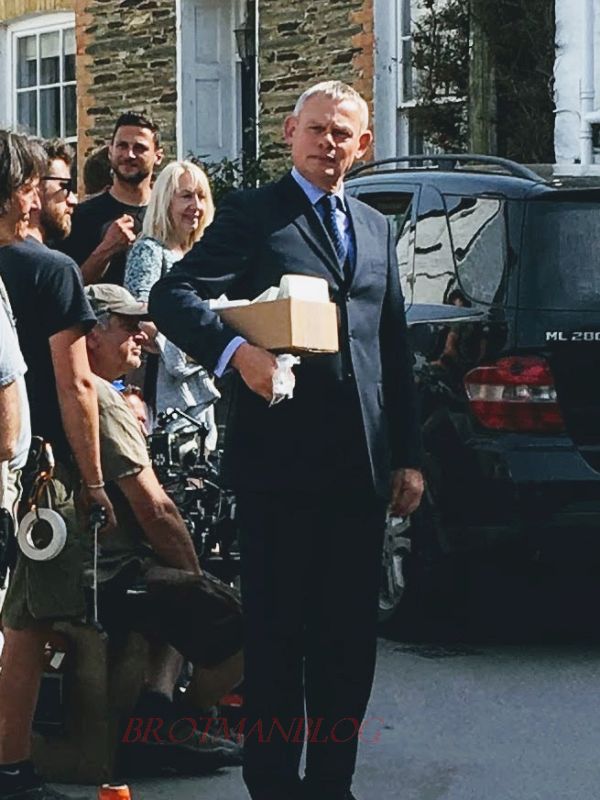
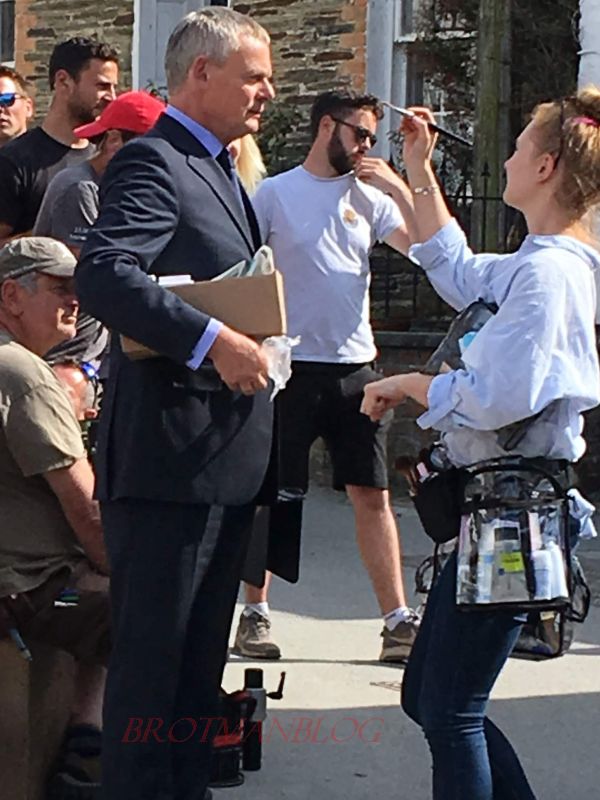
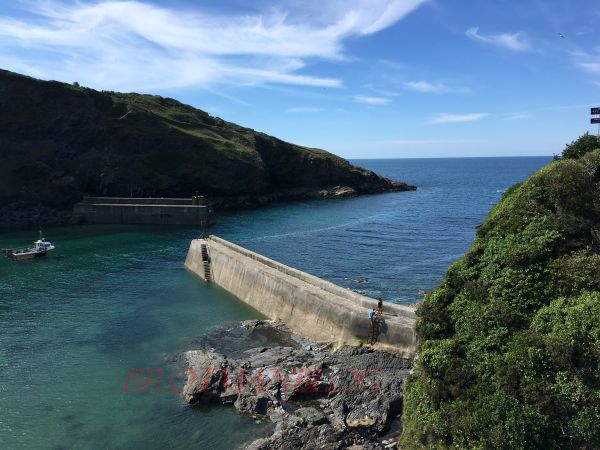
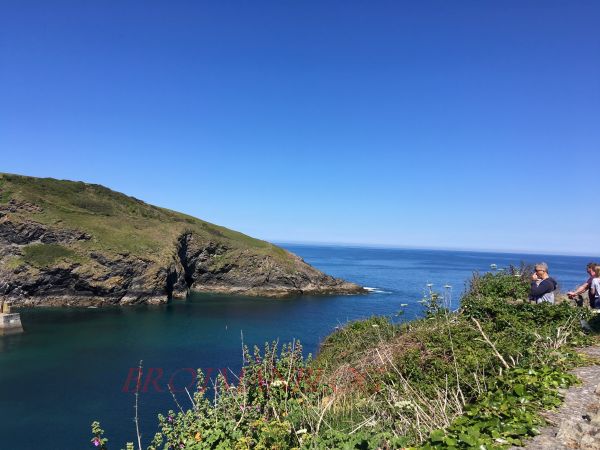
We were fortunate to see two days of filming while we were in Port Isaac and to see many of the places in the village that were familiar locations from the series. Here are just some of the Doc Martin-related photographs we took while in Port Isaac.

Of course, being such a big fan, I was excited to see some of the stars and to watch the filming process itself. It was quite interesting to see how much time and how many people it takes to film what may end up as just a few seconds of a scene in the finished program. Being an introvert, I wasn’t one of those who could run up to get selfies with the actors or to get an autograph, but I did enjoy seeing how Martin Clunes and Caroline Catz went in and out of character as they waited for the crew to set up each shot for the scenes being filmed.

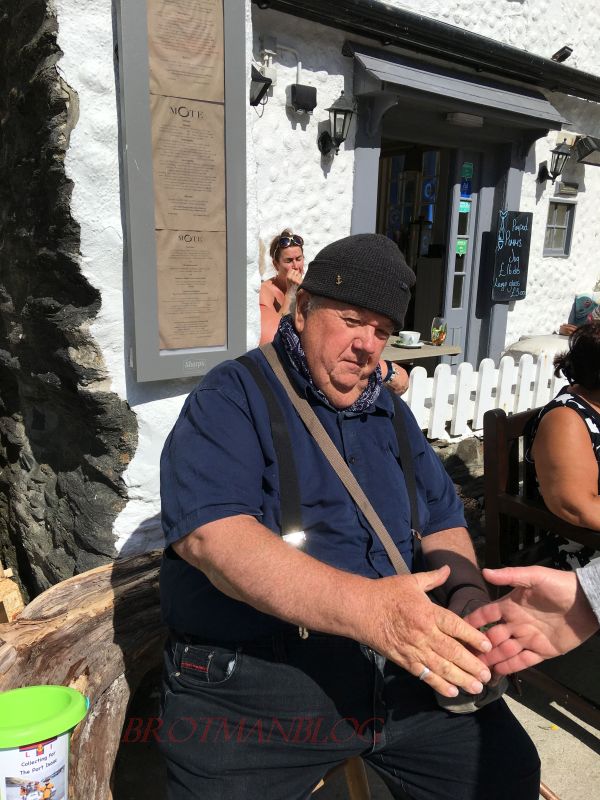
We did have a chance to shake hands with Ian McNeice, who was collecting for the local lifeboat station on the afternoon we arrived, and we also met and spoke at length with a woman who was an extra during the first day of filming. She also gave us some insights into how the program is created.

But most of our time was spent walking—doing a walking tour of the village, walking on the coastal path to neighboring Port Gaverne, walking up and down the very steep hills, and walking to Port Quin, another neighboring harbor.  We were told that at one time Port Quin was a place where fishermen lived, but after all the men were killed at sea, their families left, and now all that is left are some cottages that are available to rent.

Port Gaverne

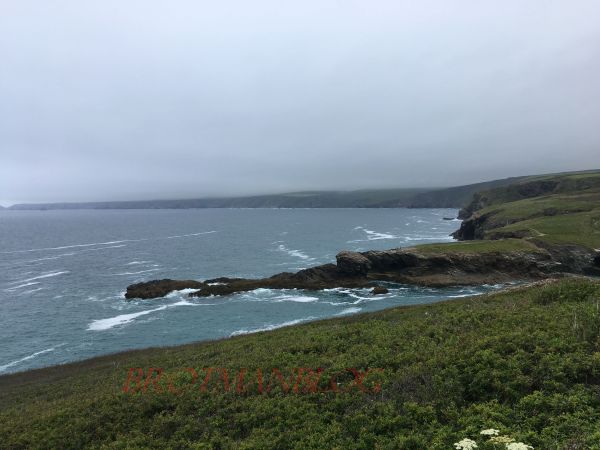
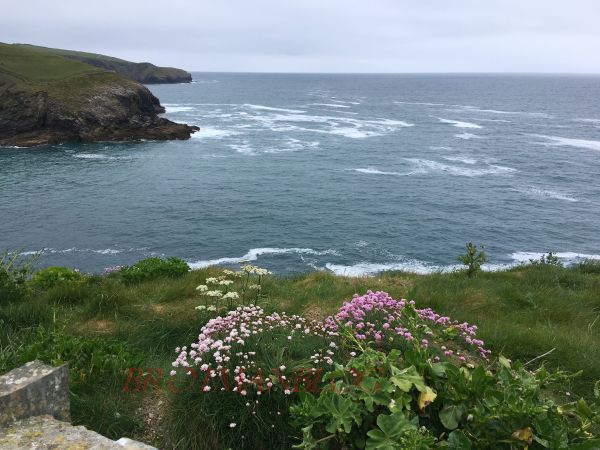
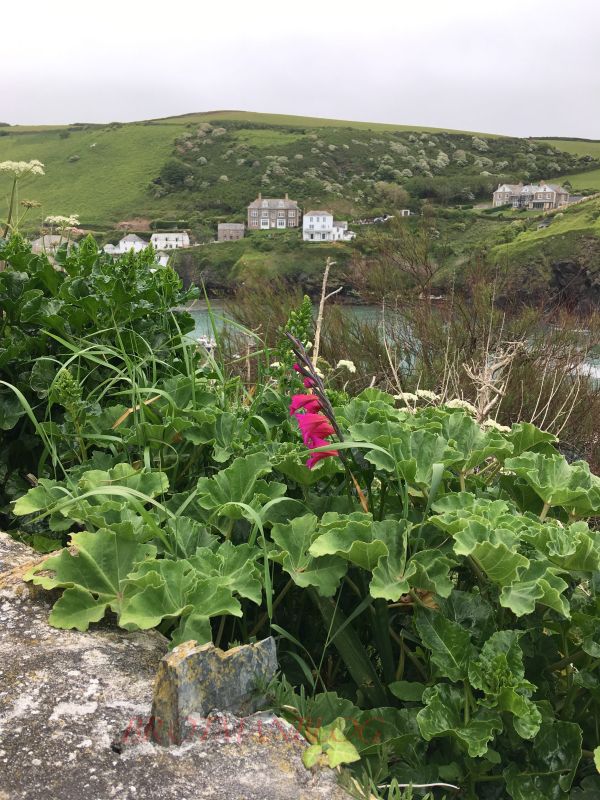
All the photographs below were taken in Port Isaac or walking along the coast to Port Gaverne.

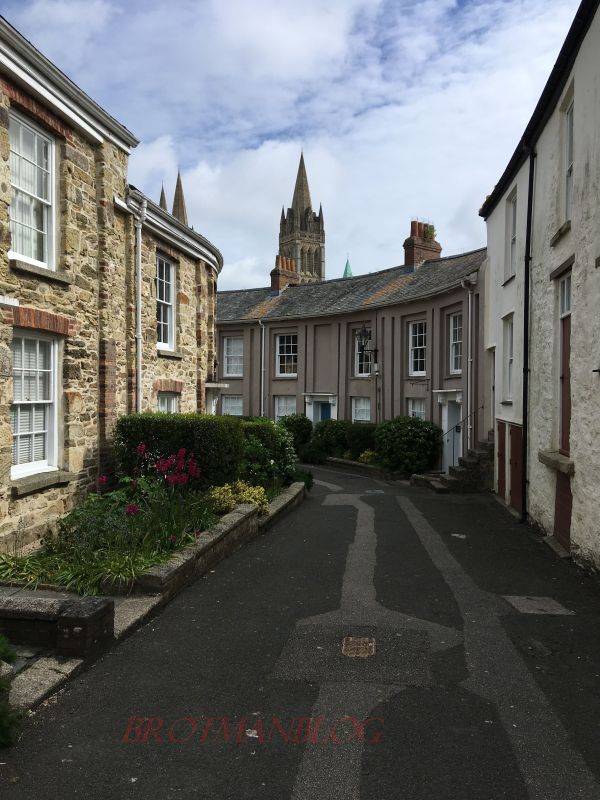
I loved every minute we spent in and near Port Isaac. But we also wanted to see more of Cornwall, so one day we took a driving tour with Kez of Cornwall Tours. He was a delightful young man who was a native of Cornwall and very proud of the region.  He took us to Truro, the largest city in Cornwall that we wanted to see in honor of Truro, Massachusetts, where I had been coming since I was a young girl many years ago. England’s Truro is nothing like the one on Cape Cod (which is more like Port Isaac than England’s Truro), but it is a nice little city with a beautiful cathedral and some lovely winding streets and the Cornwall history museum, where we learned about the mining history of Cornwall from ancient times into the 20th century.
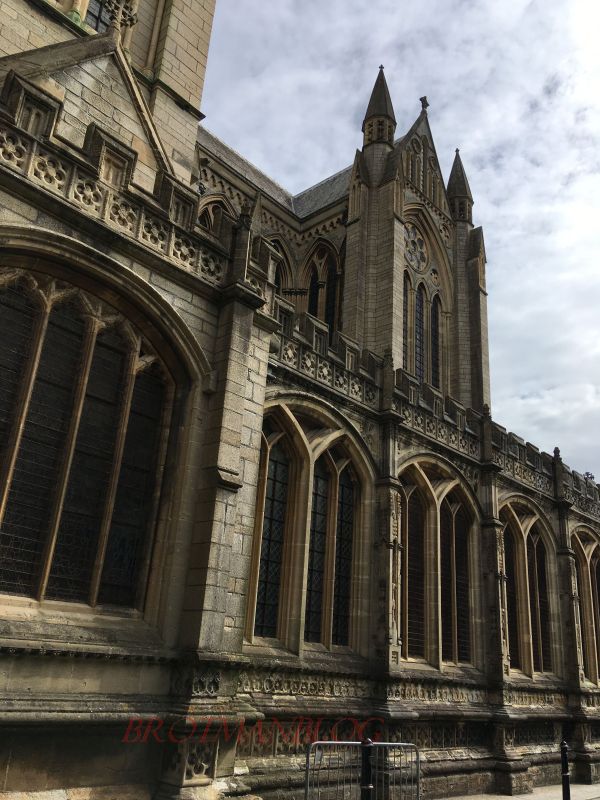
Truro Cathedral

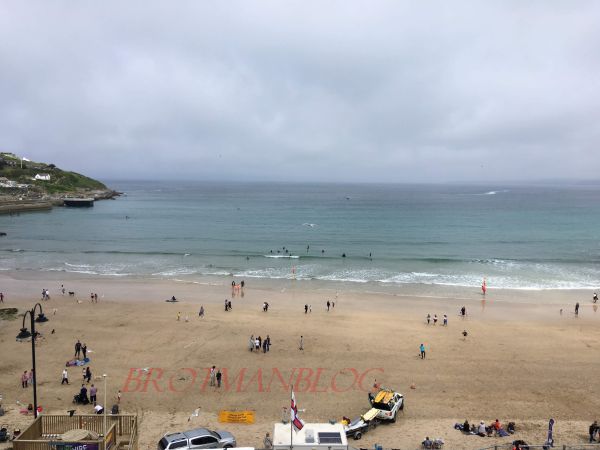
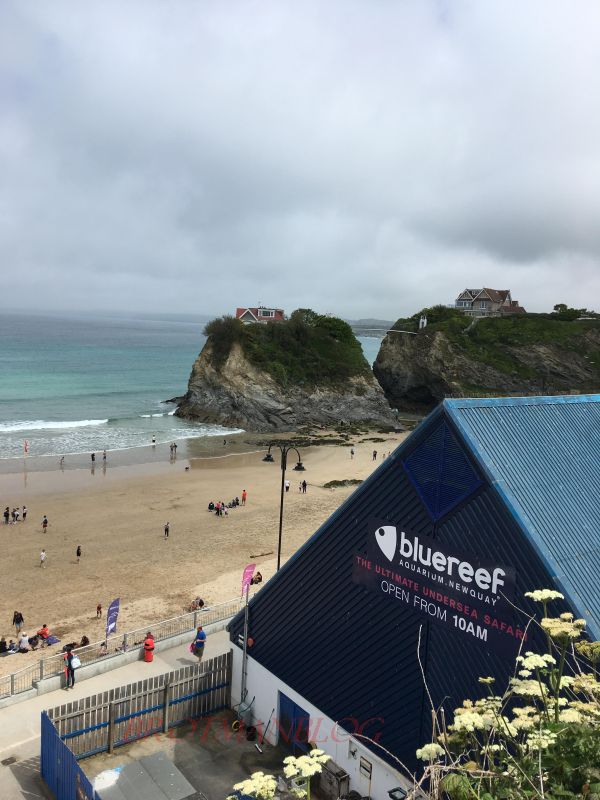
Kez then drove us to St. Agnes, an old tin mining community, and on to several beautiful beaches in Perranporth, Newquay, Saint Eval, and Booby’s Bay. As a surfer, Kez was an expert on the Cornwall beaches. It was a three-day weekend in England, so the beach areas were fairly crowded and people were surfing even though the temperature was at best in the low sixties.

St Agnes

Perranporth

Newquay

Newquay

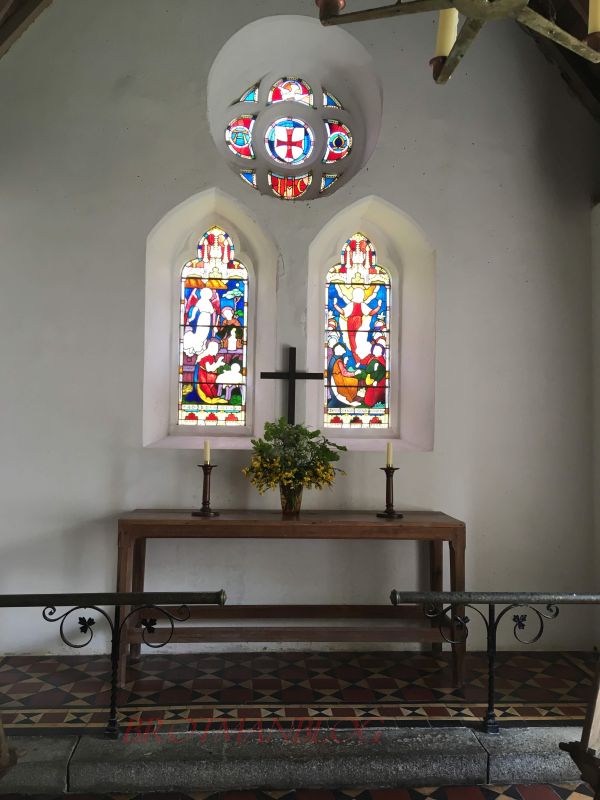
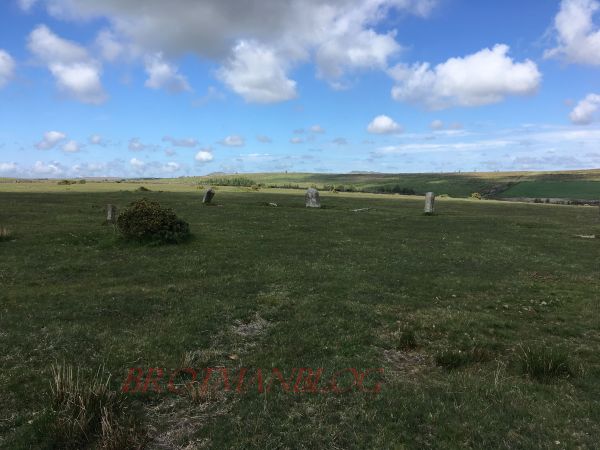
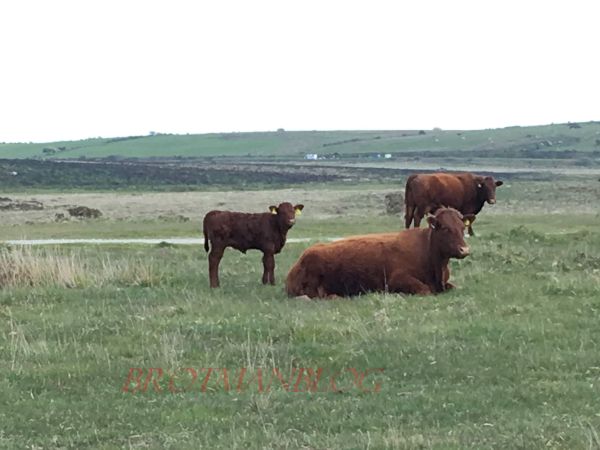
After seeing several beaches and having a quick lunch in the picturesque town of Padstow, we headed to Bodmin Moor. I’d never seen a moor before and was curious after reading about them in English novels such as Wuthering Heights. Kez took us there, where we saw the wide open highlands, a stone circle from pre-historic times, cows and calves, and Temple Church, a medieval church that was so well hidden that it may be the only one that has stained glass windows that survived Henry VIII’s orders to destroy all the decorative elements in the Catholic churches as part of the English Reformation in the 16th century.

Temple Church

Temple Church

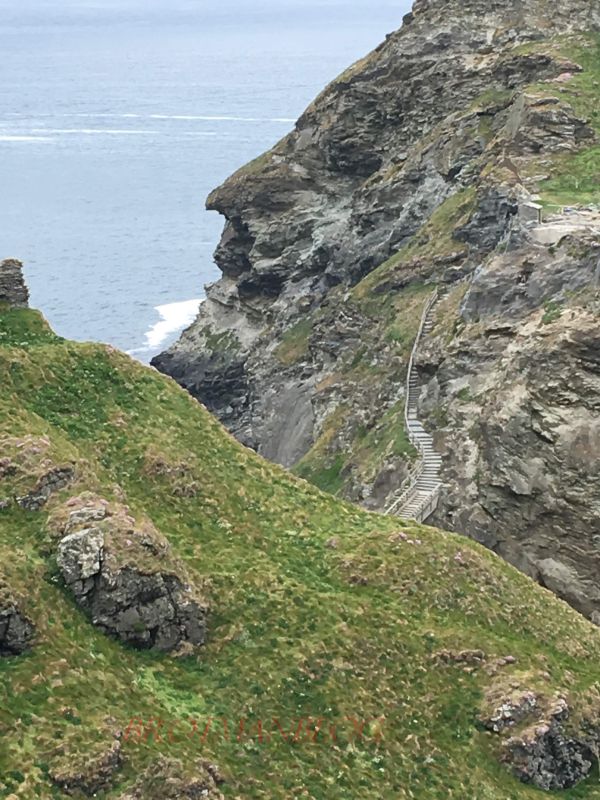
Our last stop with Kez was Tintagel where legend says King Arthur’s castle once stood. Work is now being done on the bridge that connects the small island where there was once a castle to the mainland, so you cannot get to the ruins, but the views were nevertheless well worth the drive to this location.
Tintagel

Thus ended our last day in Cornwall. With one last excellent meal at the Longcross, one last sunset, one last breakfast the next morning, and lots of goodbye hugs, we were off to the Cotswolds on May 26.

Back from the Pacific Northwest

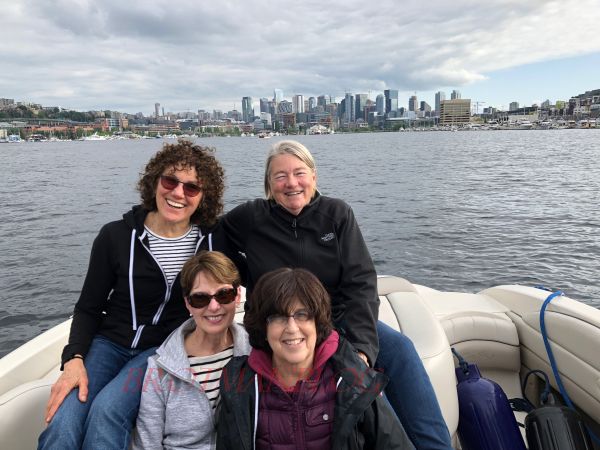
I am back—after eleven days in the gorgeous Pacific Northwest.  First, I spent four days in Seattle with my dear friends from college.  About ten years ago we decided that we would schedule a reunion every other year some place in the country—either where one of us lives or on neutral grounds.  We have been to Chicago, Boston, Boulder, and now Seattle. I’d never been to Seattle before, and in between lots and lots of talking, somehow we managed to see the sights.

Then Harvey flew out and together we saw a bit more of Seattle and then drove north to Vancouver for a few days. Both Seattle and Vancouver are such beautiful cities with water and mountains everywhere, and both cities take advantage of their natural beauty with long walks along the water. Vancouver has a bike path that circles almost the entire city and a huge park that we biked around. And we walked and walked everywhere, never moving our car in either city, except to arrive and to leave.

Seattle skyline

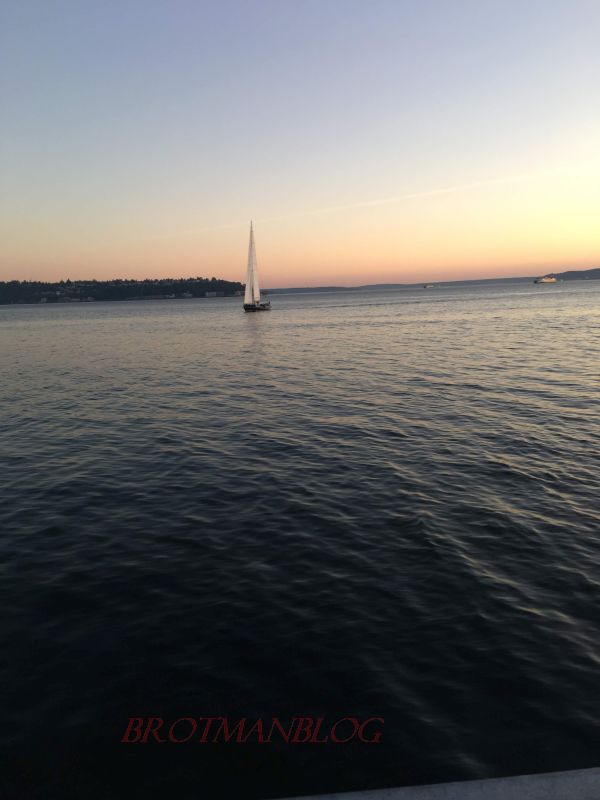
Seattle harbor at sunset

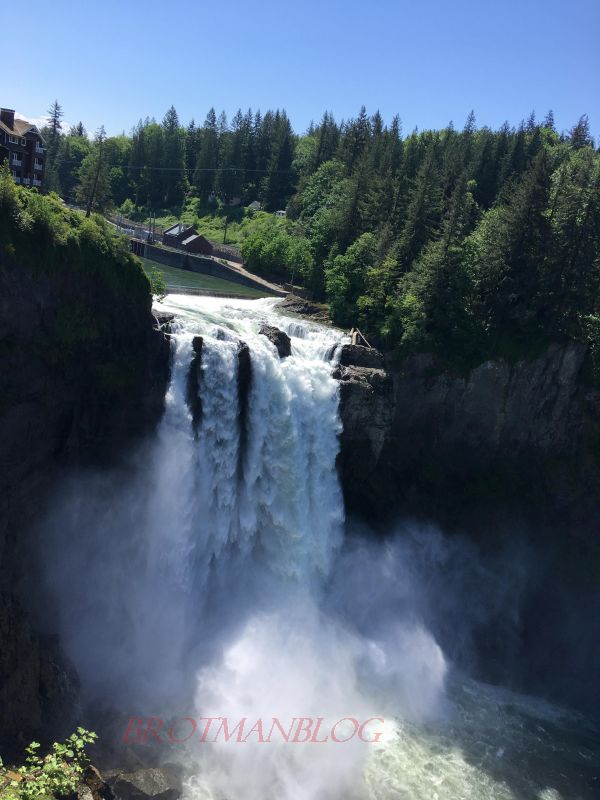
Snoqualmie Falls

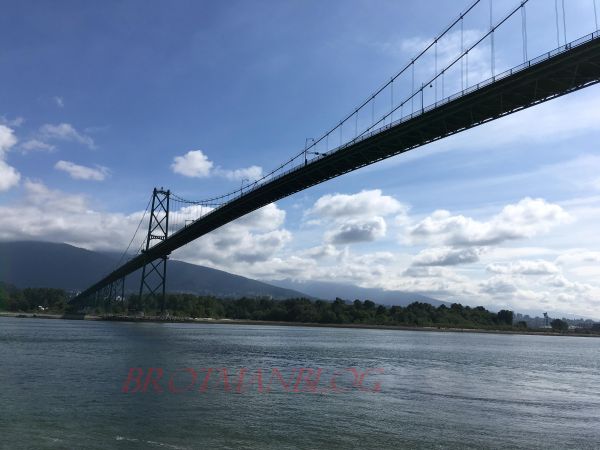
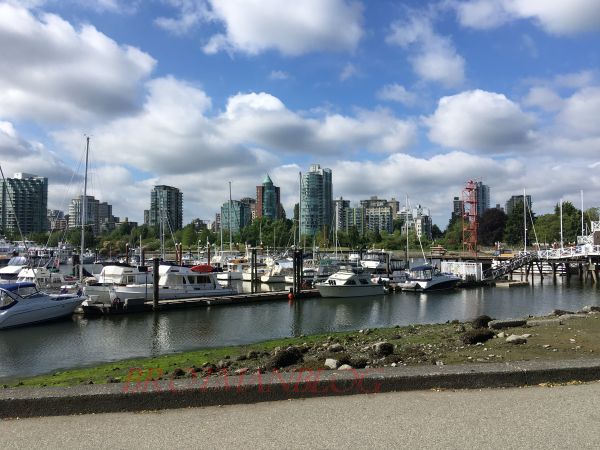
Vancouver

Vancouver

Friends on the bike path

Vancouver skyline

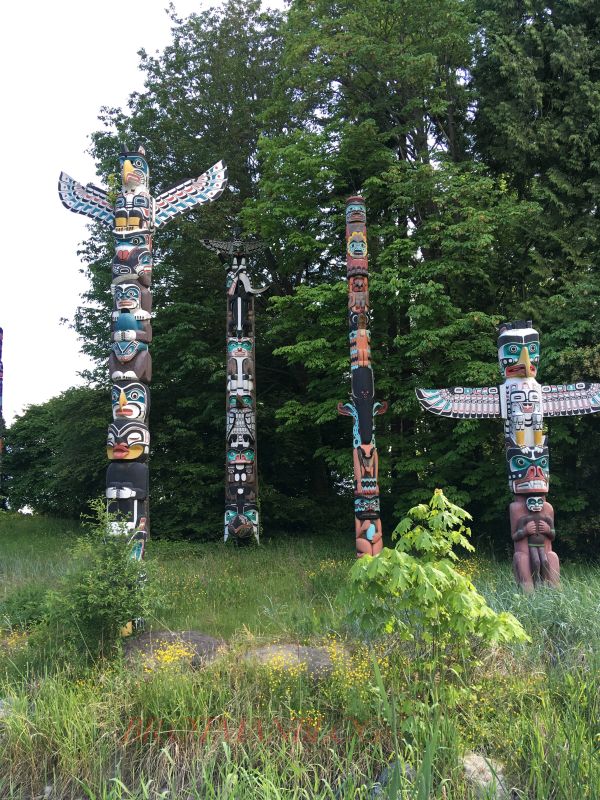
Totem poles in Stanley Park, Vancouver

Returning from Vancouver we spent two days on Orcas Island off the coast of Washington.  It was like stepping back into a past world.  Although there are modern amenities and a small town with some shops and restaurants, for the most part the land feels pristine, almost the way it might have looked a hundred years ago. We hiked a little, drove up Mt Constitution, ate wonderful meals overlooking the water, and enjoyed the slower pace after visiting two major cities.

Orcas Island (view from our inn)

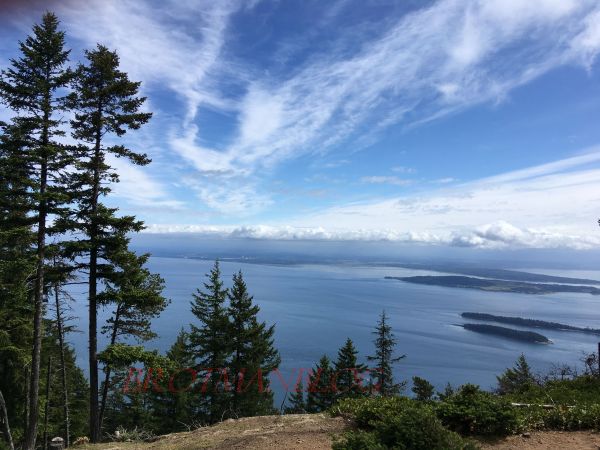
View from the summit of Mt Constitution, Orcas Island

Hiking to Obstruction Pass

View in Eastsound, Orcas Island

And now we are home, dealing with dirty laundry, jet lag, and a return to “reality.” This trip had no genealogical purpose—just valuable time with friends and with each other and a chance to see places we’d never seen before.  I will return to regularly scheduled programming next week and meanwhile will also try and catch up with all the blogs I follow and have missed in the last two weeks or so.

Walking in Their Footsteps by Jennifer Spier-Stern

I am honored today to share with you an essay written by my fourth cousin, once removed, Jennifer Spier-Stern. Jennifer is the great-granddaughter of Minna Ruelf and Isaak Spier, about whom I wrote in my last post. When Jennifer shared this essay with me, I was so moved that I asked her if I could post it on my blog. She graciously agreed to let me do that, and I hope that you also will feel the way I did—that I was with Jennifer in her footsteps as she walked in the footsteps of her family in Rauischholzhausen, Germany.

Walking in Their Footsteps

by Jennifer Spier-Stern

I was transformed back in time as we drove through the narrow streets of the town called Rauischholzhausen.  We passed old homes with beautiful flower baskets hanging from windows and well manicured gardens. The narrow street was paved and there was even a sidewalk. I wanted to absorb every corner, every home into my mind so I could never forget these images.  I know that 70+ years ago it was not as pristine. I have thought of this day for so many months. Each and every time I envisioned this part of my trip I cried.  The tears were for the people that were no longer here to tell me their tales. My father wasn’t with me to show me the way, to tell me about his memories and to stand with me in front of the home where he was born. To walk with me to the Schloss (castle) and show me the places where he ran, where he played, to show me where his family lived and where the synagogue was.

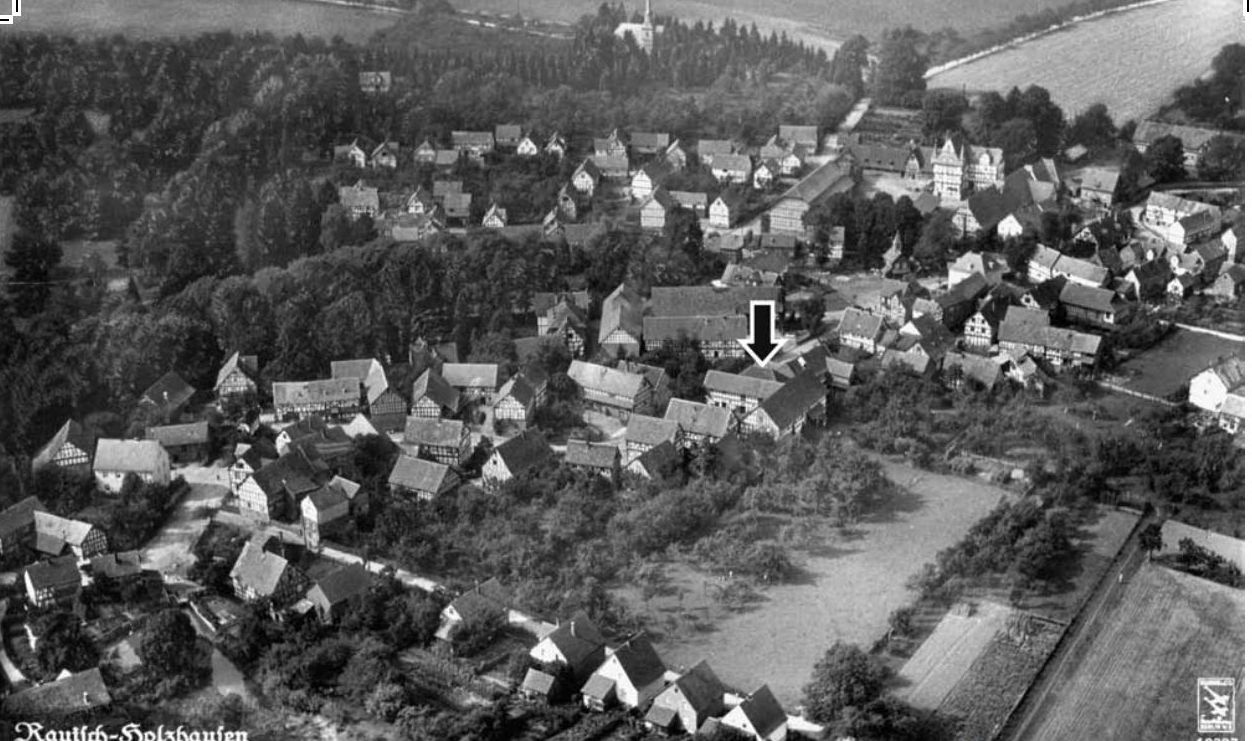
View of Rauischholzhausen with arrow pointing to synagogue
http://www.alemannia-judaica.de/images/Images%20362/Rauischholzhausen%20Ort%200100.jpg

The reason for this trip started many years ago. My father was born in Rauischholzhausen in 1922, a small town a few minutes drive from Marburg.  Growing up we heard all the stories of Holzhausen and of the early childhood of my father and his four siblings. We used to roll our eyes and laugh with yet another story of “home.” As young adolescents we didn’t appreciate all that he told us.  I wish I had documented everything, but like most young adults, I didn’t.   My father always promised my brother and I a trip back to his roots, but that was never going to happen, he passed away in 1998.  Since my father’s passing I had fleeting thoughts of going to Germany but not until recently did this strong urge possess me that I had to go and see for myself.

Without going into full details of the history of our family, my father’s brother returned to Germany with his wife and son and settled in Bielefeld in 1959.

My aunt, uncle, cousin and his wife met us at our beautiful hotel and drove us to the house that was 16 Lerchengasse. 16 Lerchengasse was the house where my father lived. The house that bore the name I Spier (Isaak Spier) above the front door frame. We parked the car and walked that last few steps down a cul de  sac.  I had the vision of the house from few photos that survived the war. 

My uncle stopped in front of the house and said, “This is it. This is the house where we were born.”  I looked up at this large home, the home of my great-grandfather, grandfather and father. My hands were shaking and the tears rolled down my face.  I heard my father’s voice, I heard his stories, I saw him walking up and down the front stairs. I saw him running around the courtyard with his siblings. I haven’t felt my father’s presence as strongly as I did at that moment.  I wish I could have knocked on the door and introduced myself. I so wanted to go inside, but I know it is far different than the house my father left on November 9, 1938.  I looked at the surrounding homes, and they too were lovely with their planters filled with flowers and lace curtains in the window. Later in the week Hajo (My hero guide) posed the question to me, “Can you imagine this town 65 years ago?”

Spier home in Rauischholzhausen
Courtesy of Jennifer Spier-Stern

The next stop was the Jewish cemetery. We picked up the key at the caretaker and then we walked the grass soaked path towards the cemetery. The rain started and the path became very muddy. The land to the right was a beautiful pasture for grazing cows who seemed very curious and walked over to the fence. It seemed surreal.  As we walked my eyes were looking down at the path, knowing that my grandparents and many other ancestors walked here to enter the cemetery. They came here to bury. They came here on the holidays to remember those that passed. They came here to say Kaddish. I was walking in their footsteps.  

My grandfather Abraham Spier buried his parents, Isaak Spier and Minna Rülf neé Spier. One of the oldest stones in the cemetery is Nathan Spier, my 3rd great grandfather (1792-1866). We stepped into the cemetery where 80% of the graves are family ancestors. I had my dear friend Hajo Bewernick photograph every stone for me. I’ve looked at the photos numerous times and now, I stood before them. I stood there and cried.  Emotions flooded my body that I didn’t know how to react. I wanted to touch every stone and place a rock, I wanted to pray. In years to come how many will walk through the gates to pray for all the souls? However, all I could do was cry. Later on I found out that my husband said the Mourner’s Kaddish, (a Mourner’s Prayer) as he stood over one grave, but he said it for all.

Gravestones of Minna Ruelf Spier and Siegfried Spier in Rauischholzhausen
http://www.alemannia-judaica.de/rauischholzhausen_friedhof.htm

I walked in their footsteps. I was thankful that my family who live in Germany were able to share this experience with me.  Special thanks to Hajo Bewernick who took the time from his busy work and home life to show my husband and I Marburg. I can never thank you enough for explaining the history of your beautiful town as well as showing us the many historical sites and to our many insightfully deep conversations.  You created a three dimensional image for me  of my grandparents, my Oma and Opa, by showing us where they would have been, where they would have walked and the buildings from where they were deported. I do not recall the name of the street corner. Hajo was specific in pointing his finger.

Through my research I have come across generous people who devote their time and efforts to the history of the Jewish people. To everyone we thank you for all your hard work. Special thank you to Barbara Greve for always being there with the answers.

One more person I need to thank with all my heart is my husband, Effy. This trip wouldn’t have happened without him. He knew how important this trip was for me and I am glad he shared it by my side.

I never felt closer to my family and my ancestors as I have during these few days in my family’s home town.   I know I’ll keep these stories alive with my family and I hope they will continue the legacy.

In the Footsteps of the Ancestors by Beate Goetz: We Make the Newspaper in Bingen

In July, I received an email from my friend Beate Goetz; Beate is the woman who not only was our guide when we visited Bingen in May—she was one of the first people from Germany who helped me with my research, starting back almost three years ago. We’d had a lovely time with Beate while in Bingen, and she wrote an article about our visit for the local newspaper, Allegemeine Zeitung.  It was wonderful to relive the experience through Beate’s eyes and remember our time together.

With some help from Google Translate and Wolfgang, I’ve translated her article; my apologies to Beate for any errors, for which I take full responsibility:[1]

In the Footsteps of the Ancestors

Jewish Bingen

US-American Amy B. Cohen and Wolfgang Seligmann have Common Bingen roots.

In November 2014, Amy Cohen from Massachusetts turned to the Arbeitskreis Judische and asked for help.  She was in search of meaningful documents about her ancestor Moses, later Moritz, Seligmann, who was born in either Gau-Algesheim or Gaulsheim in the 19th century.

It soon became apparent that Moritz Seligmann was born on January 10, 1800, in Gaulsheim, the son of the merchant Jacob Seligmann and his wife Martha nee Mayer, who came from Oberingelheim. Also, his grandfather Hirsch Seligmann was born in Gaulsheim.

Moritz Seligmann was married twice: first with Eva Schoenfeld from Erbes-Buedesheim. The wedding was on February 27, 1829, in Gaulsheim.

The year before, Moritz Seligmann had wanted to transfer his place of residence to Gau-Algesheim, as Ludwig Hellriegel wrote in his little book, The History of the Jews of Gau-Algesheim. However, the town council rejected this and stated that “there are already a large number of Jews in the local community.” And “that it is not advisable to overpower the church with Jews.” But when Moritz Seligmann submitted a testimony to the mayor’s office of Gaulsheim of his unblemished reputation, he was allowed to become a citizen of the city.

After the death of his first wife Eva on the birth of their son Benjamin, Moritz Seligmann married her sister Babetta Schönfeld, as was customary at that time.  Bernard Seligmann, Amy Cohen’s ancestor, came from this marriage. He and his brothers Adolph and Sigismund (from the marriage with Eva) went to America around 1850. The brothers settled in Santa Fe and established the prosperous business, Seligman Brothers. They transported goods from the East Coast on the Santa Fe Trail and sold them in Santa Fe.

Since 2013 Amy Cohen has been collecting her family history research in a blog. The coincidence was that radiojournalist Wolfgang Seligmann found Amy’s blog and soon they found out that they have the same ancestor in Moritz Seligmann. While Amy’s ancestor Bernard Seligman was finding happiness in America, Wolfgang’s great-grandfather August had stayed in Gau-Algesheim. His grandfather Julius Seligmann had started the Christian line in the family as he converted when he married Magdalena Kleisinger, who was Catholic. From 1939, the family lived in Bingen.

Wolfgang Seligmann had strong support in his family research from his recently deceased mother, Annlis, who tirelessly gathered the documents and mastered the old German script.

So a few weeks ago the two Seligmann descendants met when Amy Cohen came with her husband Harvey. In addition to Mainz and Gau-Algesheim, Bingen was on the travel schedule of the guests. Together we went on a tour of the town that led along the houses and stolpersteine to remember the extensive family associations of the Seligmann, Gross, and Mayer families.

Also, we visited the synagogues and the Memorial and Meeting Center of Judische Bingen in Rochusstraße and also took countless photos before the visit to the Jewish cemetery ended the tour.

Shortly after her journey, which led the couple to Koblenz, Koln, and Heidelberg, Amy Cohen wrote how impressed she was by visiting the cemetery. “The people behind the names and stories I had researched seemed to me so close and very real, and I realized how close my Seligmann relatives were to the Bingen local community.”


[1] Only one correction to the caption under the photo: Harvey’s surname is not Cohen. I kept my birth name, just to make things easier for future genealogists. 😊

Our Last Two Days in Germany—Worms and Heidelberg—and Some Final Thoughts on the Trip

Why did we go to Worms? Not for any genealogy reason, but for its significance to Jewish history generally and to German Jewish history more particularly. It is one of the so-called ShUM cities, the three cities (Speyer (Sh), Worms (U), and Mainz (M) where Jewish scholars and rabbis in the Middle Ages had a widespread impact on Jewish religious and cultural practices.  Some of the greatest medieval Jewish scholars studied and taught in the ShUM cities, including Rashi, who is considered one of the greatest Talmudic scholars of all time. Many of the melodies used even today in Jewish religious services were developed in the ShUM cities. It seemed that it would be wrong to go all the way to Germany and not see Worms.  (Speyer, unfortunately, we could not fit into our itinerary, and we had seen Mainz.)

Worms is a short train ride from Heidelberg, so it made sense to go there during one of our three days in Heidelberg.  On May 13, we took a morning train to Worms to meet our tour guide. [For various reasons we were not very pleased with this guide, so I’ve decided not to use her name in this post. If anyone wants to know why, I will be glad to share privately but not on the blog.]

The guide met us at the train station and showed us the reliefs sculpted over the doorways to the train station, one showing different modes of transportation and the other, the doorway used by the wealthy, showing kings and nobles.  The station was built in the early 1900s and, as the guide said, was considered a sign of modernity and of the status of Worms as an important city.

From the station we walked a few blocks to the Jewish cemetery, which has existed since the eleventh century and is considered the oldest Jewish cemetery in Europe.  We could not enter as it was Shabbat (Saturday), and the cemetery was closed.  But we could see the old stones and the very well-maintained grounds. The guide told us about some of the important scholars buried at the cemetery and how the cemetery is a pilgrimage site for Jews from all over the world.

From the cemetery we walked through a park where there was a statue of Martin Luther, for whom Worms was also an important city because, according to the guide, it was in Worms that his movement for Reformation became a movement adopted by the people, not just a theoretical idea. The guide also pointed out to us that the park we were walking through was where the moat had been located when Worms was a walled city in medieval times.  Once the wall was taken down and the moat filled, it became a ring of green space surrounding the city.

Martin Luther statute

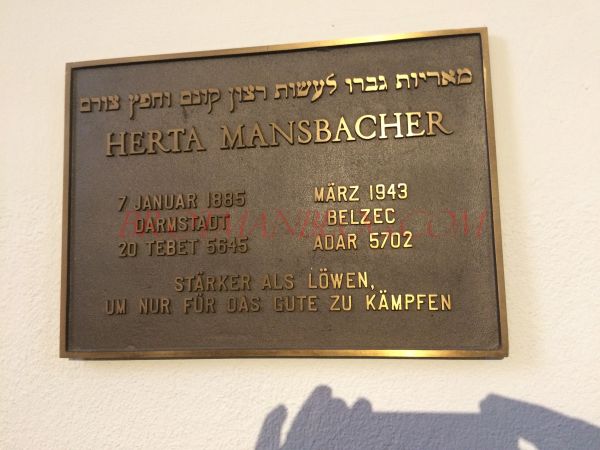
We continued to follow the former moat towards the old Jewish quarter in Worms. Along the way we passed several stolpersteine, including one for Herta Mansbacher, who is considered an important heroine in the story of the Jews of Worms.  She was a teacher in a non-Jewish school until 1933 when she lost her job and took a teaching job in a Jewish school.  She then stayed in Worms to help the children and to encourage families to emigrate from Germany.  After the Worms synagogue was burned during Kristallnacht, Herta Mansbacher ran to rescue what she could and to try and put out the fire.  In 1942, she was deported and murdered by the Nazis.

Stolpersteine for Herta Mansbacher and others

Former home of Herta Mansbacher

A short distance past the home of Herta Mansbacher we reached the former Jewish quarter of Worms. Turning left on Judengasse it felt like we had entered not only a difference place but a different time. You could visualize what the quarter was like a hundred years earlier.

Judengasse in Worms

The Jewish quarter in Worms

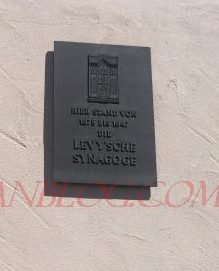
There are two synagogue buildings in the Jewish quarter.  They are located at opposite ends of a small plaza in the center of the quarter. The Levy’sche synagogue is now a residential building.


Across from it was the other synagogue, the Old Synagogue—where there is a sculpture commemorating Rashi; Rashi studied at the yeshiva attached to this synagogue.  The building dates from the 12th century and is claimed to be the oldest synagogue in existence north of the Alps.   The building is today used for religious purposes and also for cultural events. There is a separate building where the yeshiva was located and also a mikveh on the grounds.   Behind the synagogue is a Jewish museum displaying Judaica and historical documents from the region; the most moving display was of the Torah scrolls and wimpels that were burned during Kristallnacht.  Perhaps these were the ones rescued by Herta Mansbacher, for whom there is a memorial plaque in the synagogue.

Old synagogue in Worms

Statue honoring Rashi

Interior of Old Synagogue

The synagogue was rebuilt after the war, but some of the original structure still was standing and is part of the building today.  Seeing the Jewish quarter allowed me to imagine in a concrete way how the Jews once lived in this section of the city.

After leaving the Jewish quarter, we stopped for lunch, and then the guide showed us Trinity Church, a very large Lutheran church built in the 18th century.  It was destroyed by Allied bombing in World War II and rebuilt in the 1950s.

Trinity Church

Interior of Trinity Church

Our last stop in Worms was at St. Peter’s Cathedral, which was built in the 12th century.  It is an impressive structure, and the altar is quite elaborate and beautiful.

St Peter’s Cathedral, Worms

Altar in St Peter’s Cathedral

We then walked back to the train station and returned to Heidelberg.

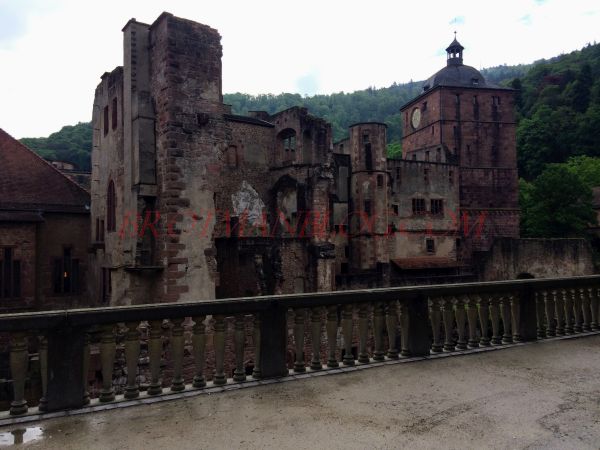
The next day, our last day in Germany, we were back on our own.  We took the funicular up to the castle that hovers over the city and can be seen quite dramatically from across the river.

We strolled around the grounds where the views of the river and the city of Heidelberg are stunning. Because you cannot get into the castle without a guided tour, we waited for the guided tour at 10 am.  Fortunately there were only three of us on the tour, plus the guide.  (There were hundreds of people wandering around the grounds being led by Viking Cruise guides, all with earplugs in their ears to listen to their guides, but they did not enter the buildings.)

The guide was delightful with a very dry and sarcastic sense of humor, and we all got a big kick out of him.  He entertained us with stories of political intrigue, romance, and wars to give us the colorful history of the complex of buildings that make up the castle.  The castle predated the city; it was originally built for strategic purposes with its towers and walls overlooking the valley below. Then, as medieval times moved into the Renaissance era, it became more a home for the local noble to impress his wife and entertain their guests.  Even Hitler used the castle at some point as a place to house soldiers.  I wish I could remember all the details of the guide’s stories, but suffice it to say he kept us interested, and he not only was amusing but very well-informed about the history of the region.

After returning to the city below, we spent our last afternoon in Germany wandering through the beautiful city of Heidelberg.  Unlike every other city we’d visited—Mainz, Bingen, Cologne, Wurzburg, and Worms—Heidelberg did not sustain any significant damage from Allied bombing during World War II, so it retains its architectural heritage as originally built.

The city has so much to offer—a world-renowned university, a scenic location on the Neckar River, a fascinating castle with gorgeous views, and churches and buildings that are rich in architectural detail.  The winding narrow streets and wide plazas, the youthful population, and the multitude of restaurants, bars, and stores make it an interesting and exciting place to visit. It made it all that much harder to pack our bags and head to the airport where we would stay our last night in order to catch our flight the following morning.

And so we said Auf Wiedersehen to Germany, land of my paternal ancestors, a country I had truly learned to appreciate during our stay, a place where the beer, the bread, the cities, the villages, the landscapes, and especially the people are just wonderful.  I was sad to leave, but ready to come home and have a chance to digest and remember it all.

Looking back on the trip now that we have been home for well over a month, it almost seems like a dream.  Was I really there? Did I really walk in the footsteps of my ancestors, see their gravestones, and meet my cousins, their descendants? Writing these blog posts has helped me remember and process everything we saw and experienced.  Looking at the photographs reminds me of all the people we met and all the beauty we saw as well as all the reminders of what happened during Hitler’s reign.

Much of what we experienced was bittersweet—bitter because of all the awful killings and destruction, sweet because of the kindness of the people we met and the hope they gave us for a future where people are tolerant and understanding and loving of each other despite their differences.  As I now return to the task of learning about and writing about my family’s history, I can better visualize where they lived and what their lives were like.  It will make what has already been a fascinating and rewarding journey that much more meaningful and satisfying.

Thank you for following me on this journey.