Hilde Blumenfeld Meinrath: A Strong and Determined Woman

Once again, a new cousin found my blog and helped me find information that I could not find through traditional research, this time because the family had ended up in Brazil. Not speaking Portuguese and thus not having easy access to any Brazilian sources, I had hit a brick wall when it came to the family of my cousin, Hilde Blumenfeld Meinrath, whom I wrote about here back on May 31, 2022.

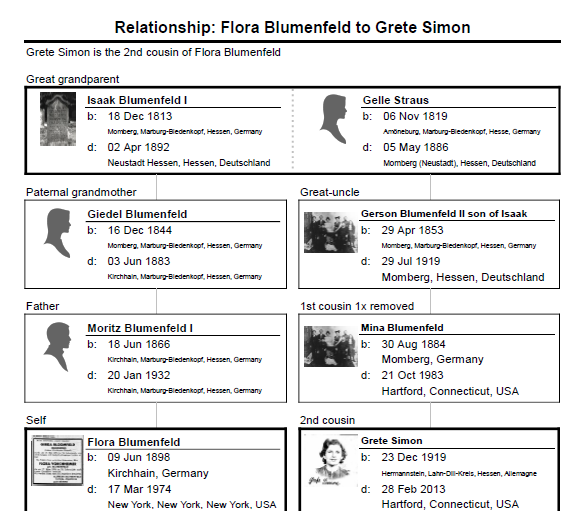
On January 30, 2023, I heard from Ana Gabriela Meinrath, my fifth cousin, once removed, who left the a comment on my blog, telling me that she is the granddaughter of Hilde Blumenfeld Meinrath. Here is a chart showing my father’s connection to Hilde:

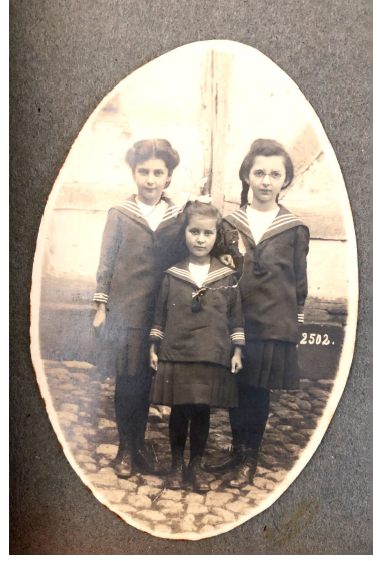
Hilde was the youngest of the three daughters of Salomon Blumenfeld and Malchen Levi: Gretel (born 1906), Jenny (born 1907), and Hilde (born 1911). Gabriela shared this wonderful photograph of the three sisters:

Jenny, Hilde, and Gretel Blumenfeld c. 1917 Courtesy of the family

Gabriela shared some family stories and many photographs and connected me to her uncle Roberto Meinrath, who added more information and stories about Hilde and her family. Roberto then connected me to Michael Katz, grandson of Gretel Blumenfeld Katz. Michael shared this photograph of Salomon and Malchen with all three of their daughters:

Salomon Blumenfeld and family Courtesy of the family

First, a summary of what I knew before Gabriela found me: I knew from my research that Salomon and Malchen and all three of their daughters survived the Holocaust by leaving Germany in time. Hilde, in fact, had left Germany as a seventeen year old in 1929, years before Hitler came to power. Later, she married Ludwig Meinrath, and eventually they immigrated to Brazil. Her parents followed her there, but later immigrated to the US where their second daughter Gretel and her family were living. The third daughter Jenny ended up in Israel.

But I had many questions left unanswered when I published that post on May 31, 2022, including why Hilde had left Germany in 1929 when she was only seventeen, how Hilde had met Ludwig and when they had married, why they had gone to Brazil, and whether Hilde and Ludwig had had more than one child. I also had questions about Hilde’s sister Jenny: had she married Siegmund Warburg, as many trees reported, and did she have children? And I knew few details about Gretel and her family.

Hilde had been interviewed by the Shoah Foundation, but unfortunately it was in Portuguese, and I couldn’t find anyone to translate it.

Most of my unanswered questions have now been answered, and I’ve learned a great deal more about the family from my cousins Roberto, Gabriela, Michael, and Simeon Spier. In addition, I’ve once again been working with my cousin Richard Bloomfield, and he was able to find someone to translate Hilde’s Shoah Foundation interview.

First, let me share the new information I have about Salomon Blumenfeld and his wife Malchen or Amalie Levi and their youngest daughter Hilde Blumenfeld Meinrath.

I learned from Hilde’s Shoah Foundation interview1 (as translated by Manuel Steccanella from Portuguese to German and then translated by Richard Bloomfield from German into English) that her father Salomon had served in the German military and fought for Germany during World War I, serving in France and Belgium, and leaving behind his wife and three young daughters. According to Hilde, when her father returned to Kirchhain from the war, he brought a hundred prisoners with him. Salomon owned a large hotel in Kirchhain, and the prisoners lived in the hotel and worked in Kirchhain. Hilde said that on Sundays, the prisoners butchered small animals and once made her a doublet from the fur to wear in the cold weather. They also shared with her the cookies and other baked goods they received from their families back in France and Belgium.

Gabriela shared this photograph of her great-grandfather’s hotel in Kirchhain:

Salomon Blumenfeld’s hotel in Kirchhain, Germany Courtesy of the family

Hilde reported that although her father was liberal in his Jewish observances, her mother was more orthodox. They would all go to synagogue on shabbat and on holidays, however. On Sundays, the children had religious instruction. But during the week they went to a non-religious school attended by Jews and non-Jews. Hilde would play with the non-Jewish children next door, and she recalled that their family was the only Jewish family on their street.2

After ten years at the local school in Kirchhain, Hilde went to study at the Elisabethschule in Marburg an der Lahn to study to become a librarian. She then worked at the Jewish library in Kassel for a year. At that time (1929), Hilde’s maternal uncle suggested that she come with him to the US to continue her studies.3 Hilde’s son Roberto had an additional insight into Hilde’s reason for going to the US. 4 he wrote that she left home at seventeen because she had socialist political opinions that created conflicts with her religious parents.  Her parents permitted her to go for a year.

Hilde lived with her uncle and his wife in New York for a year, learning English and secretarial skills. But when that year was up, Hilde did not return to Germany. By then she had saved enough money from working while going to school to get her own rented room, and she then got a job doing German-English translation for Siemens-Schuckert in their patent department. (According to Britannica, at that time Siemens was making medical diagnostic and therapeutic equipment, especially X-ray machines and electron microscopes.) She worked there for three years. At night she continued her studies.5

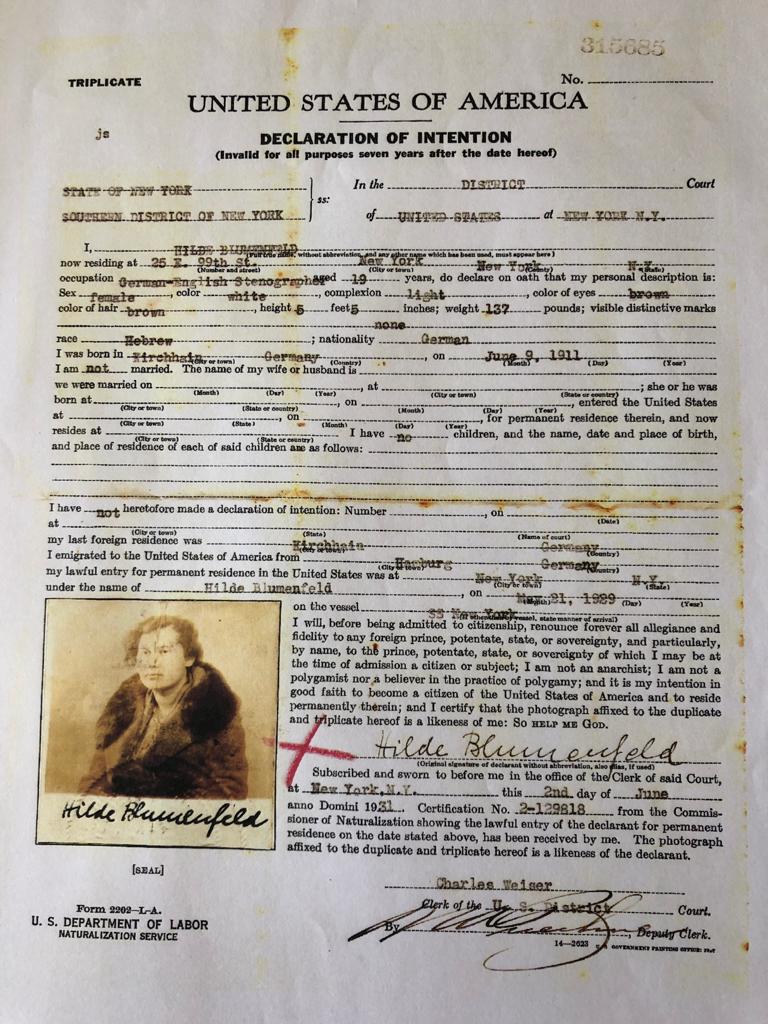
Hilde had serious intentions of staying in the US, as seen in her Declaration of Intention to become a US citizen, filed in 1931.

Hilde Blumenfeld Declaration of Intention. Courtesy of the family

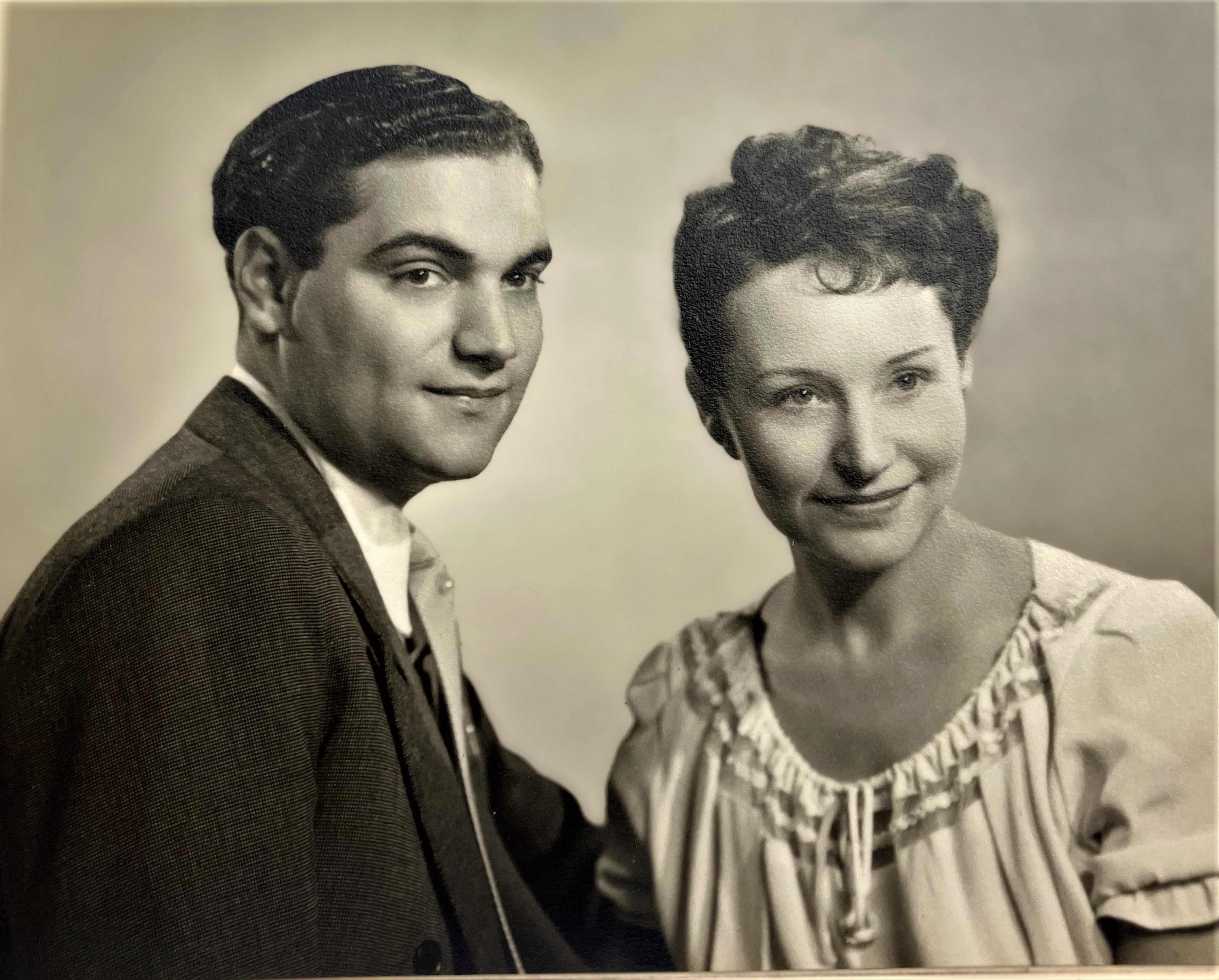
But her life changed when she went back to Germany in 1932 to visit her family; she at first intended to stay for only six months and then return to New York, but then she met her future husband, Ludwig Meinrath, at a Purim ball and decided to stay in Germany longer.6 Here is a photograph of Hilde with Ludwig:

Hilde Blumenfeld and Ludwig Meinrath Courtesy of Richard Bloomfield

Hilde Blumenfeld and Ludwig Meinrath Courtesy of the family

Hilde began working for an American author named William March; Roberto told me that she was helping him with his manuscript for his book Company K. According to the description on Amazon.com, Company K is the “greatest First World War novel to come out of America[.] Company K is the unforgettable account of one US Marine company, from initial training, through to the trenches in France and post-war rehabilitation. Written in 1933 by a decorated Marine hero, this is an unflinching, visceral depiction of the brutal reality of war.”

William March was apparently quite fond of Hilde. Richard Bloomfield found this quote from a letter written by William March to John B. Waterman on February 18, 1933, as quoted in an article about March from the Fall 1977 issue of The Mississippi Quarterly written by R. S. Simmons (warning—it is quite sexist, but typical of its times): 7

[March] had this to say about the German secretary he had engaged: “As a matter of interest for the company’s records, Miss Blumenfeld is quite in the tradition of the Waterman Line not only for beauty but for intelligence.” He added whimsically: “Of course, the latter was merely a happy accident.”

It appeared that Hilde was not planning to leave Germany now that she was married and happily employed. But, of course, everything changed when Hitler came to power. More on that in the post to follow.


  1. The references in this post to the interview of Hilde Meinrath and the information contained therein are from her interview with the Shoah Foundation, March 18, 1998, which is in the archive of the University of Southern California Shoah Foundation Institute for Visual History and Education. For more information: http://dornsife.usc.edu/vhi 
  2. Ibid. 
  3. Ibid. 
  4. All the information in this post attributed to Roberto Meinrath as well as the quotations were shared through emails sent between February 11 and February 16, 2023. 
  5. See Note 1, supra
  6. See Note 1, supra
  7. R.S. Simmons, “William March’s ‘Personal Letter:’ Fact into Fiction,” The Mississippi Quarterly (Fall 1977), p. 625, 629, found at https://www.jstor.org/stable/26474519 

How Eugene Goldsmith Met May Jacobs

Over four and a half years ago, I wrote about Eugene Goldsmith, my great-grandmother Hilda Katzenstein Schoenthal’s first cousin.

Eugene was born in 1859 and had lived with his parents, Meyer Goldschmidt/Goldsmith and Helene Hohenfels, and his brother Maurice all his life, first growing up in Philadelphia and then in New York City. Then in 1913 at the age of 54, he married May Jacobs, who was 41.

One of the questions I had about Eugene was how he met his wife May Jacobs. I wrote then:

In 1913, Eugene married May Jacobs in Philadelphia. He was 54, she was 41. May was the daughter of Michael Jacobs and Alice Arnold, both of whom were born in Pennsylvania. May’s father died when she was just a young child, and she and her three sisters were all living together with their mother in Philadelphia in 1910. I’d love to know how May connected with Eugene, who had by that time been living in New York City for over twenty years.

Well, four and a half years after posting that question, I heard from a cousin of May Jacobs, and she may have found the answer. Lynn Hsu wrote to me on the blog that she was the great-granddaughter of Oscar Arnold, who was a first cousin of May Jacobs. Lynn wrote that Oscar was in the business of manufacturing umbrellas in New York City, and since Eugene and his brother Maurice were in the business of selling umbrellas in New York City, we hypothesized that Eugene knew Oscar from business and that Oscar set up Eugene with his cousin May, who was living in Philadelphia.

But Lynn actually had found several other hints that suggested that there were numerous earlier connections between her Arnold/Jacobs cousins and my Goldsmith cousins. On August 5, 1892, the Philadelphia Jewish Exponent reported that May Jacobs was on the same Atlantic City sailing party as Rose and Florence Goldsmith, the two younger sisters of Eugene Goldsmith. So as early as 1892, some 21 years before Eugene married May, there was a meeting of May Jacobs and Eugene’s sisters Florence and Rose. Whether they had already known each other before the sailing trip isn’t clear, but certainly they did once that trip was over.

Philadelphia Jewish Exponent, August 5, 1892, p. 8

Also, three years before May married Eugene, she attended his mother’s funeral, as reported by the Philadelphia Jewish Exponent on March 4, 1910:

Philadelphia Jewish Exponent, March 4, 1910, p. 14

Why it took Eugene and May until 1913, when he was 54 and she was 41, to decide to get married will remain a mystery. My only hypothesis is that Eugene waited until both his parents had died before “striking out on his own.” His mother died in 1910, his father in 1911. And then Eugene married May in 1913. His brother Maurice never married.

There was one other unexpected bonus connection that I learned about as a result of connecting with Lynn. May Jacobs Goldsmith, the daughter of Alice Arnold Jacobs, was the niece of Clarissa Arnold, Alice’s sister. Clarissa was married to Ernst Nusbaum, younger brother of my three-times great-grandfather John Nusbaum, namesake of my grandfather John Nusbaum Cohen and my father John Nusbaum Cohen, Jr. I wrote about Clarissa and Ernst and their family here and in many other of the posts that follow that one.

So the tree continues to twist! And thanks to Lynn, I now know even more about the Goldsmith/Goldschmidt and Nusbaum families.


More Cousins Discovered: The Family of Sigmund Livingston, Founder of the ADL

One of the other cousins whose name always stays with me is my third cousin, twice removed, Sigmund Livingston, the founder of the Anti-Defamation League, as I wrote about here as well as about his earlier years and his family here, here, here, here, and here.

Sigmund was related to me through our mutual ancestors Abraham and Geitel (Katz) Blumenfeld, as shown on this chart. He was my father’s third cousin, once removed:

To briefly summarize what I’d learned about Sigmund: he was born in Giessen, Germany, in 1872, to Meyer Loewenstein (later changed to Livingston) and Dora (Dusschen) Blumenfeld. He was only nine years old when his family immigrated to the United States in 1882 and settled in Bloomington, Illinois, where his father’s relatives had already established themselves as successful entrepreneurs. Sigmund ended up going to law school and practicing law in Bloomington. He married Hilda Freiler in 1918, and they had one child, Richard, born in 1920. The family later moved to Chicago where Sigmund continued to practice law.

After experiencing anti-Semitic stereotypes and slurs during a vaudeville show in the early 1900s, Sigmund decided to do something to fight back against anti-Semitism. He founded an organization in Bloomington that eventually grew to become known as the Anti-Defamation League, an international organization that still exists today, fighting against all forms of discrimination, including but not only anti-Semitism. When I learned that I was related, albeit very distantly, to the founder of the ADL, I felt incredibly proud to have that connection. Today the ADL continues to be at the forefront of those fighting against hatred and prejudice.

Recently I was thrilled to hear from two of Sigmund’s grandchildren, Richard and Laurie, who found me through my blog. Richard has done a great deal of genealogical research also and provided me with more information about the Livingston/Loewenstein side of his family tree. Richard and Laurie have also given me some additional new cousins on the Blumenfeld side of our family tree to contact, which I plan to do in the near future. And Richard caught two errors in my tree that I’ve now corrected both on the tree and on my blog; I am so grateful that Richard found those mistakes and told me.

But I was most excited to see additional photographs of Sigmund and his family and to learn a little more about his life and the life of his family. I particularly enjoyed seeing this photograph of Dora Blumenfeld and Meyer Loewenstein/Livingston:

This is the house where Sigmund was born in Giessen, Germany, in December 1872:

Birthplace of Sigmund Livingston in Giessen, Germany Courtesy of the family

Here are several photographs of Sigmund from age 20 up to age 47:

Sigmund Livingston, 1893 Courtesy of the family

Sigmund Livingston, 1903 Courtesy of the family

Sigmund Livingston, 1914 Courtesy of the family

Sigmund Livingston, 1918 Courtesy of the family

Sigmund Livingston, 1920 Courtesy of the family

Here is Sigmund’s diploma from law school:

Sigmund Livingston diploma at McClean County Historical Museum Courtesy of the family

Finally, this photograph shows the family in about 1918-1919: Dora (Meyer had passed away in 1915) and her children and their spouses:

Back Row (left to right): Sigmund Livingston, Alfred Livingston, Eva Siegel Livingston (married to Alfred); Irvin Livingston; “Gramma” Dora (Dusschen) Blumenfeld Livingston; Dorothy Ensel Livingston (married to Herman); Herman Livingston, Rosalie Livingston Livingston; Harold Livingston (in back); Albert Livingston (cousin who married Rosalie); Maurice Livingston; Sol Salzenstein (married to Gussie). Front Row (left to right): Helen (Cubby) Baer(?) Livingston (married to Irwin); Hilda Freiler Livingston (married to Sigmund); Bertha August Livingston (married to Maurice); and Gussie (Gutschen) Livingston. Courtesy of the family

Richard shared what he knew about his grandfather Sigmund’s career after leaving Bloomington and moving to Chicago in 1928:1

When Sigmund left Bloomington in 1928, he gave his share in his local law practice to a young cousin, Herb Livingston; and joined a major Chicago law practice with his brother-in-law Charles Lederer. Charles was married to Hilda’s [Sigmund’s wife Hilda Freiler] older sister Florence. The firm was known as Lederer, Livingston, Kahn, and Adler or similar until approx. 1958; at which time its name became Arnstein and Lehr. Lederer & Livingston were Sears Roebuck & Co.’s legal counsel during its heyday.

Richard also filled me in on how his father Richard, who was known as Dick and who was born in Bloomington and then moved with his parents to Chicago when he was a boy, had ended up living in the suburbs of New York City as an adult:

My father Dick attended Duke University and was supposed to be class of ’42; but joined the US Army Air Corp for 5 years of WWII around his junior year. He was an airplane instruments technician or mechanic and trained pilots to read and understand the gauges and dials in a cockpit; but never was a pilot himself and fortunately never was stationed overseas or faced combat during the war. After the army, he returned to Duke University, graduating in Spring, 1947. Following graduation, he returned to Highland Park, IL, living with his mother Hilda (as best we know) and not sure if he was employed or not.

In February 1948, Hilda and Dick were vacationing at the Hollywood Beach Hotel in Hollywood Beach, Florida. Dick met a recent Wellesley graduate from New York City named Mimi Spector. They fell instantly in love and were soon thereafter married on May 30, 1948. Dick and Mimi moved into Mimi’s parent’s Manhattan apartment for a while before getting their own place. Dick initially worked in sales for his father-in-law’s business.

In the 1950s Dick and Mimi and their family moved to Westchester County in the suburbs of New York City, eventually settling in Scarsdale, less than five miles from where I lived and went to high school. Richard and Laurie and I were tickled to learn that we had all grown up not far from each other and went to neighboring high schools and even knew some of the same people. We likely crossed paths many times without knowing we were distant cousins.

It has taken over 50 years since high school before we finally connected. And I am so grateful that Richard and Laurie found my blog and reached out to me and have shared their stories and photographs.


  1. The quotes and other information from Richard Livingston were from emails dated from February 11 to February 21, 2023. 

Rudolph Meyer: “A Great Man”

Back in late December, a new reader, Candice, left a comment on my blog saying that her grandparents were Rudolph Meyer and Ruth Cohn and that we were related. I love when a new cousin finds my blog and seeks to connect with me.

Candice and I are fifth cousins, once removed, through my Blumenfeld branch. Her grandfather Rudolph was the son of Rebecca Strauss, the grandson of Dusschen Blumenfeld Strauss, the great-grandson of Isaak Blumenfeld I, the great-great-grandson of Moses Blumenfeld I, and the great-great-great-grandson of Abraham Blumenfeld I, my four times great-grandfather. This chart shows Rudolph’s relationship to my father; they were fourth cousins, so Rudolph was my fourth cousin, once removed:

I wrote about Rudolph and his family here, but Candice and her father Albert were able to give me a more complete portrait of Rudolph and his wife Ruth Cohn. I already knew that Rudolph was born in Bonn, Germany, in 1908, and had arrived in the US from Germany in 1937 and settled first in New York City. By 1940 he was living in Albany, New York, and working for Cotrell & Leonard, a manufacturer of graduation caps and gowns.

Rudolph’s son Albert filled in some of the gaps in the story in the obituary he wrote about his father in 1984. Albert wrote in part:

Rudolf Raphael Meyer was born in Bonn, Germany, on March 17, 1908. He was to experience many of the history shaping events which influenced the course of his life and development. As the child of Albert and Rebecca Meyer with his sister Ilse he at the ages through 6-10 went through the trauma of World War I. The war brought hardship to him as did the period following it. The economic chaos of Weimar Germany with its rampant inflation left its mark on him in that no matter how well might do, he felt he never knew if he and his family would have enough just to provide for the basic necessities of life.

As the economic and political situation remained explosive in Germany and with Anti-semitism on the rise, he, his sister, and mother, his father having died, immigrated to the United States. However, life in the new country soon underwent its earthquake also with the coming of the Great Depression and World War II. The Depression only added to his feelings of anxiety regarding economic matters and [he] became a fervent supporter of the new deal with Franklin Delano Roosevelt and then Harry Truman representing the type of leadership he felt a society needed.

During the later years of the 30s he met Ruth Cohn and after a 3 year courtship they were married on August 10, 1941.

Rudolph enlisted in the US Army on September 6, 1943, and successfully petitioned for naturalization three months later in December 1943 from Spartanburg, South Carolina, where he was then stationed. What I did not know was that Rudolph then served overseas in Europe, fighting against the Nazis and the country where he was born.

Candice shared this photograph of her grandfather Rudy (as he was known) in uniform during World War II.

Rudolph Meyer during World War II. Courtesy of the family

Rudy wrote this poem about his outfit in World War II, the Blue Devils. Obviously, he was a proud American soldier out to defeat his former home country.

“Blue Devils,” by Rudolph Meyer c. 1944 (c) Courtesy of the family

What I also had not realized until Candice shared the family story is that Ruth was pregnant when Rudy left for Europe; their son Albert was born while he was abroad, fighting the Nazis. Rudy did not meet his child until after the war was over when Albert was already sixteen months old. Albert addressed this in his 1984 obituary for his father:

[Albert was born] while [Rudolf] was stationed overseas in Italy. The notice of his birth filled him with special joy as can be told by a reading of his letters from the war. As an additional sacrifice he did not get to see his child for another year.

Although the war was difficult and he was certainly not a young man while fighting in both North Africa and Italy for the Allies, his experience in the army gave him great pride. He felt he contributed to the service of his country and had helped to smash the Fascist Beast that had destroyed so many Europeans who could [not] leave and so many of his religious faith.

In fact among the things that gave him pride were his experience as a soldier, his role as a law abiding citizen, a good family provider. His citizenship was marked by regular voting, paying debts, attention by regular public affairs, and occasionally involvement in Democratic Party politics.

Here is a photograph of Albert as a baby taken while his father was away at war:

Albert Meyer Courtesy of the family

Ruth wrote this wonderful tribute to her husband, Rudy, whom she considered a “great man.”

Essay by Ruth Cohn Meyer (c) Courtesy of the family

A Great Man

My choice for the meaning of the word Great would be important. I write of a great man that I knew many years ago. His name was Rudolph Meyer. Now Rudy had a loving wife, and as is the nature of things, she became pregnant—and Rudy and his wife were very happy.

But then came fears of war from a country across the sea—a country from far away which hundreds of people were fleeing for they were afraid of what might now happen at this time. And Rudy and many of his fellow countrymen had found refuge in this country, the good old USA.

Then came the day when their fears for their country were alas confirmed. Atrocities! Tortures—and then War and Holocausts! Rudy immediately went to enlist. But at the recruitment center, he was told that because of his poor eyesight he would have to be rejected. But Rudy insisted—he must fight against the evil ones were who trying to destroy civilization. So—Rudy went to war!

I was sad. I was pregnant—but I knew in my heart that it was for those qualities in him—great devotion to family and country—that I loved him. And though I was sad—I was proud. My Love was a great man.

I waited—I would go to the grocery store. A pound of butter, if you please. Hey, Lady—don’t you know there’s a war on. Ah,yes—there’s a war on over there!

It is 4 years later—the end of the war. Rudy comes home. He holds in his arms a loving wife and 16 mo. old son. A great man has come home to us.

This was obviously a strong and loving marriage that endured for many years after Rudy returned home. This photograph of Ruth and their son Albert was taken after the war.

Albert Meyer and Ruth Cohn Meyer. 1948. Courtesy of the family

As I wrote in my earlier post, Rudy and Ruth moved to the Bronx after the war, and in 1950 they were living in the Bronx, and Rudy was now an accountant for motion pictures distributors. Ruth was an elementary schoolteacher.  Rudy’s mother Rebecca and Ruth’s father Benjamin were also living with Rudy and Ruth and their child, and Benjamin was working as a tailor.

I want to express my gratitude to Candice and her father Albert for sharing these stories and photographs about my cousin Rudolph Meyer, a man who truly lived up to his wife Ruth’s description, a great man.


Arye Katzenstein

I have researched and written about hundreds of relatives (maybe thousands?) over the almost ten years that I’ve been writing this blog. And aside from my own direct ancestors, of those many, many cousins and great-aunts and great-uncles going back over two hundred years, there are only a small number whose stories are so compelling and unforgettable that when I see their name, I immediately remember the details of their lives.

One of those cousins is my fourth cousin Arye Katzenstein, whose heroic story I wrote about here. During a terrorist attack at the Munich Airport on February 10, 1970, Arye threw himself on a grenade released by the Palestinian terrorists and sacrificed his own life so that he could save the life of his father, Heinz Katzenstein, and the lives of all the other travelers. He was only 32 years old.

So when I received a comment on my blog from a woman named Miki saying her father was Arye Katzenstein, I gasped. I’d had no idea that Arye had had children when he was killed. I immediately wrote to Miki and learned that after more than fifty years, the city of Munich is finally providing a memorial for Arye on the grounds where the attack occurred. The land is now owned by a private company, BrainLab, and together with that company, the city, and the family of Arye Katzenstein, a proper memorial is being established. BrainLab has commissioned an art work by Alicia Kwade, an internationally known artist, and the family is creating a website and informational materials for the site, which will be dedicated sometime in 2024.

From Miki, I learned a great deal more about her father and his family and his life. As I already knew, Arye was born in Haifa (then Palestine, now Israel) on November 23, 1937, after his parents fled from Nazi Germany. But I learned from Miki that he had spent time in Germany as a student. In 1959 he came to Munich to study veterinary medicine, but later returned to study engineering. He had married his wife Bilha on October 22, 1961, and their first child, my cousin Miki, was born in Munich a few years later. The family returned to Israel before the 1967 war and had two more children there, a son and another daughter.

Thus, Arye left behind not only his parents and siblings, but also his wife and three very young children. It’s hard to imagine the pain and suffering that his death must have caused his loved ones. But his legacy is one of heroism and courage.

Miki shared with me several photographs of her family. First is a photograph of her father Arye as a young man traveling in Europe.

Arye Katzenstein Courtesy of his family

This is a photograph taken at Arye and Bilha’s wedding. Bilha is third from our left, then Arye next to her. Next to Arye are his parents Mania (Miriam) Dorf and Heinz Katzenstein.

Wedding of Arye Katzenstein Courtesy of the family

This chilling photograph is of Arye’s notebook taken after the terrorist attack that killed him. It was returned to the family by El Al after Arye’s death.

Arye Katzenstein notebook returned to family by El Al Courtesy of the family

This photograph was taken on the 53rd yahrzeit (anniversary) of Arye’s death in 2023, just a month ago. Arye’s gravestone reads: “Here lies our dear, noble spirited Arye Katzenstein, son of Miriam and Jacob Hacohen, who sacrificed his live during the attack on El Al passengers.”

Gravestone of Arye Katzenstein Courtesy of the family

The stones for Miki’s grandparents appear below:

Gravestones of Heinz and Miriam Katzenstein Courtesy of the family

Finally, Miki shared with me this photograph of her family—her husband, her children, and herself. I don’t usually include photographs of living people, but in this case I do so to honor the memory of Arye Katzenstein and to recognize the resilience of his family and the hope for a better future where all of us can live in peace and without fear of terrorism.

Miki Katzenstein Dror and family Courtesy of the family


Irmgard Johanna (Joan) Lorch Staple (1923-2022): A Woman Ahead of Her Times

Last month my cousin Wink Lorch informed me that her aunt and my fourth cousin, once removed, Joan Lorch Staple had passed away on November 27, 2022, after living a remarkable life for more than 99 years. Joan was related to me through our mutual ancestors, Jacob Seligmann and Martha Mayer, she through their daughter Martha and me through their son Moritz, my three-times great-grandfather.

Joan was born in Offenbach, Germany, on June 13, 1923, escaped from Nazi Germany to England with her parents during the 1930s, and married Peter Staple in England in 1952. Together they had two sons and immigrated to the US, settling first in Alabama and later in Buffalo, New York. Joan also had a long and successful career while raising her family; she was truly a woman ahead of her times..

Joan had a remarkable career as a scientist and as a scholar and teacher, as described below in her obituary, and she wrote two memoirs about her life: Chance and Choice: My First Thirty Years (2007) and Change and Challenge: My Life After Thirty (2009). I have read them both, and they are fascinating. They tell not only the story of Joan and her family, but provide valuable historical insights into living in Germany before the Nazi era, the persecution of Jews during the Nazi era in Germany in the 1930s, life in England during World War II, and racism in Alabama before and during the Civil Rights movement, as well as the struggles of being a woman scientist in the years before, during, and after the Women’s Movement.

But the obituary written by Joan’s sons tells her story much better than I can. Thank you to my cousin Wink Lorch, Joan’s niece, for sharing it with me.  

Irmgard Joan Staple: Path-Breaking Canisius Scientist and Women’s Advocate Has Died

Joan Staple (known professionally as Dr. I.J. Lorch) passed away at the age of 99 on November 27, 2022, in her home at Canterbury Woods, Williamsville, New York.

A Professor of Biology at Canisius College for more than 30 years, Dr. Lorch also pioneered women’s studies programs at Canisius. Her ground-breaking research in the field of cell biology at the University of Buffalo was recognized by the New York Times and led to more than 30 publications in peer-reviewed scientific journals.

Early Life and Education

Dr. Lorch was born into a Jewish family in Offenbach am Main, Germany. Her father was a co-owner of Rowenta, the innovative electric appliance brand. Her family escaped the Nazis by fleeing to Birmingham, England in 1938. Lorch’s forced emigration from Germany is marked by a series of Stolpersteine — commemorative bronze plaques — set into the sidewalk outside her former home at 19 August Bebel Ring.

She attended public schools in Offenbach until 1935 when Jewish children were banned from secondary education. After emigrating, she continued her education at King Edwards High School for Girls and later graduated from Birmingham University. She went on to earn a PhD in histochemistry from the University of London in 1949.

Scientific Career

As one of the very few women working in the ‘hard sciences’ at that time, she continued her post-doctoral research on cellular aging at Kings College, London. Rosalind Franklin worked in the lab next door. The many challenges facing women in building scientific careers are well documented in the struggle to properly credit Franklin for her critical role in discovering the structure of DNA.

In 1952, Dr. Lorch married Dr. Peter H. Staple, research dentist and fellow post-doctoral student. For the next 10 years she became a homemaker raising two sons and over-seeing the family’s move to Birmingham, Alabama in 1959, and then to Buffalo in 1963.

Once in Buffalo, Dr. Lorch rejoined her King’s College mentor and colleague, James Danielli, who was then the Director of The Center for Theoretical Biology at the University of Buffalo. The team was funded by NASA and carried out pioneering work on how cells age and whether living cells can be created from cellular components. This work came to a spectacular conclusion from the controversy created by the Nov. 13, 1970 New York Times article declaring that University of Buffalo scientists had documented “the first artificial synthesis of a living and reproducing cells”. Hundreds of media outlets picked up on the story that UB scientists were creating living cells that might be shipped by NASA on spaceships to Mars.

These reports misrepresented the research and the ensuing publicity upended the  research agenda. In 1973, Dr. Lorch left the University of Buffalo accepting an offer from Canisius College. 

She shifted her professional focus from research to teaching becoming Professor and Chair of the Department of Biology. To address the discrimination against women in scientific fields, with the support of the Canisius College leadership, she spent over 20 years training and hiring women scientists and also broadening the scope for women’s participation in the management of the College. Dr. Lorch founded the women’s studies program at Canisius, now called Women and Gender Studies. She created a course for non-majors called the Biology of Women (sex ed for college kids) that soon attracted so many men that she had to limit enrollment.

In recognition of her devoted advocacy for women, in 1992 Canisius established the annual I. Joan Lorch Award to “honor a person who has made a significant contribution to women and who exemplifies the pursuit of liberation and justice regarding sex, gender, and sexuality.”

Following her retirement from Canisius in 2003, Dr. Lorch published a two-volume memoir: Chance and Choice (2007) and Change and Challenge (2009).

As recounted in her memoir, Dr. Lorch witnessed many of the 20th century’s historic events. She saw Hitler speak at the opening of an autobahn near Frankfurt in 1935, and Martin Luther King at Kleinhans Music Hall in Buffalo in 1967. She personally knew the discoverers of DNA (Watson, Crick and Franklin) and saw the fruits of her own research on amoeba used for cloning new organisms.

In 2019, Canisius College awarded Dr. Lorch the degree of Doctor of Humane Letters to celebrate “her exceptional achievements in scientific research, unwavering dedication as an educator and for being a steadfast advocate for women.”

Since learning to ski as child in Switzerland, Dr. Lorch was also an avid outdoors woman. She skied well into her eighth decade in Europe and North America and was also an active member of the Adirondack Mountain Club. In recent years, she loved playing Scrabble with her family and connecting on-line daily with other players of “Words with Friends”.

She was pre-deceased by her husband of almost 60 years, Dr. Peter Staple, Professor of Oral Biology at the University of Buffalo’s Dental School. She is survived by her sons Gregory (Siobhan) of Chevy Chase, Maryland, and Alan of Chestertown, Maryland; four grandchildren, Nicole, Nico, Justin and Camille; and one great grandchild, Naomi Joan.

A memorial service will be held at the Unitarian Universalist Church of Amherst in 2023. Donations, in lieu of flowers, should be made to Hospice & Palliative Care Buffalo. https://www.hospicebuffalo.com/give-get-involved/donate-now

A more abbreviated version of her obituary appeared here in The Buffalo News on December 4, 2022.

Joan’s life and career are an inspiration. She overcame leaving her homeland, adjusting to two different countries (and two different regions within the US), learning English, separating from her family, facing prejudice and discrimination, and nevertheless having a highly successful career balanced with a highly successful family life. Her two memoirs taught me so much about grace and strength and persistence.

Back to the Blogosphere

It’s been over a month since I last posted on the blog—the longest break I’ve ever taken. But I really needed it.

But in the month I’ve been away from blogging (and pretty much away from the laptop), I’ve nevertheless learned a great deal related to my extended family tree. In these five weeks, I have heard from numerous new cousins who found me through the blog. So even while I was taking a break from new research, the blog has been doing its work, helping me find new cousins and new information.

So in the weeks to come I will introduce these new cousins and share the stories and photos and new information they’ve shared with me about their parents and grandparents and great-grandparents.  I have been moved by all of them and am so grateful that they’ve all reached out to me and made these connections.

Two sad notes. My cousin Henry Rosenberg died earlier this month at the age of 94. I had had a lovely conversation with Henry back in the fall, and he was engaged and warm and friendly and so willing to share his life story with me. I was shocked and saddened to learn that he had passed away. I wrote about Henry and my conversation with him here, here, and here. He was related to me through our mutual ancestors Abraham and Geitel Katz Blumenfeld, Henry through their son Moses and me through their daughter Breine.

Also, on November 27, 2022, my cousin Joan Lorch Staple passed away after living a remarkable life for more than 99 years. Joan was related to me through our mutual ancestors, Jacob Seligmann and Martha Mayer, she through their daughter Martha and me through their son Moritz, my three-times great-grandfather. I will share more about Joan’s remarkable life in my next post.

Losing these two wonderful cousins—both of whom were born in Germany in the 1920s and escaped from the Nazis with their families as young people, both of whom went on to live very long and productive lives—reminded me once again of the urgency of the task of finding cousins and learning their history before it is too late.

And so I return to blogging with a renewed commitment to tell the stories of those in my extended family tree.

See you next week!

Time for A Break

I started writing about my Blumenfeld family back in August of 2021—almost a year and a half ago. In my first post about the Blumenfelds, I pointed out that my four times great-grandparents Abraham Katz Blumenfeld and Geitel Katz had six children, one being my three-times great-grandmother Breine Blumenfeld Katzenstein, whose descendants I covered in my work on the Katzenstein family several years ago.

Abraham and Geitel’s first-born child was their son Moses, who had three children, Abraham II, Isaac, and Gelle. So far, in the seventeen months or so that I’ve been posting about the Blumenfelds, I’ve not even reached Gelle or finished Isaac, let alone any of the other children of Abraham I and Geitel, the other four siblings of Moses and Breine: Sprintz, Hanna, Maier, and Jakob.

Sometimes it just feels overwhelming, and I wonder how many more years it will take before I reach Abraham and Geitel’s youngest child, Jakob. I believe each and every one of these relatives should be remembered, and my goal remains to do my best to honor their memories. But at times I feel like I am in an endless maze from which I will never emerge.

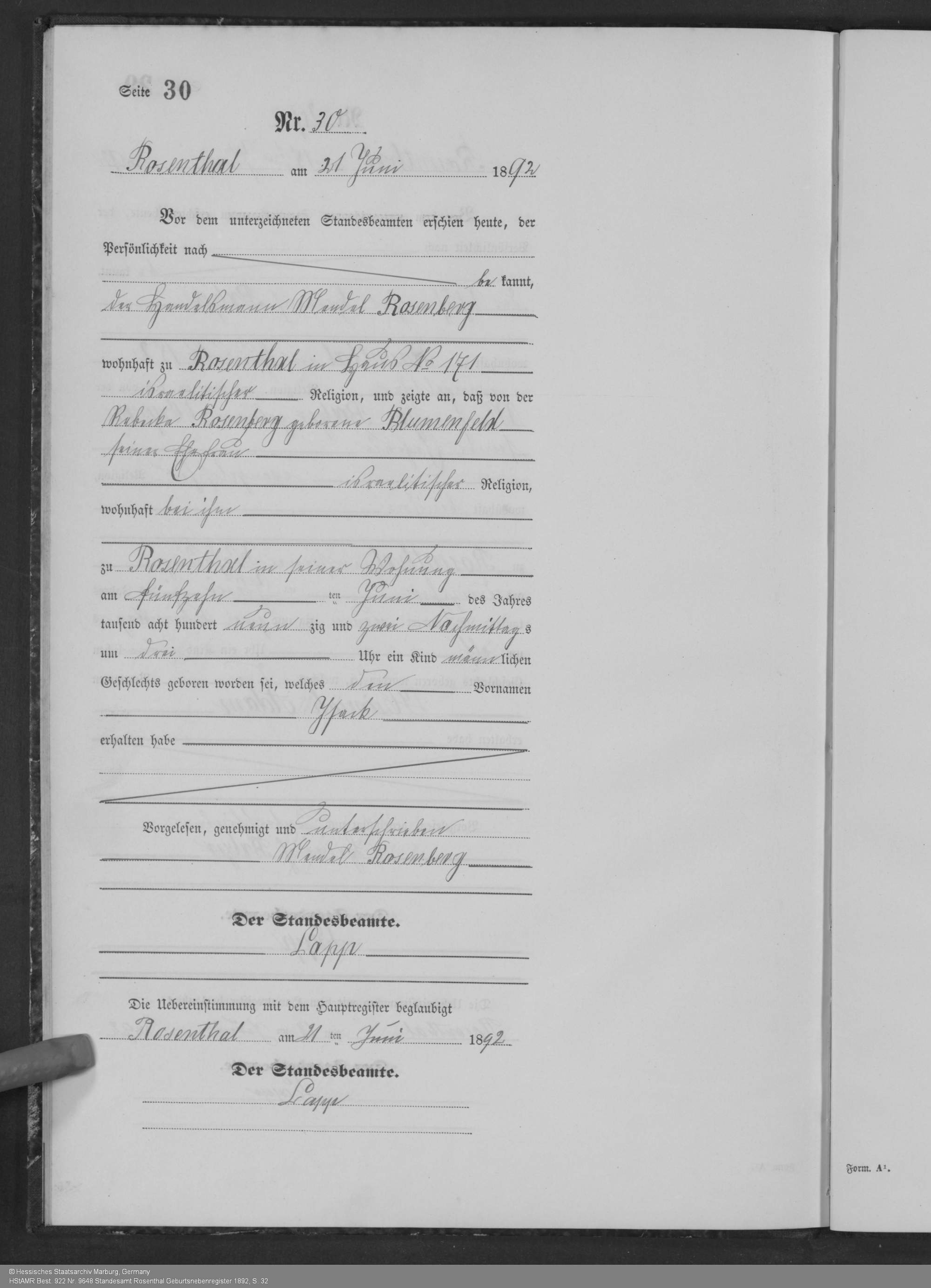
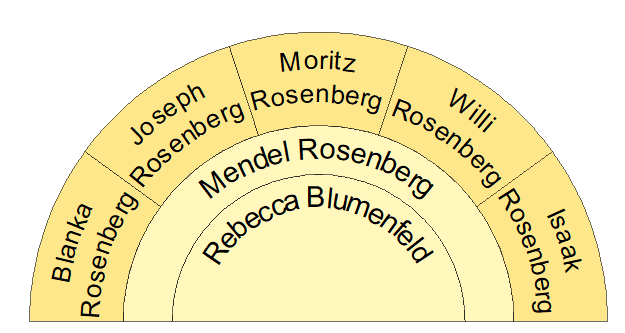
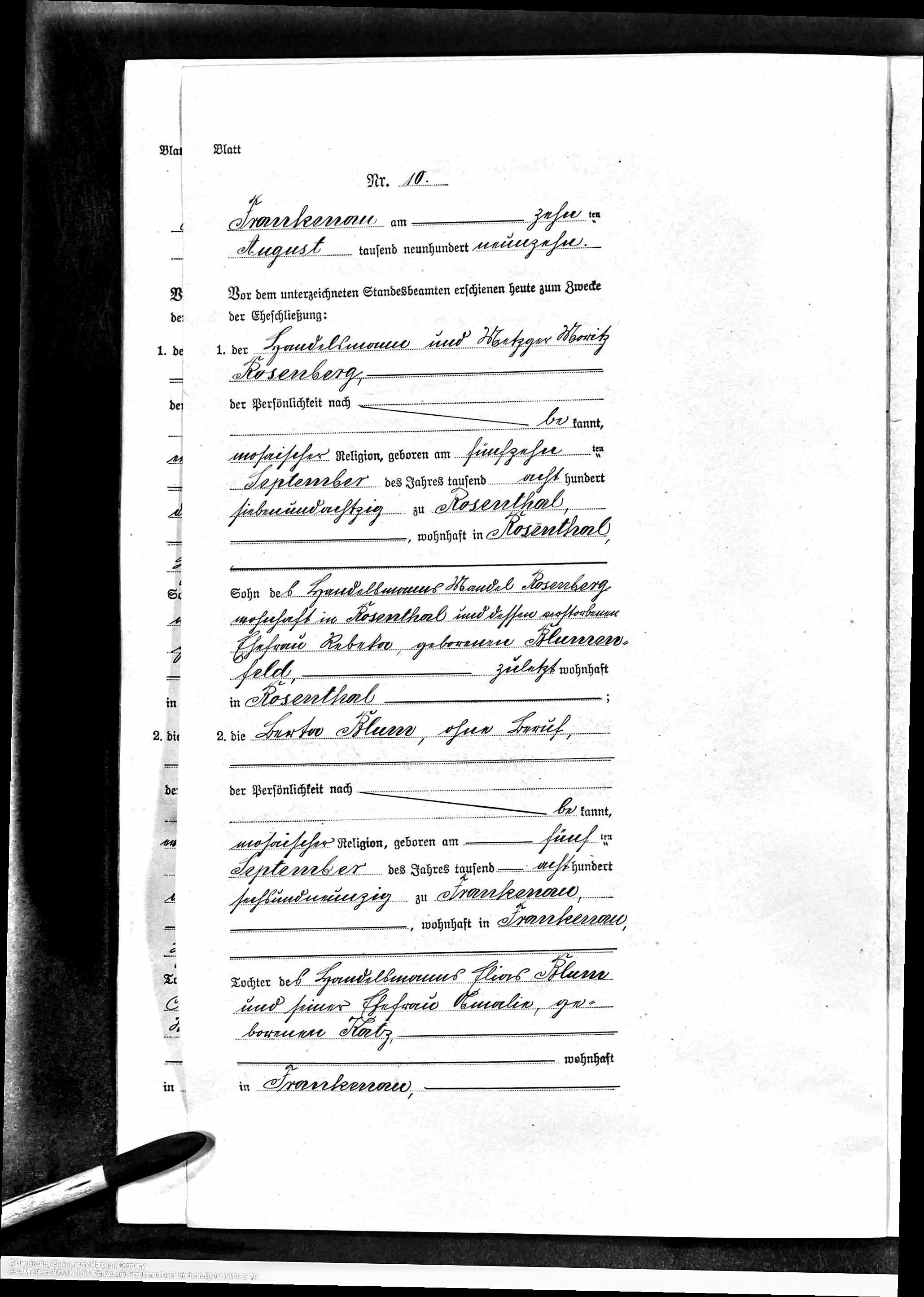
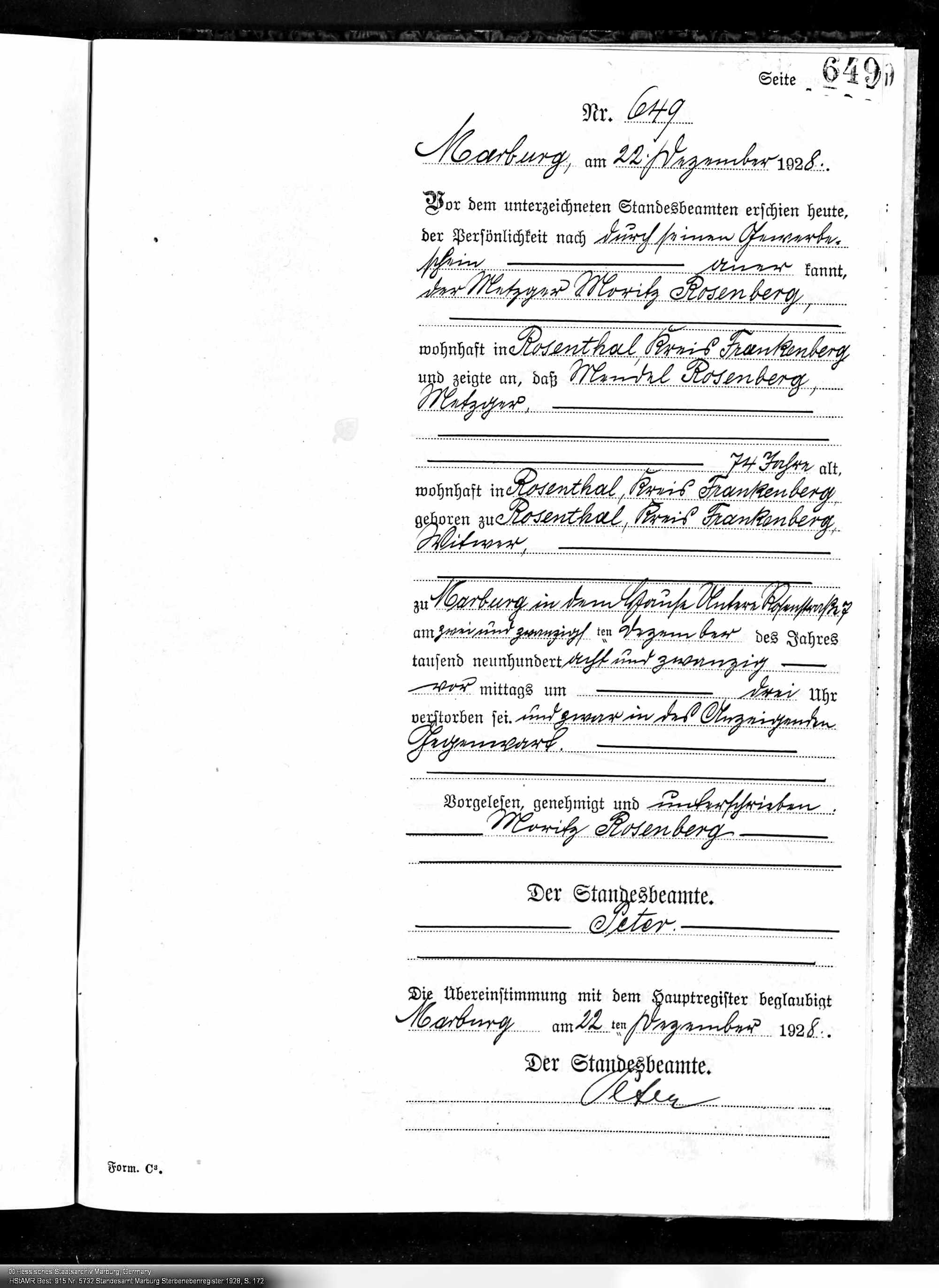
And so it’s time to take a break from blogging. I need to reinvigorate myself and clear my head so that I don’t feel so overwhelmed. I will be back—maybe in a couple of weeks, maybe longer. And when I am, I will be writing about Isaac Blumenfeld I’s eighth child, his daughter Rebecca Blumenfeld Rosenberg, one of the over 80 great-grandchildren of my four-times great-grandparents, Abraham Blumenfeld I and Geitel Katz.

Until then I will be enjoying a break from screens and getting outside as much as possible, reading books, and seeing friends and family. I will keep up with blogs and emails, of course, but otherwise hope to limit my time on the computer.

See you all soon! Have a good couple of weeks or whatever it takes until I am ready to return to the blogiverse!


My Fifth Cousin Matthew, Ruth Blumenfeld Friedman’s Grandson

Happy 2023, everyone! For today’s post I am updating a post I wrote back in April 2022. Thank you to my cousin Matthew Steinhart for making this post possible.

Back on April 22, 2022, I wrote about the children of Meier Blumenfeld III and Emma Oppenheim and the teamwork it took to locate their three daughters, Gertrud, Ruth (also known as Bertha), and Hanna. Meier, my second cousin, three times removed, was the son of Giedel Blumenfeld, Isaak’s daughter, and her first cousin, once removed, Gerson Blumenfeld I (not to be confused with Giedel’s brother Gerson Blumenfeld II, whose story I just completed.)

Meier and Emma and their family were destroyed by the Holocaust. Of the five of them, only Ruth managed to escape from Germany in time to survive the Holocaust. The others were all murdered by the Nazis.

Ruth immigrated to the US and settled in New York City, where she married Leo Friedman on March 21, 1942, as I wrote about here. Ruth and Leo had two children, and I was recently contacted by one of Ruth and Leo’s grandsons, Matthew Steinhart, son of Eileen Dinah Friedman Steinhart.

Matthew works in video production and is the manager of the video production team at the United States Holocaust Museum and Memorial in Washington, DC.1 He created three short videos about his search to learn more about his grandparents and their families. With his permission and courtesy of the USHMM, I can provide links to those three videos. They are very touching, and I highly recommend you spend the time watching them.

Matthew also shared some wonderful photographs of his grandmother and her family and generously has allowed me to share them on the blog. He also shared some family stories and other information to fill in some of the holes in the story of Ruth and her family that were left unanswered in my April 22, 2022 post.

One of those unanswered questions involved the fate of Ruth’s sister Gertrud. Yad Vashem reported that she had been killed in the Holocaust, but an Arolsen Archive document indicated that she and two children had left for the US. Which was true? Sadly, Matthew confirmed for me that the Yad Vashem information was accurate. He wrote that “the story I was told of Gertrud was that she and her husband and children intended to leave but Erwin, her husband, had an eye condition which prevented him from emigrating. Gertrud refused to leave without him, and eventually all four were deported to Lodz. All four perished.”2

I also asked Matthew about Ruth’s younger sister Hanna because again there were records that suggested she had escaped the Holocaust because she had a visa for Cuba. But Matthew had to confirm that Hanna was in fact killed in the Holocaust. He wrote that he was told that “she and her husband [Siegfried Levi] took a train to Portugal with the intent to emigrate to Cuba. In fact, Hanna had sent some of her furniture and clothing to Ruth in anticipation for her eventual arrival to the US. Apparently, this train was stopped and turned around to France. Both were put into slave labor camps. Hanna was eventually deported to Auschwitz and died. Her husband survived and emigrated from Luxembourg.”3

Matthew’s grandmother Ruth was sponsored by her aunt Bella Oppenheim Marx, her mother’s sister, and was the only one who was able to leave Germany and get to the US safely.4

Matthew has a large collection of old photographs of the family, but unfortunately, he has been only able to identify the people in a limited number of those photographs. I am sharing only those he could label with certainty. Most of those are of his grandparents, Ruth Blumenfeld and Leo Friedman.

Here are two photographs of Ruth, one as a baby and the other as a toddler.

Ruth Blumenfeld, c. 1920. Courtesy of Matthew Steinhart

Ruth Blumenfeld, c. 1922 Courtesy of Matthew Steinhart

These two photos show Ruth as a younger adult, but are undated. They may have been taken in the US since Ruth was nineteen when she immigrated, but they also might have been taken in Germany. We do not know who the woman is on the left in the first photo or who the child is in the second.

Ruth Blumenfeld on right. Date and place unknown. Courtesy of Matthew Steinhart

Ruth Blumenfeld with unknown child. Courtesy of Matthew Steinhart

The next photograph is of Ruth and Leo with Ruth’s aunt, Bella Oppenheim Marx, the woman who sponsored Ruth when she left Germany in 1940. I am sorry the image is so small.

Bella Oppenheim Marx, Leo Friedman, and Ruth Blumenfeld Friedman. Courtesy of Matthew Steinhart

This next group of photographs were taken in 1972 when Ruth and Leo visited their respective hometowns in Germany. Unfortunately we cannot identify who the couple is standing with Ruth or where these photos were taken—presumably either Bad Hersfeld, where Ruth grew up, or Crailsheim, Leo’s hometown.

Ruth Blumenfeld and Leo Friedman, 1972, in Germany. Courtesy of Matthew Steinhart

Ruth and Leo in Germany, 1972 Courtesy of Matthew Steinhart

Ruth with unknown couple, 1972, in Germany. Courtesy of Matthew Steinhart

Speaking of Bad Hersfeld, here is a postcard depicting the town sent to the family of Leo Friedman in Forest Hills, New York, from someone named Minna.. I can’t decipher the date on the postmark, but it must have been written after June 1, 1963, because that is when the US adopted zip codes.

Thank you to Simone Simiot of the GerSIG Facebook group for translating the message on the card; she said that Minna wrote that she had moved and gave her new address. She said it was fine that she moved because Dudenstrasse had become too busy and noisy. She also said that she could have moved in with her son Josef but she doesn’t want to be away/move from her pretty Bad Hersfeld. And she sent regards to Tante Bella—Aunt Bella Oppenheim Marx. I don’t know who Minna is, but if she was a relative, she must have been related to Ruth’s mother.

Since there are so many other photographs that Matthew cannot provide labels for, I have suggested that he contact Ava Cohn a/k/a Sherlock Cohn, the photogenealogist, for help in identifying the people in the other photographs. I hope that he has success doing that.

I am very grateful to my cousin Matthew for sharing his videos, his photographs, and his stories with me. It is always good to be able to have faces to put with the names and answers to questions, but it is especially meaningful to be able to connect with a new cousin who can share all this with me.


  1. Email from Matthew Steinhart, September 24, 2022. 
  2. Email from Matthew Steinhart, October 11, 2022. 
  3. Ibid. 
  4. Ibid. I will be writing more about Bella in an upcoming post. 

Blumenfeld Cousins Hanukkah Zoom

Last Thursday I was fortunate to be able to Zoom with thirteen of my Blumenfeld cousins—Omri, Richard, Jim, Steven, Milton, Kenny, Alan, Debbie, Simeon, Simone, Matthew, Max, and Michael. Some members of the group had known others for their entire lives; others of us had never met in person or otherwise before the Zoom. Most of the group are my fifth cousins—we are all descended from Abraham Katz Blumenfeld and Geitel Katz, who lived in Momberg, Germany, in the late 18th and early 19th centuries.

We span the globe—Omri from Israel, Richard from Switzerland, and the rest of us from the eastern seaboard of the US from as far north as Maine all the way to Florida. We come from a range of backgrounds—some of us (like me) having roots in the US since the mid-19th century, many of us the children of Holocaust survivors, and three of us born outside the US, one in Israel, one in Canada, and one in Italy. Our religious backgrounds also range from Orthodox Judaism to Christianity. Almost all of us fall into the Baby Boomer generation.

Yet despite our differences, our commonalities far outweigh those differences. We were moved by Omri’s lighting of the Hanukkiah from Israel and our combined voices singing Maoz Tzur. We shared stories of our own lives and the lives of our parents and grandparents. We found much to talk about and to learn from each other, including family heirlooms and family history. For some, learning that they had cousins, albeit distant, was a wonderful revelation because their own family story had not been connected to the larger Blumenfeld family tree.

My only regret is that in the midst of all the warmth, laughter, and stories, I forgot to take a screenshot of all of us on Zoom together. You will have to use your imagination. But here at least is a chart showing the descendants of Abraham Blumenfeld and Geitel Katz to the sixth generation (for most of us, our parents’ generation). It’s quite remarkable to see just how many people one couple generated through their children, grandchildren, and so on.

Overall, it was a wonderful hour for me—to share with those I’ve found through my research (or who found me through my blog or through other cousins) is the best reward of doing family history research. It helps to keep me motivated to continue the search.

UPDATE! Both Omri and Matthew did capture a screenshot of at least part of the group, so I can add these to the post.

Thank you to all who joined in. And I hope all my cousins, friends, and readers had a happy and meaningful holiday, whichever one you celebrated, and I wish you all a new year filled with love, peace, light, and meaning.