
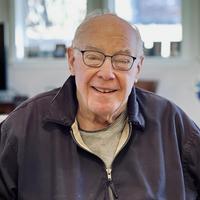
Henry M. Katz
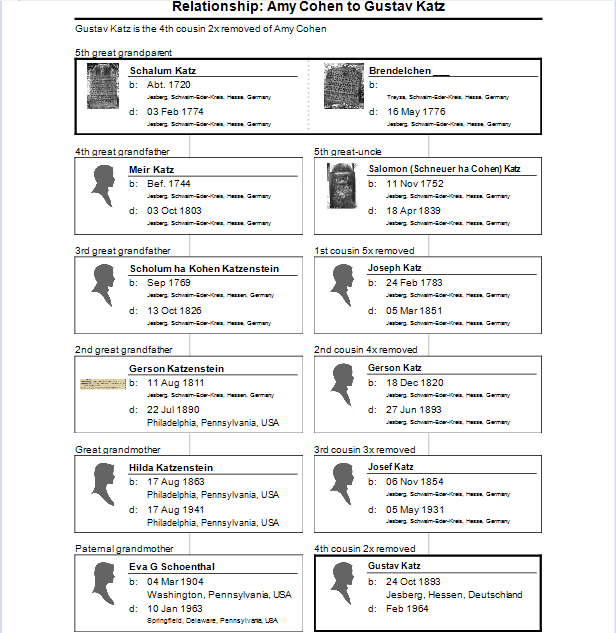
It is with great sadness that I share that my cousin Henry Katz passed away this week on February 7, 2026, at the age of 93. Henry was my third cousin, once removed, and we shared Scholem Katzenstein and Breine Blumenfeld as our mutual ancestors. But more importantly, Henry was someone I had the great pleasure of talking to and emailing with about his distinguished family history. I was connected to Henry through his wonderful daughter Marsha Katz Rothpan, who I was so fortunate to meet in person several times and with whom I still stay in touch.
Marsha and her sisters Beth and Barbara wrote their father’s obituary, so I am going to use their words to tell more about Henry. Henry’s funeral service will be livestreamed this morning at the link included below.
Henry Marvin Katz
January 3, 1933 – February 7, 2026
Funeral services for Henry Marvin Katz, 93, of Ada are Wednesday, February 11, 2026, at 10 am at Criswell Funeral Home, Ada. Rabbi Vered Harris will officiate. Burial will be at 2 pm at the Temple B’nai Israel Memorial Cemetery in Oklahoma City. Mr. Katz passed away Saturday, February 7, 2026, at his home in Ada.
Henry Katz was born on January 3, 1933, in Ada, Oklahoma, to Sadie and Benjamin Katz. The youngest of three children, Henry was a lifelong resident of Ada. He graduated from Ada High School in 1950 and the University of Oklahoma in 1954, where he was a member of Pi Lambda Phi fraternity.
After college, Henry served for two years in Japan in the U.S. Army. Upon returning home, he joined his father Ben, uncle Sidney Katz, and brother Alfred in the family business – Katz Department Store. When his father and uncle retired, Henry and Alfred took over the downtown Ada store. In 1984, Katz added a second location in Arlington Center. The downtown location remained open until 1989, and the Arlington Center store served the community until Henry’s retirement in 2004.
Henry was a descendant of a pioneer Oklahoma family. The Katz family, originally from Germany, settled in Stillwater, Indian Territory, in 1894 and opened the first Katz Department Store in 1896. Ben and Sidney came to Ada in 1926, and opened the Ada store, which was one of several successful Katz Department Stores throughout the state.
Following the example set by his father and uncle, Henry devoted his life to civic leadership and community involvement. He was deeply committed to making Ada a better place through service, business, and generosity. Henry served on the Ada Chamber of Commerce Board of Directors, including a term as President, and contributed to the Chamber’s Industrial Development Committee for many years. He also served as President of both the United Way and the Retail Merchants Association, leading the latter during the development of downtown Ada’s public parking lots – something he took great pride in.
In 1959, Henry began serving on the board of the Ada Science and Natural Resources Foundation, chairing its Land Committee for more than 40 years. When he noticed the deterioration of the historic Little Red School House (built in 1907), he led the effort to move it to its present location in Wintersmith Park where it continues to educate visitors about early rural schools.
Henry also served on the Board of the First National Bank (now Vision Bank) beginning in 1982 and continued his service through 2025. He was an active member of the Audit and Loan Committees and was proud to have contributed to Vision Bank’s growth across Oklahoma.
Judaism was an important part of Henry’s life. He was a longtime member and treasurer of the Seminole Hebrew Center for more than 40 years, and after its closing in 2017, he and Helen became members of Temple B’nai Israel in Oklahoma City.
Henry met Helen Roberts when they were both students at the University of Oklahoma. In January 1964, while on a business trip to Dallas, Henry invited Helen to dinner, and the rest was history. After a brief courtship, they were married on April 30, 1964, and shared a loving marriage for 57 years until Helen’s passing in 2021. Together, they made their home in Ada, where they raised their three daughters – Marsha, Beth, and Barbara – who were the pride and joy of Henry’s life.
When asked what he was most proud of, Henry always said, “my family.”
Henry will be remembered as a wonderful storyteller and the unofficial historian of the Ada area. He radiated positivity, warmth, and had a wicked sense of humor. Henry never met a stranger, and cherished time spent with family and friends. He especially loved hosting “Happy Hour” at his home – a tradition he and Helen began decades ago. Henry enjoyed fishing, traveling, and reading, and he was an avid fan of both the Ada Cougars and the Oklahoma Sooners. Despite never being able to keep a beat, he loved listening to music and always found joy in it.
Henry is survived by his three daughters: Marsha Katz Rothpan and her husband Jeff; Beth Katz Sherry and her husband Mike; and Barbara Katz Cobin and her husband Todd. He is also survived by his grandchildren Drew and Shayna Cobin, Leah and Gabe Sherry, his nephew Ron Lane of Ada, and many nieces, nephews, and cousins.
He was preceded in death by his wife Helen, his brother Alfred J. Katz, and his sister Bryna Katz Lane.
The family is incredibly grateful to Tina and Makayla Stephens for their love and care.
Pallbearers are Todd Cobin, Drew Cobin, Tom Cooper, Ron Lane, Jeff Rothpan, Mike Sherry and Gabe Sherry.
In lieu of flowers, the family requests memorial contributions to the Oklahoma Medical Research Foundation, the Ada Library Friends, Temple B’nai Israel, or a charity of your choice.
The funeral service will be livestreamed on the Criswell Funeral Home Facebook page (https://www.facebook.com/criswellfuneralhome).
Henry, you will be missed by all who knew you.
May his memory be a blessing forever.






























 Brotmanblog: A Family Journey