
Hello, everyone! I have returned from my break and am ready to dive back into my exploration of my Goldschmidt/Goldsmith relatives. But before I do, I want to share my second experience working with “Sherlock Cohn, the Photo Genealogist” aka Ava Cohn.
In the course of my genealogy research, many cousins have shared photographs with me, and fortunately almost all the time they can identify the people in the photographs. But occasionally I have received photographs with unidentified people in them, and sometimes those photographs just stay in my head and bother me. Who are those people? How can I figure out who they are?
This is one of those photographs, a photograph that belonged to my late cousin Marjorie Cohen, my father’s first cousin, the daughter of Stanley Cohen, my grandfather’s brother. The only person I was fairly confident I could identify in the photograph was Marjorie’s father Stanley, the man on the far left in the photograph.

Cohen & Company photograph
Here is a photograph on Stanley taken just a few years later when he was serving in World War I. You can see the resemblance to the man on the left.

Stanley Cohen World War I

The group photograph was taken in Philadelphia in front of the Cohen & Company Money Loan store, which was part of the pawnshop business started by my great-great-grandfather Jacob Cohen in Philadelphia in the 1850s and then carried on by many of his sons, including my great-grandfather Emanuel Cohen, who ran this particular store. I wondered whether these five men were also grandsons of Jacob Cohen. I was particularly curious about whether my grandfather John Cohen was one of the men standing in front of the store.
When I connected this summer with my second cousin Marcy, the granddaughter of my grandfather’s other brother, Maurice Cohen, she sent me some photographs of Maurice and of Maurice’s sons, Buddy and Maurice, Jr.

Emanuel (Buddy), Maurice Sr., and Maurice, Jr.

My great-uncle Maurice Cohen, Sr.
I also had photographs of my great-grandfather Emanuel Cohen, my great-uncle Stanley, and my grandfather John. Having had fabulous success with Ava Cohn, aka Sherlock Cohn, the Photo Genealogist, in the past, I decided to have Ava analyze these photographs to see if she could identify the people in the Cohen & Company photograph.
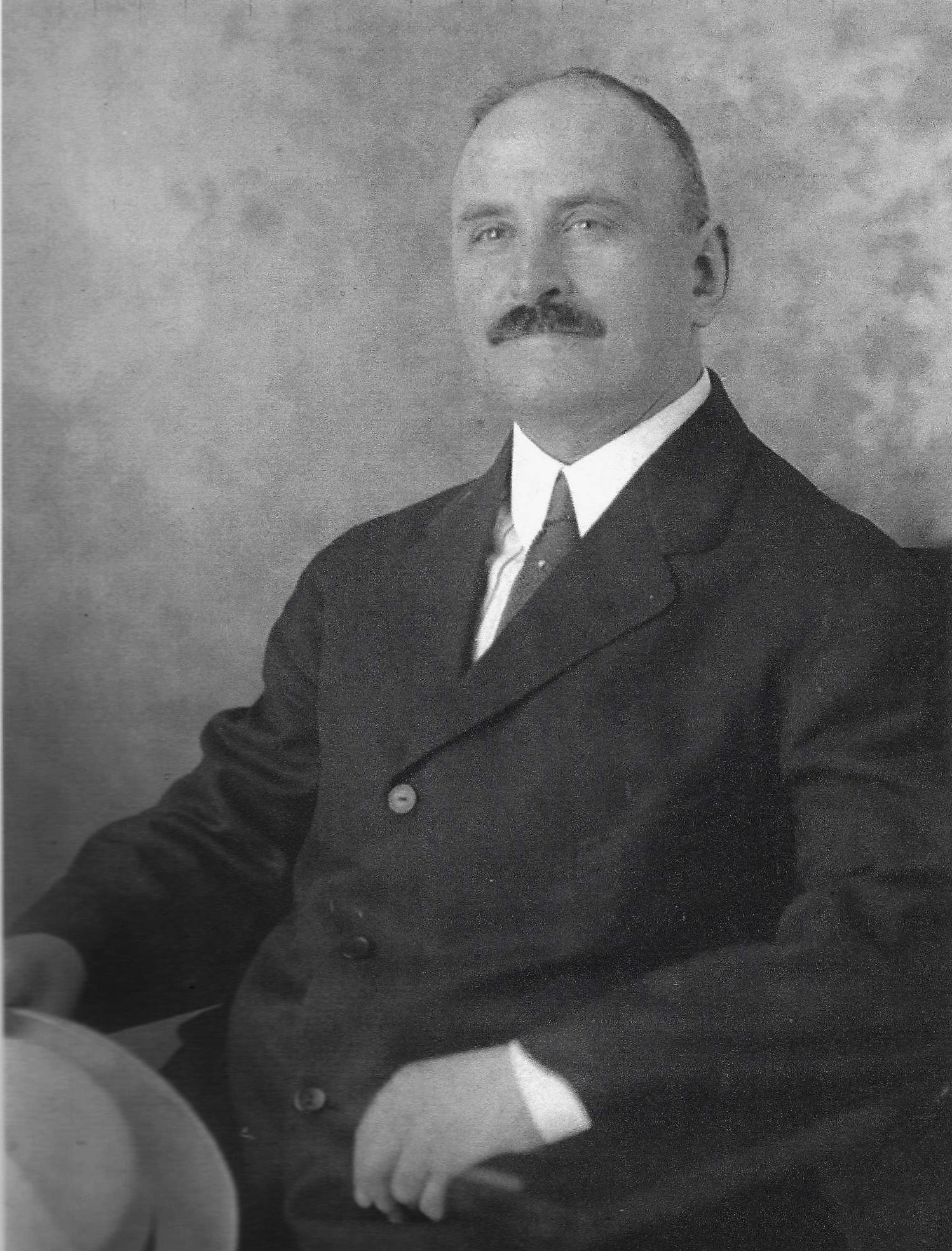
Emanuel Cohen, my great-grandfather

Eva Schoenthal and John Cohen, 1923

John and Eva Cohen
c. 1930

John Nusbaum Cohen c. 1894
Ava’s work is remarkable. Her attention to detail and the research she did to try and answer my questions is incredibly professional and thorough. Although she could not definitively identify all the people in the photograph, she certainly narrowed down the possibilities and made some very helpful and persuasive comments and suggestions. With her permission, I am going to summarize and excerpt from her report.
First, Ava analyzed whether the date that I’d been told was on the back of the photograph—April 1913—was accurate. She based her analysis in part on the type and content of the photograph:
…the scan appears to me to be a brown color, indicating a platinum print (sepia color) used generally from 1880-1930. Platinum prints often fade and there is some fading of this photograph. However, after 1920 most photographs were gelatin silver prints that had crisper black and whites than the platinum prints, another indication that this photograph was taken before 1920. … The photograph was taken outside. Since one of the men is wearing a sweater, it is appropriate to say that the photograph was taken in a cooler month, but obviously not winter. This is consistent with the presumed date of April, 1913.
Ava then analyzed the clothing worn by the people in the photograph, labeling them A through E from left to right:
- Person A is wearing a coat sweater with V-neckline, knit cuffs, two patch pockets and six buttons. This dates from the 1911-1912 period.
- All the men are wearing shirts with detached collars from around 1908 and skinny ties that were popular in 1912.
- Person B is wearing a high cut vest also with 6 buttons, a style found in ads from 1912.
- Persons C and E are wearing jackets that are slightly fitted at the waistline. Person D is wearing an older jacket that is less fitted. The slightly fitted waist style of men’s jackets was popular from 1912-1915. Also in that time period men’s jackets had 1, 2 or 3 buttons as can be seen on the men’s jackets in the photograph.
- Person D is holding a soft felt Optimo shape Panama hat from about 1912.
- Persons A, B, D and E have their hair combed back in a pompadour style with no part. Men wore their hair in this manner in the 1912-1913 period. Person C has a variation of this style with a side part.
From these observations, Ava concluded that the date of April 1913 on the photograph was likely accurate.
Then using that date and her estimation of the age of the five individuals in the photograph, Ava deduced the likely birth year of each of the five:
A: 24 years old. Born circa 1889.
B: 15 years old. Born circa 1898.
C: 24-26 years old. Born circa 1887-1889.
D: 18-19 years old. Born circa 1894-1895
E: 25 years old. Born circa 1888.
As noted above, I was already reasonably certain based on other photographs that Person A was my great-uncle Stanley Cohen, Marjorie’s father, who was in fact born in 1889. Ava’s analysis further confirmed that conclusion by relying on the physical descriptions of Stanley in his draft registrations for World War I and World War II. The World War II registration indicated that Stanley was 5’9” tall, and from that fact Ava was able to compare him to the other men in the photograph to reach some conclusions about their heights.
Using this information as well as information from draft registrations, census records, directories, and other sources, Ava reached the following hypotheses about the other four people in the photograph:
B: Simon LB Cohen, born 1898.
C: Samuel S. Cohen, born 1887.
D: John Nusbaum Cohen, born 1895.
E: Morris N. Cohen, born 1887.
For person B, Ava noted that Simon LB Cohen was the only grandson of my great-great-grandfather Jacob Cohen who would have been that young (roughly 15) in 1913. I would love for that to be Simon because I know so much about what happened to him just a few years after this photograph was taken. Simon served valiantly in World War I, was seriously injured and presumed (mistakenly) killed in action, and was awarded the Croix de Guerre for his bravery. He died as a young man in 1934, perhaps as a consequence of his time in the war.

Croix de Guerre awarded to Simon LB Cohen in 1918
But we can’t be sure that this boy was even related to the Cohens (or that anyone in the photograph other than Stanley was). Perhaps they are just a bunch of friends. But if we assume that they are all Cohens and all grandsons of Jacob Cohen, then Simon LB Cohen is a likely candidate to be person B. Since there are no draft registration descriptions of Simon nor any photographs, it is impossible to know for sure whether this is Simon in the photograph.
I was also very intrigued by Ava’s hypothesis that persons C and E could be the twin brothers, Morris and Samuel Cohen, sons of my great-grandfather’s older brother Joseph Cohen and grandsons of my great-great-grandfather Jacob Cohen. Morris and Samuel were born on August 22, 1887, in Cape May, New Jersey, but in 1910 they were living with their parents in Philadelphia, both working as salesmen in a department store, according to the 1910 census. Ava thought that although they were not identical, they did look like brothers and appeared to be about the same age—24 to 26 years old.

Ava’s analysis seemed very convincing, so I was motivated to search for descendants of Morris Cohen and Samuel Cohen to see if they had any photographs of the twin brothers. With the help of a good friend who knew one of Samuel’s grandchildren, I was able to make a connection. Unfortunately the grandchildren’s memory and photographs of their grandfather Samuel (displayed below) did not confirm that he was either Person C nor Person E in the photograph so I am back to square one in identifying those two men.

Samuel Cohen. Courtesy of his grandchildren
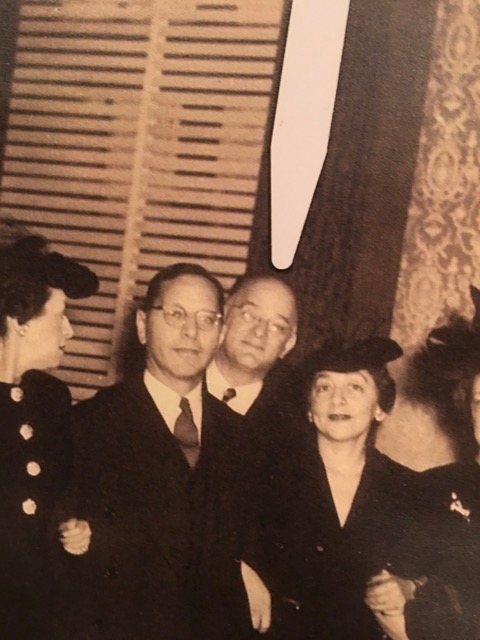
Samuel Cohen, courtesy of his grandchildren
But it was Person D I was most interested in, as I hoped he was my grandfather John Cohen, who would have been almost seventeen and a half in April 1913 and thus close to the age of Ava’s estimated age of Person D. Also, Ava pointed out that on his 1921 passport application, my grandfather’s height was reported to be 5’6” and that his World War I draft registration described him as short; certainly Person D is a shorter man than Persons A, C and E. Those two factors pointed to Person D being my grandfather.

John Cohen Sr. World War I draft registration

John N Cohen passport application page 2
 But comparing Person D to the photographs of my grandfather created doubts for Ava (and myself) as to whether Person D was my grandfather. My grandfather had very distinctive eyes—very deep set and slanted down; Person D is squinting, making it hard to see his eyes, so it is hard to tell if they are the same as my grandfather’s eyes. Ava also pointed out that Person D has a widow’s peak whereas there does not appear to be a widow’s peak in the photographs of my grandfather.
Here is a closeup of Person D and then several of my grandfather—in 1921,1923 and 1930. In addition, Ava believes (and I agree) that the man holding a baby in the fifth photograph is probably my grandfather. I know we see what we want to see, but the more I study these, the more I think Person D might be my grandfather. The loss of the widow’s peak could be from his obviously receding hairline. Look at the difference between 1921 and 1923. In 1930 he is wearing a hat—perhaps to hide his balding?
One other thing I noticed in the photographs of my grandfather—he had attached earlobes. Unfortunately when I zoom into the Cohen & Company photo, it’s hard to tell whether Person D also has attached earlobes.

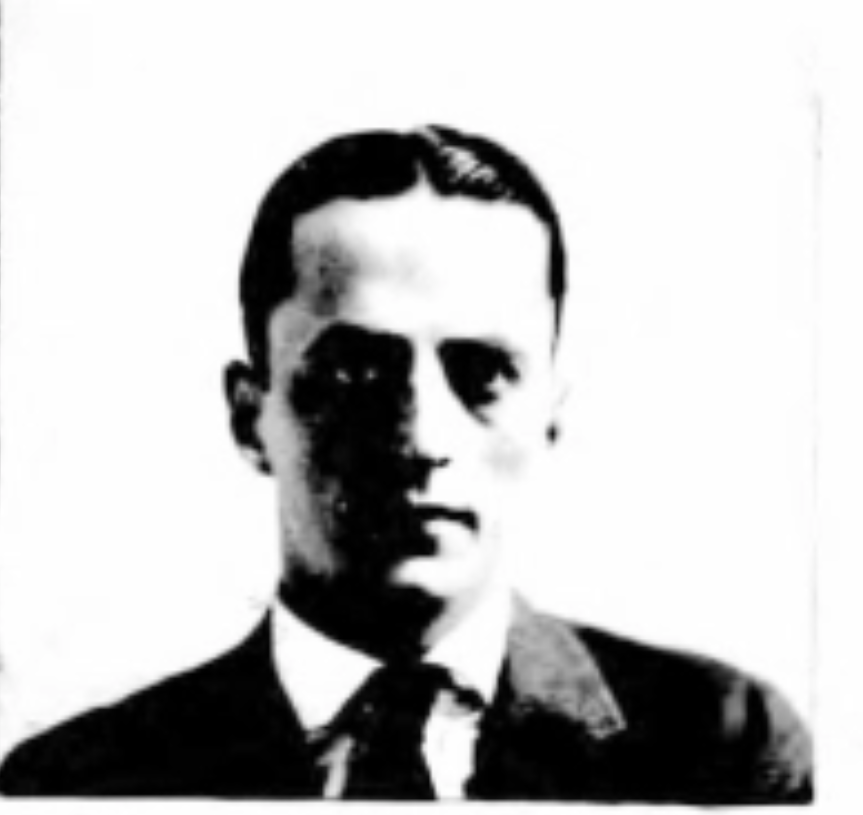
John Cohen in 1921

John Cohen in 1923

John Cohen, 1930
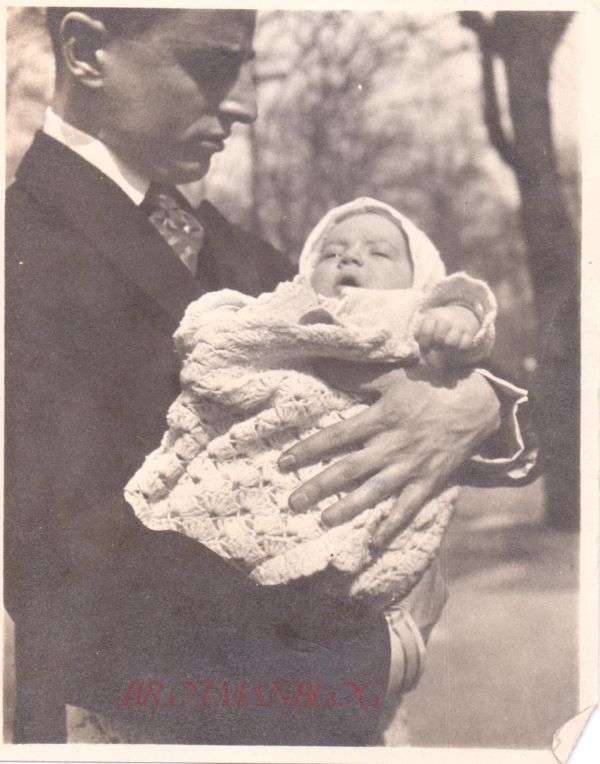
Could this be my grandfather John Cohen? And who is the baby?
I now believe that Person D is my grandfather, but I know that that’s what I am hoping for so I don’t trust my judgement. Ava was not certain, but thought it was possible.
What do you think?
Although it was not possible for Ava to identify all of the people in the group photograph, she certainly narrowed the field and provided solid and convincing reasons for her conclusions. Thank you, Ava, for a wonderful job on this extremely difficult project!











![Ancestry.com. Historical Newspapers, Birth, Marriage, & Death Announcements, 1851-2003 [database on-line].](https://brotmanblog.com/wp-content/uploads/2016/03/lionel-heymann-obit-clipped.jpg)
![Ancestry.com. Historical Newspapers, Birth, Marriage, & Death Announcements, 1851-2003 [database on-line].](https://brotmanblog.com/wp-content/uploads/2016/03/lionel-heymann-death-notice.jpg)

![Photograph by Lionel Heymann of Robert Maynard Hutchins, University of Chicago president (1929-1945) and chancellor (1945-1951), with team members of the Manhattan Project, the program established by the United States government to build the atomic bomb. Standing, from left: Mr. Hutchins, Walter H. Zinn, and Sumner Pike; seated: Farrington Daniels, and Enrico Fermi. University of Chicago Photographic Archive, [apf digital item number, e.g., apf12345], Special Collections Research Center, University of Chicago Library. accessed at http://photoarchive.lib.uchicago.edu/db.xqy?one=apf1-05063.xml](https://brotmanblog.com/wp-content/uploads/2016/03/lionel-heymann-photograph-of-men-on-manhattan-project.jpg)





![1914 directory for Washington, DC Ancestry.com. U.S. City Directories, 1822-1995 [database on-line]. Provo, UT, USA: Ancestry.com Operations, Inc., 2011.](https://brotmanblog.com/wp-content/uploads/2015/12/1914-dc-directory-schoenthals.jpg)

![Ancestry.com. Washington, D.C., Wills and Probate Records, 1737-1952 [database on-line]. Provo, UT, USA: Ancestry.com Operations, Inc., 2015.](https://brotmanblog.com/wp-content/uploads/2015/12/leo-schoenthal-will-from-ancestry.jpg)




 Brotmanblog: A Family Journey
