The First Chapter: The Dreyfuss Family

Yeah, I know.  My last post said it was the FINAL chapter of the Dreyfuss family.  How could this one be the first?

Way back on November 18, 2014, I wrote, “More on the Dreyfuss family in a later post.”  Then I proceeded to write about the Nusbaum family and the Dreyfuss family together.  Since two Dreyfuss sisters (Jeanette and Mathilde) had married two Nusbaum brothers (John and Maxwell), it just made sense to follow the stories of the three Dreyfuss sisters (Jeanette, Mathilde and Caroline) along with the stories of the Nusbaum siblings.  But what I never got back to doing was what I had promised back on November 18.  I never got back to the beginning of the Dreyfuss story as I moved forward from the 1840s in America through to the 20th century.  So although my last post was called the “Final Chapter” of the Dreyfuss family, I need to go back and write the first chapter before I can complete the story (as far as I currently know it).

So I need to step backwards in time—both in my time and in the times of the Dreyfuss family before 1840.  Back in the fall when I was researching the family of John Nusbaum, I had a wonderful resource in the family bible owned by my father.  My father had photocopied several pages of handwritten entries for births, deaths, and marriages from the bible , and most of those entries related to the Nusbaum family.  From studying the page for marriages, I learned that John Nusbaum, my three-times great-grandfather, had married Jeanette Dreyfus (as it was spelled there).  And that was the first time I knew the birth name of my three-times great-grandmother.  On the page for births, the second entry after the one for John Nusbaum was one for Jeanette Nusbaum, giving her birth date and her place of birth.  It took me a while to figure out what it said because of the handwriting, but eventually I was able to decipher it and learned that Jeanette was born in “Hechingen in Wurttemberg, Prussia,” as it is inscribed in the bible.

But there was no other Dreyfus(s) on any of the pages in the bible, and I was at that point in time focused on the Nusbaum line.  It wasn’t until weeks later that I realized that the bible’s death entry for Mathilde Pollock was not an entry for a sister of John Nusbaum, but an entry for a sister of Jeanette Dreyfuss (who happened to marry a brother of John Nusbaum) and that the entry for Caroline Wiler was also not a sister of John Nusbaum but another Dreyfuss sister. The big clue was finding 65 year old Mary Dreyfuss  on the 1850 census living with Caroline and Moses Wiler: a head-slapping moment when it occurred to me that it was Jeanette who was keeping the family bible and that, of course, she would record her sisters as well as her husband’s siblings in the family bible.

And then in mid-November I went on JewishGen’s Family Finder page and found Ralph Baer, who was also researching the Dreyfuss family from Hechingen.  I have mentioned Ralph before in the context of the Nusbaum/Dreyfuss family and his generous help with research and translation, but what I had forgotten to write about in my telling of the story of the Nusbaum/Dreyfuss family in the US was what Ralph had helped me learn about my Dreyfuss roots in Hechingen, Germany.

Hechingen, Germany

Hechingen, Germany (Photo credit: Wikipedia)

First, a little about Hechingen.  Today it is in the German state of Baden-Wurttemburg, located about 56 miles north of the Swiss border in southern Germany.  It is about 40 miles from Stuttgart, the state capital.  Although inhabited long before, the city was founded as the capital city of the Counts of Hohenzollern in 1255.  It remained during the Middle Ages a provincial and agricultural community.  During the 16th century, it became a center for art, architecture and music.  Even after the Reformation, it remained a largely Catholic community.  Throughout its pre-19th century history, Hechingen was subjected to many sieges and attacks by other German states as well as by Sweden.

de: Burg Hohenzollern bei Hechingen, Baden-Wür...

de: Burg Hohenzollern bei Hechingen, Baden-Württemberg, Deutschland en:Castle Hohenzollern near Hechingen, Germany (Photo credit: Wikipedia)

According to the Jewish Virtual Library, “There was a small Jewish settlement in Hechingen in the early 16th century, and a house was bought for use as a synagogue by the community of 10 families in 1546. In 1592 the burghers refused to conduct any commercial or financial transactions with Jews, who therefore left the town. There is no trace of Jewish settlement in the town during the next century. In 1701 Prince Frederick William I gave letters of protection lasting 10 years to six Jewish families in the neighboring villages; soon there were Jews living in the city as well. By 1737 there were 30 households, and a synagogue was built in 1761 which existed until 1870.”

The Jewish community blossomed in Hechingen in the late 18th and early 19th century through the efforts of a woman named Chaile Raphael Kaulla.  Her father was a successful entrepreneur and banker, and he provided Chaile with a good education.   She even learned German, not something girls were usually taught in those times.   When her father died, Chaile, being much older than her oldest brother, took over her father’s business; she managed the business very successfully while also raising six children.  Her husband, a Talmudic scholar, did not work.  Chaile and her brother Jacob developed a very good relationship with the authorities in Hechingen and became the leaders of the Jewish community there.  Here is more about Chaile from the Jewish Women’s Archive:

Chaile developed an aristocratic lifestyle, owning an elegant house and a horse-drawn carriage, but she continued to live according to Jewish law. She never forgot the mitzvot and cared for the Jewish community together with her brother, using her connections to the prince. The Kaulla family had their own private synagogue and rabbi. Both sister and brother gave generously to the Jewish as well as to the Christian poor and founded a hostel for needy and migrating Jews in Hechingen. In 1803, they donated a Bet Midrash, a Talmud school, with three rabbinical scholars whom they supported, together with their students and an important library.


The 19th century was a time of economic and industrial growth for the town of Hechingen and for its Jewish residents.  Wikipedia states that “By 1850, Hechingen had started to industrialize, primarily with Jewish enterprises. By 1871 the city had become one of the most important economic centres in the region, with textiles and machine shops among the major industries.”  According to the Jewish Virtual Library, the Jewish community in Hechingen was “prosperous and owned most of the local industries.” The Jewish population reached 809 people in 1842, which was about a quarter of the total population of the town.  This was also around the time that my three-times great-grandmother Jeanette and her sisters and mother would have left, which might seem strange, given how favorable the conditions there seemed to have been.

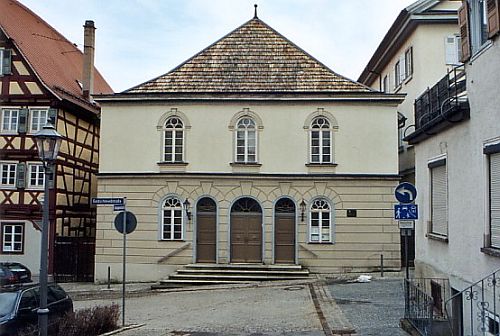
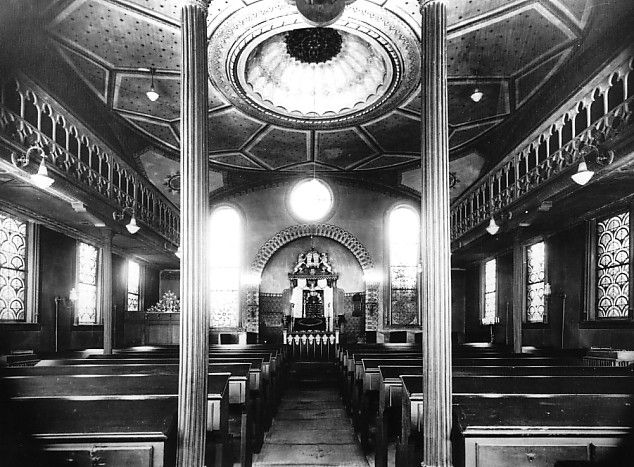
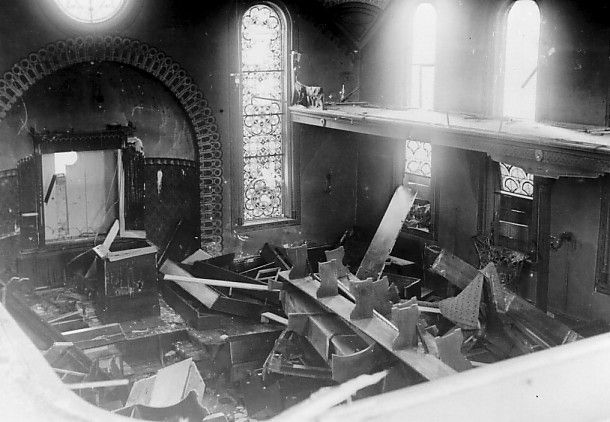
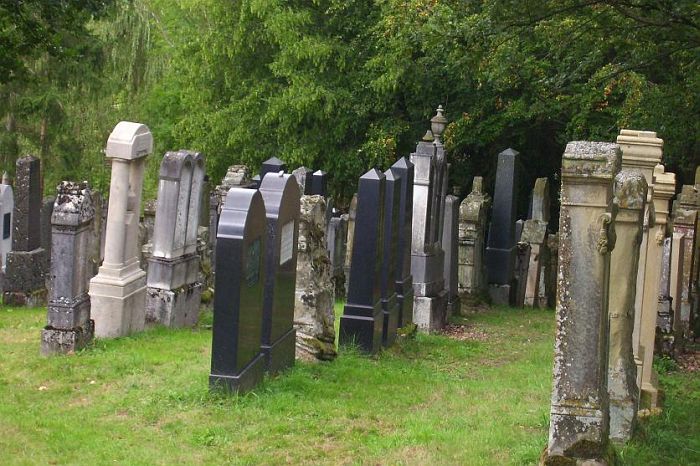
The Alemannia-Judaica, however, reports that there were some anti-Semitic “disturbances” in the 1840s, and the Dreyfuss sisters were not the only ones to leave.  By 1880, the Jewish population had dropped to 340; by the 1930s it had dropped to only 101.  Like so many other Europeans, Jews and non-Jews, the lure of opportunities elsewhere must have been irresistible.  The Dreyfuss sisters were wise to leave Hechingen because it was no more immune to the destruction and genocide of the Nazis than any other place during the Holocaust.  The synagogue was heavily damaged on Kristallnacht in November, 1938, and most of the Jewish men were sent to Dachau.  In the aftermath, 53 Jews emigrated successfully; the remaining 32 Jewish residents of Hechingen were sent to concentration camps where all but one were murdered by the Nazis.

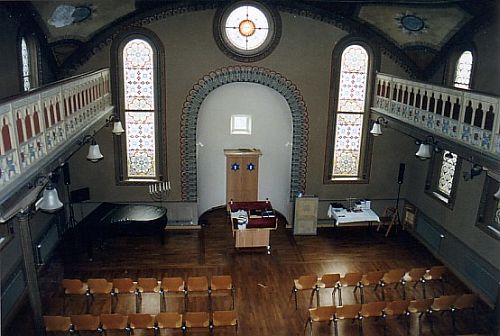
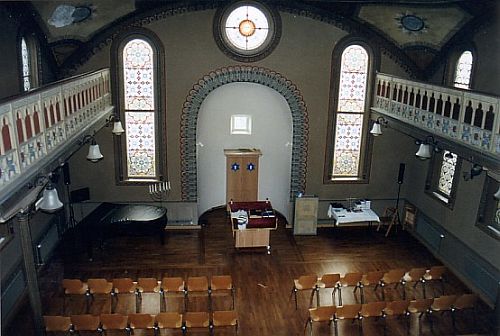
According to another source, “In 1991, the synagogue building was rebuilt as a cultural center, housing an exhibition on Hechingen’s Jewish history. A new Jewish community was founded in Hechingen in 2003.”  More pictures can be found here.
 

Where did my ancestors fit into this story of Hechingen? I was very, very lucky to find Ralph Baer on the JewishGen Family Finder because Ralph had already done extensive research on all the Hechingen Dreyfuss families years before I stumbled onto the name in the old family bible.  Even though he had not been able to find a connection between his Dreyfuss ancestors and mine, he had included my line in his tree when he’d done his research years ago.  Thus, my first email from Ralph in response to my inquiry as to his Hechingen Dreyfuss family included the following names:

A)3. Samuel (Sanwil) DREYFUß (ZELLER) 25 May 1776 Hechingen – 3 July 1859
Hechingen, married about 1805 to Miriam (Marianna) Samson BERNHEIM 17 May
1787 – 1841

A)31. Jeanette DREYFUß 20 May 1817 Hechingen, married to … NUßBAUM

A)32. Moses DREYFUß 10 February 1819 Hechingen

A)33. Goldel (Golde, Auguste) DREYFUß 16 October 1822 Hechingen,
married to … WEILER

A)34. Mathilde (Magdalena) DREYFUß 30 March 1825 Hechingen, married
to … POLLAK

A)35. Samson DREYFUß about 1827 Hechingen

A)36. Auguste DREYFUß about 1829 Hechingen[1]

There were my 3x-great-grandparents right at line 31, and there at line 33 was Caroline (born Golde) “Weiler” and at line 34 Mathilde “Pollak.”  I knew immediately that Ralph had found the three Dreyfuss sisters listed in my family bible.  Not only did the names line up, but so did the birth dates.  Thus, I now also knew that Jeanette, Caroline, and Mathilde were the daughters of Samuel Dreyfuss Zeller (later documents, as I found, indicated he had changed his surname to Zeller) and Miriam (Marianna) Samson Bernheim, that is, the Mary Dreyfuss I had found on the 1850 census living with her daughter Caroline in Pennsylvania.  (The death date of 1841 given for Miriam Ralph and I later discovered was not correct. I have not, however, found a death record for Miriam, though with two grandchildren named Miriam, one (Miriam Nusbaum, daughter of John Nusbaum and Jeanette Dreyfuss) in 1858, and one in 1859 (Miriam Pollock, daughter of Mathilde Dreyfuss and Moses Pollock, it would appear that Miriam died before 1858.)  In addition, I now had evidence of three other siblings: Moses, Samson, and Auguste.

But, of course, I wanted to see the actual records where Ralph had long ago found my relatives while researching his own.  With his patient assistance, I was able to locate a number of records relating to my Dreyfuss ancestors.  Fortunately, many of the Jewish vital records from the Baden-Wurttemburg region are digitized and available on line, and Ralph walked me step by step through the process of researching those archives and then helped me translate what I had found.  Once again, I struggled with the German script, but with Ralph’s help, I was able to find a number of relevant records.

I am now including the links to them here with a transcription of what is on each record so that I have a record later when I once again have trouble reading the script.  If you are interested in seeing the underlying documents, just click on the links.  The JPG versions were too blurry to read, so I am only posting links to the PDF versions, with two exceptions that were more legible.

Dreyfuss births (1)  Birth Registry for Hechingen 1800-1905

Line 132 Moses Dreyfuss                             Father Samuel                  Mother Miriam geb Bernheim

Line 186 Golde (Augusta) Dreyfuss           Father Samuel                 Mother Miriam geb Bernheim

Line 223 Mathilde Dreyfuss                                                 SAME


Dreyfuss Family on Archives film 240 bild 31  (Census 1831)
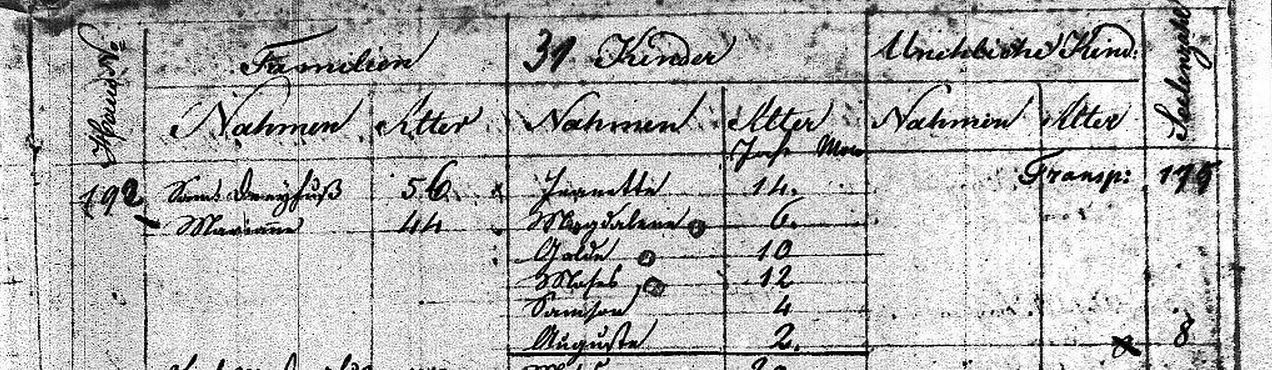
Dreyfuss family on archives film 240 film 31

#192 Samuel Dreyfuss 56 and Marianna 44. Six children: Jeanette 14, Magdalena 6, Golde 10, Moses 12, Samson 4, and Auguste 2.


Golde Auguste Caroline Dreyfuss birth record

First line:    October 16, 1822      Golde (Augusta)         Samuel Dreyfuss               Miriam geb Bernheim


Mathilde Dreyfuss birth record

Sixth line:  March 30 1825          Mathilde                       Samuel Dreyfuss                  Miriam geb Bernheim


Meier Dreyfuss brother of Samuel  Death Record

Parents               Samson Dreyfuss and Jeanette


Moses Dreyfuss birth record

Seventh line:  February 10, 1819    Moses Dreyfuss          Samuel Dreyfuss               Miriam geb Bernheim


Moses Zeller ne Dreyfuss death record Hechingen

Son of Samuel Zeller and Marie geb Bernheimer


Samuel Dreyfuss and family on Hechingen Family Records

Ralph helped me decipher this; otherwise, it would have meant nothing to me:  The name DREYFUSS is underlined with Samuel next to it. Below Samuel is written Zeller.  Below that it says Eltern (parents) Samson, and below that Jeanette(Scheile). To the right is geb. (born) and below that get. (married). The birth date for Samuel is on the right 1776 25 Mai. Between that is written “63 alt geworden” (became 63 years old, his age at the time of the compilation). For marriage it says angebl. (apparently) 1805 with also something in Hebrew. Samuel’s wife is on the right: Miriam, daughter of Samson Bern…and Golde. It also mentions a sister name Sussen right below that. The birth date for Miriam is listed as 17 Merz (March) 1787.  On the bottom are the children. The first one on the left is r Jeanette. In parentheses after her name is NUSSBAUM and below that 20 years old. To the left it states ca. 1817 20 Mai. Also listed are Moses, Mathilde Madel (Pollak), and Auguste (Golde) Weiler with birthdates.  (This was obviously compiled after 1851 since all three sisters are married and Mathilde is already married to Moses Pollock, whom she did not marry until after Maxwell Nusbaum died in 1851.)

Samuel Dreyfuss death record bild 143  (second on page)


Samuel Zeller death p 1 Samuel Zeller death p 2

Bottom of both pages: Samuel Zeller  Hechingen      Samson Dreyfuss and Jeanette    Alterschwaeche (old age)


There are some missing records.  I do not have a separate birth record for Jeanette.  Nor can I find a death record for her mother, my 4x-great-grandmother Miriam Bernheim.  I cannot find any records for the two youngest of the siblings, Samson and Auguste.  I also do not understand why there are two children with the name Auguste.  Perhaps one was a child of a family member who died? There is also a huge gap between the recorded marriage date for Samuel Dreyfuss and Miriam Bernheim of 1806 and the birth date of their oldest child, Jeanette, in 1817.  Did Samuel and Miriam have other children who died, or is their marriage date incorrect?  Samuel would have been 41 in 1817, Miriam would have been 30.  Both Samuel and Miriam had fathers named Samson.  Were both alive in 1819 when Moses was born? If not, it seems odd that their first son would not have been named Samson, unless there had been an earlier born son named Samson who had died.

I don’t know the answers to these questions, but I have answers to so many more questions than I ever expected, thanks to Ralph.  I know the names of my 4x-great-grandparents, Samuel Dreyfuss Zeller and Miriam Bernheim, and the names of my 5x-great-grandparents, Samson and Jeanette Dreyfuss and Samson and Golde Bernheim.  I have the names of the three other siblings of my 3-x great-grandmother Jeanette: Moses, Samson, and Auguste.  And I am not yet done looking for more about my Dreyfuss ancestors and now, my Bernheim ancestors as well.

Once again, I am deeply grateful to Ralph Baer.  Without him, none of this would have been possible.


[1] Together Ralph and I filled in many of the blanks here, enabling both of us to have a more complete record.

More Blessings and More Insight into My Seligmann Ancestors

This morning I woke up to another email that made me smile to start my day. But to understand why, I need to backtrack a bit.

One of the passages that was translated by Ralph Baer from Ludwig Hellriegel’s book on the history of the Jews of Gau-Algesheim indicated that Moritz Seligmann had originally come from Gaulsheim, a town that is only five miles from Gau-Algesheim.  In this passage, Hellriegel described Moritz Seligmann’s attempt to get permission to move to Gau-Algesheim in 1828.  He was denied permission the first time because the mayor concluded that there were already too many Jews in the town.  He then appealed, and although the mayor still wanted to deny him permission, Seligmann prevailed because he was legally entitled to move to the town.

This passage gave me a clue as to where Moritz, my three-times great-grandfather, might have been born, and Ralph suggested I contact the archives in Gaulsheim for more information.  I found an organization called Arbeitskreis Judische Bingen, or a study group of Jews in Bingen. (Bingen now includes the town of Gaulsheim.)  I wrote to the organization, asking for any information that they might have on Moritz Seligmann or his family.

And that brings me to my happy morning email.  A woman from the Arbeitskreis named Beate Goetz sent me a copy of the marriage record for Moritz Seligmann and Eva Schoenfeld.  Not only did this email confirm that Moritz was born in Gaulsheim (on January 10, 1800) and that he married Eva Schoenfeld (on February 27, 1829), it told me the names of my four-times great-grandparents, Jacob Seligmann and Martha nee Jacob/Mayer (my guess is that Mayer was the surname adopted by her father Jacob when surnames were required in the early 19th century).

In addition, I know now when Eva Schoenfeld was born (June 2, 1806) and where she was born (in Erbes-Budenheim), and I know her parents’ names: Bernhard Schoenfeld and Rosina Goldmann.  Assuming that Eva and Babetta, Moritz’s second wife, were sisters, Bernhard and Rosina were also my four-times great-grandparents.  Now I need to see what records I can find in Erbes-Budenheim to determine if in fact Eva and Babetta were sisters.  Beate said that she would also continue to look for a birth record for Moritz (who was born Moises) and any other relevant records.

Marriage record for Moritz Seligmann and Eva Schoenfeld February 27, 1829 Gaulsheim, Germany

Marriage record for Moritz Seligmann and Eva Schoenfeld February 27, 1829 Gaulsheim, Germany

I also know from Ralph’s additional translation of the marriage record that Jacob Seligmann and Bernhard Schoenfeld were both traders as was Moritz.  The record also indicated that the bride’s parents did not attend the wedding; as Ralph explained, this was probably a second ceremony for purposes of civil law and thus not as important as the religious wedding ceremony, which presumably the couple’s parents did attend.

Thus, thanks to Ralph Baer’s translation of a passage in the Hellriegel book, I now have learned the names of four more of my ancestors.

The Hellriegel book just continues to be a treasure chest of information.  Thanks to Matthias Steinke, I also have a translation of another few passages of Ludwig Hellriegel’s book, which shed some additional light on the character of my ancestor Moritz Seligmann.

In one passage, Hellriegel discussed the education of Jewish children in Gau-Algesheim.  He reported that until 1841, Jewish boys were taught Hebrew and other important subjects by their fathers, but in 1841 they were permitted to attend the Christian school in town.  Apparently, this was difficult for the Jewish children, so Moritz Seligmann applied in 1850 to remove his children from the school.  He then hired a private teacher named Benjamin Mayer from Essenheim to come to Gau-Algesheim to teach the children. (Essenheim is about ten miles from Gau-Algesheim.)

Apparently, however, Mayer ran into trouble in Gau-Algesheim for speaking badly about the Catholic Church, saying in front of the children and two other witnesses that those who believe in the Catholic faith are “downright stupid.”  He reportedly left Gau-Algesheim shortly after this incident.

I found this passage interesting in many ways, but mostly for what it told me about my great-great-great-grandfather Moritz.  He was a man who was determined to see that his children received a good education and in a setting where they were comfortable. That is a value that has certainly been passed down the generations in my family.  Moritz also was apparently a man of some means since he had the money to hire a private teacher.

Coat of arms of Gau-Algesheim

Coat of arms of Gau-Algesheim (Photo credit: Wikipedia)

Matthias also helped me better understand a passage about Moritz and his knowledge of German.  According to Matthias’ reading of this paragraph, Moritz had some role in the synagogue as an educated man.  He was in charge of writing the lists of Hebrew prayers to be assigned to those who made contributions to the synagogue.  (This is somewhat unclear to me.  Perhaps these were prayers for certain members to lead or perhaps these were prayers for the benefit of certain members, or maybe the book is referring to payment in order to receive the honor of reading Torah in synagogue.)

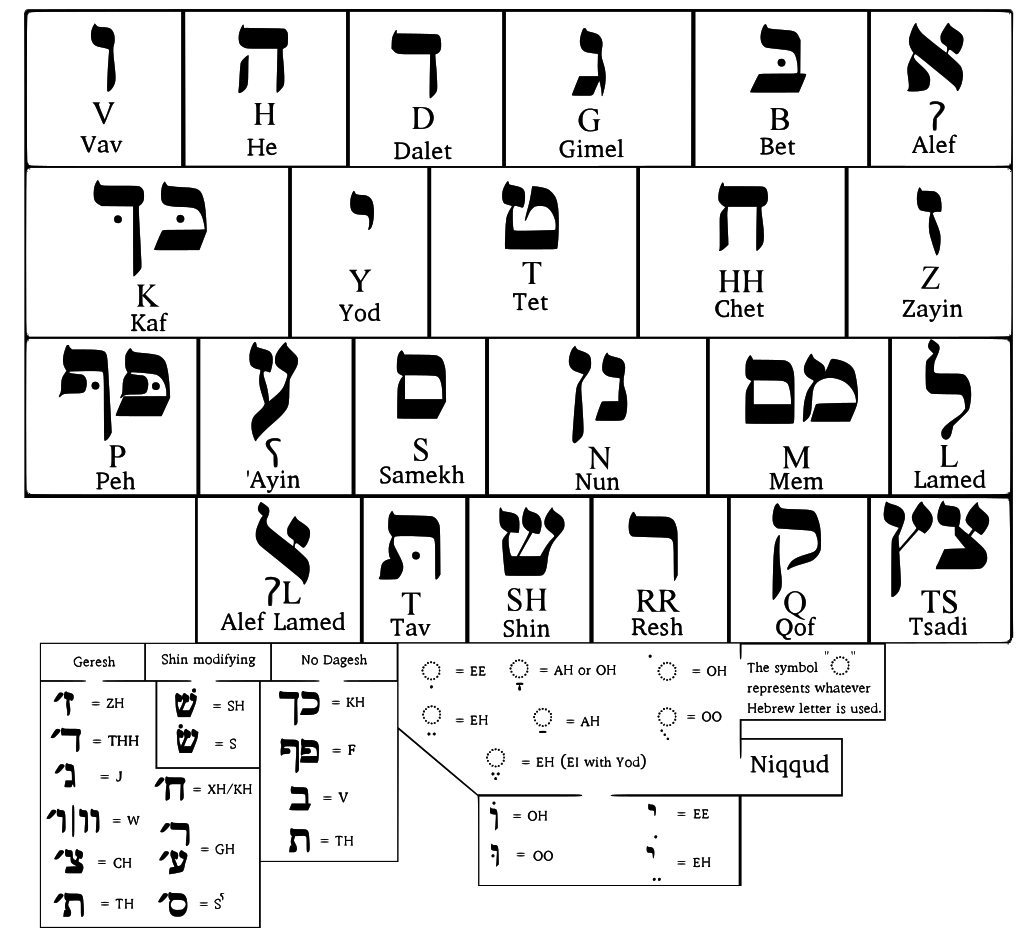
A man from Mainz, Mr. Landauer, commented that Moritz was able to write German very well in compiling these lists, but that he had trouble with “unpunctured” Hebrew.  I asked Ralph Baer what he thought unpunctured would mean in this context, and he explained that the German word could also be translated as undotted and that the reference to undotted Hebrew most likely meant that Moritz had a hard time reading Hebrew without vowel markings.  So Moritz was more fluent in writing and reading in German than he was in Hebrew.

1024px-Hebrew_Alphabet.svg

By Assyrio (Own work) [Public domain], via Wikimedia Commons


The final passage that Matthias helped me understand involved Julius Seligmann, the grandson of Moritz and son of August Seligmann, discussed previously.  He was the Seligmann who converted to Catholicism upon marrying a Catholic woman.  What I had not been able to understand before were references to Julius closing his business in 1935 in Gau-Algesheim and being the last Jew in Gau-Algesheim when he and his family left in 1939.  He and his family moved to Bingen, and the book states that there the police chief did nothing against him and that his two sons Herbert and Walter were even allowed to enlist in the army, although dismissed shortly afterwards.

With a better idea of what the words say, I now think that I understand the significance of this passage.  It seems that Julius, despite converting, was still seen as a Jew when the Nazis came to power and thus was forced to close his business.  However, once he relocated to Bingen, he was not harassed by the police, perhaps because they did not know he was Jewish.  And perhaps the significance of the sons being able to enlist also relates to this ability to deny their Jewish roots, at least for a short time.

I am obviously still reading between the lines, and without being able to read the entire book and read everything in context, I fear that I may be misreading some of these isolated passages.  It’s a long term project to be able to understand the whole book and the whole story of the Jews of Gau-Algesheim.  But already this little book has enabled me to learn so much more about my Seligmann ancestors.

By the way, Seligmann means “blessed man” in German.  The more I learn about the Seligman(n)s, both German and American, the more it seems to be an appropriate surname for the family to have adopted, especially for those Seligmans who were fortunate enough to have left Germany before the Holocaust.


A Package from Germany, Part II: Did Moritz Seligmann Have Two Wives?

Gau-Algesheim, Rathaus am Marktplatz

Gau-Algesheim, Rathaus am Marktplatz (Photo credit: Wikipedia) (Town Hall)

As I mentioned in my last post, the package I received from Germany included both a book about Gau-Algesheim and photocopies of the birth records for Bernard Seligman and his siblings.  Unfortunately for me, the birth records were all in German and were half in Germanic font and half in handwritten old German script.  I could pick out names, and most meaningfully, I could see the signature of my great-great-great-grandfather Moritz Seligmann on all the records.  But I could not read any of the text.  Not the typeface print on the form, and certainly not the handwritten script.

Bernard Seligman's birth record

Bernard Seligman’s birth record

JewishGen has a function called ViewMate where you can upload documents and ask JewishGen members for help in translation.  I decided to try that first.  Unfortunately, ViewMate limits the size of the documents you can upload to a relatively small size, and once I reduced the records to the requisite size, they were hardly legible.  Plus ViewMate takes several days; your document has to be submitted to the site, approved, and then it will be posted.  Then you have to send an email to the listserv and ask for help in translating the documents up uploaded.  Then you have to wait for someone to see your email and respond.  And you can only do five documents in a week.  This seemed a bit frustrating for me in this day of instant communications.

So I turned once again to Facebook.  There is a group on Facebook for German Genealogy, and I asked a question about obtaining translations of German records.  Someone there referred me to a different group that exists just for that purpose: German Genealogy Transcriptions.  I joined the group, and I posted the record for Bernhard Seligmann depicted above, asking if anyone could help me translate it and other records like it.

Within two hours, I heard from a group member, Matthias Steinke, who translated that first document and then spent the next couple of hours—no exaggeration—helping me with all the others.  I was just blown away by his generosity as well as his ability to decipher that script from a small scanned photograph of the document.  Matthias, if you are reading this, once again I thank you from the bottom of my heart.

So what does that birth record for Bernhard Seligmann say?  This is the translation Matthias provided, as modified based on some of the later records he reviewed:

In the year thousand eighteen hundred thirtyandseven, the twentythird November at eleven o´clock pre midday came to me, Quirin Ewen, mayor and official for the civil registration of the comunity Gau-Algesheim, county Ober-Ingelheim, Moritz Seligmann, thirtyseven years old, merchant, residing in Gau-Algesheim and declared, that at the twentythird November Eighteen hundred thirtyseven at one o´clock in the morning in the Blosselgasse nr. 98, Babetta nee Schönfeld, twentyseven years old, wife of the named Moritz Seligmann, here residing gave birth to a child of male sex, who was showed to me and who got the first name Bernhard. The declaration and showing happened in presence of the witnesses: 1. Johann Kleissinger, thirty years old, church-clerk in Gau-Algesheim residing 2. Johann Wessel (?), thirtyfive years old, tax-messenger in Gau-Algesheim residing. [signatures]

There were nine records all together, and for the others I only needed the basic data: names, ages, dates, and addresses, since I now knew what the form template was asking based on this first translation.  All the basic dates and names for the children were consistent with the information I had been originally provided by Bernie Brettschneider from Gau-Algesheim, but now I had copies of the actual records to verify that information.

Plus I now had an address for where the family was living during the years from Sigmund’s birth in 1829 until Paulina’s birth in 1847.  Although the house numbers vary, throughout all those years the Seligmann family was living on Flossergasse (apparently rafter alley). (Bernard’s said Blossergasse, but all the others said Flossergasse.)   I was able to locate Flosserstrasse on the map as well as Langgasse where August and Hyronimus later lived.  I assume Flossergasse was either off of Flosserstrasse or the street was renamed at some point.


But the records also revealed a mystery.  For Sigmund (1829), Carolina (1833), and Benjamin (1835), the mother’s name is Eva nee Schonfeld.  But starting with Bernhard in 1837, the mother’s name is given as Babetta or Barbara nee Schonfeld for Bernhard (1837), Hyronimus (1839), August (1841), Adolph (1843), Mathilde (1845), and Paulina (1847).

At first I thought that Eva had changed her name, but Matthias pointed out that the ages did not quite line up.  Not all the birth records included a reference to the age of the mother, but in  March, 1833 Eva was 26, meaning a birth year of 1806/7, depending on the month of her birthday. In May, 1835, she was 28, so that is consistent with the same birth year range.  But on Bernhard’s birth record, Babette nee Schonfeld is 27 in 1837, meaning a birth year of 1809 or 1810.  Two years later on December 14, 1839, she was 30, meaning her birth year was most likely in 1809.  The other birth records are also consistent with a birth year for Babette in 1809.

So unless Eva both changed her name and lied about her age on the later birth records, it would appear that Sigmund, Carolina, and Benjamin had a different mother than their younger siblings and also perhaps that Moritz married Eva’s younger sister sometime between 1835 when Benjamin was born and 1837 when my great-great-grandfather was born.

Thanks again to Matthias Steinke for his incredible generosity and great skills in transcribing and translating from German to English.  Thank you also to Ralph Baer who has also  been a tremendous help. Ralph is the JewishGenner who has been helping me with my Nussbaum/Dreyfuss relatives as well as generally with German records and German translations.  Both Ralph and Matthias are also helping me with the Gau-Algesheim book as I try and confirm and understand the passages about the Seligmanns.

As Thanksgiving approaches, I am filled with gratitude for all the help I have received as I continue on this path to find my family—from the readers who comment and send me helpful suggestions to the people on Facebook who jump in to help, to the people at various libraries and historical societies who respond to my inquiries, and to the people at JewishGen who have helped me solve many mysteries.  As I’ve said several times, the generosity of the genealogy community is an inspiration.  If only the whole world was as giving and helpful as the people I have met in the genealogy world.


A Package from Germany and More Sobering Revelations: A Seligmann Update

Coat of arms of Gau-Algesheim

Coat of arms of Gau-Algesheim (Photo credit: Wikipedia)

A few days ago I received a package from Gau-Algesheim with photocopies of the birth records of Bernard Seligman and his siblings as well as a book about the Jews of Gau-Algesheim, Die Geschichte der Gau-Algesheimer Juden by Ludwig Hellriegel (1986, revised 2008)[The History of the Jews of Gau-Algesheim].  Of course, the records were in German, as is the book.  And the documents were also in Germanic font and in the old German script.   Completely unintelligible to me.  Here is an example, the birth certificate of my great-great-grandfather, Bernard Seligman or Bernhard Seligmann, as it was originally spelled.

Bernard Seligman's birth record

Bernard Seligman’s birth record

And so I started with the book, which is at least printed in regular font.  I first went through the entire book (about 110 pages), looking for the name Seligmann, not really expecting to find it.  But there on page 52 was the name Moritz Seligmann, and there again a few pages later, and then a list of Seligmanns a few pages after that, and then a few paragraphs here and a few paragraphs there.  But I can’t read German.

I painstakingly entered the passages that mention Seligmann into Google Translate and mostly got gibberish.  Google Translate does not like umlauts or those funny double S symbols used in German, and typing in German is very hard when you do not know the language.  Google Translate can do a word, but putting down a whole sentence leads to verbs and nouns and prepositions in places that just make it almost impossible to know what you are reading.

For example, what does this sentence mean?

Mr. Landauer of the Israelite Religious Community in Mainz has found that Moritz Seligmann who has led this protocol , although writes excellent German , but his burden with the Hebrew has unpunctured .

That is how Google Translate translated this sentence:  Herr Landauer von der israelitischen Religionsgemeinde in Mainz hat festgestellt, dass Moritz seligmann, der dieses protokoll gefuhrt hat, zwar ausgezeichnet deutsch schreibt, aber seine Last mit dem unpunktierten Hebraisch hat.

So if there are any readers out there who can help me with translation, please let me know.  I have no clue what that means except that perhaps my great-great-great-grandfather was very proficient in German.  The sentence that follows discusses the fact that the Jews in Gau-Algesheim did not speak or read Hebrew except for religious purposes.

Now I am working on getting a better translation program or finding someone to translate the book for me.  But here are a few random tidbits of information that I am pretty sure I did understand from my very poor translation of some of the passages.

Perhaps the most informative section revealed the livelihoods of two of my great-great-grandfather’s brothers, August and Hyronimus, and a third Seligmann whose name was Jacob, for whom I have no earlier record.  August opened a business in October, 1891, for iron and also spices and playing cards.  (That’s what Google Translate says anyway.)  August died on May 14, 1909.  Hyronimus also was in the iron and spice business as well in the wine trade; he opened his business on May 22, 1892.  Jacob was also in the iron trade and the wine and spirits trade; his business opened June 5, 1898.
I also know from the book that at one time August and Hyronimus both lived and/or did business on Langgasse or Long Alley.  I had posted this photo before without realizing that this was the street were some of my family lived or worked.

Gau-Algesheim. Langgasse.

Gau-Algesheim. Langgasse. (Photo credit: Wikipedia)

The paragraph that follows the one about the three Seligmanns and their businesses was a bit hard to follow with Google Translate, but from what I can decipher, August had a son named Julius born in 1877.  Julius married a Catholic woman and converted to Catholicism.  He had a hardware store in Gau-Algesheim as well as a spice business.  If I am reading the German correctly, he closed the store on December 9, 1935 and moved with his family to Bingen on September 15, 1939.  He had two sons, Herbert and Walter, who were both apparently still alive when the book was written.  Julius also survived the war, but was killed in a fatal car accident on his way to church on March 28, 1967.

Burg Klopp in Bingen am Rhein, Germany

Burg Klopp in Bingen am Rhein, Germany (Photo credit: Wikipedia)

Julius had an older sister Frances, born on December 26, 1875, who married Max Michel, but divorced him and moved to Bingen.  Frances died on December 19, 1933; her son Fred escaped to the United States in 1937.

The third child of August Seligmann was named Moritz, and he participated in the town’s cycling association. Moritz Seligmann, his grandfather’s namesake, was born in June 25, 1881.  The book seems to be describing the skills of various members and seems to be praising the skills of young Moritz, who was nineteen when he joined the club.  The end of this passage about Moritz says that he was single and had moved to Koenigsberg and that it was believed he was killed in 1941 in Theresienstadt.

The fourth child of August Seligmann was his daughter Anna.  She was born on November 30, 1889, in Gau-Algesheim.  She had moved with her husband Hugo Goldmann to Neunkirchen in Saarland.  They and their three children, Ruth, Heinz, and Gretel, were all killed in the Holocaust.

There is also an entry for Elizabeth nee Seligman Arnfeld, who was born March 17, 1875.  She had moved to Mulheim on the Ruhr in 1938 and wanted to emigrate to the United States.  A woman named Leonara Morreau[1] had vouched for them, but for unknown reasons they were never able to emigrate.  Elizabeth died on January 23, 1943 at Theresienstadt.  Her son Heinz survived the war.  The book did not identify the parents of Elizabeth Seligman Arnfeld, but she could have been the daughter of Salomon or Benjamin, who unfortunately are not mentioned in the book, or of Hyronimus or Jacob.

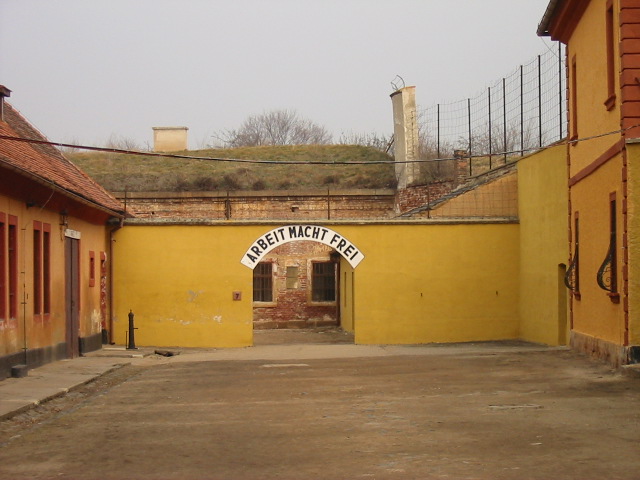
Theresienstadt

Theresienstadt concentration camp

Now that I have more names and more recent relatives, I am hoping that perhaps I can find out more about these people.  I also now know that many of them moved to Bingen, so there may be records from that larger town that will tell me more about the Seligmanns who stayed in Germany. And from several other entries in the book, I know where they lived in Gau-Algesheim.

I would love to be able to read the entire book and learn more about the history and lives of Jews in Gau-Algesheim, but it took me a good part of two days just to translate these few passages, and those translations are not very reliable.  It seems hiring someone to translate the whole book could cost me as much as $1000, and that is not in my genealogy budget by a long shot.  If someone has any brilliant ideas on how to get the book translated for free or for a really reasonable price, please let me know.

What I did learn from the passages I struggled to translate is that my family was not untouched by the Holocaust, as I once believed, but that we lost many people just from Gau-Algesheim alone.   I am hoping that I can find the descendants of the few who seem to have survived—Heinz Arnfeld and Fred Michel and Herbert and Walter Seligmann—and learn more.

In my next post I will discuss the birth records I received for the Seligmanns and how I was able to translate them.  Then I will return to the Nusbaums.

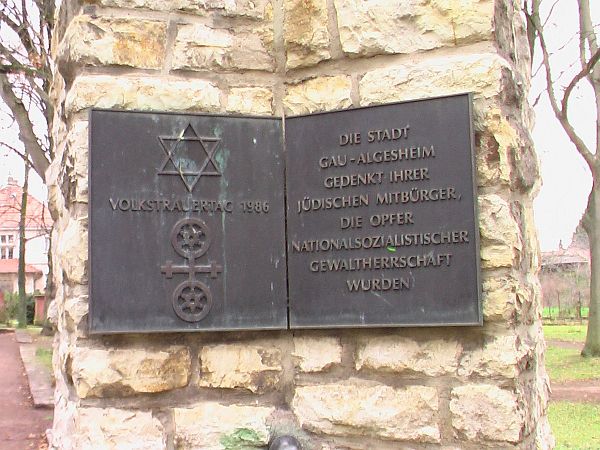
memorial plaque gau aldesheim

Holocaust Memorial plaque in Gau-Algesheim

[1] I found Leonara Morreau’s obituary and researched her a bit, but know of no reason that she would have had a connection to the Seligmanns in Germany.  She was born, married, and lived in Cleveland.  Her husband died in 1933, and she died in 1947.  As far as I can tell, they never traveled to Germany.  Leonara’s brother was Isaac Heller, who was also born in Cleveland, as was their father, Charles Heller.  Although their grandfather was born in Germany, it was not even in the same region as the Seligmanns.  Perhaps Leonara was active in trying to bring German Jews to the United States during Hitler’s reign, but I can find no evidence of that.  Her obituary only states that she was active in charitable and religious causes.

The Nusbaums Come to America

PA Harrisburg 1855

PA Harrisburg 1855 (Photo credit: Wikipedia)

I am having a hard time finding a place to start the rest of the story of my Nusbaum ancestors.  I just keep going in circles and hitting walls.  I have been able to locate most of the children of Amson and Voegele Nusbaum in the US, but for some have not been able to find very much about them.  I am still searching and hoping more will turn up, but the Nusbaums seem so far to have stayed pretty much under the radar, unlike the Seligmans for sure and even more so than the Cohens, about whom I found a number of newspaper articles.

So I will start with what I have and hope that as I go along, I will find more and learn more about the elusive Nusbaums.  From the report compiled by Rolf Hofmann based on the research of Angelika Brosig, I know that Amson and Voegele had eight children.  Guetel, the oldest, reportedly born in 1805, I have not had any luck finding either in Germany or in the United States.  I assume she married in Germany since she would have been in her mid-thirties by the time her other siblings left Germany in the 1840s.  Without access to marriage records or death records in Schopfloch, I have hit a dead end on Guetel.  At least for now.

I also have had no luck finding anything about Amson and Voegele’s fifth child, Sara, for what I assume are the same reasons.  Sara, born July 8, 1812, according to Angelika Brosig’s research, also was probably married before her siblings left Schopfloch.  Neither Guetel nor Sara appear in the Nusbaum family bible that belongs to my father, so I have to assume that they did not ever move to the United States.

On the other hand, I was able to find all five of Amson and Voegel’s sons in the United States without too much trouble, and I even was able to find their other daughter, Madel or Mathilde.  She was born on July 20, 1806, according to Angelika Brosig. My search for Mathilde was more successful than those for her two sisters because once again I was very fortunate to find someone who is related to me (and to Mathilde) by marriage.

I had posted a question on JewishGen seeking help in researching my Nus(s)baum ancestors from Schopfloch, and I received an email from a fellow researcher, Ned Lewison, who said that he doubted that he had anything helpful, but that one of his relatives, Isaac Dinkelspiel, also with ancestral ties to Schopfloch, had married someone named Mathilde Nusbaum, and that they had lived in Harrisburg, Pennsylvania.  (He also said that another relative had married another Nusbaum, but more on that in a later post.)  I knew right away that that could not be just coincidence since I already knew that John Nusbaum had settled also in Harrisburg.  Further research (to be described later) confirmed that Mathilde Nusbaum Dinkelspiel was John’s sister.

So I know of six Nusbaum children who came to the United States: Mathilde, Leopold, Isaac, John, Ernst, and Maxwell.  The earliest record I have found that might relate to my Nusbaum ancestors is an entry for a John Nussbaum on the 1840 census living in Harrisburg, Pennsylvania.

Unfortunately, the 1840 census does not provide a lot of information.  It only lists the male heads of household with check marks indicating the numbers of males and females within certain age ranges living in that household.  The entry for John Nussbaum has check marks for one male between 30 and 40 years old, one female between 20 and 30 years old, and one female between five and ten years old.  My three-times great-grandfather John Nusbaum would have been 36 in 1850, his wife Jeanette would have been 33, and they did not yet have any children that I am aware of.  In fact, the family bible lists their marriage date as July 1, 1841 and their first child, Adolphus, born in 1842.

Could this be my ancestor on the 1840 census?  I am not sure.  His wife’s age could be wrong, the family bible could be wrong about the marriage date, but who was the five to ten year old daughter?  Could John have had another wife and a child before Jeanette? I cannot be sure.  There are no birth records or death records on file in Pennsylvania before 1877 except for scattered church records and some local civil records.  There are some marriage records, but they are not complete, and I cannot find any Nusbaum marriage recorded that early.  I do know, however, that John was in Harrisburg by 1850. So maybe this is my ancestor on the 1840 census, maybe not.  I have written to the local historical society in Harrisburg and hope to get some answers.

I cannot find any of the other Nusbaum siblings on the 1840 census.  The next document I have that may relate to my Nusbaum ancestors is an immigration record for Leopold, John’s older brother. Since I only so far have the index entry and not the full ship manifest, this is also not a very helpful record.  According to the index, a Leopold Nussbaum, aged 35, arrived from Germany to New York on June 9, 1847. The family bible does not have a birthdate for Leopold (though it does have his date of death).  The Brosig records indicated that Leopold (Loew) was born on April 26, 1808, and the census records for Leopold in America conflict with each other, but suggest he was born between 1810 and 1812.  I do not know for sure, therefore, whether this is the same Leopold Nussbaum, and perhaps seeing the full ship manifest will tell me more.  But 1847 seems to be a reasonable date for the arrival of Leopold.

Although I have not been able to find any immigration records for any of the other Nusbaum siblings, I know that by 1850 four of them were already in the US because they appear on the 1850 census.  John was living in Harrisburg’s South Ward and working as a merchant.  He and his wife (listed as Shamet here) had four children: Adolphus (8), Simon (6), Frances (my great-great-grandmother, 4), and Julius (2), all born in Pennsylvania.[1]  They also had eight other unrelated adults living with them, two servants and six whose occupation was given as “clerk,” presumably in John’s store.  So by 1850 John Nusbaum was quite comfortably settled in Harrisburg.

John Nusbaum 1850 census Harrisburg, PA

John Nusbaum 1850 census Harrisburg, PA

As I indicated above, his older sister Mathilde was also living in Harrisburg with her husband Isaac Dinkelspiel.  Isaac was working as a peddler, and he and Mathilde had three children: Paulina (8), Adolph (6), and Sophia (2).  Since all three children were listed as born in Germany, this would suggest that Isaac and Mathilde had been in the United States for less than two years at the time of the 1850 census.  Mathilde and her husband Isaac had no servants living with them and presumably were not yet as comfortable as her brother John and his family, who may have been in Harrisburg for ten years at that point.

Mathilde and Isaac Dinkelspiel 1850 US census Harrisburg, PA

Mathilde and Isaac Dinkelspiel 1850 US census Harrisburg, PA

I did not find a definite listing for Leopold Nusbaum on the 1850 census, but I believe that this listing for L. Nussbaum is the right person.

L. Nusbaum 1850 census Lewistown, PA

L. Nusbaum 1850 census Blythe, PA

L. Nusbaum is listed as a butcher, 38 years old (which would give him a birth year of 1812), and married to Rosannah, both born in Germany, with two children: Adolph (2) and Francis (seven months), as well as a non-related person, perhaps a servant. Both children were born in Pennsylvania, meaning that Leopold and Rosannah had been in Pennsylvania since at least 1847, consistent with the ship manifest. They were living in Blythe, Pennsylvania, a town about seventy miles from Harrisburg.

Why do I believe this is Leopold? Because I know from later documents that Leopold’s wife was Rosa and that he had a son named Francis and a son named Adolph.   Both John and Leopold had children named Adolph/us and Francis/Frances.   Perhaps the two Adolphs were for Amson, the two Francis/Frances for Voegele. (Mathilde and Isaac Dinkelspiel also had a child named Adolph.)

The fourth sibling listed on the 1850 census is Maxwell (Meier) Nusbaum, the youngest of the Nusbaum siblings, born September 14, 1819.  In 1850, he was living with his wife Mathilde Dreyfuss Nusbaum and their two year old daughter Flora in Lewistown, Pennsylvania, which is about sixty miles from Harrisburg. Flora might also have been named for Voegele.  Maxwell was a merchant, and he had a clerk living in his household.  His wife Mathilde was the sister of Jeanette Dreyfuss Nusbaum, the wife of Maxwell’s brother John Nusbaum.  (More on the Dreyfuss family in a later post.)

Maxwell Nusbaum 1850 US census Lewistown, PA

Maxwell Nusbaum 1850 US census Lewistown, PA

Although I cannot find Ernst Nusbaum on the 1850 census, I did find a listing for an Ernest Nusbaum, a merchant in Philadelphia, on the 1852, 1854, and 1859 city directories for Philadelphia.  Given the name and the occupation and the fact that Ernst and his family show up on the 1860 census living in Philadelphia, I think it is reasonable to assume that Ernst was in Philadelphia by 1852. (Unfortunately, the 1860 census did not include street address information so I cannot compare it to the 1850s directories.)

Ernest Nusbaum in the 1852 Philadelphia city directory

Ernest Nusbaum in the 1852 Philadelphia city directory located at https://archive.org/details/mcelroysphiladel1852amce

As for Isaac Nusbaum, the remaining sibling who emigrated to the US, I have no record for him before 1865 in Peoria, Illinois.  I do not know when he arrived or where he was in 1850.

Thus, what I know with a reasonable degree of certainty is that by 1850 (1852 for Ernst), John, Mathilde, Leopold, Maxwell, and Ernst Nusbaum had settled in Pennsylvania, John and Mathilde in Harrisburg, Leopold in Blythe, Maxwell in Lewistown, and Ernst in Philadelphia.  What were they doing living in these places spread out miles from each other? In my next post I will address that question.

Nusbaum 1850 map

Google Maps


[1] The family bible says that Adolphus was born in Newville, Pennsylvania, which is about 32 miles from Harrisburg.  Simon, Frances, and Julius were all born in Harrisburg.

Follow up on Schopfloch: Who Replaced My 4x-Great-Grandfather Amson Nussbaum

In my last post, I wrote about the Jews Edict of 1813 in Bavaria and the impact it had on Jewish families.  To recap, since the law prohibited the increase in the number of Jewish families in a particular town, children would have to leave town to start their own families.

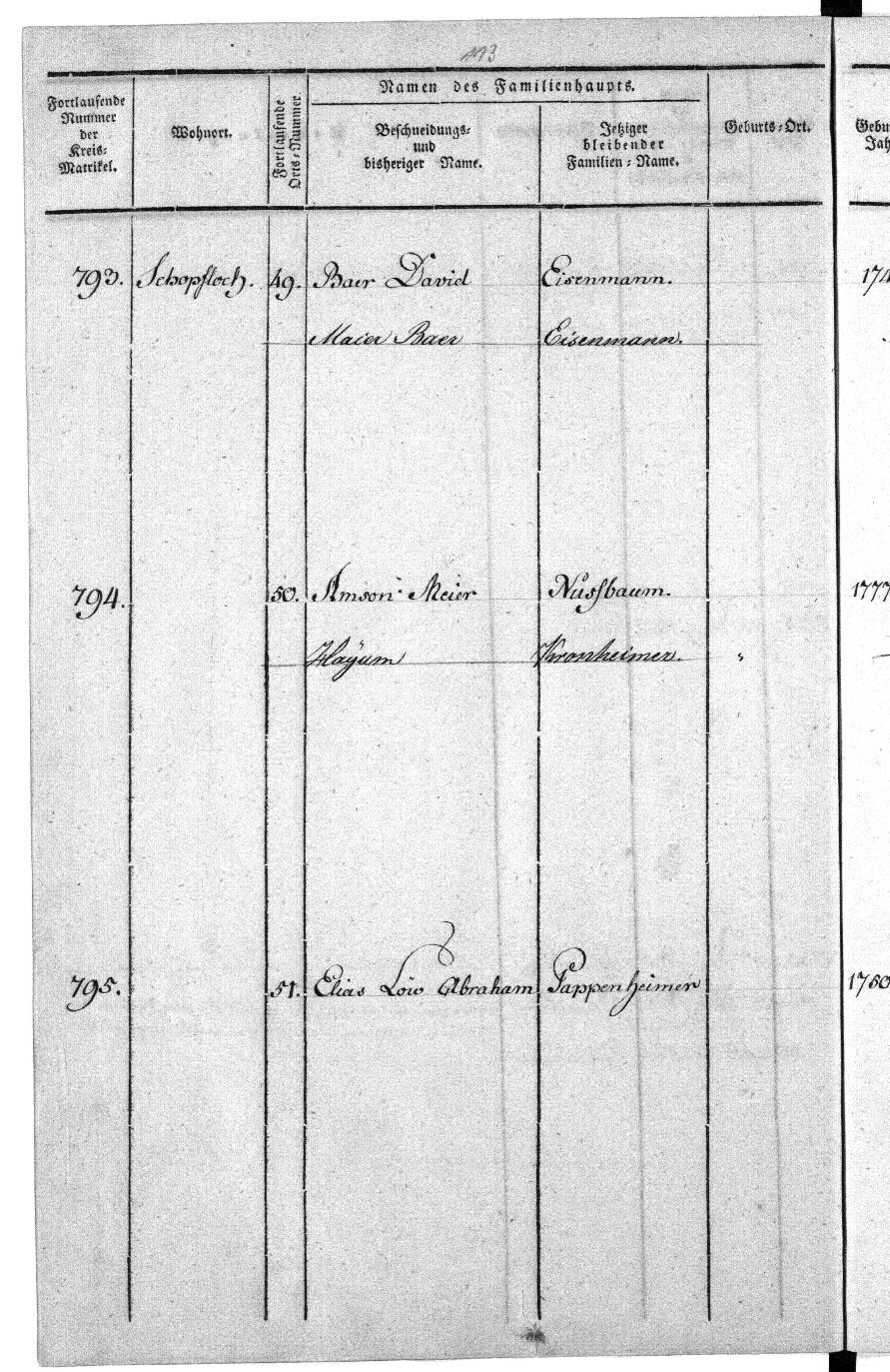
Yesterday I was very fortunate to receive the following document from a very generous fellow researcher named Ralph Baer.

1827 Matrikel part 1 for Amson Nussbaum

1826 Matrikel left side of page

1827 Matrikel part 2 for Amson Nussbaum

1826 Matrikel right side of page


This is from the census or Matrikel of 1826 for the town of Schopfloch, and the second name listed is the entry for my 4x-great-grandfather, Amson Meier Nussbaum, father of John Nusbaum.  It reports that he was born 1777 and matriculated on September 26, 1809. His occupation was “Handel mit alten Kleidern” or trade with old clothes. [Thank you, Ralph, for sending me this and for the translation.]

I was curious about the name under Amson’s name, Hayum Kronheimer, and Ralph explained to me that he was Amson’s replacement on the Matrikel.  In other words, after Amson died, Hayum Kronheimer replaced him in the count of permitted Jewish families in Schopfloch.

I’ve not yet had a chance to research Hayum Kronheimer.  Perhaps he was an in-law, or maybe just a stranger to the family. [UPDATE: Further research led me to a family tree for Hayum Kronheimer; it does not appear that he married anyone in the Nussbaum family.]   Either way, I found it rather chilling to see the actual name of the person who replaced my ancestor on the list of Jews allowed in the town.

A Town with A Secret Language: Schopfloch and the Nusbaums

I thought I should outline my connection to the Nusbaums before I began writing about them.   The chain between Amson Nusbaum  and me is as follows, with the Nusbaum descendants all on the left side of each couple:

Amson Nusbaum—Voegele Welsch  (my 4x-great-grandparents)

John (Josua) Nusbaum—Jeannette (Shamet) Dreyfuss  (my 3x-great-grandparents)

Frances Nusbaum—-Bernard Seligman  (my great-great-grandparents)

Eva May Seligman—-Emanuel Cohen (my great-grandparents)

John Nusbaum Cohen, Sr. — Eva Schoenthal  (my grandparents)

John Nusbaum Cohen, Jr. —-  Florence Goldschlager  (my parents)

Amy Cohen (me)

(Although the Nusbaums spelled their name with two S’s in Germany as in NUSSBAUM, the family dropped the second S once they got to the US, just as the Seligmanns dropped the second N when they immigrated.)

So where do I start telling this Nusbaum story? I have already talked about my grandfather John Nusbaum Cohen’s life and his mother Eva Seligman Cohen’s life in telling the stories of the Cohens and the Seligmans.  So I could start with my great-great-grandmother, Frances Nusbaum, who married Bernard Seligman.  I’ve also written a little about her.  But I prefer to start at the earliest point and move forward in time.   Right now the earliest Nusbaum ancestors I have found date back to the 18th century with Amson Nusbaum and Voegele Welsch.

This is the first branch that I have been able to take back as far as my 4x-great-grandparents.  Although I know very little about Amson Nusbaum and Voegele Welsch, I am hoping that I can learn more if I can obtain more records from Schopfloch.  But for now, here is what I know.

Amson Meier Nusbaum was born around 1777 possibly in Schopfloch, a small town in the Ansbach region of Bavaria.  He married Voegele Welsch, who was born March 7, 1782, somewhere in Germany.  They were married around 1804, and they had eight children born between 1805 and 1819, all born in Schopfloch.  Amson was a peddler.

Schopfloch

Schopfloch

Although I do not have much specific information about Amson and Voegele, I was interested in learning more about the town where they lived and raised their children in order to glean something about what their lives might have been like.

First, I read a little bit about Bavaria.  I really know almost nothing about Germany’s history, but I do know that it was not a unified country until 1871.  Before that, there were a number of separate duchys and kingdoms controlled by various aristocrats and noblemen, fighting over their borders for many hundreds of years. From the tenth century until the beginning of the nineteenth century, the land that we know as Germany was part of the Holy Roman Empire.   The Thirty Years War from 1618 to 1648, which started as a conflict between Protestants and Catholics and grew to a much larger regional conflict, was perhaps the most destructive of the wars that occurred during this pre-unification era in the area we now call Germany.

Map of the Imperial Circles of the Holy Roman ...

Map of the Imperial Circles of the Holy Roman Empire (c. 1512) (Photo credit: Wikipedia)

Bavaria was one of those regions within what is now Germany.  It is located in the southeastern part of the country, bordering the Czech Republic and Austria to the east and south.  The official website for what is now the state of Bavaria within the Federated Republic of Germany said this about the history of Bavaria:

Bavaria is one of the oldest states in Europe. Its origins go back to the 6th century AD. In the Middle Ages, Bavaria (until the start of the 19th century Old Bavaria) was a powerful dukedom, first under the Guelphs and then under the Wittelsbachs. … Cities like Regensburg developed into cultural and economic centres of European rank. After the Thirty Years War, the Electorate of Bavaria played an important role in the political deliberations of the major powers. In the 19th century Bavaria became a constitutional monarchy and the scene of a great cultural blossoming and of political and social reforms.

Schopfloch is a small town of three thousand people located near the western boundary of Bavaria.  It is about sixty miles west of Nuremberg, about one hundred miles northwest of Munich, and about eighty miles northeast of Stuttgart.

Schopfloch in AN

Schopfloch in AN (Photo credit: Wikipedia)

According to the official town website, the earliest mention of the town dates from March 11, 1260, on a land deed witnessed by someone named Ulricis de Schopfloch.  (Schopf loch apparently means “ crested hole” or “tuft hole,” and perhaps this is a reference to the fact that the town is located in a small valley).  During the Thirty Years War, many Protestants moved from Salzburg to Schopfloch.  They were primarily tradesman in the building trades—masons and bricklayers– and the town was known for its many families in the construction business.

The history of the Jews in Bavaria is, like the history of Jews in most countries in Europe, one of oppression, discrimination, unfair taxation, and frequent pogroms with occasional periods of greater tolerance and civil rights.  There is evidence of Jews living in Bavaria as early as the 900s, and numerous towns and cities in Bavaria had Jewish communities by the 12th century.  Jews were limited in their livelihoods in many locations; in many places, they were prohibited from most trades other than moneylending.  Beginning in the 14th century and continuing through the 17th century, the Jews were subjected to widespread orders of expulsion and deportation from many Bavarian communities.  A good summary of the history of Jews in Bavaria can be found here at H. Peter Sinclair’s “Chronology of the History of the Jews in Bavaria 906-1945,” .

As for Schopfloch specifically, the first Jews settled there in the fourteenth century.  According to The Encyclopedia of Jewish Life Before and During the Holocaust: K-Sered (Shmuel Spector, Geoffrey Wigoder, eds., 2001, NYU Press), p.1151, Jews moved to Schopfloch after being expelled from the nearby town of Dinkelsbuehl.   Another source suggests that Jews were welcomed to Schopfloch by rival nobles who took in Jews to increase their strength.     Jews were able to do well, engaging in cattle trade in Schopfloch and in several communities near Schopfloch.

A Jewish cemetery was created around 1612 and served not only the Jewish residents of Schopfloch but also those of surrounding towns.

A synagogue was built in 1679, and there was also a ritual bath and a school.   According to the website “Destroyed German Synagogues and Communities” :

The Jews of Schopfloch established a synagogue in 1679 and enlarged it in 1712 and again in 1715. Rabbis served the community during the 17th, 18th and 19th centuries, and the village was home to a regional rabbinate during the years 1841 to 1872. In 1877, a new synagogue was built on the Judengasse, or “Jews’ alley” (later renamed Bahnhofstrasse).

According to the town website, the Jewish residents played an important role in the social history of the town, and the long history of co-existence between the Christians and Jews in Schopfloch made it less susceptible to anti-Semitism even in the Nazi period.  Perhaps there were no pogroms or expulsion orders in Schopfloch.  None were mentioned in H. Peter Sinclair’s “Chronology of the History of the Jews in Bavaria 906-1945,” cited above and found here.

Overall, it would seem that Schopfloch would have been a relatively comfortable place for Jews to live when my ancestors Amson and Voegele Nussbaum were having children between 1805 and 1819 and the years following when their children were growing up.  Amson died June 7, 1836, and Voegele died October 2, 1842.  From what I can find in immigration records, my three-times great grandfather John (Josua) Nusbaum emigrated in 1843, the year after his mother died.  It appears that at least some of his siblings emigrated around the same time.  What would have motivated them to leave once their parents had died if in fact conditions for Jews were relatively good in Schopfloch?

The Nussbaum family was growing up in an era of significant change in Bavaria and in Europe generally.  Napoleon had risen to power in France as the 18th century ended, and the Holy Roman Empire crumbled. His armies invaded the lands in what is now Germany, and eventually he defeated the Austrian army and took over much of German land. His emancipation of the Jews in France in 1806 had an impact on those in Bavaria, and in 1813 Bavaria adopted the Jews Edict of 1813.  Although Napoleon was defeated shortly after, the Jews Edict of 1813 remained the law in Bavaria.

The Jews Edict was a mixed blessing.  As described by one source, “Jews now could acquire land and participate in trade but they were forced to adopt German surnames and to list the head of the household’s name and occupation as shown in the Matrikellisten (census) of 1817.”   This registry (while a good thing for genealogy research), which may seem benign, had a negative impact on Jews because it forced many Jews to leave their homeland.  Section 12 of the Edict provided that the number of Jewish families in any community could not increase.  That meant that a child in a Jewish family could not establish his or her own family, but had to leave the community.  Section 13 provided some exceptions, but they were quite restrictive.  In addition, Section 14 prohibited the issuance of a marriage permit even if the marriage would not result in an overall increase in Jewish families unless the man could demonstrate that he was going to engage in a legal occupation other than being a peddler.  http://www.rijo.homepage.t-online.de/pdf/EN_BY_JU_edikt_e.pdf

Thus, not all of Amson and Voegele’s children could stay in Schopfloch.   To do so would have created eight new Jewish families in the town.  Moreover, since Amson had been a peddler, chances are at least some of his sons had planned to engage in a similar trade.  So they had to leave Schopfloch, and since the neighboring towns were under the same restrictions, they could not even settle nearby.  They had to emigrate, and I am sure that America, a new country with a democratic form of government, must have been very appealing to these young people who were being denied the right to stay in the town where they were born.

The Jewish population in Schopfloch hit its peak in 1867 with 393 Jewish residents out of a total population of 1,788.  Although a new synagogue was built in 1877, by 1880 the Jewish population had dropped to 147 people.  It continued to drop so that by the early 1930s there were fewer than forty Jews in the town.  Nevertheless, the synagogue was renovated in 1932, and there was a large celebration rededicating the synagogue, attended by many Jews and non-Jews, including members of the Christian clergy, the mayor, and other town officials and residents.  One pastor spoke about the good relations between the Christian and Jewish residents of Schopfloch.

Schopfloch synagogue 1910 Source: Wallersteiner Kalendar, 1983 found at http://www.alemannia-judaica.de/schopfloch_synagoge.htm

Schopfloch synagogue 1910 Source: Wallersteiner Kalendar, 1983 found at http://www.alemannia-judaica.de/schopfloch_synagoge.htm

Tragically, just five years later on November 9, 1938, the Night of Broken Glass, or Kristallnacht, this newly renovated synagogue was destroyed by fire.  As described on the “Destroyed German Synagogues and Communities” website:

In 1938, in the wake of virulent anti-Jewish incitement, Schopfloch’s mayor advised the Jews to leave. All of them did so within months, and the synagogue was eventually sold (its ritual objects were transferred to Munich). Schopfloch’s last Jews left in October 1938. Although the synagogue was set on fire on Pogrom Night, the blaze was extinguished by the fire brigade. The building’s interior was completely destroyed, as were the ritual objects in Munich. Three Schopfloch Jews emigrated; the others relocated within Germany. Forty-eight perished in the Shoah. The synagogue building was demolished in 1939.

The cemetery, however, still exists, and a woman named Angelika Brosig began a project to restore the cemetery and to record all the names of those buried in the cemetery.  Sadly, Ms. Brosig died in 2013, and not all of the headstones have yet been translated and recorded, but the work is supposed to be continuing by others.  Thus far, I have not found any Nussbaums on the list, but I have to believe that my four-times great-grandparents Amson and Voegele are buried there.

Although Schopfloch is and was a small town without any particular historical significance of its own, it has been recognized for an interesting reason.  The Jews of Schopfloch developed a dialect of their own to be used in the course of cattle trade as a way of communicating without being understood.  It was a dialect combining Hebrew terms with German, and eventually it was used not only by the Jewish residents of Schopfloch but also by the non-Jewish residents.  In fact, the dialect, called Lachoudish, a shortened version of Lachon Kodesh, or “holy language” in Hebrew, continued to be used by the residents of Schopfloch long after all the Jews left the town in the 1930s.  The New York Times published an article about this secret language on February 10, 1984, giving some examples of the use of Hebrew terms in the dialect:

Lachoudisch is replete with words that bespeak the Jews’ wary relationship to Christian authority. The word for ”church” in Lachoudisch is ”tum” – from the Hebrew word for ”religiously unclean.” The word ”police” is ”sinem”- from the Hebrew for ”hated.” A priest is a ”gallach” or, in Hebrew, ”one who shaves.”

(James M. Markham, “Dialect of Lost Jews Lingers in a Bavarian Town,” The New York Times (February 10, 1984) found at http://www.nytimes.com/1984/02/10/world/dialect-of-lost-jews-lingers-in-a-bavarian-town.html  The article also provides historical and current information about the town.)

This website provides further examples of Hebrew terms used in Lachoudish.  http://www.medine-schopfloch.de/Lachoudisch/lachoudisch.html   Although Lachoudish is disappearing as there are fewer Schopfloch residents who remember it, there has been some effort to remember and revive the dialect.  This video, which unfortunately for me is in German, is about Lachoudish and also provides some images of Schopfloch today.  If anyone wishes to translate this for me, please let me know.

Coat of arms of Schopfloch

Coat of arms of Schopfloch (Photo credit: Wikipedia)


The Nusbaums: Were They Jewish? Learning from Rookie Mistakes

English: Postcard, dated 2.9.1917. Title: &quo...

English: Postcard, dated 2.9.1917. Title: “Schopfloch” Deutsch: Postkarte, datiert 2.9.1917. Titel: “Schopfloch” (Photo credit: Wikipedia)


Before I started doing genealogy research, I knew only one thing about the Nusbaum name.  I knew it was my father’s middle name, that it was also his father’s middle name, and that they were named for some ancestor named…John Nusbaum, my great-great-great-grandfather.

I had no idea who John Nusbaum was, although I think I did know he was from Germany.  I didn’t know if he had ever lived in the United States.  And I had no idea how he had gotten the name John.  John is not a Jewish name.  Jonathan, yes, but I do not think I have known more than one or two men named John who were Jewish, except for my father.  In fact, there were some people who had questioned whether my father really was Jewish, given his first name.

Things got even more confusing when I first started doing genealogy research a couple of years ago.  I was a real novice, and I did not know enough to know that people often put bad information on their family trees.  I assumed, very naively, that if someone put a tree on ancestry, it had to be right.  Like I said, I was a real novice.  So as I was adding information (much of it from reliable sources like census reports), I found several ancestry trees with my ancestor John Nusbaum appearing on it—with his descendants included.  I was excited—these trees linked my ancestor to a whole line of Nusbaums going back hundreds of years!  I felt like I had hit the jackpot.  I added all these people to my tree, thinking that I could now trace my family back centuries on the Nusbaum side.

I should have been more circumspect.  I should have picked up on a few clues—too many people named Johann, too many people named Maria, Christian, Catherine—no Jewish sounding names.  I began to think that in fact my Nusbaum ancestors had not been Jewish.  But I was new and trusting and just accepted what I saw.  It was the internet, after all. It had to be true. Right?

I had then turned to other things and put those Nusbaums aside.  After all, they were all done, I thought.  Someone else had found them all.

But then about a month ago I started looking again at those Nusbaums, an older and hopefully wiser researcher now.  I went back to all those trees, and I realized they had no sources to support the claim that my John Nusbaum was the same person as the Johann Nusbaum that linked back to all those non-Jewish sounding Nusbaums.  Only one tree had any sources at all for these earlier Nusbaums; the others had just somehow linked to that tree and added my ancestor to it, assuming John was the same as Johann.

I contacted the owner of that one sourced tree, and he and I had a good exchange and a few chuckles about all those other misleading trees.  His ancestors were Christian, and he had no sources indicating a link to a John Nusbaum who settled in Pennsylvania, as my John Nusbaum had done back in the 1840s.  I detached my ancestor from the other trees, sad to lose hundreds of years of ancestors, but happy to know that my Nusbaums could have been Jewish.  (I also wrote to the owners of those other trees, pointing out the error, but not one of them responded nor did they take my Nusbaums off their trees.)

So now my Nusbaum line ended with John Nusbaum.  I was able to find quite a bit in the US records, but had no hints as to his parents, siblings, or home town in Germany.  And then my father provided me with some answers.  He has the Nusbaum family bible, and it has entries for John and his siblings as well as his children, grandchildren, and great-grandchildren.  It told me where he was born—Schopfloch, Ansbach, Bavaria, in 1814.  I had names and birth dates for his siblings: Isaac (1812), Ernest (1816), Caroline (1822), Mathilde (1825).[1]  It was a gold mine.  And I was off and running to find the real Nusbaums.

A Map of Schopfloch im Landkreis Ansbach, Baye...

A Map of Schopfloch im Landkreis Ansbach, Bayern, Germany. (Photo credit: Wikipedia)

Now comes the best part.  I contacted the registry in Schopfloch to ask whether there were any records for my ancestors, giving the names of the Nusbaums I knew about.  And this is what I received in return from a man named Rolf Hofmann:

FAMILY SHEET  AMSON MEIER NUSSBAUM

OF SCHOPFLOCH

compiled by Rolf Hofmann (HarburgProject@aol.com)    VERSION 01 


AMSON MEIER NUSSBAUM

peddler in Schopfloch

born ca 1777 (Schopfloch ?), died 07 Jun 1836 Schopfloch

father = Meier ?

married ca 1804 ?


VOEGELE WELSCH

born 07 Mar 1782 (where ?), died 02 Oct 1842 Schopfloch

father = ? 


CHILDREN (all born in Schopfloch): 

(01) GUETEL                10 Feb 1805 – ?


(02) MADEL                 20 Jul 1806 – ?


(03) LOEW                  26 Apr 1808 – ?


(04) ISAK                  28 Mar 1810 – ?  emigrated to USA in 1843


(05) SARA                  08 Jul 1812 – ?


(06) JOSUA                 29 Nov 1814 – ?

(JOHN in USA)          emigrated to Philadelphia, USA around 1840

married ca 1852 [this is not correct]

JEANETTE  NN from Hesse-Darmstadt (Germany)

20 May 1817 – 12 Jan 1908 (died in Philadelphia)  parents = ? 

so far known children = Millen * 1853 + Lottie * 1863


(07) SALOMON               24 Aug 1816 – ?


(08) MEIER                 14 Sep 1819 – ?


I am now in touch with Mr. Hofmann and hope to get the sources for this information, but you can imagine the happy dance I did when I saw this.  I had the names of my FOUR-times great-grandparents, Amson and Voegele.  I had names for all their children, including some I had no records for and some who matched with the names I had from the family bible.  Madel must be Mathilda, Isak is Isaac, and I assume Ernst is Salomon, based on the birth year.  Also, I  found other Nusbaums through research—Meier is Maxwell, Loew is Leopold.

And most importantly?  Well, John, my three-times great-grandfather—his name was originally Josua.  He did in fact have a Jewish name.  He obviously Americanized it to John, just as many of his siblings Americanized their names to names that were less Jewish-sounding.  My father and my grandfather could have been named Joshua Nusbaum Cohen if their namesake had not changed his name to John.

There is still much research to be done and much to learn about the Nusbaums.  But one big mystery is solved.  My Nusbaums were not descended from all those Johanns and Marias, but were from a Jewish family living in Schopfloch, Bavaria, in the early 19th century.


[1] Although Caroline and Mathilde were listed with different surnames, I was able to find US records that verified that they were John’s sisters.  More on that later.

More Gifts from Doing Genealogy: The Gau-Algesheim Seligmanns and New Friends in Germany

As I’ve been researching and writing about my American Seligman relatives, I’ve also been busy trying to learn more about my German ancestors.  I wrote to about five different people in Gau-Algesheim, names I found on websites or through contacts from JewishGen or two Facebook groups, Tracing the Tribe and German Genealogy, including Klaus Cook.  I’d been trying since September 7 to find someone to help me learn whether there were any records of Jewish births, marriages and/or deaths from the town where I knew Sigmund, Bernard and Adolph Seligman were born.  I had gotten no responses—not even one saying that they had no such records.

Coat of arms of Gau-Algesheim

Coat of arms of Gau-Algesheim (Photo credit: Wikipedia)

I also contacted a woman named Dorothee Lottman-Kaeseler.  I had found her name on the website describing the restoration of the Gau-Algesheim cemetery, and she did write back to me.  She was very helpful and eventually she managed to find someone to pay attention to my emails.  Imagine my delight when the other morning I woke up to this email:

On behalf of our registrar, Frau Hemmkeppler, I am hereby replying to your genealogy request, which we have received on 15. Oct. 2014 via email. 

At first, please note, that due to age, we do not have any electronic archives of our historical records.  However, we have put in extra efforts and were able to manually trace the following information related to the name of Seligmann: 

Siegesmund Seligmann, DOB: 24. Dec.1829 in Gau-Algesheim, Reg-Nr. 67/1829


Salomon Seligmann, DOB: 15. Mar.1832 in Gau-Algesheim, Reg-Nr. 19/1832


Carolina Seligmann, DOB: 18. Mar.1833 in Gau-Algesheim, Reg-Nr. 25/1833


Benjamin Seligmann, DOB: 10. May 1835 in Gau-Algesheim, Reg-Nr. 36/1835


Bernhard Seligmann, DOB: 23. Nov.1837 in Gau-Algesheim, Reg-Nr. 49/1837


Hyronimus Seligmann, DOB: 14. Dec.1839 in Gau-Algesheim, Reg-Nr. 75/1839


August Seligmann, DOB: 10. Dec.1841 in Gau-Algesheim, Reg-Nr. 88/1841


Adolph Seligmann, DOB: 29. Sep. 1843 in Gau-Algesheim, Reg-Nr. 52/1843


Mathilde Seligmann, DOB: 31. Jan. 1845 in Gau-Algesheim, Reg-Nr. 4/1845


Paulina Seligmann, DOB: 29.01.1847 in Gau-Algesheim, Reg-Nr. 5/1847 

All the beforementioned persons are the children of Moritz and Eva Seligmann (born as Eva Schoenfeld). …. 

Sincerely,

B. Brettschneider

IT-Administrator


There was the birth record of my great-great-grandfather Bernard, his brothers Sigmund and Adolph, and seven other siblings, all born in Gau-Algesheim, all the children of Moritz and Eva Schoenfeld Seligmann.  I was so excited.  I now had seven more relatives to learn about and, most importantly, the names of my great-great-great-grandparents, Moritz Seligmann and Eva Schoenfeld.

I have now been in touch again with Bernie Brettschneider and hope to obtain copies of these records and also to learn if there are any other records of these individuals or of others who might be their children, spouses, and so on.

Gau-Algesheim in MZ

Gau-Algesheim in MZ (Photo credit: Wikipedia)

I am deeply grateful to Klaus Cook and the other people in the Facebook groups and JewishGen, to Dorothee Lottmann-Kaeseler and to Bernie Brettschneider for their assistance, and I am excited to see what else I can learn about this part of my family.  I am also in touch with Walter Nathan, who was the man behind the cemetery restoration in Gau-Algesheim.  Walter and I are trying to find what connections there may be between my Seligmanns and his Seligmann family, and I am learning more and more about how Jews lived in Germany in the 19th century.

When I started down this path less than three years ago, I never imagined how much I would learn about the world and its history by simply researching my own little family. I never imagined I would make contact with people in Germany and Romania and Poland, have cousins all over the world and talk to people whose lives have been so interesting.  The gifts I receive from genealogy continue to surprise me and warm my heart.

And I now am thinking that someday in the not too distant future I will visit Gau-Algesheim and see where my Seligmann ancestors lived.  And Iasi to see where my Goldschlager and Rosenzweig ancestors lived.  And Tarnobrzeg, Poland, to see where my Brotman ancestors lived.  In fact, that last one is being planned for this coming spring.  And then there are all the places right here in the US where I can go to walk in the places where my ancestors lived—New York City, Philadelphia, Washington, Santa Fe, Colorado, and who knows where else?  The adventures continue.


“Brothers and Sisters in England and in Germany” and My Lost Inheritance

When Bernard Seligman died in 1903, his obituary listed among his survivors not only his brother Adolph, but also “other brothers and sisters in England and in Germany.”  Thus far, I have only found one other definite sibling, a brother named James, and one possible sibling, a brother named August.  I am still working on locating records from Gau-Algesheim to see if I can locate any other siblings or other relatives of my great-great-grandfather.

My belief that August may be a sibling is based on two records I found on ancestry.com.  One is a birth record for August Seligmann, born on December 10, 1841, in Algesheim, Rheinhessen, Germany, to Maritz Seligmann and Barbara Schonfeld.  The second is a marriage record for August Seligmann to Rosa Bergmann on March 5, 1875, in Frankfort-Main.  I know that this record is for the same August Seligmann as the birth record because the birth date and the parents’ names match those on the birth record.  Why do I think that August Seligmann was Bernard’s brother? Because Adolph’s death certificate said his father’s name was Morris and because other sources state that Bernard’s parents’ names were Moritz and Babette.  The place of birth and the date of birth also make it likely that August was my great-great-great-uncle and that Maritz Seligmann and Barbara Schonfeld were my three-times great-grandparents.  Now if I could only get access to Gau-Algesheim records, I might find the other missing family members.  If anyone has any suggestions, please let me know.  Meanwhile, I will continue to scour the resources I have to see if I can find them.

Gau-Algesheim. Langgasse.

Gau-Algesheim. Langgasse. (Photo credit: Wikipedia)

The one other brother I know of for certain I only know about because of my cousin Pete.  Pete informed me about James Seligman, our English relative, and he himself only had known about James because of an estate settlement back in the 1980s involving James’ estate.  (I do not know whether my father or my aunt Eva or my cousin Marjorie ever were contacted about this inheritance, but given the amount at stake and how much time has passed, it’s not worth the trouble of finding out.  Pete said his share was a little more than $100, and it took years before he received payment.)

James Seligman was born in about 1853 in Germany, and by 1881 he had settled in Kilpin, Yorkshire, England and was living as a “visitor” in Kilpin Lodge, according to the 1881 England and Wales census. (England and Wales Census, 1881,” index, FamilySearch (https://familysearch.org/pal:/MM9.1.1/X3FK-ZVF : accessed 30 Sep 2014), James Seligmare in household of George H Anderton, Kilpin, Yorkshire (East Riding), England; citing “1881 England, Scotland and Wales census,” index and images, findmypast.co.uk (www.findmypast.co.uk : Brightsolid, n.d.); PRO RG 11/, p. , The National Archives of the UK, Public Record Office, Kew, Surrey)  The census listed his occupation as a wine merchant.  On May 21, 1886, James became a naturalized British citizen.  He was residing in Lewisham, Kent County, England at that time, unmarried, and employed as wine merchant.

James Seligman naturalization UK

James Seligman naturalization p 2

The National Archives; Kew, Surrey, England; Duplicate Certificates of Naturalisation, Declarations of British Nationality, and Declarations of Alienage; Class: HO 334; Piece: 13.

James married Henrietta Walker Templeton in 1887 in the Marylebone district of London.  In 1901 they were living on Buchanan Street in Glasgow, Scotland, where James was now employed as a “hotel keeper,” according to the 1901 Scotland census.  From the census record it appears that there were about thirty people residing in this hotel.  James and Henrietta did not have any children listed as living with them, and according to Pete, they never did have any children, and I did not find any children listed on the BMD index who might have been their children.

Buchanan Street, Glasgow, Scotland.

Buchanan Street, Glasgow, Scotland. (Photo credit: Wikipedia)

I don’t have another record for James after 1901 until 1922 when he and Henrietta are listed as residing at 11 Woodbourne Road in Birmingham, England, on the Midlands, England, Electoral Register for that year.  They also appear at the same address on the 1925 and 1927 electoral registers.


Henrietta died on October 4, 1928, and is buried in Harborne, Stafford, England.  About a year later, James married Clara Elizabeth Parry.  He was seventy-six at that time, and his new bride was thirty years old, so like his brother Adolph in Santa Fe, James also married a much younger woman in this second marriage.  He died less than six months later on March 31, 1930, in Birmingham, and, like his first wife Henrietta, was buried in Harborne.

Clara, his young widow, did not die until about 1977.  It was after then that a search was made for James’ heirs, as Clara and James had not had any children, and James had died intestate.  Here is a copy of the letter that Pete’s sister received in January, 1980, regarding the estate of James Seligman.

Jan 22 1980 bank to joan

An investigation was done to find James’ heirs, and a family tree was created that included my father, his sister, and his cousin Marjorie as well as the other grandchildren of Bernard Seligman and the descendants of Adolph Seligman as the potential heirs to this estate. There are  several errors and omissions on this tree, which makes me wonder about the thoroughness of the search. I would post the tree except that there are references to living people with their birth dates and other identifying information and so out of concern for their privacy, I am not posting it.

That, unfortunately, is all I know about James Seligman and about August Seligman.  I have nothing specific to tie James to Bernard aside from this estate settlement and only those two German records to connect August with Bernard.  I remain hopeful that I will at some point find more records for the other Seligman(n)s who were my great-great-grandfather’s siblings and parents and other relatives.