England, Part III: London and Come from Away

The final three days of our trip to England were spent in London. We’d visited London for a week back in 1995 and had seen most of the major attractions then—the British Museum, Parliament, Buckingham Palace and the changing of the guards, Westminster Abbey, Big Ben, Piccadilly Circus, the Tower of London, Hampstead Heath, and so on. So we decided to focus our three days on some sites we had not seen in 1995.

We stayed at the St Ermin’s Marriott hotel in the Westminster section of London. It is a gracious old hotel built in 1899 that Marriott took over and renovated. It was originally built as residential apartments and later used during World War II as a base for British espionage and intelligence operations. Churchill is said to have frequented its bar when meeting with officials there.

You enter the hotel after passing through a beautiful passageway lined with flowers, and the lobby is also quite magnificent with a white double staircase and reliefs on the ceilings and walls. We took a tiny, narrow elevator to our sixth floor room. The room itself was very small. The bed was perhaps eight inches from the outer wall, and there were no dressers for our clothes or space to tuck away our suitcases. But the room was clean and the bed comfortable, and the staff at the hotel was very friendly and helpful.

We spent our first day mostly strolling through the neighborhood near the hotel. We stopped at Westminster Cathedral and then passed Buckingham Palace where the queen was apparently hosting a garden party and there was a line of people dressed to the nines waiting to enter the palace grounds. The men were in morning coats and the women in bright dresses with elaborate hats. I wanted to take a picture, but it seemed a bit tacky, so I resisted.
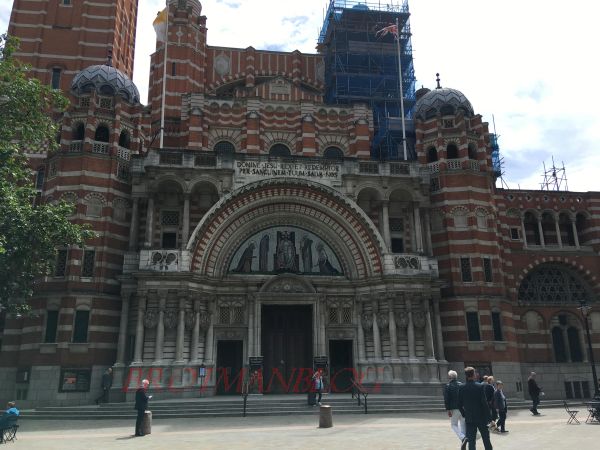
Westminster Cathedral
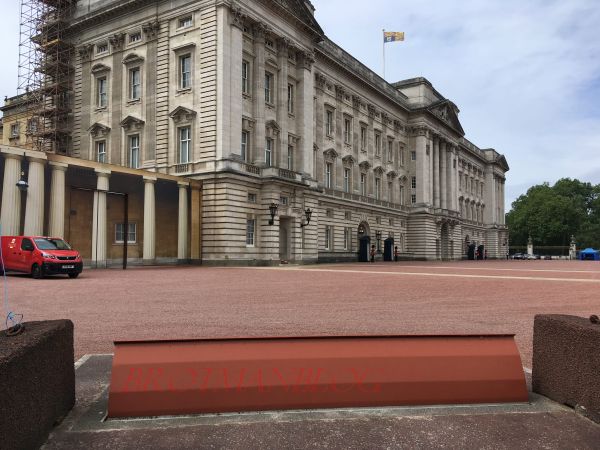
Buckingham Palace
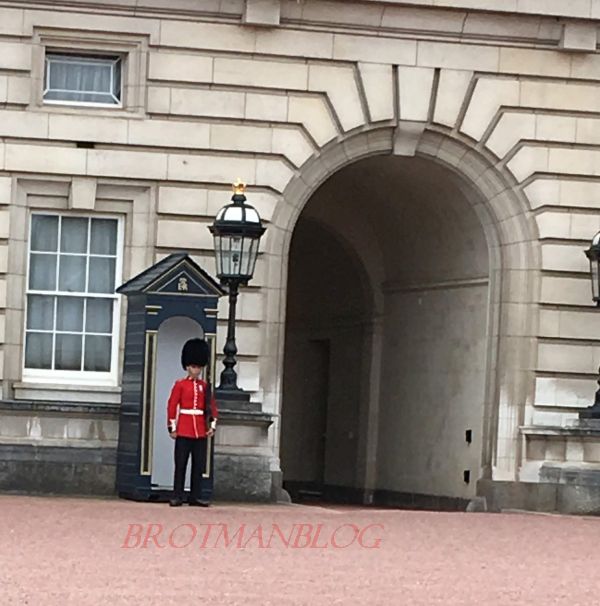
We weren’t sure this guard was real until we saw him move.

The Mall, the street that runs from Buckingham Palace to Trafalgar Square

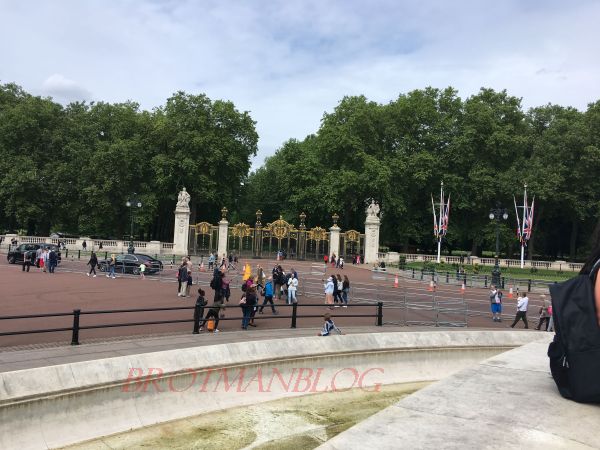
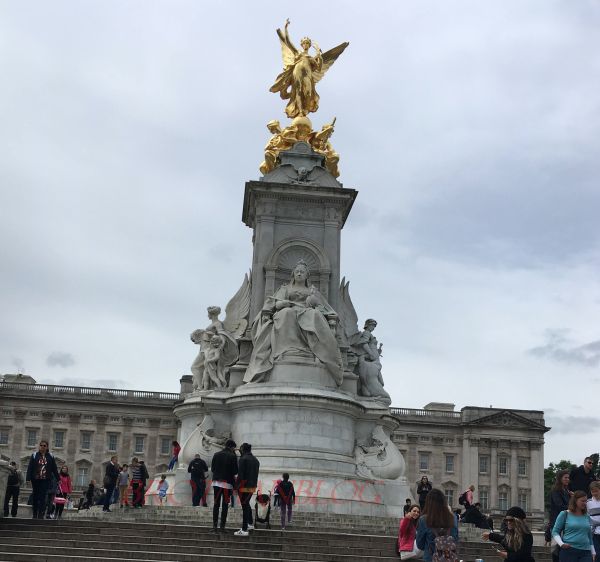
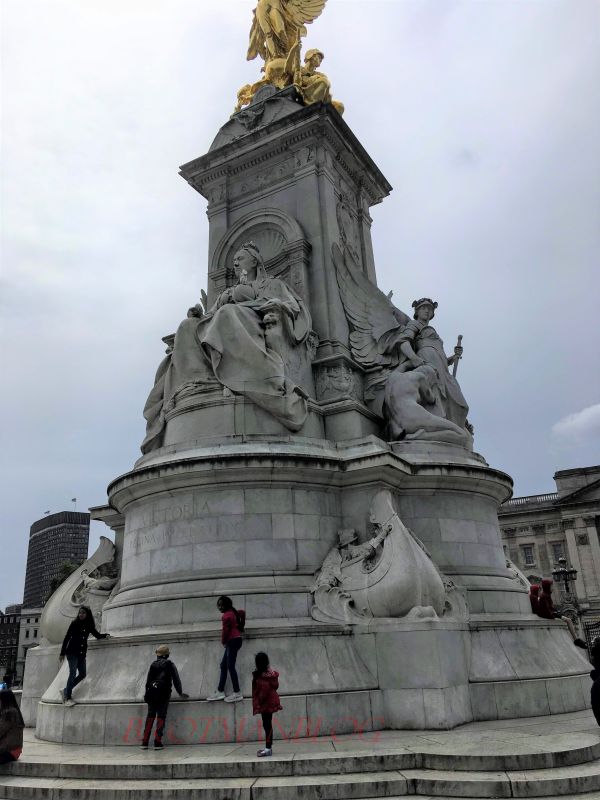
We admired the monument dedicated to Queen Victoria that stands right in front of the palace. I kept hearing the theme song from Victoria as we studied the monument from all angles and read about the significance of the various sculptural features.
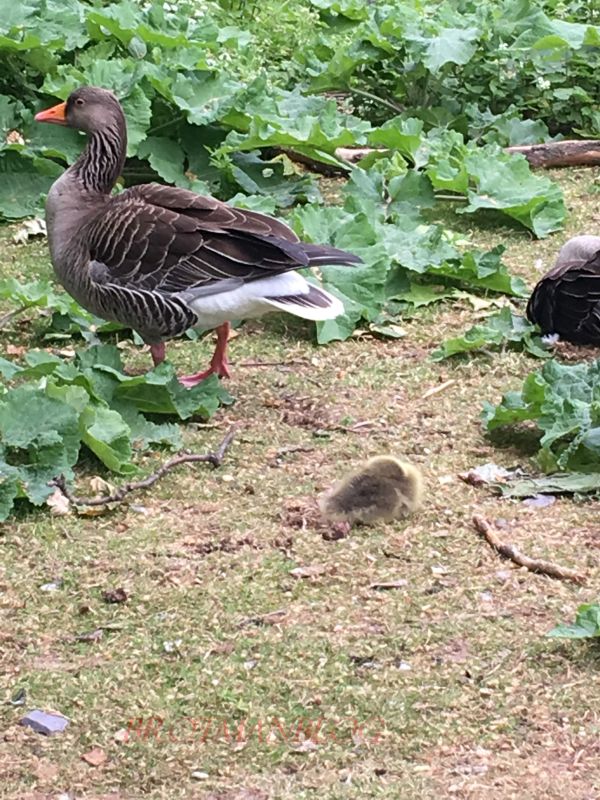
From there we took a lovely walk through St. James Park. The gardens and the birds and ducks and geese and pelicans make it a true oasis in the middle of a city where there are far too many cars, taxis, tourist buses, and people.

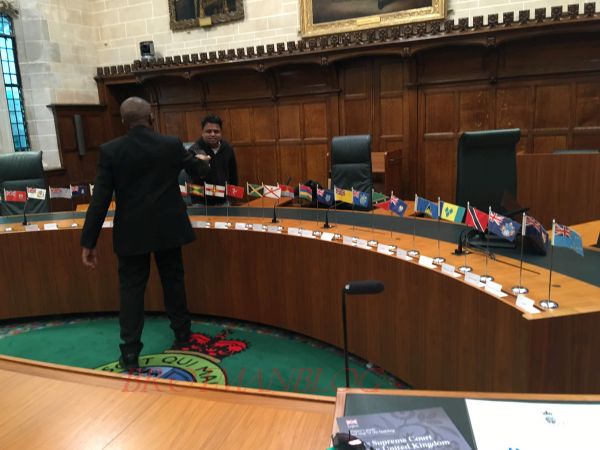
We then walked over towards Westminster Abbey and Big Ben (which is currently being renovated and is wrapped in scaffolding as is much of the Parliament building) and noticed that the Supreme Court was having an educational open house for the public that day. So we spent some time there, looking at the court rooms. No court sessions were being held, so we did not get to see any judges in wigs and robs.

St Margaret’s at Westminster Abbey

The London Eye (and no, we did not ride it)

Harvey at Westminster Bridge with Parliament behind him
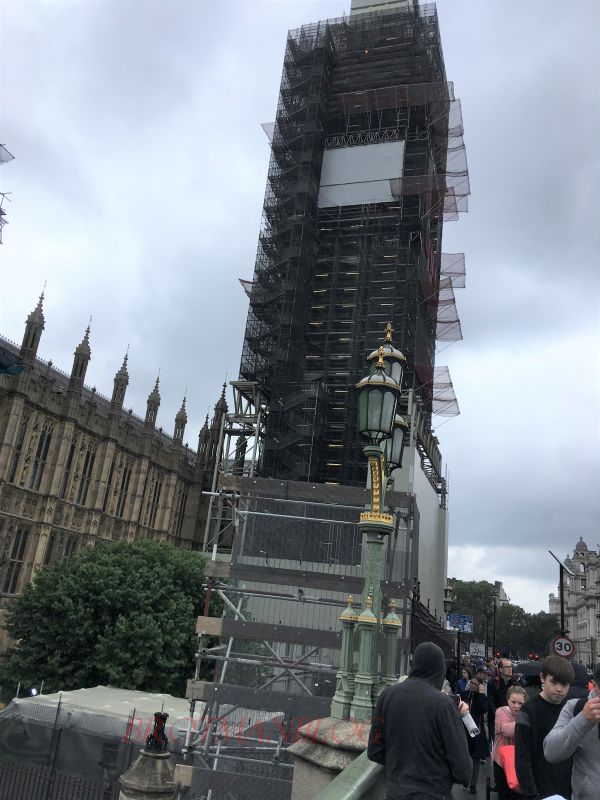
Poor Big Ben

Supreme Court library
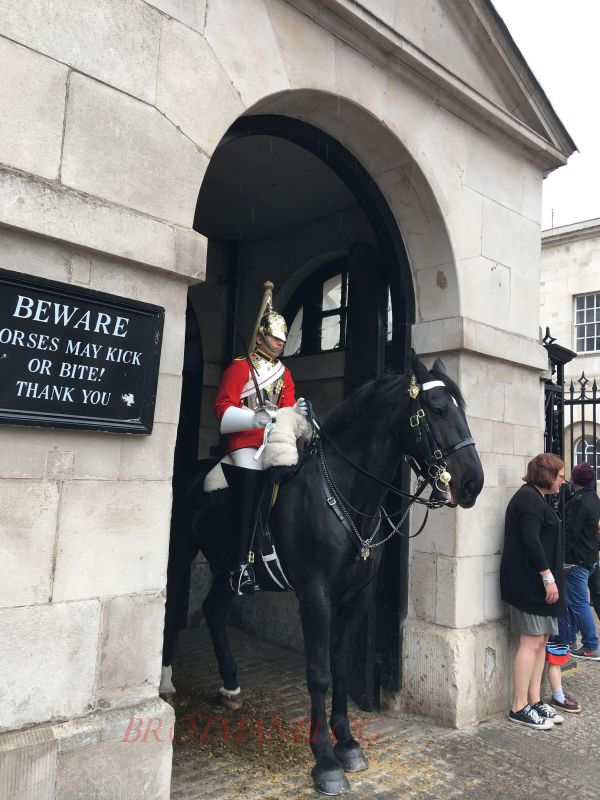
We also passed the Royal Horse Guards and avoided being kicked or bitten by the horses as we made our way to Trafalgar Square and the National Gallery, where we spent an hour or so enjoying the galleries devoted to 19th and 20th century paintings.
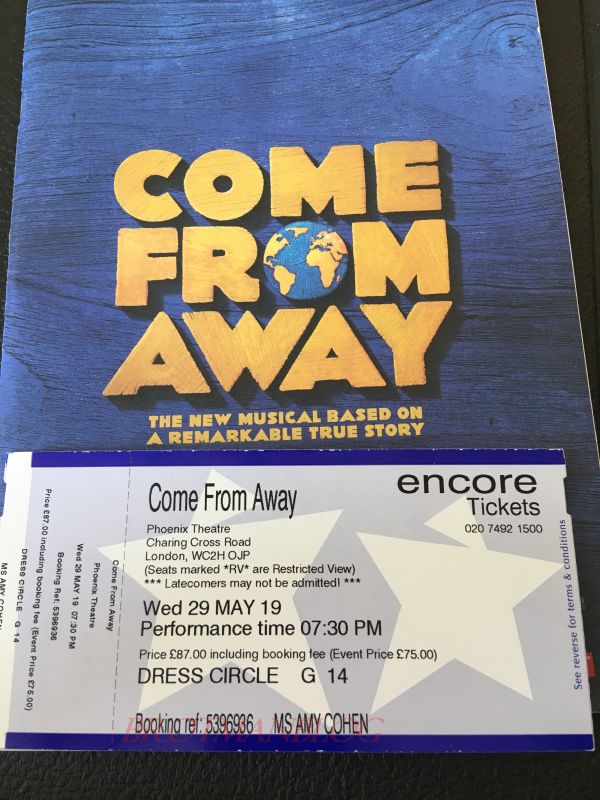
By then it was time to head back to the hotel because we had theater tickets that night in the West End. After a short rest, we walked from the hotel to Sartori, a very good Italian restaurant in the West End just a block or so from the theater.

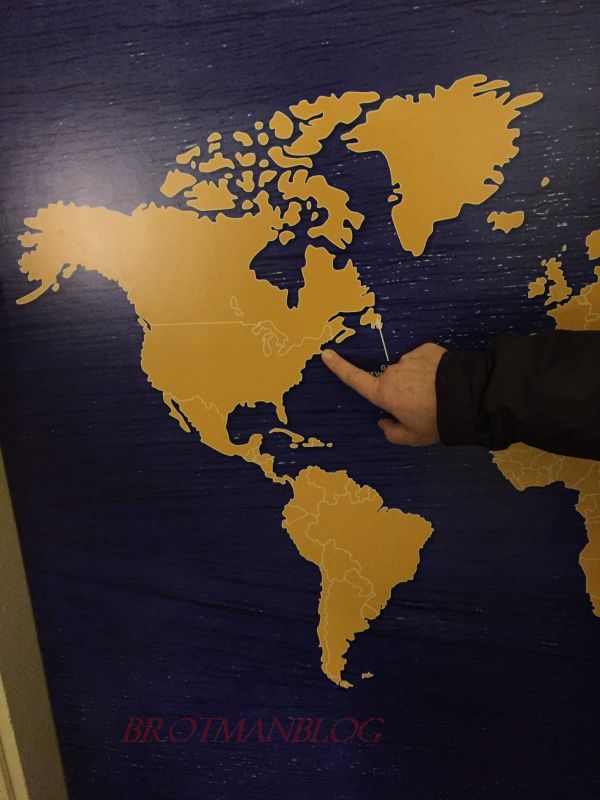
And then we saw what I believe is the best theater I have ever seen. If you haven’t seen Come From Away yet, you are missing a true masterpiece. The music, the staging, the acting are all excellent, and the writing and the story are so moving and effective. I rarely cry at live theater (though often at movies and television) because I am usually too aware that what I am watching is “just” theater and thus I am somewhat emotionally removed from it. But this play grabbed me from the beginning and kept me emotionally engaged throughout. I cried, I laughed, I was there with them all in Gander, Newfoundland. Will the play stand the test of time when those who lived through 9/11 are no longer in the audience? I would think that its universal themes of human decency, kindness, and the need for hope and love will sustain it.
Our second day in London started with a walk from the hotel to Covent Garden, a neighborhood of lots of upscale shops and restaurants and a big market that resembles Fanueil Hall Market in Boston—aisles and aisles of food and stores and restaurants and street performers. And St Paul’s Church (not to be confused with St Paul’s Cathedral discussed below).

St Paul’s Church

Street performers in front of St Paul’s Church, Covent Garden

Our walk continued along the Strand and Fleet Street where the Royal Courts of Justice are located as well as many law firms and publishing companies. The streets were crowded with young men in suits and women dressed in business clothing—presumably many of them lawyers or business people. We went into the court building, but it was lunch hour so no courts were in session. We did pass a number of lawyers sitting with clients, so there were likely hearings scheduled for the afternoon.

Somerset House

Royal Courts of Justice
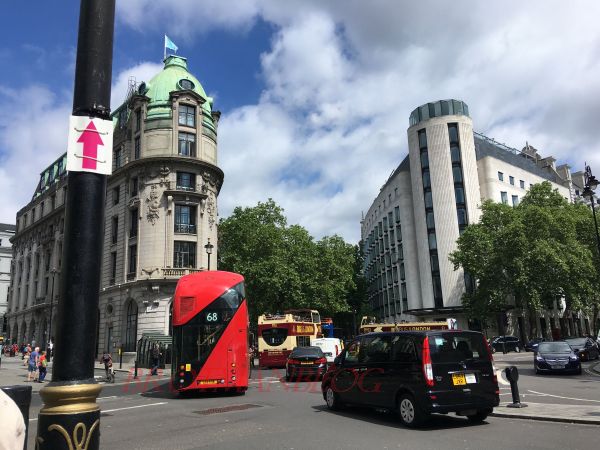
After a quick lunch, we reached St. Paul’s Cathedral, the Christopher Wren landmark that is still one of the tallest buildings in London.  You can see its dome from many vantage points in the city. When we saw what they were charging to enter the cathedral (twenty pounds each or about $26 each), we opted not to go inside.

St Paul’s in the distance on Fleet Street

Facade of St Paul’s Cathedral

The Dome of St Paul’s

Temple Bar, also designed by Christopher Wren

Here’s a map showing all the places we saw on the first day and a half in London. Our hotel is the circle at the lower left on Caxton Street and St Paul’s is at the upper right.

We decided to take “the Tube” or the Underground the rest of the way to Whitechapel, where we had arranged for a guided walking tour of London’s Whitechapel and Spitalfields neighborhoods, the neighborhood where my Cohen ancestors lived between about 1800 and 1851 before immigrating to the US. More on that in my next post.
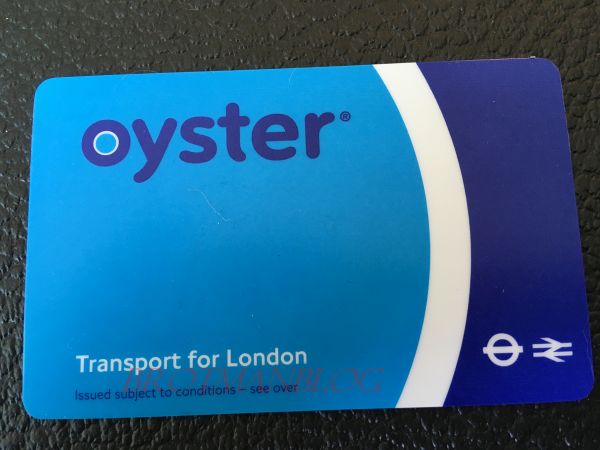
The Oyster Card—London’s public transport pass


England Part II, The Cotswolds and Oxford

The morning we left Cornwall for the Cotswolds was the only really rainy time we had during our entire trip. While packing for the trip, we’d prepared for the worst after hearing how damp and cold England can be this time of year, but we had almost no rain and lots of sunshine during our entire stay. And that one rainy morning was spent traveling to the Cotswolds. (No, we didn’t drive—we decided that would be too stressful, and the train connections were not workable, so we hired a driver to take us.)

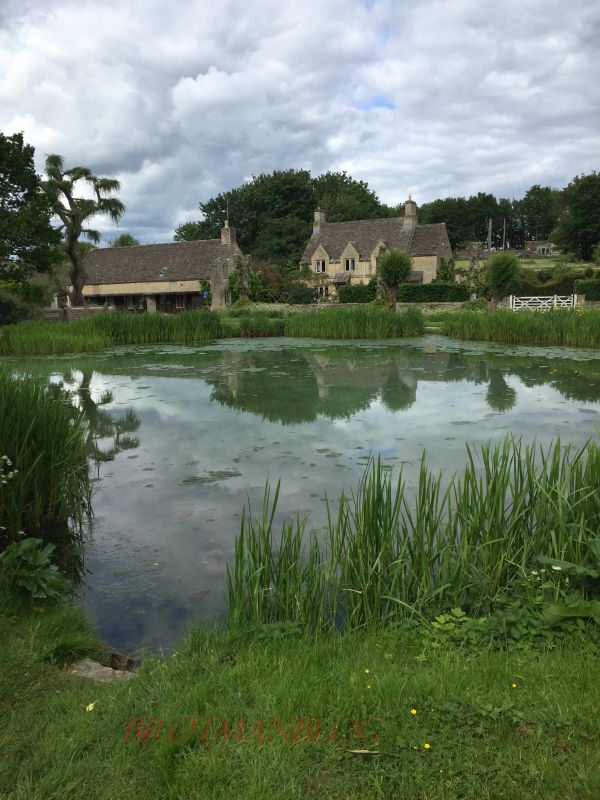
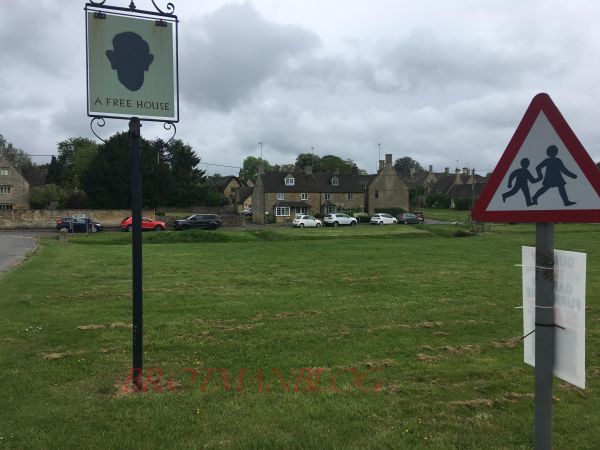
We arrived at the Kings Head Inn in Bledington around 1 pm, just in time for lunch.  And the rain stopped. The whole area was just charming.  Bledington is a tiny little hamlet, and, like all over the Cotswolds, all the houses and buildings are made of the same beige-colored stone.  According to Wikipedia, there are about 490 people in the village. The only commercial building we saw was the inn itself.

The Inn described itself as more a pub/restaurant with rooms than a hotel, so we weren’t sure what to expect. But our room was certainly adequate. It was in a separate building across a lovely courtyard from the actual inn. The room was small and somewhat dark, but nevertheless comfortable. And although we were a little concerned about noise—especially from the rooster who spent much of the day strutting around and crowing—we slept well, and the rooster had the decency not to start crowing until about 7 am.

During our first afternoon, we decided to take the “easy” walk suggested on a brochure distributed by the inn.  It was easy in the sense of not being physically challenging, but following the instructions turned out to be quite a challenge. Truly, it was not the fault of the person writing the directions, but rather the person who was interpreting them, i.e., me. Somehow I misread the first step in the directions and ended up walking the trail backwards! But I didn’t realize that until we were nearly done with the two hour walk. It’s not worth explaining how or why, but despite following the steps backwards, we ended up finding our way without any trouble, thinking we were doing the walk in the right direction. I am still mystified by how that could be!

For example, the directions included a step that described going under an archway formed by trees.  I thought this was what they meant.

Only when we passed the actual archway much later and were almost done with the walk did I realize that something was off.

Making it even more embarrassing was the fact that another woman had joined us on the walk, thinking I knew what I was doing. I kept acting like I did, and neither she nor my husband suspected anything. I only confessed to my husband after we were safely back at the inn. (As my good friend Art would say, “Frequently wrong, but never uncertain.”)

Even though we did it backwards, it was still a scenic and enjoyable walk, passing through fields with cows and sheep, going along a lovely little creek, and walking along an abandoned railroad path.

After dinner at the inn, we took another shorter walk, enjoying the light on the houses and the church from the late-setting sun. That time I knew what I was doing.

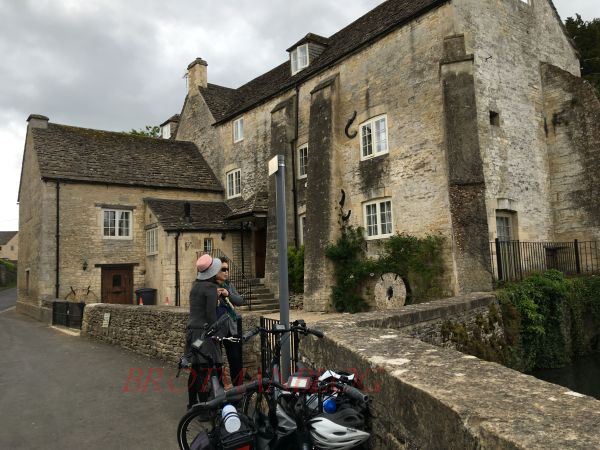
The next morning we were picked up by Peter of Cotswold Electric Bike Tours for our day of bicycling around the Cotswolds. We drove to Burford, which is about eight miles south of Bledington. It is a much larger town than Bledington with lots of shops and a big church, but also all in the same beige-colored stone. We met up with three other people joining us for the day—Carolyn and her adult daughters Meghan and Rachel from Salt Lake City (which, of course, led to a conversation about the Family History Library). After a quick lesson on how to use an electric bike, we were off on our thirty-mile trip around the area.

This was our first time on e-bikes, and we loved them. What a pleasure it was to get that “assist” going up some of the steeper hills. But for the most part the ride was relatively flat (or so it seemed after walking in Cornwall) and extremely scenic. We traveled from Burford to Windrush to Sherborne to Northleach to Bibury to Westwell and back to Burford.

Here are some of the images we captured during our almost seven-hour ride:

Burford

Flowers along the way

Norman doorway in the church in Windrush

Interior of Windrush church with Romanesque and Gothic features

Church graveyard, Windrush

Windrush

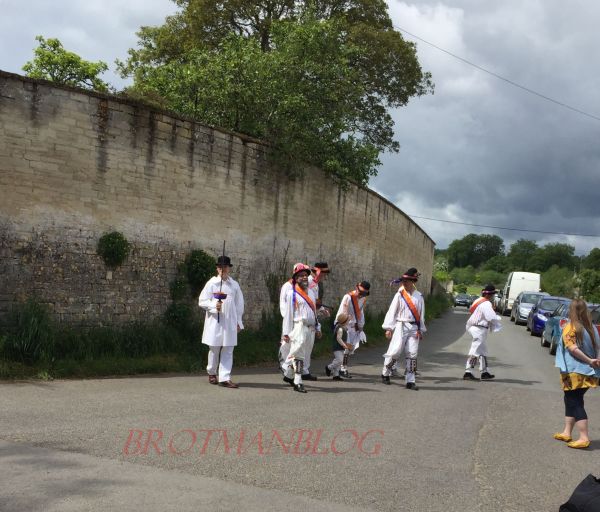
In Sherborne we saw some Morris dancers, a form of English folk dancing dating back to the fifteenth century. We also stopped for a short tea and cake break in Sherborne.  .

We continued on our way, going through Northleach and seeing its beautiful church.

Northleach

We stopped for a late lunch in Bibury, a town once described as the most beautiful in England and thus packed with many tour buses and tourists. It is beautiful, but the crowds and buses and traffic made that harder to appreciate.

Bibury


After lunch we continued on to Westwell before returning to Burford and the end of our tour.

The six of us all had a wonderful time with lots of laughs and good conversation, and Peter also taught us a great deal about English history and the history of the region, pointing out the architectural characteristics of each era as seen in some of the churches we visited. It was a fun and educational day and gave us a good overall view of the Cotswolds.

The next day we decided to take the train to Oxford, which is only half an hour by train from Kingham, the town next to Bledington. We walked the mile to the station, itself a pretty walk.

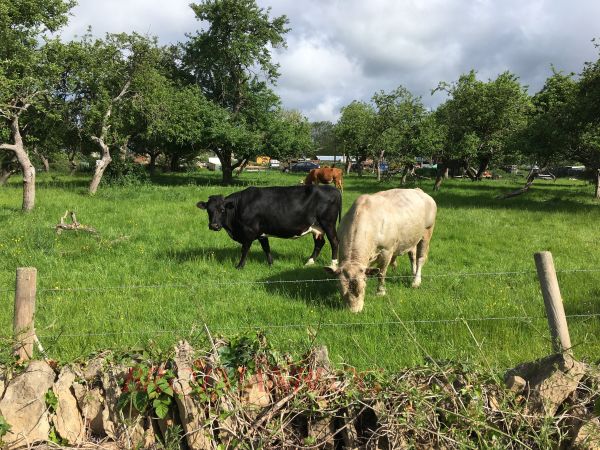
Cows in someone’s yard. Really.

We arrived in Oxford at 10:30 and signed up for a 1 pm walking tour. We then spent the rest of the morning walking through the city.  The city was filled with young people—university students and teenagers coming to tour the university. Everywhere we went there were large groups of teens touring together. And lots of impressive architecture.

The tower from the old northern wall of the city

We walked to the south end of the city to Christchurch—which is both a college within Oxford University and a church. Some of the scenes in the Harry Potter movies were filmed at Christchurch, we were told. It certainly has the feel and appearance of a proper English school.

Exterior of Christchurch, a college at Oxford


Grounds of Christchurch

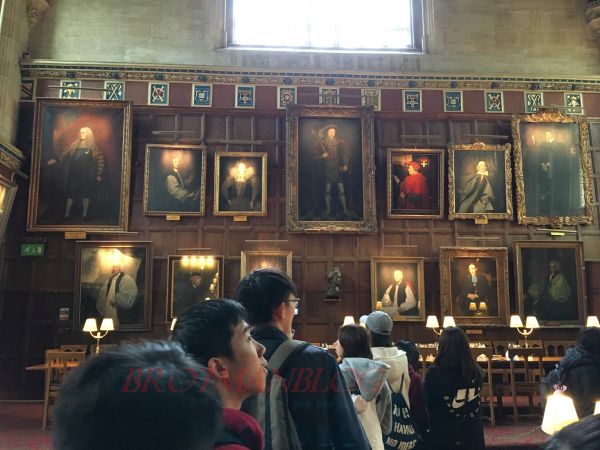
Refectory at Christchurch

Refectory

Quadrangle at Christchurch

The church at Christchurch was magnificent, especially the stained glass windows.

At 1, we met up with our guide and a group of fellow tourists—about sixteen in total. Out of that group, we were the only Americans. There were people from Germany, France, Scotland, England, Australia, and India. The guide was very knowledgeable, and the tour focused on Oxford University and its unusual (by US standards anyway) college-university system.

I am still not sure how it all works, but from what we were able to understand, students apply to individual colleges within Oxford and study in tutorials with a tutor and just one or two other students in that college for their three years of undergraduate study. They produce papers each week for the tutors and have exams at the end of their first year and then at the end of their third year. Every college has its own library, church, and faculty, and the students eat and learn and live in their chosen college. But there are also some university-wide courses. I may have this all wrong. I still don’t know whether students have distribution requirements across several fields as in US schools. I also am not sure whether they take only one tutorial at a time or multiple courses in different subjects each semester. So if there are any Oxford experts out there who can explain this all, please let me know.
Our guide showed us many of the different colleges as well as some of the main libraries and other buildings.

House where Shakespeare stayed when he visited Oxford

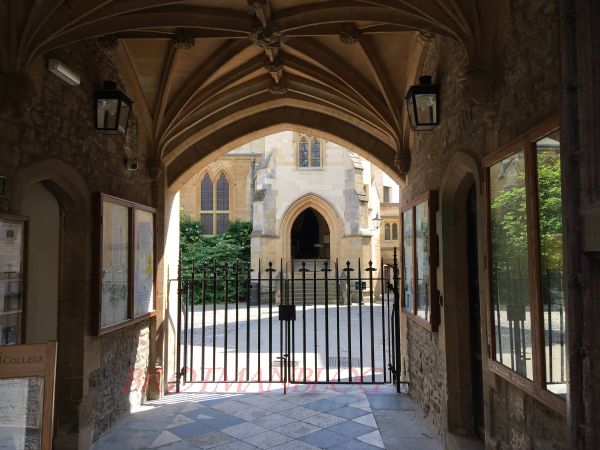
Jesus College

Old bookstore

Sheldonian Theater

We enjoyed the comment about Bill Clinton

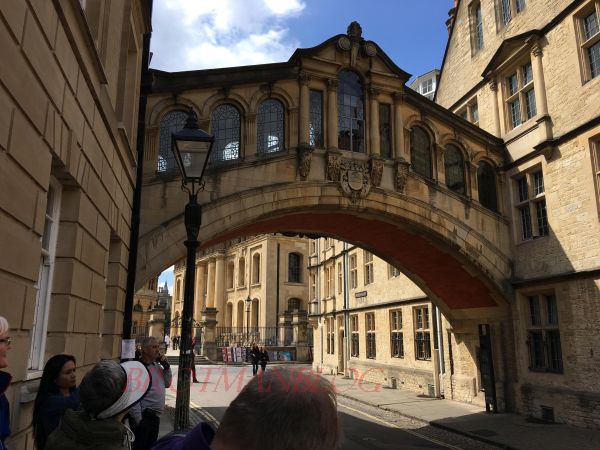
Bridge joining two parts of Hertford College

New College

Merton College

Corpus Christi College

Corpus Christi College

Radcliffe Camera

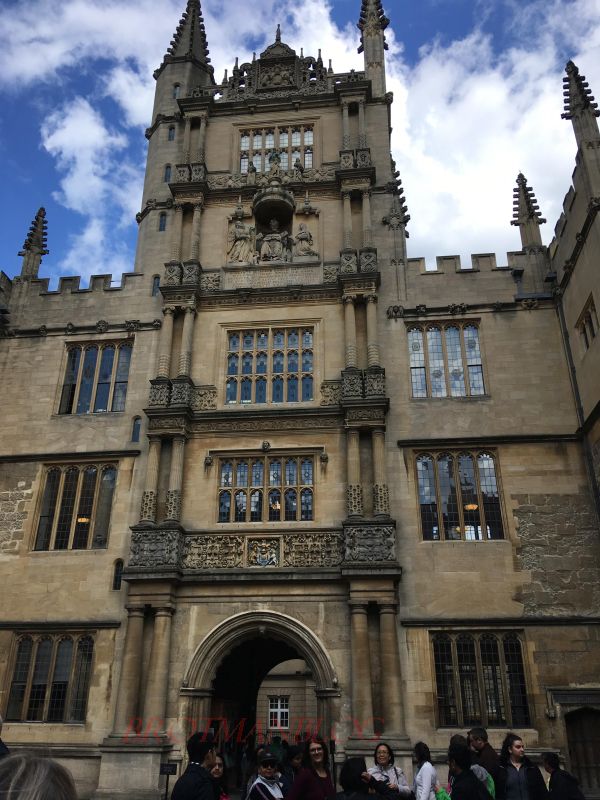
Bodleian library

Our guide pointed out the students who were finished with their last exam and the wild way they decorated themselves to celebrate the completion of their studies at Oxford.

When the tour ended, we walked a bit more and then made our way back to the train station, back to Kingham, and back to Bledington and the Kings Head Inn.  The following morning we left Bledington for the last stop on our trip to England, London.

England, 2019: Cornwall

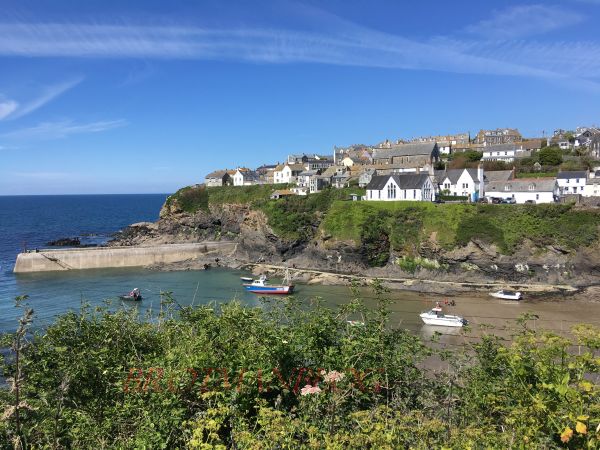
Almost ten years ago my husband and I started watching Doc Martin, the British television series about a London surgeon who develops a fear of blood and is forced to retire from surgery and become a country doctor in a small fishing village in Cornwall called Port Wenn. We were immediately taken not only by the story and the eccentric characters and humor, but also by the gorgeous scenery—the rocky cliffs surrounded everywhere by deep blue water.

We decided that someday we would have to visit Cornwall and specifically Port Isaac, the real name for the village where Doc Martin is filmed.  Since then I have watched and re-watched Doc Martin enough times that I know most of the dialogue by heart. It has been a wonderful way to escape and have a laugh and enjoy a good love story and a great diversion while riding my exercise bike.  So my interest in visiting Port Isaac only intensified over the years, and last year we started making plans for our visit.

We arrived on Tuesday, May 21, after landing at Heathrow that morning. We took a bus to Reading, a bustling small city where we had a quick breakfast and a short walk before boarding the Great Western Railway train to Bodmin Parkway.

I had made arrangements with Lyn, a taxi driver, to meet us at the station, and she was there waiting for us when we arrived.  She gave me a warm hug when we met—a wonderful welcome to England. On our half-hour drive to our hotel, she entertained us with stories of her family, her dog, and life in Cornwall as we tried to adjust to being on the left side of the increasingly narrow roads she maneuvered. It was quite an adventure.

I cannot say enough good things about our hotel, the Longcross, a small hotel about a mile outside of Port Isaac. It is an elegant older building with lots of Victorian details but with all the modern amenities—wifi, flat screen tvs, and comfortable and spacious rooms. From our room we could see miles of open farmland, the bright blue sea in the distance, and magnificent sunsets.

The view from our room

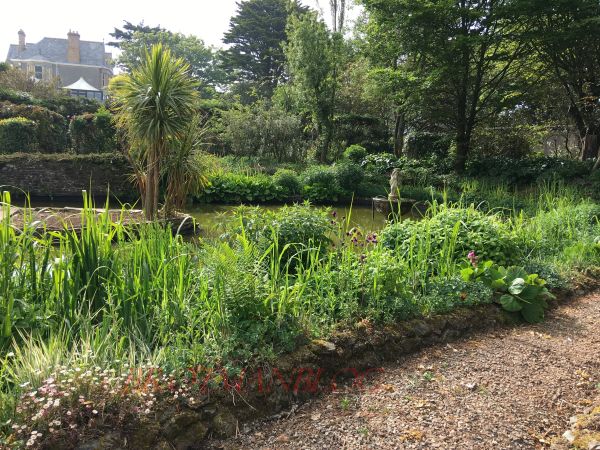
Outside the hotel was a lovely English garden with arched walkways and a pond and an array of flowers and trees.

But what really made the Longcross my favorite hotel of all time was the service and the food. When we arrived, we met with Jamie, the general manager, and with Julia, who runs the dining room and whose husband Andy is the chef and runs the kitchen. We explained our long list of dietary restrictions (especially mine)—no meat, no shellfish, no dairy, no onions. Julia quickly said that there was no problem—she would create a menu just for us for each night that we were there using a different fresh fish each night depending on what was available in the market. And she and Andy created dinners for us that were just incredible—beautifully presented and made from all fresh ingredients. I still cannot believe how accommodating and gracious the staff at the Longcross was.

I didn’t take pictures of the food, but here are some of the menus Julia typed up for us.

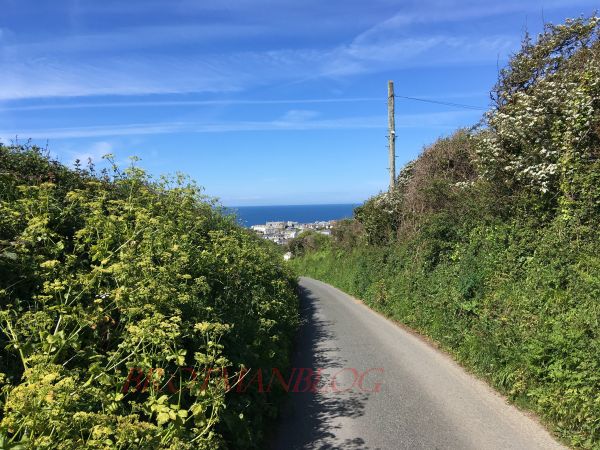
Of course, we didn’t go to Cornwall just to eat! We went for the scenery and for the opportunity to see some filming of the next season of Doc Martin. Each morning we walked the mile or so into the village, passing cows and fields and those iconic Cornish hedges while trying not to get killed as cars sped by, passing each other on the narrow and winding one-land roads.

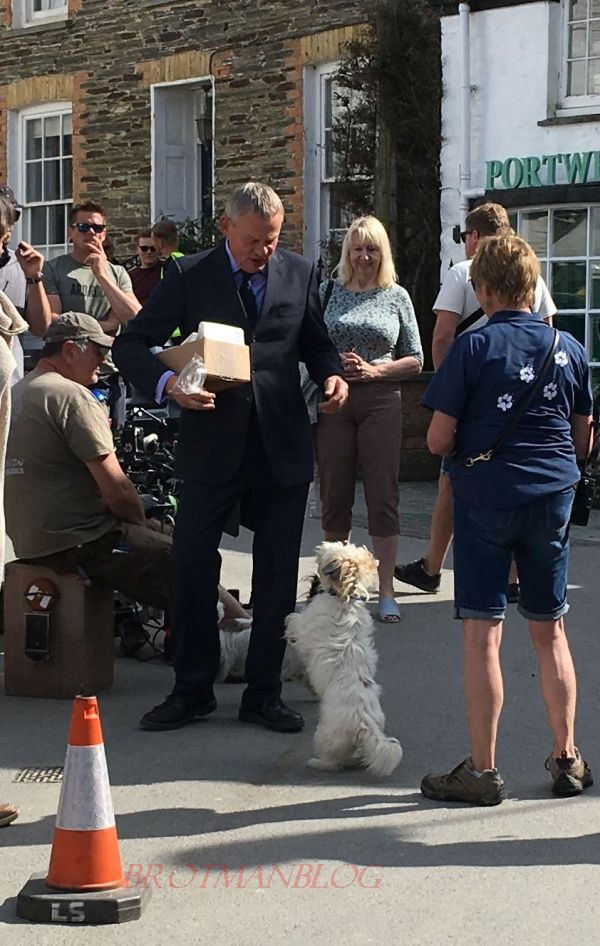
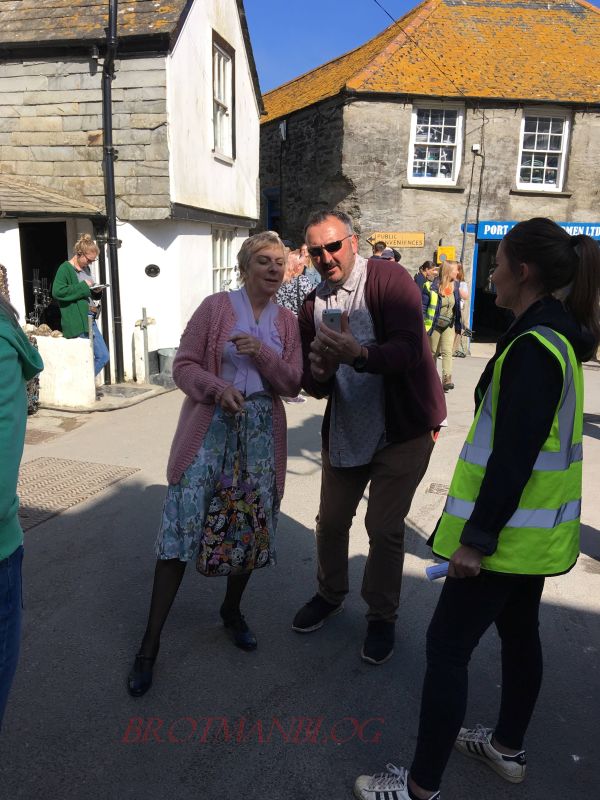
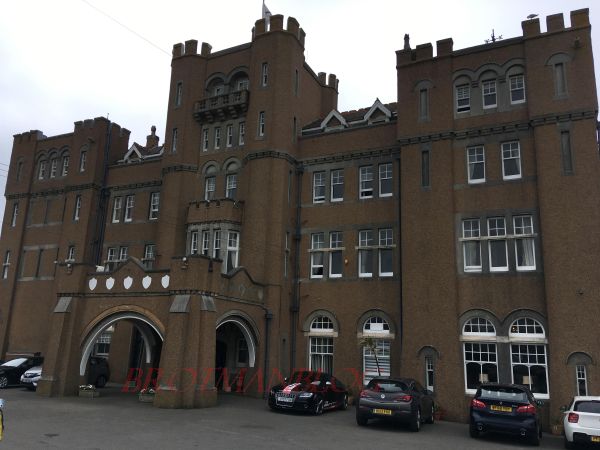
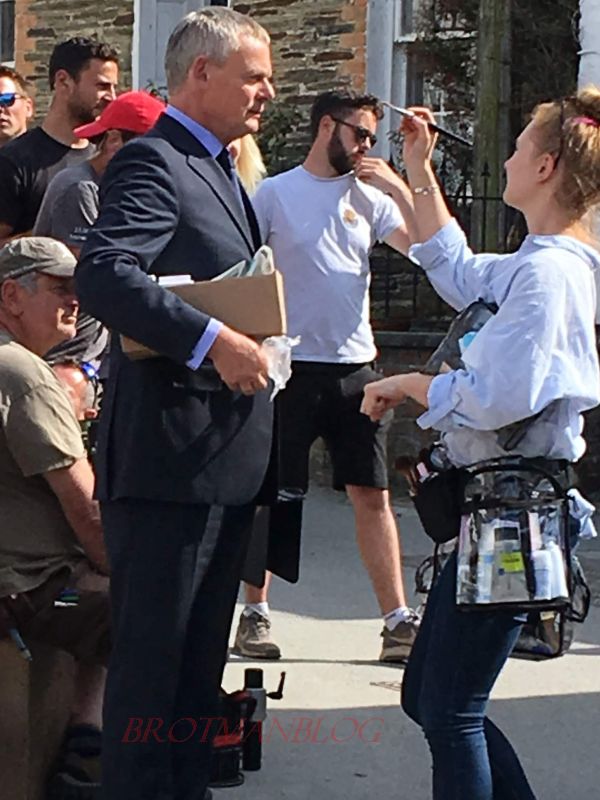
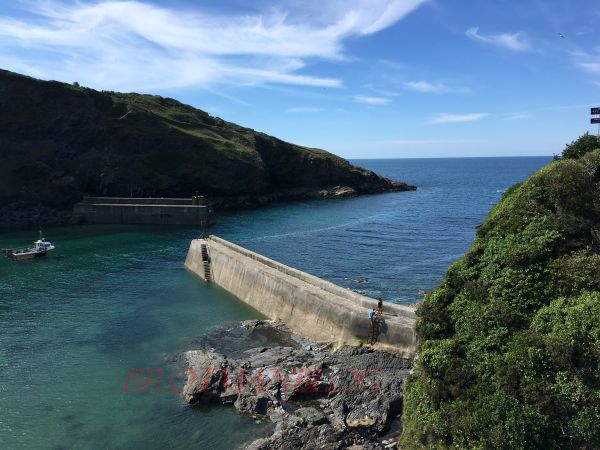
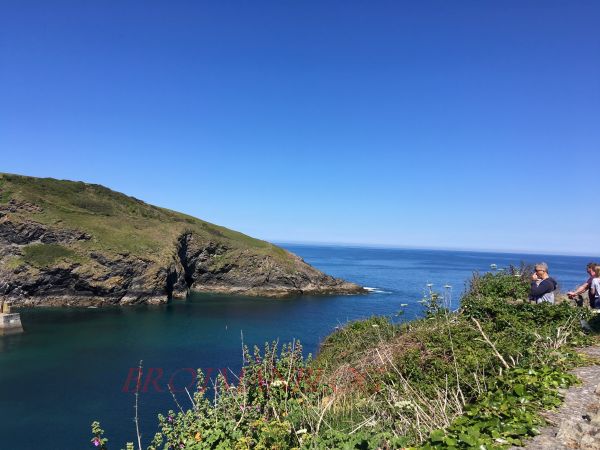
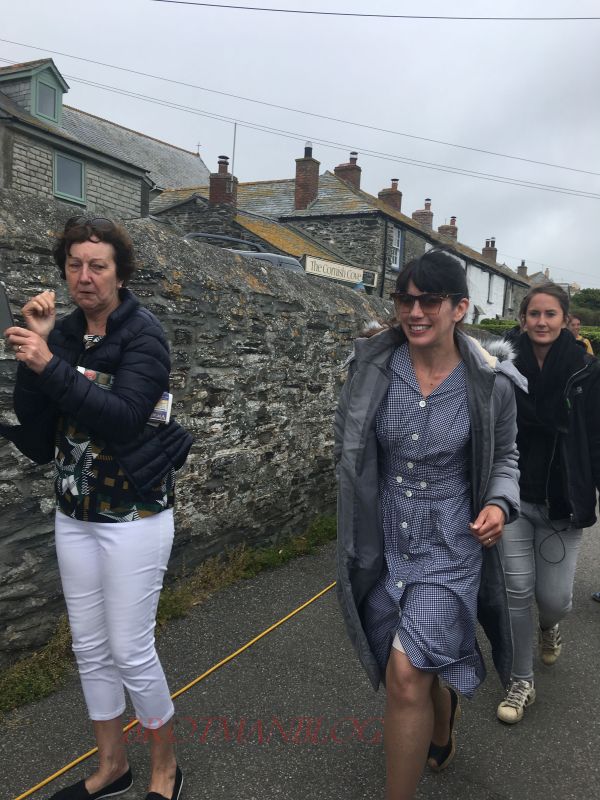
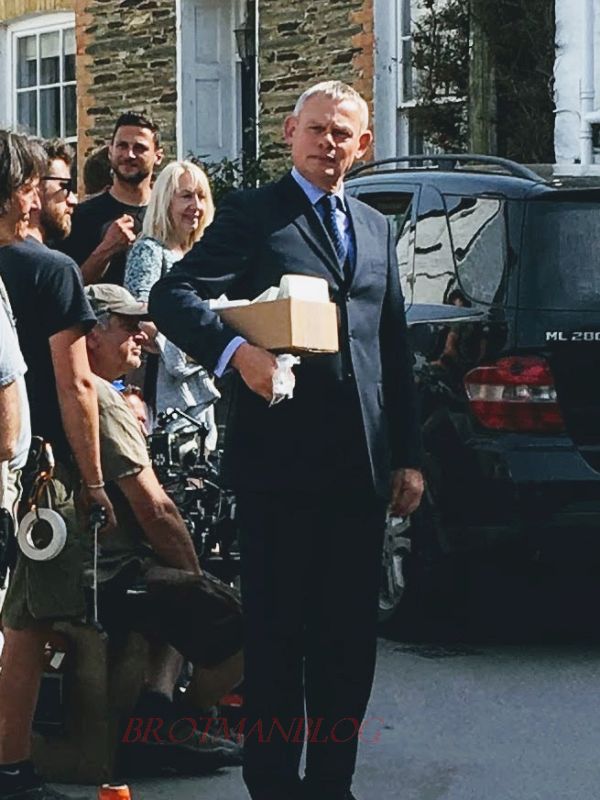
We were fortunate to see two days of filming while we were in Port Isaac and to see many of the places in the village that were familiar locations from the series. Here are just some of the Doc Martin-related photographs we took while in Port Isaac.

Of course, being such a big fan, I was excited to see some of the stars and to watch the filming process itself. It was quite interesting to see how much time and how many people it takes to film what may end up as just a few seconds of a scene in the finished program. Being an introvert, I wasn’t one of those who could run up to get selfies with the actors or to get an autograph, but I did enjoy seeing how Martin Clunes and Caroline Catz went in and out of character as they waited for the crew to set up each shot for the scenes being filmed.

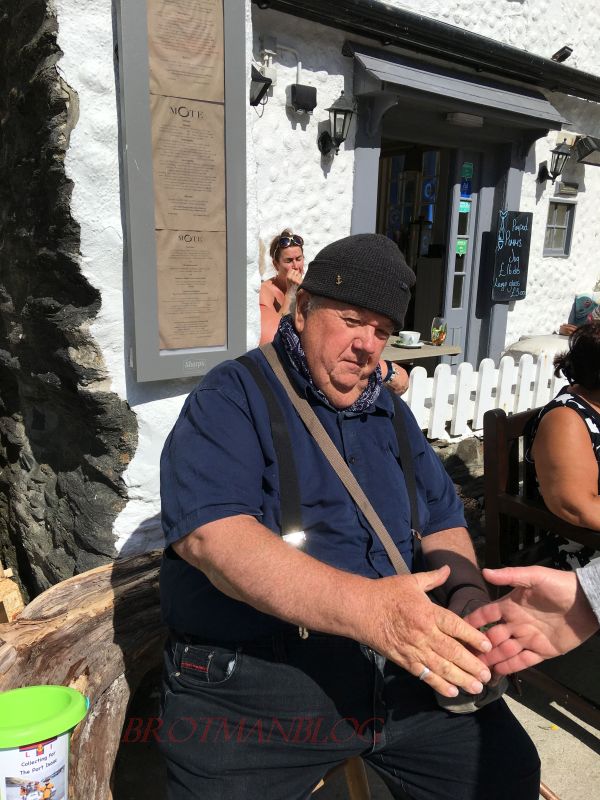
We did have a chance to shake hands with Ian McNeice, who was collecting for the local lifeboat station on the afternoon we arrived, and we also met and spoke at length with a woman who was an extra during the first day of filming. She also gave us some insights into how the program is created.

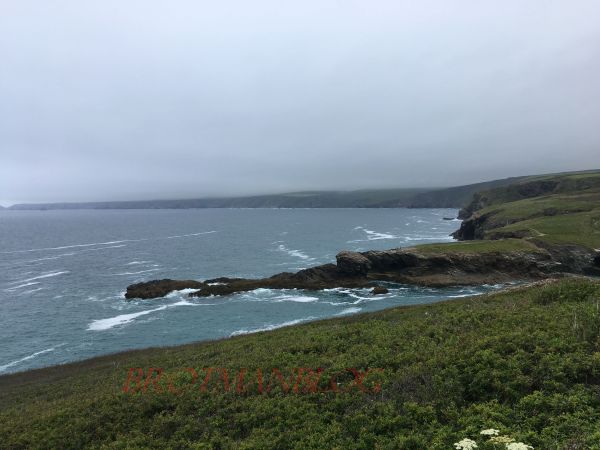
But most of our time was spent walking—doing a walking tour of the village, walking on the coastal path to neighboring Port Gaverne, walking up and down the very steep hills, and walking to Port Quin, another neighboring harbor.  We were told that at one time Port Quin was a place where fishermen lived, but after all the men were killed at sea, their families left, and now all that is left are some cottages that are available to rent.

Port Gaverne

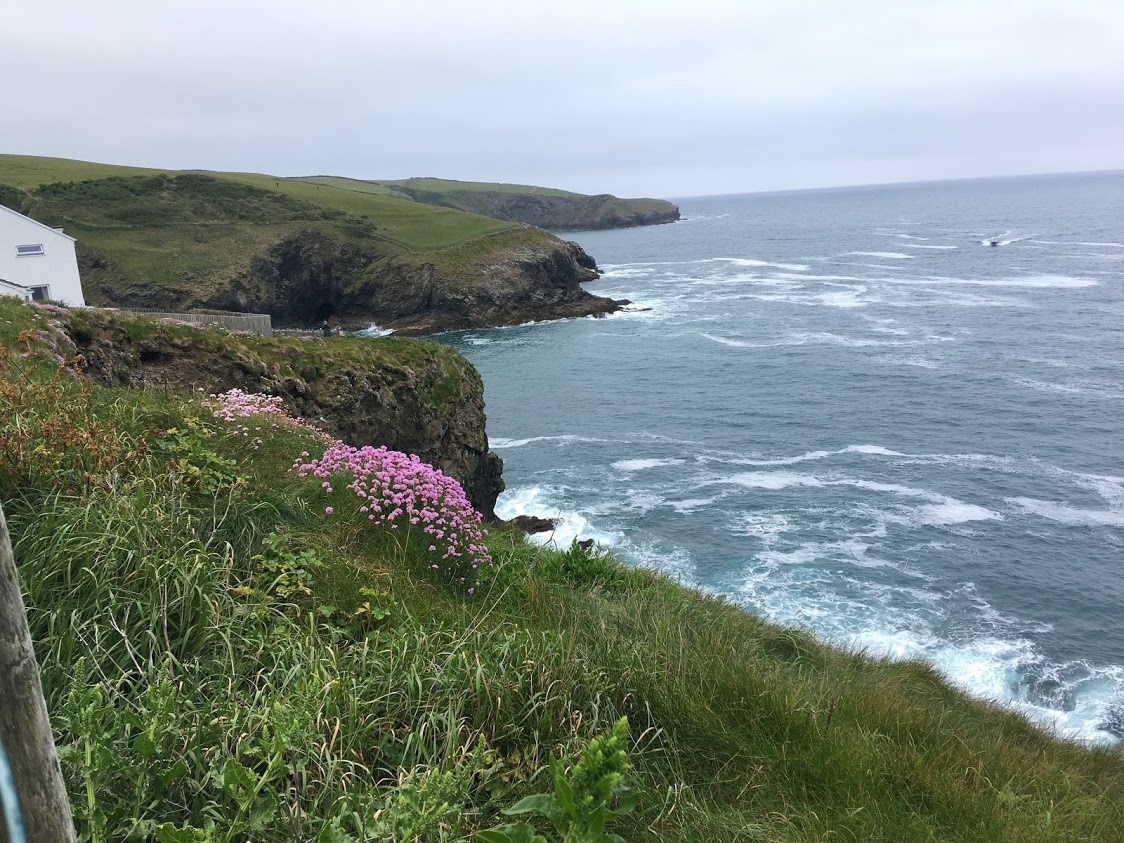
All the photographs below were taken in Port Isaac or walking along the coast to Port Gaverne.

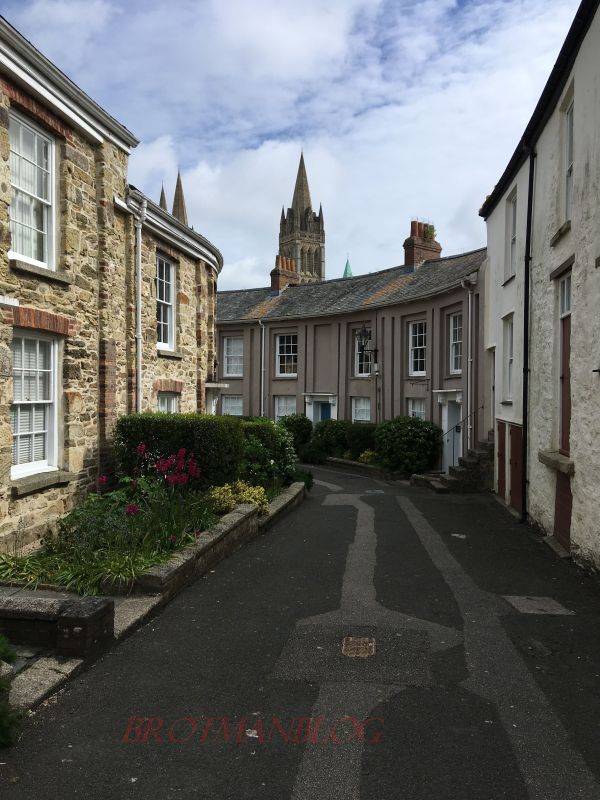
I loved every minute we spent in and near Port Isaac. But we also wanted to see more of Cornwall, so one day we took a driving tour with Kez of Cornwall Tours. He was a delightful young man who was a native of Cornwall and very proud of the region.  He took us to Truro, the largest city in Cornwall that we wanted to see in honor of Truro, Massachusetts, where I had been coming since I was a young girl many years ago. England’s Truro is nothing like the one on Cape Cod (which is more like Port Isaac than England’s Truro), but it is a nice little city with a beautiful cathedral and some lovely winding streets and the Cornwall history museum, where we learned about the mining history of Cornwall from ancient times into the 20th century.

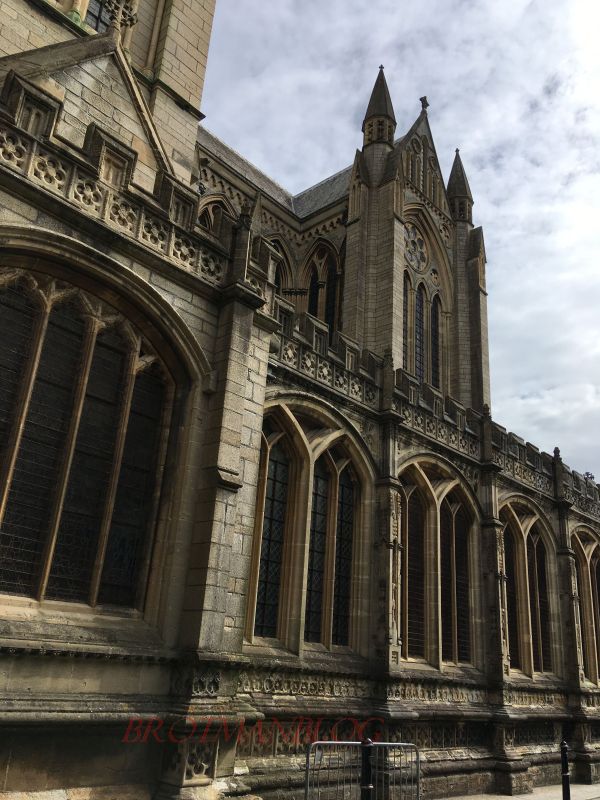
Truro Cathedral

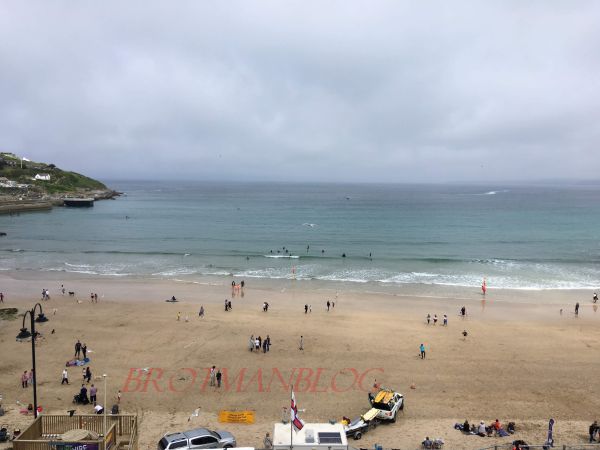
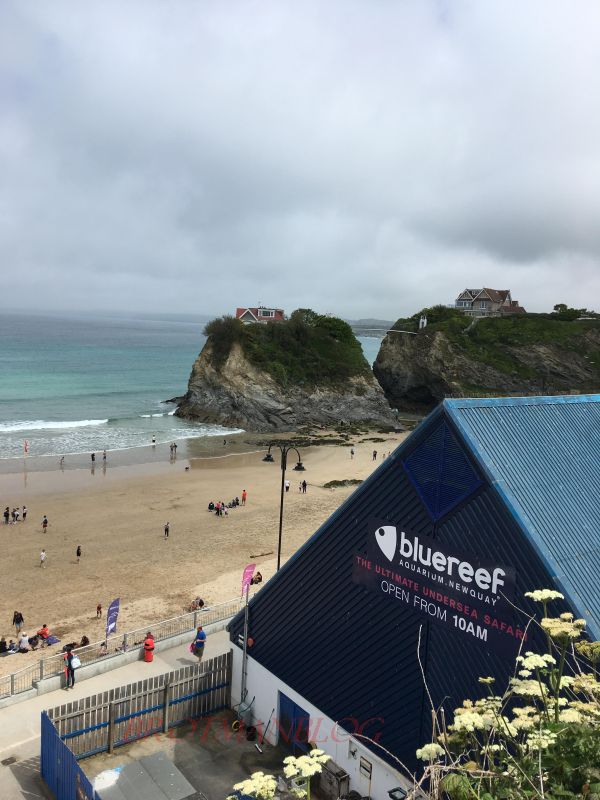
Kez then drove us to St. Agnes, an old tin mining community, and on to several beautiful beaches in Perranporth, Newquay, Saint Eval, and Booby’s Bay. As a surfer, Kez was an expert on the Cornwall beaches. It was a three-day weekend in England, so the beach areas were fairly crowded and people were surfing even though the temperature was at best in the low sixties.

St Agnes

Perranporth

Newquay

Newquay

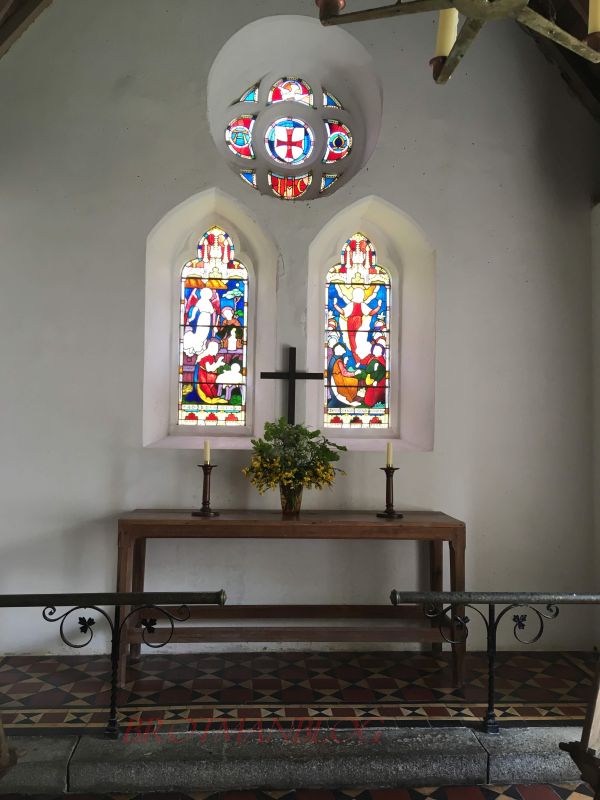
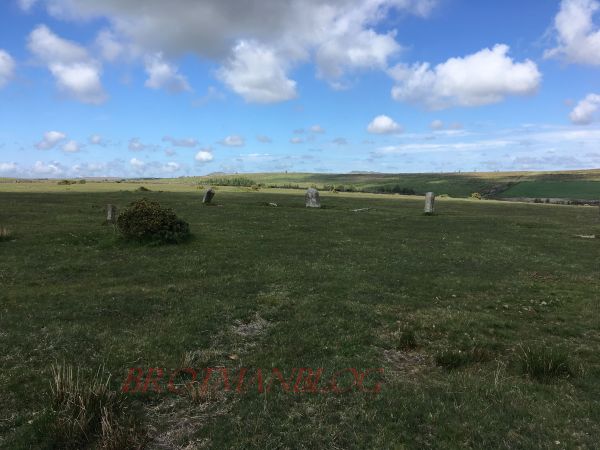
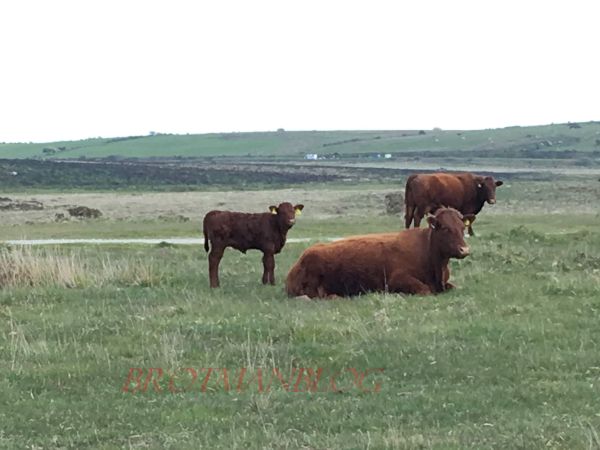
After seeing several beaches and having a quick lunch in the picturesque town of Padstow, we headed to Bodmin Moor. I’d never seen a moor before and was curious after reading about them in English novels such as Wuthering Heights. Kez took us there, where we saw the wide open highlands, a stone circle from pre-historic times, cows and calves, and Temple Church, a medieval church that was so well hidden that it may be the only one that has stained glass windows that survived Henry VIII’s orders to destroy all the decorative elements in the Catholic churches as part of the English Reformation in the 16th century.

Temple Church

Temple Church

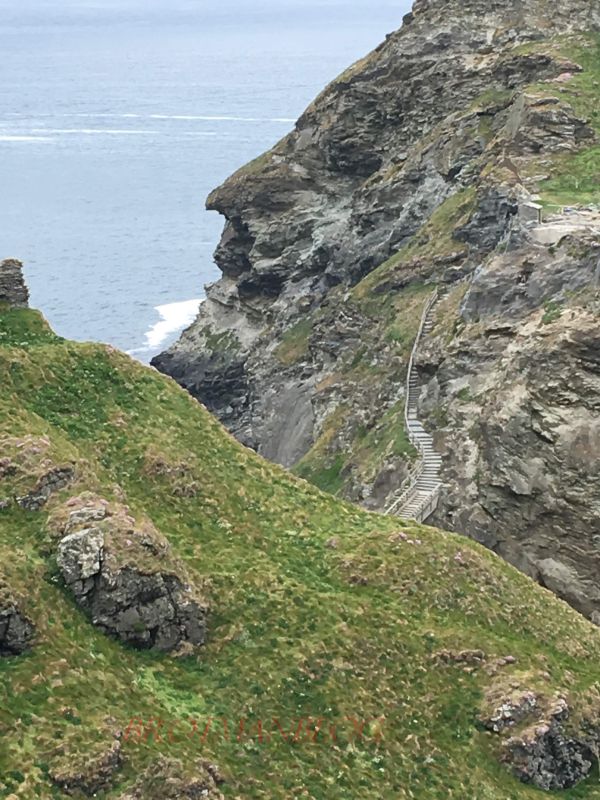
Our last stop with Kez was Tintagel where legend says King Arthur’s castle once stood. Work is now being done on the bridge that connects the small island where there was once a castle to the mainland, so you cannot get to the ruins, but the views were nevertheless well worth the drive to this location.
Tintagel

Thus ended our last day in Cornwall. With one last excellent meal at the Longcross, one last sunset, one last breakfast the next morning, and lots of goodbye hugs, we were off to the Cotswolds on May 26.

Slowly Returning to the Blogosphere

I have been away for the last twelve days on a wonderful trip to England. It was not a genealogy trip, though I did meet some cousins and did spend one afternoon in the London neighborhood where my Cohen ancestors lived between 1800 and 1851 or so. But otherwise it was a trip just to see a part of the world we hadn’t seen before. And before I return to the Goldsmiths and the rest of their saga, I will spend some time sharing our travel experiences in England.

I also need to spend some time catching up—with other blogs and with comments on my blog. This was a true escape from the internet for twelve days—except to answer a few important emails and to research the places we were seeing and visiting. So please be patient—I will catch up with everyone eventually.

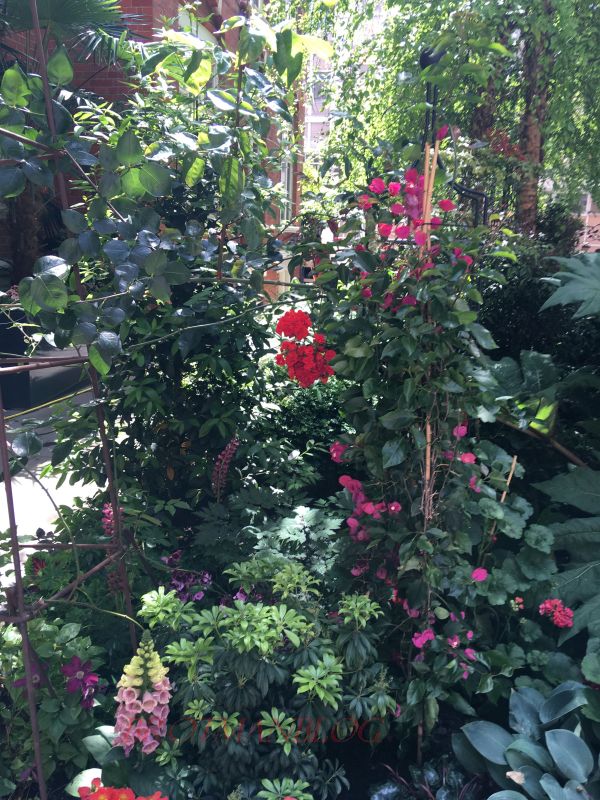
For now, just a few photos of the three regions we visited in England—Cornwall, the Cotswolds, and London—each exciting and beautiful and interesting in very different ways.

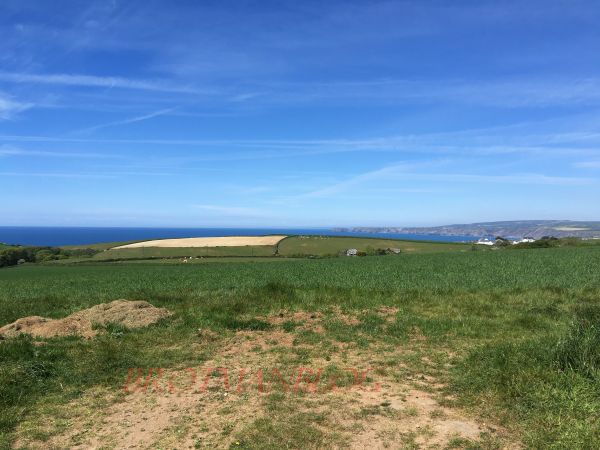
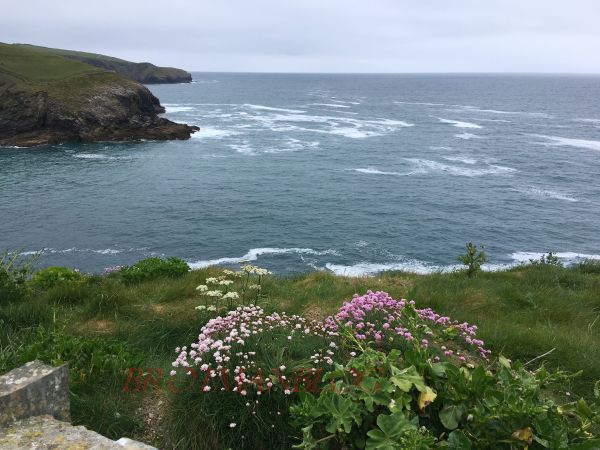
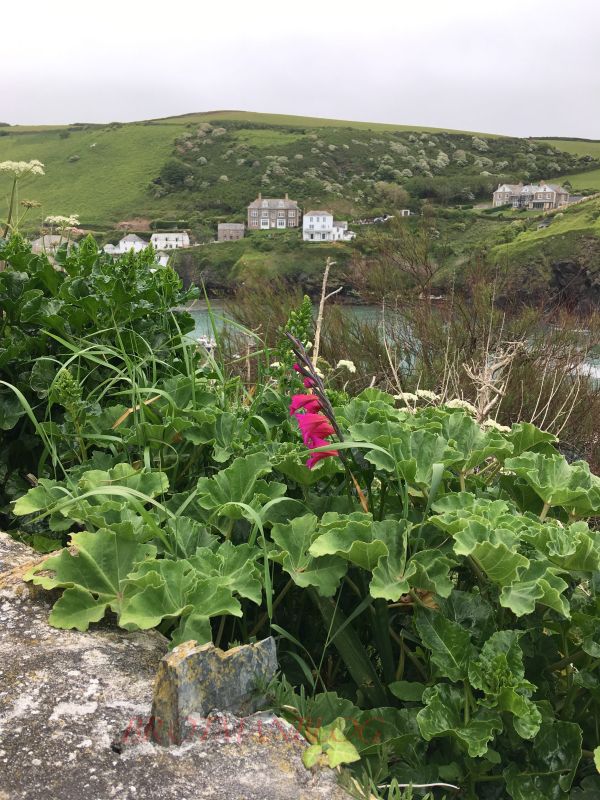
Cornwall—Port Isaac

The Cotswolds—Burford

London—St James Park

Milton’s Family Album, Part XIV: Teasing His Little Brother

Having created pages about his grandparents, his parents, and himself, Milton Goldsmith turned to his siblings, starting with his brother Edwin.

Here is Edwin with his wife Jennie Friedberger:

And here is the biography that Milton wrote about Edwin:

A couple of observations about this biography:

First, I had to look up “caul” as I’d never heard of this before or the superstition associated with it, but this website confirmed what Milton said. A baby born with the amniotic sac on its head or even its whole body is said to have been born with a caul. Here’s a video showing such an occurrence:


As for Milton’s remarks about Edwin being registered as a girl at birth, I recalled that when I was researching Edwin, I saw on the Philadelphia birth index that he was identified as a girl. I assumed that that was just an indexing error, but apparently as Milton notes, Edwin was in fact registered as a girl at birth. Unfortunately, I cannot access the image of the actual birth record through FamilySearch; they are only viewable at a Family History Center, and I do not have easy access to one. If anyone lives near one and can retrieve it, please let me know.

I found Milton’s tone here that of the teasing older sibling as opposed to the serious, almost reverential tone of his other biographies. It is clear that Milton found it humorous that his little brother was registered as a girl.

But the remainder of this biography is obviously written with respect and admiration for his brother and all his accomplishments. This biography must have been written sometime after 1935 when Edwin retired, as mentioned in the essay, and before Edwin’s death on November 15, 1944, because Milton added that fact by the handwritten note above the biography. I think this also is a clue as to when Milton compiled the album—sometime between 1935 and 1944.

In another album I found this photograph of Edwin:

Edwin Goldsmith at 24

The only other article on this page is the obituary for Edwin’s wife Jennie Friedberger Goldsmith:

I won’t quote the entire obituary, but just this excerpt:

The death of Jennie Friedberger Goldsmith … after an illness of six weeks, brought sorrow to the family’s large circle of friends throughout the community. Mrs. Goldsmith, who was 67 years of age, was stricken with a heart ailment on June 5, while attending to some business matters at the offices of the Pennsylvania Company, and her condition became so serious that she was removed to the Jefferson Hospital.

…She was active in social and charitable work in Philadelphia and in Atlantic City….She possessed a wide circle of friends and was esteemed and beloved for her sterling qualities of heart and mind. Her abilities and energies were of an unusually high order. At her summer home in Longport as well as in her beautiful home in Philadelphia, she was a gracious hostess to her numerous friends for many years. Her passing is widely mourned….

The page following this contains a long article about Milton’s brother-in-law Felix Gerson, husband and widower of Emily Goldsmith and editor of The Jewish Exponent newspaper, on the occasion of his retirement. I won’t excerpt this one, but if you click on the image, you can zoom in and read it. I have already written about Felix elsewhere.

This is Part XIV of an ongoing series of posts based on the family album of Milton Goldsmith, generously shared with me by his granddaughter Sue. See Part I, Part II, Part IIIPart IVPart V,  Part VI, Part VII , Part VIII,  Part IX,  Part X, Part XI, Part XII and Part XIII at the links.

I will be taking a break for the next couple of weeks, so see you all in June! 

Henry Goldsmith’s Children, 1923-1930: Years of Change

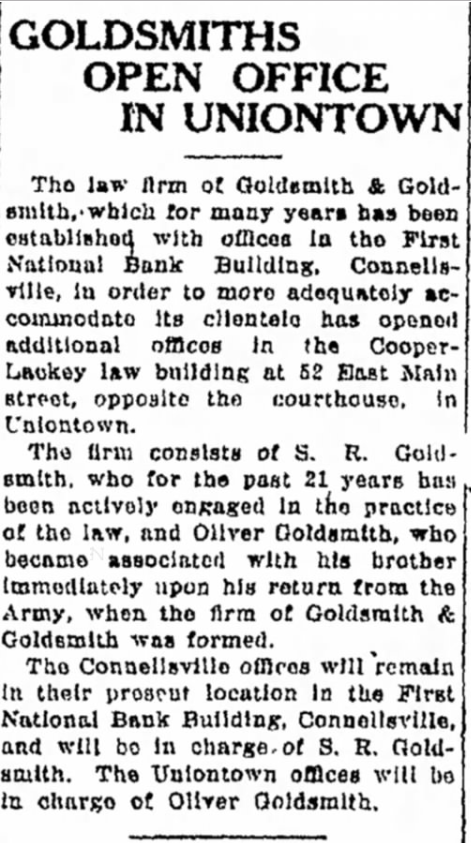
After Henry Goldsmith’s death in 1923, there were a number of changes and relocations in the family. The first change was the opening of a second law office for S(amuel) R and Oliver Goldsmith in January, 1924.  According to this news article, Oliver Goldsmith, the younger brother, was to be in charge of the new office in Uniontown, Pennsylvania, while SR would remain in charge of the office in Connellsville. Uniontown is less than twelve miles from Connellsville.

“Goldsmiths Open Office in Uniontown,” The Connellsville Daily Courier, January 9, 1924, p. 1

But the Uniontown office must not have worked out because by July 1925, Oliver had relocated to Miami, Florida, where he continued to practice law.1  On May 18, 1926, Oliver married Sarah “Sally” Friedman in Miami.

“Oliver Goldsmith Weds Former Pittsburg Girl,” The Connellsville Daily Courier,” May 19, 1926, p. 2

According to this brief news item, Sally was also then residing in Miami, but had previously lived in Pittsburgh. She was in fact born in Pittsburgh on April 13, 1890, to Gershon and Libby Friedman,2 who were immigrants from Russia. Sally grew up in the Pittsburgh area where her father was a merchant.3

What I don’t know is how or why Sally and Oliver, two Pennsylvania natives and residents, ended up both living in Miami and getting married there. Did they both happen to move there to escape the cold Northern winters? Or had they planned to move there together? Both were mature adults by 1926—Oliver was 39, Sally was 36.

In any event, they stayed in Florida only until about 1930 (I cannot find them on the 1930 census), but in 1931, they were listed in the Reading, Pennsylvania directory,4 and  the August 25, 1930, Reading Times (p. 2) reported that Oliver had been appointed as a “master of divorce,” “an attorney appointed by the Court to make recommendations in contested divorce and annulment actions.” I don’t know what took them to Reading, which is 230 miles from Connellsville and 260 miles from Pittsburgh where their families were living. Perhaps there was some tension with their families that drove Sally and Oliver first to Miami and then to Reading.

Meanwhile, SR Goldsmith had taken in a new law partner not long after his brother Oliver left:

“S.R. Goldsmith and J. E. Horewitz Form Law Partnership,” The Connelllsville Daily Courier, November 30, 1925, p. 1

Reading between the lines, I imagine that something had happened between SR and Oliver that caused them to dissolve their partnership.

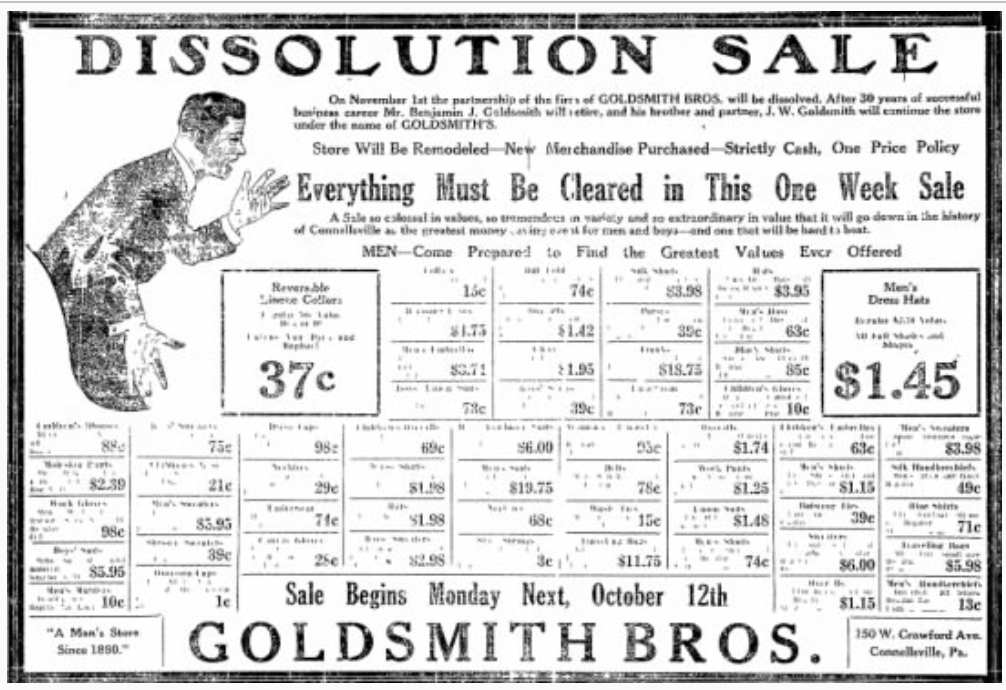
The other big business change that occurred in the years following Henry’s death was Benjamin Goldsmith’s retirement from the store he owned with his brother JW, as announced in this advertisement from the October 9, 1925, Connellsville Daily Courier (p. 18):

At the very top it says, “On November 1st, the partnership of the firm of Goldsmith Bros. will be dissolved. After 30 years of successful business career Mr. Benjamin J. Goldsmith will retire, and his brother and partner, J.W. Goldsmith will continue the store under the name Goldsmith’s.”

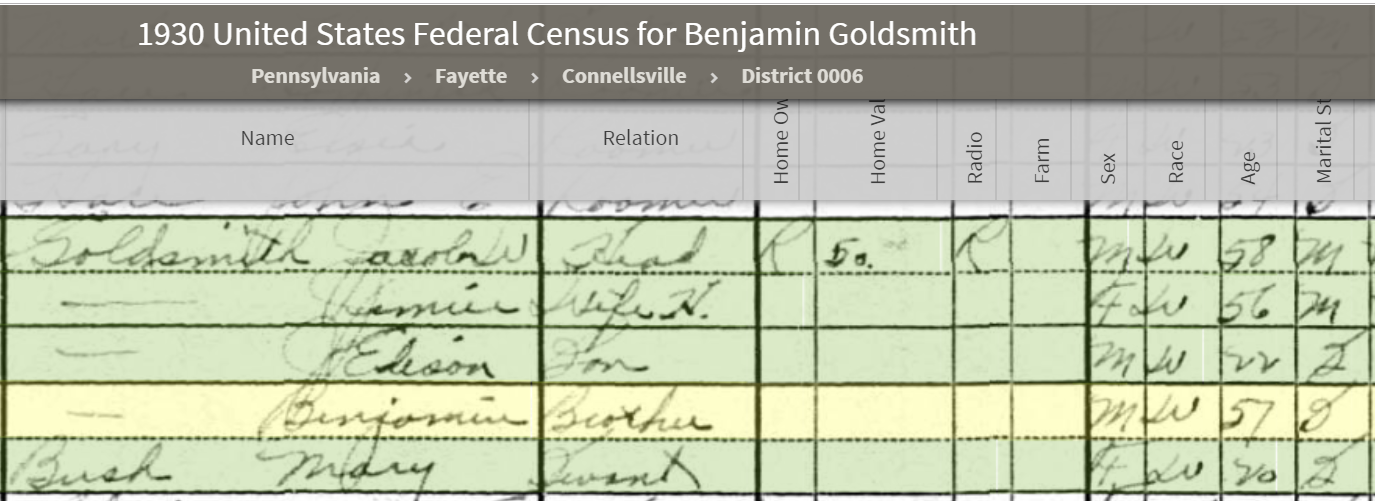
Although the ad stated that JW would continue to operate the store (he, after all still had a seventeen-year-old son, J. Edison, to support in 1925), by 1930 it appears that JW had retired as well because the 1930 census reported that he had no occupation. In this case there was no indication of any bad blood leading to the dissolution of JW and Benjamin’s partnership since the 1930 census revealed that Benjamin was living in JW’s home.

JW Goldsmith and family, 1930 US census, Census Place: Connellsville, Fayette, Pennsylvania; Page: 8A; Enumeration District: 0006; FHL microfilm: 2341772
Ancestry.com. 1930 United States Federal Census

Thus, the 1920s were years of loss, growth, and change for the children of Henry Goldsmith. They lost their father Henry and little Sarah Goldsmith. There were two marriages and a number of new babies born. And four of the brothers experienced career changes—JW, Benjamin, SR, and Oliver.

These were also years that saw some of Henry’s grandsons go away to college. More on that in the next post.


  1. Miami, Florida, City Directory, 1926, Ancestry.com. U.S. City Directories, 1822-1995 
  2. Sally Friedman Goldsmith death certificate, Pennsylvania Historic and Museum Commission; Pennsylvania, USA; Pennsylvania, Death Certificates, 1906-1965; Certificate Number Range: 083001-086000, Ancestry.com. Pennsylvania, Death Certificates, 1906-1966 
  3. Gershon Friedman and family, 1900 US census, Census Place: Pittsburgh Ward 12, Allegheny, Pennsylvania; Page: 5; Enumeration District: 0148; FHL microfilm: 1241359, Ancestry.com. 1900 United States Federal Census 
  4. Reading, Pennsylvania, City Directory, 1931, Ancestry.com. U.S. City Directories, 1822-1995 

Henry Goldsmith’s Family, 1920-1930: Losses and Heartbreak

Up through 1920, the family of Henry Goldsmith had had generally good fortune and much success. Henry’s eight surviving children were doing well in their chosen professions. All but two were married, and six of the surviving eight children had children of their own.

On the other hand, Henry had suffered some tragic losses—Henry’s little son Albert died as a young boy, his son Edison died in a horrific train accident, and his wife Sarah Jaffa died in 1907 when she was 56. In addition, Henry had suffered a stroke in 1911, but had recovered. And Henry’s unnamed grandson, the son of Walter Goldsmith and his wife Ella, had died in 1915 when he was just twenty-two days old.

Walter and his wife Ella had then been blessed a year later with a second child, Sarah Jaffa Goldsmith, named for her grandmother. But Walter and Ella suffered another heartbreaking loss on March 21, 1921, when four-year-old Sarah died from acute gastroenteritis.

Death certificate of Sarah Jaffa Goldsmith, Pennsylvania Historic and Museum Commission; Pennsylvania, USA; Pennsylvania, Death Certificates, 1906-1965; Certificate Number Range: 020501-023500, Ancestry.com. Pennsylvania, Death Certificates, 1906-1966

Ella had just twenty days earlier on March 1, 1921, given birth to another child, a son Edison, named for Walter’s deceased brother.1

I can’t imagine how Walter and Ella coped with this tragedy. To lose a second child on the heels of the birth of third—did they worry that the new baby would also get sick and die? Did they worry that they had not been fast enough to notice little Sarah’s illness because of the chaos that always surrounds the birth of a new baby?

Walter and Ella somehow survived this loss. In fact, another child was born to them less than two years later. Stanley Goldsmith was born on December 16, 1922.2 And a daughter Edna was born on October 4, 1924.3 Fortunately, all three of these children survived and lived full lives.

The extended family also continued to grow when the first of Henry Goldsmith’s grandchildren married in 1921.  Eleanor Goldsmith, daughter of JW, married Julian F. Rosenbaum on August 16, 1921, in Connellsville.4 Julian was the son of Joseph and Toni (Frankel) Rosenbaum, German immigrants, and he was born on December 18, 1897, in Uniontown, Pennsylvania, where his parents had settled after immigrating.5 His father was a dry goods merchant there, and in 1921, Julian was working as the assistant manager in his father’s department store, Rosenbaum Brothers.6

Eleanor and Julian settled in Uniontown where Julian continued to work at the family store.  They had three children born in the 1920s in Uniontown, Henry Goldsmith’s first great-grandchildren.7

But the extended family suffered another loss on June 19, 1923, when Henry Goldsmith died from edema of the lungs at the age of 76.  His funeral was attended by “[o]ver 200 of Fayette county’s prominent citizens, including judges of the common pleas and orphans’ courts.”8 Henry was survived by eight children and nine grandchildren.

Henry Goldsmith death certificate, Pennsylvania Historic and Museum Commission; Pennsylvania, USA; Pennsylvania, Death Certificates, 1906-1965; Certificate Number Range: 067501-070500, Ancestry.com. Pennsylvania, Death Certificates, 1906-1966

Henry Goldsmith had lived overall a good life, but not a life without tragedy and heartbreak. He had lost his mother when he was three and had outlived two of his children and two of his grandchildren. His wife had died fifteen years before he did. But despite those tragedies, he and his wife Sarah had raised an incredibly well-educated, intelligent, and successful family, all of whom were still living relatively close by in western Pennsylvania when Henry died in 1923.

That would start to change in the years after Henry’s death.


  1. SSN: 181120537, Ancestry.com. U.S., Social Security Applications and Claims Index, 1936-2007 
  2. SSN: 201142857, Death Certificate Number: PA 2972985, Ancestry.com. U.S., Social Security Applications and Claims Index, 1936-2007 
  3.  Issue State: Pennsylvania; Issue Date: Before 1951, Ancestry.com. U.S., Social Security Death Index, 1935-2014 
  4. “Hostess at Rehearsal Dinner,” The Connellsville Daily Courier, August 15, 1921, p. 2. 
  5. SSN: 550052846, Ancestry.com. U.S., Social Security Applications and Claims Index, 1936-2007; Joseph Rosenbaum, passport application, National Archives and Records Administration (NARA); Washington D.C.; Roll #: 550; Volume #: Roll 550 – 07 May 1900-11 May 1900, Ancestry.com. U.S. Passport Applications, 1795-1925; Rosenbaum family, 1920 US census, Census Place: Uniontown Ward 5, Fayette, Pennsylvania; Roll: T625_1571; Page: 10B; Enumeration District: 103, Ancestry.com. 1920 United States Federal Census. 
  6. Uniontown, Pennsylvania, City Directory, 1921, Ancestry.com. U.S. City Directories, 1822-1995 
  7. Julian Rosenbaum and family, 1930 US census, Census Place: Uniontown, Fayette, Pennsylvania; Page: 16B; Enumeration District: 0104; FHL microfilm: 2341775,
    Ancestry.com. 1930 United States Federal Census 
  8. “Henry Goldsmith,” The Pittsburgh Press, June 22, 1923, p. 28. 

Milton’s Family Album, Part XIII: The Creative Talent of Milton Goldsmith Himself

Milton Goldsmith devoted the next three pages of his family album to himself and to his wife Sophie. The first page includes photographs and two biographies of Milton.

I wonder how they made this photograph of Milton taken from numerous angles—anyone know how they did this?

UPDATE! According to Ava Cohn, aka Sherlock Cohn the Photo Genealogist, these photographs were done with a folding mirror and were quite common. In fact, Ava shared another one as did another Facebook reader who saw my post.

I don’t know where this biography of Milton was published or when, though it was written no earlier than 1891 as it refers to the publication of his book, Rabbi and Priest, in that year. The biography also appears to have been written while he was still living and working in Philadelphia and before he moved to New York City and married Sophie Hyman in 1899. So it was written some time in the 1890s.

I would think that this photograph of Milton was taken about the same time as the publication of that biography, sometime in the 1890s when he was in his thirties:

This entry about him in Who’s Who was written many years later as it references some of his later publications, including his play, The Little Brother, which was published in 1918.

What I really love about this Who’s Who entry are the insights into Milton’s appearance and personality—that he had blue eyes, a fair complexion, and graying hair, that he was cheerful and optimistic, and that he was a moderate drinker and did not smoke. Most of the other biographical and professional information I had already gleaned from other sources. (There are a fair number of blog posts about Milton’s life and career, e.g., here, and here and here and here and here.)

Speaking of The Little Brother, the next page in Milton’s album is a copy of the program from a performance of that play in 1918:

I had previously written about this play and Tyrone Power’s starring role in it.

Finally, the third page compiled three reviews of a play (undated) in which Milton’s wife Sophie had an important role. The play, The Flight of the Duchess, by Henry Hanby Hay, was an adaptation of a “poetic romance” by Robert Browning and performed by the local Browning Society, a amateur group.

In the article on the left side of the page, the reviewer did not like either the play or the performers, but did praise Sophie’s acting, saying, “Mrs. Goldsmith’s reading of her lines was marked by a distinction and sense that had been welcomed in her associates….”

The second review, at the middle bottom of the page, was overall much kinder and also praised Sophie’s performance as “a striking piece of work.” And the third review, on the right side of the page, was more mixed, but again praised Sophie, saying that “The chief individual honors of performance fell to Mrs. Milton Goldsmith.”

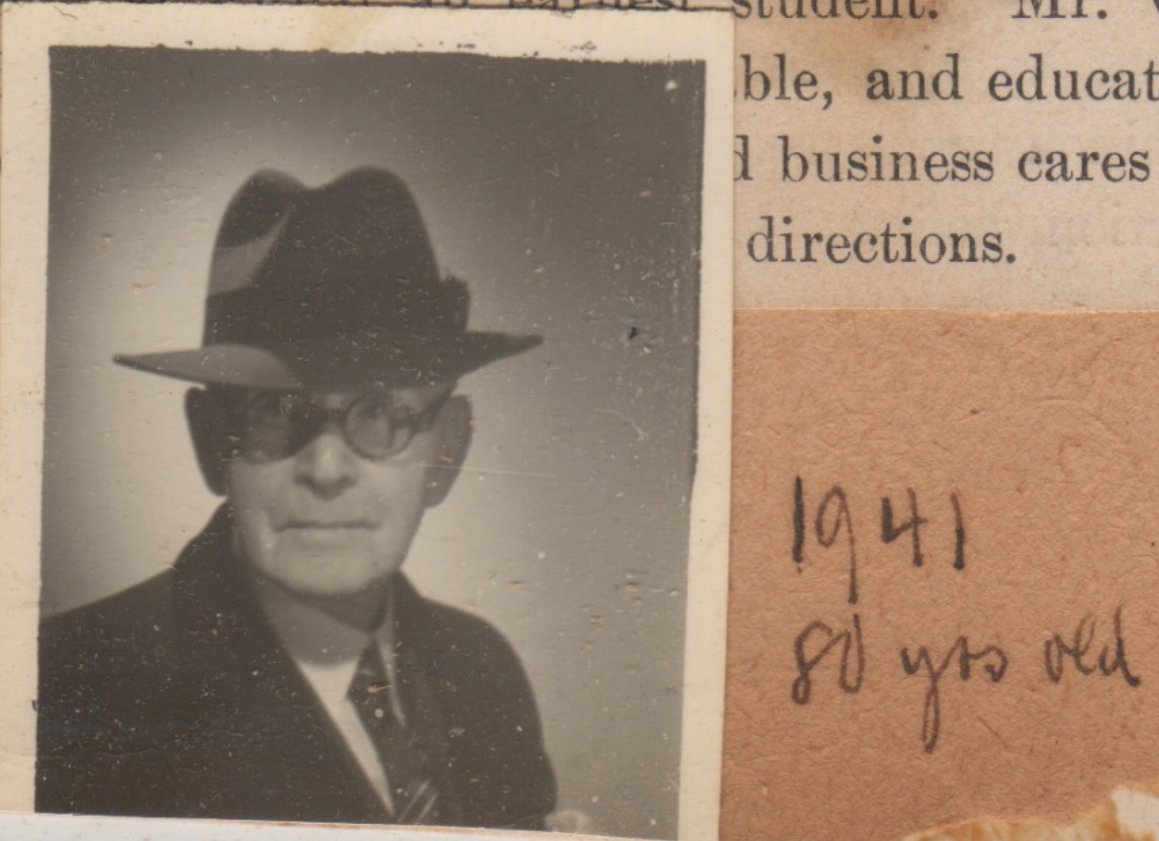
These three pages about Milton and his wife Sophie are appropriate reminders of their many talents. Here is one final photograph of Milton, taken in 1941 when he was eighty years old:

This is Part XIII of an ongoing series of posts based on the family album of Milton Goldsmith, generously shared with me by his granddaughter Sue. See Part I, Part II, Part IIIPart IVPart V,  Part VI, Part VII , Part VIII,  Part IX,  Part X, Part XI and Part XII at the links.

Another Lawyer in Henry Goldsmith’s Family

As seen in my prior post, the years between 1910 and 1920 were busy and productive ones for three of Henry Goldsmith’s children; Helen, Walter, and Florence all married in that decade and also engaged in meaningful work (teaching, dentistry, and music, respectively) and Walter and Helen also had children.

This post will focus on the other five children of Henry Goldsmith: Jacob (JW), Benjamin, Milton, Samuel (SR), and Oliver, and their lives during the second decade of the twentieth century.

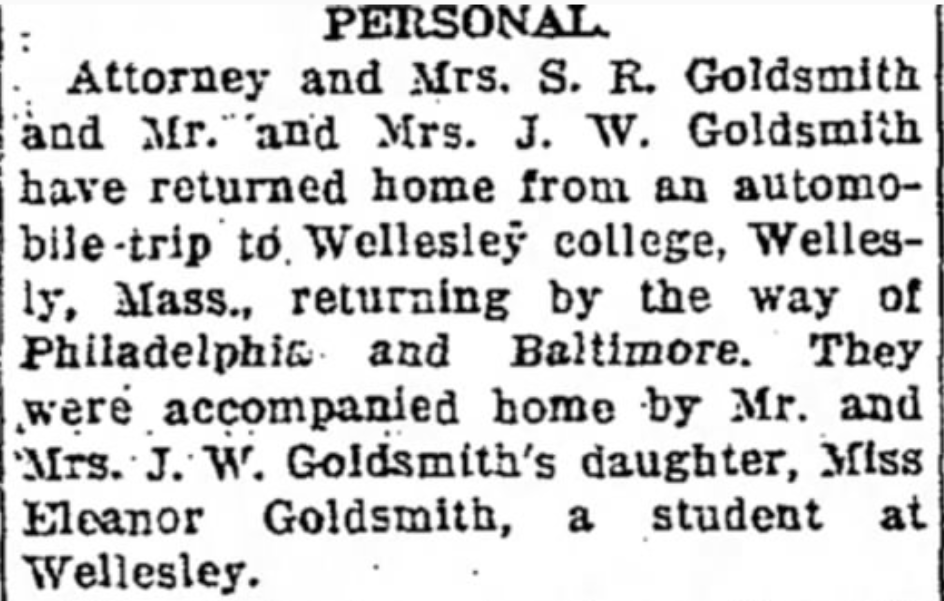
JW, as we saw, was living in Connellsville in 1910 with his wife Jennie and two children, Eleanor and J. Edison. He was a clothing merchant in business with his brother Benjamin. He continued this work in the 1910s. By 1918, his daughter Eleanor, then seventeen, was a student at Wellesley College.

“Personal,” The Connellsville (PA) Daily Courier, June 19, 1918, p. 2

In 1920 they were all still living in Connellsville, and JW was still a clothing merchant.

Jacob W. Goldsmith and family, 1920 US census, Census Place: Connellsville Ward 5, Fayette, Pennsylvania; Roll: T625_1568; Page: 6B; Enumeration District: 13
Ancestry.com. 1920 United States Federal Census

On November 10, 1917, Benjamin Goldsmith was involved in a terrible accident in which his car struck a three-year-old child, fatally injuring him.  Benjamin, however, was found not to be at fault and was completely exonerated of any criminal culpability:

“Driver Exonerated,” The Connellsville (PA) Daily Courier, November 16, 1917, p, 3

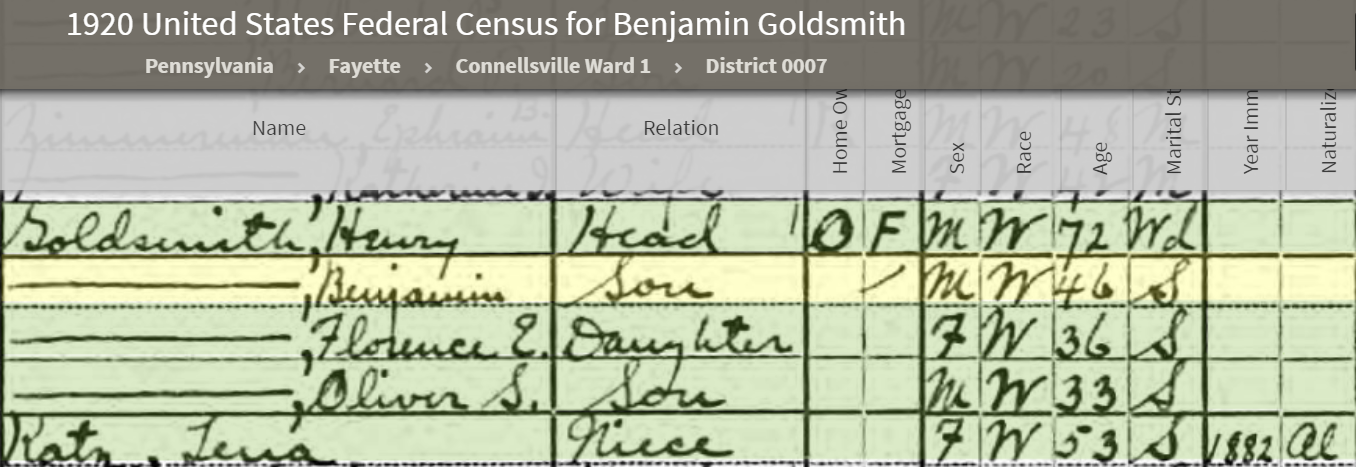
In 1920, Benjamin was still living with his father Henry, his sister Florence, brother Oliver and cousin Lena Katz in Connellsville. Henry was still in the insurance business, Benjamin continued to work as a clothing merchant with JW, Florence was teaching music and soon to be married, and Oliver—well, his story is still to come below.

Henry Goldsmith and family, 1920 US census, Census Place: Connellsville Ward 1, Fayette, Pennsylvania; Roll: T625_1568; Page: 2A; Enumeration District: 7
Ancestry.com. 1920 United States Federal Census

Milton, the third Goldsmith sibling, and his wife Luba were both practicing medicine in Pittsburgh in  1910. They had a second child, Albert Robin Goldsmith, born on April 10, 1915, in Pittsburgh.1 Henry volunteered to provide medical services in 1918 to the mining town of Cool Run located in McIntyre, Pennsylvania, where the Spanish flu epidemic had affected one hundred of the 125 homes.

“Dr. Milton Goldsmith,” The Connellsville (PA) Daily Courier, October 11, 1918, p, 2

In 1920, Milton, Luba, and their sons Norman and Albert were living in Pittsburgh where both Milton and Luba continued to practice medicine.2

SR (Samuel) Goldsmith continued to practice law and live in Connellsville with his wife Rae and son Jack in the 1910s.3 During this decade he was joined by another member of the family as a member of the profession. His younger brother Oliver graduated from Dickinson Law School in Pennsylvania and became a member of the Pennsylvania bar in August, 1917.4 The newspaper reported on his first case:

The Connellsville Daily Courier, August 6, 1917, p. 1

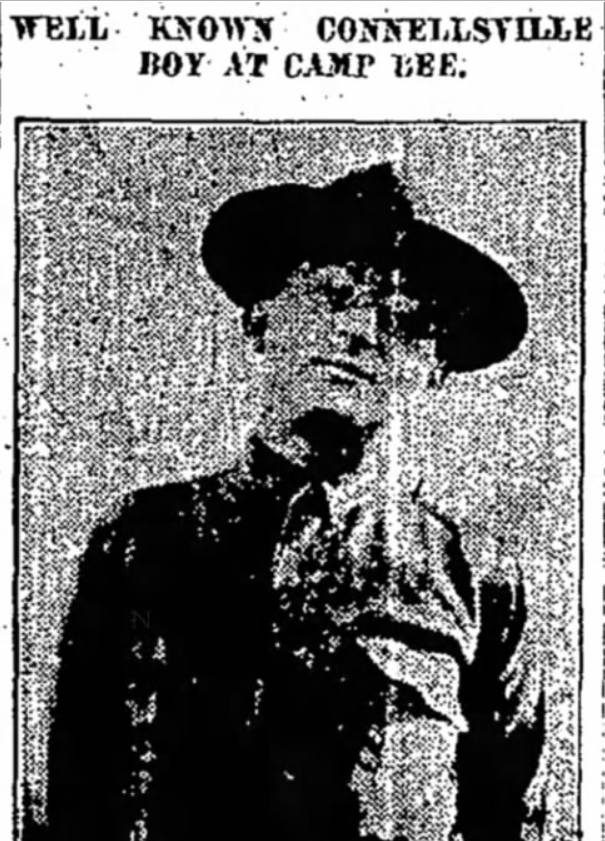
But Oliver did not have much time to use his license to practice law before he was inducted into the army on September 22, 1917 and sent to Fort Lee, Virginia, where he became a training sergeant. He was ultimately promoted to a corporal and then quartermaster sergeant and was stationed at Fort Lee until his discharge on April 11, 1919.5

“Well Known Connellsvile Boy at Camp Lee,” The Connellsville Daily Courier, March 7, 1918, p. 1

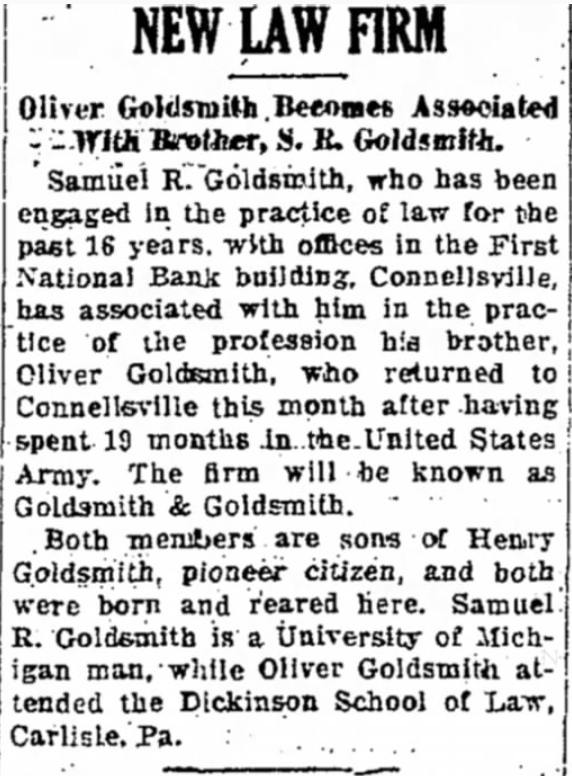
Once he returned from his time in the service, Oliver joined his brother SR in his law practice in Connellsville:

“New Law Firm,” The Connellsville Daily Courier, April 30, 1919. p. 2

As noted above, in 1920 Oliver was living with his father Henry, brother Benjamin, and sister Florence in Connellsville.

Thus, by 1920, all of Henry Goldsmith’s children were adults. All but Benjamin and Oliver were married, and Henry had eight grandchildren. What is perhaps most remarkable is how educated and successful Henry’s children were: a doctor, a dentist, and two lawyers among his sons (with the other two working together as clothing merchants) and two daughters who were both educated, one a teacher, the other a music teacher and composer.

That is quite impressive for the children of a German immigrant mother and a father who was born in the US shortly after his parents immigrated from Germany and who lost his mother when he was only three years old. I wonder who or what inspired them to seek higher education.

And what would the 1920s bring for Henry and his children and grandchildren? Unfortunately, it was not all good news.


  1. Albert Goldsmith, World War II draft registration, The National Archives in St. Louis, Missouri; St. Louis, Missouri; Record Group: Records of the Selective Service System, 147; Box: 914, Ancestry.com. U.S. WWII Draft Cards Young Men, 1940-1947 
  2. Milton Goldsmith, 1920 US census, Census Place: Pittsburgh Ward 14, Allegheny, Pennsylvania; Roll: T625_1522; Page: 21A; Enumeration District: 550, Ancestry.com. 1920 United States Federal Census 
  3. Samuel R Goldsmith, 1920 US census, Census Place: Connellsville Ward 1, Fayette, Pennsylvania; Roll: T625_1568; Page: 10A; Enumeration District: 7, Ancestry.com. 1920 United States Federal Census 
  4. The Connellsville (PA) Daily Courier, June 5, 1916, p. 2, and August 6, 1917, p. 1 
  5. Olilver Goldsmith, World War I draft registrations, Registration State: Pennsylvania; Registration County: Fayette; Roll: 2022796; Draft Board: 2, Ancestry.com. U.S., World War I Draft Registration Cards, 1917-1918. Ancestry.com. Pennsylvania, WWI Veterans Service and Compensation Files, 1917-1919, 1934-1948;. 

Henry Goldsmith,1910-1920: Obstacles Faced and Overcome

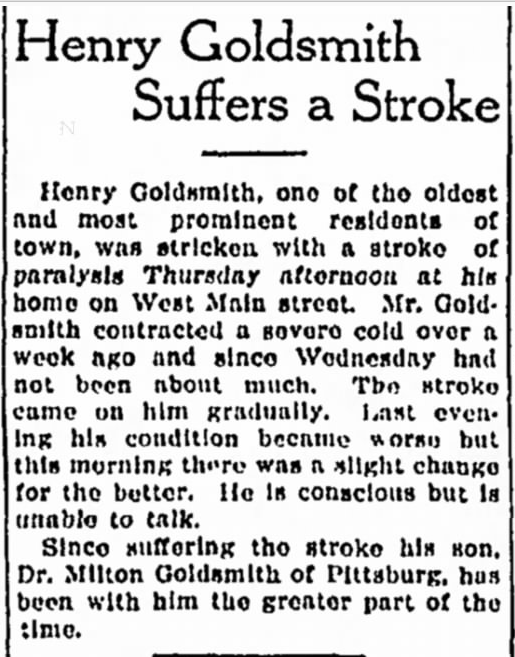
On August 10, 1911, Henry Goldsmith, then 64 years old, suffered a stroke, rendering him paralyzed and unable to speak.  His condition was reported in the Connellsville paper, as was his continuing improvement.

“Henry Goldsmith Suffers a Stroke,” The Daily Courier, 12 Aug 1911, Sat, Page 1

But Henry had a full recovery. A week later the paper reported that he was able to sit up in bed,1 and by September 18, 1911, he was able to go out and was reported as “recovered” by the newspaper.2 In October, he was re-elected to be president of the board of the People’s Building and Loan Association,3 and the following June he traveled with members of his family to Europe.

The Daily Courier, 02 May 1912, Thu, Page 1

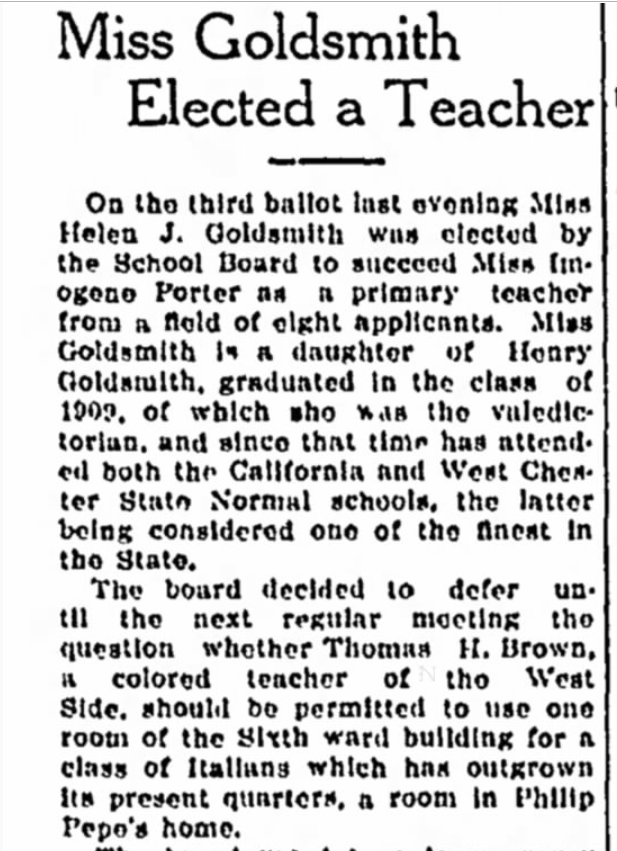
By this time even Henry’s youngest child, Helen, was earning a living. Just days after her father’s stroke, she was appointed to be a primary teacher in Connellsville, selected from a field of eight candidates. Like her older siblings, Helen had been an excellent student, graduating from the Connellsville school as valedictorian as had her brother Milton.

The Daily Courier, 22 Aug 1911, Tue, Page 6

I could not post this article without commenting on the paragraph that follows the one about Helen. It so clearly reflects the discriminatory social attitudes of those times by referring to the teacher by his race and to the class by their ethnic background.

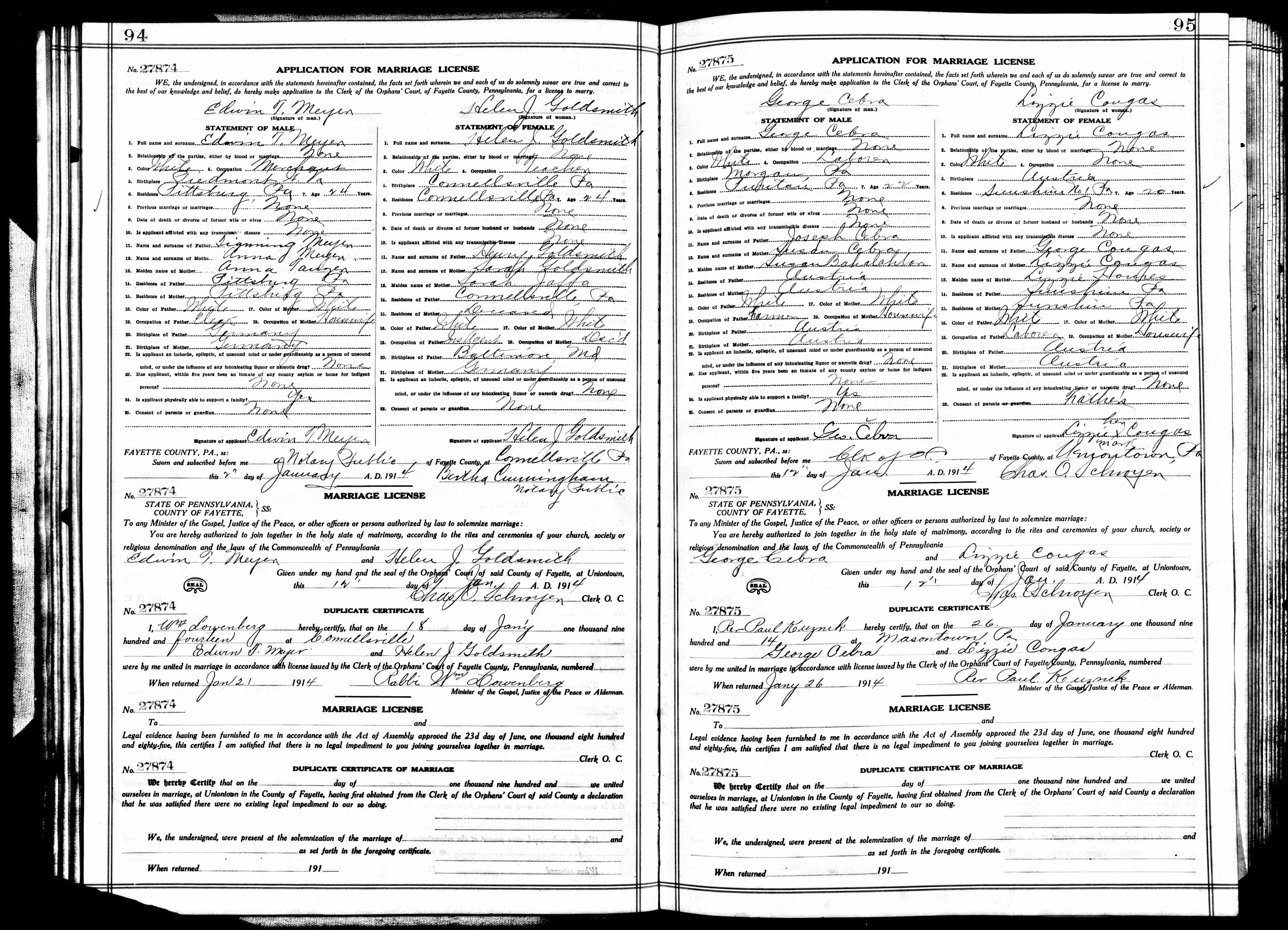
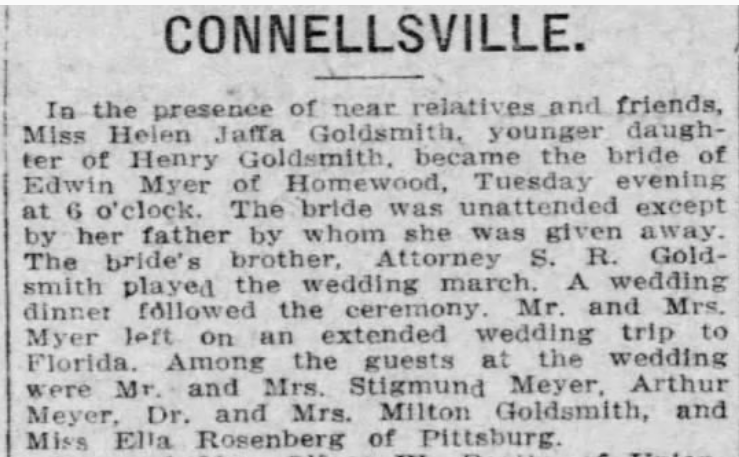
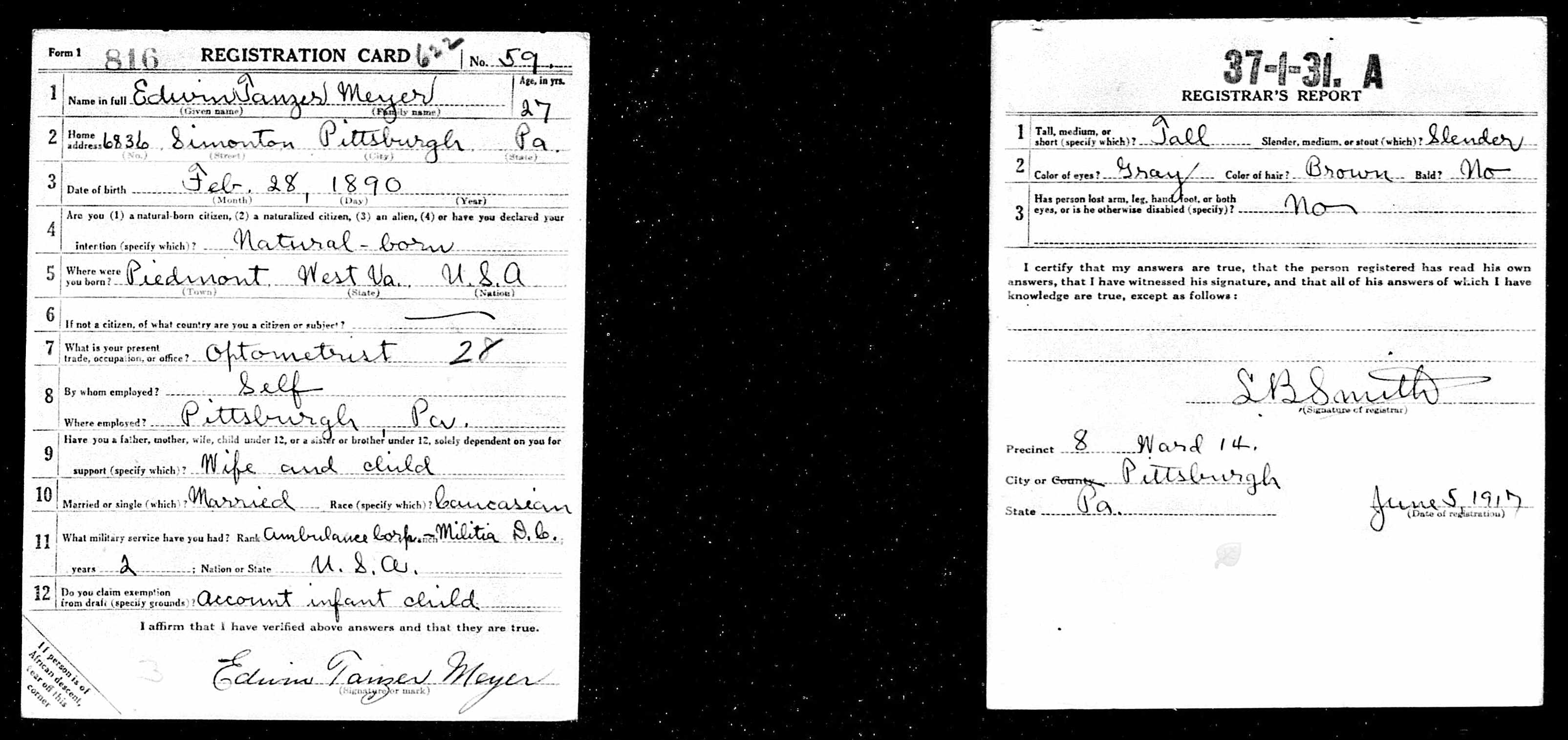
Helen’s teaching career in Connellsville did not last very long. On January 20, 1914, she married Edwin Tanzer Meyer; she was 24, he was 23. Edwin was born in Piedmont, West Virginia, on February 28, 1890, to Sigmund Meyer and Anna Tanzer, who were German immigrants. After living for some time in Lonaconing, Maryland, the family moved to Pittsburgh, where in 1910, Sigmund was a salesman in a department store and Edwin was a floor manager in a department store.4

Helen Goldsmith marriage record, Ancestry.com. Pennsylvania, Marriages, 1852-1968 
Original data: Marriage Records. Pennsylvania Marriages. Various County Register of Wills Offices, Pennsylvania

The Pittsburgh Press – 25 Jan 1914 – Page 45

Helen and Edwin settled in Pittsburgh, where they had two children: Edgar J. Meyer, born on March 31, 1915,5 and Malcolm G. Meyer, born January 17, 1918.6 Edwin had become an optometrist in the years between the 1910 census and his registration for the World War I draft. On that registration he reported that he had already served in the ambulance corps in the DC militia. In 1920 Helen, Edwin, and their two young sons were living in Pittsburgh, and Edwin was practicing optometry.7

Edwin T Meyer, World War I draft registration, Registration State: Pennsylvania; Registration County: Allegheny; Roll: 1909239; Draft Board: 11
Ancestry.com. U.S., World War I Draft Registration Cards, 1917-1918

Helen was not the only one of Henry’s children to marry in 1914. Her brother Walter married Ella Rosenberg six months after Helen married Edwin—on June 17, 1914. Ella was the daughter of Herman Rosenberg and Bertha Moskovics. She was born on January 13, 1887, in Csorgo, Hungary. 8 Her family had immigrated to the US in 1890, and in 1900 they were living in Pittsburgh where her father was a liquor salesman. Ella was still living in Pittsburgh in 1910.9

“Rosenberg-Goldsmith,” The Daily Courier, 18 Jun 1914, Thu, Page 2

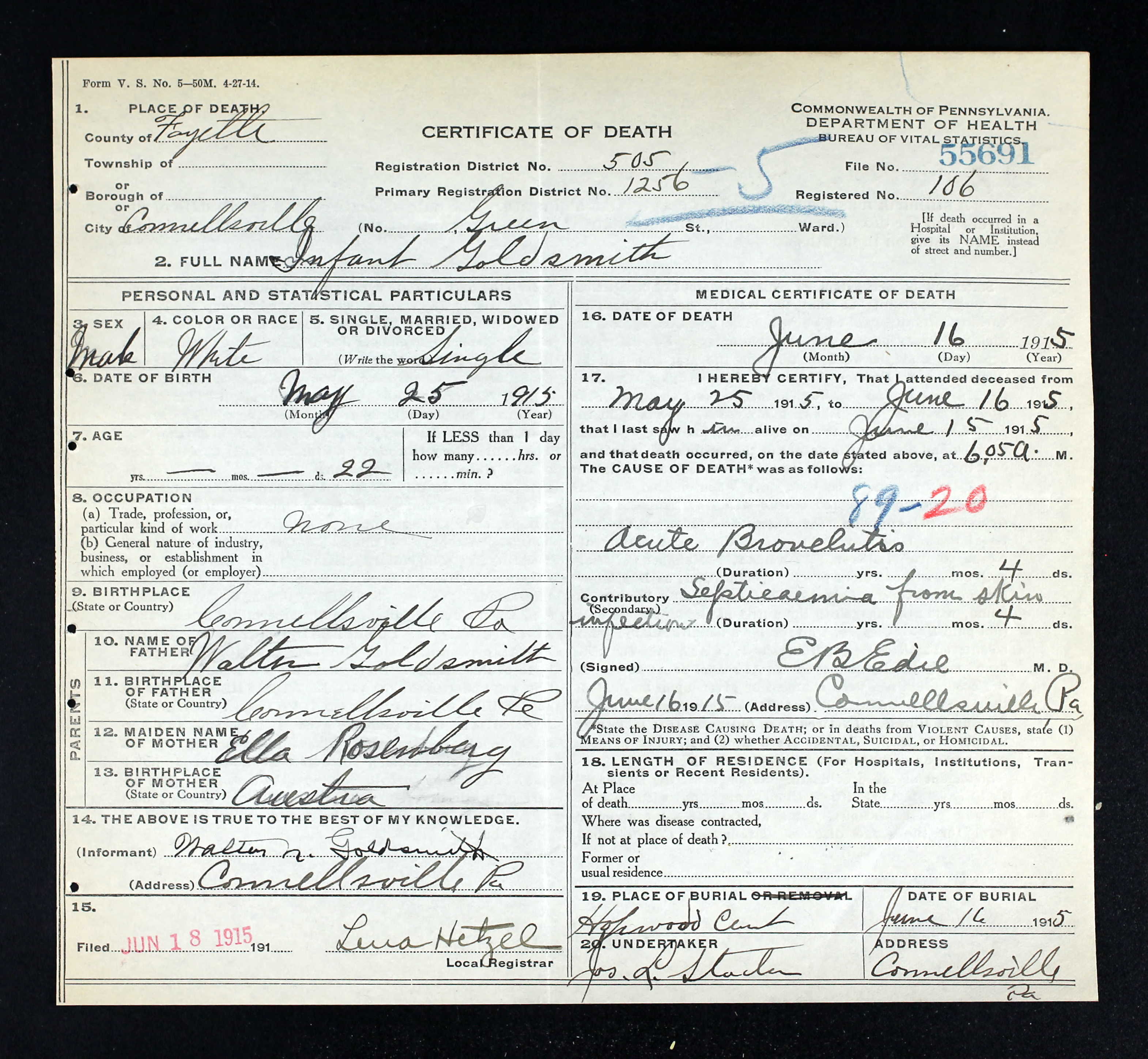
She and Walter settled in Connellsville, where Walter had a dentistry practice. On May 25, 1915 their first child was born; he only lived for 22 days, dying on June 16, 1915, from acute bronchitis and septicemia from a skin infection. Since there was no name given for this child on his death certificate, I imagine he was either premature or very sick right from birth:

Pennsylvania Historic and Museum Commission; Pennsylvania, USA; Pennsylvania, Death Certificates, 1906-1965; Certificate Number Range: 054101-057320
Ancestry.com. Pennsylvania, Death Certificates, 1906-1966

Walter and Ella’s second child was born on October 2, 1916. She was named Sarah Jaffa Goldsmith in memory of Walter’s mother.10

At the time of his registration for the World War I draft in 1918, Walter and his family were still living in Connellsvile,11 but by 1920, Walter, Ella and their daughter Sarah were living in Pittsburgh where Walter had a general dentistry practice.12

1914 was also a big year for Florence Goldsmith, though for different reasons. That year she debuted her operetta, “The Pilot of Tadousac,” for which she had written the book, the lyrics, and the music. Unfortunately, I do not know anything about this operetta. Tadoussac is a village in Quebec. I did find this story on a CBC Canadian history website, so perhaps this is the “pilot” that inspired Florence’s operetta:

In the spring of 1608, two vessels crossed the Atlantic, the Lévrier, under the command of Dupont-Gravé, and the Don de Dieu, under the command of Champlain.

On June 3, when Champlain arrived in Tadoussac, Dupont-Gravé’s pilot came to greet him in a rowboat. The pilot informed him that Dupont-Gravé had tried to impose his monopoly on the Basque and Spanish captains who were already there, but they had answered him with their muskets and cannons. He took Champlain to the bedside of Dupont-Gravé, who was still alive but seriously wounded.

Together, they negotiated a truce with Darache, the leader of the Spaniards, which allowed Dupont-Gravé’s men to start trading with the Montagnais.

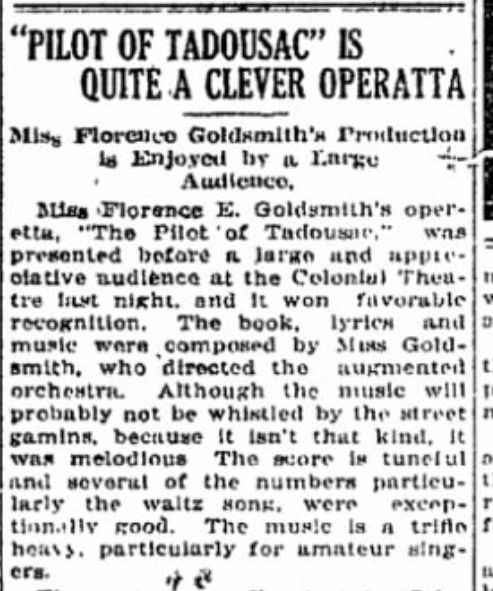
Aside from this reference, I found nothing that revealed the story behind Florence’s operetta. The operetta itself was generally well-reviewed by the local newspaper as seen in this excerpt from a longer article (I excluded the parts describing the cast):

“Pilot of Tadousac is Quite A Clever Operatta [sic],” The Daily Courier, 29 May 1914, Fri, Page 2

It also was performed in two other locations in Pennsylvania over the next several years. 13 Florence also continued to teach music.14

The Pittsburgh Press, 29 Oct 1916, Sun, Page 10

Then on March 11, 1920, she married Lester Bernstein in New York City.15 He was 38, she was 36. Lester was born in Columbia, Pennsylvania, on May 14, 1881, to Sigmund Bernstein and Marie Omann, who were both immigrants from Germany.16 In 1900, Lester’s father Sigmund was working as a jeweler in Philadelphia, and Lester was a “rodman.”17 According to this website, a rodman was a surveyor’s assistant.

Lester was a Phi Beta Kappa graduate of Lehigh University. In 1910, he was living on his own as a lodger in Baltimore and working as a civil engineer for the railroad. He was still living in Baltimore and working for the railroad when he registered for the World War I draft in 1918, although now he reported his title as statistician. The article about his marriage to Florence reported that he had at one time worked for the railroad in Connellsville as a field engineer, which is probably when he met Florence.

The Daily Courier, 11 Mar 1920, Thu, Page 2

After marrying, Florence and Lester settled in Pittsburgh.  I could not find them on the 1920 census, perhaps because they were still on their “extended honeymoon trip” when the enumeration was done.

Thus, Walter, Helen, and Florence all married between 1910 and 1920. Their other siblings—JW, Benjamin, Milton, Samuel and Oliver—were also busy in those years. More on that in my next post.


  1. “Henry Goldsmith Improved,” The Daily Courier – 14 Aug 1911 – Page 1 
  2. “Henry Goldsmith Well Again,” The Daily Courier, 18 Sep 1911, Mon, Page 1 
  3. “Peoples B&L Elects Officers,” The Daily Courier, 11 Oct 1911, Wed, Page 1 
  4. Sigmund Meyer family, 1900 US census, Census Place: Lonaconing, Allegany, Maryland; Page: 6; Enumeration District: 0110; FHL microfilm: 1240604, Ancestry.com. 1900 United States Federal Census. Sigmund Meyer family, 1910 US census, Census Place: Pittsburgh Ward 13, Allegheny, Pennsylvania; Roll: T624_1303; Page: 2B; Enumeration District: 0446; FHL microfilm: 1375316, Ancestry.com. 1910 United States Federal Census 
  5. Edgar Meyer, World War II draft registration, The National Archives in St. Louis, Missouri; St. Louis, Missouri; Record Group: Records of the Selective Service System, 147; Box: 1695, Ancestry.com. U.S. WWII Draft Cards Young Men, 1940-1947 
  6. Malcolm Meyer, World War II draft registration, The National Archives in St. Louis, Missouri; St. Louis, Missouri; Record Group: Records of the Selective Service System, 147; Box: 1695, Ancestry.com. U.S. WWII Draft Cards Young Men, 1940-1947 
  7. Edwin T. Meyer, 1920 US census, Census Place: Pittsburgh Ward 13, Allegheny, Pennsylvania; Roll: T625_1522; Page: 2B; Enumeration District: 521, Ancestry.com. 1920 United States Federal Census 
  8. Ella Rosenberg birth record, Source: LDS 642954, Page # – Item #: 301-014, JewishGen Hungarian Special Interest Group volunteers, comp. Hungary, Birth Records collected by Rabbis in Various Counties, 1789-1921 
  9. Rosenberg family, 1900 US census, Census Place: Allegheny Ward 5, Allegheny, Pennsylvania; Page: 10; Enumeration District: 0048; FHL microfilm: 1241355,
    Ancestry.com. 1900 United States Federal Census; Rosenberg family, 1910 US census,Census Place: Pittsburgh Ward 11, Allegheny, Pennsylvania; Roll: T624_1302; Page: 1A; Enumeration District: 0422; FHL microfilm: 1375315, Ancestry.com. 1910 United States Federal Census 
  10. Sarah Jaffa Goldsmith death certificate, Certificate Number: 22703
    Pennsylvania Historic and Museum Commission; Pennsylvania, USA; Pennsylvania, Death Certificates, 1906-1965; Certificate Number Range: 020501-023500,
    Ancestry.com. Pennsylvania, Death Certificates, 1906-1966 
  11. Walter Goldsmith, World War I draft registration, Registration State: Pennsylvania; Registration County: Fayette; Roll: 2022796; Draft Board: 2, Ancestry.com. U.S., World War I Draft Registration Cards, 1917-1918 
  12. Walter Goldsmith and family, 1920 US census, Census Place: Pittsburgh Ward 14, Allegheny, Pennsylvania; Roll: T625_1522; Page: 14A; Enumeration District: 550,
    Ancestry.com. 1920 United States Federal Census 
  13. “The Pilot of Tadousac,” The Uniontown (PA) Morning Herald, 16 Sep 1915, Thu, Page 5; “Amateurs Will Stage Benefit Play,” The Pittsburgh Press, 29 Oct 1916, Sun, Page 10; 
  14. “Students Give Recitals,” The Daily Courier, 11 Jun 1919, Wed, Page 5 
  15.  License Number: 7069, New York City Municipal Archives; New York, New York; Borough: Manhattan; Volume Number: 3, Ancestry.com. New York, New York, Marriage License Indexes, 1907-2018 
  16. Lester Bernstein, World War II draft registration, The National Archives at St. Louis; St. Louis, Missouri; World War II Draft Cards (4th Registration) for the State of California; Record Group Title: Records of the Selective Service System, 1926-1975; Record Group Number: 147, Ancestry.com. U.S., World War II Draft Registration Cards, 1942. Lester Bernstein death certificate, Certificate Number: 121500-65, Pennsylvania Historic and Museum Commission; Pennsylvania, USA; Pennsylvania (State). Death certificates, 1906-1963; Box Number: 2459; Certificate Number Range: 121201-124000, Ancestry.com. Pennsylvania, Death Certificates, 1906-1966 
  17. Sigmund Bernstein and family, 1900 US census, Census Place: Philadelphia Ward 17, Philadelphia, Pennsylvania; Page: 8; Enumeration District: 0327; FHL microfilm: 1241459, Ancestry.com. 1900 United States Federal Census