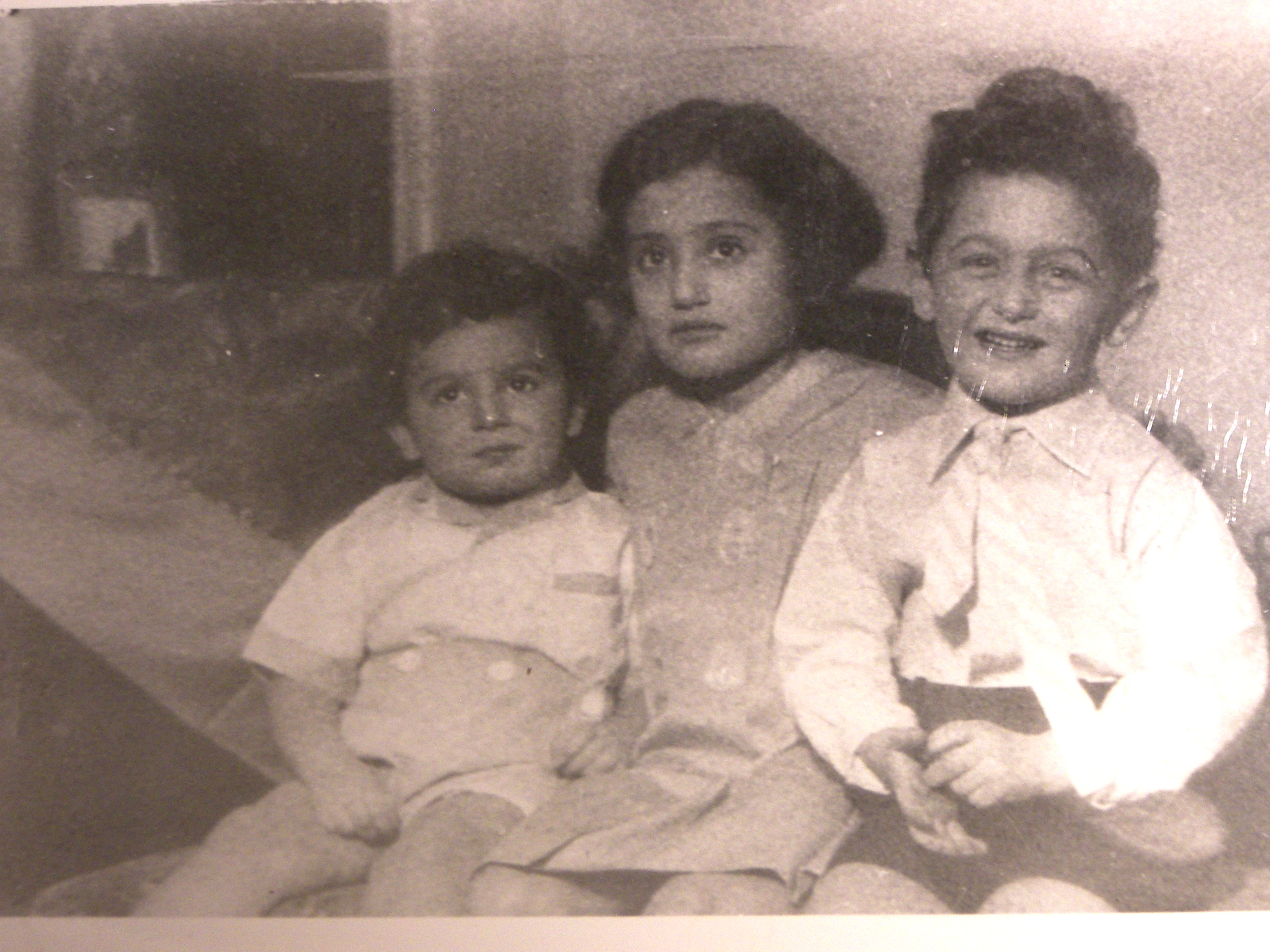
The Screenwriter and the Real Estate Mogul

This is the story of two boys who lost their mother before they were even four years old and who, despite that tragedy, grew up to be very successful.

As I wrote here, my cousin Hattie Baer died at age 33 in 1910.  Hattie and her husband Meyer Herman had had two sons, Justin Baer Herman and Richard B. Herman; Justin was three when his mother died, and Richard was just a few months old.  Five years later in 1915, Hattie’s sister Amanda married her brother-in-law Meyer when those boys were still only eight and five years old, respectively.

Meyer was in the clothing business.  In fact, according to one cemetery record, he worked for the Snellenburg Clothing Company, a clothing manufacturing company and a department store in Philadelphia.

Meyer Herman and Hattie and Amanda burial

Historical Society of Pennsylvania; Philadelphia, Pennsylvania; Collection Name: Historic Pennsylvania Church and Town Records

In one of those “small world moments,” I realized that Meyer Herman was working for a company that was owned by the family of another of my relatives: Carrie Snellenburg, who married my great-great-uncle Joseph Cohen, my great-grandfather Emanuel Cohen’s older brother.  The twisted family tree creaks one more time.

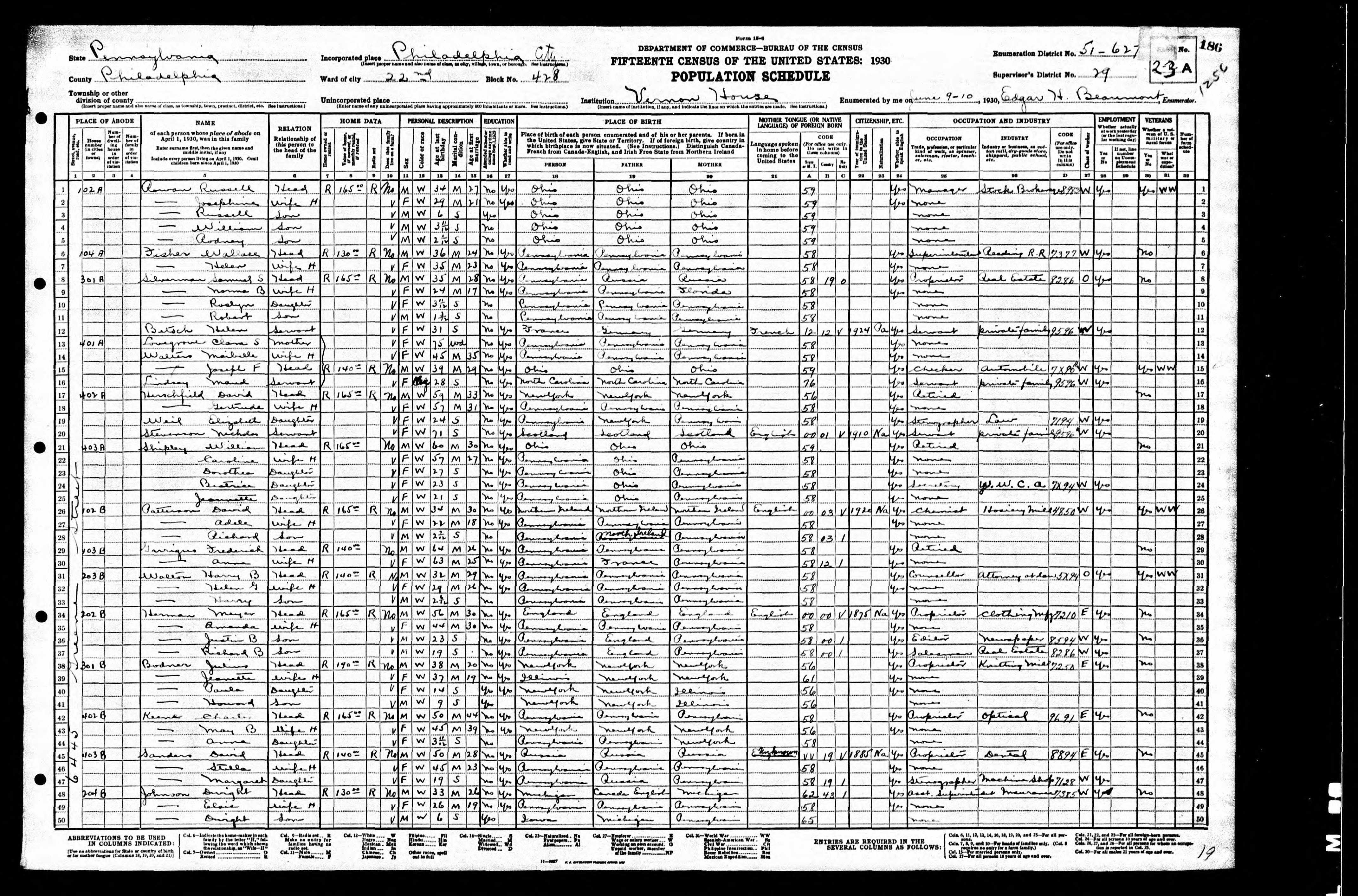
By 1930 both of the sons of Meyer Herman and Hattie Baer (nephews and stepsons of Amanda Baer) were working, Justin as a newspaper editor, Richard as a real estate salesman.  Meyer, Amanda, Justin, and Richard were all still living together in Philadelphia.  Justin was 23, Richard 19 at the time of the 1930 census.

Meyer and Amanda Herman and sons 1930 census Year: 1930; Census Place: Philadelphia, Philadelphia, Pennsylvania; Roll: 2104; Page: 23A; Enumeration District: 0627; Image: 902.0; FHL microfilm: 2341838

Meyer and Amanda Herman and sons 1930 census
Year: 1930; Census Place: Philadelphia, Philadelphia, Pennsylvania; Roll: 2104; Page: 23A; Enumeration District: 0627; Image: 902.0; FHL microfilm: 2341838

Ten years later Meyer and Amanda were still living in Philadelphia, and Meyer was still working as a clothing salesman.  He was 69 years old, Amanda was 58.  Justin and Richard were no longer living with them.  Both had already established themselves in their chosen careers.

After graduating from the Pennsylvania Academy of Fine Art, Justin had become a successful writer, cartoonist, and screenwriter. He wrote for The Philadelphia Record as a reporter and also established a magazine, The Town Crier, during the early 1930s.  He then moved to New York by 1935, where he was a contributor of poems, short stories, and cartoons to The New Yorker magazine.  During that decade he also starting writing screenplays for short films.  Between 1934 and 1940, he wrote nineteen screenplays for short films, working for Paramount Pictures.  “Justin B. Herman Dead at 76; Writer and Producer of Films,” The New York Times, December 10, 1983.    As of 1940, he was single and still living in New York City.

Pennsylvania Academy of the Fine Arts, 118-124...

Pennsylvania Academy of the Fine Arts, 118-124 North Broad Street, Philadelphia, PA 19102, built 1872-75, Frank Furness, architect, William A. Armstrong, builder, National Historic Landmark, 1975. Museum of the Pennsylvania Academy, the oldest art institution in the United States. (Photo credit: Wikipedia)

Meanwhile, his younger brother Richard was also doing quite well during the 1930s.  According to his obituary, Richard “got an early start in the business. He convinced his family and teachers that he was bright, and in elementary school, he was permitted to skip two grades. He entered high school when he was 12, and at 17 was working in real estate for the Lionel Friedman Co. In 1933, at age 23, he founded his own real estate firm. Concentrating on major properties, he built Richard B. Herman & Co. into one of the largest real estate firms in Philadelphia. His forte was real estate investment and management.”  “RICHARD B. HERMAN, 71, REAL ESTATE, CIVIC LEADER,” The Philadelphia Inquirer, June 27, 1982, GenealogyBank.com (http://www.genealogybank.com/doc/obituaries/obit/0FBAE8CA0B3A0215-0FBAE8CA0B3A0215 : accessed 5 July 2016).

As of the 1940 census, Richard had married Marion Cohn, and they were living in Philadelphia.  Their son was born later that year.

On August 25, 1941, Meyer Herman died from coronary thrombosis at age 70.  He had survived the loss of his first wife, Hattie Baer, at a very young age and raised two very young sons in the aftermath of her death before marrying Hattie’s sister Amanda five years later.  He must have been very proud of those two sons.

Meyer Herman death certificate Ancestry.com. Pennsylvania, Death Certificates, 1906-1963 [database on-line]. Provo, UT, USA: Ancestry.com Operations, Inc., 2014. Original data: Pennsylvania (State). Death certificates, 1906–1963. Series 11.90 (1,905 cartons). Records of the Pennsylvania Department of Health, Record Group 11. Pennsylvania Historical and Museum Commission, Harrisburg, Pennsylvania.

Meyer Herman death certificate
Ancestry.com. Pennsylvania, Death Certificates, 1906-1963 [database on-line]. Provo, UT, USA: Ancestry.com Operations, Inc., 2014.
Original data: Pennsylvania (State). Death certificates, 1906–1963. Series 11.90 (1,905 cartons). Records of the Pennsylvania Department of Health, Record Group 11. Pennsylvania Historical and Museum Commission, Harrisburg, Pennsylvania.

During the 1940s Justin Baer Herman married Alma Baer (as far as I can tell, the fact that her surname was Baer was coincidental; she does not appear to have been related to Jacob Baer’s family).  They would have two daughters.  Justin continued to be a successful screenwriter for Paramount.  Two of the films he wrote were nominated for Academy Awards in the category of Best Short Subject.  According to the Imdb database, he was credited as the writer on 61 films between 1934 and 1955 and as director on 49 of those films, producer on forty.  His obituary claimed even higher numbers: “Mr. Herman produced 118 short subjects in 35 years of film making. Three of them were nominated for Academy Awards – ”Life Line to Hong Kong,” ”Roller Derby” and ”Three Kisses.” “Justin B. Herman Dead at 76; Writer and Producer of Films,” The New York Times, December 10, 1983.

Richard also continued to have success in his career.  His obituary reports that:

One of the original developers of Penn Center, he played a major role in the revitalization of Center City. He helped build, and his firm operated, many of the buildings added to the city’s skyline since 1950. …  Working in Penn Center, he was responsible for much of its growth through such transactions as the sale for Penn Central of the 16th and Market Street sites on which stand such buildings as the Central Penn National Building.   He was also responsible for the sale of the Suburban Station Building to the late Matthew H. McCloskey Jr., and the construction of the IBM Building.  When major buildings were placed on the market, he usually was involved – he handled the sale of the Curtis Building, for example. [As of 1971, his company]  was responsible for the operation and leasing of more than 30 major office buildings containing 4.5 million square feet of space.

In fact, Richard’s real estate development firm was responsible for building the huge apartment building, The Philadelphian, where my aunt Eva Cohen lived for many years.

"Philadelphia to Have Largest Apartment, Camden Courier Post, Saturday, May 6, 1961, p. 2

“Philadelphia to Have Largest Apartment, Camden Courier Post, Saturday, May 6, 1961, p. 2

The Philadelphian

The Philadelphian

Unfortunately, Richard suffered a tragedy in his personal life.  On February 28, 1953, his nine year old daughter Barbara died from acute cardiac dilatation.

Barbara Herman death certificate Ancestry.com. Pennsylvania, Death Certificates, 1906-1963 [database on-line]. Provo, UT, USA: Ancestry.com Operations, Inc., 2014. Original data: Pennsylvania (State). Death certificates, 1906–1963. Series 11.90 (1,905 cartons). Records of the Pennsylvania Department of Health, Record Group 11. Pennsylvania Historical and Museum Commission, Harrisburg, Pennsylvania.

Barbara Herman death certificate
Ancestry.com. Pennsylvania, Death Certificates, 1906-1963 [database on-line]. Provo, UT, USA: Ancestry.com Operations, Inc., 2014.
Original data: Pennsylvania (State). Death certificates, 1906–1963. Series 11.90 (1,905 cartons). Records of the Pennsylvania Department of Health, Record Group 11. Pennsylvania Historical and Museum Commission, Harrisburg, Pennsylvania.

 UPDATE: Luanne, a fellow genealogy blogger, asked what I knew about Barbara’s cause of death, so I asked my brother/medical consultant.   He said, “something like viral myocarditis that resulted in cardiogenic shock…would be the most likely diagnosis in a 9 year old.  Acute cardiac dilatation isn’t really a diagnosis, it’s a finding or a descriptive term.[It means an acutely enlarged heart.] Rapid onset cardiogenic shock can also be caused by an MI, valve dysfunction, wall rupture and dysrhythmias, but these would be pretty unusual in a 9 year old. It is also possible she had septic shock which, in the end, caused her heart to dilate (enlarge) and fail.”  For those (like me) who need a definition of cardiogenic shock, MedlinePlus says, “Cardiogenic shock is when the heart has been damaged so much that it is unable to supply enough blood to the organs of the body.”

Justin and Richard’s aunt and stepmother Amanda Baer died on July 28, 1969; she was 89 years old.  She was buried in Mt Sinai cemetery in the same lot as her husband, Meyer Herman, and her sister, Hattie Baer, Meyer’s first wife. Meyer was buried between his two wives, the two Baer sisters.

Meyer Herman and Hattie and Amanda burial

Mt Sinai cemetery record of burials of Amanda Baer Herman, Meyer Herman, and Hattie Baer Herman

Like Meyer, Amanda must have been very proud of her two nephews, Justin and Richard, whom she had helped raise perhaps even before she had married their father in 1915.

Richard Herman died on June 25, 1982.  He was only 72 years old.  I have already quoted extensively from his Philadelphia Inquirer obituary, but want to add these additional insights into who he was beyond a highly successful real estate developer:

He was involved in a wide range of activities. … He was vice president and a member of the board of the Medical College of Pennsylvania, a member of the board of trustees of the Eastern Pennsylvania Psychiatric Institute, a former chairman of the Easter Seal drive, and served on the board of the Athenaeum of Philadelphia. 

Mr. Herman was a member of the prestigious Committee of 70, and a director of the Philadelphia Museum School of Art and the Franklin Institute. He was former chairman of the nonsectarian National Jewish Hospital in Denver and of divisions of United Fund and United Way drives.   He was active in the Rittenhouse Astronomical Society, the Pennsylvania Historical Society, and the Philadelphia Art Alliance.

Mr. Herman was the only man to head both the Society of American Magicians and the International Brotherhood of Magicians simultaneously.

He was a member of the Citizens Council on City Planning and the Germantown Historical Society.

He was a man with an endless curiosity and an I.Q. high enough to make him eligible for membership in Mensa, an organization for the very intelligent. He taught himself art, sculpture and music. He learned to play the organ on his own. He had his own observatory.

His art was displayed in his home and his office, accompanying his collections of such things as pipes. He also collected instruments related to astrology and medicine, children’s toys and signs.

Richard B. Herman ad

His brother Justin died just one year later on December 3, 1983.  He was 76 years old and died of emphysema.  “Justin B. Herman Dead at 76; Writer and Producer of Films,” The New York Times, December 10, 1983.

These two men who lost their mother before either was four years old certainly left their mark in their respective fields, one an Oscar nominated screenwriter, the other a highly successful real estate developer and civic leader.

In Memory of Murray Leonard: May 4, 1922-March 27, 2016

Murray Leonard

Murray Leonard

My second cousin Richard Leonard contacted me to let me know that his father, Murray Leonard (born Murray Leonard Goldschlager) had passed away on March 27, 2016, in Tucson, Arizona.  Murray was my mother’s first cousin.  He was the son of David Goldschlager, my grandfather’s younger brother, and Rebecca Schwarz.  He was named for his grandfather, my great-grandfather Moritz Lieb Goldschlager, and shared the same Hebrew name with his first cousin, my uncle Maurice Goldschlager.

I never had the chance to meet Murray, but I know from Richard how well loved he was.  With Richard’s permission, I am quoting from Murray’s obituary and Richard’s own personal tribute:

Murray Leonard, 93, of Tucson, Arizona, passed away peacefully on March 27th 2016. He was born in Scranton, Pennsylvania on May 4th 1922.

Murray grew up in The Bronx, following all the NY Yankee greats.

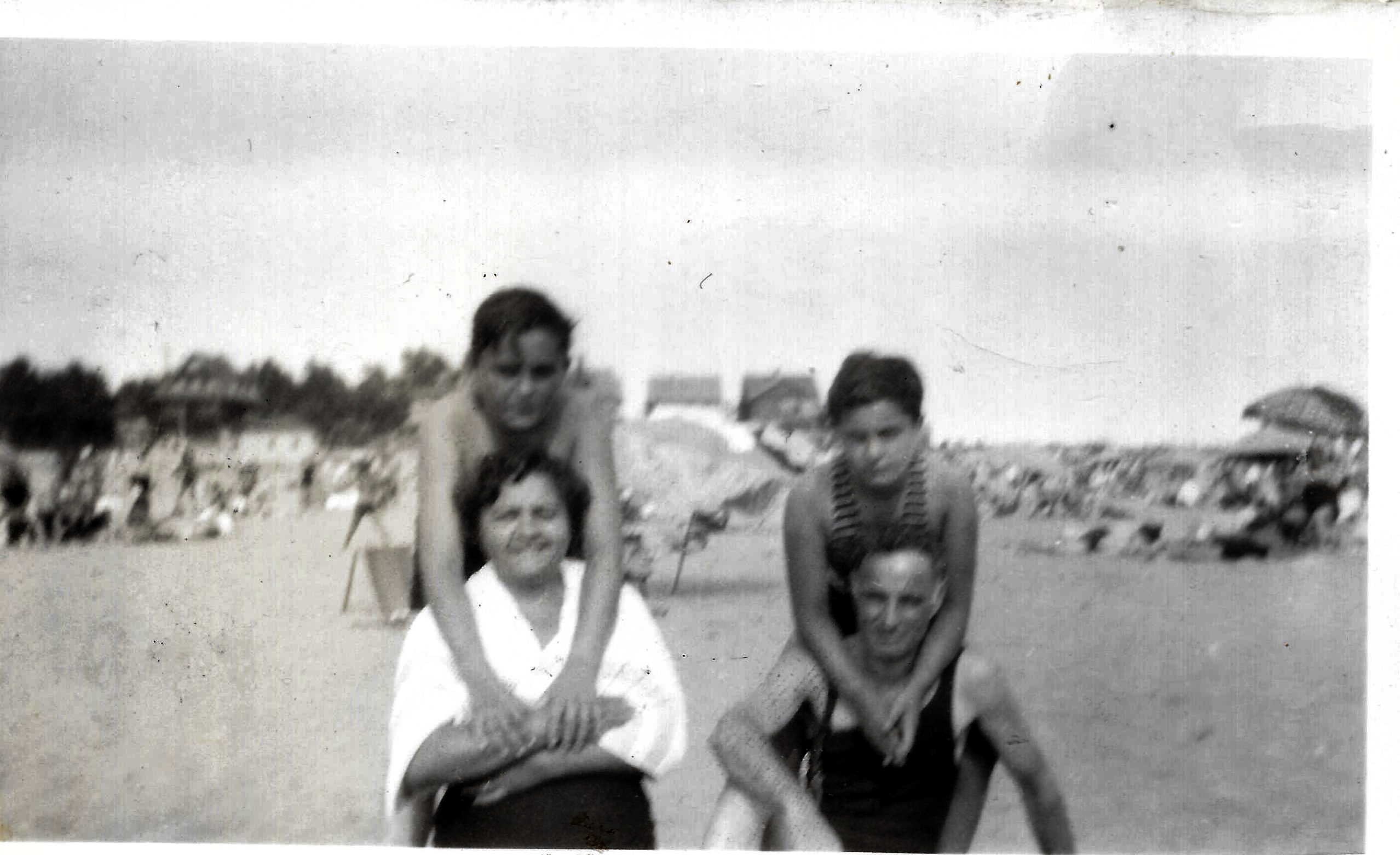
David Rebecca Sidney and Murray at Brighton Beach

Murray, Sidney, Rebecca and David Goldschlager at Brighton Beach

David and Murray Goldschlager

David and Murray Leonard Goldschlager


When World War Two broke out he answered his country’s call to duty as a PFC in the US Army (83rd Reconnaissance Troup, 83rd Division), participating in the Battle of the Bulge, sustaining injuries and was awarded a Purple Heart.

Ancestry.com. U.S., WWII Jewish Servicemen Cards, 1942-1947 [database on-line]. Provo, UT, USA: Ancestry.com Operations, Inc. Original data: Alphabetical Master Cards, 1942–1947; Series VI, Card Files—Bureau of War Records, Master Index Cards, 1943–1947; National Jewish Welfare Board, Bureau of War Records, 1940–1969; I-52; boxes 273–362. New York, New York: American Jewish Historical Society, Center for Jewish History.

Ancestry.com. U.S., WWII Jewish Servicemen Cards, 1942-1947 [database on-line]. Provo, UT, USA: Ancestry.com Operations, Inc.
Original data: Alphabetical Master Cards, 1942–1947; Series VI, Card Files—Bureau of War Records, Master Index Cards, 1943–1947; National Jewish Welfare Board, Bureau of War Records, 1940–1969; I-52; boxes 273–362. New York, New York: American Jewish Historical Society, Center for Jewish History.

After getting married to the love of his life Edna in 1958, he moved to Tucson, Arizona to pursue a career in the mail-order and retail women’s clothing business with his wife at Old Pueblo Traders and the Vicki Wayne retail stores, retiring at the age of 78.   

He was a keen golfer and enjoyed playing with his buddies as part of the ‘Grumpy Old Men” golfing group, playing until he was 87. He also enjoyed playing the US stock market/investing mostly on his own, including reading the Wall Street Journal every day.

Murray_Leonard_Lacey_Busby_Hadwin_Layla_Hadwin_11_JAN_2014

Murray Leonard


He is survived by a son, Richard (Stephanie) and loving wife of 57 years, Edna Leonard. He was preceded in death by his brother Sidney Goldschlager (Nora) of Rumson, New Jersey and parents, David and Rebecca Goldschlager, who immigrated to the US [from] Iași, Romania. He is also lovingly remembered by all his nieces and nephews as fun-loving “Uncle Mursh”, who would do anything for a laugh.

Richard wrote:

He was a fantastic father, patriotic American and overall great guy. He heeded his country’s call to duty fighting in WWII, seeing combat action in the Battle of the Bulge (getting wounded and was awarded a Purple Heart). A successful businessman retiring at the age of 78, he also was a keen golfer, playing until he was 87. He will be certainly missed but the great memories will always remain! Time to toast him with a Tanqueray & Tonic, his favorite drink!

I will be sure to have that Tanqueray & Tonic in his memory and will think of my cousin Murray, the son of Romanian immigrants who grew up to live the life his parents must have dreamed for him: a long and happy marriage and a loving son, a successful business, and dedicated service to the country that his parents had adopted as their own when coming here as young adults in the early 20th century.

May his memory be for a blessing, and may his family be comforted by their memories.

Murray Leonard older


A Brotman, Goldschlager, and Rosenzweig Update: The Baby Book

As you know if you’ve been following this blog for a while, my Aunt Elaine preceded me as the family historian for my maternal side.  Several times notes she made or information she gave to others has led me to more information.  Her information has almost without exception proven to be accurate.  For example, she provided me—indirectly—with the names of my grandmother Gussie Brotman’s half-siblings, Abraham, David, Sophie, and Max.  She provided me with the clue that the Brotmanville Brotmans were our close relatives.  She told me how my grandparents met each other in Brooklyn.

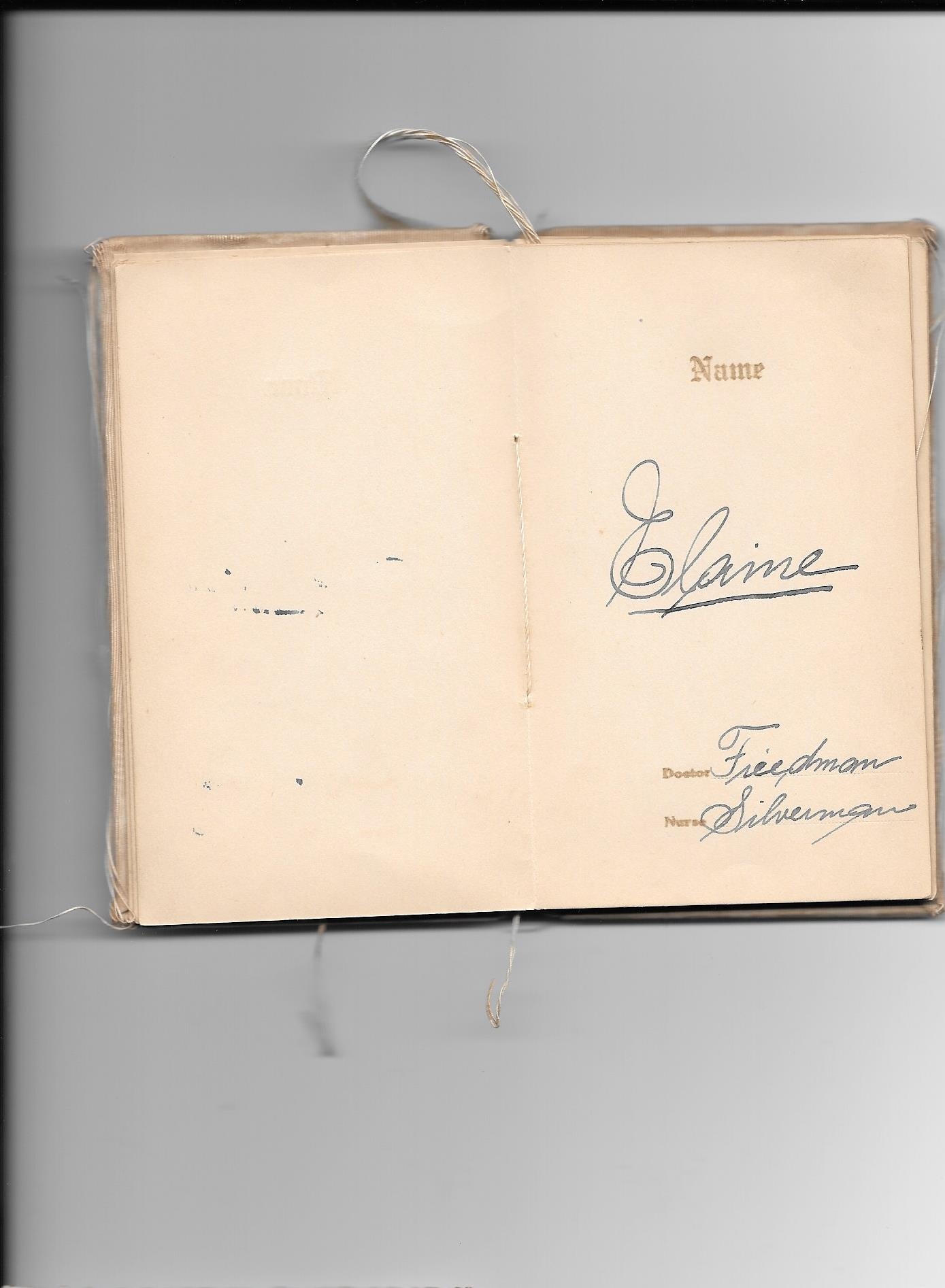
Well, she has done it again.  This time, however, it was not information or notes that she provided, but rather her baby book, which my cousin found in a shoebox of old papers.  It was partially filled out when my aunt was born on October 14, 1917.  Although most of it is blank, the few pages that were filled provide not only further confirmation of relationships about which I was previously aware, but hints at some new ones.

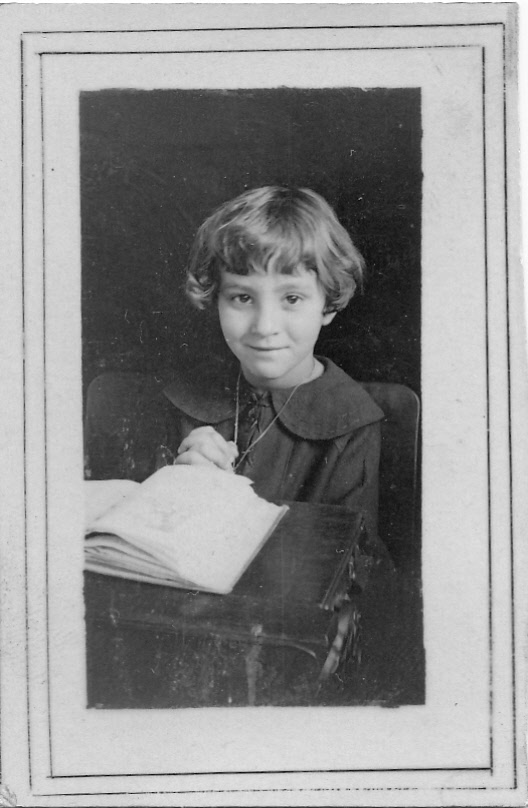
Elaine 1926

Elaine 1926

Here are the pages of the book that have been filled in:

Aunt Elaine baby book p 1

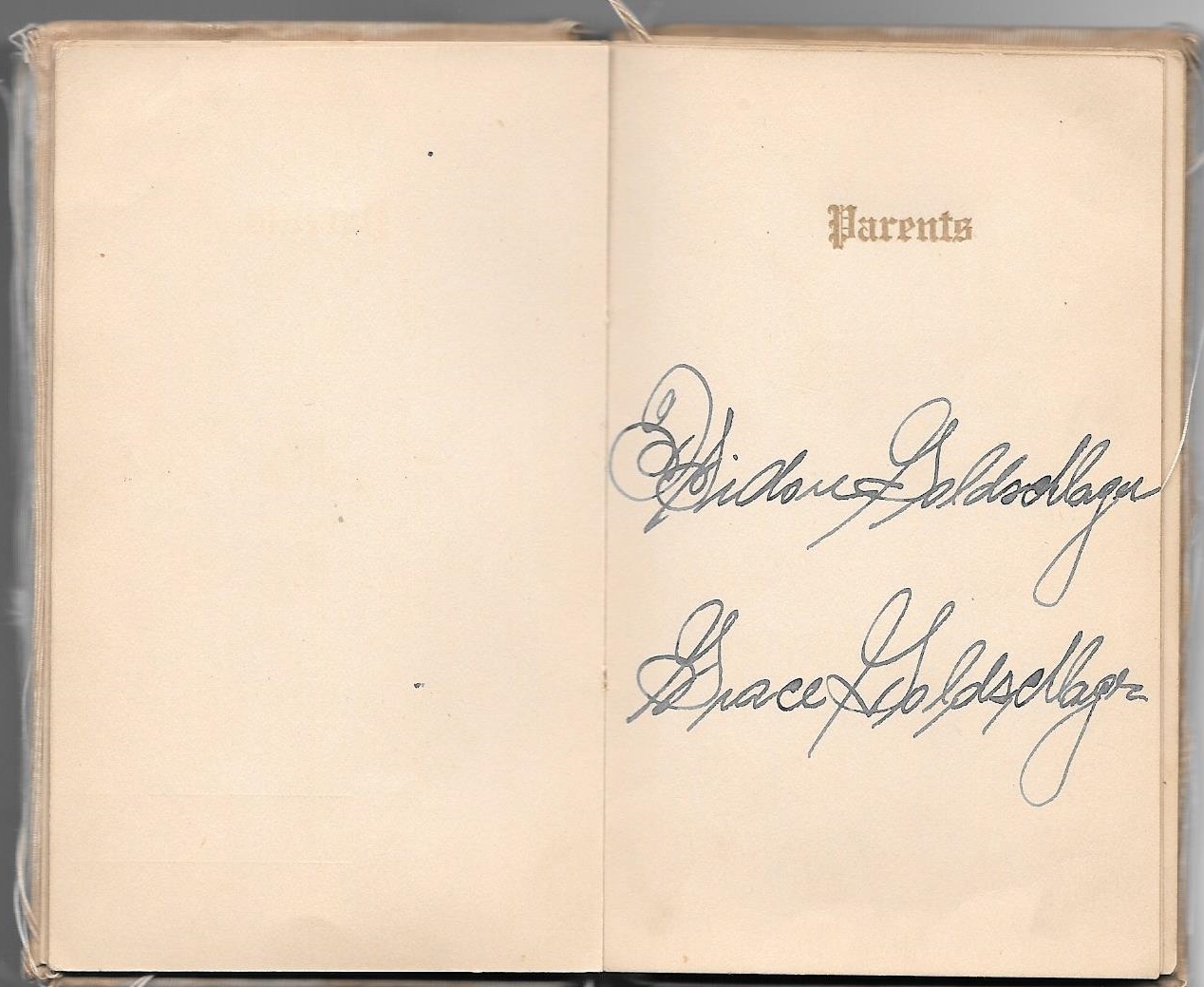
This is my grandfather’s beautifully florid handwriting.  His daughter, my aunt, also had fancy handwriting like this.


Aunt Elaine baby book p 2

My grandmother was never called Grace, always Gussie.  But family lore is that my grandfather’s family thought Grace was more American.


Aunt Elaine baby book 3

My two maternal great-grandmothers!


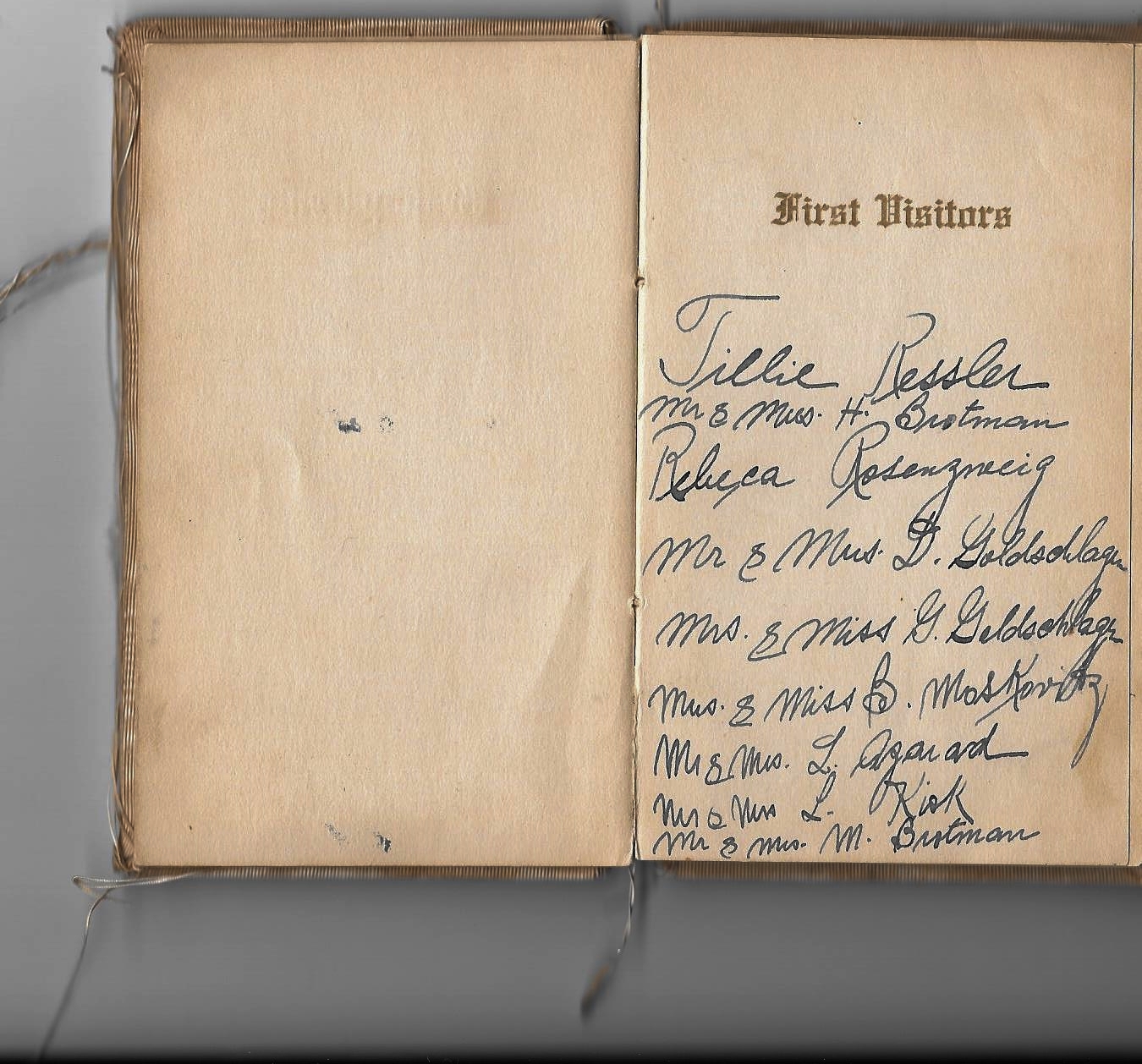
Aunt Elaine baby book 4

Who are these people?

Tillie Ressler—my grandmother’s older sister

Mr. and Mrs. H. Brotman—my grandmother’s brother Hymie and his wife Sophie

Rebecca Rosenzweig—my grandfather’s cousin, daughter of his mother’s brother Gustav Rosenzweig

Mr. and Mrs. D. Goldschlager—my grandfather’s brother David and his wife Rebecca

Mrs. and Miss G. Goldschlager—my great-grandmother Ghitla Rosenzweig Goldschlager and her daughter Betty

Mrs. and Miss B. Moskowitz—my great-grandmother Bessie Brotman Moskowitz and her daughter Frieda

The next two are not familiar, but provide new paths to research.  Can anyone help me decipher the names?

UPDATE: The last two must have been friends.  Mr. and Mrs. Leon and Ray Kiok and her mother Mrs. Frances Azeraad.  I found them all living together in Brooklyn, but not near my grandparents. I am not sure where they would have met.  Leon was born in Poland in 1886, and Ray’s parents were born in Spain.

Finally, Mr. and Mrs. M. Brotman: my grandmother’s half-brother Max Brotman and his wife Sophie

On the following page were more names.

Aunt Elaine baby book 5

Miss E. Shapiro and fiancé—not known yet

Sam Brotman—my grandmother’s younger brother

Mrs. A. Peter and son—I do not know

Mr. and Mrs. A. Brotman—-my grandmother’s half-brother Abraham Brotman and his wife Bessie

Mrs. D. Brotman—Annie nee Salpeter, wife of David Brotman, my grandmother’s half-brother

Mr. and Mrs. Julius Goldfarb—more on them below

The next three are not familiar—Mrs. Louis (?) Yassky, Miss Rose Botomick (?), and Mrs. Tsulie (?) Hecht.  As far as I can tell, these were not relatives, but friends.

I just loved seeing all these names.  Names that I have researched and know are my family, but names I’d not seen in something like this, something that makes it clear that these people were all really connected to my grandparents in a personal way.  I know that sounds odd.  These were the siblings, mothers, and cousins.  But since I grew up without hearing many of these names, it still was wonderful to see them all listed as the first visitors to see my aunt as a newborn in 1917.

I also found the list of gifts fascinating.  My grandparents did not have money for silver and silk, but someone was very generous in giving these items to them for their first-born child.

One final page—the inside of the back cover:

Aunt Elaine baby book 6
A. Rosenzweig—-my grandfather’s cousin, Abraham Rosenzweig, Rebecca’s brother.  I have speculated, based again on a story conveyed by notes from my Aunt Elaine, that it was either Abraham or Rebecca or Sarah who was accompanying my grandfather Isadore on Pacific Street in Brooklyn when he first laid eyes on my grandmother and declared he was going to marry her.

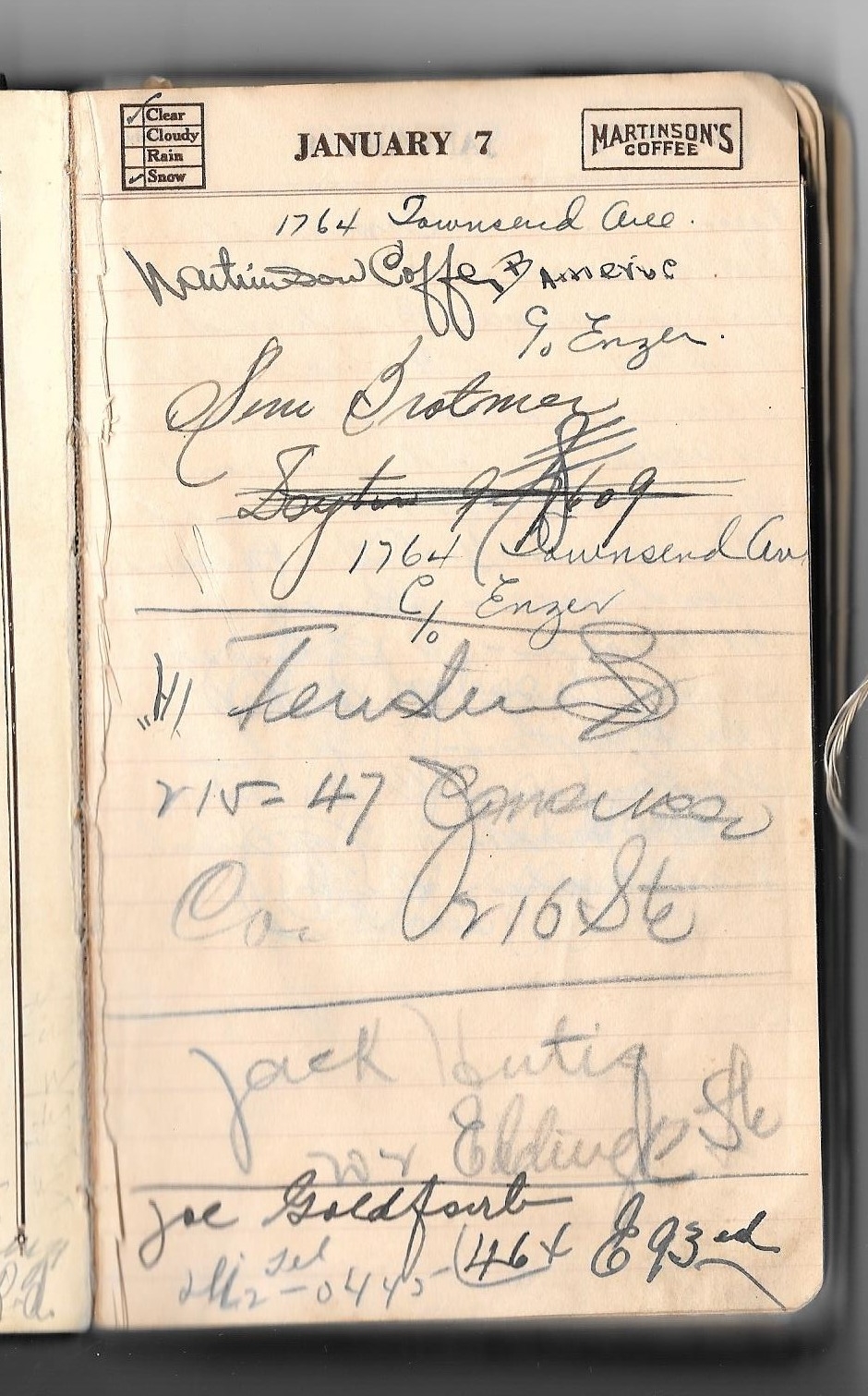
Back to Mr. and Mrs. Julius Goldfarb.  I asked my mother who they were because in a second old item—a notebook my grandfather used for various purposes that was also used by all three of his children at one time or another[1]—the name Joe Goldfarb appeared twice.  Who were these Goldfarbs?

Grandpa Notebook page 1 addresses Joe Goldfarb

Grandpa notebook 13 more addresses Joe Goldfarb

(There’s more great stuff on this page—Sam Brotman is my great-uncle Sam, Feuerstein B. is my great-aunt Betty Goldschlager Feuerstein, Leo Ressler is my mother’s first cousin, her Aunt Tillie’s son; Rae Rosenzweig and Lizzie Horowitz are my grandfather’s first cousins, sisters of Abraham and Rebecca. And there is an S. Goldfarb in addition to Joe.)

My mother said all she could remember was that either Julius or his wife was my grandmother Gussie’s first cousin.  I’d never heard the name Goldfarb before, so what did I do? What all genealogy addicts would do.  I immediately started searching.  And the results of that search will be discussed in a later post once I have filled in more gaps in that story.

But for now, I once again can hear my aunt cheering me on, telling me to keep digging and finding the family stories.

elaine and amy 1953

Aunt Elaine and me 1953


[1] I will share more of that notebook in later posts also.

Some Broken Brick Walls: Thank you, Cousin Bob!

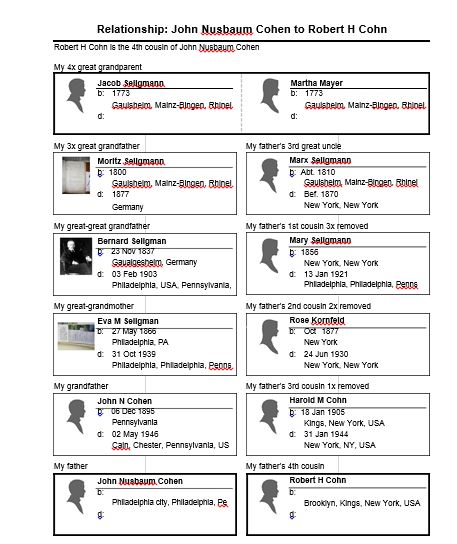
In my post about the descendants of Mary Seligman, the youngest child of Marx Seligman, I wrote that I was hoping to be in touch with one of Mary’s descendants to learn more about what happened to some members of the family.  Specifically, I was trying to connect with Bob Cohn, who is the son of Harold Cohn and Teddi Kremenko (sometimes called Tillie, sometimes Theodora).  Harold Cohn was the son of Joseph Cohn and Rose Kornfeld.  Rose was Mary Seligman’s daughter with her husband Oscar Kornfeld.  Here’s a chart showing how Bob and my father are related as fourth cousins, making him my fourth cousin once removed.

Dad to Bob

After jumping through a number of hoops, I finally reached Bob after emailing someone at the public relations firm he founded in Atlanta forty-five years ago, Cohn & Wolfe.  Although Bob has retired, the man I contacted at the firm immediately emailed Bob, and within minutes Bob and I had exchanged emails.   It’s a long story as to how I figured out that the Bob Cohn at Cohn & Wolfe was the right Bob Cohn.  I won’t describe all my crazy sleuthing on this one!

Bob Cohn with trophy

My cousin, Bob Cohn All photos in this post are courtesy of Bob Cohn

Anyway, Bob is himself a family historian and has generously shared with me a great deal of information and a wonderful collection of photographs.  He, however, did not know very much about his grandmother Rose or her family, so he was delighted to learn what I had discovered about Rose and her Seligman(n) family roots.  By sharing what we each knew, we each were able to fill in some of the gaps that we each had in our research.

For example, I had been unable to find Rose and Joseph on any record after the 1930 US census.  At that time they were living on West 90th Street in New York, and after years in the printing business, Joseph had become an investor in the securities business.  Obviously that was unfortunate timing because, as Bob told me, Joseph lost a great deal of money in the 1929 stock market crash and the ensuing Depression.

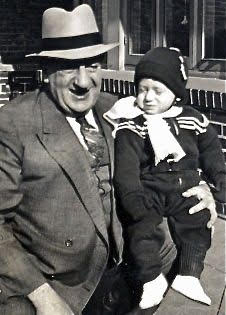
Joseph and Bob Cohn

Joseph Cohn and his grandson Bob.  Note the family resemblance as you can see in the photo of Bob above.

Bob also told me that he had no memory of his grandmother Rose.  Since I knew Bob was born in 1934, I assumed that Rose might have died sometime between 1930 and 1940 if he had no memory of her.  Although a death record had not shown up in my initial search, this time I was able to find it.  Rose had died on June 24, 1930, shortly after the 1930 census.  She was 52 years old and died from a cerebral hemorrhage caused by hypertension.

Rose Cohn death certificate

Rose Cohn death certificate

Since I had not found Joseph on the 1940 census or elsewhere after the 1930 census, I was hoping Bob would know when he died or where he lived.  Bob believes that Joseph died in a nursing home in New Rochelle sometime in the late 1950s.   Those death records are not publicly available, however, except to close family, so I don’t have any record of Joseph’s death.  But knowing that he was a widow after 1930 led me to search again for him on other records.   I still, however, ran into some trouble.  On the 1940 US census, I found a Joseph Cohen (with the E), a widower of the right age, living in Newark, New Jersey, working as a storekeeper in a restaurant. (You will have to click on the images below to see them more clearly.)

Joseph Cohen and lodger 1930 US census

Joseph Cohn and lodger 1940 US census


Full page: Joseph Cohn 1930 census

Full page: Joseph Cohn 1940 census Year: 1940; Census Place: Newark, Essex, New Jersey; Roll: T627_2414; Page: 4B; Enumeration District: 25-132

Bob has no memory of his grandfather living in New Jersey.  The man on this census record was living with a woman, Mary Miller, listed (I think) as “occupant,” working as a laundryman (?) in a hospital.  Although the enumerator wrote that Joseph was living in the same place in 1935, he also wrote that he was living in Matthen (??), New York, in 1935.  Maybe that’s Manhattan?  The same page has lots of other strange entries.  I think perhaps this enumerator was not very careful.

So why would I think that this is Joseph Cohn, Bob’s grandfather? Because I also found a World War II draft registration that shows that Joseph Cohn was living in Newark, New Jersey, in 1942.  This is definitely the right Joseph Cohn; he lists his closest relative as Harold Cohn of East 9th Street in Brooklyn, which is where Bob and his parents and brother Paul were living in 1942.  On the draft registration, Joseph was living on Court Street in Newark. The Joseph Cohen on the 1940 census was living on Bergen Street in Newark, less than two miles away.  Joseph was working for L. Loeb in Newark in 1942 at 317 Mulberry Street in Newark.

Joseoh Cohn World War II draft registration

Joseph Cohn World War II draft registration


I decided to search Newark directories for 317 Mulberry Street to see if I could find out what Joseph was doing in Newark.  I did not find Joseph in the 1942 Newark directory, but at 317 Mulberry Street in 1942 I did find a listing for a butcher named Samuel Cohn.  Bob had told me that his grandfather Joseph had had a brother Samuel, but he had not been able to learn what had happened to his great-uncle.  When I saw the name and the same address that appeared on Joseph’s draft registration, I assumed that this had to be Joseph’s brother Samuel.  I searched further in the Newark directories and found that in 1934 Sam Cohn was located on Bergen Street, where Joseph CohEn was living in 1940, according to the 1940 census.  In 1941, Sam was located at 69 Court Street; Joseph was living at 59 Court Street in 1942.  I was quite certain now that Joseph had moved to Newark after his wife Rose died in order to be closer to his brother Samuel.

That made me curious to know more about Samuel, the great-uncle Bob had not been able to locate.  Knowing now that he was a butcher, I was able to find him living in New York City in 1940 on the US census; he was living with his wife Minerva and adult son Phillip as well as two boarders.  The census indicated that he had been living in Newark in 1935 and that he was a butcher.  Now knowing his wife and son’s names, I found Samuel on the 1910 and 1920 census (but not the 1930), working as a butcher and living with his wife Minerva (or Minnie) and his son Phillip in the Bronx.

Unfortunately, I have not been able to find any records for Joseph or Samuel Cohn after 1942.  All I know is what Bob told me—that Joseph lived until sometime in the 1950s and was living at a nursing home in New Rochelle when he died.


Harold and Teddi

Harold and Teddy 1926

Harold and Teddi 1926

When I first wrote about Bob’s parents, Harold Cohn and Teddi Kremenko, I knew that Harold and Teddi had married in 1928, but then they disappeared for the next sixteen years.  I couldn’t find them on either the 1930 or the 1940 census.  All I knew was that Harold had died of coronary thrombosis at the age of 39 in 1944.  I didn’t know what he had done for a living, I didn’t know what had happened to his wife Teddi, and I didn’t know whether they had had children.  Fortunately, one of Teddi’s relatives, a granddaughter of one of her sisters, has a tree on Ancestry.com, and by connecting with her, I learned more and eventually found our mutual cousin, Bob.

I had been unable to find Harold and Teddi on the 1930 census, but one clue from Bob helped me locate a Harold Cohn who seems likely to be the right one.  I asked Bob what his father had done for a living, and he told me he’d been in the silk importing business.  I’d had no luck looking for a Harold Cohn married to a woman named Teddi, Tillie, or Theodora, but by entering “silk” into the search form, I came up with this Harold Cohn.  (You will need to click and zoom to read it.)

Harold Cohn 1930 census

Harold Cohn 1930 census  See lines 11 and 12.  Year: 1930; Census Place: Manhattan, New York, New York; Roll: 1556; Page: 8A; Enumeration District: 0449; Image: 1030.0; FHL microfilm: 2341291


Yes, it says his father was born in Germany, whereas Harold’s father Joseph Cohn was born in New York. But his grandfather Philip was born in Germany.  Harold’s mother Rose was born in New York, as the census reports.  He was a silk distributor, as the census reports.  His age is not exactly right, but it’s close, or at least within the range of accuracy that census records generally report. They were living on West 86th Street, the same neighborhood where Harold’s parents were living in 1930.  All that certainly supports my assumption that this is the correct Harold Cohn.

But then it says his wife was Fay, not Tillie, Teddi, or Theodora.  It says she was born in New York, but Teddi was born in Russia.  It says her mother was born in England, but Teddi’s mother was born in Russia.  How do I explain these inconsistencies?  I can’t.  Did the census enumerator talk to a neighbor who knew more about Harold than he or she knew about Teddi? I don’t know, but I still think this is the right Harold.  But am I certain? No.  What do you think?

The 1940 census is even more problematic. In 1940, Bob turned six, his brother Paul turned three.  Bob said that they were living in Brooklyn when he started school at PS 99.  But I can’t find them in Brooklyn.  Even looking at the census report for everyone living on East 9th Street between Avenues J and K where Bob recalls the family living, I couldn’t find them on the 1940 census.

I only found one possible entry  for Harold and Teddi on the 1940 census, and it is even more of a stretch; I have serious doubts about whether these are the right people. I found a Philip Kohn married to Lillie with a four year old son named Michael, living in Queens.  Why would I even for a second think this was Harold and Teddi Cohn? Because Philip Kohn was in the silk business.  But it says he was born in Russia, not New York.  But it also says Lillie (could be Tillie?) was born in New York, not Russia.  Had the enumerator switched the birthplaces? And gotten all the names wrong?  And forgotten a child? Probably not.  Especially since Bob says they never lived in Queens. So the Cohn family remains missing from the 1940 census as far as I can tell.

Could this be Harold Cohn? See line 74

Could this be Harold Cohn? See line 74  Year: 1940; Census Place: New York, Queens, New York; Roll: T627_2749; Page: 1B; Enumeration District: 41-1623B


For the rest of the story, I have the great benefit of Bob’s memories, experiences, and research.  I think it best to let him tell his story mostly in his own words.

First, a few pages that Bob wrote about his mother’s family, the Kremenkos.

Bob's book 1 Bob's book 2 Bob's book 3

As for his father’s family, Bob wrote:

The Cohn family history covers three generations.  Bob’s father, Harold, was born in New York City and was the only child of Joseph and Rose Cohn.  Joseph was also born in New York to Adela and Phillip Cohn in 1876. … Phillip and Adela immigrated to New York in 1866 and married four years later.  Adela was from the Alsace Region of France hat sits on the west bank of the Upper Rhine River next to the German border. It is one of France’s principal wine-growing regions.  Phillip was born in Baden in July, 1842 and later worked as a banker there.

From the collection of family photographs Bob shared with me, it looks like Harold Cohn and Teddi Kremenko and their sons were living happily up until 1944:

Harold and Teddi

Harold and Teddi

Mom and Dad at tennis

Harold and Teddi

Mom and Dad with Robert in the grass

Harold, Bob, and Teddi Cohn

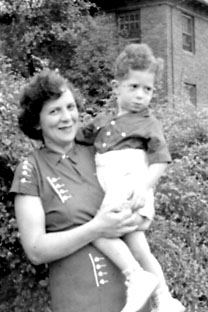
Mom and Robert, 1937

Teddi and Bob, 1937

Mom, Paul and I, 1944 at Bungalow Colony

Paul, Teddi, and Bob Cohn 1944

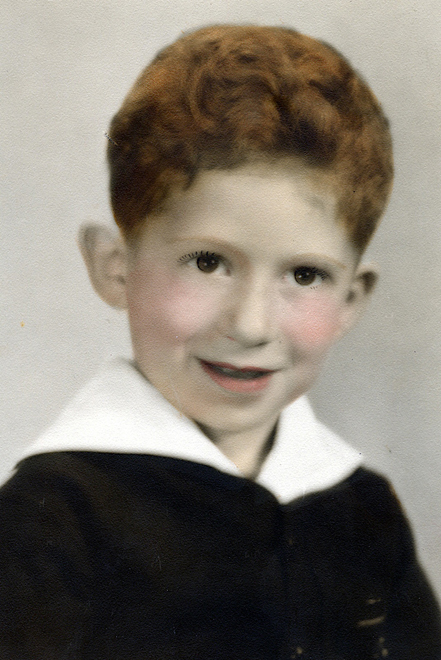
Robert (Red) Cohn

Bob

My Mom and Dad, Uncle Barney

Harold and Teddi Cohn, Barney Kremenko, and others

U 2

Harold and Teddi


And then, as noted earlier, Harold died unexpectedly.  Bob wrote:

When I was 9 years old, I remember my father giving me a nickel on the front porch of our home on East 9th Street between Avenue J and Avenue K.  The money was for a Red Cross Fund Drive.  My Dad died that day, February 1, 1944, at the age of 39 from a heart attack.

As if that wasn’t tragedy enough for two young boys and their mother, less than two years later, Bob and Paul’s mother Teddi died at age 42 from throat cancer.

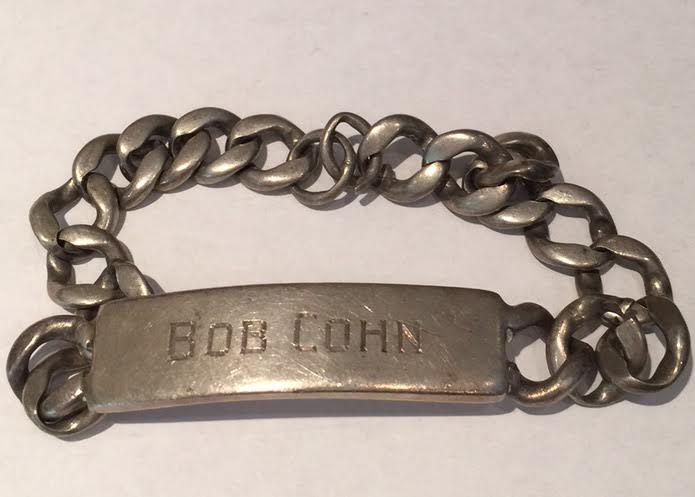
My mother, Theodora (Teddi) Cohn died on Oct. 13, 1945, barely a month after World War II ended. For my Oct. 12th birthday Uncle Barney (Kremenko) took me to Yankee Stadium’s press box to watch undefeated Army play a highly ranked Michigan team. Army had two Heisman trophy winners in the backfield—Doc Blanchard and Glen Davis—and four consensus All-Americans. At halftime the score was 14-0 when Uncle Barney got a call to rush home because my mother was dying. We got there before she passed away and she gave me an ID bracelet that was popular in those days. Everyone in the family called me Robert, including my Mom, but she knew I preferred the name Bob. So it was the first time she acknowledged my preference and gave me the sterling silver bracelet with Bob Cohn inscribed on the top. On the reverse side she had inscribed “From Mother, Oct. 12, 1945.

ID bracelet

As it turned out Army won 28-7 and it was a historic day in college football.  

(According to Wikipedia, “Outmanned by Army, Michigan’s Coach Fritz Crisler unveiled at halftime the first known use of the so-called “two-platoon” system in which separate groups played offense and defense.” Click the link for more on the game.)

Thus, by the time he was eleven, Bob Cohn had lost both his parents; his brother Paul was only eight years old.  Where would they go?

Bob wrote:

There was a family circle meeting to decide who would take my brother Paul and I in. Aunt Diana and Uncle George said they wanted to have us but the others voted against them because they would not be right for young children because they had no experience, having no children of their own. Then Aunt Rose and Uncle Louie put in their bid but they also were turned down. The decision was made by the family for us to live with Aunt Beatrice and Uncle Sol because they had two young children and could best deal with the situation. Aunt Diana understood but over the years spent a lot of her time with the two of us. Ann [a cousin] said she loved us deeply.

Bob pointed out that his Aunt Beatrice and Uncle Sol had two children—Barbara and Morton—who became like siblings to Bob and Paul. Barbara is three years older than Bob, and Morton is seven years younger.

Barbara Paul Morty and Bob

Aunt Rose with Paul Barton Cohn

Rose Kremenko and Paul Barton Cohn

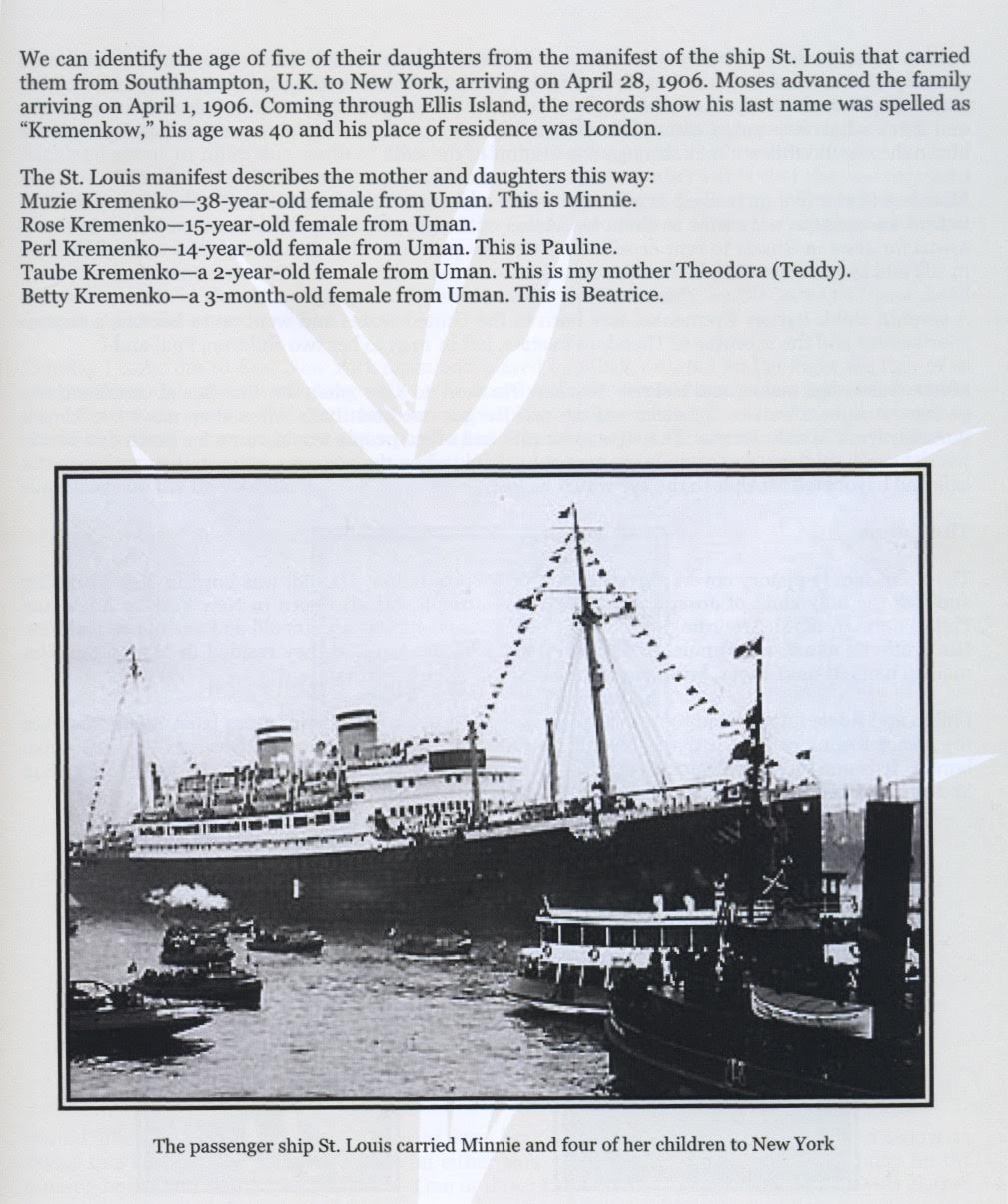
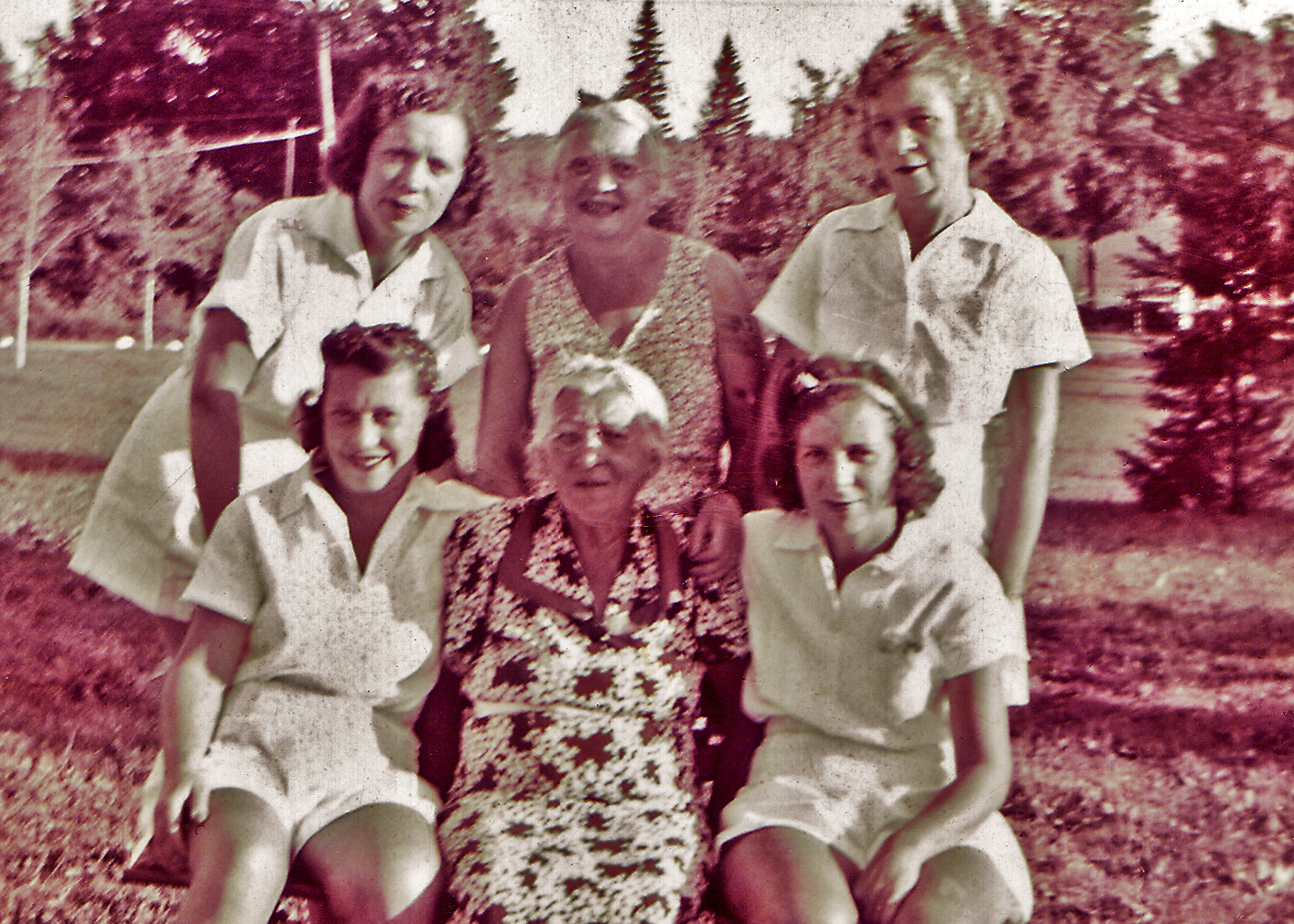
Kremenko sisters

The five Kremenko sisters and their mother Minnie

What would happen to these two little boys who lost both their parents so young? Not only did they survive; they both thrived, as we will see in Part II of Bob’s story.  That they did is a tribute to the love they had received from Harold and Teddi in their early years and the love they received from the family members who raised them and cared for them after they’d lost their parents.


Old Friends: Braided Forever

My mother has often spoken about how sad she was when her family decided to move from Brooklyn to the Bronx when she was about twelve years old.  There were many reasons she was upset.  For one, she had to leave her dog Sparky behind.  That broke her heart, and she still can’t talk about it without getting emotional.

Sparky 1934


But also she had to leave her best friend Beatty behind. Beatty lived in the same four-family house at 1010 Rutland Road in Brooklyn; she lived right down the hall from my mother.  They had been close friends all through childhood, and although they tried to stay in touch after my mother moved, back in the 1940s that was not at all easy.  Phone calls were expensive, and the trip from Brooklyn to Parkchester in the Bronx was a long one, especially for two young girls.  So over time, they lost touch.

Beatty and my mother c. 1940

Beatty and my mother c. 1940

Not too long ago my mother asked me if I could find Beatty.  She knew her first and last name from when she’d last seen her over 70 years earlier, but she had no idea where she was living or whom she might have married.  I tried to find her, but with so little information I had no luck.  If Beatty had married, it was after the last year of the publicly available NYC marriage index (1937).  The only information I could find related to her siblings, who had passed away.

So you can imagine how excited I was to receive a message on the blog last week from Beatty herself.  She was looking for my mother after seeing her pictures and childhood name on the blog.  I contacted Beatty, and I called my mother.  And I gave them each other’s contact information, and now they are reconnected after over 70 years.  I get the chills (and a warm feeling) whenever I think about it.

One of the stories my mother shared with me was about Passover at Beatty’s house.  Her father led the seder in a very serious way, and as many of us know, a traditional seder can get quite long and quite boring, especially for young children.  To keep themselves from misbehaving and talking, my mother and Beatty would braid the fringes on the beautiful tablecloth that adorned the seder table.  When my mother shared this memory with Beatty, she said that she also had shared that story with her children.

The tablecloth still exists, and even more remarkable, the braids made by my mother and her best friend Beatty are still there as well.  Here is the photograph to prove it.

Beatty's tablecloth

Beatty’s tablecloth

tablecloth with braids 2

My mother was once my Girl Scout troop leader, and one of the songs we sang had the lyrics, “Make new friends, but keep the old.  One is silver, and the other gold.”  My mother and Beatty certainly know the truth of that message.

Lotte’s Story, Part III: Coming to and Settling into America

In Parts I and II of Lotte’s story, we saw how my cousin Lotte’s idyllic childhood as the daughter of a successful doctor in Mannheim, Germany, was shattered after Hitler and the Nazis came to power in Germany in 1933.  By 1937, her sister Doris had left for the US, and a year later, Lotte and her parents Joseph and Anna (Winter) Wiener had moved to Luxembourg, where Anna’s parents, Samuel and Laura (Seligmann) Winter had already relocated.

After visiting her daughter Doris in the US, Anna returned to Luxembourg and convinced Joseph that they also should relocate there.  First, they had to obtain visas to travel to the US.  Lotte wrote:

The nearest American consulate was in Antwerp, Belgium, necessitating a fairly long trip. My grandparents were rather disabled by that time and in no condition to undertake the long journey. Reluctantly, we had to leave them behind when we made the trip. After a long wait we were admitted to the consul’s office where he sat, pipe in the corner of his mouth and feet on his huge executive desk. A most unfriendly man, he asked my parents all the necessary questions. When my turn came up, he quizzed me in some of the simplest arithmetic questions. When he was satisfied that I was not imbecile, he condescended to tell us that we could expect the visas in “six months to one hundred years”. Fortunately it took only a little over six months before we could sail.

While waiting for the visas to come through, Lotte worked at a baby hospital in Luxembourg.  She worked long hours taking care of the infants, and in the end she earned a Red Cross certificate, which proved to be quite valuable when she later applied to nursing school in New York.

The atmosphere in Luxembourg grew increasingly tense.  After the Munich agreement allowed Germany to take over the Sudetenland in Czechoslovakia in the fall of 1938, more and more Jewish refugees were leaving Germany for Luxembourg.

Bundesarchiv, Bild 183-R69173 / CC-BY-SA [CC BY-SA 3.0 de (http://creativecommons.org/licenses/by-sa/3.0/de/deed.en)], via Wikimedia Commons

Signing the Munich Agreement
From left to right: Chamberlain, Daladier, Hitler, Mussolini, and Ciano pictured. Bundesarchiv, Bild 183-R69173 / CC-BY-SA [CC BY-SA 3.0 de (http://creativecommons.org/licenses/by-sa/3.0/de/deed.en)%5D, via Wikimedia Commons

As Lotte described it:

Many Jewish refugees had arrived in Luxembourg, many only with their fur coats and jewelry in assets. Having nothing else to do but to wait for the possibility of a visa, most unlikely on the Austrian and Hungarian quotas, they spent a lot of time in the local cafés. That in turn aroused a certain amount of the latent antisemitism in the population. Or maybe it was not so latent. My roommate at the hospital, a devoutly Catholic young lady who went to mass almost every morning, confided in me that she needed to “confess” to the priest that she was sharing her room with a Jewish girl. She had to admit, however, that I neither had horns nor did anything evil as far as she knew.

It was becoming very clear that there would be a war in Europe, and the events of Kristallnacht in November, 1938, also frightened those who were still in Luxembourg.

Finally, in April 1939, Lotte and her parents received their visas and could leave for the United States.   There was, however, no way to take Lotte’s grandparents, Laura and Samuel, with them.

Tickets for the voyage were booked, and soon my parents and I found ourselves on a train to Le Havre without them. We never were to see them again. As we found out later, Oma died of a heart attack while looking for an apartment, having been evicted when the German army took over Luxembourg in the spring of 1940. Opa was deported to Theresienstadt where he reportedly died “of natural causes”.

When I think about these separations, it tears me apart.  I cannot imagine leaving my parents behind, as Annie Winter Wiener was forced to do.  Anyone who has seen the recent movie “A Woman in Gold” will remember the scene when Maria Altmann leaves her parents behind in Vienna for similar reasons.  It’s a scene that breaks your heart and stays with you long after the movie ends with Maria victorious in her legal battles over the Klimt painting.  Maria was a real person, just as Lotte is a real person.  These are not Hollywood stories written just to wring tears from viewers.  These are the lives and the experiences that thousands and thousands of people endured.

But somehow these people, including Lotte and her parents, survived and found the strength to move on.  Lotte’s description of her sea voyage to America, leaving her grandparents and her homeland forever, reveals that tenacity, the strength, that courage.

Below is the ship manifest listing, on lines 6,7, and 8, Lotte and her parents (her real first name is Leonore) and a photograph of the George Washington, the ship that brought them to the US.
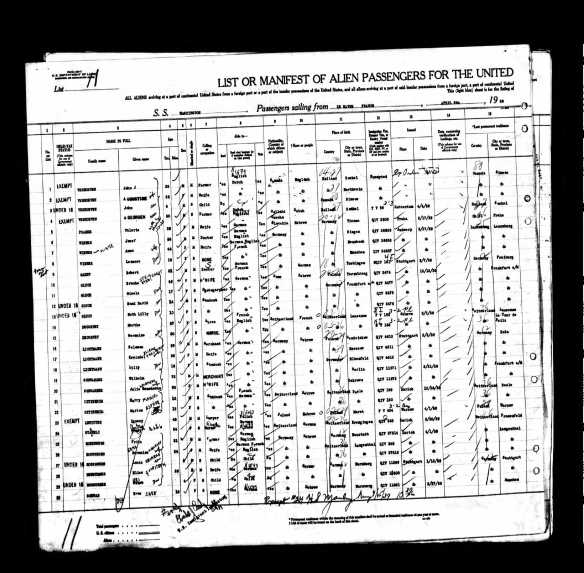
Year: 1939; Arrival: New York, New York; Microfilm Serial: T715, 1897-1957; Microfilm Roll: Roll 6313; Line: 1; Page Number: 176

Year: 1939; Arrival: New York, New York; Microfilm Serial: T715, 1897-1957; Microfilm Roll: Roll 6313; Line: 1; Page Number: 176

The George Washington, the ship that Lotte and her parents sailed on to the US in 1939 Ancestry.com. Passenger Ships and Images [database on-line]. Provo, UT, USA: Ancestry.com Operations Inc, 2007. Original data: Various maritime reference sources.

The George Washington, the ship that Lotte and her parents sailed on to the US in 1939
Ancestry.com. Passenger Ships and Images [database on-line]. Provo, UT, USA: Ancestry.com Operations Inc, 2007.
Original data: Various maritime reference sources.

Lotte chose to write this section in the third person, which I found interesting and revealing.  Was she distancing herself from that teenaged girl who was herself distancing herself from her past?

It was a grey and rainy day in April of 1939. A wet and blistery wind blew, adding to the girl’s anxiety. The security of her world had been shattered, slowly at first, but then with increasing speed and ferocity. Her best friend had been left behind – without her being able to say a proper good-bye – perhaps they would never have a chance to see each other again. Here she stood at the pier in Le Havre, ready to embark on the longest journey of her young life. Slowly she and her parents stepped on the planks of the ship, the ocean liner which would bring them from a Europe threatened by the certain relentless march toward war to the vast and unknown entity of America which lay before her.

The voyage was stormy and rough. The ship rocked from side to side with the huge waves. Most of the time she felt sick. Staying in the cabin was awful. When she stepped on deck, she felt even worse. Looking at the ominous grey sky above as well as watching the wildly moving waves below made her dizzy. Eating became a nightmare. Keeping any food down was impossible. They suggested broth. That wouldn’t work. Eating a baked potato– who had ever heard of a baked potato before? The English spoken on board did not sound at all like what she had learned in school. The ship’s entertainment was provided by an enormously fat and very jolly man with the incongruous name of “Tiny”. Was everybody crazy?

Finally, during the fifth night, the storm passed, and in the morning the sea was calm and the sun shone brightly. She stepped outside and saw to her right the exhilarating sight she had been told to expect: New York Harbor with the Statue of Liberty. Suddenly she felt well. Her excitement grew. Soon she would be able to set foot on the land which would be her new home. She resolved that she would accept whatever there was. She would not compare things with what had been.
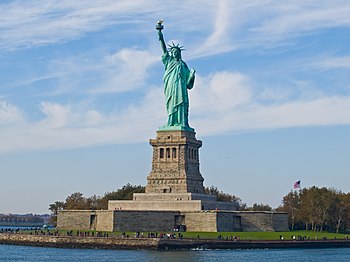
Statue of Liberty National Monument, Ellis Isl...

Statue of Liberty National Monument, Ellis Island and Liberty Island, Manhattan, in New York County (Photo credit: Wikipedia)

Lotte seemed to stay true to those resolutions.  She quickly adapted to life in New York City, working as a babysitter while awaiting acceptance to a nursing program.  She was accepted into Cornell University-New York Hospital’s nursing program for the fall of September, 1939, less than six months after her arrival in New York.  Lotte wrote about some of the culture shock she experienced when she began her nursing studies in New York:

Once I was notified that I had been accepted at the prestigious Cornell University – New York Hospital School of Nursing, it took me exactly one week to purchase the few required items and to pack my suitcase. Actually admissions had been closed quite a while before, but they had made an exception for me. Of course I had lost no time getting all my documents together and to have my credentials translated and notarized. I had taken a six-week crash course at a private school in Manhattan, located on Sixth Avenue behind the Public Library. How I had sweated that summer, taking the Subway from Kew Gardens to Times Square and back, and then to take the Regents exams! The courses, American History, 4th Year English, and Civics, were required in order to obtain a “Nurse Qualifying Certificate”.

So one fine September morning in 1939 my father and I, all of 18 years old, set out to travel from Kew Gardens, Queens, to the nurses’ residence on York Avenue in mid-Manhattan. With two big suitcases we walked to the subway station, went downstairs, took the  train to 59th Street and Lexington Avenue, dragged the suitcases back upstairs, walked to the Second or Third Avenue Elevated which was still running at that time, and then walked to the York Avenue address. As we entered, we saw several taxis pulling up, bringing some of my new classmates to the same destination. Only they did it the easy way. It had never occurred to us to take a cab as money was very tight. I said goodbye to my father and went about to register and to get settled in my new quarters.

The schedule of activities for the first day included a four o’clock tea for all the newcomers in the formal and somewhat stuffy library. True to my nature I was there right on time, the first one to appear, to be exact. All the others were still busy taking showers and changing into the kind of clothes you were supposed to wear for an afternoon tea. Little did I know that that was the thing to do. I was still in my travel outfit and felt rather sweaty. Well, I entered the library and found a stunning-looking white-haired woman in a gorgeous red dress seated at the solid oak table, “pouring” tea. I learned that she would be one of my nursing instructors. Soon the other students came, and we began to get acquainted.

*****

During the first six months the emphasis was on academics. Actually one of the entrance requirements had been one year of chemistry. Most of my classmates had two years of college with all the needed requirements behind them, while I had barely obtained my high school equivalent certificate. My European education had been superior in some ways, but badly missing in science. I did not even know how to balance a chemical equation. So here I was supposed to obtain a basic knowledge of inorganic as well as organic chemistry in all of six weeks. It seemed like it was going to be a disaster. But with the help of a fellow student who had dropped out of medical school, and with the kindness and understanding Miss Rynbergen, my teacher, showed to me, I did overcome that hurdle and even managed to get an “A” in the course. None of the other courses presented any problems, at least not academically.


Obviously, Lotte was an extremely gifted student.   She had neither the academic background nor the social benefits of most of her classmates, yet she excelled in her studies, even though English was her second language.  In fact, Lotte did so well that she tried to be admitted to NYU Medical School and met with the dean to discuss her application.  Here is what happened:

I had mustered a lot of courage. After two years of practicing hospital nursing I really wanted to pursue the ambition I had nurtured since childhood – to become a doctor like my father. Thus I marched up the long corridor at my hospital’s medical school and entered the dean’s office. Of course the visit had been properly scheduled ahead of time. The dean, bespectacled, grey-haired, lean and stern-looking, listened to my brief story: that I was dissatisfied with the prospect of my future nursing career, and that I really would like to find out how I could be admitted to the medical school. The man just took one look at me and smiled. “My dear, you are asking for the impossible. First of all, you are a woman. There is quite a limit placed on the number of females at our school. Secondly, you lack the necessary college preparation. It would take several years for you to catch up with our requirements. Thirdly, you are Jewish. Do you know what that means? All kinds of difficulties along the way! You’d better forget about it.”  

Lotte must have been devastated.  She was being discriminated against as a woman and as a Jew.  The fact that she had excelled in the nursing program was not enough to outweigh her limited pre-nursing school education.  She had left Germany to escape anti-Semitism, and here it was, thrown in her face again.

In 1942, as World War II was in full force with the US now itself involved, Lotte graduated from nursing school and began working the night shift in the internal medicine department at New York Hospital.  The family received news of Samuel Winter’s deportation to Theriesenstadt, and the news overall was quite disturbing.  Lotte somehow kept a positive outlook.

Terezin

Terezin

My mother was desperate. This war is going to end in a terrible nightmare of defeat, she stated. But I, being young and more optimistic by nature, I just KNEW that good had to prevail over evil, that things would eventually come out all right. I knew that history had its ups and downs. This was a down. Sooner or later there would be an up. I wrote so to my friends. I never gave up hope. In the end, I was right.

How incredible is it for Lotte to have concluded, after all she had experienced and all she would soon learn about her relatives in Europe, “that things would eventually come out all right?”  It truly takes a real strength of character and a positive view of the world to see things that way.  I greatly admire her for that depth of character and strength.

There is much more in Lotte’s memoirs—stories about how she met her husband, their courtship and wedding, and their happy marriage of 58 years.  There are stories about their travels and anecdotes about various events in Lotte’s adult life.  But I will end Lotte’s story with one that I think says so much about her—who she was as a child and who she is today.  It’s a story that brought tears to my eyes.  It has nothing to do with the Holocaust or the war per se; it’s about an incredibly sensitive and generous woman.  I hope you find it as powerful as I did.

A PRIZED POSSESSION

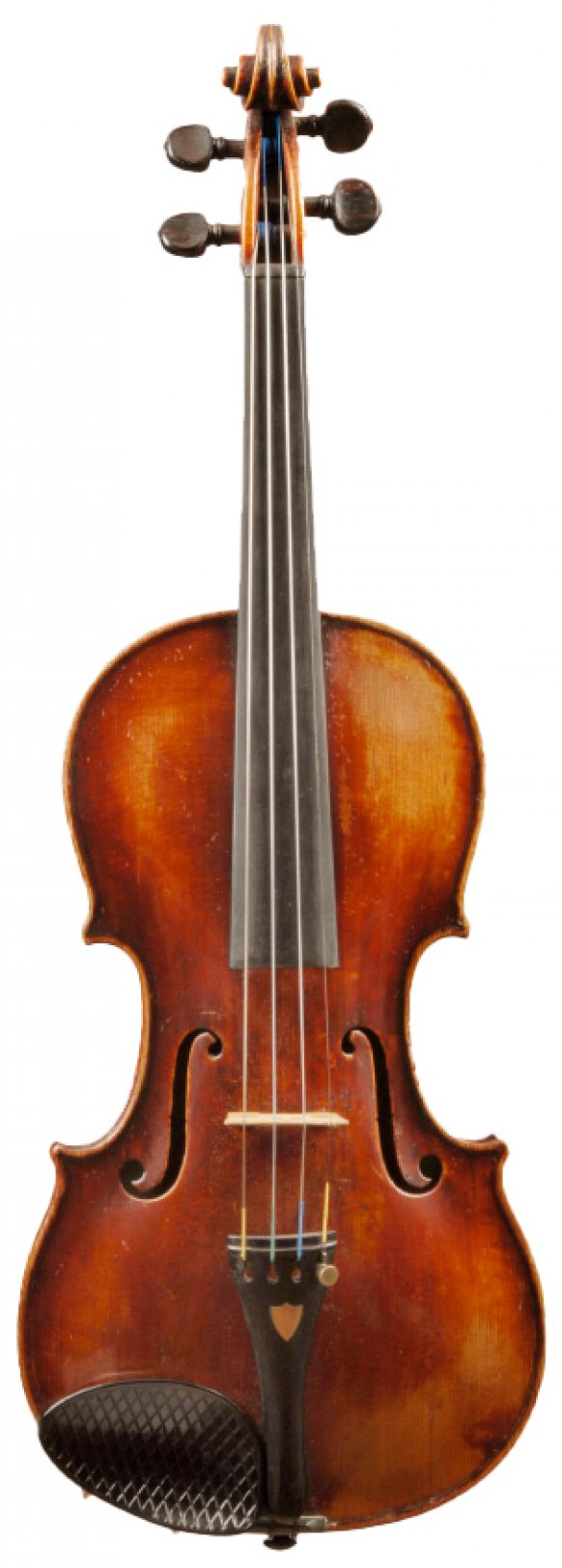
There was a piece which was part of me. Ever since I was a teenager it went with me wherever I moved. But it is no longer in my possession. I gave it away. But I do hope that whoever uses it now appreciates what I did and gets as much enjoyment from it as it gave me at one time. It was my violin, my beautiful Italian violin bearing a label, glued to the inside, reading

 “Matteo Albani fecit Bolzano anno 1698″.

How did I receive this beautiful instrument, and why did I dispose of it the way I did? It’s a long story which began in 1937 when my parents began to make preparations for our eventual emigration from Germany to the United States. Since they had been able to put aside a sizable sum of money which could not be legally transferred abroad, they had to find various ways to buy objects of value which might be suitable for a later sale in the U.S. or which might be useful to us. My mother schemed and bought a trousseau for my sister and also for me. They bought two Leica cameras, modern lamps, clothing and many other articles. But my father, who had at one time played the violin, insisted that he wanted to buy me a fine instrument which hopefully would not have to be sold so soon.

That’s why he traveled with me to Stuttgart, a city about two hours away, where, with the help of my violin teacher, he had located an internationally known dealer of fine string instruments, Hamma & Company, which incidentally is still in business at the present time. I did not have much to say in the matter, but between my father and my teacher they found a suitable violin, full size but not too large, for the acceptable  price of DM 3,000.00, bargained down to DM 2,200.00, a substantial sum of money at that time. Proud as a peacock I traveled home with my new possession, my princess, carefully wrapped in a blue silk cloth and placed in a light brown leather case with light blue plush lining.

Now I must describe my pride and joy: It was beautiful to look at with its light orange-brownish varnish. The top was made of spruce with fine, even grain. The back, pleasantly curved for an aesthetic feel of form, was made of two pieces of maple with small, faint flames. The label, mentioned above, was found on the inside, to be seen through the F-shaped openings on the top. Later on I was assured that the label was authentic, and that the violin really was the work of Matteo Albani, a highly respected violin maker, and that it was a fine example of his work.

Yes, it was beautiful to look at, and beautiful to feel. But the most important quality of such an instrument is, of course, its sound. Played by my teacher it sounded magnificent. My own technique left something to be desired, but I had received the impetus to improve, and I worked hard at it. Friends in my chamber-music group admired it, envied me for it. I took good care of it. I treated it like the princess it was, what with the silk wrap and plush lining of the case.

From now on the violin went with me wherever fate took me. In 1938 we left Germany. After one year in Luxembourg we embarked for New York where I ended up living in my hospital’s Nurses’ Residence. I did not have much time to practice or to play, but I did have my own private room where I could do so at various times. I also once participated in a talent show where I played something or other in a miserable performance. My fellow student nurses were not very kind. They made a number of nasty cracks about my playing, but assured me that it was all meant in good humor.

My violin was with me on Pearl Harbor Day. I had been playing some chamber music on a rare, free Sunday afternoon and found myself on the platform of the A-train subway in Washington Heights when the terrible news broke. I will never forget it.

Later on, while raising my family and through most of my married years, I played only sporadically, sometimes in orchestras, sometimes in chamber music groups. At one time I even took some more lessons. But I found that I did not have it in me to work at it the way I needed to in order to really improve. Most of the time my precious fiddle was locked up in a hall closet. Yet I knew it was there.

And then disaster struck. At pretty much the same time I developed arthritis and a great clumsiness in my fingers along with a noticeable loss of hearing. The latter distorted many of the higher frequency sounds, thus making it impossible for me to play with the required accuracy. I grew discouraged and finally gave up. Much as I loved my violin, I knew that it was no longer of service to me. I also knew that it had appreciated greatly in value. Thus I made a very painful decision.

Selling my violin would have been like selling a piece of me. Leaving it to my children might create problems and certainly cause unnecessary difficulties. Yet it was not doing me any good. So I decided that I would give it to someone who would truly appreciate it. I made a number of inquiries and soon learned that there was a place for my intended gift right here in town. The non-profit Colburn Foundation collects instruments for use by aspiring artists, to be loaned and returned when they can afford to buy their own.

The decision was easy, the execution was hard. On one rainy afternoon in 1996 my husband and I traveled to the magnificent Colburn mansion in the Hollywood Hills. We were greeted quite cordially and even received a tour of the estate. That’s where we left my beautiful princess, still wrapped in blue silk and in her blue plush-lined leather case, to be given to someone who really needed it. I never found out to whom it was given, but I do hope he or she is taking good care of it. After all, although the wound has healed, it was a part of me.

For me, that final sentence says it all.  It is not only about her lost violin, but also about every other loss she suffered:  her grandparents, her home, her friends, her school, her country, her language.
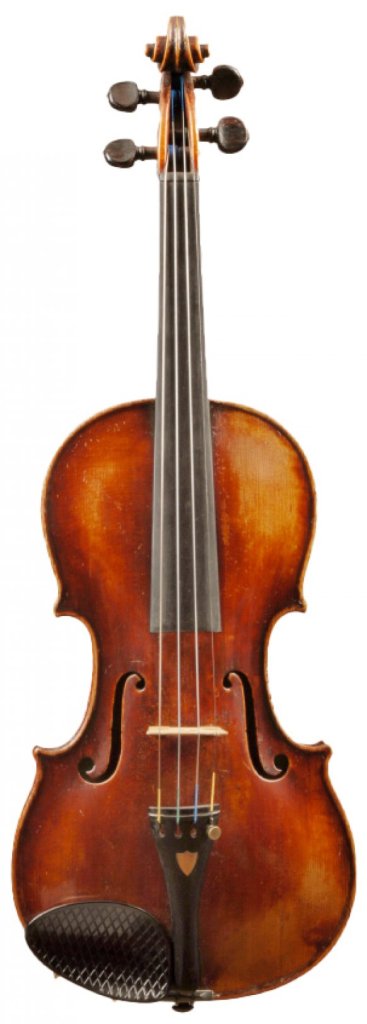
An Albani violin

An Albani violin

Perhaps someone reading this will know the fate of Lotte’s beloved violin.  If so, like Lotte, I hope it is being well taken care of and played with all the heart and soul and passion that Lotte herself has demonstrated through her writing and throughout her life.

Thank you, Lotte, for sharing your life story with us.

The Last of the Children of Marx and Sarah Seligmann: Mary Kornfeld and Her Descendants

In this post I will complete the story (as far as I know it thus far) of the descendants of Marx and Sarah (Koppel) Seligmann.  Marx, the younger brother of my three-times great-grandfather, came to the US with his second wife Sarah in 1849 and had four children:  Sigmund, Jacob, Charlotte, and Mary.  I have already written about the first three.

As I posted before, the youngest child of Marx and Sarah Seligmann, their daughter Mary, was the first to marry.  She and her husband Oscar Kornfeld, a cigar maker, married in 1873 and by 1882 had four children: Marx (later Max) (1874), Rose (1877), Carrie (1879), and Lillian (1882).  In 1900 Mary, Oscar, and their three daughters were living at 1883 Madison Avenue.  Their son Max had already married Emma Pisko that year prior to the 1900 census.

Two of their daughters also married during 1900. On March 22, 1900, Carrie Kornfeld married Berthold Weiss.  He was the son of Sigmund Weiss and Rose Hecht, who were Hungarian immigrants.  Sigmund was a woodturner, according to the 1900 census, and Berthold was a hosiery salesman.

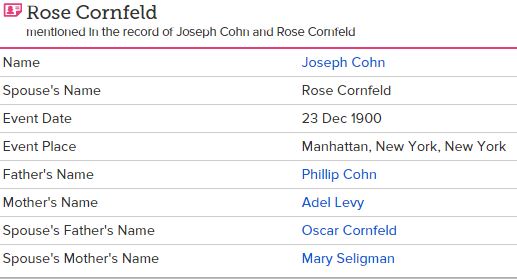
On December 23, 1900, Rose Kornfeld married Joseph Cohn.  Joseph was the son of Philip and Adele Cohen, German immigrants.  His father was a baker. Joseph was born in New York in 1876.  In 1900, before marrying Rose, he had been living with his parents and brother and working as a printer.

New York, Marriages, 1686-1980," , FamilySearch (https://familysearch.org/ark:/61903/1:1:F6HY-Z96 : accessed 8 August 2015), Joseph Cohn and Rose Cornfeld, 23 Dec 1900; citing reference ; FHL microfilm 1,570,443.

New York, Marriages, 1686-1980,” , FamilySearch (https://familysearch.org/ark:/61903/1:1:F6HY-Z96 : accessed 8 August 2015), Joseph Cohn and Rose Cornfeld, 23 Dec 1900; citing reference ; FHL microfilm 1,570,443.

Thus, within one year, three of the four children of Mary and Oscar Kornfeld had married.  Their youngest child, Lillian, married two years later.  She married Emil Nardin on May 4, 1902.

"New York, Marriages, 1686-1980," , FamilySearch (https://familysearch.org/ark:/61903/1:1:F6QW-TVL : accessed 8 August 2015), Emile Nardin and Lillian Kornfeld, 04 May 1902; citing reference ; FHL microfilm 1,570,816.

“New York, Marriages, 1686-1980,” , FamilySearch (https://familysearch.org/ark:/61903/1:1:F6QW-TVL : accessed 8 August 2015), Emile Nardin and Lillian Kornfeld, 04 May 1902; citing reference ; FHL microfilm 1,570,816.

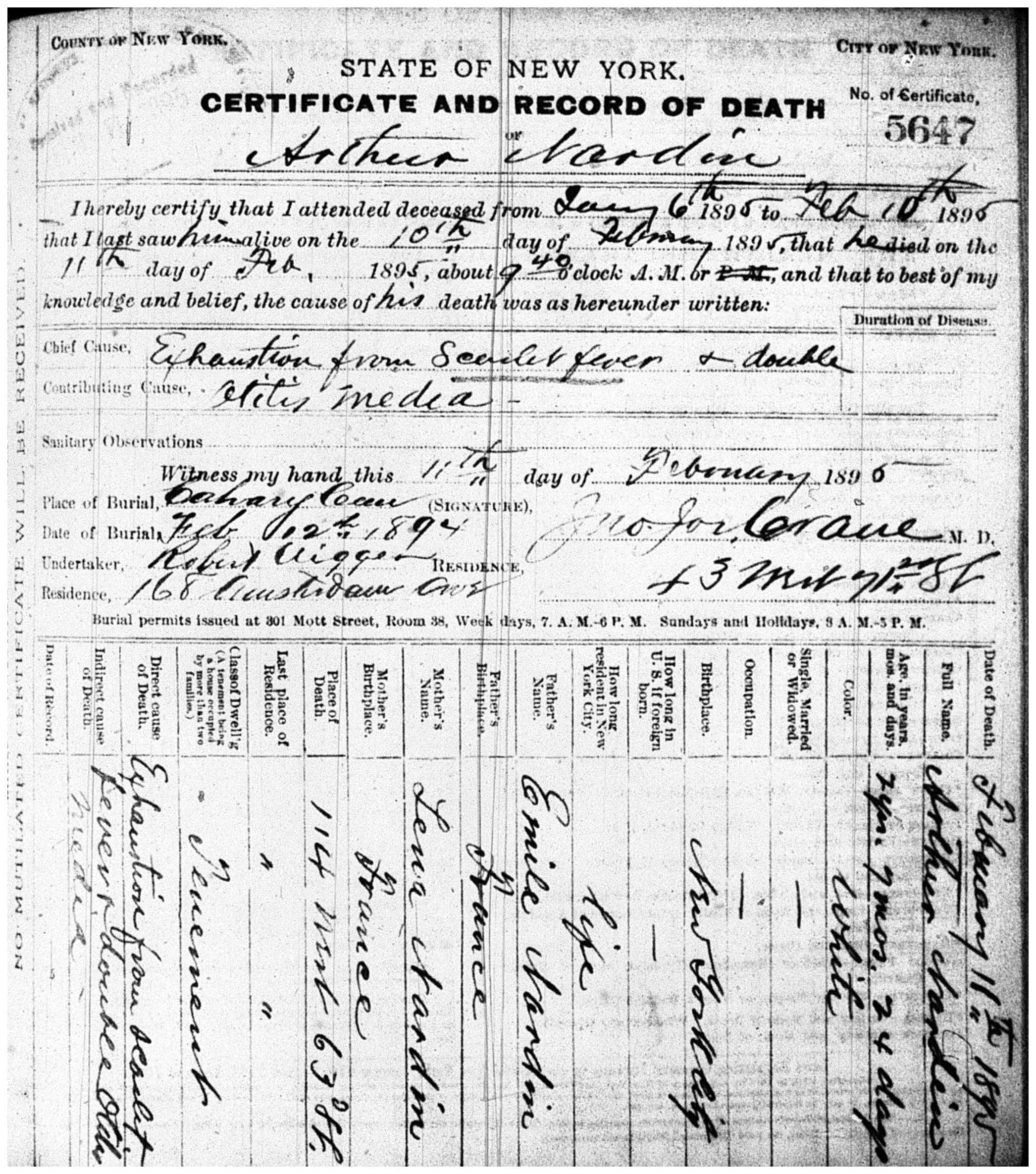
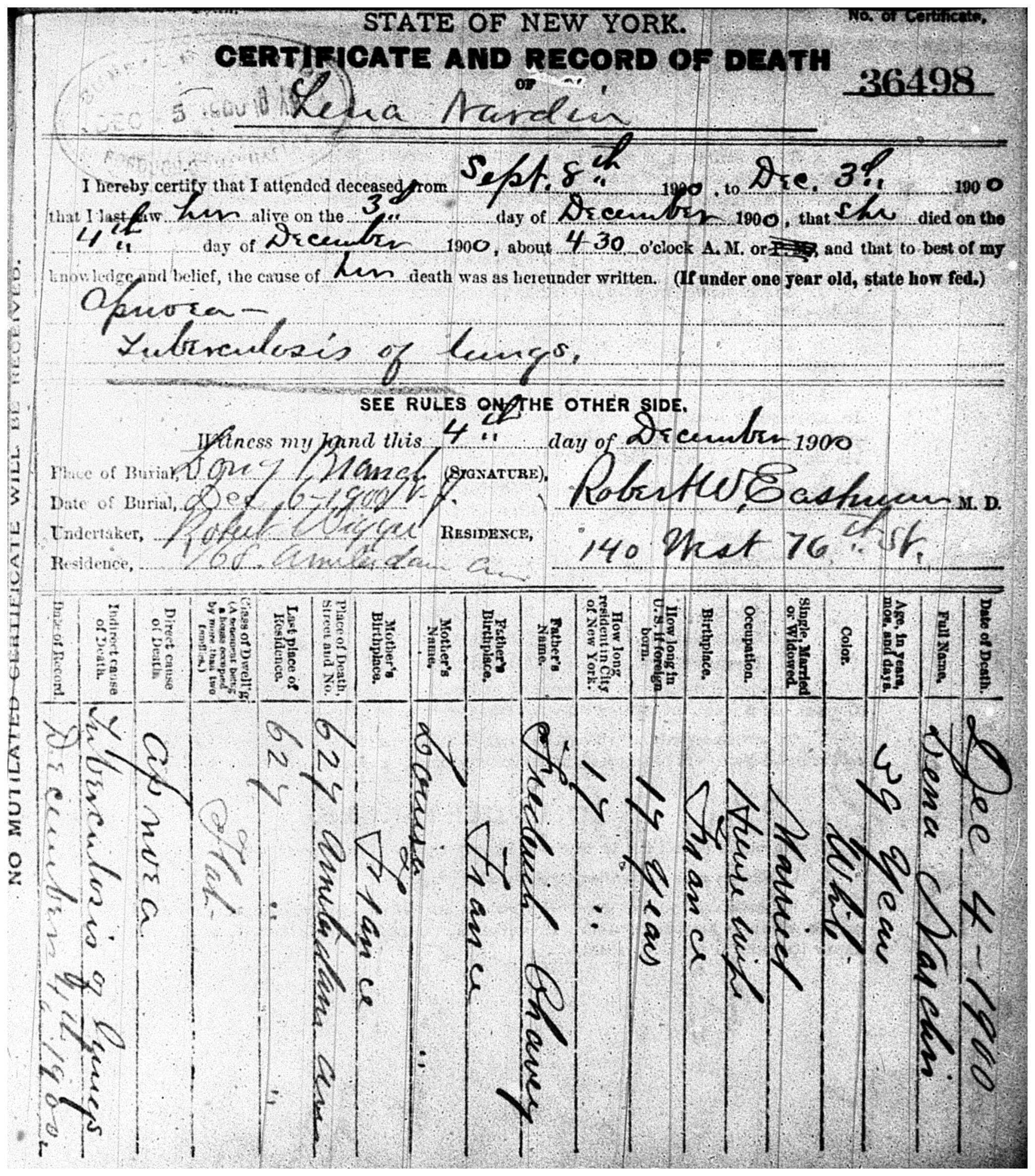
Emil was born in France, the son of Fredric and Susanne Nardin, and had arrived in the US in about 1886 when he was about twenty years old.   He had been married previously to Lena Chavey, also French born, and they had had three children together: Ida, born in 1888, whom I cannot find on any subsequent record, Henri Arthur, who was born in 1892 and who died in 1895 from scarlet fever, and Helen Edith (known as Edith), born in 1896. On the 1900 census, Emil and Lena were living with just Edith.  The census record reported that although Lena had had three children, only one was alive, so Ida must have died also.  Emil was working as a cook. (A French chef in the family!)  The family was living at 627 Amsterdam Avenue in New York. Sadly, Emil’s first wife Lena died from tuberculosis on December 4, 1900, leaving him with four year old Edith.  Lena was 39 years old.

Nardin, Arthur death Nardin, Lena

Thus, Emil had lost two young children and his wife before marrying Lillian Kornfeld in 1902.  Lillian and Emil had a child of their own, a son named Arthur, born on June 26, 1903.

Mary and Oscar Kornfeld had two other grandchildren born in the early years of the 20th century.  Carrie and Berthold Weiss had a daughter, Edna Hazel, on February 27, 1903. Rose and Joseph Cohn had a son Harold, born on January 18, 1905. Arthur Nardin, Edith Weiss, and Harold Cohn were the only grandchildren Mary and Oscar would have.

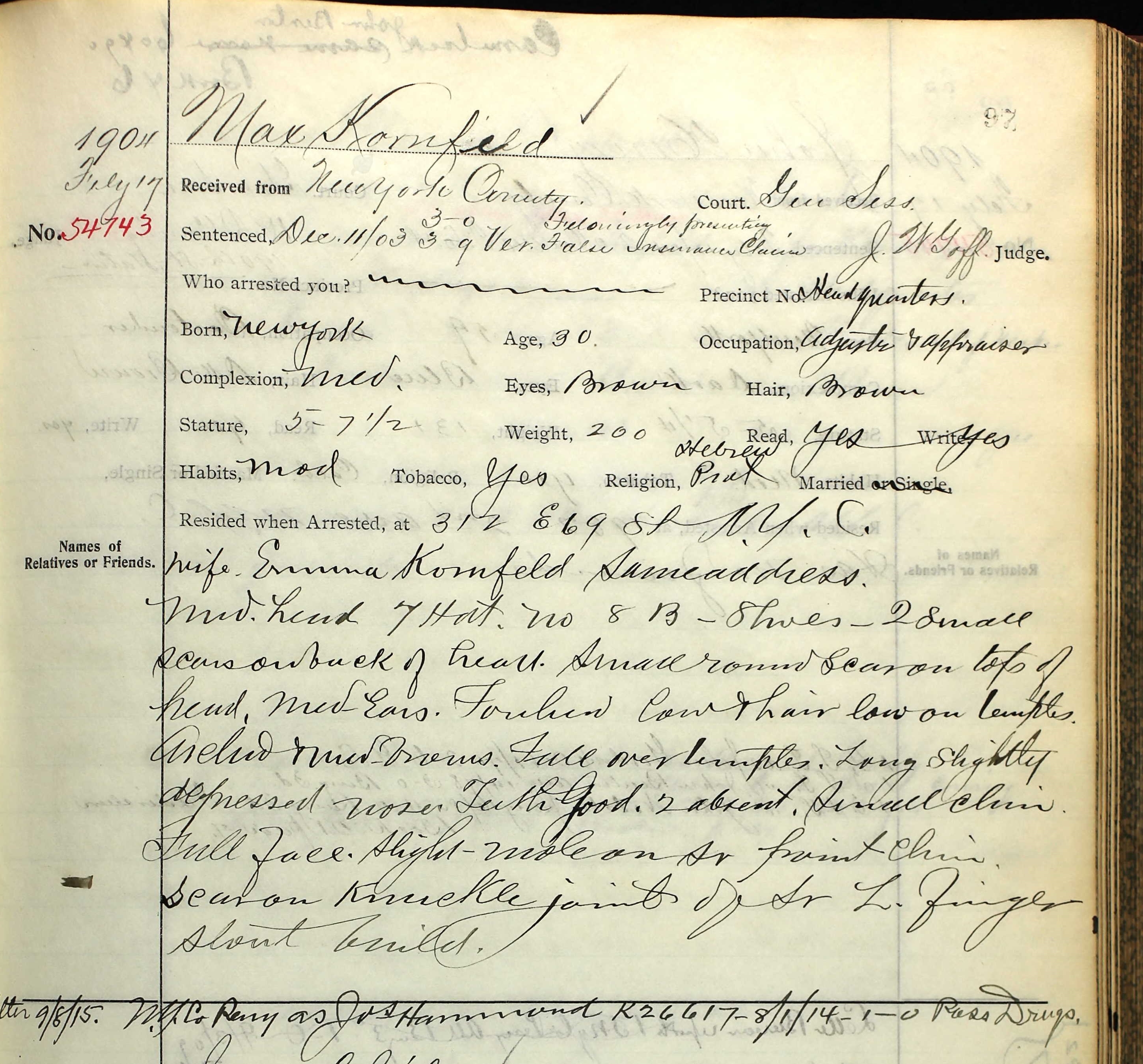
Overall, these should have been happy years for the extended Kornfeld family. Unfortunately, Max Kornfeld soon ran into serious legal problems.  In 1903, he was convicted on several counts of insurance fraud and sentenced to Sing Sing prison in Ossining, New York.  As reported in the November 20, 1903, edition of The Standard, an insurance industry trade publication, Max Kornfeld was a public fire insurance adjuster and had been convicted of making a false insurance claim for $2000, claiming that his wife Emma’s wardrobe had been destroyed in a fire at the Hotel Richelieu.  A later article dated December 10, 1903, in The Spectator, another trade publication, reported that Max was in fact part of a much larger insurance fraud scheme.  It reported that Max had confessed to over 300 fraudulent fire insurance claims.  He had testified that in these claims the adjuster received 40% of the proceeds, and he described some of the methods used to make these claims.


Embed from Getty Images
Sing Sing Prison

Max was admitted to Sing Sing prison on July 17, 1904, and according to the admission record below, it looks like he was sentenced for three to nine years;  he was still in prison at the time of the 1905 New York State census.  One thing I found interesting on the Sing Sing admission record is the recording of his religion as Protestant and Hebrew.  There is also a detailed physical description; Max had a number of scars on his head as well as on his hand.

New York State Archives; Albany, New York; Sing Sing Prison, 1852-1938; Box: 14; Volume: 36

New York State Archives; Albany, New York; Sing Sing Prison, 1852-1938; Box: 14; Volume: 36

As for the rest of the family in 1905, I could only find Mary and Oscar Kornfeld and their daughter Rose on the 1905 NY census.  In 1905, Mary (nee Seligman) and Oscar Kornfeld were living as lodgers without any of their children in the household of a woman named Anna Bohl, residing at 274-276 West 19th Street in Manhattan.  Oscar was still working as a cigar maker.  According to the 1905 NY census, their daughter Rose, her husband Joseph Cohn, and their son Harold were living at 10 West 118th Street, and Joseph was working as a printer.

Although I could not find Carrie Kornfeld Weiss or Lillian Kornfeld Nardin on the 1905 NY census, I had better luck locating all the Kornfelds but Mary and Oscar on the 1910 census.  Max was out of prison, and he and Emma had moved to Philadelphia, where Max was working as a real estate broker.  They did not have any children.  Rose and Joseph Cohn were living on West 148th Street with their six year old son Harold, and Joseph had his own printing business.  Carrie and Berthold Weiss were living on Lenox Avenue with their seven year old daughter Edna, and Bert was still a hosiery salesman.  Lillian and Emil Nardin were living on West 17th Street with their six year old son Arthur and Emil’s daughter Edith, who was now fourteen; Emil was a chef in a hotel.  Thus, it appeared that all four of the Kornfeld children were doing fairly well in 1910.

The next five years were harder. Their father Oscar died on November 27, 1911; he was 58 years old.  He died from cirrhosis of the liver.

Kornfeld, Oscar death

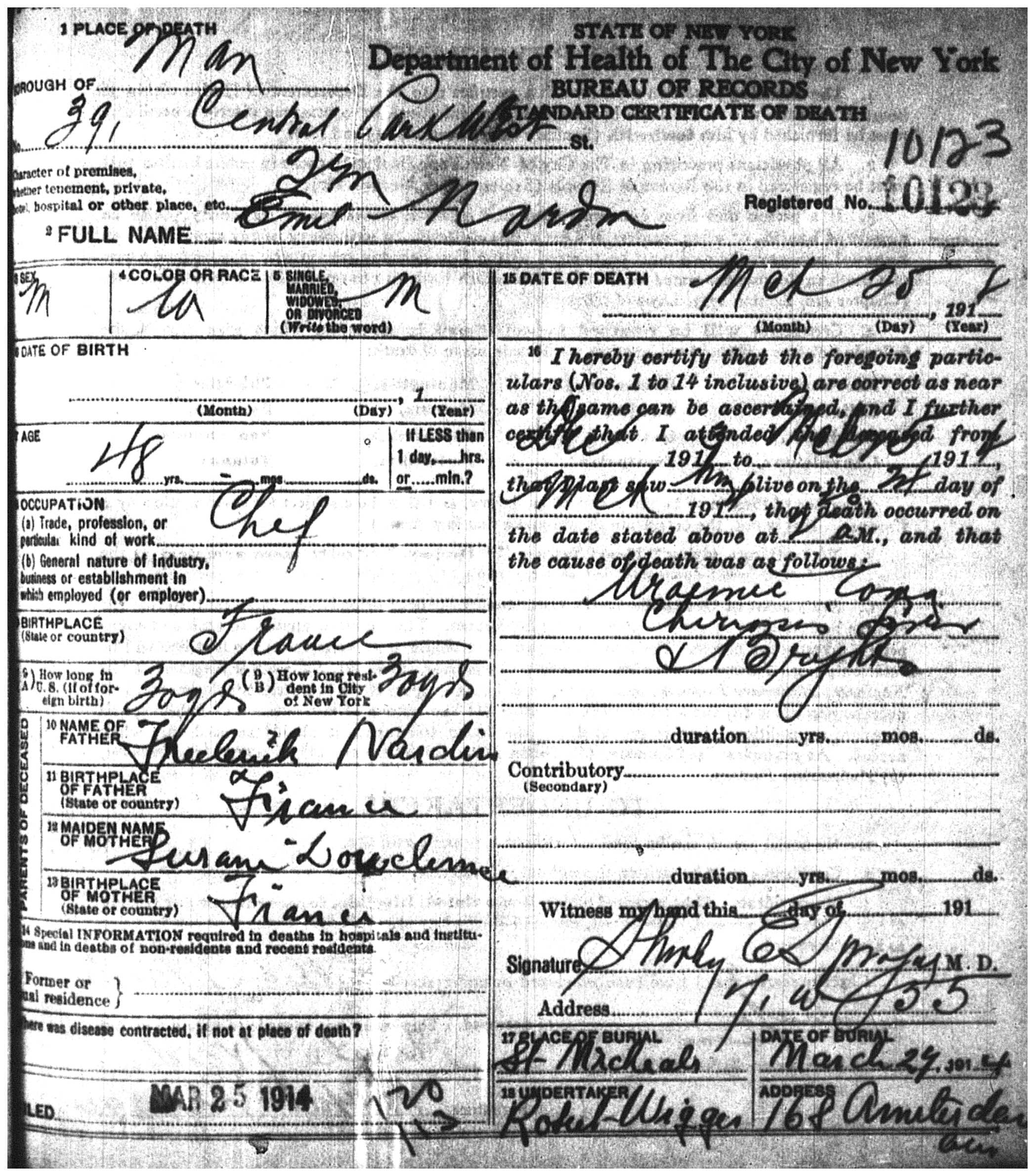
Then Lillian’s husband Emil died on March 28, 1914, also from cirrhosis of the liver as well as a uremic coma; he was only 48 years old and left not only Lillian, but his daughter Edith, who was only 18, and his son Arthur, who was only ten years old.

Nardin, Emil death

Poor Edith Nardin had lost her mother Lena in 1900 and now her father in 1911. By 1915 she was married to Arthur Downing Holmes, and the couple was living with Edith’s stepmother, Lillian Kornfeld Nardin, and Edith’s half-brother, Arthur Nardin, on West 92nd Street.  Arthur Holmes was 25 and working as a real estate agent. He had been born in New Haven, Connecticut, and was a graduate of Yale.

New York State Archives; Albany, New York; State Population Census Schedules, 1915; Election District: 10; Assembly District: 17; City: New York; County: New York; Page: 14

New York State Archives; Albany, New York; State Population Census Schedules, 1915; Election District: 10; Assembly District: 17; City: New York; County: New York; Page: 14

According to his World War I draft registration, Arthur D. Holmes was in the construction business.  At the time of his registration and on the 1920 census, their address was on West 84th Street.  By 1920, Arthur and Edith had two sons, William and Lawrence.  In 1922 they had a third son Robert.  (Although Arthur and Edith were still together on the 1930 census, by 1940 Arthur was married to a much younger woman named Ann.  I cannot find what happened to Edith after 1930 except for a 1974 Florida death record for an Edith H. Thomson with the same birth date.)

Meanwhile, eighteen months after Emil’s death, his wife Lillian Kornfeld Nardin remarried.  On September 27, 1915, she married Arthur Rosenberg.  He was born in England in 1885 and had immigrated to the US in 1898 with his parents.  In 1910, he had been a chauffeur for a private family.  According to his 1918 World War I draft registration, he and Lillian were living at 3440 Broadway, and he was now a rental agent for L.J. Phillips, a real estate company.

Registration State: New York; Registration County: New York; Roll: 1786675; Draft Board: 141

Registration State: New York; Registration County: New York; Roll: 1786675; Draft Board: 141


Carrie (nee Kornfeld) and Bert Weiss and their daughter Edna were living at 2400 Seventh Avenue in 1915.  The 1915 NY census reports that Bert was working in the wholesale dental supplies business, but according to his draft registration for World War I three years later, he was back in hosiery sales in what appears to be his own business, Weiss and Goldstein.  The family was then living at 555 West 115th Street.

Registration State: New York; Roll: 1786805; Draft Board: 146

Registration State: New York; Roll: 1786805; Draft Board: 146

In 1920 Rose and Joseph Cohn were living at 253 West 146th Street, and Joseph had his own printing business.  Their son Harold was now 15.

According to his World War I draft registration, Max Kornfeld and his wife Emma were living at 1628 Diamond Street in Philadelphia in 1918, and Max was self-employed as a merchandise man and insurance adjuster. I was surprised to see that he was back in the insurance business, given his criminal record for insurance fraud.  In 1920, however, Max reported his occupation as a real estate adjuster.

Registration State: Pennsylvania; Registration County: Philadelphia; Roll: 1907649; Draft Board: 29

Registration State: Pennsylvania; Registration County: Philadelphia; Roll: 1907649; Draft Board: 29

Mary Seligman Kornfeld must have moved in with her son Max and daughter-in-law Emma sometime after the 1920 census because when she died on January 13, 1921, her address was 1628 Diamond Street in Philadelphia, where Max and Emma had been living in 1920.  Mary was 64 years old and had died from cardiac dilatation and pulmonary edema. I thought it interesting that she had moved from New York where her three daughters and her grandchildren lived to live with her son in a city where she had never before lived.  I also thought it odd that Max could not provide the name of his mother’s parents as the informant on her death certificate.

Ancestry.com. Pennsylvania, Death Certificates, 1906-1963 [database on-line]. Provo, UT, USA: Ancestry.com Operations, Inc., 2014. Original data: Pennsylvania (State). Death certificates, 1906–1963. Series 11.90 (1,905 cartons). Records of the Pennsylvania Department of Health, Record Group 11. Pennsylvania Historical and Museum Commission, Harrisburg, Pennsylvania.

Ancestry.com. Pennsylvania, Death Certificates, 1906-1963 [database on-line]. Provo, UT, USA: Ancestry.com Operations, Inc., 2014.
Original data: Pennsylvania (State). Death certificates, 1906–1963. Series 11.90 (1,905 cartons). Records of the Pennsylvania Department of Health, Record Group 11. Pennsylvania Historical and Museum Commission, Harrisburg, Pennsylvania.

Two years later Mary’s youngest child, Lillian Kornfeld Nardin Rosenberg, died at age 41.  (Her death certificate says she was 39, born in 1884, but that is not consistent with the birth records from the NYC birth index I have for her.)  She died from chronic endocarditis and cerebral edema.

Rosenberg, Lillian death page 1 Rosenberg, Lillian death page 2


Lillian’s son Arthur Nardin was 20 years old when she died.  On March 6, 1925, Arthur married Jane Burns; they were both 21 years old at the time.  Their son Arthur Nardin, Jr., was born two years later.  According to the 1930 census, Arthur, Sr., was a car salesman.  The family was living on West 181st Street at that time.

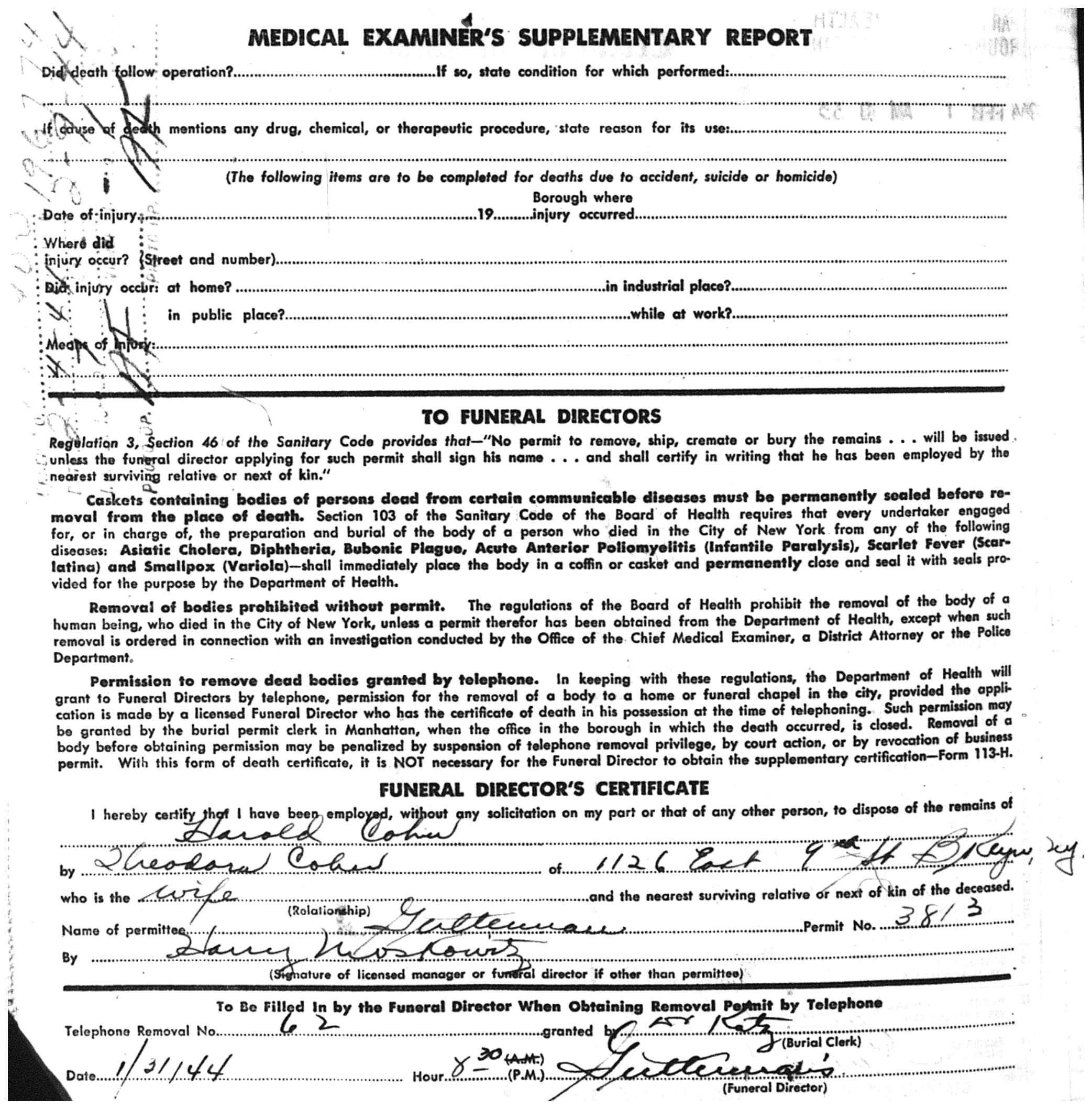
In 1930, Lillian’s sister Rose and her husband Joseph Cohn were living on West 90th Street, and Joseph was no longer a printer, but now an investor in securities. Their son Harold had married Tillie or Teddi or Theodora Kremenko, a Russian immigrant, on October 6, 1928.  Thus far, I cannot locate Harold or Tillie on the 1930 or 1940 census, but did find that Harold died on January 31, 1944.  He was only 39 years old and died from coronary thrombosis.  I am now following a lead to someone who might be Harold and Tillie’s son, so I hope to get more information and some photographs.

Cohn, Harold death page 1 Cohn, Harold death page 2

The third Kornfeld sister, Carrie, and her husband Bert Weiss were living on West 103rd Street in 1930, and Bert was still a dry goods salesman.  Their daughter Edna had married Harry Rosenberg on December 14, 1924.  Harry was born in New York City, and in 1920 he and his father Edward were both selling dry goods.  In 1925, Harry and Edna were living on West 176th Street, and Harry was selling real estate.  Unfortunately, as with Harold and Tillie, I cannot find them on the 1930 or 1940 census.

Finally, Max Kornfeld and his wife Emma had moved to Atlantic City by 1923, according to the directory for that year for that city.  They were still there in 1926, and Max was working again as an insurance agent. I could not find Max and Emma on the 1930 census.  (What is it with this family and the 1930 census? How did they elude the census takers?), but they were still living in Atlantic City when Max died on October 25, 1931.  Max was 57 years old. He was buried at Rodeph Shalom cemetery in Philadelphia.

Historical Society of Pennsylvania; Philadelphia, Pennsylvania; Collection Name: Historic Pennsylvania Church and Town Records; Reel: 1112

Historical Society of Pennsylvania; Philadelphia, Pennsylvania; Collection Name: Historic Pennsylvania Church and Town Records; Reel: 1112

Thus, by 1931, two of the Kornfeld siblings had died, Max and Lillian.  I cannot find Rose and her husband Joseph Cohn on the 1940 census, nor can I find their death records, and thus I do not know anything about them after 1930.  The only Kornfeld sibling I located on the 1940 census was Carrie and her husband Bert Weiss.  They were then living at 607 Broadway, and Bert was still selling hosiery.  I do not have any information about them after 1940.

As for the three grandchildren of Mary Seligman and Oscar Kornfeld, as noted above, I cannot find Carrie’s daughter Edna and her husband Harry Rosenberg on either the 1930 or 1940 census, nor can I find Rose’s son Harold and his wife Tillie on any census after their marriage in 1928.  I only know that Harold died in 1944.  The only grandchild about whom I could find any real information after 1930 was Arthur Nardin, the son of Lillian and her husband Emil Nardin.  In 1940, Arthur and his wife Jane and his two children, Arthur, Jr. and Edith, were still living on West 181st Street, and Arthur was a car dealer.  By 1958, Arthur and Jane had moved to Miami, where he died in 1983 at the age of 80.

That brings me to the end of the line started by Marx Seligmann and his wife Sarah Koppel, who immigrated to the United States in 1849 shortly after Marx’s divorce from his first wife.  Marx and Sarah must have come to the US to begin their lives together as a married couple in a new country, far away from their home country of Germany.  From that marriage came four children, eighteen grandchildren, and fifteen known great-grandchildren as well as many great-great-grandchildren, all my previously unknown American-born Seligman cousins, including my wonderful cousin Steve who supplied me with so many family stories and photos.


Brick Walls Everywhere


Embed from Getty Images

I’ve run into some tough brick walls in my research, but never as many as I have with the descendants of Charlotte Seligman, the third child of Marx and Sarah Seligman. It’s been one frustration after another, searching for her children and grandchildren.

As noted in my earlier post, Charlotte (or Lottie) married Max Schlesinger in 1874, and they had four children: Harriet (1875), Arthur (1876), Lillie (1877), and Louis (1884).  Max was in the tie manufacturing business. Lillie and Louis were still living at home in 1900.

By 1900, Harriet (or Hattie) had married George Cain and had had one child, originally named Edith, but then renamed Lucie in memory of George’s sister.  The following year Harriet and George had a second daughter named Ethel.

I could not locate Arthur at all on the 1900 census, nor have I found him on any other record aside from the 1880 census and the NYC birth record index.  There is one possible military enlistment record for him dated March 4, 1895, but I can’t even be sure it is the same Arthur Schlesinger from the record.

On December 14, 1904, Max and Charlotte’s third child Lillie married Solomon Sondheim. Solomon, or Sol, was born in New Hampshire in 1867, making him ten years older than Lillie.  His father, a German immigrant, was in the dry goods business.  After living in New Hampshire, Sol had lived in Buffalo, New York, and then Bradford, Pennsylvania.  By 1900 when he was 33, Sol was working as a salesman and living in New York City as a boarder in what appears to be a large boarding house at 589 Second Avenue.  After marrying, Lillie and Sol were living on East 116th Street, and Sol listed his occupation on the 1905 NY census as a merchant.

In searching to learn more about Sol Sondheim, I found numerous articles about the suicide of his brother Philip.   From these articles, I learned that Sol’s father had been a wealthy man, leaving quite a large estate to be divided among his four children (which apparently Philip squandered through gambling).

New_York_Times_December_9_1900_page_1 Philip Sondheim

Sondheim suicide from Herald

Boston Herald December 13, 1900 p. 8

As for the rest of the family of Charlotte and Max Schlesinger, the 1905 NY census just presented me with problems. First, I cannot find Hattie and George Cain at all on the 1905 census (and Arthur still was missing).  What’s even more confusing, Charlotte Schlesinger is listed twice on the 1905 census (both with the date June 1, 1905, preprinted on the page).  On one page, Charlotte and Max were living at 231 West 116th Street, and Max was still working in manufacturing (presumably ties).

Max and Charlotte Schlesinger 1905 NY census New York State Archives; Albany, New York; State Population Census Schedules, 1905; Election District: A.D. 21 E.D. 39; City: Manhattan; County: New York; Page: 24

Max and Charlotte Schlesinger 1905 NY census New York State Archives; Albany, New York; State Population Census Schedules, 1905; Election District: A.D. 21 E.D. 39; City: Manhattan; County: New York; Page: 24

On another page of the 1905 census, Charlotte is listed with her son Louis and his wife Alice, living at 1838 Seventh Avenue.  Louis was only 21, and Alice was only 19.

Louis Schlesinger 1905 census New York State Archives; Albany, New York; State Population Census Schedules, 1905; Election District: A.D. 21 E.D. 35; City: Manhattan; County: New York; Page: 38

Louis Schlesinger 1905 census
New York State Archives; Albany, New York; State Population Census Schedules, 1905; Election District: A.D. 21 E.D. 35; City: Manhattan; County: New York; Page: 38

I assume Max died sometime between the first census listing and the second, but I cannot find any record for Max’s death.  There is no listing in the NYC death index, no obituary, nothing that explains what happened to him. Moreover, the NYC marriage index has Louis marrying Alice Stacke on April 26, 1906, a year after the 1905 census. Is it possible that this second census entry was filled in and filed a year late? Or perhaps it is more likely the marriage certificate was filed a year late.  Or they weren’t legally married until April 1906?

According to the 1910 US census, Louis and Alice were still living with Charlotte, now listed as a widow (the NY 1905 census had not asked about marital status).  They were living at 200 West 136th Street, and Louis was working as a clothing salesman.  Harriet and George Cain and their two daughters were living at 2308 Seventh Avenue, and George was the secretary of a bank.  Lillie and Sol Sondheim were living on West 122nd Street, and Sol was a traveling salesman.  Arthur remained missing.

On June 4, 1914, Harriet’s husband George Cain died.  I could not find a death record for him, but did find this death notice in the June 5, 1914, New York Times.

New York Times, June 4, 1914

New York Times, June 5, 1914

Since there is no listing for George Cain in the NYC death index, I assume George died someplace outside of New York City.  He left behind two young daughters, just 14 and 13, as well as his wife Harriet.  On the 1915 NY census, Harriet was living with her two daughters Lucie and Ethel as well as her mother Charlotte at 2308 Seventh Avenue.  No one in the household was employed outside the home.

Harriet Schlesinger Cain 1915 NY census New York State Archives; Albany, New York; State Population Census Schedules, 1915; Election District: 23; Assembly District: 21; City: New York; County: New York; Page: 11

Harriet Schlesinger Cain 1915 NY census
New York State Archives; Albany, New York; State Population Census Schedules, 1915; Election District: 23; Assembly District: 21; City: New York; County: New York; Page: 11

In 1920, Harriet was living with Lucie and Ethel, now 19 and 18, at 465 Central Park West.  Harriet’s occupation was reported as “renting rooms” at home, and there was one lodger listed in the household, but her name was crossed out.  Lucie was working in the bonding department of a security company, and Ethel was not employed.

I cannot find either Louis Schlesinger or Lillie Schlesinger Sondheim on the 1915 NY census.  (These people are just incredibly elusive, no matter how I search.) But between 1910 and 1920, much had changed for both of them.  First, on July 12, 1917, Louis married a second time, this time to Bertha Stein.

New York, New York City Marriage Records, 1829-1940," database, FamilySearch (https://familysearch.org/ark:/61903/1:1:24HM-6GL : accessed 4 August 2015), Louis Schlesinge and Bertha Stein, 12 Jul 1917; citing Marriage, Manhattan, New York, New York, United States, New York City Municipal Archives, New York; FHL microfilm .

New York, New York City Marriage Records, 1829-1940,” database, FamilySearch (https://familysearch.org/ark:/61903/1:1:24HM-6GL : accessed 4 August 2015), Louis Schlesinge and Bertha Stein, 12 Jul 1917; citing Marriage, Manhattan, New York, New York, United States, New York City Municipal Archives, New York; FHL microfilm .


I would have thought this was a different Louis, except that the marriage record reveals his parents’ names as Charlotte Seligman and Max Schlesinger.  What had happened to Alice, his first wife? I don’t know.  There is no death record for her, but neither was there one for George Cain or for Max Schlesinger.  There are a number of later records for women named Alice Schlesinger, but none is obviously the right one.  If she remarried, I haven’t found her.

At any rate, Louis and Bertha Schlesinger had a child on June 14, 1918, less than a year after marrying.  They named him Arthur, which makes me believe that Louis’ older brother Arthur had died.  According to his draft registration for World War I, Louis was the financial secretary for the Joe Morris Music Publishing Company, and he, Bertha, and their son Arthur were living at 301 St. Nicholas Avenue in New York City.  Their residence remained the same on the 1920 census.

Louis Schlesinger World War I draft registration Registration State: New York; Registration County: New York; Roll: 1786672; Draft Board: 139


As for Lillie, her life also changed dramatically between 1910 and 1920.  Her husband Sol died on March 12, 1919, while he was in Chicago; I assume he was traveling there as part of his job as a salesman as he died at a hotel.  He died from heart and kidney disease.  He was 52 years old.

Sondheim, Sol. death

Six months later Lillie married William Lindsay on September 24, 1919.  William was born in Philadelphia, the son of Joseph Lindsay and Mary Thomson, who were born in Scotland and Ireland, respectively. William grew up in Philadelphia, where his father was a shirt manufacturer.  In 1920, William was working as an advertising solicitor for a trade magazine, and he and Lillie were living on 112th Street.

Thus, between 1910 and 1920, three of the children of Charlotte Seligman and Max Schlesinger had had  major marital status changes in their lives.  Harriet had become a widow; Lillie also had become a widow and then remarried; and Louis had either become a widower or had his marriage end, and he had remarried.  Meanwhile, their mother Charlotte was living on her own at 2040 Seventh Avenue.  Charlotte died three years later on January 19, 1923, when she was 69 years old.

I cannot find Harriet on the 1925 NY census, but according to a directory listing, she was still living at 465 Central Park West in 1925.  Her younger daughter Ethel had married Milton Robitchek on June 29, 1922, when she was 21, and had a daughter Georgia in 1928.  By 1930, however, Ethel was divorced, and she and two year old Georgia were living with Harriet on West End Avenue.  Ethel was a public school teacher. (I can’t seem to find Milton Robitchek at all after the 1922 marriage record. How could someone with such an unusual name just disappear?)

Harriet Schlesinger Cain 1930 US census Year: 1930; Census Place: Manhattan, New York, New York; Roll: 1557; Page: 12B; Enumeration District: 0465; Image: 685.0; FHL microfilm: 2341292

Harriet Schlesinger Cain 1930 US census
Year: 1930; Census Place: Manhattan, New York, New York; Roll: 1557; Page: 12B; Enumeration District: 0465; Image: 685.0; FHL microfilm: 2341292


Harriet’s older daughter Lucie was living on her own on Clinton Street in Brooklyn, according to the 1930 census, which reported that her occupation was “child placing” for an accountant.  I have no clue what that means.

In 1940, Harriet was still living with her daughter Ethel, now on East 68th Street, and with her granddaughter Georgia, now twelve.  Ethel was still working as a teacher.  Lucie was still living on her own in Brooklyn, and her occupation now clearly states that she was a public accountant.   I have not found any later records for Harriet, Lucie, Ethel, or Georgia.  I have searched as many ways as I can, but have found no documents, no news stories, no obituaries.

As for Harriet’s sister Lillie, she became a widow again on November 14, 1924, when her husband William Lindsay died at age 58.  Like Harriet’s first husband Sol, William died of both heart and kidney disease.

Lindsay, William death page 1

I’ve had no luck finding Lillie on either the 1925 NY census or the 1930 US census, but did find her on the 1940 census.  She was 62 years old, living at the Wyndham Hotel, and not employed.  That is the last record I have for Lillie.

Finally, there is Charlotte and Max’s youngest child Louis Schlesinger.  In 1925, he was still married to Bertha, and they were still living on St. Nicholas Avenue with their son Arthur, now six years old.  Louis was still employed in music publishing.  Although the family had moved to West 180th Street by 1930, all else remained the same (though everyone was five years older, of course).

But then the big mystery for me surrounding Louis and his family surfaced in the 1940 census.  Now Louis, Bertha, and Arthur are living on West 164th Street, but there are two more children living with them: Henry, listed as their son, 17 years old, and Matilda, listed as their daughter, 12 years old.  Where did these two children come from? If they were in fact Louis and Bertha’s children, they should have been listed with them on the 1930 census, but they were not.  Had they been adopted after 1930? They both had the surname Schlesinger, at least on the census record.  I don’t know, and what’s even more mystifying, I cannot find either of them on any later record or document.  I would think Henry would have served in World War II, but I cannot find any record that would match him, if his name in fact was Henry Schlesinger.

Louis Schlesinger 1940 US census Year: 1940; Census Place: New York, New York, New York; Roll: T627_2677; Page: 8B; Enumeration District: 31-2144

Louis Schlesinger 1940 US census
Year: 1940; Census Place: New York, New York, New York; Roll: T627_2677; Page: 8B; Enumeration District: 31-2144

At any rate, in 1940 Louis was still in music sales, and his son Arthur, now 21, was a clerk in an advertising firm.  On his draft registration for World War II, Louis reported that he was a music salesman and the president of Lewis Music Company.

Arthur Schlesinger, Louis and Bertha’s son, died on February 20, 1943.  He was 24 years old.  His death certificate does not report the cause of death, but it does indicate that he had been under a doctor’s care since October, 1942.  He had been working as a clerk in federal court.

Schlesinger, Arthur 1943 death page 1


That, unfortunately, is the last record I have for Louis Schlesinger and his family.  As with his siblings Harriet, Arthur, and Lillie, I do not know when he died.  I don’t know when his wife Bertha died, what happened to his first wife Alice, or what happened to the two children who were living with him as his children in 1940, Henry and Matilda.

Since I cannot find out what happened to Ethel Cain Robitchek’s daughter Georgia either, I don’t know whether there are any living descendants of Charlotte Seligman and her husband Max Schlesinger.  Harriet’s other daughter Lucie did not marry.  Lillie had no children.  Louis’s son Arthur died at a young age.  But what I did learn about Charlotte and her family is that this was a family where many marriages ended early either due to divorce or death.  Lillie was widowed twice.  Harriet was left a widow at a young age with her two young daughters.  Her daughter Ethel’s marriage was over by the time Ethel’s daughter Georgia was only two.  And Louis married twice, though I don’t know if the first ended because his first wife died or because they divorced.

So many unanswered questions.  I am hoping that with further digging, some answers will turn up, but for now I must say that searching for the family of Charlotte Seligman has made me feel like a very poor researcher and a very frustrated genealogist!  If any of you out there reading have any suggestions on how I might find more about these people, please let me know.


Embed from Getty Images


From Cigars to Security, and Heartbreak and Heart Disease: The Family of Jacob Seligman

The second child of Marx and Sarah Seligmann was Jacob.  As I wrote in an earlier post, he married Mathilde Kerbs in 1881, and they had four sons and one daughter: Max (1882), Harry (1883), Louis (1885), Samuel (1888), and Beatrice (1902).  Jacob was a cigar packer, and the family was living at 303 East 69th Street in 1900.  Max and Harry were both working as salesman, according to the 1900 census.


Embed from Getty Images


The family suffered a terrible loss when Max died on November 25, 1903.   He was only 21 years old.  He died from typhoid fever and pneumonia.

Maxwell Seligman death certificate 1903

Maxwell Seligman death certificate 1903

In 1905, the remaining members of the family were living at 212 East 40th Street.  Harry was a police officer, Louis an errand boy, and Samuel a stock keeper (I assume in a store).  Their father Jacob was still a cigar packer.

On July 17, 1907, Samuel, the youngest son, married Frances Hooton, the daughter of William Proctor Hooton and Hannah Newman.

Marriage certificate of Samuel Seligman and Frances Hooton

Marriage certificate of Samuel Seligman and Frances Hooton

Seligman - Horton marriage page 2

William was born in England and was a shipping clerk; Hannah (usually referred to as Annie) was his second wife.  His first wife Deborah Newman (perhaps Annie’s sister?) died in 1879, leaving him with four children.  After having two children with Annie, including Frances in 1886, William lost his second wife Annie when she died on November 27, 1887.  William himself died in 1901 when Frances was only fifteen, and she ended up living with one of her sisters, working as a dressmaker. [Thanks to the generosity of Chip Bennett, a relative of the Hootons, I am able to share some photographs of Frances Hooton Seligman and her children.]  When Samuel and Frances married, he was only nineteen and she was 21.

Their first child Marion was born a year later in July, 1908.

Marion Seligman photo courtesy of Chip Bennett

Marion Seligman
photo courtesy of Chip Bennett

In February 1910, their second child Maxwell was born.  According to the 1910 census, the family was living at 349 East 82nd Street, and Samuel was working as a special officer for the Highway Department.   A third child was born to Samuel and Frances in 1913; his name was William.

Frances Hooton Seligman with Max and Marion and her niece Ethel   Photo courtesy of Chip Bennett

Frances Hooton Seligman with Max and Marion and her niece Ethel
Photo courtesy of Chip Bennett


Meanwhile, the other children of Jacob and Mathilde Seligman were still living with their parents in 1910.  Jacob was still in the cigar business, and Harry was still working as a city police officer.  Louis had no occupation listed, and Beatrice was only eight years old.

Harry married Rose Weis on March 24, 1912.  Rose was the daughter of Joseph/Ignatz Weis and Henrietta Schoen, Hungarian immigrants.  Her father was an upholsterer.  As far as I can tell, Harry and Rose did not have any children.  In 1915, Harry continued to work as a police officer.  He and Rose were living at 349 East 84th Street, according to the 1915 census.

Jacob Seligman died on December 16, 1915.  He was 63 years old.  His son Louis was married a year and a half later; he married Fannie Zinck on June 2, 1917.  She was born in Alsace-Lorraine in about 1889 and immigrated to the US around 1902.  Unfortunately, I have not been able to find any more about Fannie’s background.  Louis and Fannie did not have any children.

According to his World War I draft registration, Louis was employed as a canvasser by his brother Samuel in 1918; according to Samuel’s registration, he was self-employed as a watchman.  What would Louis have been doing as a canvasser for a watchman?  They were living not far from each other, Louis and Fannie at 506 East 83rd Street, Sam and Frances and their children at 242 East 85th Street.  Harry and Rose were also nearby—at 409 East 84th Street; Harry (using the name Henry on his draft registration) was still a New York City patrolman.  I found it interesting that all three brothers were in some aspect of the security business.

Their mother Mathilde Kerbs Seligman died on March 12, 1918; she was 54 years old.  Beatrice, the youngest sibling, was only sixteen years old and orphaned.  She moved in with her brother Louis and his wife Fannie, according to the 1920 census.  They were then living at 307 East 78th Street; Louis listed his occupation as special officer on night patrol, and Beatrice was a typist. In 1920, Harry and Rose continued to live at 409 East 84th Street, and Harry continued to work as a police officer.  Sam, Frances, and their three children were still living at 242 East 85th Street, and Sam was still working as a night watchman.

Things remained pretty much the same in 1925.  Louis, Fannie, and Beatrice were still living on 78th Street.  Louis was now working as a mechanic, according to the 1925 New York census; it looks like Beatrice’s occupation was a correspondent.  I am not sure what that means.  Samuel and his family were still on 85th Street.  Sam had his own business, and his two oldest children were working: Marion doing clerical work and Maxwell as a helper—perhaps in their father’s business?  I have not been able to locate Harry and Rose on the 1925 New York census.

Marion Seligman as a young girl photo courtesy of Chip Bennett

Marion Seligman as a young girl
photo courtesy of Chip Bennett

Samuel and Frances Seligman’s son Maxwell married Helene Sumner on August 25, 1927.  Helene was the daughter of Edward Sumner and Priscilla nee McCarthy, who were English-born immigrants; her father was an engineer. Maxwell was only 17 years old when they married (although listed as 22 on the marriage record, all other records indicate he was born in 1910); Helene was listed as 17, but all her earlier records say she was born in 1912, making her only 15 in 1927. Given how young they were, I might have thought that Helene was pregnant (and maybe she was), but their first and only child, Joseph, was not born until 1929.

Maxwell Seligman as a young boy Photo courtesy of Chip Bennett

Maxwell Seligman as a young boy
Photo courtesy of Chip Bennett

The 1920s ended very sadly for the family.  On March 9, 1929, Samuel Seligman died; he was only 40 years old and left behind his wife Frances and their three children.  He died from angina pectoris and myocarditis—heart disease.

Samuel Seligman death certificate 1929

Samuel Seligman death certificate 1929


Marion was 21, Maxwell 19, and William only 16 years old when their father died.  Frances remarried a man named Frank Mildrum on February 16, 1931, according to the records in the New York marriage index on Ancestry, although according to the 1930 census, she was already married to Frank, as she is listed as his wife and living with him and two of her children, Marion and William, in the Bronx.  Frank also had a thirteen year old daughter Florence from his prior marriage.  Frank was a private detective.  Marion Seligman was working as an office clerk.

Louis Seligman did not live much longer than his brother Samuel.  In 1930 he and Fannie as well as his sister Beatrice were still living at 308 East 78th Street.  Louis had his own business in protective alarms, and Beatrice was a clerk for an express company, according to the census.  But on October 23, 1931, Louis died from luetic aortitis and chronic myocarditis at age 44. Heart disease had contributed to the death of yet another family member.  Of the four sons born to Jacob and Mathilde Kerbs Seligman, only Harry was still alive.

Louis Seligman death certificate 1931

Louis Seligman death certificate 1931

By 1930 Harry and his wife Rose had moved in with her parents and siblings in Brooklyn, and Harry was no longer working as a police officer, but instead as a clerk in a brokerage house.  Harry was 49 years old; he had been working for the police force since at least 1905. Why would he and Rose have moved in with her family after all those years living on their own? Was Harry disabled? Had he reached eligibility for retirement? Did the police force even have a pension back then? According to this article from the official New York City website, there was some form of pension for police officers dating back to the 19th century.

I don’t know the answers to these questions, but I do know that Harry died just seven years later on March 6, 1937.  He was fifty-six years old and died from “coronary thrombosis with cerebral and pulmonary emboli induced by generalized arteriosclerosis.” (The parents’ names on this certificate are clearly in error, but this is also clearly the correct Harry Seligman, son of Jacob and Mathilde.)

Harry (Henry) Seligman death certificate 1937

Harry (Henry) Seligman death certificate 1937

The New York Times March 7, 1937

The New York Times March 7, 1937


Beatrice Seligman had been orphaned by the time she was sixteen, and now she had lost all of her siblings by time she was 35 years old.  In 1940 she was living as a lodger on West 99th Street and still working for the express company as a stenographer.  She was single and 38 years old.  After that, I cannot find her.  I don’t know whether she ever married or what happened to her after 1940.  I don’t know when she died.

Of the five children born to Jacob and Mathilde Seligman, only one, Samuel, had had any children.  As noted above, Samuel and Frances Seligman’s son Maxwell married Helene Sumner as a teenager, and they had a son Joseph born in 1929.  I saw on Ancestry that Joseph died when he was three years old in 1932.  When I received the death certificate, I was shocked.  Joseph had been hit by a car on 85th Street between Second and Third Avenue and had sustained a fractured skull.  How could something like this happen to a three year old child?

Seligman, Joseph death page 1 Seligman, Joseph death page 2

It appears that the marriage between Maxwell and Helene did not survive the death of their son.  In 1939, Maxwell traveled with his brother William to Key West, Florida.  On the 1940 census Maxwell and William were both living with their mother Frances Hooton Seligman Mildrum, who had been widowed again when Frank Mildrum died in June, 1939.  Frank’s daughter Florence was also living with them.  Maxwell and William were both working as collectors for a detective agency; according to the 1940 census, both Maxwell and William had been living in the same house in 1935, suggesting that Maxwell’s marriage had ended by then.

William Seligman as a young boy Photo courtesy of Chip Bennett

William Seligman as a young boy
Photo courtesy of Chip Bennett

As for Marion, Samuel and Frances Seligman’s other child, she married Howard Fairweather on July 3, 1932.  He was the son of Howard and Margaret (Duffy) Fairweather.  This also appears to be a marriage that did not last.  On the 1940 census, Howard and Marion were living on Undercliff Avenue in the Bronx.  Although Marion was working as a secretary at Star Protection Company, Howard had no occupation listed.

Marion may have been more than a secretary; she may have been THE secretary of the company.  According to an article from the New York Times dated January 27, 1940 about a labor strike at the company (Star Electric Protective Company, a burglar alarm company), Marion Fairweather was at that time the treasurer of the company.

Marion Fairweather burglar alarm strike

Marion and Howard had no children.  In 1942 Howard was serving in the armed forces as a private and still listed his status as married.  He reported that his occupation was as a non-public police officer, so I assume a private detective.  After that I have no records for them together.  Marion traveled alone several times in the 1950s.  Perhaps they were still married, but I have no documentation for either of them until their deaths.  Howard Fairweather died in Atlantic City in 1976; Marion Seligman Fairweather died July 27, 1988. Her last residence had been in New York City.

William had enlisted in the military on 1942.  In July, 1953, he traveled  to Bermuda. It appears that William never married.  William P. Seligman is listed in the New York City telephone directory in 1959 and 1960, and there is a Max Seligman as well, but I don’t know if it is the correct Max since even within the family there were several Max Seligmans.  William died on June 2, 1964.  His death notice in the New York Times mentioned only his sister Marion Fairweather as a survivor so Max must have predeceased him.  Unfortunately I cannot locate a death record or obituary for Max.

The New York Times, June 4, 1964

The New York Times, June 4, 1964

None of the children of Samuel Seligman had children, and Samuel was the only child of Jacob Seligman to have children, and thus the line of Jacob Seligman, son of Marx and Sarah Seligmann, ended when Marion Seligman Fairweather died in 1988.  Looking back at their story, this seemed to be a family that was succeeding in America—three sons who were all involved in personal and property security in some form or another.  But they were also three sons who died far too young in addition to the fourth son who died as a very young man.  There was the tragedy of a three year old child killed by a car and the marriage between his two young parents that failed not long after that death.  It is also a family that has no living descendants to carry on the names or the stories of these people.

Descendants of Jacob Seligman and Mathilde Kerbs

Descendants of Jacob Seligman and Mathilde Kerbs


Gifts from My Cousin Steve

How very lucky I have been in finding my Seligman cousins.  Starting with my cousin Pete from Santa Fe, then my cousin Wolfgang in Germany, then my cousin Suzanne from Scranton, and now two more cousins: Lotte, a descendant of Hieronymous Seligmann, brother of my great-great-grandfather Bernard, and Steve, a descendant of Marx Seligman, brother of my three-times-great-grandfather Moritz.  I will talk about Lotte in subsequent posts, but for now I will continue the story of Marx Seligman and his descendants.

Steve is a grandson of Sigmund Seligman, the oldest child of Marx and Sarah Seligman, and as I mentioned last time, he has generously shared with me many photographs of his family as well as personal anecdotes about them.  All the photographs in this post are courtesy of Steve.  I am filled with gratitude to him for bringing to life his father Leo, his aunt Mary, and his uncles Max and Albert.

In my earlier post about Marx and his descendants, I wrote that “Sigmund and Charlotte had five children between 1883 and 1896: Mary (1883), Max (1884), Leo (1891), Theresa (1894), and Albert (1896).  Sigmund was employed in the insurance industry.  In 1900, they were living at 304 East 117th Street.”  As posted last time, here is a family photograph of Sigmund and Charlotte and their children from about that time, estimated to be taken in 1901.

Sigmund Seligman and family about 1901. Standing rear: Mary, Max.  Sitting middle row: Sigmund, Albert, Leo, and Charlotte.  In front: Theresa Photo courtesy of Steve Seligman

Sigmund Seligman and family about 1901. Standing rear: Mary, Max. Sitting middle row: Sigmund, Albert, Leo, and Charlotte. In front: Theresa
Photo courtesy of Steve Seligman

Tragedy struck this happy family on September 27, 1902, when eight year old Theresa, the little girl seated in front, died from tubercular meningitis.

Theresa Seligman death certificate

Theresa Seligman death certificate


In 1905, the remaining children were all still living with their parents at 89 East 121st Street; Sigmund was a supervisor in an insurance company, Max was working as a bookkeeper, and the other boys were in school.  Mary was home.

As noted last time, Mary married Joseph Brandenburg (later Brandt) in 1907.  By 1910, her parents and brothers had moved to 275 East 123rd Street.  Sigmund was still working as a supervisor in the insurance company, now identified as Metropolitan Life.  Both Max and Leo were working as clerks for American Pencil Company, and Albert was only fourteen and presumably in school.

In 1915, the family had relocated again to 60 West 129th Street; Sigmund was still in the insurance business.  The census does not report what businesses they were working in, but Max was working as an assistant manager, Leo as a salesman, and Albert as a stock clerk.

Sigmund Seligman and family 1915 NY census New York State Archives; Albany, New York; State Population Census Schedules, 1915; Election District: 09; Assembly District: 21; City: New York; County: New York; Page: 35

Sigmund Seligman and family 1915 NY census New York State Archives; Albany, New York; State Population Census Schedules, 1915; Election District: 09; Assembly District: 21; City: New York; County: New York; Page: 35

Sigmund and Charlotte’s first grandchild, Jerrold Thurston Brandt, son of Joseph and Mary (Seligman) Brandt, was born on June 15, 1913.

On October 12, 1915, Max married Pauline Hirsch. Pauline’s father Samuel was a German immigrant working as a watchman; her mother had died in 1901. Pauline had been working as a bookkeeper for a clothing company in 1910.  Pauline and Max had a daughter Theresa born August 15, 1916, presumably named for Max’s little sister Theresa, who had died in 1902.

Both Leo and Albert served in World War I.  Leo served stateside near Jacksonville, Florida; Albert was sent overseas where he was gassed on the battlefields of France.  According to his nephew Steve, Albert never fully regained his health, suffering from heart problems and pneumonia all his life.

Leo Seligman World War I courtesy of Steve Seligman

Leo Seligman World War I courtesy of Steve Seligman

Albert Seligman ww1

Albert Seligman World War I photo courtesy of Steve Seligman

By 1920 Sigmund had retired.  He and Charlotte were still living with two of their sons, Leo and Albert, as well as a boarder. Home from the war, Leo was a salesman for a cloak company, and Albert was a merchant in ladies’ clothing.

On April 18, 1920, Leo married Jeanette Freundlich, the daughter of Morris and Martha Freundlich.  Morris was an immigrant from the Austria-Hungary Empire, and according to his passport application, he was born in Krakow.  Morris was a furrier and had his own business.  According to the 1920 census, Jeanette and her brothers Julian and Edwin were all helping their father in his business.  Jeanette and Leo had three children in the 1920s, Joan, my newly-found cousin Steven, and Edward.

Leo Seligman and his family

Leo Seligman and his family

Joan Seligman

Joan Seligman

Edward, Joan and Steven Seligman

Edward, Joan and Steven Seligman

EDDIE & STEVE ABOUT 1938 001

Edward and Steven Seligman about 1938

Joan Seligman, age 13

Joan Seligman, age 13

In 1920 Max was working as the assistant manager in the pencil company, and he and his family were living at 424 East 51st Street.

Albert Seligman married Bella Heftler on November 20, 1921. Bella was the youngest of ten children of Max and Sarah Heftler, who were Hungarian immigrants.  Max Heflter was supporting that large family as a tailor, with his two oldest daughters working in a shirt factory in 1900. By 1920, Max had died, and Bella was working as a bookkeeper, still living with her mother and five of her siblings.  In 1923, Bella and Albert Seligman had a son Maxwell, named presumably for Bella’s father.

Albert Seligman courtesy of Steve Seligman

Albert Seligman courtesy of Steve Seligman

Bella Heftler Seligman

Bella Heftler Seligman courtesy of Steve Seligman

Maxwell Seligman courtesy of Steve Seligman

Maxwell Seligman courtesy of Steve Seligman

Sigmund Seligman died on June 15, 1924.  He was 74 years old.  His wife Charlotte survived him by ten years, dying on July 18, 1934.  She was 75 years old.

Sigmund Seligman and Charlotte Koppel Seligman

Sigmund Seligman and Charlotte Koppel Seligman

As for their children, in 1930 Max was working as the manager of a movie theater and living with his family on West 97th Street.  Leo was living with his family on Cathedral Parkway (110th Street) and working in coat manufacturing.  Albert and his family were living on Jesup Avenue in the Bronx, and Albert was a salesman in the film industry.  Mary and Joe Brandt were living with their son Jerrold at 23 West 73rd Street, and Joe was one of the owners of what was now called Columbia Pictures.

By 1940, all three brothers were somehow connected to the film industry.  Joe Brandt had left Columbia Pictures in 1932 and had died in 1939, but he somehow must have connected his three brothers-in-law to the movie industry.  According to the 1940 census, Max Seligman was working as a purchasing agent for Columbia Pictures.  His draft registration for World War II says that Columbia Pictures was his employer.  Leo reported that he had his own office as a film distributor on the 1940 census, and on his World War II draft registration he said his employer was Max Seligman.  According to Steve, his father distributed foreign films as well as children’s cartoons for a local movie theater.  As for Albert, the 1940 census reports his occupation as a movie theater manager, but on his World War II draft registration he listed his employer as Columbia Pictures.  Steve said that Albert was in the publicity department.  Thus, by 1942 all three brothers appear to have been working in the film business.

Max (front left), Leo (rear on right), and Mary (front right) and two friends playing cards  Courtesy of Steve Seligman

Max (front left), Leo (rear on right), and Mary (front right) and two friends playing cards
Courtesy of Steve Seligman

Mary had also moved back from Hollywood to New York at some point after Joe died, and her nephew Steve remembers that she would often take him and his siblings to the movies.  Steve wrote, “Aunt Mary would march up to the box office and demand to see the manager.  When he came out she would come up with the same pitch.  ‘My husband was President and co-founder of Columbia Pictures and this child and I would like to see this picture.’ I never remember being turned away.”

Mary Seligman Brandt Photo courtesy of Steve Seligman

Mary Seligman Brandt
Photo courtesy of Steve Seligman

About his Uncle Max, Steve wrote, “Uncle Max had a habit of saying almost everything twice.  When I would go and visit him and my Aunt Pauline, Uncle Max would invariably open the door and say, ‘Hello my boy, hello my boy, how are you, how are you.’  Even during conversations it would happen.  I don’t know whether he thought we were hard of hearing or if he just wanted to emphasize what he said.    Not everything was repeated, of course, but enough times for my brother Eddie and my cousin Maxwell to refer to him as Uncle Max, Uncle Max.”

Steve also wrote this loving tribute to his father, Leo Seligman, the middle brother:

One thing you could say about my father was that he was a lousy ballplayer.  He couldn’t throw, he couldn’t catch, he didn’t even follow the baseball teams. When my brother Eddie and I would be in our room listening to a replay of the day’s games, my father would be in the living room reading the paper and surely not the sports page. But in other ways he managed to spend quality time with us. In the summer almost every Sunday we would go up to the roof of our apartment building with bridge chairs and hang out for a couple of hours. He would have contests between Eddie and me testing our spelling, math and memory skills. Eddie would always win the math contest but I managed to hold my own in the other games. I think whoever won would get a nickel, nothing to get crazy over but enough to tide us over in the candy store.  In my early teens on Sundays in the spring he and I would rent bikes and go bike riding in Central Park. It’s amazing but I still remember the store. The owners name was Aug, it was on 81st St. and he charged a quarter an hour. That was fun. What my father lacked in ball playing he made up on a bike. One other thing; he never spanked us. When I misbehaved he would “flick” my ear, hard.  It’s hard to describe what “flicking” an ear is but if you put your forefinger against your thumb and release it strongly, that’s flicking. It really didn’t hurt much but it didn’t matter, we knew we were being punished.

Leo Seligman

Leo Seligman

Leo and Jeanette (Freundlich) Seligman

Leo and Jeanette (Freundlich) Seligman

All three brothers died within five years of each other.  Albert, the youngest, died first on October 6, 1948.  He was only 52 years old and had been plagued with poor health since his service during World War I.  Leo died on January 1, 1952; he was just sixty years old.  Max, the oldest of the three, died the following year on March 9, 1953; he was 68.


Max Seligman NYT Obit

Mary Seligman Brandt, the oldest of the children of Sigmund and Charlotte Koppel Seligman, lived the longest.  She died in February, 1977, at the age of 94.

Thank you once again to my cousin Steve Seligman for sharing his photographs and his stories with me.  I am so pleased that we have found each other.  These new contacts and the pleasure they bring me continue to be the most meaningful benefits I get from doing genealogy and writing this blog.  Here are some additional photographs of Steve’s family:

Steve's brother Eddie Seligman

Steve’s brother Eddie Seligman

Steve's wife Arline

Steve’s wife Arline

Joan Seligman's husband Bennett Pollard

Joan Seligman’s husband Bennett Pollard

Steve and Arline Seligman

Steve and Arline Seligman

Nancy (nee Seligman) and Barry Buzzuro

Nancy (nee Seligman) and Barry Buzzuro

Steve and Arline Seligman and daughter Nancy

Steve and Arline Seligman and daughter Nancy

Jane Brenwasser Jacobs, great-granddaughter of Sigmund Seligman

Jane Brenwasser Jacobs, great-granddaughter of Sigmund Seligman