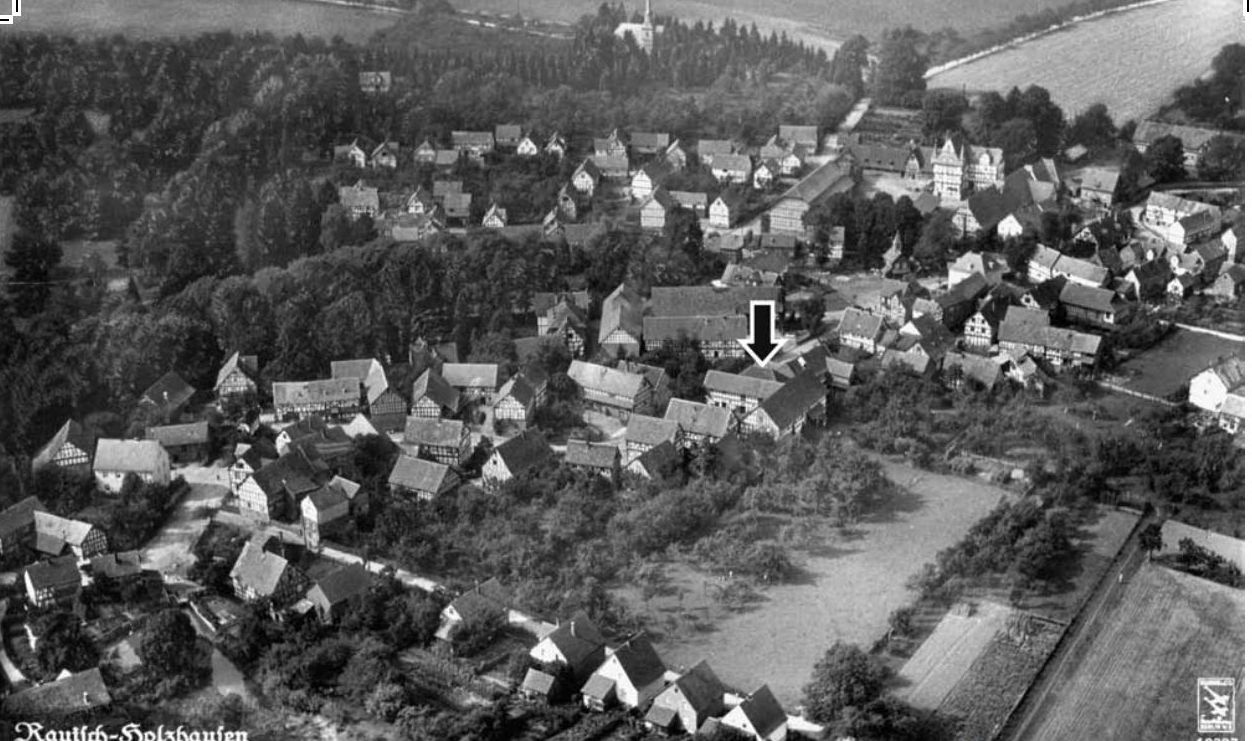
The youngest child of Gelle Katzenstein and Moses Ruelf to live to adulthood was Pauline Ruelf. Part of Pauline’s story has already been told, as she was the mother of Julius Abraham, who married Senta Katz, the great-granddaughter of Rahel Katzenstein. That is, as I described here, Pauline’s son Julius and his wife Senta Katz were half-third cousins. Julius and Senta were the parents of Fred Abrahams, whose memoirs of his family’s life and departure from Germany were also posted here.

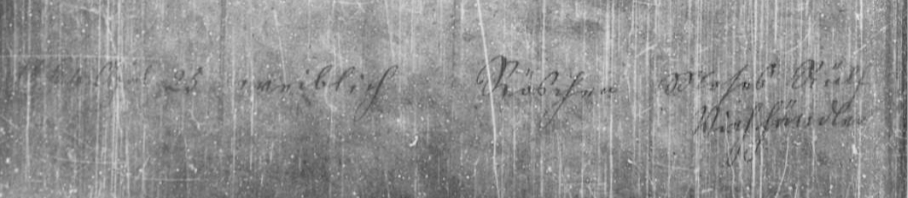
But I am getting a bit ahead of myself, so let me back up and start with Pauline’s birth. She was born on September 25, 1869, in Rauischholzhausen:

Pauline Ruelf birth record,
Geburtsregister der Juden von (Rauisch)Holzhausen (Ebsdorfergrund) 1824-1874 (HHStAW Abt. 365 Nr. 452)AutorHessisches Hauptstaatsarchiv, Wiesbaden, p.15
On December 26, 1891, when she was 22 years old, she married Hirsch Abraham. Hirsch was born on December 4, 1858, in Niederurff, and was the son of Jakob Abraham and Roschen Frank.

Pauline Ruelf marriage to Hirsh Abraham
Hessisches Hauptstaatsarchiv; Wiesbaden, Deutschland; Collection: Personenstandsregister Heiratsregister; Signatur: 915; Laufende Nummer: 7960
Hirsch was a widower when he married Pauline; his first wife was Pauline’s older sister Johanna Ruelf, who had died on August 12, 1890, eleven days after giving birth to a daughter, whose name was originally Rosa but was changed to Johanna (or Hannah) after her mother died.

Birth record of Rosa later Johanna Abraham
Hessisches Hauptstaatsarchiv; Wiesbaden, Deutschland; Collection: Personenstandsregister Geburtsregister; Signatur: 920; Laufende Nummer: 6175
So Pauline took on the responsibility for raising her niece Johanna. She and Hirsch also had six children together: Ricchen Rosa (1892), Julius (1894), Meta (1894), Sarah (1896), Siegfried (1897), and Recha (1900). Although Julius and Meta were both born in 1894, they were not twins; Julius was born January 2, 1894, and his sister Meta was born almost twelve months later on December 26, 1894, meaning Julius was only three months old when Meta was conceived.
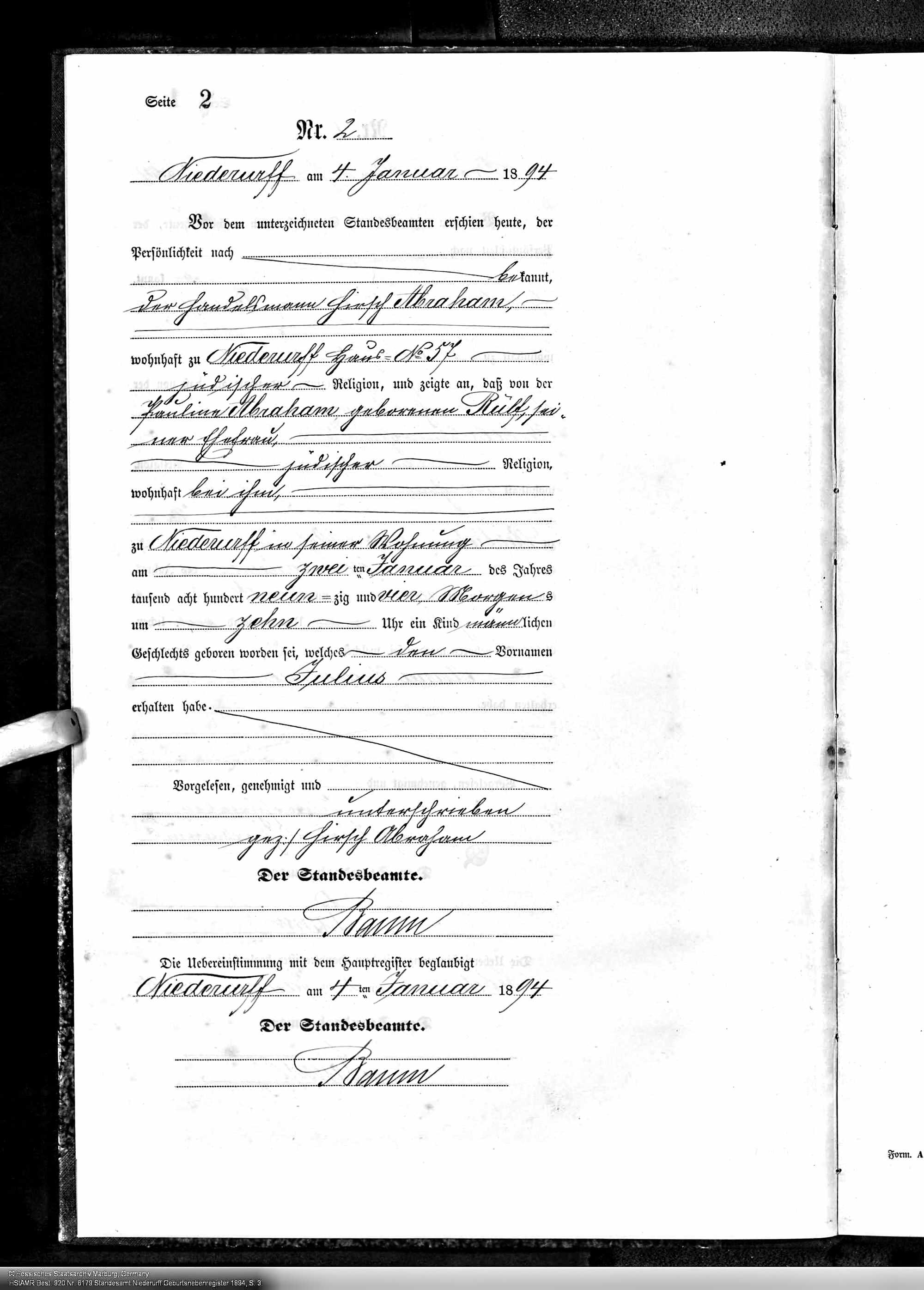
Birth record of Julius Abraham Hessisches Hauptstaatsarchiv; Wiesbaden, Deutschland; Collection: Personenstandsregister Geburtsregister; Signatur: 920; Laufende Nummer: 6179

Birth record of Meta Abraham
Hessisches Hauptstaatsarchiv; Wiesbaden, Deutschland; Collection: Personenstandsregister Geburtsregister; Signatur: 920; Laufende Nummer: 6179
Pauline and Hirsch lost two of their children at young ages. Their daughter Sarah died on June 25, 1910; she was only fourteen.

Death Record for Sarah Abraham
Hessisches Hauptstaatsarchiv; Wiesbaden, Deutschland; Personenstandsregister Sterberegister; Bestand: 920; Laufende Nummer: 6261
Their son Siegfried was killed fighting for Germany in World War I. He was only nineteen when he was shot in the line of duty on April 13, 1917. According to his death record, he was a musketeer in the Germany infantry and was shot twice, once in the left forearm and once in the chest, and died from his injuries; he was buried in a common grave.
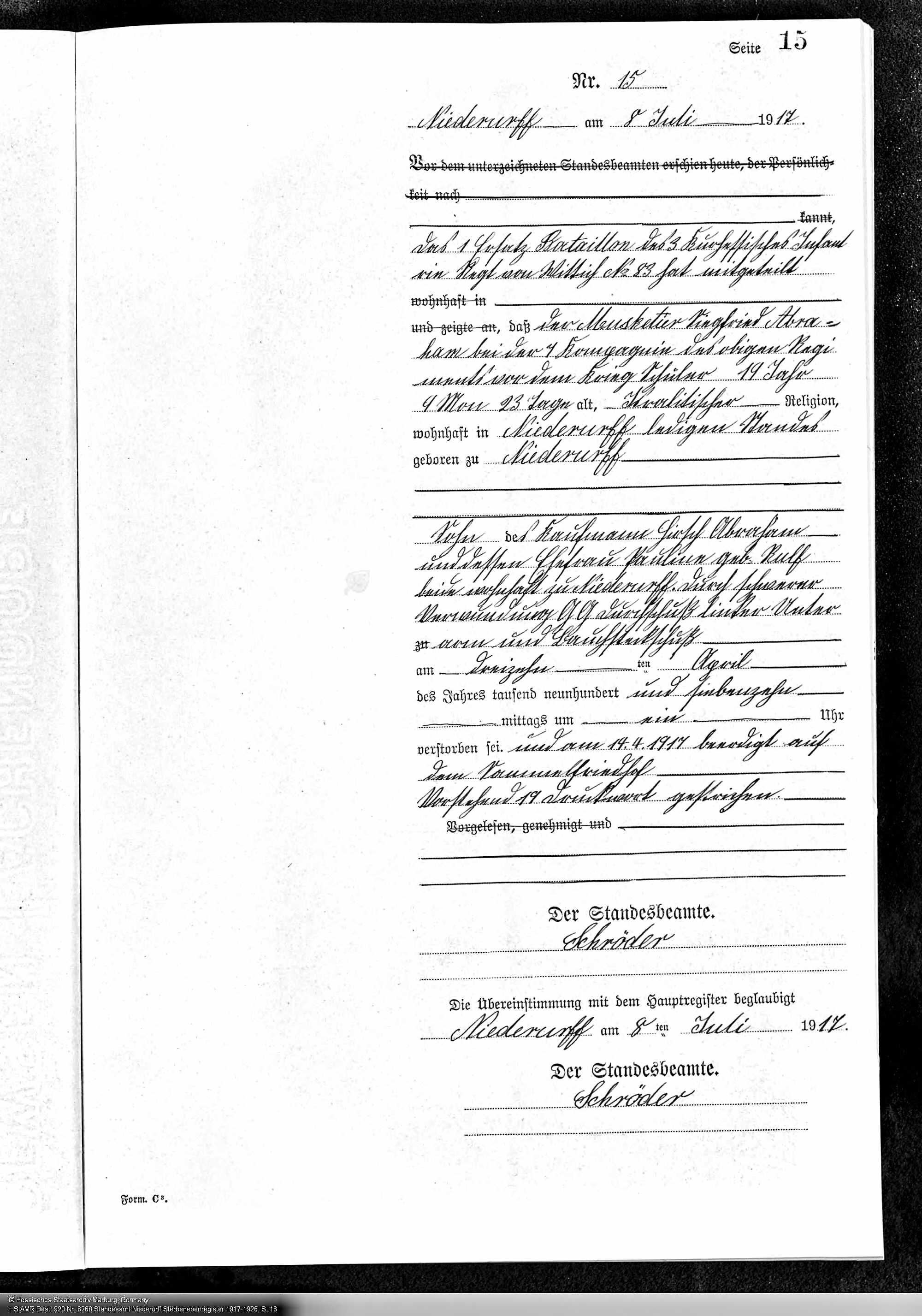
Siegfried Abraham death record
Hessisches Hauptstaatsarchiv; Wiesbaden, Deutschland; Personenstandsregister Sterberegister; Bestand: 920; Laufende Nummer: 6268
The fact that twenty years later Siegfried’s family would be forced to leave Germany to survive makes his death even more tragic. My cousin Fred Abrahams was named for his uncle Siegfried.
Siegfried’s brother Julius also served in World War I. Here is a photograph of three of Siegfried’s siblings at some gathering in Germany in 1915; first, the overall photograph and then a snip focusing on the three Abraham siblings, Meta, Julius, and Recha. You can see that Julius is in uniform:
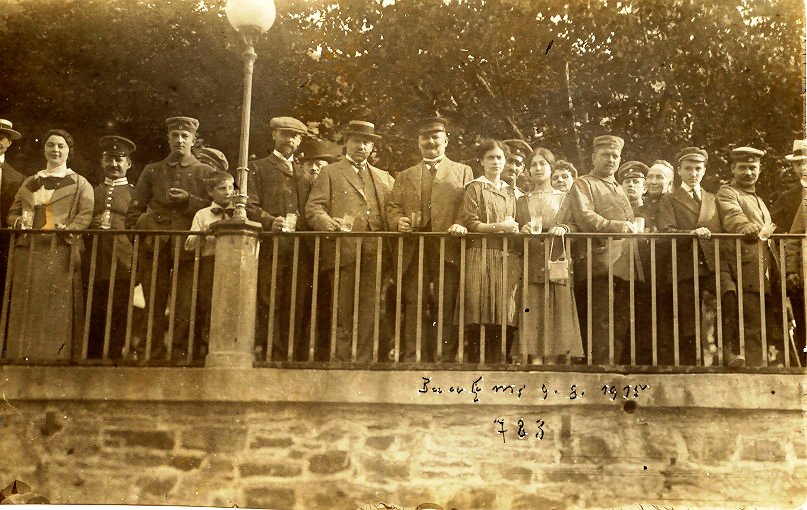
Courtesy of Fred and Martin Abrahams

Courtesy of Fred and Martin Abrahams
On September 25, 1921, Johanna Abraham, Pauline’s niece whom she raised after her sister Johanna died, married Jakob Hirschberg of Zwesten, Germany. Jakob was born on April 15, 1893. He and Johanna had one child, a son Martin.

Marriage of Johanna Abraham and Jakob Hirschberg
Hessisches Hauptstaatsarchiv; Wiesbaden, Deutschland; Collection: Personenstandsregister Heiratsregister; Signatur: 920; Laufende Nummer: 6226
Although I have very little information at all about Hirsch and Pauline’s oldest daughter Ricchen Rosa Abraham, one passenger manifest lists her with the married name Zechermann; I don’t know her husband’s first name or when or where she married, nor do I know whether they ever had children.

Ricchen Rosa Abraham passenger card
The National Archives at Washington, D.C.; Washington, D.C.; Series Title: Passenger and Crew Manifests of Airplanes Arriving at Miami, Florida.; NAI Number: 2788541; Record Group Title: Records of the Immigration and Naturalization Service, 1787 – 2004; Record Group Number: 85
The other surviving daughters of Pauline Ruelf and Hirsh Abraham both immigrated to the United States in the 1920s. Recha, the youngest child, was only 25 when she first left Germany on October 6, 1925, to travel to the US. According to the passenger manifest, she had been last living in Frankfurt and working as a housekeeper and was now traveling to her uncle, Max Abraham, who resided in Davenport, Iowa. Recha stated that she expected to stay for nine months.

Recha Abraham 1925 ship manifest
Year: 1925; Arrival: New York, New York; Microfilm Serial: T715, 1897-1957; Microfilm Roll: Roll 3741; Line: 1; Page Number: 135
Ancestry.com. New York, Passenger Lists, 1820-1957
Max Abraham was Hirsch Abraham’s older brother; he had come to the US from Germany in the 1870s when he was just a teenager. In 1880, he was living in Louisville, Kentucky, and working as a dry goods merchant. He remained in Kentucky for a number of years and after marrying in 1988, he moved to Campbellsburg, Indiana, where he became president of the local bank. After 25 years in Indiana, Max and his family moved to Davenport, Iowa in 1916, where he and his sons started what became a very successful clothing business, Abrahams Brothers. “Max Abrahams, Treasurer of Ready to Wear Store in Davenport, Dies at 82,” Quad-City Times (Davenport, Iowa), 24 Apr 1938, p. 1
I don’t know how long Recha ended up staying with her uncle Max in Iowa on this trip, but on October 15, 1926, she again sailed from Hamburg to New York listing her destination as her uncle Max Abraham’s home in Davenport, Iowa. She listed her last address as Frankfurt. She provided no occupation nor did she indicate this time the length of her stay.
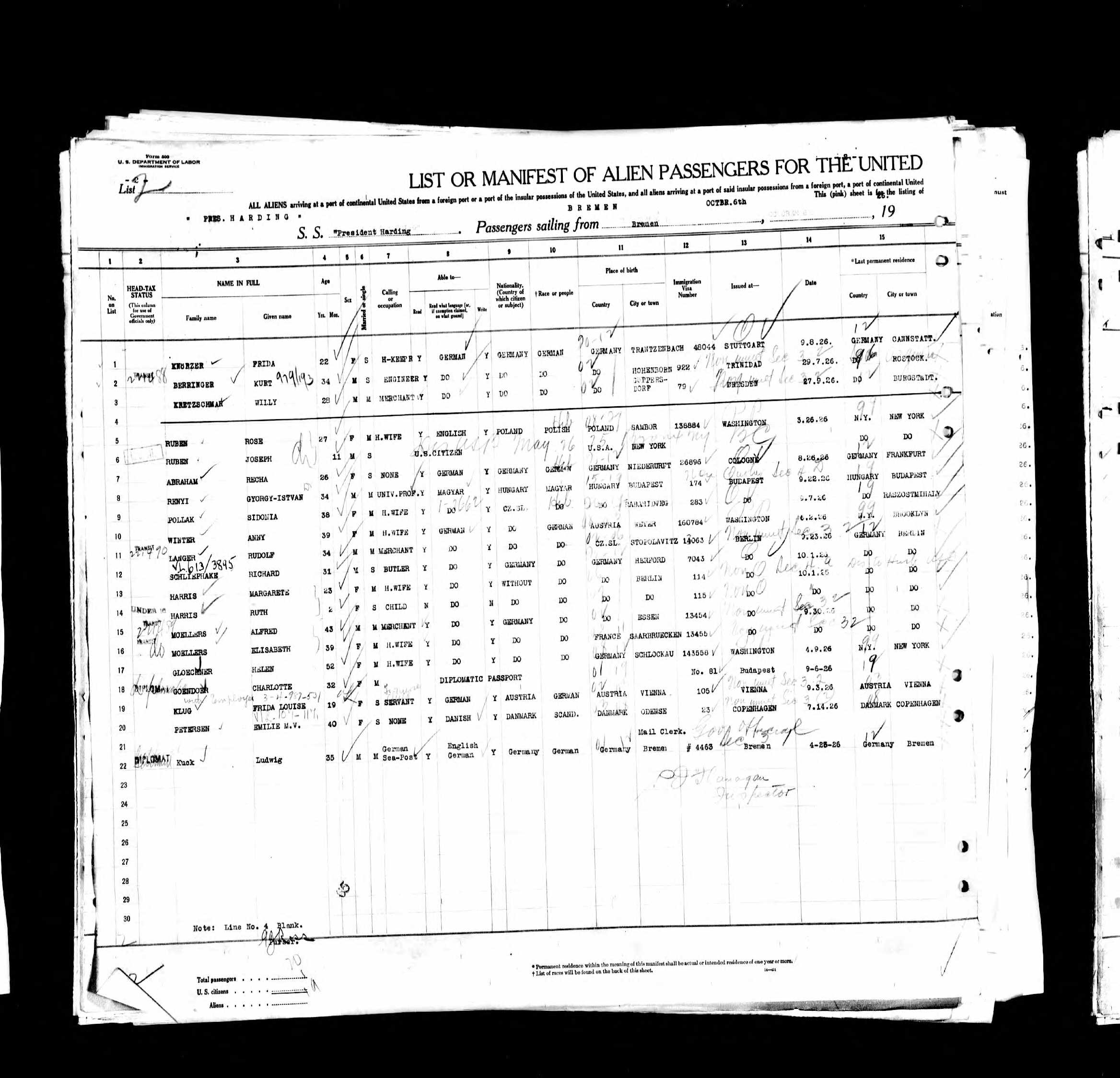
Recha Abraham 1926 ship manifest
Year: 1926; Arrival: New York, New York; Microfilm Serial: T715, 1897-1957; Microfilm Roll: Roll 3947; Line: 1; Page Number: 182
Ancestry.com. New York, Passenger Lists, 1820-1957
On September 23, 1927, her older sister Meta also arrived in the US and also indicated that she was going to her uncle Max Abraham of Davenport, Iowa. Meta stated that she planned to stay in the US permanently. She stated that her occupation was a clerk.

Meta Abraham 1927 passenger manifest
Year: 1927; Arrival: New York, New York; Microfilm Serial: T715, 1897-1957; Microfilm Roll: Roll 4135; Line: 1; Page Number: 94
Ancestry.com. New York, Passenger Lists, 1820-1957
In the fall of 1930, both Meta and Recha must have visited their family in Germany because a passenger manifest for a ship sailing from Hamburg and arriving in New York City on October 8, 1930, lists both sisters as residents of New York City where they were both living at 42 West 89th Street. Recha was working as a cashier and Meta as a dressmaker. Neither had yet become a US citizen. Both reported that they had been in the US since 1927, although Recha obviously had arrived earlier than that.
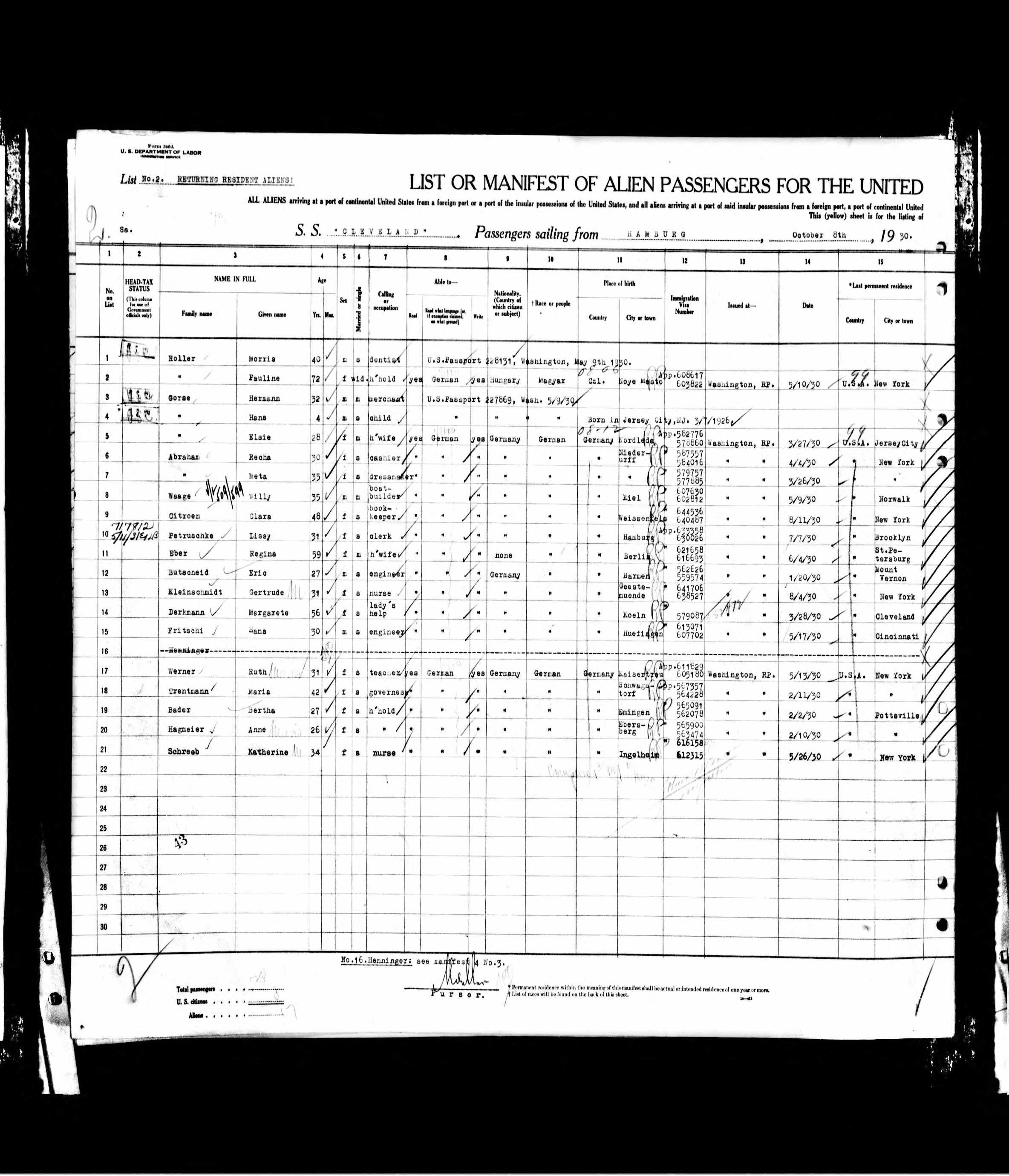
Meta and Recha Abraham 1930 passenger manifest
Year: 1930; Arrival: New York, New York; Microfilm Serial: T715, 1897-1957; Microfilm Roll: Roll 4854; Line: 1; Page Number: 90
Ancestry.com. New York, Passenger Lists, 1820-1957
Meta and Recha did not show up on the 1930 census when I searched for them on Ancestry and FamilySearch, which puzzled me. I turned to stevemorse.org, using his enumeration district finder tool and the address from the 1930 passenger manifest—42 West 89th Street. There they were, clear as could be.

Meta and Recha Abraham 1930 US census
Year: 1930; Census Place: Manhattan, New York, New York; Roll: 1556; Page: 9A; Enumeration District: 0450; FHL microfilm: 2341291
So why hadn’t they shown up when I searched? For one thing, both had reported themselves as much younger than they were; Meta, who apparently gave the information to the enumerator, said that she was 24 and her sister 22 when in fact Meta was 34 and Recha was 30. That obviously threw off my search even though I thought I’d given fairly wide ranges in my search parameters for their ages. Also, Recha was listed as Rebecca. But this household is clearly that of the Abraham sisters. Meta was working as a cashier for a butcher and Recha was a seamstress at Macy’s. Both are listed with the surname Abrahams, a change that had also been made by their uncle Max in Iowa.
Meanwhile, back in Niederurff, Germany, Pauline and Hirsh’s only surviving son, Julius Abraham, had by 1932 married his half-third cousin Senta Katz of Jesberg, and they had two sons in the 1930s, Martin and Siegfried/Fred. (Julius and Senta were married either on January 10, 1931, or January 10, 1932; their sons were not sure of the year, and I’ve not been able to find an official record.)
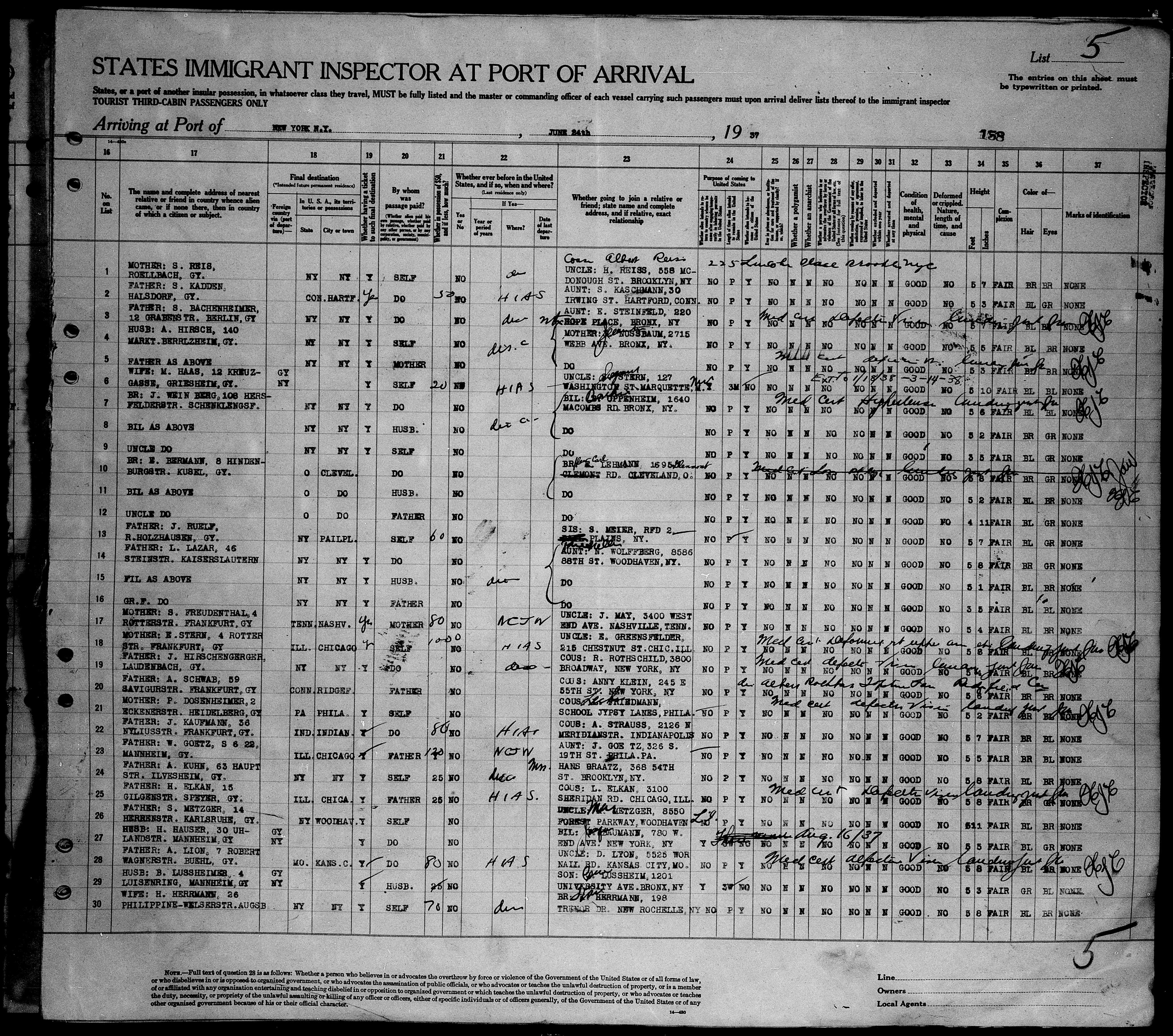
It was not too much longer before Julius and Senta recognized the need to escape from Nazi Germany. As Fred described in his memoir excerpted here and as I wrote about in that same post, Julius and Senta and their two sons left Germany and arrived in New York City on June 24, 1937 . They were going to Julius’ sisters, Meta and Recha, who were then living at 252 West 85th Street. Julius reported his occupation to be a tailor.


Family of Julius and Senta Katz Abraham, passenger manifest, Year: 1937; Arrival: New York, New York; Microfilm Serial: T715, 1897-1957; Microfilm Roll: Roll 6003; Line: 1; Page Number: 18
Description
Ship or Roll Number : Roll 6003
Source Information
Ancestry.com. New York, Passenger Lists, 1820-1957
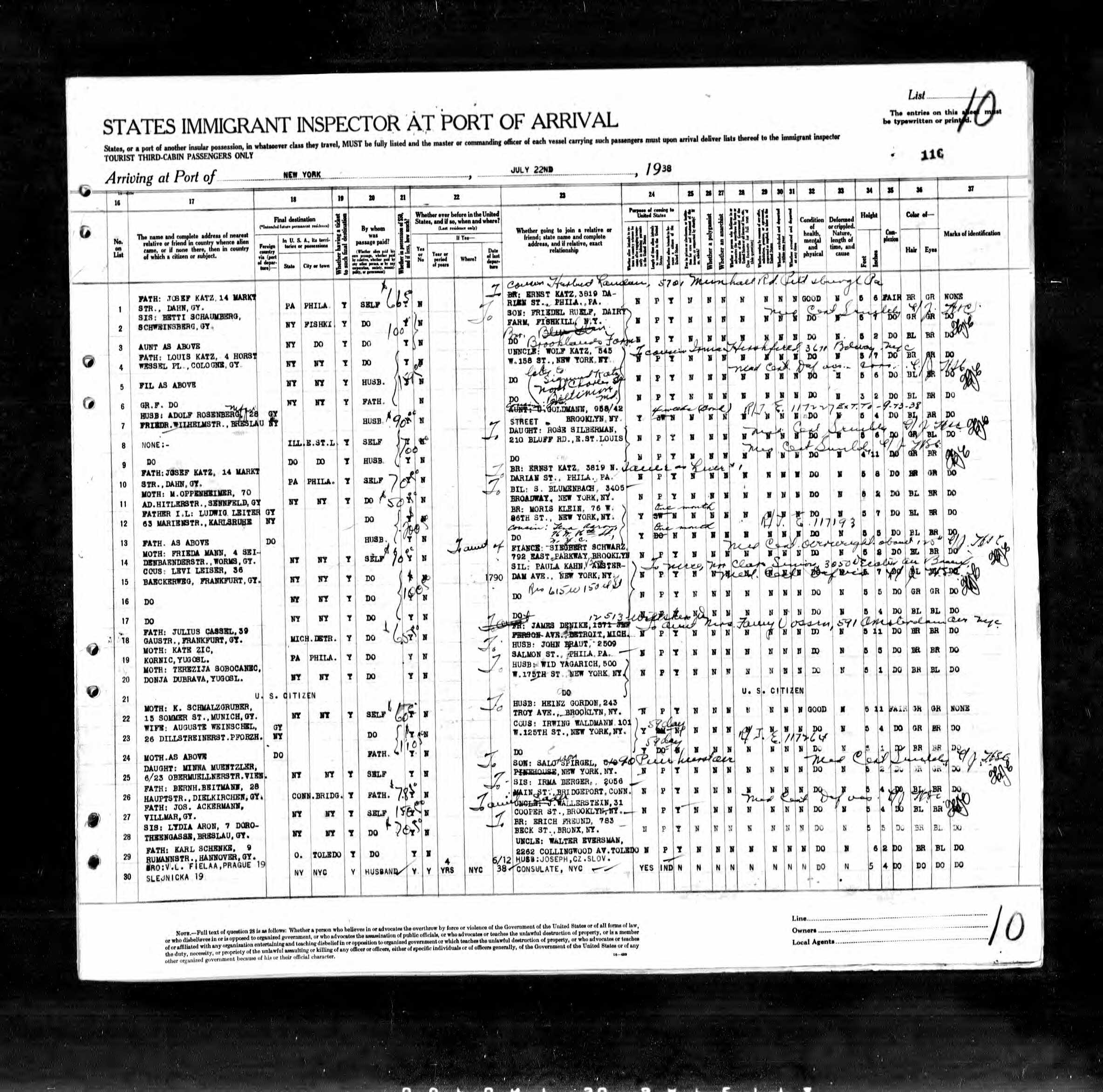
The next family member to arrive from Germany was Johanna Abraham Hirschberg, the half-sister of Meta, Julius, and Recha, daughter of Johanna Ruelf and Hirsch Abraham. Johanna came with her husband Jakob and son Martin on May 4, 1938; they also were going to Meta and Recha’s home at 252 West 85th Street in New York City. Jakob was a merchant. They had been living in Zwesten, Germany, before immigrating to the US.
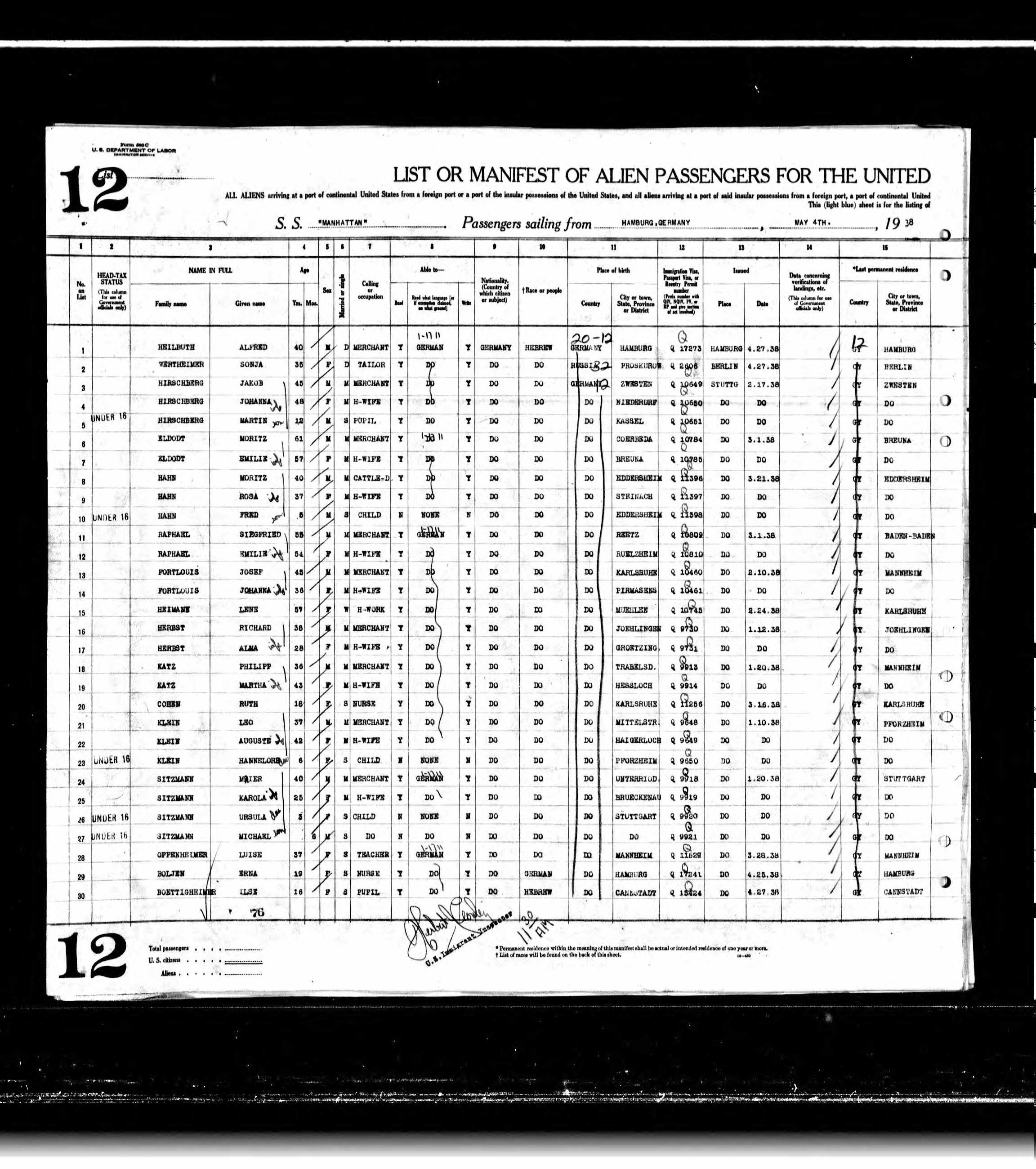
Johanna Abraham Hirschberg and family on 1938 passenger manifest
Year: 1938; Arrival: New York, New York; Microfilm Serial: T715, 1897-1957; Microfilm Roll: Roll 6152; Line: 1; Page Number: 168
Ancestry.com. New York, Passenger Lists, 1820-1957
Sadly, Pauline Ruelf Abraham died on March 22, 1938, in Niederurff, and thus did not get to join her children in the United States. She was 68 years old when she died.
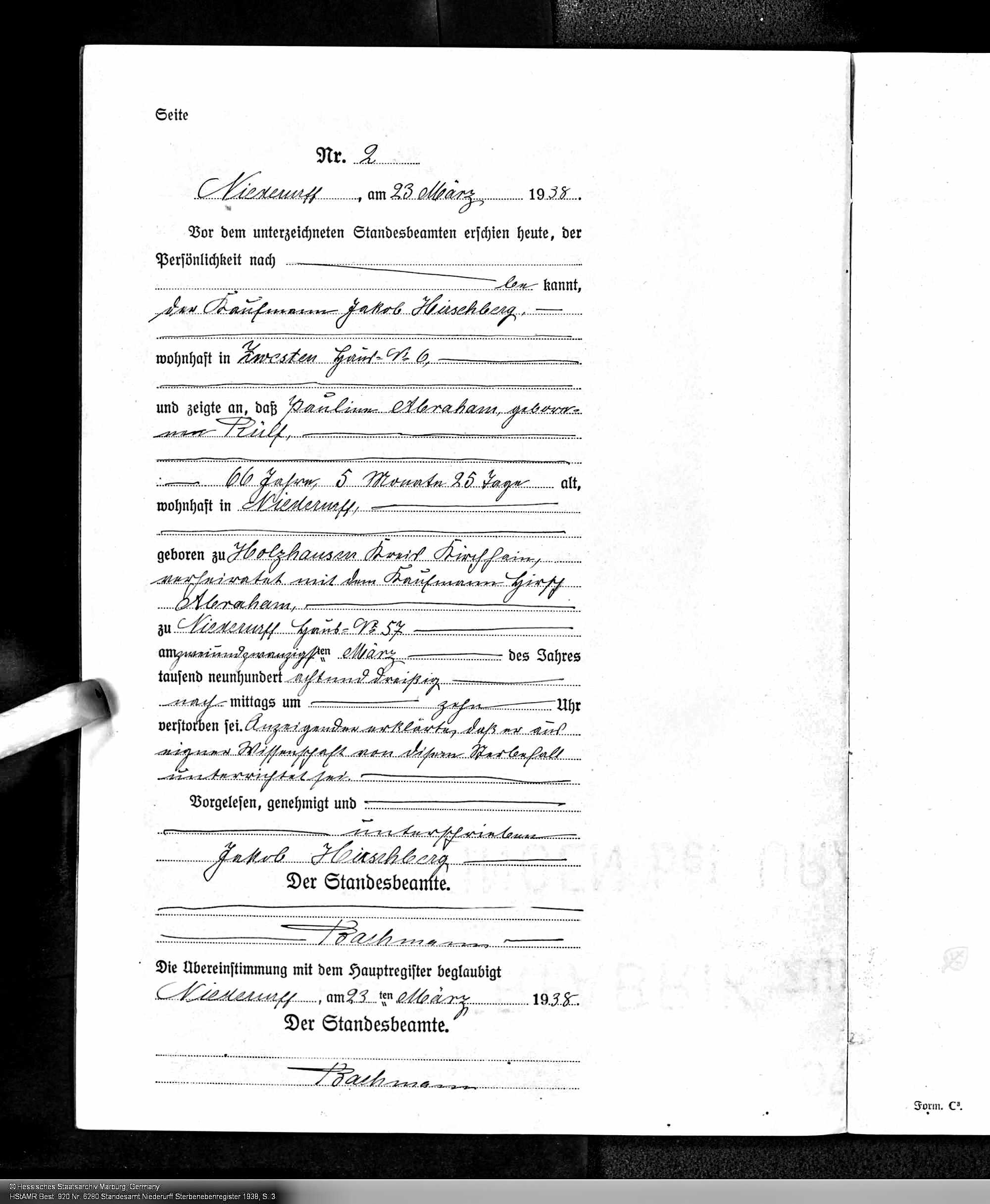
Pauline Ruelf death record
Hessisches Hauptstaatsarchiv; Wiesbaden, Deutschland; Personenstandsregister Sterberegister; Bestand: 920; Laufende Nummer: 6280
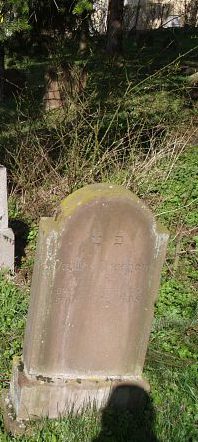
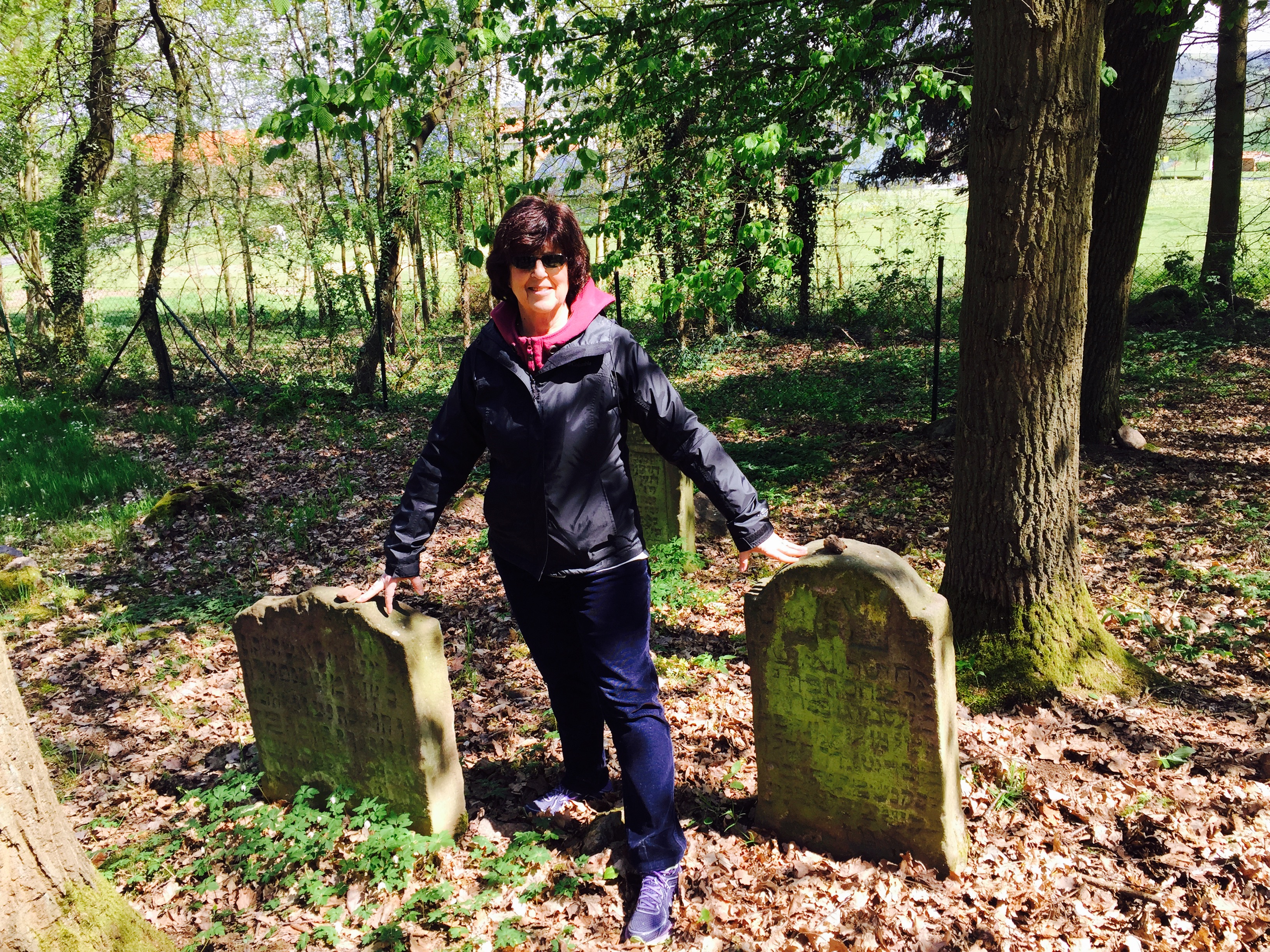
Pauline Ruelf Abraham gravestone
Her husband Hirsch Abraham left Germany a year later, arriving in New York on March 25, 1939. He also was joining his daughters at 252 West 85th Street. He was eighty years old when he left Niederurff, Germany and sailed alone to New York City, leaving behind the only home he’d ever known. He lived only a year in the US, dying on March 9, 1940 at age 81. (New York, New York, Death Index, 1862-1948, on Ancestry.com)
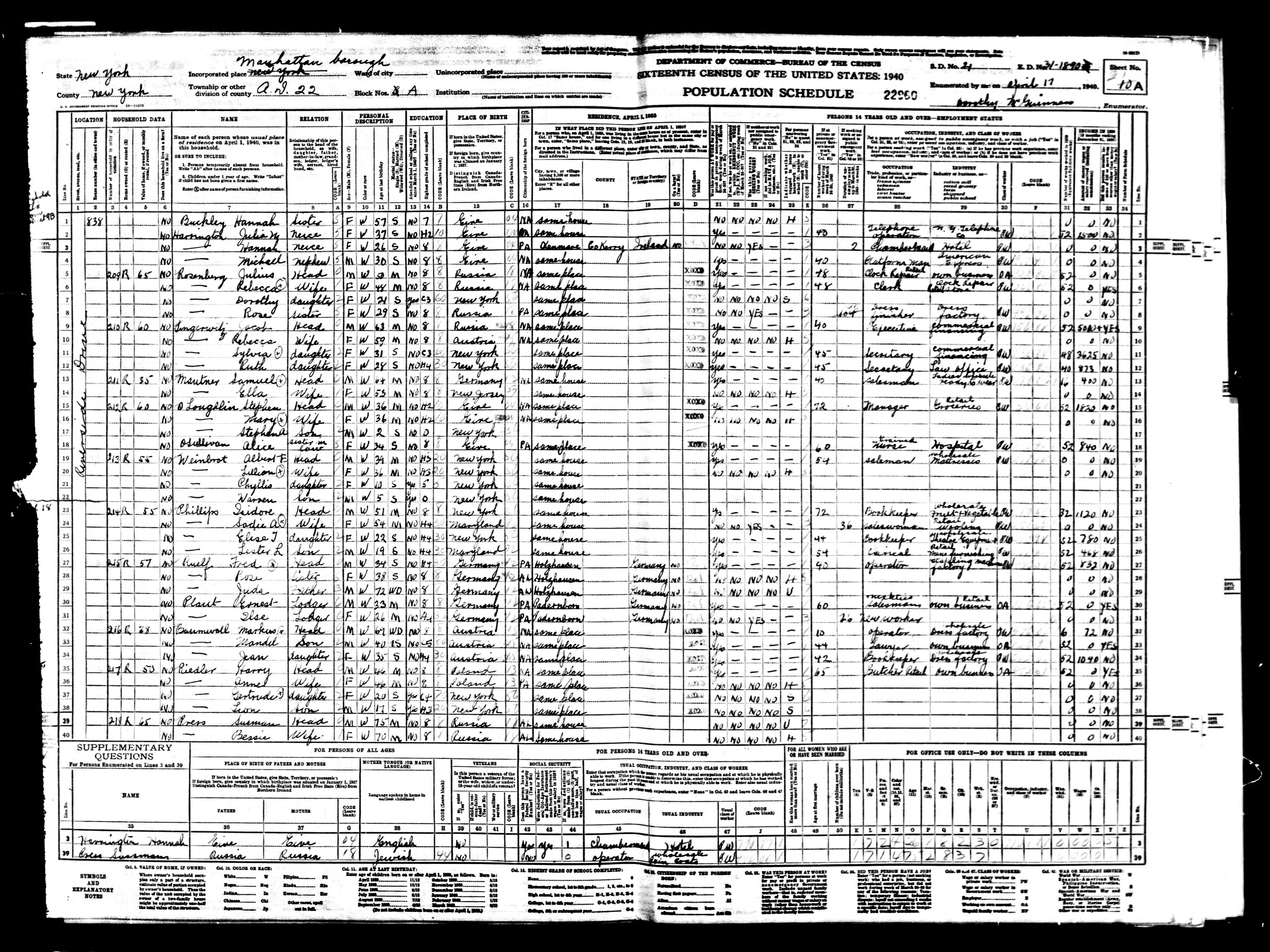
Thus, by March 1939, all but one of the children of Pauline Ruelf and Johanna Ruelf and Hirsch Abraham were living safely in New York City. On the 1940 census, Meta and Recha were still living at 252 West 85th Street; Meta was a bookkeeper for a women’s clothing manufacturing company, and Recha had no occupation listed. Meta died in New York City on May 18, 1977, and her sister Recha died almost a year to the day later on May 24, 1978. Meta was 83 when she died, and Recha was 78. It appears the two sisters had lived together their entire adult lives once coming to the US in the 1920s.
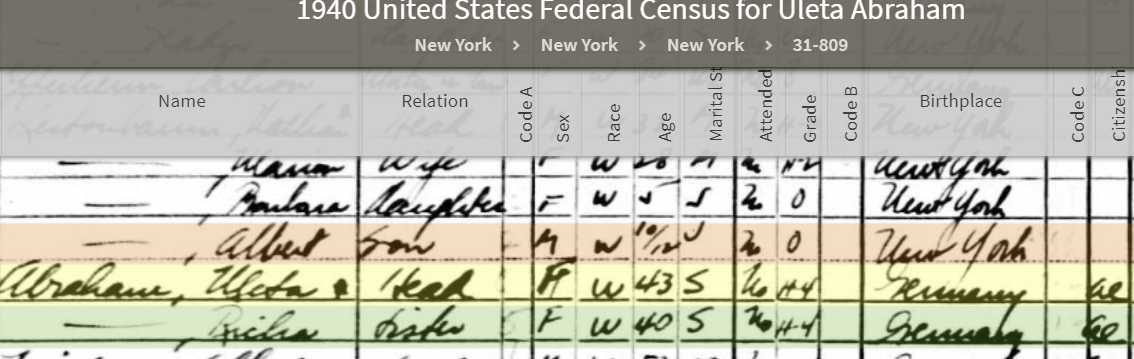
Meta and Recha Abraham on 1940 census
Year: 1940; Census Place: New York, New York, New York; Roll: T627_2643; Page: 1B; Enumeration District: 31-809
Their half-sister/first cousin Johanna and her husband Jakob (listed as Jack) and son were also still living in New York in 1940; Johanna and Jack were both working as cooks, Jack for the city and Johanna in a private home. By 1955, the family had moved to Davenport, Iowa, where Jack and his son Martin were both working in Max Abrahams’ store. Johanna died August 15, 1955, and Jack died in 1960. They are buried in Davenport.
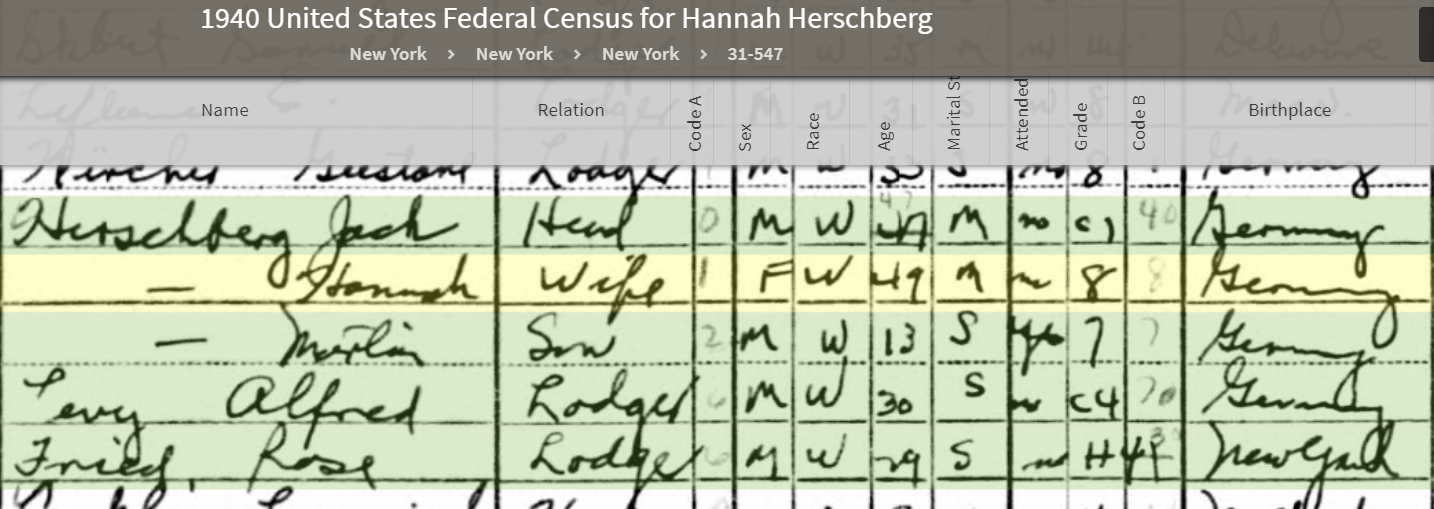
Johanna Abraham Hirschberg and family on 1940 census
Year: 1940; Census Place: New York, New York, New York; Roll: T627_2636; Page: 13A; Enumeration District: 31-547
Julius Abraham and his wife Senta Katz and their sons were also living in New York City in 1940. As I wrote earlier, the family was living at 325 West 93rd Street, and Julius was working in the family business, Abrahams Brothers, the clothing business started by Max Abrahams and his sons in Davenport, Iowa. The business had grown to about a dozen stores throughout the Midwest. In 1940, Julius was working in the fur department of the New York office, where the administration and buying for the many stores was handled. He continued to work for the business for the rest of his life. Julius died on December 22, 1959; his wife Senta lived to 93, dying on October 15, 2000, in Stamford, Connecticut.

Senta Katz Abrahams and family, 1940 census
Year: 1940; Census Place: New York, New York, New York; Roll: T627_2642; Page: 16A; Enumeration District: 31-777
The only child of Pauline Ruelf Abraham who is unaccounted for is Ricchen Rosa Abraham, Pauline’s first child. I have no records for her aside from her birth record and the 1961 passenger list card depicted above. I am also only inferring that this is in fact Ricchen in the passenger list card based on the birth date and place of birth and the fact that her nephews Martin and Fred knew that she had ended up in Chile. The family story is that she was unable to gain entry to the US and so went to Chile instead.
I have no records for her in Chile so do not know when she got there, whom she married, whether she had children, or when she died. I have tried finding information about her from sources in Chile, but so far have had no luck. If anyone has any suggestions, please let me know.
But what I do know is that all of the children and grandchildren of both Pauline Ruelf and her sister Johanna Ruelf survived the Holocaust. That in and of itself gives me a happy ending to this last chapter in the story of Gelle Katzensten and Moses Ruelf.
















































 Brotmanblog: A Family Journey