I am honored today to share with you an essay written by my fourth cousin, once removed, Jennifer Spier-Stern. Jennifer is the great-granddaughter of Minna Ruelf and Isaak Spier, about whom I wrote in my last post. When Jennifer shared this essay with me, I was so moved that I asked her if I could post it on my blog. She graciously agreed to let me do that, and I hope that you also will feel the way I did—that I was with Jennifer in her footsteps as she walked in the footsteps of her family in Rauischholzhausen, Germany.
Walking in Their Footsteps
by Jennifer Spier-Stern
I was transformed back in time as we drove through the narrow streets of the town called Rauischholzhausen. We passed old homes with beautiful flower baskets hanging from windows and well manicured gardens. The narrow street was paved and there was even a sidewalk. I wanted to absorb every corner, every home into my mind so I could never forget these images. I know that 70+ years ago it was not as pristine. I have thought of this day for so many months. Each and every time I envisioned this part of my trip I cried. The tears were for the people that were no longer here to tell me their tales. My father wasn’t with me to show me the way, to tell me about his memories and to stand with me in front of the home where he was born. To walk with me to the Schloss (castle) and show me the places where he ran, where he played, to show me where his family lived and where the synagogue was.
The reason for this trip started many years ago. My father was born in Rauischholzhausen in 1922, a small town a few minutes drive from Marburg. Growing up we heard all the stories of Holzhausen and of the early childhood of my father and his four siblings. We used to roll our eyes and laugh with yet another story of “home.” As young adolescents we didn’t appreciate all that he told us. I wish I had documented everything, but like most young adults, I didn’t. My father always promised my brother and I a trip back to his roots, but that was never going to happen, he passed away in 1998. Since my father’s passing I had fleeting thoughts of going to Germany but not until recently did this strong urge possess me that I had to go and see for myself.
Without going into full details of the history of our family, my father’s brother returned to Germany with his wife and son and settled in Bielefeld in 1959.
My aunt, uncle, cousin and his wife met us at our beautiful hotel and drove us to the house that was 16 Lerchengasse. 16 Lerchengasse was the house where my father lived. The house that bore the name I Spier (Isaak Spier) above the front door frame. We parked the car and walked that last few steps down a cul de sac. I had the vision of the house from few photos that survived the war.
My uncle stopped in front of the house and said, “This is it. This is the house where we were born.” I looked up at this large home, the home of my great-grandfather, grandfather and father. My hands were shaking and the tears rolled down my face. I heard my father’s voice, I heard his stories, I saw him walking up and down the front stairs. I saw him running around the courtyard with his siblings. I haven’t felt my father’s presence as strongly as I did at that moment. I wish I could have knocked on the door and introduced myself. I so wanted to go inside, but I know it is far different than the house my father left on November 9, 1938. I looked at the surrounding homes, and they too were lovely with their planters filled with flowers and lace curtains in the window. Later in the week Hajo (My hero guide) posed the question to me, “Can you imagine this town 65 years ago?”
Spier home in Rauischholzhausen Courtesy of Jennifer Spier-Stern
The next stop was the Jewish cemetery. We picked up the key at the caretaker and then we walked the grass soaked path towards the cemetery. The rain started and the path became very muddy. The land to the right was a beautiful pasture for grazing cows who seemed very curious and walked over to the fence. It seemed surreal. As we walked my eyes were looking down at the path, knowing that my grandparents and many other ancestors walked here to enter the cemetery. They came here to bury. They came here on the holidays to remember those that passed. They came here to say Kaddish. I was walking in their footsteps.
My grandfather Abraham Spier buried his parents, Isaak Spier and Minna Rülf neé Spier. One of the oldest stones in the cemetery is Nathan Spier, my 3rd great grandfather (1792-1866). We stepped into the cemetery where 80% of the graves are family ancestors. I had my dear friend Hajo Bewernick photograph every stone for me. I’ve looked at the photos numerous times and now, I stood before them. I stood there and cried. Emotions flooded my body that I didn’t know how to react. I wanted to touch every stone and place a rock, I wanted to pray. In years to come how many will walk through the gates to pray for all the souls? However, all I could do was cry. Later on I found out that my husband said the Mourner’s Kaddish, (a Mourner’s Prayer) as he stood over one grave, but he said it for all.
I walked in their footsteps. I was thankful that my family who live in Germany were able to share this experience with me. Special thanks to Hajo Bewernick who took the time from his busy work and home life to show my husband and I Marburg. I can never thank you enough for explaining the history of your beautiful town as well as showing us the many historical sites and to our many insightfully deep conversations. You created a three dimensional image for me of my grandparents, my Omaand Opa, by showing us where they would have been, where they would have walked and the buildings from where they were deported. I do not recall the name of the street corner. Hajo was specific in pointing his finger.
Through my research I have come across generous people who devote their time and efforts to the history of the Jewish people. To everyone we thank you for all your hard work. Special thank you to Barbara Greve for always being there with the answers.
One more person I need to thank with all my heart is my husband, Effy. This trip wouldn’t have happened without him. He knew how important this trip was for me and I am glad he shared it by my side.
I never felt closer to my family and my ancestors as I have during these few days in my family’s home town. I know I’ll keep these stories alive with my family and I hope they will continue the legacy.
Although the story of Minna Ruelf Spier is, like that of her sisters Esther and Bette, a story that includes much tragedy and suffering, in its way it is also uplifting for what it reveals about the human spirit and the will to survive. As we move closer to Rosh Hashana and Yom Kippur, I find Minna’s story appropriate for these days and inspiring.
I have been in touch with one of Minna’s direct descendants, my fourth cousin- once removed Jennifer Spier-Stern, and she has shared with me what she knows about the family history as well as some family photographs. I am so very grateful to Jennifer for her help and her generosity.
Minna Ruelf was born on February 16, 1859, in Rauischholzhausen, Germany:
Minna Ruelf birth record Geburtsregister der Juden von (Rauisch)Holzhausen (Ebsdorfergrund) 1824-1874 (HHStAW Abt. 365 Nr. 452)AutorHessisches Hauptstaatsarchiv, Wiesbaden, p. 10
Three days after her 21st birthday, on February 19, 1880, she married Isaak Spier. Isaak was born June 12, 1850, in Leidenhofen, Germany, another town in the Hesse region, the son of Abraham Spier and Esther Schaumberg. Isaak was a merchant. Minna and Isaak settled in Ebsdorf, a small village a mile from Leidenhofen, where they had the first of their three sons, Abraham, who was born on January 18, 1881.
Minna Ruelf and Isaak Spier marriage record Hessisches Hauptstaatsarchiv; Wiesbaden, Deutschland; Collection: Personenstandsregister Heiratsregister; Signatur: 915; Laufende Nummer: 2524
Their two younger sons, Julius (July 26, 1883), and Siegfried (November 29, 1886), were born in Rauischholzhausen.
Isaak Spier died on June 17, 1910, in Rauischholzhausen. He was sixty years old. At that time none of his sons had married.
Isaak Spier Courtesy of Jennifer Spier-Stern
Isaak Spier death record Hessisches Hauptstaatsarchiv; Wiesbaden, Deutschland; Personenstandsregister Sterberegister; Bestand: 915; Laufende Nummer: 8036
Abraham, the oldest son, married nine years later on November 3, 1919; he was 38 years old. He married Jenny Wertheim, who was born on June 4, 1890, in Hatzbach, Germany, to Wolf Wertheim and Sanchen Edelmuth.
Marriage of Abraham Spier and Jenny Wertheim Hessisches Hauptstaatsarchiv; Wiesbaden, Deutschland; Collection: Personenstandsregister Heiratsregister; Signatur: 915; Laufende Nummer: 5047
Abraham Spier, c. 1914 Courtesy of Jennifer Spier-Stern
Jenny Wertheim Spier Courtesy of Jennifer Spier-Stern
Abraham and Jenny had five children, one daughter and four sons: Edith (1920), Julius (1922),[1] Alfred (1924), Martin (1925), and Walter (1927); they were all born in Rauischholzhausen.
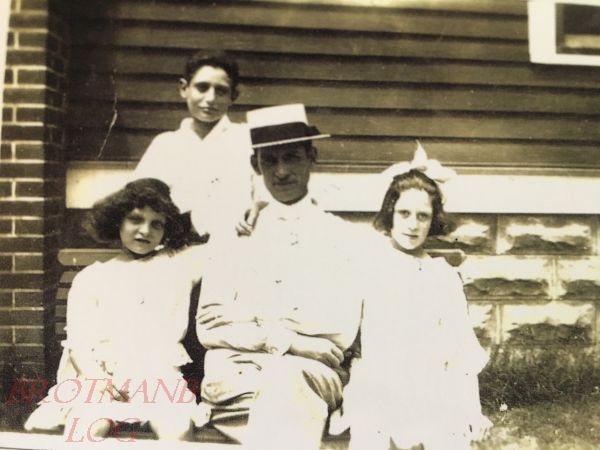
Edith, Julius, and Alfred Spier , c. 1926 Courtesy of Jennifer Spier-Stern
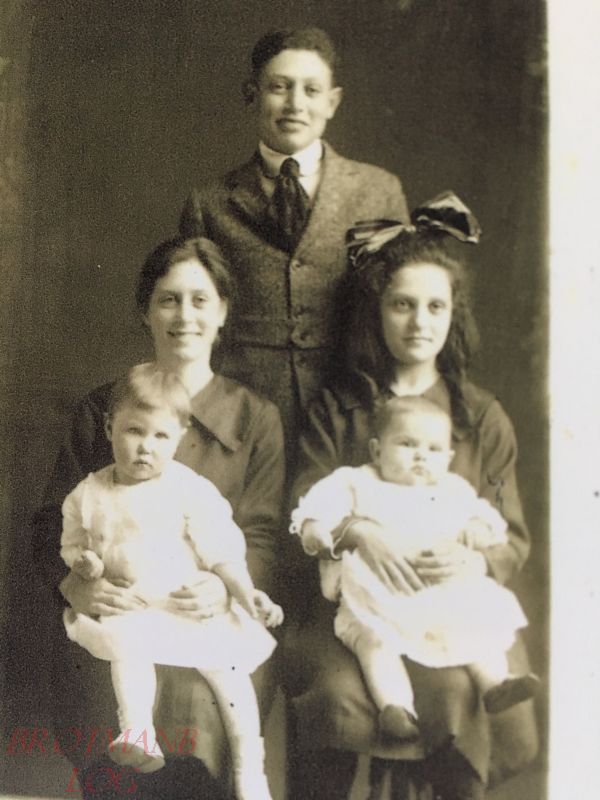
Family of Abraham and Jenny Spier, Courtesy of Jennifer Spier-Stern
Just three weeks after Walter’s birth, his grandmother Minna Ruelf Spier died at age 68 on November 5, 1927.
Minna Ruelf Courtesy of her great-granddaughter Jennifer Spier-Stern
Minna Ruelf Spier death record Hessisches Hauptstaatsarchiv; Wiesbaden, Deutschland; Personenstandsregister Sterberegister; Bestand: 915; Laufende Nummer: 8053
The youngest son of Isaak Spier and Minna Ruelf, Siegfried, died when he was 48 years old in Rauischholzhausen on February 21, 1935, just seven months before the Nuremberg Laws were adopted by the Nazis in Germany. Siegfried was unmarried.
Siegfried Spier death record Hessisches Hauptstaatsarchiv; Wiesbaden, Deutschland; Personenstandsregister Sterberegister; Bestand: 915; Laufende Nummer: 8061
Not long after Siegfried’s death, Julius Spier (Abraham’s brother, not his son) left Rauischholzhausen. According to Alfred Schneider’s book, Die Juedischen Familien im ehemaligen Kreise Kirchain (p. 350), Julius was still in Rauischholzhausen in 1935, but as of 1936, his location was unknown. One source says that he went to Frankfurt where he had a seat on the stock exchange. That same source said that he immigrated to England by 1945, perhaps as early as 1938. (The Church of Jesus Christ of Latter-day Saints, “Pedigree Resource File,” database, FamilySearch(https://familysearch.org/ark:/61903/2:2:SB2K-RMP : accessed 2017-09-06), entry for Julius /Spier).
According to Jennifer, Julius Spier married Lucie Henrietta Cohn. According to this website located by Jennifer, Lucie was the daughter of Hugo Cohn and Selma Marcuse of Halberstadt; she was born on October 28, 1897. The website also states that she’d gone to Frankfurt and married (no date or place was given, nor the name of her husband). If futher states that after getting divorced in 1938, Lucie had immigrated to England and worked in the fashion industry. Although I have no marriage record or other document showing her marriage or divorce, Lucie appears on many passenger manifests between 1947 and 1960—first residing in London, later in the US, listed at various times as a commercial traveler, a housewife, and a nurse.
Julius died in London on February 25, 1959. (England & Wales, Civil Registration Death Index, 1916-2007, on Ancestry.com)
UPDATE: Thank you to Anne Callanan of the German Genealogy for sending me some records she found on FindMyPast, a genealogy service to which I do not (yet) subscribe. Anne found Enemy Alien registration cards for several family members including Julius Spier and Lucie Henrietta Spier. From those records, I now know that Julius was in England by November 1939, working as an agent. He was at first granted an exemption from being detained as an enemy alien, but that decision was reversed and he was interned on June 21, 1940, but was released two months later on August 23, 1940.
Lucie also had to register as an enemy alien. She registered on December 8, 1939, when she was living in Manchester, England (thus not with Julius) and working as a house servant for a Mr. M. I. Marks in his home. She was granted an exemption and was not interned. The card does not reveal any information about her marital status.
Julius Spier (son of Minna Ruelf and Isaak Spier) Courtesy of Jennifer Spier-Stern
Abraham and Jenny Spier and their children were still in Germany during the Nazi era, but they were eventually able to get some of their children to England. According to my cousin Jennifer, Edith Spier left Germany on one of the early Kindertransports to England where she worked as au pair; according to the Schneider book (p. 351), Edith left on October 20, 1937, when she was seventeen. She eventually went to New York, where in 1943 she married Alfred Baumann, who was born in Adelsberg, Germany, in 1913, and had immigrated to the US in 1938.
My father, John Sanders (nee Julius Spier) was born in Rauischholtzhausen, Germany on June 17, 1922. At the age of 16, on November 9, 1938 he was arrested in his home by the Gestapo. It should have been my grandfather, but he was in a few towns over at his mother’s home. Rumors around the towns were that the Gestapo were going from house to house to arrest the eldest male.
My father was taken to Buchenwald concentration camp where he remained for 10 weeks. During this time, his mother heard about the organized efforts of the Jewish Agency of Bloomsbury, London to get as many Jewish children, between the ages of four to 17, out of Germany, Austria and Czechoslovakia. She went to the Jewish Agency and the police, where she was told to get all the documents ready, as well as a visa to leave Germany.
Upon release from Buchenwald, my father had only two weeks to leave Germany. His father took him to the Frankfurt train station, where he was to meet the Kindertransport train that would take him to England. At the train station there were other families with children. The parents and their young ones had to say their good-byes inside the train station. The children, regardless of age, had to go onto the platform and then onto the train by themselves. Families with infants gave the infants to the older children. It is difficult to comprehend all sides. How does a parent give up a baby and how does a young adult care for one. My father said goodbye to his father, not realizing that this was the last time he would ever see him. …
After his tenure in Dover Court, my father was taken into the home of an Orthodox family in Westgate, London. He was there until June of 1939 when his brother [Alfred] came over from Germany. Together, they went to a hostel in London. Shortly thereafter they were taken to a farm in Aberdeen, Scotland. An aristocrat owned the farm by the name of Sir Robert Grant. He treated my father and his brother with the utmost of respect and kindness. One memorable time for my father was when the chauffeur-driven Rolls Royce took him and his brother to Harrod’s department store in London and they were able to pick out all that they needed. Sir Robert Grant applied for visas to get my father’s parents and brothers out of Germany. Unfortunately war broke out a few days later and all visas were denied.
Julius Spier, son of Abraham and Jenny (Wertheim) Spier, c. 1935 Courtesy of Jennifer Spier-Stern
That left Abraham and Jenny and their two youngest children, Martin and Walter, stranded in Germany. On September 7, 1942, all four were deported to Theriesenstadt. Then on May 18, 1944, all four were transported to Auschwitz, where Abraham and Jenny were murdered. Martin and Walter survived. Walter Spier talked movingly about his experience in this video. I implore you all to watch it. It’s less then fifteen minutes long, and when you considered what he suffered for years, you know you can spare fifteen minutes to hear him talk.
When I think of the two young men being reunited in Rauischholzhausen in 1945, it moves me to tears.
Meanwhile, their older siblings were for a time in the United Kingdom. But like many other Jews who were sent to England for safety from the Nazis, Julius and Alfred were sent to the Isle of Man as possible “enemies of the state” after England declared war on Germany in September, 1939.
According to this article from B’nai Brith Magazine, the first inmates arrived on the Isle of Man in May, 1940, and by August, 1940, there were over 14,000 men, women, and children imprisoned on the Isle of Man, some being Nazi sympathizers, many others being Jews who’d been born in Germany and thus were considered enemy aliens, ironically. Because of overcrowding, in July, 1940, England decided to send some of the inmates to Canada or to Australia. (Cheryl Klemper, “Imprisoned On The Isle Of Man: Jewish Refugees Classified As “Enemy Aliens”, ” B’nai Brith Magazine, September 19, 2016)
Julius and Alfred Spier were among those sent to Australia. According to Jennifer, they both were on the ship known as the HMT (Hired Military Transport) Dunera. According to the Australian website for the Migration Heritage Centre:
On board the HMT Dunera were about 2,000 male German Jewish refugees aged between 16 and 45, who had escaped from Nazi occupied territories. Also on board were 200 Italian POWs and 250 Nazis. The voyage lasted 57 days. The conditions were appalling. Apart from overcrowding on the ship with the attendant problems of hygiene and harsh treatment by crew members, the journey was also made unpleasant by the fear of torpedo attacks, the uncertainty of the destination, and by tensions between Jewish refugees and Nazi passengers.
After arriving in Australia, Julius and Alfred spent two years interned at camps in Hay and Tatura in Australia. The Migration Heritage Centre website reported this about the Hay camp:
The Hay POW camp was constructed in 1940. The first arrivals were 2036 German and Austrian Jewish refugees who fled the Nazis. They were mostly professionals who had simply fled for their lives. They were placed along side 451 German and Italian POWs many of whom were pro Nazi and fascist.
While awaiting release, the Dunera Boys developed a rich cultural and intellectual programme at their camp, giving concerts and establishing an unofficial university. The small group of strictly Orthodox Jews also managed to organise a kosher kitchen. After a period of time the injustice of their situation was realised and they were permitted to return to Britain.
Here is a record identifying Julius Spier as a POW in Australia during the war:
Courtesy of Jennifer Spier-Stern
According to Jennifer, when Julius and Alfred were finally released, they were given a choice either to return to Germany or join the British Army, so they both joined the British Army, where they served for the duration of the war and then returned to England.
UPDATE: Thanks again to Anne Callanan, I now have enemy alien registration cards for both Edith and Julius Spier. Edith registered on December 12, 1939, and was granted an exemption; she was working as a domestic. Her brother Julius registered as an enemy alien on November 28, 1939, when he was working on Sir Robert Grant’s farm in Scotland. But as we know he was denied an exemption and interned until June 21, 1942, when he was returned to the UK from Australia.
In the years immediately after the war Edith was in New York City, Julius and Alfred were in England, and Martin and Walter were in Germany. Martin and Walter both stayed in Rauischholzhausen for a year after their liberation from the camps in 1945, and then both immigrated to New York City where both of them later married.
In England, Alfred married Hannelore Reimers, who was from Bielefeld, Germany. Hannelore wanted to return to Bielefeld where her family still lived[2], so Alfred and Hannelore ended up back in Germany.
Julius married Helene Trunec in England in 1952; Julius and Helene stayed in England until 1963 when they immigrated to the United States and were reunited with Edith, Martin, and Walter in New York City. Julius and Helene had two children, Jennifer and Mark.
The five children of Abraham Spier and Jenny Wertheim thus all survived the Holocaust, although their parents did not. The five siblings not only suffered the loss of their parents and of their home; two were tortured and suffered terribly in the Nazi concentration camps, and two were imprisoned like criminals by England, the country where they had sought sanctuary. It’s hard to imagine how any of them coped with what they had endured.
But listening to Walter Spier on that video reveals that somehow the human spirit can endure unimaginable suffering and still have faith, hope, and love. All five of the Spier siblings went on to have children after the war, one sign of the incredible power of faith, hope, and love.
[1] I find it interesting that Abraham named a son Julius since his brother Julius was still alive. I assume the son was named for another family member, not his uncle.
[2] Hannelore was not born Jewish, but converted when she married Alfred.
As I wrote last time, Gelle Katzenstein, the oldest daughter of Jakob Katzenstein and Sarchen Lion, married Moses Ruelf of Rauischholzhausen. They had ten children together, six of whom lived full adult lives: Esther, Minna, Bette, Rebecca, Juda, and Pauline. They were my second cousins, twice removed. This post will tell the story of the families of Esther and Bette.
Esther, born May 26, 1857, in Rauischholzhausen, married Sussman Bachenheimer on June 25, 1874. (Schneider, Die Juedischen Familien im ehemaligen Kreise Kirchain, p. 345.) He was also born in Rauischholzhausen on December 25, 1850. They settled in Kirchhain, Germany. Together Esther and Sussman had four daughters: Helene (1876), Rosa (1877), Bertha (1879), and Minna (1881).
Helene died the day after she was born:
Helene Bachenheimer birth record June 3 1876 Hessisches Hauptstaatsarchiv; Wiesbaden, Deutschland; Collection: Personenstandsregister Geburtsregister; Signatur: 915; Laufende Nummer: 4977
Helene Bachenheimer death record June 4, 1876 Hessisches Hauptstaatsarchiv; Wiesbaden, Deutschland; Personenstandsregister Sterberegister; Bestand: 915; Laufende Nummer: 5061
The other three daughters lived to adulthood, and their parents lived to see all three married with children.
Rosa was born on August 10, 1877, in Kirchhain:
Rosa Bachenheimer birth record Hessisches Hauptstaatsarchiv; Wiesbaden, Deutschland; Collection: Personenstandsregister Geburtsregister; Signatur: 915; Laufende Nummer: 4978
According to Matthias Steinke and Doris Strohmenger from the German Genealogy group on Facebook, the language in the left margin indicates that her name, Rosa, was added after the birth record had been recorded. It also indicates that her father’s name was Sussman, not Simon, as indicated on the original record.
Rosa married August Felix Katzenstein on November 20, 1900, in Kirchhain.
Marriage record of Rosa Bachenheimer and August Felix Katzenstein Hessisches Hauptstaatsarchiv; Wiesbaden, Deutschland; Collection: Personenstandsregister Heiratsregister; Signatur: 915; Laufende Nummer: 5028
August was born April 26, 1849 in Jesberg, the son of Meier Katzenstein and Auguste Wolf.
August Felix Katzenstein birth record Hessisches Hauptstaatsarchiv; Wiesbaden, Deutschland; Collection: Personenstandsregister Geburtsregister; Signatur: 920; Laufende Nummer: 3807
August was Rosa’s first cousin, once removed. He was the grandson of Jakob Katzenstein and Sarchen Lion through their son Meier, and Rosa was their great-granddaughter through their daughter Gelle and granddaughter Esther.
August and Rosa had two children: Margaretha Grete Katzenstein (1901) and Hans Peter Katzenstein (1905).
Rosa’s younger sister Bertha was born August 5, 1879, in Kirchhain.
She married Josef Weinberg on November 11, 1903. Josef was born in Lauterbach, Germany, on March 4, 1876, the son of Abraham Weinberg and Fanni Simon.
Marriage record of Bertha Bachenheimer and Josef Weinberg Hessisches Hauptstaatsarchiv; Wiesbaden, Deutschland; Collection: Personenstandsregister Heiratsregister; Signatur: 915; Laufende Nummer: 5031
Bertha and Josef had one child, a daughter named Ruth born on August 28, 1904.
Minna, the youngest daughter of Esther Ruelf and Sussman Bachenheimer, was born on March 5, 1881, in Kirchhain.
Minna Bachenheimer birth record Hessisches Hauptstaatsarchiv; Wiesbaden, Deutschland; Collection: Personenstandsregister Geburtsregister; Signatur: 915; Laufende Nummer: 4982
She married Meier Wertheim on March 15, 1906. Meier was born on November 23, 1878, in Hatzbach, Germany, the son of Isaac Wertheim and Bertha Wertheim.
Marriage record of Minna Bachenheimer and Meier Wertheim Hessisches Hauptstaatsarchiv; Wiesbaden, Deutschland; Collection: Personenstandsregister Heiratsregister; Signatur: 915; Laufende Nummer: 5034
Minna and Meier had five sons born in Hatzbach: Herbert (1906), Kurt (1908), Walter (1915), and Gunther (1924).
Thus, by 1924, Esther Ruelf and Sussman Bachenheimer had six grandchildren, all born and living in the Hesse region of Germany. In the next twenty years their lives were all completely changed.
First, Sussman Bachenheimer died on March 8, 1924, in Kirchhain. He was 73 years old. The marginal comment here reports that his name was legally changed from Simon to Sussman in 1907.
Sussman Bachenheimer death record Hessisches Hauptstaatsarchiv; Wiesbaden, Deutschland; Personenstandsregister Sterberegister; Bestand: 915; Laufende Nummer: 5109
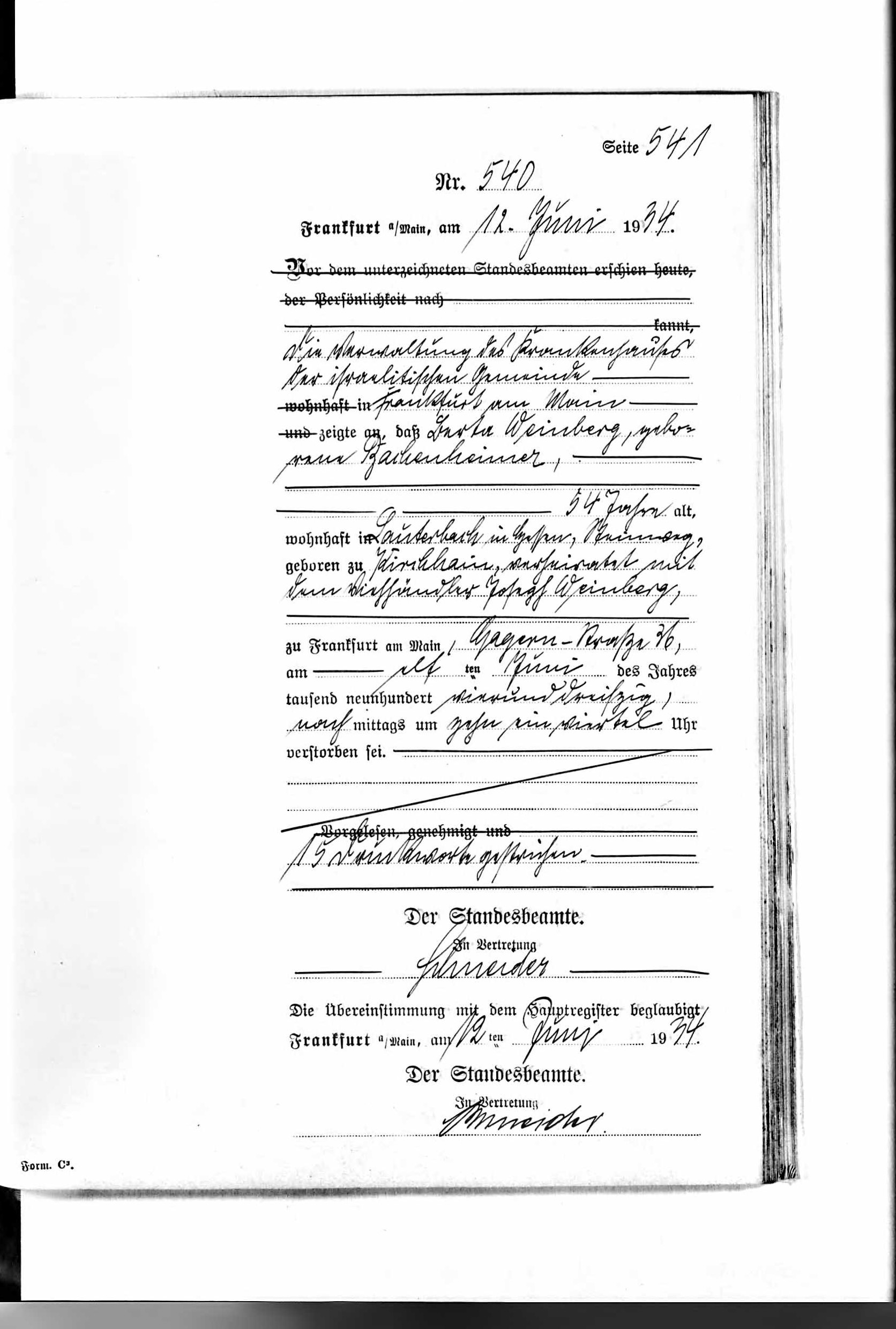
Then on June 11, 1934, Esther Ruelf Bachenheimer’s daughter Bertha Bachenheimer Weinberg died at age 54; Bertha’s husband Josef Weinberg died just three months later on September 9, 1934. He was 58. They were survived by their daughter Ruth, who was thirty years old when her parents died.
Bertha Bachenheimer Weinberg death record Hessisches Hauptstaatsarchiv; Wiesbaden, Deutschland; Personenstandsregister Sterberegister; Bestand: 903; Signatur: 903_11031
By the time Bertha and Josef died in 1934, the Nazis were in power in Germany, and life had already changed for Jews living there. Some Jews were beginning to leave the country.
On September 23, 1935, Herbert Wertheim, the son of Minna Bachenheimer and Meier Wertheim, left Germany and moved to what was then Palestine, now Israel. Six months later in March, 1936, his younger brother Walter joined him there.
Esther Ruelf Bachenheimer died on August 16, 1936, at age 79. Not long after, her daughter Minna Bachenheimer Wertheim and her husband Meier left Germany to join their sons in Palestine; they arrived there with their youngest son Gunther on September 10, 1936.
Death of Esther Ruelf Bachenheimer HStAMR Best. 915 Nr. 5121 Standesamt Kirchhain Sterbenebenregister 1936, S. 22
Ruth Weinberg, the daughter of Bertha and Josef Weinberg, also soon left Germany. She and her husband Hugo Schleicher and their daughter arrived in New York City on May 16, 1940. Hugo, who had been a lawyer in Germany, was working in Brooklyn at the Weingarten Agency of Fidelity Mutual Life Insurance Company in 1942 when he registered for the World War II draft; the family was living in Manhattan.
Hugo Schleicher World War II draft registration The National Archives at St. Louis; St. Louis, Missouri; Record Group Title: Records of the Selective Service System, 1926-1975; Record Group Number: 147
Thus, as of 1942, the only child of Esther Ruelf and Sussman Bachenheimer who was still in Germany was Rosa Bachenheimer along with her husband, August Felix Katzenstein, and their two children Margaretha and Hans-Jacob. Why they did not follow the other family members to either Palestine or the US is a mystery and a tragic one.
All four of them, as well as Margaretha’s husband Rudolf Loewenstein, were deported on April 22, 1942, to a concentration camp in Izbica, Poland, where they were murdered. Rosa, August, Margaretha, and Hans-Jacob were all my cousins, since Rose and August were both descendants of Jakob Katzenstein, my great-great-grandfather’s brother. Four more of my family members whose lives were taken by the Nazis. (The links are to their entries in Yad Vashem’s database.)
And heartbreakingly, the list does not end there. Esther Ruelf’s younger sister Bette also had family who were killed in the Holocaust. In fact, Bette has no living descendants.
Bette was born on December 3, 1860 in Rauischholzhausen. On January 26, 1886, she married Gustav Schaumberg of Schweinsburg. He was born in May 1857 to Isaak and Gutroth Schaumberg.
Marriage record of Bette Ruelf and Gustav Schaumberg Hessisches Hauptstaatsarchiv; Wiesbaden, Deutschland; Collection: Personenstandsregister Heiratsregister; Signatur: 915; Laufende Nummer: 8456
Bette and Gustav had four children born in Schweinsburg: Siegfried (1886), Rosa (1888), Flora (1891), and Selma (1897).
Sigfried Schaumsberg birth record November 16, 1886 Hessisches Hauptstaatsarchiv; Wiesbaden, Deutschland; Collection: Personenstandsregister Geburtsregister; Signatur: 915; Laufende Nummer: 8429
Rosa Schaumberg birth record October 13, 1888 Hessisches Hauptstaatsarchiv; Wiesbaden, Deutschland; Collection: Personenstandsregister Geburtsregister; Signatur: 915; Laufende Nummer: 8431
Flora Schaumberg birth record July 14, 1891 Hessisches Hauptstaatsarchiv; Wiesbaden, Deutschland; Collection: Personenstandsregister Geburtsregister; Signatur: 915; Laufende Nummer: 8434
As far as I’ve been able to determine, only Flora ever married. She married David Haas on December 14, 1914. I cannot find any record indicating that they had had children.
Marriage record of Flora Schaumberg and David Haas Hessisches Hauptstaatsarchiv; Wiesbaden, Deutschland; Collection: Personenstandsregister Heiratsregister; Signatur: 915; Laufende Nummer: 8484
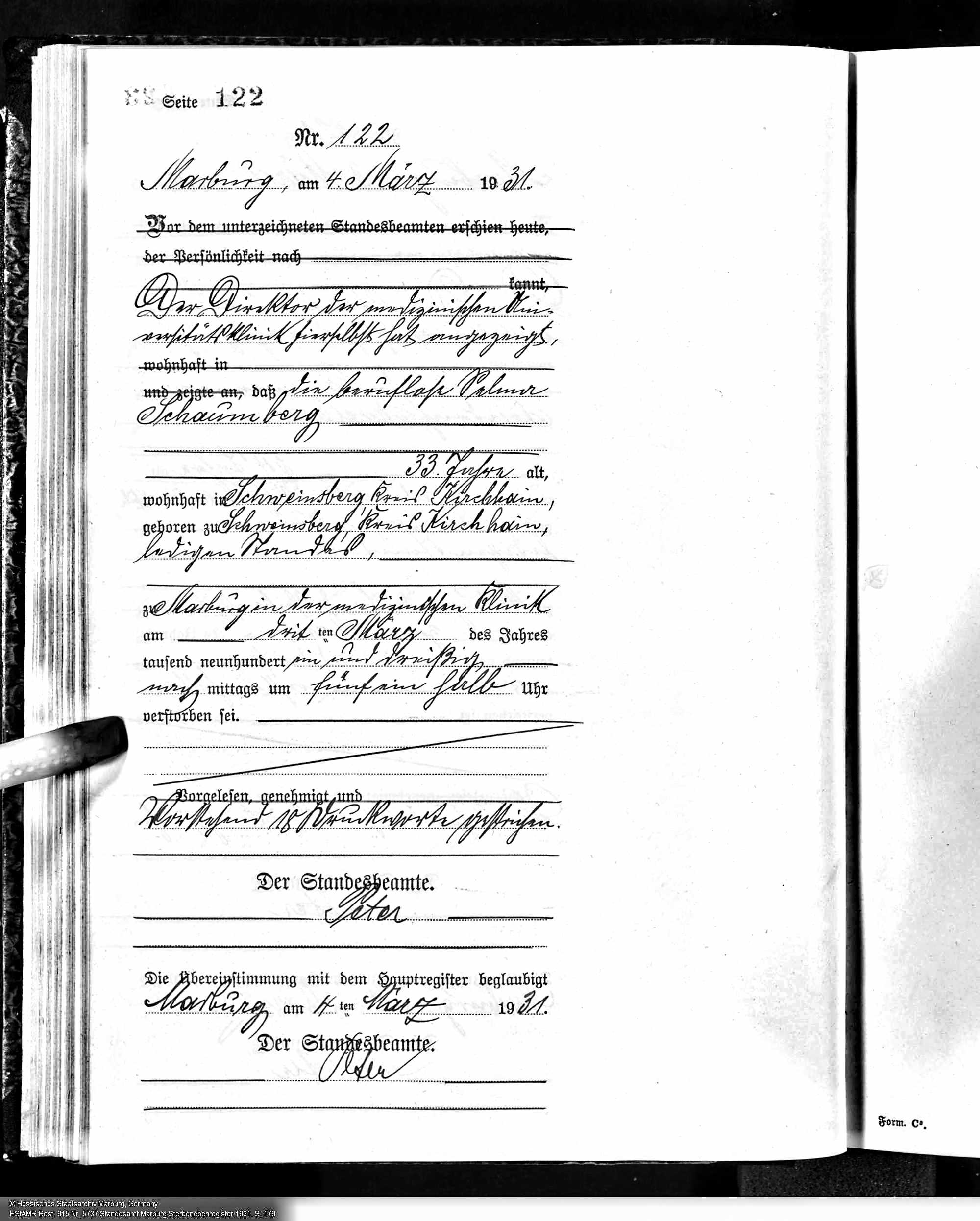
Sadly, the youngest child of Bette Ruelf and Gustav Schaumberg, Selma, died in Marburg, Germany, on March 3, 1931, when she was only 33 years old:
My colleagues Matthias Steinke and Doris Strohmenger at the German Genealogy group helped me translate this record also. It reads: “The director of the university-hospital here has reported, that the unemployed (without profession being) Selma Schaumberg, 33 years old, residing and born in Schweinsberg, county of Kirchhain, unmarried, in Marburg in the hospital at the 3rd March of the year 1931 past midday at 5:30 is deceased.” There is no cause of death given.
Perhaps Selma was in some ways fortunate. She did not live to suffer under Nazi rule.
Her father Gustav Schaumberg died on July 30, 1938, when he was 81 years old; his wife Bette Ruelf Schaumberg died April 9, 1940; she was 79. They also in some ways may have been fortunate to die when they did, although by the time they did, they must have already experienced much suffering and humiliation by the Nazis.
Bette Ruelf Schaumberg death record Hessisches Hauptstaatsarchiv; Wiesbaden, Deutschland; Personenstandsregister Sterberegister; Bestand: 915; Laufende Nummer: 8568
But at least they may have died with some hope that their remaining children would survive.
They did not. Siegfried was sent to Dachau Concentration Camp on April 3, 1942; he was then sent to the death camp in Hartheim, Austria on August 12, 1942, where he was killed. (JewishGen volunteers, comp. Germany, Dachau Concentration Camp Records, 1945 [database on-line]. Provo, UT, USA: Ancestry.com Operations Inc, 2008.)
A month later Siegfried’s sisters Rosa and Flora were also deported. They were both sent to Theriesenstadt along with Flora’s husband David Haas. Rosa was then sent to Auschwitz on January 23, 1943, where she was put to death. Flora and her husband David were both sent to Auschwitz on May 16, 1944, where they also were murdered. (The links are to their Yad Vashem entries.)
Thus, not one of the children of Bette Ruelf and Gustav Schaumberg survived the Holocaust.
Can anyone not understand why it is so depressing, frightening, and maddening to see people marching with swastikas in our streets?
It still amazes me that people find my blog, leave a comment, and then lead me to answers to questions about my family’s history. Just a month ago someone named Shyanne left a comment that led me to answers to another question I had been unable to resolve several years ago.
First, some background: Back in November 2014, I posted about a book I had received from Bernie Brettschneider of Gau-Algesheim, Die Geschichte der Gau-Algesheimer Juden by Ludwig Hellriegel (1986, revised 2008)[The History of the Jews of Gau-Algesheim]. It was my first source of detailed information about my Seligmann relatives, and I had struggled to translate as much as I can.
One of the entries in the book mentioned a woman named Leonara Morreau, as I wrote back then:
There is also an entry for Elizabeth nee Seligman Arnfeld, who was born March 17, 1875. She had moved to Mulheim on the Ruhr in 1938 and wanted to emigrate to the United States. A woman named Leonara Morreau[1] had vouched for them, but for unknown reasons they were never able to emigrate. Elizabeth died on January 23, 1943 at Theresienstadt. Her son Heinz survived the war.
Eventually, once my cousin Wolfgang Seligmann found me, I learned more about “Elizabeth” Bettina Seligmann Arnfeld and her family, as I wrote about here and here. But back in November, 2014, I had not yet found Wolfgang nor had I yet found Beate Goetz, and my knowledge of my Seligmann relatives in Germany was very, very limited.
Bettina (Elizabeth) Arnfeld nee Seligmann
But I had been curious about this woman “Leonara Morreau,” and had tried to figure out her connection to the Seligmanns. Why had she vouched for them? Why hadn’t she been able to save them? As I wrote back then:
I found Leonara Morreau’s obituary and researched her a bit, but know of no reason that she would have had a connection to the Seligmanns in Germany. She was born, married, and lived in Cleveland. Her husband died in 1933, and she died in 1947. As far as I can tell, they never traveled to Germany. Leonara’s brother was Isaac Heller, who was also born in Cleveland, as was their father, Charles Heller. Although their grandfather was born in Germany, it was not even in the same region as the Seligmanns. Perhaps Leonara was active in trying to bring German Jews to the United States during Hitler’s reign, but I can find no evidence of that. Her obituary only states that she was active in charitable and religious causes.
Stolperstein for Bettina Seligmann Arnfeld
And that was as far as I got. I put it aside and continued to work on my Seligmann family. Beate connected with me a few weeks after that post in November, 2014, and Wolfgang found me in February, 2015, and I was then on an amazing and exciting run of good luck with their help and the help of Wolfgang’s mother Annlis. Many if not most of the holes in the Seligmann family tree were filled with our collective efforts. But I never returned to the question of Leonara Morreau.
Until last month when Shyanne commented on my blog:
Leonara Morreau. Now, I’m unsure if there are multiples in the same family, but in my ancestry, my great great grandfather Albert Morreau was married to a Lea Nora Morreau, multiple docuuments spell it differently, though. But she too, was born an Heller. Here in the states. However, Albert was born in Germany, which is where the connection from Germany could be.
When I read Shyanne’s comment, I could barely remember the whole question of “Leonara” Morreau (whose name is generally spelled Leanora but sometimes Lenora or Lea Nora). After all it had been almost three years before and just a passing question in the overall search for information about my Seligmann family. But I was intrigued and emailed Shyanne right away.
After a flurry of emails, exchanges of information, and a review of the Seligmann family tree, Shyanne and I had the answer. And it was right before my eyes. In all my initial research about Leanora back in the fall of 2014, I’d never thought to search for information about her husband, only about Leanora herself. The answer lay with her husband.
As Shyanne had said, Leanora was married to a man named Albert Morreau. And although there’d been no Morreaus in my tree in November 2014 when I wrote that blog post that mentioned Leanora, there was now an Albert Morreau in my Seligmann family tree. I had entered him back in July 2015, just eight months after I’d written the post about Leonara Morreau, but I’d never made the connection.
Albert was one of three children named on the handwritten family tree Wolfgang had sent me that we believe was written by Emil Seligmann. I had written this on the blog on July 7, 2015, describing Emil’s tree:
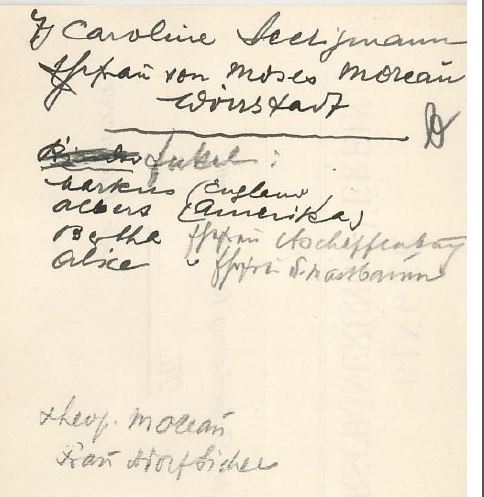
The next child of Jacob and Marta, Caroline, married Moses Moreau (?) of Worrstadt, and they had four children whose names are written underneath; the first I cannot decipher (maybe Markus?), but the other three are Albert, Bertha, and Alice.
Page 1 of Emil Seligmann’s handwritten tree (snip)
That is, the Albert Morreau who married Leanora Heller was my cousin—he was a descendant of Jacob Seligmann and Martha Mayer, my four-times great-grandparents, through their daughter Caroline, the sister of my 3x-great-grandfather, Moritz Seligmann. Caroline had married Moses Morreau (it is correctly spelled with two Rs) of Worrstadt. According to this tree, Albert was Caroline’s son.
I shared this information with Shyanne, but then found a biography of Albert from A History of Cleveland, Ohio: Biographical (Samuel Peter Orth, S.J. Clarke Publishing Company, 1910),that said that Albert’s parents were not Moses and Caroline Morreau, but in fact were named Leopold and Amelia Morreau:
Albert Morreau biography excerpt, A History of Cleveland, Ohio: Biographical (Samuel Peter Orth, S.J. Clarke Publishing Company, 1910), pp. 843-844
Shyanne found several other sources providing the same information. Shyanne and I were confused—was this the same Albert Morreau? And if so, who were Leopold and Amelia Morreau? Could all these sources be wrong?
Then I found UK naturalization papers for Markus Morreau, the brother of Albert, and those also stated this his parents were Leopold and Emilia Morreau. So why did Emil list Albert and Markus as the sons of Moses and Caroline on his family tree? And who was Leopold Morreau?
UK Naturalization papers for Markus Morreau The National Archives; Kew, Surrey, England; Duplicate Certificates of Naturalisation, Declarations of British Nationality, and Declarations of Alienage; Class: HO 334; Piece: 19 Description Description : Piece 019: Certificate Numbers A6901 – A7300
When I looked again at the papers I’d received from Wolfgang, I realized that Wolfgang had sent a second handwritten family tree a few days after he’d sent the tree done by Emil. On July 9, I wrote this on the blog:
This page [page seven of the second handwritten tree] is devoted to Caroline Seligmann, who married Moses Moreau from Worrstadt, another town not very far from Bingen. Underneath are four names that the creator of this tree originally labeled as the children of Caroline and Moses, but then crossed out and wrote “grandchildren.” The names are the same as those on the earlier tree—Markus, Albert, Bertha, and Alice. Next to Markus it says “England,” and next to Albert it says “Amerika.”
Second Seligmann handwritten tree, page 7
So Albert and his siblings Markus, Bertha, and Alice were not the children of Caroline Seligmann and Moses Morreau, but their grandchildren.
If the sources naming Albert’s father as Leopold Morreau were correct, that meant that Caroline and Moses Morreau had a son named Leopold. When Shyanne and I re-examined the page from the second handwritten family tree, we both concluded that one of the two names at the very bottom was Leopold Moreau. What do you think (see image directly above)? What do you think the second name at the bottom is?
UPDATE: I just figured out what the second name is! I will reveal it in a later post. 🙂
Meanwhile, Shyanne kept researching and so did I. And we ran into some incredible luck when I contacted Michael S. Phillips, a tree owner on Ancestry who generously shared with us his research on the Morreau family. Then two weeks after Shyanne’s initial comment, I received another comment about the Morreau family from a man named Paul; I emailed Paul and learned that he was related to Otto Mastbaum, who had married Albert Morreau’s sister Alice. Otto Mastbaum was Paul’s great-grandmother’s brother. And Paul filled in more gaps on the Morreau family. And I also learned more about Bertha Morreau and her husband Isidor Aschaffenburg with help from my friend in Cologne, Aaron Knappstein. And then my friend Dorothee connected me with Friedemann Hofmann, a man in Worrstadt who was able to send me the birth, death, and marriage records for the entire Morreau family from Worrstadt.
In subsequent posts, I will follow up and fill in these details and tell the full story of my Morreau cousins. But for now I just want to thank Shyanne (who I now know is my fifth cousin, once removed,), Paul, Aaron, Michael, Dorothee, and Friedemann for all their help in filling in these gaps in the Seligmann family tree.
This whole experience has been a real lesson to me. Even when you think you are “done,” there is always more to learn. And there are always incredibly generous people out there to help you do so.
This was a painful post to research and write. It was made even more painful by the events in Charlottesville this past weekend. How can we still be seeing swastikas and Nazis in 2017? How do people learn to hate those who differ from them? When will we ever conquer racism and prejudice of all kinds?
***************
In my last post, I wrote about the family of Markus Katz, the oldest son of Moses Katz and Malchen Wetterhahn. Markus died before the Holocaust, and his wife Nanny was murdered by the Nazis. Fortunately, however, their three children—Maurice, Mali, and Senta—escaped in time.
Tragically, not all of Moses and Malchen’s descendants were able to escape. My thanks to David Baron and Barbara Greve for their research and help in uncovering some of the records and facts included in this post.
Rickchen Katz, the oldest child of Moses and Amalia Katz,died of cancer in Frielendorf on September 15, 1933. Given the ultimate fate of her husband and children, that might very well have been a blessing.
Death record of Rickchen Katz Moses, HHStAW Fonds 365 No 166,p. 54
I don’t know the details of what happened to the family in the 1930s, but according to the research done by Barbara Greve and reported on the Juden in Nordhessen website, Rickchen’s husband Abraham Moses committed suicide on June 13, 1940. He had moved to Frankfurt with his three daughters, Rosa/Rebecca, Amalie, and Recha. Imagine how intolerable his life must have become under Nazi rule for him to take such drastic action.
In November, 1941, Rickchen and Abraham’s daughter Rosa/Rebecca and her husband, Julius Katz, and their teenage son Guenther, were deported from Frankfurt to Minsk, where it is presumed that all three were killed. Amalie, Rosa’s sister, also was deported to Minsk at that time and is also presumed to have been killed there. I have no further record for Amalie’s twin Recha. I assume she also was a victim of the Holocaust. (All the links here are to the Yad Vashem entries for those individuals.) Thus, all of the children of Rickchen Katz and Abraham Moses were murdered by the Nazis.
Jacob M Katz, the second oldest son of Moses and Malchen Katz, had been in the US for many years by 1930, having arrived in 1908, as I wrote about here. He had settled in Oklahoma, where in 1930 he was married to Julia Meyer and had a teenage son, Julian. They were living in Wolf, Oklahoma, where Jacob was working in a dry goods store. According to the 1940 census, by 1935 Jacob and Julia had moved to Pawnee, Oklahoma, and in 1940 Jacob was a men’s clothing merchant there. Julia’s sister Rose was also living with them.
Jacob M Katz and family, 1940 census, Year: 1940; Census Place: Pawnee, Pawnee, Oklahoma; Roll: T627_3322; Page: 16A; Enumeration District: 59-21
But by 1942 when he registered for the World War II draft, Jacob and Julia had moved to Vallejo, California, where Jacob was working for the Kirby Shoe Company. I do not know what took them to California; their son Julian had married by then, but was still living in Oklahoma. Jacob died in San Francisco in 1956; Julia died the following year, also in San Francisco.
Jacob M Katz, World War II draft registration, The National Archives at St. Louis; St. Louis, Missouri; Record Group Title: Records of the Selective Service System, 1926-1975; Record Group Number: 147
Lena Katz, one of the three children of Moses and Malchen still in Germany in the 1930s and their third oldest child, survived the Holocaust. Her husband Hermann Katz had died on November 2, 1929, in Marburg, Germany, but Lena and their three children—Bertha, Moritz, and Amalie—all left Germany before 1940.
Her son Moritz left first, arriving in the US on November 14, 1936. He listed his occupation as a butcher and listed Maurice Mink, his aunt Julia’s husband, as the person he knew in the United States. His final destination was listed as Cleveland, Oklahoma, where Julia Katz Mink (the youngest daughter of Moses and Malchen) and her husband Maurice Mink were then living. Perhaps not coincidentally, his cousin Julius Katz, son of Aron Katz, was on the same ship, as noted in an earlier post.
Moritz Katz manifest, line 19, Year: 1936; Arrival: New York, New York; Microfilm Serial: T715, 1897-1957; Microfilm Roll: Roll 5900; Line: 1; Page Number: 146 Ancestry.com. New York, Passenger Lists, 1820-1957,
Lena and her daughter Amalie were the next to arrive; they sailed together along with Amalie’s husband Max Blum and their daughter and arrived in New York on April 1, 1938. They all listed Jacob M. Katz in Pawnee, Oklahoma, Lena’s brother, as the person they were going to in the United States. Max listed his occupation as a cattle trader. (Lena, spelled Lina here, is listed on a separate page of the manifest from the Blum family.)
Lina Katz on manifest, Year: 1938; Arrival: New York, New York; Microfilm Serial: T715, 1897-1957; Microfilm Roll: Roll 6134; Line: 1; Page Number: 98
Max and Amalie (Katz) Blum and family, lines 3-5, Year: 1938; Arrival: New York, New York; Microfilm Serial: T715, 1897-1957; Microfilm Roll: Roll 6134; Line: 1; Page Number: 88 Ancestry.com. New York, Passenger Lists, 1820-1957
The next family members to arrive were the three young children of Lena’s daughter Bertha and her husband Siegmund Sieferheld; they were only twelve and eight years old (the younger two were twins) and sailed on a ship that seemed to have many children; it arrived in New York on February 6, 1940. The ship manifest listed the German Jewish Children’s Aid Society as the entity responsible for receiving these children.
Children of Bertha Katz Sieferheld, passenger manifest, lines 5-7. Year: 1940; Arrival: New York, New York; Microfilm Serial: T715, 1897-1957; Microfilm Roll: Roll 6443; Line: 1; Page Number: 40 Description Ship or Roll Number : Roll 6443 Source Information Ancestry.com. New York, Passenger Lists, 1820-1957
According to the Leo Baeck Institute, “The German-Jewish Children’s Aid Society was formed in New York in 1934 by a coalition consisting of the New York Foundation, the Baron de Hirsch Fund, B’nai B’rith, the Hofmeimer Foundation, the American Jewish Committee and the Women’s Committee of the American Jewish Congress. These organizations contributed the funds for the German-Jewish Children’s Aid to operate. The purpose of the German-Jewish Children’s Aid was to act as the receiving organization for unaccompanied or orphaned children emigrating from Europe to the United States. It acted as financial sponsor for the children (to avoid their “becoming a public charge”) and attempted to secure housing or foster home placement. ”
A more extensive description of the organization can be found here. It describes the incredible work done by Americans, Jews and non-Jews, to rescue over a thousand children from the Nazis—certainly a small drop in the bucket considering the number of children who were murdered, but without organizations like the German-Jewish Children’s Aid Society, many more, perhaps including the three children of Bertha Katz and Siegmund Sieferheld, would also have been killed.
When I try to imagine the desperation of these parents—sending their young children off on a ship, not knowing whether they’d ever see them again—and the fear of those children, leaving their parents and the only home they’d ever known, I have to stop and catch my breath. I think of my seven year old grandson, just a year younger than Bertha’s twins. It is just too painful, too unimaginable, to visualize him being torn away from his parents and his parents being torn away from him.
The 1940 census shows Lena and almost all of her children and grandchildren living together in Detroit; Moritz, listed as the head of household on the 1940 census, was working as a sausage maker in a butcher shop. Lena’s daughter Mali and her husband Max Blum were both working in a packing house. And the three young children of Bertha and Siegmund Sieferheld, Tillie, Werner, and Henry, were also living with Lena, Moritz, and Mali. Their parents Bertha and Siegmund were still in Germany, separated from the rest of their family.
In addition, Lena’s younger sister Julia Katz Mink (listed as a widow here) was also living with them. Julia had apparently separated from her husband Maurice by 1930, when they were living separately in Cleveland, Oklahoma. Her daughter had married by 1940 and was living elsewhere. Julia died in 1971 in Montclair, New Jersey.
Lena Katz and extended family, 1940 census, Year: 1940; Census Place: Detroit, Wayne, Michigan; Roll: T627_1881; Page: 2B; Enumeration District: 84-1383
So as of 1940, all but Lena’s daughter Bertha and her husband Siegmund had escaped from Germany; their three young children, however, were safely with their grandmother Lena and aunt Amalie and uncle Moritz.
And then finally Bertha and Siegmund arrived on April 15, 1940. They were sailing with two older women also named Sieferheld—perhaps Siegmund’s mother and aunt. They listed Detroit as their destination and M. Katz, Bertha’s brother Moritz, as the person they were going to. Siegmund listed no occupation.
Siegmund and Bertha (Katz) Sieferheld manifest, lines 18-21, Year: 1940; Arrival: New York, New York; Microfilm Serial: T715, 1897-1957; Microfilm Roll: Roll 6458; Line: 1; Page Number: 130 Description Ship or Roll Number : Roll 6458 Source Information Ancestry.com. New York, Passenger Lists, 1820-1957
How very fortunate Lena and her family were—all of them reunited safely in Detroit by April, 1940. Sadly, Lena died from cancer on December 25, 1941, just twenty months after having her whole family reunited in Detroit. She was 69 years old.
Thus, almost all of the children of Moses Katz survived the Holocaust—all but the children of Rickchen, who were murdered. Even those who were fortunate enough to survive, however, must have borne some scars from what they had experienced. Words like “fortunate” and “survived” are just not the right words to use in writing about something as horrific as the Holocaust. I find myself just unable to find any right words. I don’t think there are any.
And to think that there are still people out there, chanting for hate and waving Nazi flags.
**************
This brings me to the end of the story of the children of Rahel Katzenstein and Jacob Katz. From Abraham Katz and Samuel Katz, who came as young men in the 1860s and settled first in Kentucky before moving to Oklahoma and Nebraska, to Jake and Ike Katz who came thirty years later as young men and started a department store business that grew to be a small empire in Oklahoma, to the many family members who were killed in the Holocaust and those who were able to escape the Nazis in the 1930s, the Katzenstein/Katz family demonstrated over and over that they were willing to take risks, to help each other, and to work hard for success. I am so fortunate to have been able to connect with so many of their descendants, who continue to exhibit that strong sense of family and that drive to succeed. To me that seems quite remarkable, but given the spirit of adventure and commitment to family exhibited by all the children of Rahel Katzenstein and Jacob Katz, perhaps it really is not.
In earlier posts I discussed the families of the two sons of Rahel Katzenstein and Jacob Katz who were still living in Germany as of 1930: Moses and Meier. Moses had died in 1898 and Meier in 1925, but some of their children were still in Germany when Hitler came to power. Mylastfour posts described how the children and grandchildren of Meier Katz were able to survive by leaving Germany and coming to the US in the 1930s.
In this post and the one to follow, I will describe what happened to the children of Meier’s brother Moses Katz, three of whom had remained in Germany after 1930: Rickchen, Markus, and Lena. I will also report on what happened to the two children of Moses who had emigrated before the 1930s, Jacob M Katz and Julia Katz, and also Moses’ grandson Maurice (son of Markus), who also had immigrated to the US before 1930. This post will focus on the family of Markus Katz, the one to follow on the other four.
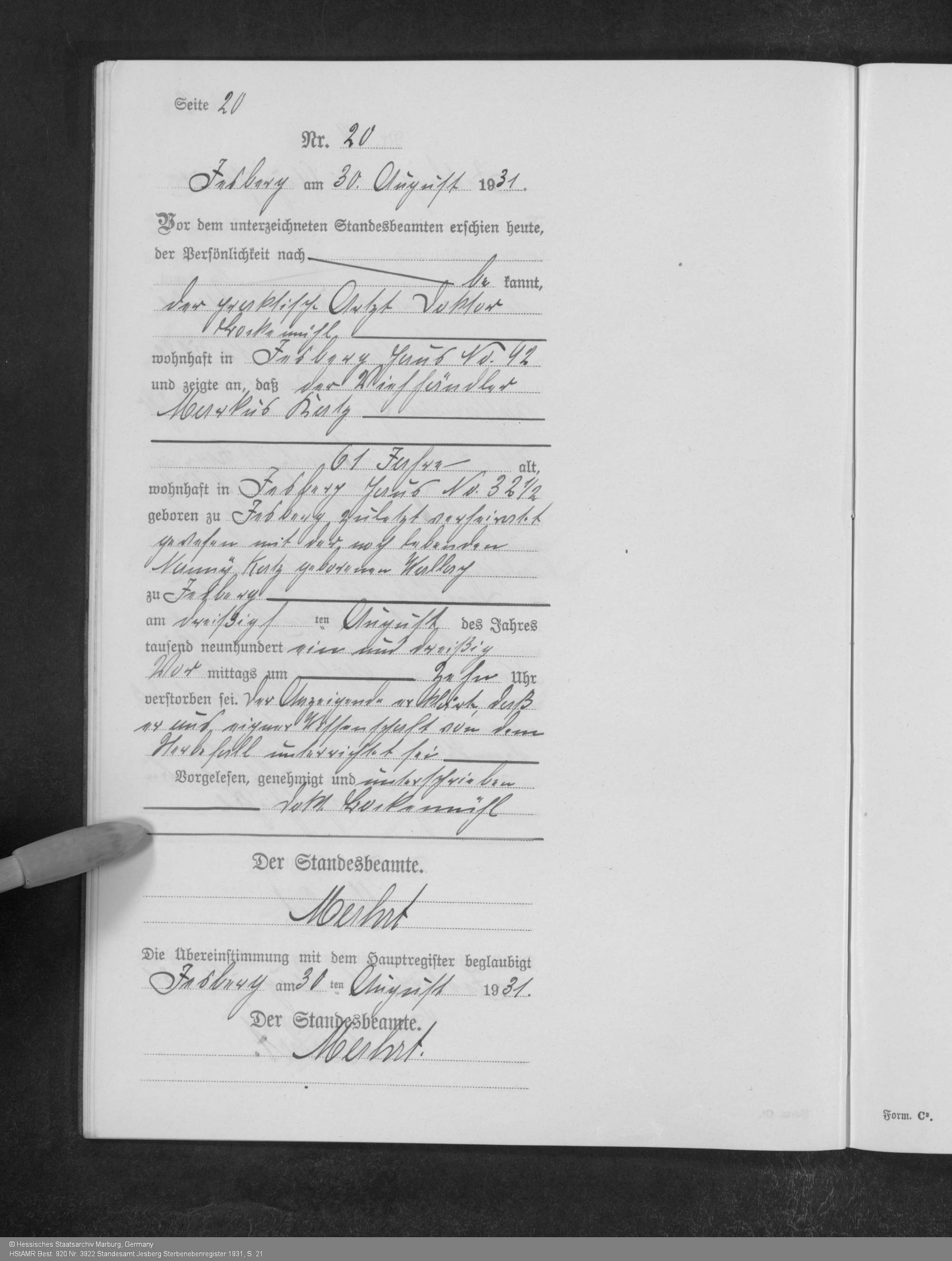
Markus Katz died before he had to experience the horrors of the Holocaust. He died on August 3, 1931, in Jesberg, where he is buried. As I wrote about here, his grave is marked by a double stone where half was reserved for his wife Minna(also known as Nanna or Nanny) Wallach, but Minna is not buried there. She was deported by the Nazis on June 16, 1942, and was presumed to have been killed sometime thereafter. That is why the other half of the gravestone is blank.
Markus Katz death record, HStAMR Best. 920 Nr. 3922 Standesamt Jesberg Sterbenebenregister 1931, S. 21
Gravestone of Markus Katz, son of Moses Katz, grandson of Rahel Katzenstein, with the blank half for his wife Minna (Nanny) Wallach Katz
Thanks to the generosity of their grandsons, I have this wonderful photograph of Markus and Nanny:
Minna (Nanny) Wallach and Markus Katz Courtesy of the Abrahams family
Here is Nanny with her daughter Senta, grandson Martin, and mother Jenchen:
Nanny Wallach Katz, Senta Katz Abraham, Martin Abraham, and Jenchen Wolf Wallach Courtesy of the Abrahams family
This beautiful photograph is of the three children of Markus and Nanny: Mali, Senta, and Maurice (Moritz):
Amalie (Mali), Senta, and Moritz (Maurice) Katz, 1908 Courtesy of the Abrahams family
Fortunately, all three of the children of Markus and Minna fared better than their mother.
As I wrote earlier, Moritz (later known as Maurice) left Germany for the US in April, 1925, and settled near his Katz relatives in Oklahoma. In the 1930s he was living in Oklahoma City and working as a salesman in a clothing store. In 1940 he was living as a lodger with the family of Herman Mararsk in Oklahoma City, still working as a clothing salesman.
Maurice Katz, 1930 census Year: 1930; Census Place: Oklahoma City, Oklahoma, Oklahoma; Roll: 1920; Page: 6A; Enumeration District: 0102; Image: 345.0; FHL microfilm: 2341654
Maurice Katz, 1940 census Year: 1940; Census Place: Oklahoma City, Oklahoma, Oklahoma; Roll: T627_3342; Page: 10A; Enumeration District: 78-20
Maurice married Mollie Krisman on May 23, 1943, in Oklahoma City. That marriage apparently did not last, because on January 21, 1948, Maurice married Sarah Ross in Chicago. Obituary of Sarah Ross Katz, The Daily Oklahoman, Monday, November 30, 1998.
Maurice Katz marriage to Mollie Krisman 1943 Ancestry.com. Oklahoma, County Marriages, 1890-1995 [database on-line]. Lehi, UT, USA: Ancestry.com Operations, Inc., 2016. Original data: Marriage Records. Oklahoma Marriages. FamilySearch, Salt Lake City, UT.
For many years, Maurice owned a pawnshop in Oklahoma City. He died on October 7, 1994, and was survived by his wife Sarah. His obituary said this about him: “Maurice “Morris”, ended 91 years of a wonderful life when he died on October 7, 1994. Morris was born in Jesberg, Germany, Sept. 8, 1903 and came to the U.S. in 1925. He operated his business in Oklahoma City for 30 years before his retirement in 1972. … The wonderful memories of early Oklahoma City through the eyes of an immigrant that he shared with all who knew him will live on with his memory.” TheDaily Oklahoman, October 10, 1994. His wife Sarah died in 1998; there were no children.
Maurice’s two sisters, Mali and Senta, also survived the war. Although I’ve yet to find any official records of what happened to Mali, her nephews and one tree on Ancestry show that she and her husband Siegfried Baumann and their daughters ended up in Brazil. Her nephew told me that she had tried to enter the US, but had been refused. I am still searching for more information about Mali and her family.
Senta and her husband Julius Abraham and their two sons immigrated to the United States on July 2, 1937. What I did not discover until the last week or so was that Julius was also a cousin of mine as well as a cousin to his wife Senta. Julius was born in Niederurff in the Hesse region on January 2, 1894. He was the son of Hirsh Abraham and Pauline Ruelf. His mother Pauline was the daughter of Moses Ruelf and Gelle Katzenstein. Gelle Katzenstein was the daughter of Jacob Katzenstein, who was the half-brother of Rahel Katzenstein, Senta’s great-grandmother. In other words, Senta Katz and Julius Abraham were half-third-cousins, and Julius was my half-third cousin, once removed; Senta my full third cousin, once removed:
Julius and Senta’s son Fred Abrahams has generously shared with me his memoir and allowed me to share those portions that reflect the family’s life in Niederurff, Germany, and their decision to leave in 1937. Fred was only three years old when the family left Germany, which makes the clarity of his memories quite remarkable. I think his writing movingly captures the innocence of childhood amidst the chaos of a world filled with hate:
The name, “Niederurrf”, the town where we lived means “lower-urrf (gothic for “stream”). The “urrf” was indeed a stream, probably no more than 10 feet across which ran by the back of our house. There it was spanned by a rude arched wooden foot bridge. I have many memories of playing and wading in the cool, clear waters of the slow moving rock marbled stream. In one of them:
My cousin from Frankfurt, Paul, is showing us how to fold paper hats out of newspaper. We are on the little bridge. Then, wonder of wonders, he places the hats in the stream and they become sailboats. But the water is not flowing fast enough to carry them very far downstream. My father appears. Across the stream, just above the bridge there is a long wooden board stretched lengthwise on edge across the stream and held in place by long pegs. The “urrf” forms a pool of water beyond this small dam. My father raises the board, releasing the water and the boats float and sail away out of sight. I cry because of the lost boats.
I am playing in the cobbled yard in front of our house. some boys who live a few streets away are shouting at me. I am upset. They are loud, angry…something to do with “Juden”. I don’t understand. I hardly know them. Opa (my Grandfather) Max says,” they are ignorant, you are much better than they are, ignore them. Come inside when you see them. They are louts!” I feel a little better, but I am still concerned. It still bothers me today. My Grandfather unlocks the gate to the garden behind our house. He shows me where he hides the key in a niche in a wall of slate slabs. It is our secret. …
My father comes into the living room. The atmosphere is strange, tense, nervous. Something important is taking place. He is excited and is holding a small book in his hand. We are going to America he tells us. Looking at the book in his hand he begins teaching us English words. He looks up a word and points at an object in the room. “Window” he says pointing to the fenster. “Door” pointing to the kitchen tur. “Chair” he indicates the stuhl he is sitting on. This is a strange new game but I know somehow that it is very important.
We are on a train, facing each other across the car, my mother and father on one side, my brother and I on the other. We sit on facing benches that line the walls of the car. My mother has brought salami sandwiches. An indoor picnic, as we eat I can hear the click-clack of the wheels of the train and see the countryside streaming by. I am excited but also sense that my parents are worried. We stop to visit my Grandmother in Frankfurt. I am playing and jumping on her white metal frame bed. She seems to be ill (diabetes I later learn) and we are saying goodbye. She will be left behind. We are going on to Bremen! Then, we are going on a big boat to America, the German Lloyd liner Hansa. To America (wherever that is). It is a great adventure!
I’m running all around a big boat. There is a wide long alley like deck with the water far below on one side. I am fascinated by the water streaming by. A brass band is playing, a real concert with a band stand. The bandsmen are in dark blue uniforms with white hats. I stand in front of the bandleader and make believe I am the conductor, aping his movements, leading the band. The bystanders watch me, laughing and applauding.
Later I am sick and miserable lying on an upper bunk. I can’t climb the ladder and my father lifts me up. After a while I feel better. Then my mother gets sick. The doctor comes to our cabin. I am left free to run around again. I explore this huge complex boat, bigger than any place I have ever known. More people at once than I have ever seen. Playing hide and seek in the life boats with sailors and other kids. Sitting in all the deck chairs. Trying to play shuffleboard. What an adventure.
Then the trip is over. We dock and wave to people waiting on the pier.
[From the memoirs of Fred J. Abrahams, unpublished.]
When the family left Germany, they were heading to New York, where Julius’ sisters (and thus also Senta’s cousins) Meta and Recha were living. Julius had been a businessman and tailor in Niederurff as well as a shop owner and farmer; on the ship manifest he listed his occupation as a tailor.
Family of Julius and Senta Katz Abraham, passenger manifest, lines 5-8, Year: 1937; Arrival: New York, New York; Microfilm Serial: T715, 1897-1957; Microfilm Roll: Roll 6003; Line: 1; Page Number: 18 Ancestry.com. New York, Passenger Lists, 1820-1957
In 1940, the family was living at 325 West 93rd Street in New York City, and Julius was working in the family business, Abrahams Brothers, a clothing business. Julius had an uncle, Max Abrahams, who had come to the United States in the early 1870s and ultimately settled in Davenport, Iowa, where he and his sons established a clothing business known as Abrahams Brothers. The business grew to about a dozen stores throughout the Midwest. In 1940, Julius was working in the fur department of the New York office, where the administration and buying for the many stores was handled. He continued to work for the business for the rest of his life.
Senta Katz Abrahams and family, 1940 census Year: 1940; Census Place: New York, New York, New York; Roll: T627_2642; Page: 16A; Enumeration District: 31-777
Julius died on December 22, 1959; Senta lived to 93, dying on October 15, 2000, in Stamford, Connecticut. Their sons Martin and Fred have both been very kind and generous in sharing the photographs and the story of their family, and I look forward to meeting them both.
The last child of Meier and Sprinzchen Katz to leave Germany was their son Aron, who had been his younger brother Karl’s partner in the cattle trading business in Jesberg.
The family of Aron Katz and Sara Leiser: rear, Julius, Aron, Jack; front, Sara. Courtesy of the family of Fred Katz
As noted in an earlier post, Aron’s son Jacob, known as Jack, had left Germany for the US in 1926 and was living with Jake Katz and his family in Stillwater in the 1930s, working in the Katz department store there.
Aron’s son Julius arrived on November 4, 1936, on the same ship as his cousin Moritz Katz, son of Moses Katz’s daughter Lena. Julius listed himself as a cattle trader and said he was headed to his uncle “Jakob” Katz in “Chillwater,” Oklahoma.
Julius Katz manifest, line 6Year: 1936; Arrival: New York, New York; Microfilm Serial: T715, 1897-1957; Microfilm Roll: Roll 5900; Line: 1; Page Number: 146 Ancestry.com. New York, Passenger Lists, 1820-1957,
On February 22, 1939, Aron and his wife Sara finally arrived from Germany. Fred Katz told me that Aron had been quite resistant to leaving Germany, believing like so many others that things would not get too bad. Thank goodness Aron realized how wrong he was before it was too late. When the war in Europe started just a little over six months later, it became much more difficult for Jews to leave Germany.
Aron and Sara listed their son Jacob (Jack) Katz of Stillwater, Oklahoma, as the person who was receiving them, but handwritten in is the additional notation that they were also going to Aron’s brother Jake at the same address. Aron reported that he was a merchant.
Aron and Sara Katz, ship manifest, lines 4-5, Year: 1939; Arrival: New York, New York; Microfilm Serial: T715, 1897-1957; Microfilm Roll: Roll 6291; Line: 1; Page Number: 141 Ancestry.com. New York, Passenger Lists, 1820-1957
In 1940, Aron and Sara were living in Stillwater like so many other members of the extended family.
As mentioned in the post about Walter and Max Katz, Aron and Sara’s older son Jack Katz was in the US Army during World War II and stationed for some time in Germany. Jack was 31 when he registered for the draft in October, 1940. He was living in Stillwater and working Katz Department Store there. I don’t know the details of his service other than what was described by Walter, but his draft card indicates that he was discharged on November 2, 1945.
Jack Katz Draft Registration Page 1 – Selective Service Registration Cards, World War II: Multiple Registrations 15-Oct-1909
After he returned home Jack married Helen Oppenheimer of Jackson, Missouri, on August 18, 1947.
Jack’s brother Julius registered for the draft in October, 1940. At the time he was living in Oklahoma City and listed his employer as Humpty Dumpty. Humpty Dumpty was a supermarket chain owned by Sylvan Goldman, the son-in-law of Jake Katz and husband of his daughter Margaret Katz. As I wrote previously, Sylvan and his brother Alfred had married the two daughters of Jake Katz, Margaret and Helen (respectively). The Goldman brothers were in the grocery business together.
After World War I… [Sylvan and] Alfred opened Goldman Brother’s Wholesale Fruits and Produce in Breckenridge, Texas. Years later, while living in California, Sylvan and Alfred were intrigued by a new type of grocery store that offered all products under one roof—the supermarket. The brothers returned to Oklahoma in order to bring this new way of shopping to their home state. With Sylvan serving as president and Alfred as vice president of Sun Grocery Company, they opened a store on April 3, 1920, at 1403 East Fifteenth Street in Tulsa, Oklahoma. One year later there were twenty-one Sun Grocery markets throughout the state.
In 1929 Sylvan and Alfred sold the Sun chain to Skaggs-Safeway Stores, and in 1934 Sylvan purchased the faltering Humpty-Dumpty grocery chain. The chain was revived in part due to Goldman’s revolutionary advertising and enlightened personnel policies. His greatest contribution was the shopping cart, invented in 1936 and patented by Goldman. He established the Folding Basket Carrier Company to manufacture his invention. It was just the beginning of a list of creations that revolutionized the grocery industry: the grocery sacker, the folding interoffice basket carrier, and the handy milk bottle rack.
The New York Times described Sylvan’s invention of the shopping cart in Sylvan’s 1984 obituary:
With help from a carpenter and a maintenance man, and with a folding chair as a model, he built the first grocery cart in the mid-1930’s. Shoppers were reluctant to use it, so Mr. Goldman hired people to push loaded carts back and forth in front of a store. He also hired a woman to offer the carts to customers as they entered. “Sylvan N. Goldman, 86, Dies; Inventor of the Shopping Cart,” The New York Times, November 27, 1984.
After Alfred Goldman died on July 9, 1937, while vacationing in New York City, Sylvan continued the business, and Julius Katz, Aron’s son, was working for him in the Oklahoma City store at the time he registered for the draft in 1940. More information about Sylvan Goldman can be found here, here,here, and in this video:
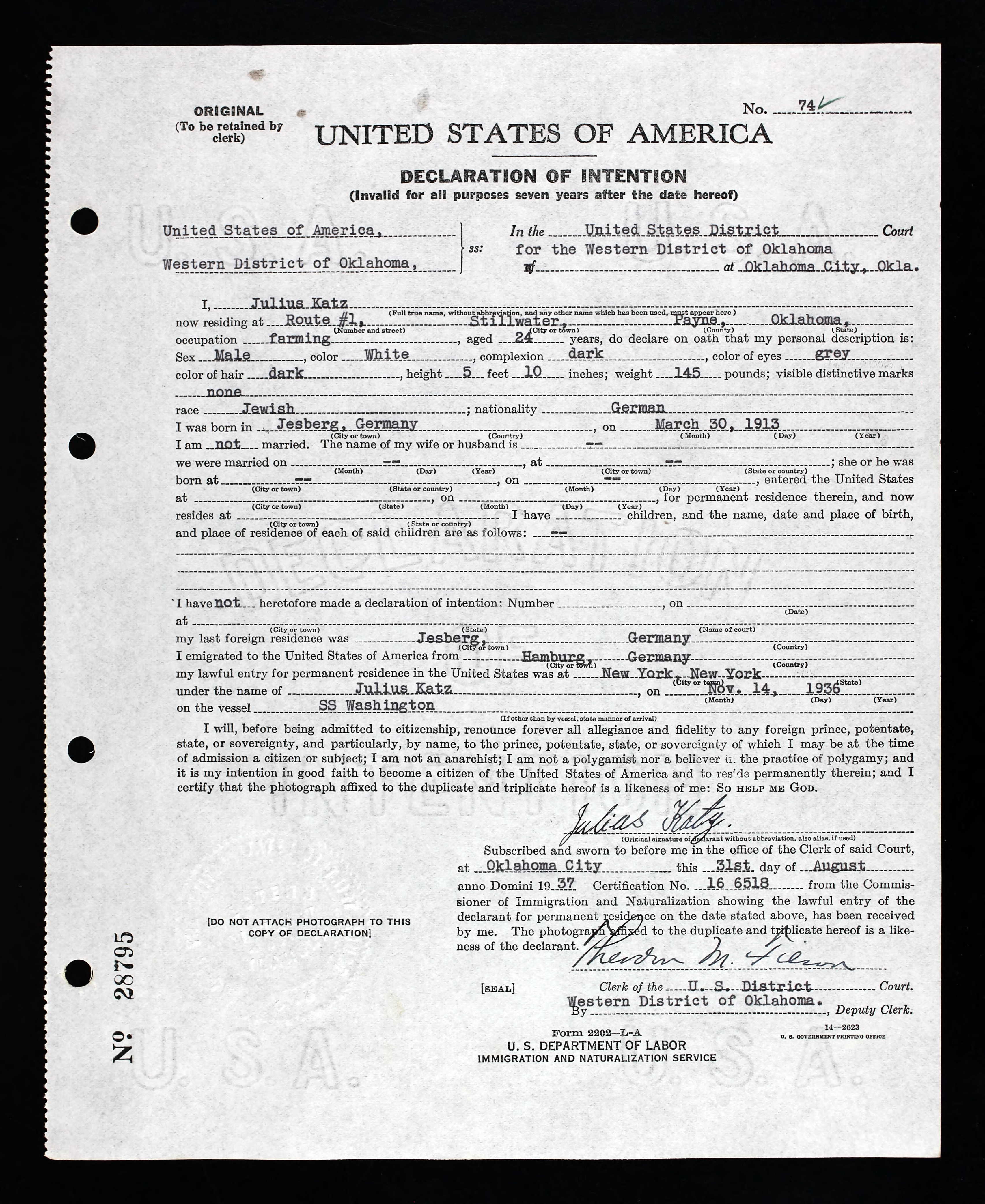
Julius Katz was still living in Oklahoma City in 1943 when he became a naturalized citizen. He listed his occupation as farming in 1937 when he filed his Declaration of Intent, but the Petition for Naturalization does not reveal what his occupation was at the time.
Julius Katz Declaration of Intent National Archives and Records Administration; Washington, D.C.; ARC Title: Declarations of Intention for Citizenship , compiled 1908 – 1932; ARC Number: 731206; Record Group Title: Records of District Courts of the United States; Record Group Number: 21 Oklahoma City Declarations of Intention, 1932-1974 (Box 1) Ancestry.com. Oklahoma, Naturalization Records, 1889-1991
Aron Katz died on October 19, 1950. He was seventy-five years old and was buried in Stillwater.
On November 15, 1953, his son Julius married Seena Hana Kaufman in Kansas City, Missouri:
Marriage record of Julius Katz and Seena Kaufman Ancestry.com. Missouri, Marriage Records, 1805-2002 [database on-line]. Provo, UT, USA: Ancestry.com Operations, Inc., 2007. Original data: Missouri Marriage Records. Jefferson City, MO, USA: Missouri State Archives. Microfilm.
The marriage must not have lasted, however, because two years later in 1955, Seena is listed under her birth name in the Kansas City directory.
Julius died on August 7, 1963. According to his obituary, his body was discovered at his farm by his brother. The obituary described Julius as a “well-known Payne County farmer and rancher with operations north of Stillwater.” The only survivors mentioned were his mother and his brother Jack. “Funeral Services Slated Friday for Julius Katz, Stillwater Newspress, August 8, 1963, p. 8.
Aron’s wife Sarah died three years after her son at age 88 on December 18, 1966. She was survived by her son Jack, who died in Dallas, Texas, on August 27, 1997. He was 87 years old. Like his father, mother, and brother, he was buried in Fairlawn Cemetery in Stillwater.
Thus, all of the children of Meier Katz and Sprinzchen Jungenheim—Jake, Aron, Ike, Regina, and Karl and all their children—ultimately left Germany and settled safely in the United States, almost all of them in Oklahoma. Some came as early as the 1890s, other as late as the 1930s. As for those who came in the 1930s, it is tempting to think that it was a miracle that the entire family survived the Holocaust, but it was probably more a combination of luck, courage, and their own determined efforts and those of their family in America—especially those of Jake Katz—that got them out of Germany in time.
Albert Jerome Katz in rear, Helen Katz and Margaret “Babe” Katz seated with unknown cousins on laps Courtesy of the Goldman family
Perhaps some Katz family member can identify the two unknown little cousins? Since we know Albert Jerome died in 1919, I am assuming this photo was taken in about 1918, meaning the two young children were likely born in 1916-1917. I am thinking one might be the daughter of Lester Katz and Mayme Salzenstein, Mildred “Bobbie,” since she was born in January 1916 and was related to Jake and Sophia on both sides, Lester being Jake’s cousin and Mayme being Sophia’s sister.
Here is Jake Katz with all three of his children:
Albert Jerome Katz in rear, Margaret “Babe” Katz, Jake Katz, and Helen Katz seated Courtesy of the Goldman family
Family members tell me that after Albert Jerome died, Sophia did not want to continue living in the house where their son had lived, so Jake sold it to a sorority. After Sophia died, he bought the house back from the sorority. Family members recall his home as a family gathering place where children played hide and seek. There were frequent Sunday dinners where the extended family would come to visit, and Jake always had either a silver dollar or a Hershey’s kiss for every child. Jake’s great-niece Ester wrote about Jake and his role in saving the family on her blog, It’s All from Hashem in her post Thoughts of a Libra.
Jake Katz died on July 2, 1968, in Stillwater, Oklahoma. He was 94 years old. His obituary made the front page of the Stillwater Newspress (July 3, 1968). [There is one error here; Sophia Salzenstein Katz did not die fifteen years after they were married; she died in 1930.]
Stillwater Newspress, July 3, 1968, p. 1 Jake Katz obituary
Jake Katz was truly a remarkable man. He came to the US as a young teenager, traveling alone. He worked with family members until he was able to strike out on his own, and then he started a department store business that expanded over the years and ultimately supported many members of his extended family. He rescued several of his siblings and their children from Nazi Germany. And he did all of this despite suffering the tragic loss of his son Albert Jerome and the premature death of his wife. He is remembered with great love and admiration by many members of the family who knew him. It is quite a legacy.
His daughters Margaret and Helen survived him. Margaret died in 1984, followed just a few weeks later by her husband, the grocery store magnate and shopping cart inventor Sylvan Goldman. Helen died in 1999. Jake’s three grandsons also have passed away, but he is survived today by two great-grandchildren.
When Hitler came to power in 1933, three of the five children of Meier Katz and Sprinzchen Jungheim were still living in Germany: Aron, Regina, and Karl. Through the moving memoir of Fred Katz and the oral history of Walter Katz, we’ve seen how Karl Katz and his family were finally able to leave Jesberg by December, 1938. His sons Walter and Max had left earlier, and Karl, his wife Jettchen, and youngest son Fred left soon after Kristallnacht. All had settled in Stillwater, Oklahoma, with the help of Karl’s oldest brother, Jake.
Jake wasn’t only helpful to Karl’s family. Karl and his family had been preceded by his sister Regina and her family—her husband Nathan Goldenberg and their three children, Bernice, Theo and Albert.
Theo, Bernice, and Albert Goldenberg Courtesy of the Goldenberg family
Theo was the first of Regina and Nathan’s family to leave Germany, arriving in New York on August 17, 1934, when he was twenty years old. Thanks to Theo’s granddaughter Abbi, I have some documents that reflect Theo’s work history and reputation before he left Germany. Special thanks to Doris Strohmenger and Heike Keohane of the German Genealogy group on Facebook for translating these documents for me.
This first letter, written November 14, 1932, when Theo was eighteen, is from his employer, A. Bachenheimer, a clothing manufacturing company, where Theo had been first an apprentice and then a salesman; he’d started when he was fourteen years old. The letter describes him as an honest, efficient and diligent salesman.
The second letter is from the next employer, Josef Volk, another clothing manufacturer, where Theo worked from December, 1932, until July 1933; this letter also describes him as willing, honest, and industrious. I am not sure where Theo went next or why he left this company, but given that Hitler had been elected by then and the boycott of Jewish businesses had been declared in April 1933, I assume there was some connection.
Theo left Germany a little over a year later. He filed a certificate of deregistration with the community of Kestrich on August 6, 1934, indicating that he was leaving the community.
He sailed on the SS New York with his cousin, Helma Goldenberg, who was 22 and a nurse. Theo listed his occupation as “clerk” and his final destination as Stillwater, Oklahoma, where he was going to his uncle Jake Katz. (Helma was going to Georg Goldenberg, her uncle, who was in New York City.) As my cousin Marsha learned when she interviewed Theo in 1993, Jake met Theo at the boat in New York when he arrived and provided him with land to farm when they returned to Oklahoma. Theo told Marsha he “owed it all to Jake.”
Theo Goldenberg ship manifest, line 19, Year: 1934; Arrival: New York, New York; Microfilm Serial: T715, 1897-1957; Microfilm Roll: Roll 5531; Line: 1; Page Number: 39 Ancestry.com. New York, Passenger Lists, 1820-1957
Theo’s sister Bernice and her family were the next to arrive in the US. Bernice was married to Julius Katz, who was born in Steinbach, Germany. They had a son Henry. I knew that the family had arrived by 1940 because they are listed as living in Brooklyn on the 1940 census. Julius was working as a wholesale butcher, and Bernice as a dressmaker. But I could not find a passenger manifest for them. When I look back on it, I am not sure why it was so hard to locate. But I thought it might be worthwhile sharing what I did and how I finally found them.
Because all I had was the 1940 census, I used the names and ages on that census to search for a manifest. I searched for Bernice Katz, Julius Katz, Henry Katz, and Julius’ mother and sister, Violet and Bette Katz. I searched for any ship arriving between 1935 and 1940 because I knew from the census that they were still in Germany in 1935. But nothing came up that seemed right.
Bernice Goldenberg and Julius Katz and family, 1940 census, Year: 1940; Census Place: New York, Kings, New York; Roll: T627_2611; Page: 8A; Enumeration District: 24-2457
Then I searched to see if I could find more specific information about Julius and his mother and sister—when and where were they born? Nothing came up. Finally, I searched for obituaries, and although I found a SSDI record showing that Bernice had died in Fairfield, Connecticut in 1985, I could not find any obituaries. I was stumped.
So I decided to ask the family for help. I sent Theo’s son Nate a message on Facebook, asking whether he knew when Bernice had arrived and whether her son Henry was still alive. Nate knew that Henry had died within the last few years so I narrowed my obituary search to the last few years, and Henry’s obituary immediately appeared. It revealed, among other things, that Henry and his family had arrived in 1936. It also revealed that Henry was born in 1931, not 1933, as the 1940 census had indicated. (Hartford Courant, January 17, 2015)
That led me to a specific search for any Katz arriving in 1936 in New York City—with no limits on ages or names. And this time the search immediately produced the right result: a ship manifest for Julius Katz, Berni Katz, Heinz [Henry] Katz, Veilchen [Violet] Katz, and Betty Katz arriving in New York on April 10, 1936. Julius Katz listed his occupation as an animal dealer, and they were all heading to New York City where Julius’ brother Leopold Katz was living.
Bernice Goldenberg Katz and family on ship manifest, lines 9-13, Year: 1936; Arrival: New York, New York; Microfilm Serial: T715, 1897-1957; Microfilm Roll: Roll 5787; Line: 1; Page Number: 176 Ancestry.com. New York, Passenger Lists, 1820-1957
How had I missed this before? I am not sure. Yes, all the ages were off. Julius is listed as 37 on the 1936 manifest, but is listed as 48 four years later on the 1940 census; Bernice, who is listed as 29 on the manifest, is lasted as 37 on the 1940 census. Henry, as noted, was two years younger on the census than he was on the ship manifest. Had I searched too narrowly by those birth years? I don’t know. All I know is that I was very grateful to my cousin Nate for providing me with enough information to narrow my search and find the passenger manifest for his aunt Bernice and her family.
On July 2, 1936, less than three months after Bernice and her family arrived, Nathan and Regina (Katz) Goldenberg and their son Albert arrived from Germany. (Regina is listed as Rosa here.) Nathan’s occupation was a cattle dealer, and Albert, who was sixteen, was an apprentice. Here is Nathan’s business identification card from Germany:
They were headed to Stillwater, Oklahoma, going to Jake Katz and also joining their son Theo.
Nathan Goldenberg and family, ship manifest, lines 1-3, Year: 1936; Arrival: New York, New York; Microfilm Serial: T715, 1897-1957; Microfilm Roll: Roll 5825; Line: 1; Page Number: 20 Description Ship or Roll Number : Roll 5825 Source Information Ancestry.com. New York, Passenger Lists, 1820-1957
Here are their German passports:
Nathan Goldenberg passport
Regina Katz Goldenberg passport
Albert Goldenberg passport
In 1940, Nathan, Regina, Theo, and Albert were all living together in Stillwater where Nathan and Albert were farming, and Theo was a salesman in a clothing store—Katz Department Store in Stillwater.
Thus, the entire family of Nathan and Regina (Katz) Goldenberg had safely left Germany before 1940.. Theo filed a Declaration of Intent to become a US citizen on February 7, 1936, his brother filed on February 10, 1938, his father Nathan filed one on December 29, 1938, and his mother Regina had done the same on August 18, 1941. All must have been very relieved to be safely living in Stillwater and anxious to become American citizens.
Theo Goldenberg Declaration of Intent National Archives and Records Administration; Washington, D.C.; ARC Title: Petitions 1932 – 1991; ARC Number: 731222; Record Group Title: Records of District Courts of the United States; Record Group Number: 21 Oklahoma City Petitions, 1954-1957 (Box 6; Volume 14-17) Ancestry.com. Oklahoma, Naturalization Records, 1889-1991
Albert Goldenberg Declaration of Intent National Archives and Records Administration; Washington, D.C.; ARC Title: Declarations of Intention for Citizenship , compiled 1908 – 1932; ARC Number: 731206; Record Group Title: Records of District Courts of the United States; Record Group Number: 21 Oklahoma City Declarations of Intention, 1932-1974 (Box 1) Ancestry.com. Oklahoma, Naturalization Records, 1889-1991
Nathan Goldenberg Declaration of Intention National Archives and Records Administration; Washington, D.C.; ARC Title: Declarations of Intention for Citizenship , compiled 1908 – 1932; ARC Number: 731206; Record Group Title: Records of District Courts of the United States; Record Group Number: 21 Oklahoma City Declarations of Intention, 1932-1974 (Box 2) Ancestry.com. Oklahoma, Naturalization Records, 1889-1991
Regina Katz Goldenberg Declaration of Intent National Archives and Records Administration; Washington, D.C.; ARC Title: Declarations of Intention for Citizenship , compiled 1908 – 1932; ARC Number: 731206; Record Group Title: Records of District Courts of the United States; Record Group Number: 21 Oklahoma City Declarations of Intention, 1932-1974 (Box 2) Ancestry.com. Oklahoma, Naturalization Records, 1889-1991
Albert and Theo both registered for the draft, Theo on October 16, 1940, and Albert on July 1, 1941. Both were working at Katz Department Store in Stillwater at the time of their registrations.
Theo Goldenberg draft registration Page 1 – Selective Service Registration Cards, World War II: Multiple Registrations 1940 Web Address http://www.fold3.com/image/612584757?xid=1945
Tragically, the family was to suffer two terrible losses not that long after settling in the United States. First, on March 17, 1944, Nathan Goldenberg died. He was only 67 years old. According to his obituary, he had been ill for some time. His two sons were in the military at the time of his death; Theo was a corporal in the US Army stationed in Garden City, Kansas, and Albert was a private, first class, stationed in the Pacific Theater. “Goldenberg Rites Sunday,” Stillwater Newspress, March 17, 1944, p.3.
Just three months later on July 12, 1944, Albert was killed in action serving his adopted country. According to his obituary, he had been inducted into the army on December 1, 1941, just six days before Pearl Harbor. He had trained at Camp Barkley in Texas and was serving with the medical corps attached to the 105th Infantry in Saipan when he was killed. He was only 24 years old at the time of his death. “Services Set for Goldenberg, Stillwater Newspress, June 16, 1948, p. 8.
Albert Goldenberg, courtesy of the Goldenberg family
According to Theo’s son, after receiving training to join the intelligence service, Theo was en route to France when he received word that his brother had been killed; he was called back and discharged from the service as the sole surviving son. In the space of three months, Regina Katz Goldenberg had lost her husband and her youngest child, and her two remaining children, Theo and Bernice, had lost their father and younger brother. How heartbreaking it must have been to have escaped the Nazis only to lose two family members so soon afterwards, one of whom was killed serving his new country.
After returning home to Stillwater, Theo returned to work at Katz Department Store with his uncle Jake, where he worked for over fifty years, and also operated a small dairy business for over forty years. He milked cows by hand and sold raw milk; he was the last dairyman to be able to sell raw milk in Payne County.
On October 15, 1950, Theo married Anne Marie Kunstler, who was born in Nuremburg, Germany. They were married in Stillwater.
Marriage License of Theo Goldenberg and Anne Marie Kunstler Ancestry.com. Oklahoma, County Marriages, 1890-1995 [database on-line]. Original data: Marriage Records. Oklahoma Marriages. FamilySearch, Salt Lake City, UT.
According to family lore, Theo and Anne Marie met in New York City, and six days later Theo proposed to her. She told him she wouldn’t marry him without seeing Oklahoma first, and he told her he would buy her a one way ticket, and if she didn’t want to stay, she’d have to pay for her own ticket back home.
Apparently Oklahoma met her standards, and she and Theo were married for almost fifty years. Theo died on January 11, 2000. He was 86 years old. Anne Marie is still living.
As for Theo’s sister Bernice, she and her husband Julius and their son Henry lived in Brooklyn for many years, where Julius worked in the meat industry (a kosher hot dog company) and Bernice in the garment district. She would take her sewing machine back and forth from work so that she could work at home in the evenings. Bernice and Julius moved to Fairfield, Connecticut, in 1975, after Julius was mugged several times in Brooklyn.
Julius Katz died on November 26, 1977, in Fairfield. Bernice Goldenberg Katz, died at age 79 in Fairfield, Connecticut, on May 2, 1985. Their son Henry died on January 15, 2015, in West Hartford, Connecticut. He was a veteran of the Korean War and was a structural designer, having studied at Pratt Institute and New York City Community College. He worked for over thirty years at Dorr Oliver, a chemical engineering company in Stamford, Connecticut. (Obituary, Henry Herman “Hank” Katz, The Hartford Courant, January 17, 2015.)
Thus, another branch in the family of Meier Katz and Sprinzchen Jungheim survived the Holocaust and prospered in America. But for the tragic death during World War II of young Albert Goldenberg, this would have been another happy story about Meier and Sprinzchen’s descendants.
When I spoke with Fred Katz, I had many questions about what it was like to come to the US in 1938, a nine year old boy leaving the small town of Jesberg, arriving in New York City, and then settling in Oklahoma. Fred made it seem as though this was not a very difficult adjustment for him, although he said it was harder for his parents. I asked how he felt about leaving Germany, and he said that he had been very excited to come to the US although sad to leave the family’s horse behind. He said he learned English quickly and adjusted easily to school in Oklahoma, and he said the family felt comfortable in Oklahoma, having so many other family members around, most of whom had been either born in or living in the US for quite some time.
So what happened to the rest of the family of Karl and Jettchen Katz after immigrating to America in the late 1930s? What happened to Fred’s two older brothers, Walter and Max?
On September 24, 2000, two graduate students at Wichita State University, Janice Rich and Paul Williams, conducted an oral history interview of Walter Katz. That interview, which remains unpublished, is the source of much of the information in this post.
In the interview Walter spoke about the family’s decision to leave Germany after 1933. He told the interviewers that boys who had been his friends before Hitler came to power ganged up on him and threw dirt clods at him, giving him a black eye; after 1935, his father and uncle were not legally allowed to engage in their cattle trading business, but they persisted illegally at great risk. He also shared the story that Fred had told of the difficulties the family had getting visas from the American consulate and of Fred’s rescue of the Torah scroll after Kristallnacht.
Walter also noted that his uncle Jake in Oklahoma had facilitated Max and Walter’s departure from Germany by submitting affidavits to support their applications for exit visas. When Walter left Germany, he sailed to New York, stayed with relatives there for a few days, and then took a train to St. Louis where he was met by his uncle Jake. Obviously Jake was very instrumental in saving Karl’s family from the Nazis.
Walter Katz on passenger manifest, line 29, Year: 1937; Arrival: New York, New York; Microfilm Serial: T715, 1897-1957; Microfilm Roll: Roll 6055; Line: 1; Page Number: 50 Description Ship or Roll Number : Roll 6055 Source Information Ancestry.com. New York, Passenger Lists, 1820-1957
Jake brought him back to Stillwater where he was enrolled in school and was quickly put on the football team (he was seventeen, but because he did not yet know English, he was placed in junior high school).
Walter’s younger brother Max arrived in New York on July 21, 1938, and also listed that he was going to his uncle in Stillwater, Oklahoma:
Max Katz passenger manifest Year: 1938; Arrival: New York, New York; Microfilm Serial: T715, 1897-1957; Microfilm Roll: Roll 6188; Line: 1; Page Number: 101 Description Ship or Roll Number : Roll 6188 Source Information Ancestry.com. New York, Passenger Lists, 1820-1957
Finally, Max and Walter’s parents and brother Fred arrived on November 30, 1938:
Karl Katz passenger manifest, Year: 1938; Arrival: New York, New York;Microfilm Serial: T715, 1897-1957;Microfilm Roll: Roll 6258; Line: 1; Page Number: 16 Ancestry.com. New York, Passenger Lists, 1820-1957 [database on-line]. Provo, UT, USA: Ancestry.com Operations, Inc., 2010.
The family of Karl Katz and Jettchen Oppenheimer was finally reunited in Stillwater, Oklahoma.
The Family of Karl Katz reunited in Stillwater: Max, Jettchen, Karl, Fred, and Walter
In 1939, Walter moved to Wichita, Kansas, where he worked at a men’s clothing store owned by two of his Youngheim cousins. In 1942, he was drafted and inducted into the army at Fort Leavenworth in Kansas. He was then transferred to Camp Cook in California (now Vantenberg Air Force Base) and was soon naturalized as a United States citizen, as he described in the oral history interview.
Walter Katz in the US Army during World War II, courtesy of his family
Walter was assigned first to the 5th Armored Division and worked in company supply because of his retail experience. He trained in Tennessee and in New York and was then transferred to intelligence school at Camp Ritchie in Maryland where he received two months of intensive training to prepare him to interrogate POWs. He and 300 other servicemen from his base were then sent to the UK for seven months more of training. After that he was stationed in France, Belgium, and Germany. In France Walter became entangled in the Battle of the Bulge in December 1944; while en route to Paris to pick up jeeps, he learned that the Germans had broken through Allied lines, and his unit, which had been stationed in Reims, France, was relocated to Belgium.
In Germany Walter was part of the Counter Intelligence Corps (CIC) where his job after the war was to interview and arrest civilian officials who had been Nazis and to see that they were replaced with those who had not been affiliated with the Nazis. Walter told his interviewers that the people he interviewed all denied being Nazis and claimed they had no choice but to follow orders.
While in Germany, Walter met up with his cousin Jack Katz, Aron’s son, who was stationed in Wiesbaden. The two cousins attended high holiday services in 1945 at a restored synagogue in Bad Nauheim. In one of those eerie small world stories, a teenage boy who participated in the service later married one of Walter’s cousins. Walter did not know of this coincidence until visiting that cousin in New York years later.
Walter and Jack also visited Jesberg while they were stationed in Germany. Walter was distressed by the state of the cemetery, which had been vandalized during the war, and he demanded that the mayor restore the stones that had been toppled and clean up the damage, which was done by the next time he visited. Walter and Jack also met a young Jewish woman they’d known in Jesberg who had been in one of the camps and wanted to live in Jesberg again. She had no money, so Walter went to the man who had been the local Nazi official responsible for the damage to the synagogues and Jewish homes and businesses and demanded that this woman be provided with everything she needed.
Walter and Jack visiting the former Jesberg synagogue after World War II, courtesy of the Katz family
Walter Katz and Jack Katz in Jesberg after World War II Courtesy of the Katz family
Although Walter had an opportunity to stay in Germany and work for the State Department, he wanted to return to the US. He returned to Wichita and to his work in his cousin’s men’s clothing store, The Hub, which he eventually purchased. He married his wife Barbara Matassarin in Denver on July 7, 1950. Barbara had been a nurse training in Wichita when she met Walter and had enlisted in the US Army as a second lieutenant in early 1950. When she was assigned to a hospital in Denver, they decided to get married. Walter and Barbara lived, however, in Wichita with their daughter for most of the rest of their lives, and Walter remained in the men’s clothing business until he retired.
Walter Katz at his store in Wichita, 1950s. Courtesy of the Katz family
Walter’s brother Max also served in the US army during World War II. He served in the Army Air Corps from 1942 until 1945, according to his obituary. Like Walter, he became a US citizen while serving in the armed forces. According to his brother Fred, Max was stationed stateside during the war and did not fight overseas.
Max Katz in the US Army during World War II
After the war, Max returned to Oklahoma and attended Oklahoma A&M for two years, receiving a certificate in business. He worked in the meat packing industry for several years before starting his own cattle trading business in 1953.
Military discharge papers for Max Katz
According to his obituary, “in 1973, Max began buying pasture land throughout Payne County and feeding his own cattle, in addition to commission buying. At any given time, Max usually had about 3,000 head of cattle either on pasture or in feed lots. Max retired from the cattle business in 2009.” Tulsa World, January 1, 2011.
Walter, Max, and Fred Katz lost their father Karl in 1966 and their mother Jettchen in 1979. Both had remained in Stillwater, where they are buried.
Katz family members buried at the Stillwater cemetery
Walter Katz died in Israel on November 5, 2007; his wife Barbara had predeceased him on July 1, 2000. They are buried in Israel. Max Katz died in Tulsa, Oklahoma, on December 30, 2010; he is buried in Stillwater.
According to his obituary, Max Katz “was known far and wide as a superior cattle buyer and rancher who created a successful 56-year career in the cattle business by relying on a keen eye, a razor-sharp business sense, honest dealings, and above all, pure hard work. His generosity and willingness to help others in need became his hallmark and reputation.” Tulsa World, January 1, 2011.
Walter Katz, when asked in 2000 by his interviewers what he would say to the youth of America, said “First, you are lucky to be born in the United States. Second of all, you can do anything here that you want to do if you put your mind to it. The opportunity for anything you want to do is here if you want to do it. Work hard and stay with it and be good and honest. Live a good honest life and you will make it!”
Although those words do not necessarily reflect the experiences of everyone in this country, they do reflect the experiences and the values of Walter Katz and of his brother Max. Both Walter and Max had escaped from Germany as teenagers and traveled by themselves to the United States; they both had contributed greatly to their adopted country. They served in its military during a war against their country of birth, and they worked hard to become successful businessmen.
And yet these were two men who almost did not get into this country because of some bureaucrats dealing with immigration in the 1930s. How many more could have been saved? How many more were turned away because of ignorance, fear, and prejudice? Will we ever learn?
Why did we go to Worms? Not for any genealogy reason, but for its significance to Jewish history generally and to German Jewish history more particularly. It is one of the so-called ShUM cities, the three cities (Speyer (Sh), Worms (U), and Mainz (M) where Jewish scholars and rabbis in the Middle Ages had a widespread impact on Jewish religious and cultural practices. Some of the greatest medieval Jewish scholars studied and taught in the ShUM cities, including Rashi, who is considered one of the greatest Talmudic scholars of all time. Many of the melodies used even today in Jewish religious services were developed in the ShUM cities. It seemed that it would be wrong to go all the way to Germany and not see Worms. (Speyer, unfortunately, we could not fit into our itinerary, and we had seen Mainz.)
Worms is a short train ride from Heidelberg, so it made sense to go there during one of our three days in Heidelberg. On May 13, we took a morning train to Worms to meet our tour guide. [For various reasons we were not very pleased with this guide, so I’ve decided not to use her name in this post. If anyone wants to know why, I will be glad to share privately but not on the blog.]
The guide met us at the train station and showed us the reliefs sculpted over the doorways to the train station, one showing different modes of transportation and the other, the doorway used by the wealthy, showing kings and nobles. The station was built in the early 1900s and, as the guide said, was considered a sign of modernity and of the status of Worms as an important city.
From the station we walked a few blocks to the Jewish cemetery, which has existed since the eleventh century and is considered the oldest Jewish cemetery in Europe. We could not enter as it was Shabbat (Saturday), and the cemetery was closed. But we could see the old stones and the very well-maintained grounds. The guide told us about some of the important scholars buried at the cemetery and how the cemetery is a pilgrimage site for Jews from all over the world.
From the cemetery we walked through a park where there was a statue of Martin Luther, for whom Worms was also an important city because, according to the guide, it was in Worms that his movement for Reformation became a movement adopted by the people, not just a theoretical idea. The guide also pointed out to us that the park we were walking through was where the moat had been located when Worms was a walled city in medieval times. Once the wall was taken down and the moat filled, it became a ring of green space surrounding the city.
Martin Luther statute
We continued to follow the former moat towards the old Jewish quarter in Worms. Along the way we passed several stolpersteine, including one for Herta Mansbacher, who is considered an important heroine in the story of the Jews of Worms. She was a teacher in a non-Jewish school until 1933 when she lost her job and took a teaching job in a Jewish school. She then stayed in Worms to help the children and to encourage families to emigrate from Germany. After the Worms synagogue was burned during Kristallnacht, Herta Mansbacher ran to rescue what she could and to try and put out the fire. In 1942, she was deported and murdered by the Nazis.
Stolpersteine for Herta Mansbacher and others
Former home of Herta Mansbacher
A short distance past the home of Herta Mansbacher we reached the former Jewish quarter of Worms. Turning left on Judengasse it felt like we had entered not only a difference place but a different time. You could visualize what the quarter was like a hundred years earlier.
Judengasse in Worms
The Jewish quarter in Worms
There are two synagogue buildings in the Jewish quarter. They are located at opposite ends of a small plaza in the center of the quarter. The Levy’sche synagogue is now a residential building.
Across from it was the other synagogue, the Old Synagogue—where there is a sculpture commemorating Rashi; Rashi studied at the yeshiva attached to this synagogue. The building dates from the 12th century and is claimed to be the oldest synagogue in existence north of the Alps. The building is today used for religious purposes and also for cultural events. There is a separate building where the yeshiva was located and also a mikveh on the grounds. Behind the synagogue is a Jewish museum displaying Judaica and historical documents from the region; the most moving display was of the Torah scrolls and wimpels that were burned during Kristallnacht. Perhaps these were the ones rescued by Herta Mansbacher, for whom there is a memorial plaque in the synagogue.
Old synagogue in Worms
Statue honoring Rashi
Interior of Old Synagogue
The synagogue was rebuilt after the war, but some of the original structure still was standing and is part of the building today. Seeing the Jewish quarter allowed me to imagine in a concrete way how the Jews once lived in this section of the city.
After leaving the Jewish quarter, we stopped for lunch, and then the guide showed us Trinity Church, a very large Lutheran church built in the 18th century. It was destroyed by Allied bombing in World War II and rebuilt in the 1950s.
Trinity Church
Interior of Trinity Church
Our last stop in Worms was at St. Peter’s Cathedral, which was built in the 12th century. It is an impressive structure, and the altar is quite elaborate and beautiful.
St Peter’s Cathedral, Worms
Altar in St Peter’s Cathedral
We then walked back to the train station and returned to Heidelberg.
The next day, our last day in Germany, we were back on our own. We took the funicular up to the castle that hovers over the city and can be seen quite dramatically from across the river.
We strolled around the grounds where the views of the river and the city of Heidelberg are stunning. Because you cannot get into the castle without a guided tour, we waited for the guided tour at 10 am. Fortunately there were only three of us on the tour, plus the guide. (There were hundreds of people wandering around the grounds being led by Viking Cruise guides, all with earplugs in their ears to listen to their guides, but they did not enter the buildings.)
The guide was delightful with a very dry and sarcastic sense of humor, and we all got a big kick out of him. He entertained us with stories of political intrigue, romance, and wars to give us the colorful history of the complex of buildings that make up the castle. The castle predated the city; it was originally built for strategic purposes with its towers and walls overlooking the valley below. Then, as medieval times moved into the Renaissance era, it became more a home for the local noble to impress his wife and entertain their guests. Even Hitler used the castle at some point as a place to house soldiers. I wish I could remember all the details of the guide’s stories, but suffice it to say he kept us interested, and he not only was amusing but very well-informed about the history of the region.
After returning to the city below, we spent our last afternoon in Germany wandering through the beautiful city of Heidelberg. Unlike every other city we’d visited—Mainz, Bingen, Cologne, Wurzburg, and Worms—Heidelberg did not sustain any significant damage from Allied bombing during World War II, so it retains its architectural heritage as originally built.
The city has so much to offer—a world-renowned university, a scenic location on the Neckar River, a fascinating castle with gorgeous views, and churches and buildings that are rich in architectural detail. The winding narrow streets and wide plazas, the youthful population, and the multitude of restaurants, bars, and stores make it an interesting and exciting place to visit. It made it all that much harder to pack our bags and head to the airport where we would stay our last night in order to catch our flight the following morning.
And so we said Auf Wiedersehen to Germany, land of my paternal ancestors, a country I had truly learned to appreciate during our stay, a place where the beer, the bread, the cities, the villages, the landscapes, and especially the people are just wonderful. I was sad to leave, but ready to come home and have a chance to digest and remember it all.
Looking back on the trip now that we have been home for well over a month, it almost seems like a dream. Was I really there? Did I really walk in the footsteps of my ancestors, see their gravestones, and meet my cousins, their descendants? Writing these blog posts has helped me remember and process everything we saw and experienced. Looking at the photographs reminds me of all the people we met and all the beauty we saw as well as all the reminders of what happened during Hitler’s reign.
Much of what we experienced was bittersweet—bitter because of all the awful killings and destruction, sweet because of the kindness of the people we met and the hope they gave us for a future where people are tolerant and understanding and loving of each other despite their differences. As I now return to the task of learning about and writing about my family’s history, I can better visualize where they lived and what their lives were like. It will make what has already been a fascinating and rewarding journey that much more meaningful and satisfying.