Bingen: The Early Home and the Last Home in Germany for Many in the Seligmann Family


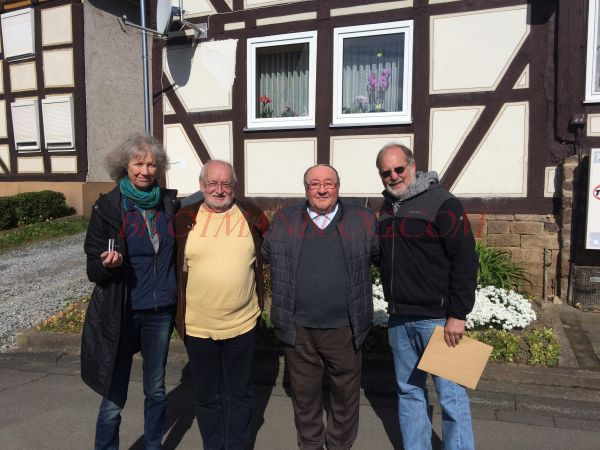
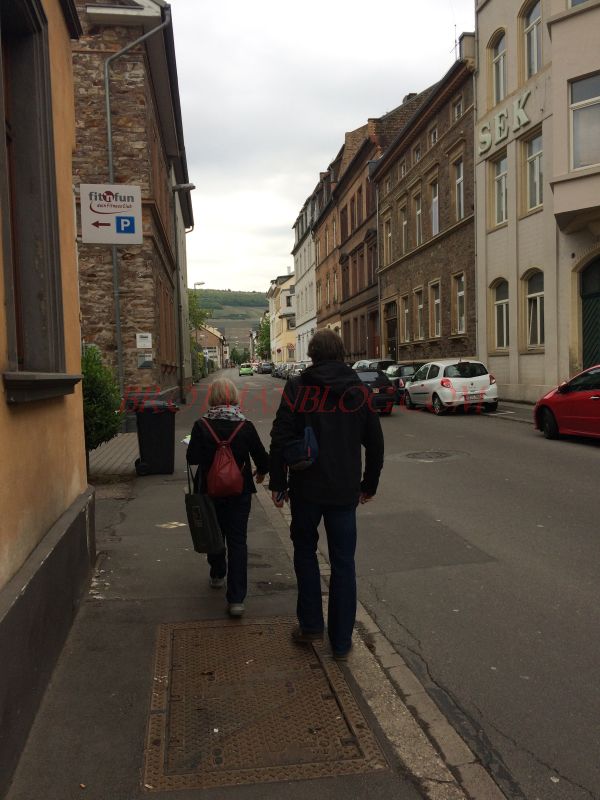
After lunch in Mainz on May 3, Wolfgang drove us to Bingen, where we were scheduled to meet Beate Goetz.  Beate, who volunteers at the Arbeitskreis Judische in Bingen, is one of the many German researchers who have helped me with my research.  Over the last two years she has sent  many records of our Seligmann relatives from the Bingen region, and she has been extremely helpful so I was looking forward to meeting her.  She had volunteered to show us around Bingen.  It was wonderful to meet her and spend time with her; she is one of the many dedicated people working to preserve the Jewish history of Germany.

Beate Goetz, Wolfgang, and me

In researching my Seligmann family, I had learned that my 4x-great-grandfather Jacob Seligmann and my three-times great-grandfather Moritz Seligmann were both born in Gaulsheim, a village that is now a part of Bingen.  I had wanted to see Gaulsheim, but Beate assured me that there was really nothing to see as all the old houses were gone.  Now it is just a residential area outside the main center of Bingen. So we focused instead on the center of the city itself.

https://www.google.com/maps/dir/Mainz,+Germany/Bingen,+Germany/@49.9832962,7.93582,11z/data=!3m1!4b1!4m14!4m13!1m5!1m1!1s0x47bd912e33df1379:0x422d4d510db1ba0!2m2!1d8.2472526!2d49.9928617!1m5!1m1!1s0x47bdefacf3e6e303:0x422d4d510db4180!2m2!1d7.904596!2d49.9667396!3e0

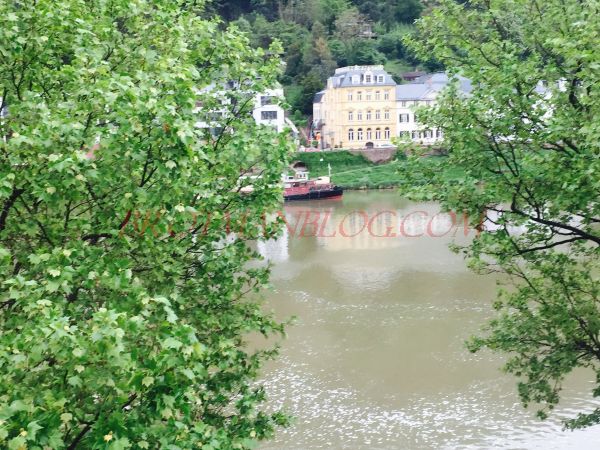
Bingen is located at the junction of two rivers—the Rhine and the Nahe.  It is a small city; today its population is about 25,000 people.  Our hotel, the Roemerhof, overlooked the Nahe river (which we could see if we peered between two buildings outside our window).  While walking along the river, we saw ducks swimming along.  The region is known for wine-making, and we could see vineyards in the hills surrounding the city.

There is evidence that Bingen was settled as early as Roman times, and its location gave it strategic importance as a gateway to the Rhine Valley region.  There was a Jewish community in Bingen at least as early as the 12th century. Although the Jews were expelled from Bingen in both the late 12th century and the 16th century, they returned and resettled.  Jews worked as money lenders in the earliest times, but in later times, Jews like my own relatives were merchants and wine traders. In 1933 there were 465 Jews living in Bingen. Half left by 1939, and those who remained were deported. Only four returned. Today there is a small number of Jews from Russia living in Bingen, but no real synagogue or formal Jewish community.

Jews being deported from Bingen. Courtesy of the Arbeitskreis Judische Bingen.

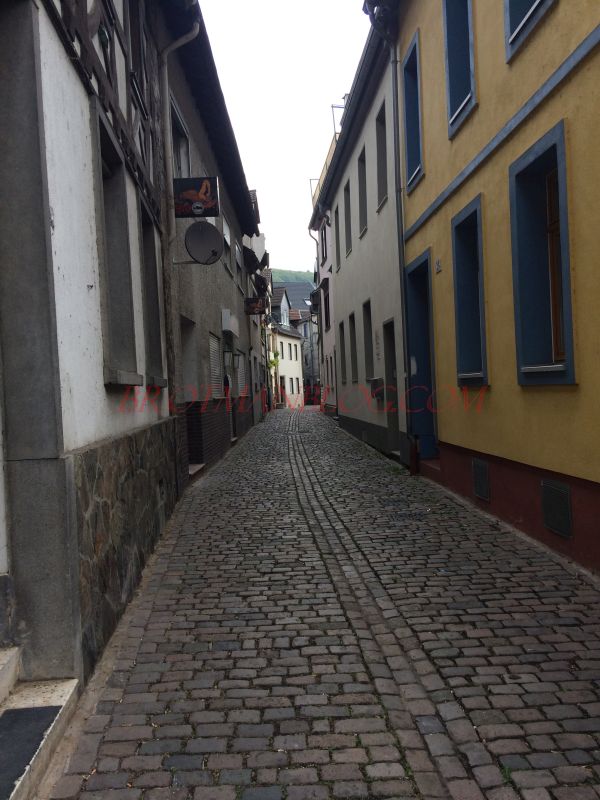
Bingen suffered extensive damage by Allied bombing during the war, and parts of the the city today are not particularly pretty, although there are still lovely winding streets and open squares throughout the city, some lined with older buildings and homes.  Many of the buildings, however, are post-war concrete construction that do not have much aesthetic appeal.

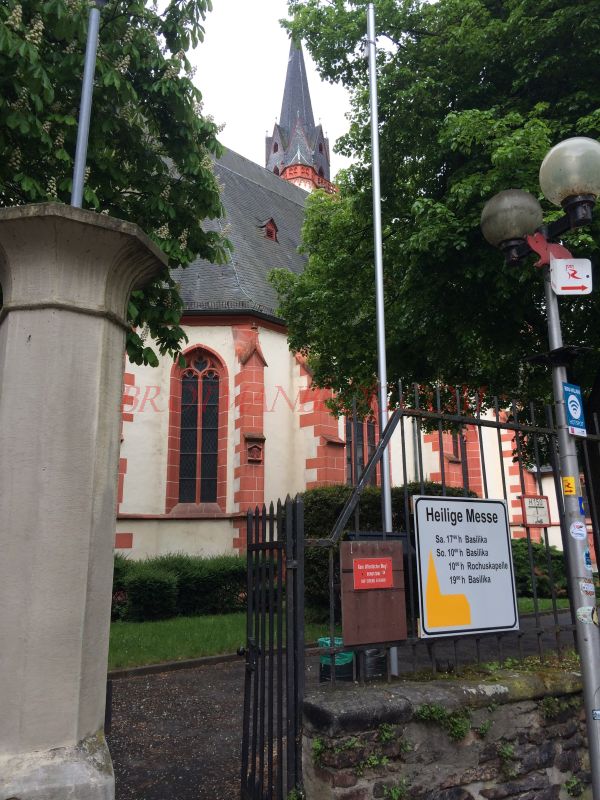
Catholic Church in Bingen

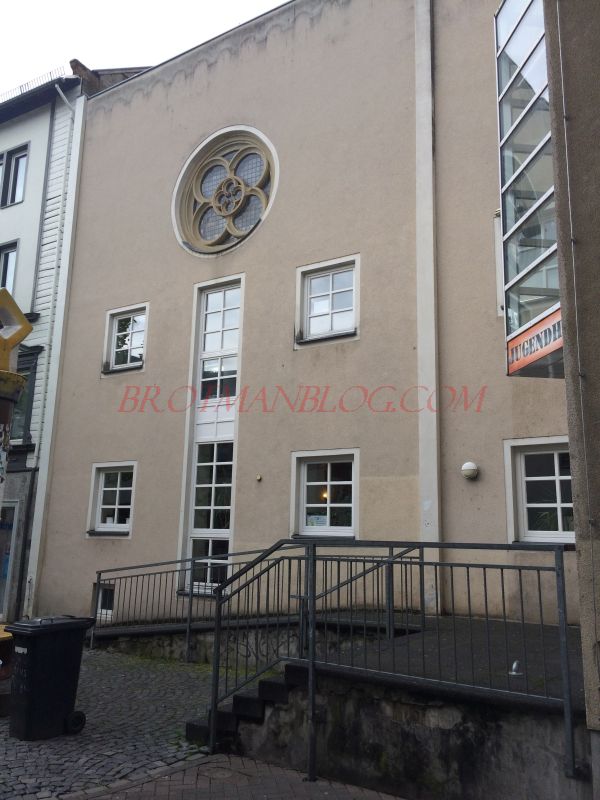
Beate took us to see two former synagogue buildings.  The first had been closed by the Jewish community itself in 1905 because the community, numbering at that time about 700 people, needed a larger space.  Today it is used as a youth center.

Old synagogue in Bingen

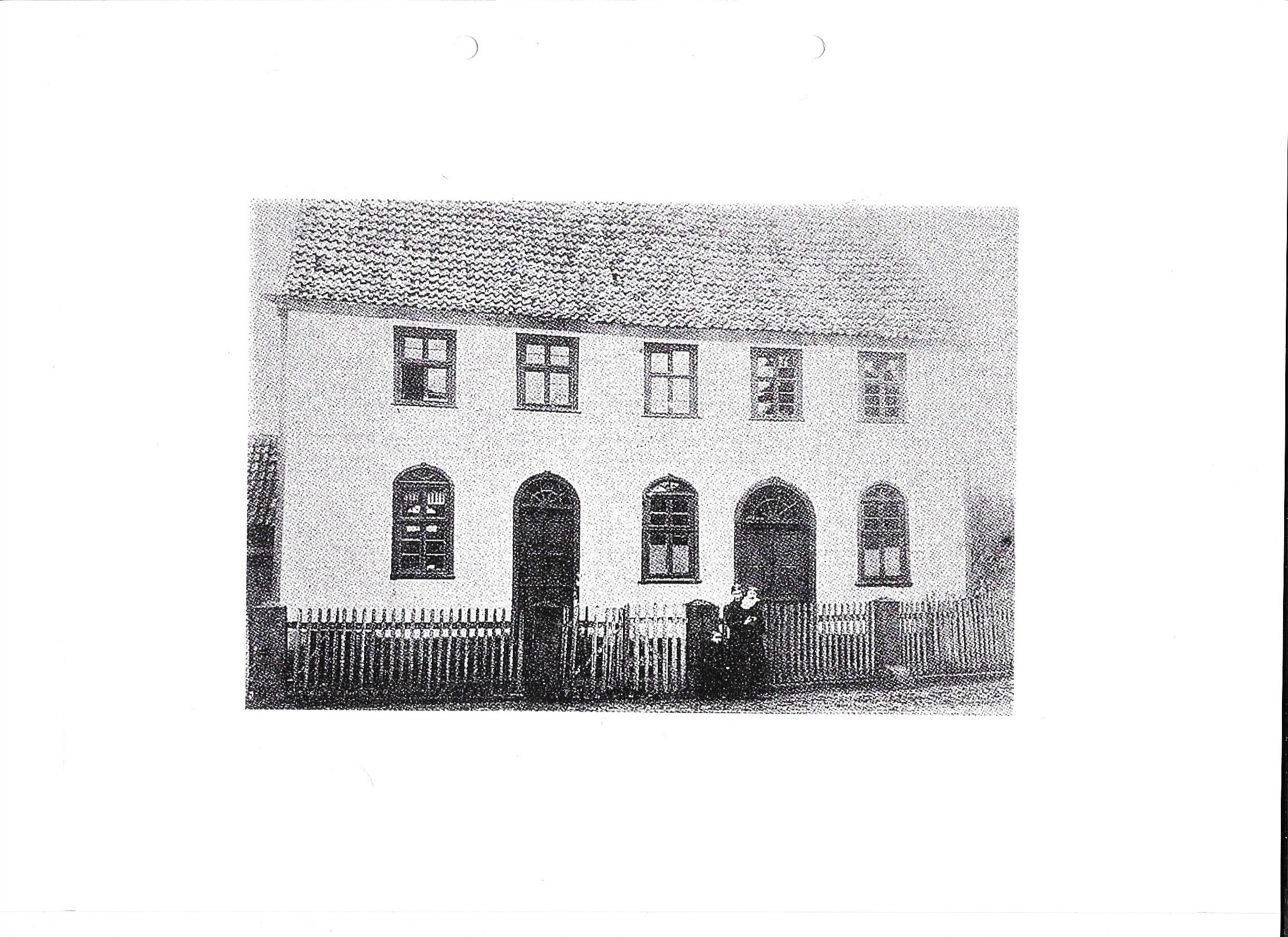
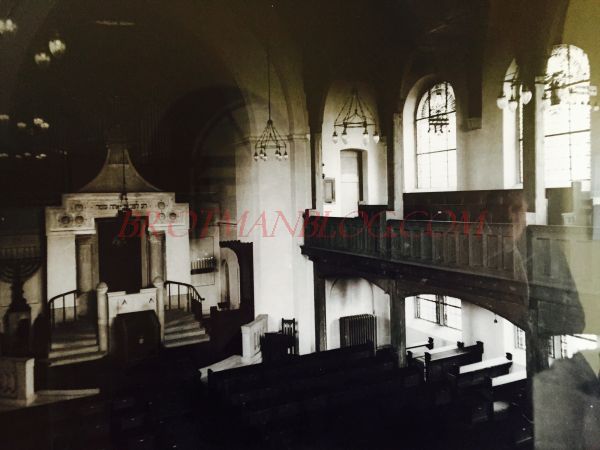
The second synagogue, which opened in 1905, was once quite a grand building. Here are some photographs from the Arbeitskreis Judsiche Bingen of what it looked like before 1938 as well as a model showing what the exterior looked like:

Courtesy of the Arbeitskreis Judische Bingen.

Courtesy of the Arbeitskreis Judische Bingen.

Courtesy of the Arbeitskreis Judische Bingen.

Like so many synagogues across Germany, it was partially destroyed by fire in November, 1938, on Kristallnacht. After the war the building was sold, as there was no longer a Jewish community that needed it. Most of the building was taken down, but part remains.  Today part of it houses the Arbeitskreis Judische and provides a meeting space for the Russian Jews who live in Bingen.

1905 Bingen synagogue

Beate also took us to several homes where some of our Seligmann cousins had once lived.  We saw the house that had belonged to Bernhard Gross and his wife, Bertha Seligmann.  Bertha was my first cousin, four times removed. Her grandparents were Jacob Seligmann and Martha Mayer, my 4x-great-grandparents; her mother, Martha Seligmann, was the sister of Moritz Seligmann, my three-times great-grandfather. Bertha and Bernard died from carbon monoxide poisoning in their own home in 1901, as I wrote about here.

Home of Bertha Seligmann and Bernhard Gross

We also saw the former home of Bertha and Bernard’s daughter Mathilde Gross and her husband Marx Mayer.  Mathilde is the cousin whose memoir inspired me to start learning German. (I still am not fluent enough to read it with much ease, however.) Her husband Marx died in 1934, but Mathilde and all their children emigrated from Germany in the 1930s and were able to survive the war.

House of Marx Mayer and Mathilde Gross

As you might imagine, seeing these two stately and large homes made me realize how successful the family had been and thus how much they had lost when they left Germany.

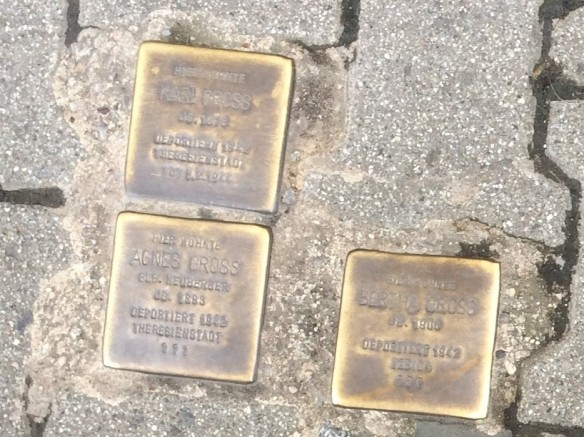
We also saw a number of stolpersteine, including these three for the family of Karl Gross, who was Mathilde Gross Mayer’s brother. Karl Gross, his wife Agnes Neuberger, and their daughter Bertha Gross were all killed in the Holocaust.  Karl was was my second cousin, three times removed. His grandparents, Jacob Seligmann and Martha Mayer, were my 4x great-grandparents. I wrote about the Gross family here.

Stolpersteins for Karl Gross and his family

Finally, Beate pointed out to us the location of the former shoe store owned by the family of Joseph Wiener.  Joseph Wiener married my cousin Anna Winter, daughter of Samuel Oskar Wiener and Rosina Laura Seligmann.  Rosina was the daughter of Hyronimus Seligmann, brother of my great-great-grandfather Bernard Seligman.  Rosina was thus also the sister of Johanna Seligmann Bielefeld, whose house in Mainz I’d seen the day before.  Rosina and her husband were both murdered in the Holocaust; their only son had been killed serving Germany in World War I.  Anna and Joseph survived and immigrated to the US in 1938.  Their daughters, Doris and Lotte, wrote the moving memoirs I was honored to excerpt on my blog here, here, here, and here.

Thus, as we left the downtown area of Bingen to drive to the Jewish cemetery up the steep hill from the town, I had the thoughts of all these cousins in my head. The people behind the names and stories I’d researched and studied suddenly felt very close and very real. Seeing some of the additional names in the cemetery made me appreciate how deeply connected my Seligmann relatives had been to the Bingen community.

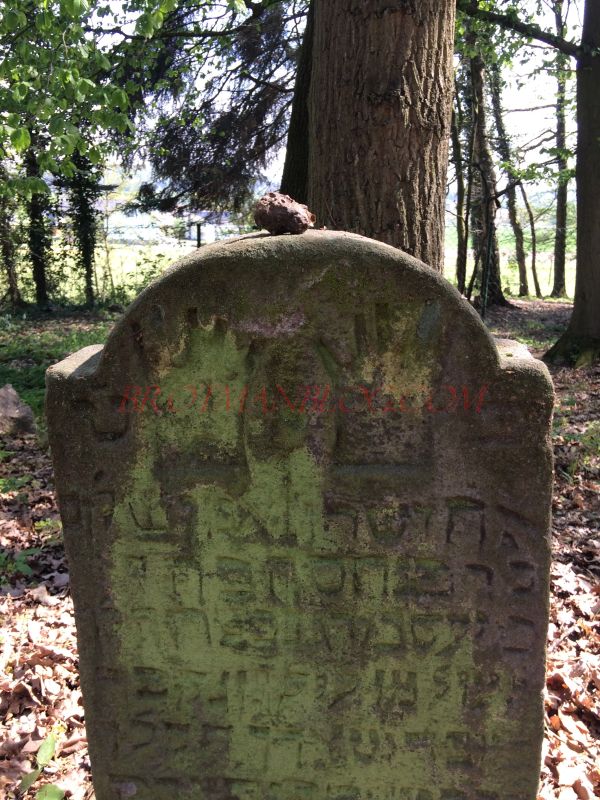
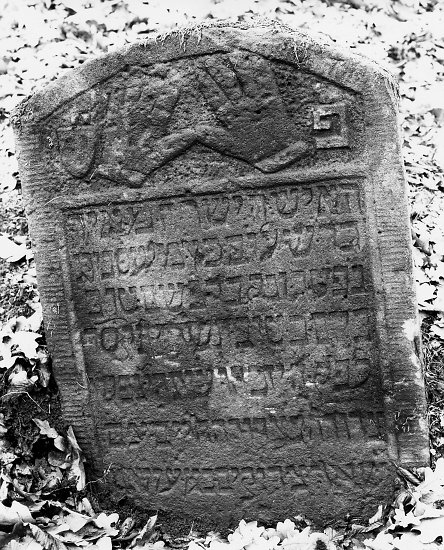
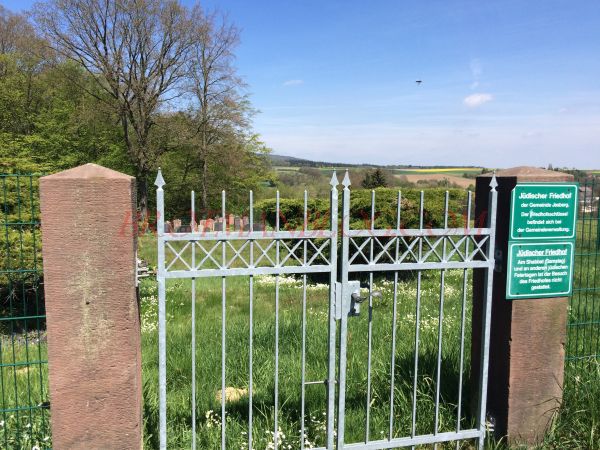
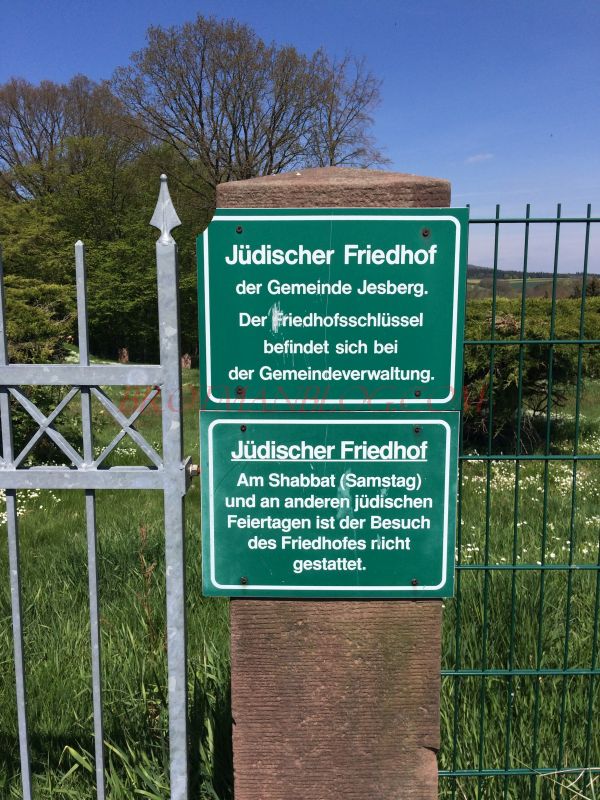
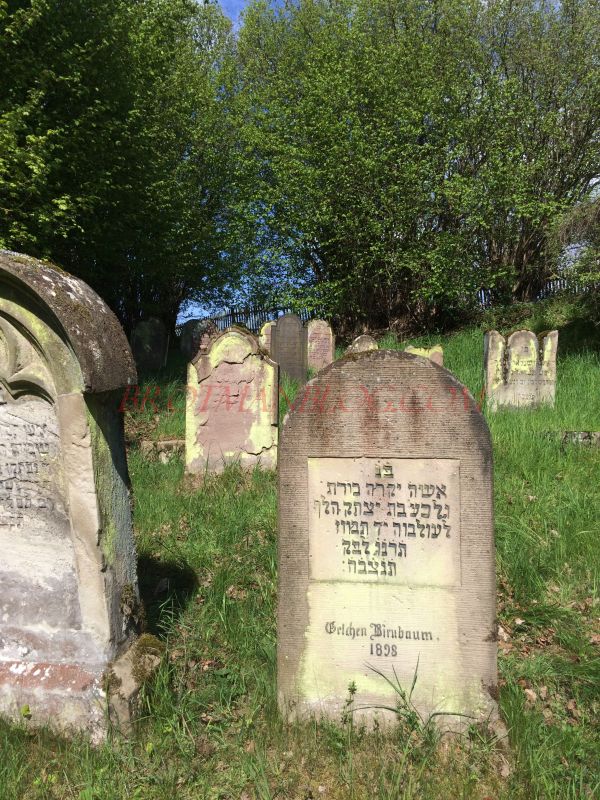
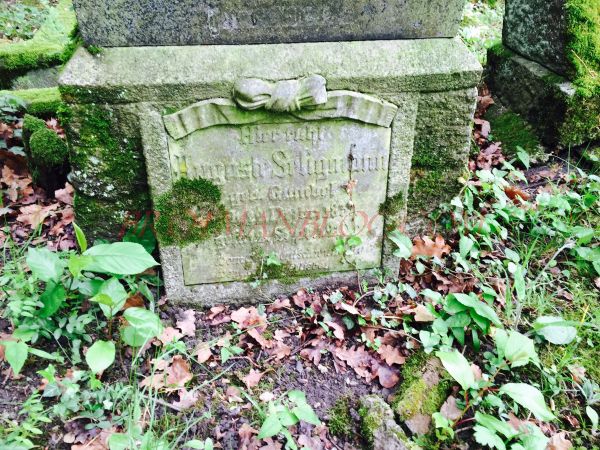
The cemetery is a large and peaceful place.  There are about a thousand headstones there in a beautiful wooded area overlooking the valley below.  It was overwhelming. I took many photographs, and I hope to be able to get some of them translated.  Here are just a few of the stones we saw for my Seligmann relatives.

Marx Mayer, husband of Mathilde Gross, granddaughter of Jacob Seligmann and Martha Mayer, my 4x-great-grandparents:

Marx Mayer

Ferdinand Seligmann and Lambert Seligmann: brothers of Bertha Seligmann. My first cousins, four times removed.

Graves of Ferdinand Seligmann and his brother Lambert Seligmann

Hermann Seligmann, brother of Ferdinand, Lambert, and Bertha.

Headstone of Hermann Seligmann

Ludwig or Louis Seligmann, son of Isaak Seligmann and another grandson of Jacob Seligmann and Martha Mayer.  Another first cousin, four times removed.

Louis Seligmann

Wife of Louis Seligmann, Auguste Gumbel

Auguste Seligmann geb. Gumbel

Emilie Seligmann Lorch. daughter of Benjamin Seligmann and Martha Seligmann (who were first cousins).  Martha Seligmann was the sister of Moritz Seligmann, my 3x-great-grandfather. She was my 4x great-aunt.

Emilie Seligmann Lorch

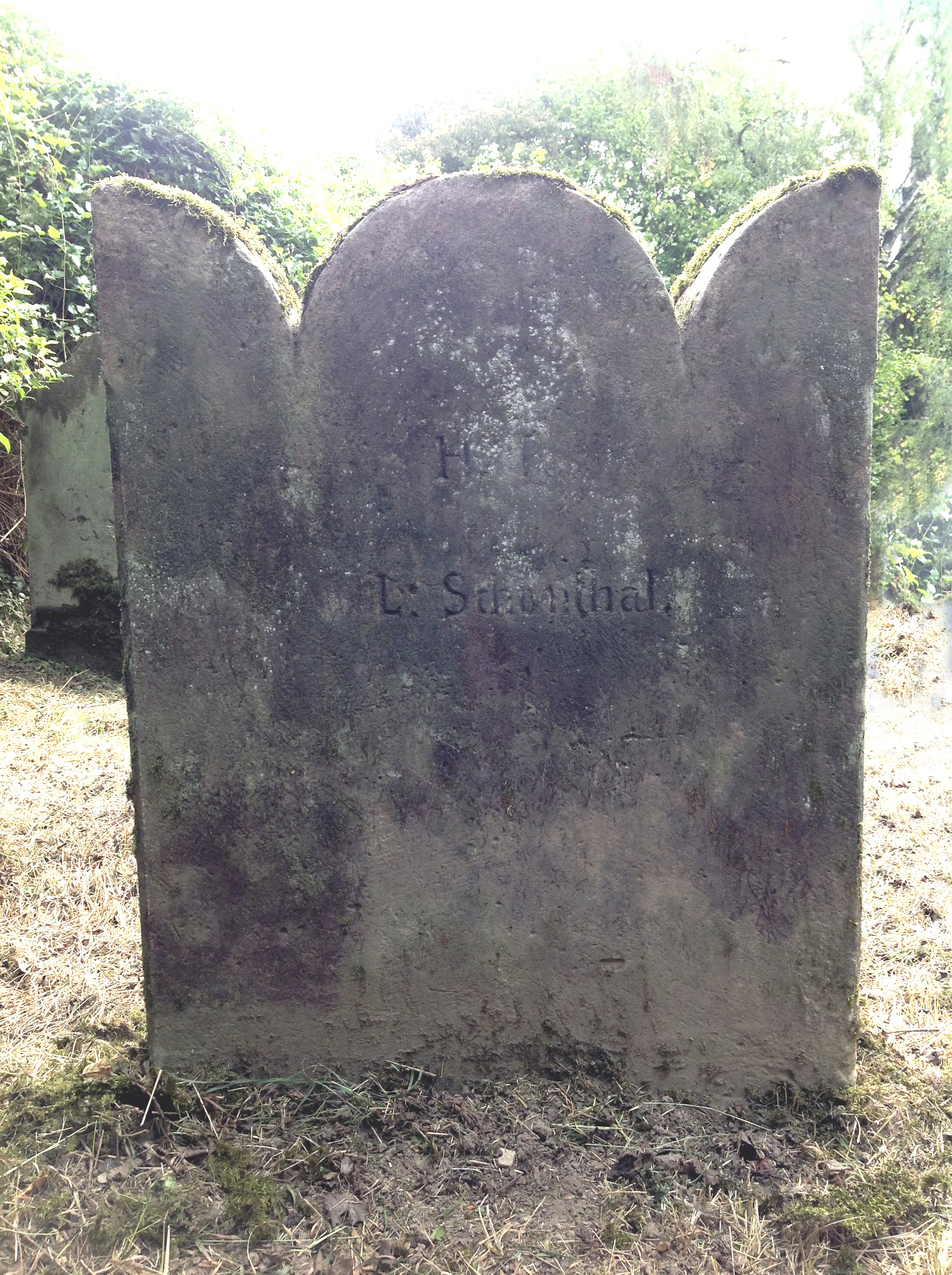
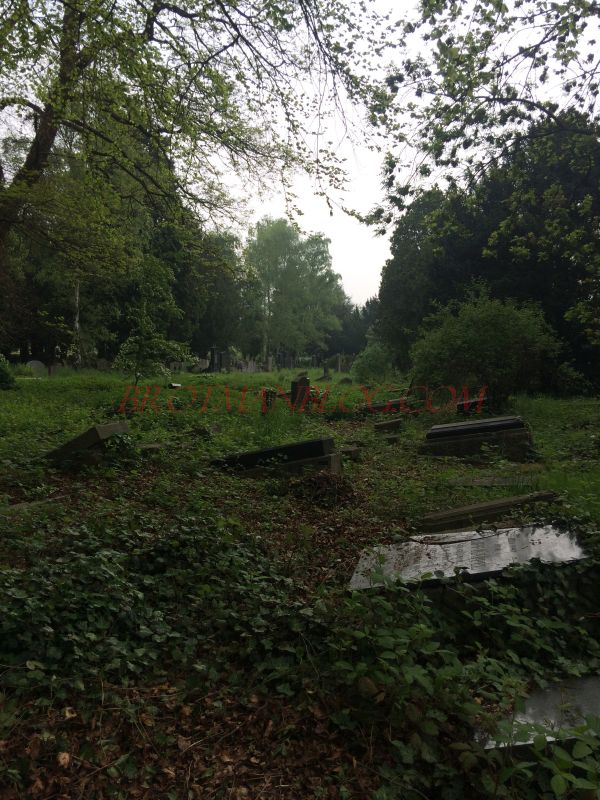
There were probably many, many more of my Seligmann cousins buried in Bingen’s Jewish cemetery, but many stones were impossible to read, and the sheer volume of stones made it overwhelming to think about searching for more.  I took some additional photographs of stones that would need translating from Hebrew, but I had to accept that there was no way to find and photograph every headstone in the cemetery in the limited time we had.

By the end of our afternoon in Bingen, it was clear to me that this city had been at one time the place where most of my Seligmann relatives and ancestors had lived.  Although I had not found the gravesites or homes of any of my direct ancestors, I knew that many of my cousins had lived and died in Bingen, sadly some at the hands of the Nazis.  Bingen was the home of the earliest Seligmann ancestors I’ve found, Jacob and Martha (Mayer) Seligmann back in late 18th century, and there were Seligmann descendants still living there in the 20th century.

We would return to Bingen the following evening for dinner, but first on the following day we were to visit Gau-Algesheim, where my great-great-grandfather Bernard was born and lived until he came to America in the1840s.

First Stop on Our Trip to Germany: Mainz

We spent our first day and a half in Germany in the beautiful and ancient city of Mainz, a city with a population of about 200,000 people and a city that was once an important center for Jewish learning and culture. Our visit there created some cognitive dissonance for me as we experienced such incredible beauty and also memories of such horrific ugliness.

We flew into Frankfurt Airport on May 2 and found the train to Mainz.  Once on the train, we were not entirely sure that we’d gotten on the right train.  Despite a full year of learning German online, I could not make out one word of the train announcements.  Fortunately, a very kind man sitting across from us realized we were confused and reassured us that we were on the right train and that he would tell us when to get off.  From the start, we were favorably impressed with the people in Germany.

Our hotel, the Mainz Hilton, was right on the Rhine; it is a large American-style hotel with large rooms and all the amenities.

The Rhine

We were exhausted after the overnight flight and took a short rest before meeting Wolfgang at 1:30.  And the adrenaline kept us going. I had so anticipated meeting my cousin Wolfgang.  We had been emailing each other for over two years on a regular basis, at first mostly about family history, but as time went on more often exchanging current information—about our families, our lives, politics, German and English, and life in general.  Meeting him in person for the first time, I felt as if I must have already met him and spent time with him. The connection was immediate, and he was just as I imagined based on his emails.  A warm and open person, sensitive and kind, intelligent and perceptive.  And with a delightful sense of humor.

My cousin Wolfgang and me

Wolfgang had planned a walk through the sights closest to our hotel and then a tram tour around the city to see some of the sites that were further out. We strolled along the Rhine for a bit.  The weather was rainy and quite cool, but it did not put a damper on my spirits. We passed a sculpture reflecting the division of Germany after World War II and its reunification in 1990.

We walked past a 15th century watch tower known as the Holzturm (“wooden tower); it was destroyed by bombing in World War II but reconstructed and restored to its original appearance.

Then Wolfgang showed us the house where Johanna Seligmann and Alfred Bielefeld had lived.  Johanna was my first cousin, three times removed.  She was the daughter of Hyronimus Seligmann, brother of my great-great-grandfather Bernard Seligman.  Alfred, her husband, was a wine merchant in Mainz.  Both were killed in the Holocaust.  They were deported to Terezin first, where Alfred died in 1945; Johanna was then sent to Auschwitz, where she was killed in 1945.  Their children, Hans and Lily, survived and lived in the United States.  I wrote about Johanna and her family here and here.

Johanna Bielefeld nee Seligmann

Bielelfed house in Mainz

Just around the corner from where the Bielefelds lived was the so-called “Jew House” where the Nazis moved Jewish families before deporting them.  Although the house itself no longer exists, this is where it was located:

We then visited a beautiful 18th century church, St. Augustine, with an elaborately decorated interior:

St Augustine church in Mainz

Perhaps my favorite spot in Mainz was the Kirschgarten—a small square framed by several half-timber houses, some now restaurants.  This little square captured exactly what I expected an old German city or town to look like—something out of Hansel and Gretel or some other fairy tale. The oldest house in Mainz is located in the Kirschgarten:

Kirschgarten in Mainz

Everywhere we turned there were beautiful half-timber buildings, sometimes right next to a post-war building.

We then visited the Dom, or cathedral, a large Romanesque sandstone structure located on the main market square in Mainz. The cathedral’s oldest sections are a thousand years old with later additions over the years.  It was damaged by bombing in World War II, but restored afterwards.  The cloister is a peaceful place for contemplation, and the high vaulted ceiling in the main part of the cathedral forces you to look upwards.  It is an impressive and inspiring building.

Mainz Marktplatz

Cloister at the cathedral in Mainz

At this point we caught the little tram that took us on a tour around other parts of the city, passing the Rathaus (town hall), the Schloss (a palace more than a castle), the new synagogue, and the building where the Gestapo was housed during World War II. I couldn’t get any photos of these sites as we were moving too fast, but I was glad to be seated and not walking at that point. I asked Wolfgang if we could come back the next day to see the synagogue.

As I wrote here, our first stop on Wednesday was our visit with Wolfgang’s mother Annlis, a time I will never forget.

Then we continued our tour of Mainz.  We passed the location where Fritz/Fred Michel once owned a store.  Fred Michel was the son of Franzeska Seligmann and the grandson of August Seligmann, Wolfgang’s great-grandfather and another brother of my great-great-grandfather Bernard. Fred and his wife Ilse came to the US in the 1930s and settled in Scranton, Pennsylvania.  I wrote about Fred, his mother, and his family here.

Fred Michel and Franziska Seligmann Michel
Courtesy of the Family of Fred and Ilse Michel

Location of Fred Michel’s store in Mainz

We then walked up the steep hill to St. Stephen’s church, where there are a number of windows designed by Marc Chagall.  The contrast between the thousand year old medieval structure and the gorgeous blue Chagall windows is striking. Like so many other buildings in Mainz, this church was damaged by bombing during World War II.  According to Wikipedia, the priest at St. Stephens, Monsignor Klaus Mayer, was a friend of Marc Chagall and approached him in the 1970s to design new windows. This is the only church in Germany for which Chagall designed windows, and he saw it as a way of expressing his hope for peace between Christians and Jews.  To see the work of a Jewish artist and his depictions of figures from the Jewish bible inside a medieval Catholic church was very moving.

St Stephen’s church in Mainz with Chagall windows

We then walked back to the hotel to pick up our luggage and Wolfgang drove us to see the new synagogue.  I knew before coming that Mainz had a long and very important history as a Jewish community. According to several sources, Mainz had a Jewish community at least as early as the tenth century. Rabbi Gershom ben Judah, known as “the light of the diaspora,” was an early important leader of the Mainz Jewish community, and his codification of Jewish law was accepted in many other communities in Europe as well.

The Jews, however, were expelled from the city in the eleventh century; they returned later, but then a thousand were killed during the first Crusade during the twelfth century.  Later, many died from the Black Death and from persecution. For several centuries there was not much of a Jewish community in Mainz. The community began to grow again in the 18th and 19th centuries. Synagogues were constructed, and Jews for some time lived in peace in the community. By 1900, there were 3000 Jews living in Mainz, according to JewishGen.org

On November 9, 1938, the Mainz synagogues were attacked as part of Kristallnacht and burnt and in some cases destroyed; there were over 200 synagogues at that time in Mainz, including the largest synagogue, Neue Synagogue, which was completely destroyed. Most of the Jews who remained in Mainz, including my Bielefeld cousins, were eventually deported and killed.

But today there is hope.  A new synagogue was built on the site of the former Neue Synagogue in 2010, and it is an imposing structure.  As this article describes, it was consider a symbol of hope for the revival of Jewish life in Germany. Outside the synagogue stand pillars from the original synagogue, a permanent reminder of what had existed and what was destroyed. The city now has about a thousand Jews who are affiliated with the synagogue as well as many others who are not.

The website of Manuel Herz, the architect who designed the new synagogue, provides a great deal of information about the history and about the reasons for the choices made in naming and designing this new building.  The synagogue is called Meor Hagolah, which means “Light of the Diaspora,” the name used to refer to Gershom ben Judah because of his wisdom and his broad-reaching influence on the practice of Judaism. The Hebrew words on the door to the synagogue are translated as “Light of the Diaspora Synagogue Mainz.”

Meor Hagodah Synagogue Mainz

The building’s shape is supposed to evoke the Hebrew word Kedushah, meaning holiness and referring to one of the sections of the Amidah prayer. I must admit I could not see the letters no matter where I stood outside the building, but I like the concept. The building overall is quite imposing and, in my opinion, not very welcoming.  It looks more like a fortress than a house of prayer.  Maybe that is in part the point: that this is a safe place that will not be destroyed again.

We stopped at the historic Mainz cemetery on our way out of town.  I have no known family members there, and we could not go inside, but the age and number of the gravestones there are another reminder that there was once a large and important Jewish community there.

Mainz Jewish cemetery

Mainz is truly a beautiful city, and despite all the damage inflicted during the war, it retains its charm, its character, and its architectural beauty. It is hard to imagine, amidst all that beauty and all those churches, how the Jewish community that lived there so long could have been destroyed.  But it is also important to look forward. I left the city feeling hopeful, knowing that a new synagogue and a growing new Jewish community exist in the city of Mainz.


Why Germany?

Before we left for Germany, we received many strange reactions when we would tell people we were traveling to Germany.  Some people were quite blunt: how could we visit that country after what they did to the Jews in the Holocaust? Others were more subtle and just shrugged and said, “Why would you go there?” Others simply looked bemused.  Some people said, “Just Germany?” I know if we were going to Italy or England, no one would have reacted that way.  Germany just did not seem to be an appealing destination to many of the people we know.

Even when I explained that I was going to see the places where my father’s ancestors had lived and meeting cousins who live in Germany, people reacted strangely. So now that we are back, I can better explain why we went to Germany and why other people might want to go there as well. I will write about the specific experiences we had in the various places we visited in later posts, but first I want to put the trip in perspective and give some overall thoughts about what we saw and what we learned.

First, Germany is a beautiful country with so much to see and experience.  The Rhine River and the rolling hills and wide open green spaces are a delight.

On the Rhine from Bingen to Koblenz

Some of the cities and towns we saw are as charming, interesting, and historically and culturally rich as any we have seen in other places.  In particular, Mainz, Wurzburg, and Heidelberg are beautiful with storybook churches, elegant palaces, and inviting and exciting markets and squares.  The houses range from half-timber fairy tale houses to rococo-decorated merchant homes.

Mainz

In the smaller villages and towns, you get a feeling for how life has been lived in such places for centuries.  They are not like the small town where I now live.  There are clusters of houses around a central square with a church and town hall anchoring that common space.   Surrounding these clusters of homes and buildings are miles and miles of open land.

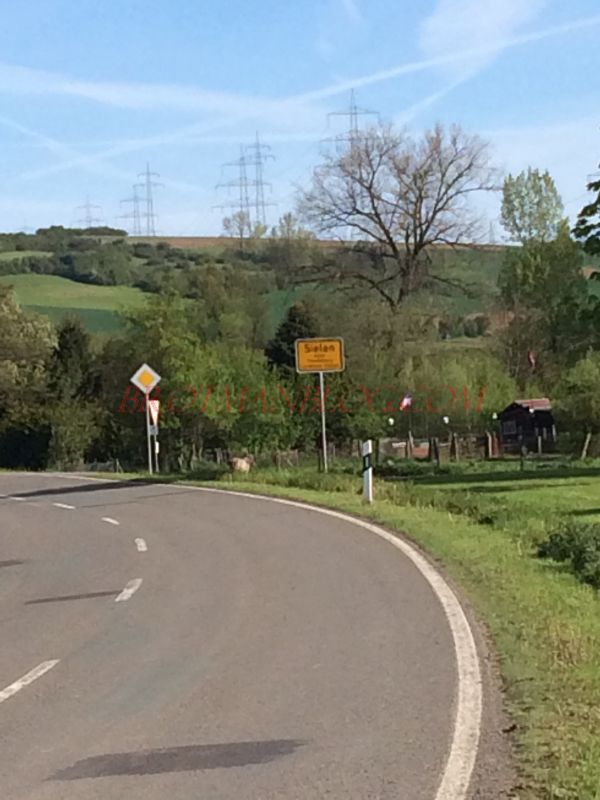
Countryside near Sielen

Second, people need to see and understand the damage that war can do. The places destroyed by the Nazis—especially the synagogues and cemeteries—are terribly heartbreaking to see, and there are constant reminders of the Jews who were deported and killed by the Nazis. You cannot go any place in Germany without being reminded that there were once Jews there and that they were persecuted and murdered.

Stolpersteine in Bingen

And some of the places we visited—Cologne, Kassel, and Bingen, in particular—were devastated by Allied bombing during the war.  They’ve been rebuilt, but quite often the new architecture is bland and boring. Often people would comment on how beautiful a city had been before the bombing. The Germans live with daily reminders of what their country did during the Third Reich and also what the war cost them.

A street in Cologne showing a Roman arch at the end of a post war street.

I can’t say that as an American Jew, I felt any guilt about the damage my country did to Germany in order to stop the Nazis.  But I also never once heard any of the many Germans we spoke to express resentment or hostility towards the Allies for the harm done to their country.  They seem to understand and accept that the Allied attacks were a necessary response to the aggression and genocide committed by the Nazis. Nevertheless, as the world continues to use violence and destruction as a means of settling disputes, we all should understand the consequences of war—not only in terms of loss of life, but also in terms of loss of culture, history, art, and architecture.

Which brings me to the third important lesson we learned while in Germany.  There are many non-Jewish Germans who are working with a true passion and commitment to preserve and restore the history of the Jewish communities that were wiped out during the Holocaust.  These people by and large are volunteers—good and dedicated people who were born either during or after the war and who are horrified by what the Nazis did.  We spent a great deal of time with six of these people in a number of different towns where my ancestors once lived.

Just a few of the good people we met in Germany (and my husband Harvey)

We asked all of them why they are doing this work.  Their answers varied; one said it was because she’d had a Jewish teacher as a child with whom she’d been very close; another said that it was discovering a former synagogue that had been desecrated; another mentioned that it was learning what had happened to the Jews in his small town that had motivated him to learn more.  They are all warm, thoughtful, and kind people. They became friends.  One man, with tears in his eyes, spoke about his gratitude to the US for the aid it provided to German citizens after World War II.  These people spent many hours with us and did not charge us one cent.  They just wanted to help.  They want Jews to know about the work they are doing; they want us to come and visit and reclaim our history.  They want to help us reclaim that history, and they want us to help them preserve it.

And that’s what I did in Germany.  I stood where my ancestors once stood.  I staked my claim as a person whose family once lived and thrived in the towns of Germany, as a person who is also a part of the history of that place.  I wanted to make a visible statement that Hitler did not win because Jews still exist; we survived, and we are as entitled as anyone to walk the streets of Germany.  By going to Germany and talking to those who live there, I was able to let them know that we have not forgotten what happened during the Third Reich, but we also have not forfeited our claim to our history in those places.

Standing at the graves of my 3x-great-grandparents, Scholum Katzenstein and Breine Blumenfeld in Haarhausen cemetery

I understand that not everyone will feel as I do. And it’s not my intention to change anyone’s mind.  I just want to explain my feelings to those who have asked and will continue to ask me with that skeptical look, “Why would you go to Germany?” Because we can.  Because the Nazis did not win.  Because we have every right to claim our rich heritage and our long history in that country. And because many people who live there want us to do just that.

Another Small World Story, Another Twist in the Family Tree

In my last post I described my discovery that Rose Mansbach Schoenthal was not only related to me by her marriage to Simon Schoenthal, the brother of my great-grandfather Isidore Schoenthal, but that she was also related by marriage to my other great-grandfather Gerson Katzenstein through her Mansbach cousins.   This post is about another discovery of a strange twist in my family tree, but this one involving two living cousins.

Last week I received a comment on an old blog post about Elizabeth Cohen, who was the sister of my other great-grandfather, Emanuel Cohen.  The man who left the comment on my blog, Joel Goldwein, is the great-grandson, through his mother’s side, of Elizabeth Cohen.  He is thus my third cousin.  I was, of course, delighted to make this connection, and I emailed Joel to learn more about him and our mutual family.

In the course of the exchange of emails, Joel shared information not only about his mother’s family, but also about his father, Manfred (Fred) Goldwein, who had escaped from Nazi Germany on the Kindertransport to England.  His father’s parents and other family members, however, were murdered by the Nazis.  Joel sent me a link to a website about his son’s bar mitzvah in Korbach, Germany, the town where his father was born and had lived until he left Germany.  I was very moved by the idea that Joel’s family had returned to this town to honor the memory of his father’s family.

I mentioned that I was going to be in Germany, not far from Korbach, because I had Hamberg ancestors from Breuna.  Joel then mentioned that his paternal great-grandparents are buried in Breuna and that he had visited the cemetery there.  He sent me a link to his photographs of the cemetery, and I looked through them in search of anyone named Hamberg.

Imagine my surprise to find this photograph:

Courtesy of Joel Goldwein

Baruch Hamberg was the second cousin of my great-great-grandmother, Henrietta Hamberg Schoenthal.  More importantly, he was the great-grandfather of my fifth cousin, Rob Meyer.

Some of you may remember the story of Rob.  He and I connected through JewishGen’s Family Finder tool about a year and a half ago, and we learned that not only did Rob live about a mile from where I had once lived in Arlington, Massachusetts, we also had very good mutual friends.  It was one of those true goosebump moments in my genealogy research, standing in a cemetery in Longmeadow and talking to Rob as we realized that we both had the same close friends.

Rob’s mother had, like Joel’s father, escaped from Nazi Germany, and she also, like Joel’s father, had lost most of the rest of her family in the Holocaust. I sent the headstone photograph to Rob, and I asked whether he might be related to Joel.  Rob answered, suggesting that perhaps he was related to Joel not through Baruch Hamberg, but through Baruch’s mother, Breinchen Goldwein.  A little more digging around revealed that in fact Joel was related to Breinchen: her brother Marcus Goldwein was Joel’s paternal great-grandfather.

Thus, Joel and Rob are third cousins, once removed, through Rob’s mother’s side and Joel’s father side. And although they did not know of each other at all, Joel also had a photograph of the street in Breuna named in memory of Rob’s aunt:

Courtesy of Joel Goldwein

.

It gave me great pleasure to introduce Rob and Joel to each other, who soon discovered that not only are they third cousins through their Goldwein family line, they are also both doctors and both graduates of the same medical school.

And they are both my cousins, Rob through his mother’s Hamberg side and Joel through his mother’s Cohen side.

There truly are only six degrees of separation.

My Grandmother’s Cologne Cousins: More New Records

Aaron Knappstein, our Cologne guide, really pulled the rabbit out of the hat when he found the Schopfloch death records for my four-times great-grandparents, Amson Nussbaum and Voegele Welsch, but his magic tricks did not end there.  He also was able to locate birth records for a number of the children of Jakob Schoenthal and Charlotte Lilienfeld.

My great-grandfather Isidore Schoenthal had two siblings who did not immigrate to America, and his older brother Jakob was one of them.  Jakob married Charlotte Lilienfeld and was a merchant in Cologne.  He and Charlotte had five children: Johanna, Lee, Meyer, Henriette, and Erna. They were my grandmother Eva’s first cousins.

I’ve told their stories in prior posts.  Four of the children survived the Holocaust.  The two sons, Lee and Meyer, immigrated to the US long before Hitler came to power, and Erna escaped with her son Werner during the 1930s.  Johanna and her husband spent time in the Gurs concentration camp and came to the US after the war.  Tragically, Henriette and her husband were murdered by the Nazis.

Thus far Aaron has located birth records for four of the children: Johanna, Lee, Meyer, and Erna.  I hope that he is able to find the record for Henriette as it would indeed be tragic if her record was the only one that did not survive, just as she was the only sibling who did not survive.

Here are the records that Aaron has thus far located:

Birth record of Johanna Schoenthal (Nr. 3030/1880)

father: Jakob Schönthal (tradesman)
mother: Charlotte Lilienfeld
both jewish religion
Köln, Breitestraße 113

June 5, 1880


birth-record-johanna-schoenthal

Birth record of Lee (Leo) Schoenthal (Nr. 5717/1881)

father: Jakob Schönthal (tradesman)
mother: Charlotte Lilienfeld
both jewish religion
Köln, Breitestraße 113

December 6, 1881


birth-record-of-lee-schoenthal

Birth record Meier Schönthal (no. 606/1883)

father: Jakob Schönthal (tradesman)
mother: Charlotte Lilienfeld
both jewish religion
Köln, Breitestraße 113
February 7, 1883
05.15 in the morning


meyer-schoenthal-birth-recod

Birth Record Erna Schönthal (no. 577/1898)

father: Jakob Schönthal (tradesman)
mother: Charlotte Lilienfeld
both jewish religion
Köln, Breitestraße 85
March 27, 1898
08.15 in the morning

erna-schoenthal-birth-record

Sliding Doors

Back in April, I wrote about the family of Rosalie Schoenthal, my great-grandfather’s sister, the one who stayed in Germany to marry Willy Heymann.  Most of what I knew of their fate I learned from the memoir written by Ernest Lion, the man who married Rosalie and Willy’s granddaughter, Liesel Mosbach.  Liesel, her sister, her parents, and her aunt, were all victims of the Holocaust. Ernest Lion memorialized them all in his heartbreaking memoir, The Fountain at the Crossroad.

As I mentioned in a subsequent post written for Yom Hashoah in May, I was so moved by Ernest’s story that I tracked down his son Tom to ask about getting it published so that it could be more widely read.  Since then, I have been working with Tom to edit and format the memoir for publication.  (We’ve run into a few obstacles, but that’s a story for another day.)  I am hoping that sometime soon the book will be available for distribution. When it is, I will post the relevant information on the blog.

But none of this would be possible without the help of another of my cousins by marriage, Sharon.  Sharon is married to the great-grandson of Simon Schoenthal, who was also my great-grandfather’s brother as well as Rosalie Schoenthal Heymann’s brother.  And Sharon, who writes the blog The Heart and Craft of Life Writing, has a great deal of knowledge not only about writing, but also about getting your writing published.  Sharon and her husband were the ones who shared with me the remarkable memoir written by Hettie Schoenthal Stein.  So when I decided to try and get Ernest Lion’s book into a publishable format, I turned to Sharon for help.

Sharon spent hours through email and Skype instructing me on how to turn a typed manuscript into a format that is not only more readable, but also professional looking.  She has been incredibly patient with me, as all this was new to me, and the old brain isn’t quite as flexible as it once was.  I cannot possibly express how grateful I am to her for her help.

One of the last things we worked on was inserting photographs into the memoir, and as she was doing this, Sharon was struck by the resemblance she saw between Liesel Mosbach Lion, Ernest’s first wife and our mutual cousin, and Sharon’s mother-in-law, Blanche Stein Lippincott.  She sent me a photograph of Blanche and her family that I had not previously seen.

ezzie-blanche-parvin-1940

Blanche Stein Lippincott and her family 1940 Courtesy of the Lippincott family

And here is a photograph of Liesel Mosbach and Ernest Lion that I obtained from Ernest’s son to put into his book:

wedding-ernest-liesel-dec-18-1940-600-dpi

Liesel Mosbach and Ernest Lion Courtesy of the Lion Family


The resemblance is striking.  Blanche and Liesel were second cousins, but from these two photographs, they could have been sisters.

jpg-blanche-to-liesel


But what different lives and fates they had, and the expressions on their faces in these two photographs reflect those differences. While Blanche looks healthy and happy, Liesel looks drawn and sad, even on her wedding day.

Blanche was born in 1912 in Tucson, Arizona, and grew up living on the American frontier in the 1910s and 1920s.  Her mother Hattie and her aunt Gertrude had ventured out west after growing up in Philadelphia and Atlantic City.  They did later return to the East, as I’ve written, and Blanche spent the rest of her life living in New Jersey.  She married in 1937 and raised two children with her husband Ezra.  Blanche lived a long and happy life, making it to almost 101 years old before dying in 2013.  Her mother Hettie had made it to 103.

Blanche Stein Lippincott with her great-granddaughter 1996

Blanche Stein Lippincott with her great-granddaughter 1996

In contrast, Liesel lived a short and tragic life.  She was born in 1921 in Germany, where her father Julius Mosbach owned a fruit and vegetable stand. The family was probably living a comfortable enough life until Hitler came to power.  When Liesel married Ernest Lion on December 18, 1939, conditions for Jews were terrible in Germany, and the young couple had no idea what the future would bring.

There would, in fact, be no future. As a result of the Nazi oppression and the loss of his business, Julius Mosbach suffered a nervous breakdown; in 1941, he was sent to an institution where instead of being treated, he was murdered by the Nazis. In 1942, Liesel’s mother, sister, and aunt, and Ernest’s father were all deported and eventually killed in a Nazi concentration camp.  In 1943, Liesel and Ernest were deported to Auschwitz, where Liesel was killed.  Ernest survived and eventually escaped; he became the voice for the whole family.

Thus, Blanche and Liesel, second cousins who looked like sisters, had far different lives and fates.  I can’t help but think, what if Rosalie and Willie had come to the US like almost all of Rosalie’s siblings? What if Liesel and her sister Grete had grown up in Pennsylvania or anywhere else in the United States?

As the president of our synagogue reminded us on Rosh Hashanah, we cannot control where we are born, when we are born, or to whom we are born.  Some of us are blessed with good luck in all of those things while others are not.  We should never take that for granted.

Imprisoned on the Isle of Man

Some of my readers were disturbed, as was I, to learn that England imprisoned Jewish refugees in internment camps on the Isle of Man during World War II; one of those imprisoned was my cousin Ilse Gross, daughter of Karl Gross, as I wrote about here.

By one of those strange incidences of serendipity, someone on the JewishGen listserv and on one of my Facebook groups today posted a link to a recent story on the B’nai Brith International website about these camps.  It gives a much fuller picture of the history of the camps, what conditions were like, and why England did this.  It demonstrates how fear can lead us to do things that are fundamentally unfair and discriminatory, judging people by their race, religion, or national origin.

Here is one excerpt from the article.  You can find the rest here:

On May 27, 1940, Isle of Man residents gathered behind barricades at the docks, witnessing the arrival of the first 823 prisoners. Leaving the boat under armed guard, they included German Nazi sympathizers, mixed in with Jewish men in their 20s and 30s, as well as a few school boys, conspicuous in short pants. They would set the pattern for those coming in the next weeks and months, assigned to camps located in Ramsey, Douglas, Onchan and other seaside spots. Cleared of tourists, ordered to leave behind their sports equipment for the inmates, quaint Victorian rooming houses and private hotels were grouped together and ringed with barbed wire to form compounds. In some, Jews and Nazis shared the same spaces.
Additional information can be found at the following links:

https://en.wikipedia.org/wiki/Hutchinson_Internment_Camp

http://timewitnesses.org/english/IsleOfMan.html

Mathilde’s Brothers: Wilhelm, Isidor, and Karl Gross

Mathilde Gross Mayer, my distant cousin and the author of Die Alte und Die Neue Welt, had three younger brothers in addition to her younger sister Anna about whom I wrote in my last post.  In this post, I will tell what happened to the three brothers. In order to learn a little more about them, I decided to use my little bit of German (along with a dictionary and Google Translate) to try and read some of Mathilde’s book myself, in particular Chapter 4, which is entitled “Geschwister,” or siblings.  I also relied on the family biography on the Arbeitskreis Judische Bingen website  in addition to traditional genealogy sources.

Family View Report for Bertha Seligmann-page-001

Wilhelm, the third child of Bertha Seligmann and Bernhard Gross, was born on April 14, 1872, in Bingen.  He married Sophie Hirsch, who was a relative of his sister Anna’s husband, Wilhelm Lichter, and they, like Anna and her family, settled in Stuttgart. They had a son, Bernhard, born in Stuttgart in 1905; he was presumably named for his grandfather Bernhard, who had died from carbon monoxide poisoning in 1901.  According to Mathilde’s book (pp. 48-50), Wilhelm suffered from mental illness and was institutionalized for many years, dying in a sanatorium in Wurttemberg in 1928.

When Hitler came to power in 1933, Wilhelm’s widow Sophie  and son Bernhard Gross immigrated to Rio de Janeiros, Brazil, where Bernhard became a very successful and well-known physicist. He was appointed to the staff of the National Institute of Technology in Rio and eventually became the director.  He also served on various scientific committees of the United Nations and traveled all over the world serving on those committees; later, he was the director of the Brazilian National Commission of Nuclear Energy.  You can read more about his life and career here and here and here.  He died at age 97 in 2002 in Brazil.

Mathilde’s second brother Isidor, whom I’ve mentioned before for his role as a contributor to Mathilde’s book, was born on September 25, 1873, in Bingen.  He married Klara Emrich, and like his sister and her husband, Anna (Gross) and Wilhelm Lichter, Isidor and Klara settled in Stuttgart where Isidor worked as a banker. Isidor and Klara had one child born in 1903 and presumably also named for his grandfather; his name was Hans Bernard Gross.  When Wilhelm’s widow and son, Sophie and Bernard Gross, left for Brazil in 1933, they took Isidor’s son Hans with them as well, according to the Arbeitskreis Judische-Bingen website.  Hans was at that time a law student.

Isidor and Klara were not yet ready to leave Germany in 1933.  As indicated by a September, 1937 ship manifest, Isidor and Klara sailed from Buenos Aires, Argentina, to Southampton, England; the manifest shows that their last permanent residence was in Germany and that they were going to stay at a hotel in London, but that their “country of intended future permanent residence” was a foreign country outside of the United Kingdom.  (It looks like the far right column says “..o de Jan,” so I assume that Isidor and Klara had been visiting Hans in Rio.)

Isidor and Klara (Emrich) Gross on 1937 ship manifest The National Archives of the UK; Kew, Surrey, England; Board of Trade: Commercial and Statistical Department and successors: Inwards Passenger Lists.; Class: BT26; Piece: 1138; Item: 48

Isidor and Klara (Emrich) Gross on 1937 ship manifest
The National Archives of the UK; Kew, Surrey, England; Board of Trade: Commercial and Statistical Department and successors: Inwards Passenger Lists.; Class: BT26; Piece: 1138; Item: 48

The immigration cards below indicate that Isidor and Klara moved to Brazil in June 1939:

isidor-gross-brazil-immigration-card-from-famsearch-p-1

Brasil, Cartões de Imigração, 1900-1965,” database with images, FamilySearch (https://familysearch.org/pal:/MM9.3.1/TH-1951-22436-27549-86?cc=1932363 : 10 November 2014), Group 4 > 004914427 > image 44 of 203; Arquivo Nacional, Rio de Janeiro (National Archives, Rio de Janeiro).

isidor-gross-brazil-immigration-card-p-2

Brasil, Cartões de Imigração, 1900-1965,” database with images, FamilySearch (https://familysearch.org/pal:/MM9.3.1/TH-1951-22436-27549-86?cc=1932363 : 10 November 2014), Group 4 > 004914427 > image 44 of 203; Arquivo Nacional, Rio de Janeiro (National Archives, Rio de Janeiro).

klara-emrich-gross-brazil-immigration-card-from-family-search

Brasil, Cartões de Imigração, 1900-1965,” database with images, FamilySearch (https://familysearch.org/pal:/MM9.3.1/TH-267-12579-62878-12?cc=1932363 : 10 November 2014), Group 1 > 004551542 > image 34 of 203; Arquivo Nacional, Rio de Janeiro (National Archives, Rio de Janeiro)

klara-emrich-gross-brazil-immigration-card-from-family-search-p-2

Brasil, Cartões de Imigração, 1900-1965,” database with images, FamilySearch (https://familysearch.org/pal:/MM9.3.1/TH-267-12579-62878-12?cc=1932363 : 10 November 2014), Group 1 > 004551542 > image 34 of 203; Arquivo Nacional, Rio de Janeiro (National Archives, Rio de Janeiro)

They both lived the rest of their lives in Brazil, as did their son Hans.  Isidor died and is buried in Petropolis in 1950; Klara is also buried there; she died in 1969.  Hans died in Rio de Janeiro in 1979.

(Thank you to Andre Convers of the LatAmSIG on JewishGen.org for finding the information about Klara and Isidor’s deaths and burial for me; they are listed in Egon and Frieda Wolff’s book, Sepulturas de Israelitas Il, p.100; Sophie Gross, widow of Wilhelm Gross, is listed on p. 101 and also buried in Petropolis, but her date of death says “19.5” so I assume it was partially illegible. There are also several people named Emrich on p. 100, presumably relatives of Klara Emrich Gross.)

Egon and Frieda Wolf, Sepulturas de Israelitas II, p. 100 (Petropolis Municipal Cemetery)

Egon and Frieda Wolf, Sepulturas de Israelitas II, p. 100 (Petropolis Municipal Cemetery)

cemetery-information-for-sophie-gross

Egon and Frieda Wolf, Sepulturas de Israelitas II, p. 101 (Petropolis Municipal Cemetery)

Unfortunately, the youngest child and third son of Bertha Seligmann and Bernhard Gross was not as fortunate as his older brother Isidor or his sister Mathilde.  Karl Gross was born on March 6, 1876, in Bingen, Germany.  According to the Arbeitskreis Judische Bingen page dedicated to Karl, he married Agnes Neuberger, and they had two daughters.  Bertha was born in 1906 and presumably named for Karl’s mother, Bertha Seligmann Gross, who had died with her husband in 1901 from carbon monoxide poisoning; sadly, Bertha suffered brain damage at birth and required special care.

A second daughter, Ilse, was born in 1921, after Karl returned from service in the Germany army during World War I. He had served from August, 1914, through the end of the war and was honored several times for his service.

After returning from the war, Karl worked in the Gross family winemaking business.  Two years Hitler’s rise to power, he and Agnes decided to send fourteen year old Ilse to the International School in Geneva, Switzerland in 1935. In 1938, when she was just seventeen, Ilse left Switzerland for England.

Karl and Agnes, however, stayed in Germany to be near their other daughter, Bertha. In December, 1940, the German Reich required that Bertha be admitted to the Israelite Hospital and Sanatorium in Bendorf-Sayn, also known as the Jacoby Institute. It had been founded almost a century before as a mental institution for Jewish patients.  Its role was altered terribly by the Nazis.

According to this website,

During the first years of National Socialism the Jacoby Institute was left in relative peace; probably as an acknowledgement of the fact that it was an important employer for Sayn and the region. ….A circular decree issued by the Ministry of the Interior on 12th December 1940 decreed that “mentally ill Jews” were only to be accommodated in Sayn because “a cohabitation of Germans and Jews is not acceptable in any length of time” (illustr. 7). The option of concentrating all the patients in one location served as preparation of their deportation. In the course of five transports (between March and November 1942) 573 people were taken to the death camps in the East.

Bertha Gross was one of those 573 people; she was deported to a concentration camp in Izbica, Poland, where she died.

Karl and Klara Gross also were killed in the Holocaust. They were sent to Theriesenstadt on July 27, 1942, where Karl worked as a stretcher-bearer until he died on February 1, 1944.  In October, 1944, Klara was deported from Theriesenstadt to Auschwitz where she was murdered.

karl-gross-and-family-stolpersteine-from-judische-bingen

Stolpersteins for Karl Gross, Agnes Gross, and Bertha Gross http://www.juedisches-bingen.de/?id=54

Their younger daughter Ilse, however, survived, and like so many in this family, she ultimately thrived. As described in her obituary, after leaving Switzerland for England in 1938, at first she worked as an unpaid mother’s helper.  After England was at war with Germany, however, Ilse, along with many other Jewish refugees from the Nazis, was imprisoned as an “enemy alien” in an internment camp on the Isle of Man, according to her obituary. 

Ilse, who had been writing poetry in German since she was a teenager, began writing short stories in English while in the camp and continued her writing after she was released in 1941.  In 1948, she married Kit Barker, a British artist.  Ilse began writing under the pseudonym Kathrine Talbot and published a number of well-regarded works, including three novels, many articles, and short stories.  She died in 2006, and her obituary in The Guardian includes an extensive description not only of her life but of her work.  “Ilse Barker,” The Guardian (June 2, 2006), located here.

Thus, Mathilde Gross Mayer lost both her sister Anna and her brother Karl in the Holocaust, as well as their spouses, Wilhelm Richter and Klara Emrich, respectively; her niece Bertha also was a victim of the Nazis.  Her brother Wilhelm had died years before, so Mathilde’s only surviving sibling after 1944 was her brother Isidor, who had immigrated to Brazil along with his wife and son and Wilhelm’s widow and son and thus lived a continent away from where Mathilde was in New Rochelle, New York.

Although Mathilde was fortunate that all of her children and grandchildren and almost all her nieces and nephews had survived the Holocaust, there is no overstating the tragedy she endured—from the loss of her parents in 1901, the loss of her husband in 1934, the uprooting of her children, grandchildren, and herself from their homeland, and the cruel deaths of a number of her family members at the hands of the Nazis.

Perhaps now you can better understand why I want to be able to read her book and get a feel for the real person who endured so much and lived so long.


A Family’s Life Destroyed: The Story of Anna Gross

As I wrote last time, Mathilde Gross Mayer and her three children, Wilhelm, Ernst, and Alice, all safely emigrated from Germany in the 1930s after the Nazis had taken over.   Not all of her siblings and other relatives were as fortunate.  Mathilde had four younger siblings, Anna, Wilhelm, Isidor, and Karl.  This post will tell the story of Anna Gross, Mathilde’s younger and only sister.  Anna, like Mathilde, was my second cousin, three times removed.  We are both descendants of Jacob Seligmann.

Family View Report for Bertha Seligmann-page-001

If the birth dates provided by her brother Isidor in Mathilde’s book are accurate, Anna Gross was born September 1, 1870, or a year and a half after Mathilde’s birth on April 14, 1869.[1] Anna married William Lichter of Bruchsal in 1892, whose father Leopold Lichter owned a wine distillery.  Anna and William settled in Stuttgart, where they had a son Paul (1893) and a daughter Irma (1898).

family-group-sheet-for-anna-gross-page-001

According to a biography of William and Anna and their family published on a Stolperstein site about the family, in 1916 Wilhelm Lichter purchased a stately house on a large lot with a terrace, courtyard, garage, and a garden with pergolas and two garden sheds.

Wilhelm and Anna (Gross) Lichter, 1927 passport photos http://www.stolpersteine-stuttgart.de/index.php?docid=749

Wilhelm and Anna (Gross) Lichter, 1927 passport photos
http://www.stolpersteine-stuttgart.de/index.php?docid=749

According to the Stolperstein site, Anna and Wilhelm’s son Paul Lichter married Marie Hirsch on February 17, 1919; they would have two daughters born in the 1920s, Renate and Lore.

Just nine months after her brother married, Irma Lichter married Max Wronker on November 2, 1919.  Max had served as an officer in the German army during World War I and had been awarded the Iron Cross, Second Class.

Irma Lichter Wronker, courtesy of the Wronker family

Irma Lichter Wronker, courtesy of the Wronker family

Max Wronker during World War I, courtesy of the Wronker family

Max Wronker during World War I, courtesy of the Wronker family

Max and Irma would have two children, a daughter Gerda and a son Erich.

Max Wronker and Irma Lichter Wronker and their two children Gerda and Paul, 1927 Courtesy of the Wronker family

Max Wronker and Irma Lichter Wronker and their two children Gerda and Erich, 1927
Courtesy of the Wronker family

According to the introduction to the family papers on file with the Leo Baeck Institute (Guide to the Papers of the Lili Wronker Family 1843-2002 (AR 25255 / MF 737)), Max was the son of Herman Wronker and Ida Friedeberg of Frankfurt; Herman Wronker was an extremely successful merchant with department stores in a number of cities in Germany.  He also was a founder of a successful cinema business in Frankfurt. According to an October 25, 2007 article in Der Spiegel (“Lili und die Kaufhauskönige”), Herman Wronker was invited in the 1920s by Carl Laemmle of Universal Pictures to come to Hollywood, but Wronker was loyal to Germany and did not want to leave. (Thank you to my cousin Wolfgang for find the Der Spiegel article for me.)

The Der Spiegel article also reported that during the 1920s, the Wronker department store business employed over three thousand people with annual sales exceeding 35 million Reich marks.  When the Depression came in 1929, Herman’s son Max, husband of Irma Lichter, took over the management of the business and was forced to sell two of the Wronker department stores.

Max Wronker had a sister Alice, and I was very fortunate to make a connection through Ancestry.com with Trisha, whose husband is Alice Wronker’s grandson.  Trisha has known several members of the extended Lichter and Wronker families, and she has a wonderful collection of photographs of the family, which she generously shared with me.  The family pictures in this post are all courtesy of Trisha and her family, except where otherwise noted.

Alice Wronker Engel, Irma Lichter Wronker, and Ida Friedeberg Wronker

Alice Wronker Engel, Ida Friedeberg Wronker, and  Irma Lichter Wronker, Courtesy of the Wronker family

First cousins: Ruth , daughter of Alice Wronker Engel and Herman Engel, and Gerda, daughter of Max Wronker and Irma Lichter Wronker Courtesy of the Wronker family

First cousins: Ruth , daughter of Alice Wronker Engel and Herman Engel, and Gerda, daughter of Max Wronker and Irma Lichter Wronker
Courtesy of the Wronker family

Both the Wronker and Lichters families were obviously quite wealthy and living a good life in Germany until the Nazis came to power.  Then everything changed.  According to the same 2007 Der Spiegel article, by the end of March, 1933, the Wronkers were no longer allowed on the premises of their businesses, and the entire business was “aryanized” in 1934.

The article also indicated that at that point Max and Irma (Lichter) Wronker decided to leave Germany and move to France, where Max tried unsuccessfully to start a leather goods company.  He then received a tourist visa to go to Cairo to work as an adviser to a department store business there, but was unable to receive an official work permit and earned so little money that he was forced to sell much of the family’s personal property.

sale-of-effects-cairo

Max and Irma did not come to the United States until after the war ended.

Meanwhile, Anna (Gross) and Wilhelm Lichter also were suffering from Nazi persecution.  As reported in the Stolperstein biography, on April 1, 1938, Irma’s father Wilhelm Lichter sold the lovely home he owned in Stuttgart for 125,000 Reich marks, which was far below its value (according to assessors determining reparations after the war).  Wilhelm and Anna were allowed to rent the second floor of the home after they sold it for a one year term.

On April 26, 1938, the Germans enacted the Decree on the Registration of the Property of Jews pursuant to which all Jews were required to assess all their assets and register them if their value exceeded 5,000 Reich marks.  The Nazis also prohibited Jews from owning or operating a business, except for limited exceptions to allow services rendered by Jews to other Jews.  Additional information about these property deprivations can also be found here in a December 25, 1938 article by the Jewish Telegraphic Agency (“Nazi Restrictions, Special Taxes Strip Jews of Wealth”).

As a result of these regulations, Wilhelm Lichter was forced to pay substantial amounts of money to the German government in 1938.  After Kristallnacht, the government also passed additional laws, increasing substantially the taxes that Jews were forced to pay under the pretext that they were obligated to pay for the damage caused by Kristallnacht.  Wilhelm again was required to use a great deal of his assets to pay for these taxes.

Then, in the aftermath of Kristallnacht on November 9 and 10, 1938, Wilhelm and Anna’s son Paul Lichter was arrested and sent to the concentration camp at Dachau, where he was imprisoned until December 6, 1938.  After he was released, Paul decided to leave Germany with his wife Marie and their children; his two daughters were no longer allowed to attend school after May, 1938, and he had had to sell his business.

In order to emigrate, Paul had to comply with the Reichsfluchtsteuer, or Reich Flight Tax, a tax imposed on those wishing to leave Germany.  As explained by this Alphahistory site, “this law required Jews fleeing Germany to pay a substantial levy before they were granted permission to leave. The flight tax was not an invention of the Nazis; it was passed by the Weimar Republic in 1931 to prevent Germany from being drained of gold, cash reserves and capital. But the Nazi regime expanded and increased the flight tax considerably, revising the law six times during the 1930s. In 1934 the flight tax was increased to 25 per cent of domestic wealth, payable in cash or gold. Further amendments in 1938 required emigrating Jews to leave most of their cash in a Gestapo-controlled bank.”

Another site about the Holocaust indicated that, “As a result of these levies and others, those Jews fortunate enough to emigrate were able to save only a small portion of their assets.  For Jews remaining in Germany after 1938, whatever assets they had left were kept in blocked accounts in specified financial institutions, from which only a modest amount could be withdrawn for their living expenses.”

In order to pay this tax, Paul and Marie had to sell their personal property, including their jewelry, silverware, coffee service, sugar bowls, and candlesticks to a pawnshop and then pay a tax of 67,000 Reich marks, or the equivalent of about $30,000 in 1938 US dollars.  That would be equivalent to almost $500,000 dollars in 2016.

Paul emigrated first, arriving in New York on March 11, 1938.  According to the ship manifest (line 9), he was a liquor dealer.  He listed the person he was going to as a cousin named Meyer Gross living at 30 Parcot Avenue in New Rochelle, New York.

paul-lichter-ship-manifest-1938

Paul Lichter on 1938 ship manifest to NY Ancestry.com. New York, Passenger Lists, 1820-1957 [database on-line]. Provo, UT, USA: Ancestry.com Operations, Inc., 2010. Original data: Passenger Lists of Vessels Arriving at New York, New York, 1820-1897. Microfilm Publication M237, 675 rolls. NAI: 6256867. Records of the U.S. Customs Service, Record Group 36. National Archives at Washington, D.C. Passenger and Crew Lists of Vessels Arriving at New York, New York, 1897-1957. Microfilm Publication T715, 8892 rolls. NAI: 300346. Records of the Immigration and Naturalization Service; National Archives at Washington, D.C. Supplemental Manifests of Alien Passengers and Crew Members Who Arrived on Vessels at New York, New York, Who Were Inspected for Admission, and Related Index, compiled 1887-1952.

Paul Lichter on 1938 ship manifest to NY, line 9
Ancestry.com. New York, Passenger Lists, 1820-1957 [database on-line]. Provo, UT, USA: Ancestry.com Operations, Inc., 2010.
Original data: Passenger Lists of Vessels Arriving at New York, New York, 1820-1897. Microfilm Publication M237, 675 rolls. NAI: 6256867. Records of the U.S. Customs Service, Record Group 36. National Archives at Washington, D.C. Passenger and Crew Lists of Vessels Arriving at New York, New York, 1897-1957. Microfilm Publication T715, 8892 rolls. NAI: 300346. Records of the Immigration and Naturalization Service; National Archives at Washington, D.C. Supplemental Manifests of Alien Passengers and Crew Members Who Arrived on Vessels at New York, New York, Who Were Inspected for Admission, and Related Index, compiled 1887-1952.

That was not a name that was on my tree, but given the surname Gross, I assumed it was a relative of Anna, perhaps on her father’s side.

It also made sense that Paul would be going to New Rochelle since he had family members living in that city.  In fact, 30 Parcot Avenue was only half a mile from where Paul’s cousin Alice Mayer Kann was living in 1940 at 17 Argyle Avenue in New Rochelle as well and just two blocks from where Paul’s cousin Ernst Mayer was living at 94 Hillside Avenue in New Rochelle.

I searched the 1940 census to see if there was a Meyer Gross living at 30 Parcot Road in 1940, and I discovered that Kurt Kornfeld and his family were living at that location in 1940.  Kurt Kornfeld was one of Ernst Mayer;s partners in Black Star Publishing, which they founded after they escaped Nazi Germany, as I discussed here.  And living in the Kornfeld home as a lodger in 1940 was a 72 year old German-born woman named Matilda Mayer, who I believe I am safe in assuming was Mathilde Gross Mayer, Paul’s aunt.

But who then was Meyer Gross? I don’t know.  I checked both the 1938 and 1940 directories for New Rochelle (the 1939 was not available online), and there was no person with that name in either directory.  Since the name was entered by hand on the manifest, perhaps it was written incorrectly by the person entering the name.  Maybe it was “Mathilde Gross,” her birth name?  I don’t know.

On June 8, 1939, Paul and Marie’s eighteen year old daughter Renate sailed to New York alone; she was to be met by another “cousin” Heinz “Anspacher,” who resided at 404 West 116th Street in New York City. (See line 13.)

renate-lichter-1939-ship-manifest-line-13

Renate Lichter on 1939 ship manifest, line 13 Ancestry.com. New York, Passenger Lists, 1820-1957 [database on-line]. Provo, UT, USA: Ancestry.com Operations, Inc., 2010. Original data: Passenger Lists of Vessels Arriving at New York, New York, 1820-1897. Microfilm Publication M237, 675 rolls. NAI: 6256867. Records of the U.S. Customs Service, Record Group 36. National Archives at Washington, D.C. Passenger and Crew Lists of Vessels Arriving at New York, New York, 1897-1957. Microfilm Publication T715, 8892 rolls. NAI: 300346. Records of the Immigration and Naturalization Service; National Archives at Washington, D.C. Supplemental Manifests of Alien Passengers and Crew Members Who Arrived on Vessels at New York, New York, Who Were Inspected for Admission, and Related Index, compiled 1887-1952.

Renate Lichter on 1939 ship manifest, line 13
Ancestry.com. New York, Passenger Lists, 1820-1957 [database on-line]. Provo, UT, USA: Ancestry.com Operations, Inc., 2010.
Original data: Passenger Lists of Vessels Arriving at New York, New York, 1820-1897. Microfilm Publication M237, 675 rolls. NAI: 6256867. Records of the U.S. Customs Service, Record Group 36. National Archives at Washington, D.C. Passenger and Crew Lists of Vessels Arriving at New York, New York, 1897-1957. Microfilm Publication T715, 8892 rolls. NAI: 300346. Records of the Immigration and Naturalization Service; National Archives at Washington, D.C. Supplemental Manifests of Alien Passengers and Crew Members Who Arrived on Vessels at New York, New York, Who Were Inspected for Admission, and Related Index, compiled 1887-1952.

That was another name that did not ring any bells for me, so I searched for him.  Although I could not find a Heinz Anspacher, I did find a Heinz Ludwig Ansbacher who had immigrated to the US in 1924 and was born in 1904 in Frankfurt. He was a well-known professor of psychology, and in the 1930s he was studying at Columbia, so living at 404 West 116th Street made sense.

Heinz was the son of Max Ansbacher and Emilia Dinkelspiel, neither of whom appear to have a connection to the Gross or Licther or Hirsch families. Perhaps this was a friend of the family? I don’t know. (I hate paragraphs that end with I don’t know, and that’s the second time in this post.)

But if her father Paul had arrived in 1938, why was Renate going to Heinz Ansbacher in 1939? Had Paul returned to Europe after his trip in 1938? On March 1, 1940, Paul, Marie, and their younger daughter sailed from Liverpool to New York, and although Marie and her daughter listed their last permanent residence as Stuttgart, Paul’s last permanent residence was stated as Birmingham, England.  They all listed Ernst Mayer, Paul’s cousin, as the person they were going to in the United States.

paul-lichter-and-family-on-1940-manifest

Paul, Marie, and Lore Lichter on 1940 ship manifest, lines 13-15 Ancestry.com. New York, Passenger Lists, 1820-1957 [database on-line]. Provo, UT, USA: Ancestry.com Operations, Inc., 2010. Original data: Passenger Lists of Vessels Arriving at New York, New York, 1820-1897. Microfilm Publication M237, 675 rolls. NAI: 6256867. Records of the U.S. Customs Service, Record Group 36. National Archives at Washington, D.C. Passenger and Crew Lists of Vessels Arriving at New York, New York, 1897-1957. Microfilm Publication T715, 8892 rolls. NAI: 300346

Paul, Marie, and Lore Lichter on 1940 ship manifest, lines 13-15
Ancestry.com. New York, Passenger Lists, 1820-1957 [database on-line]. Provo, UT, USA: Ancestry.com Operations, Inc., 2010.
Original data: Passenger Lists of Vessels Arriving at New York, New York, 1820-1897. Microfilm Publication M237, 675 rolls. NAI: 6256867. Records of the U.S. Customs Service, Record Group 36. National Archives at Washington, D.C. Passenger and Crew Lists of Vessels Arriving at New York, New York, 1897-1957. Microfilm Publication T715, 8892 rolls. NAI: 300346

The English ship manifest for their trip leaving from Liverpool is consistent with the New York manifest: Paul is listed as last residing in England, Marie and their daughter in Germany, and Paul is listed with an address in Birmingham, England.  I can only infer that Paul had left the US sometime after his March 1938 arrival and before Renate arrived in June 1939 and was living in England in 1940 when he and the rest of the family joined Renate in New York.

Paul, Marie, and Lore Lichter on the 1940 UK ship manifest Ancestry.com. UK, Outward Passenger Lists, 1890-1960 [database on-line]. Provo, UT, USA: Ancestry.com Operations, Inc., 2012. Original data: Board of Trade: Commercial and Statistical Department and successors: Outwards Passenger Lists. BT27. Records of the Commercial, Companies, Labour, Railways and Statistics Departments. Records of the Board of Trade and of successor and related bodies. The National Archives, Kew, Richmond, Surrey, England.

Paul, Marie, and Lore Lichter on the 1940 UK ship manifest
Ancestry.com. UK, Outward Passenger Lists, 1890-1960 [database on-line]. Provo, UT, USA: Ancestry.com Operations, Inc., 2012.
Original data: Board of Trade: Commercial and Statistical Department and successors: Outwards Passenger Lists. BT27. Records of the Commercial, Companies, Labour, Railways and Statistics Departments. Records of the Board of Trade and of successor and related bodies. The National Archives, Kew, Richmond, Surrey, England.

Although Anna and Wilhelm’s two children and their grandchildren were thus all safely out of Germany by the spring of 1940, Anna and Wilhelm were not as fortunate.  On February 28, 1942, they were forced to move to a Jewish home for the elderly.  (Wilhelm was then 77, Anna 72.)  Then in August, 1942, they entered into an “agreement” whereby they transferred their remaining assets (22,815 Reich marks) in exchange for free accommodations for life at the camp at Theriesenstadt.  On August 23, 1942, Anna and Wilhelm were deported to Theriesenstadt.

Anna died less than a month later on September 18, 1942.  Wilhelm lasted five more months, dying on February 6, 1943.

Stolpersteine for Wilhelm Lichter and Anna Gross Lichter http://www.stolpersteine-stuttgart.de/index.php?docid=749

Stolpersteine for Wilhelm Lichter and Anna Gross Lichter
http://www.stolpersteine-stuttgart.de/index.php?docid=749

Their son-in-law’s parents, Hermann and Ida Wronker, were also murdered; according to Der Spiegel, by 1939, almost all of their property had been confiscated by the Nazis.  In 1941, they were living in France and were sent to the internment camp at Gurs, where they were later deported to Auschwitz.  They were killed there in 1942.

Herman and Ida Wronker with their four grandchildren, Eric, Gerda, Ruth, and Marion

Herman and Ida Wronker with their four grandchildren, Erich, Gerda, Ruth, and Marion, courtesy of the Wronker family

But all the children and grandchildren of Herman and Ida (Friedeberg) Wronker and Anna (Gross) and Wilhelm Lichter survived and, like so many of those who escaped from Nazi Germany, they had to start over with almost nothing.

Here are some members of the extended family years later.

From left to right, standing: Max Wronker, Paul Lichter, Marie Hirsch Lichter, Lilli Cassel Wronker, Renate Lichter, Alice Wronker Engel, Irma Lichter Wronker, Erich .Wronker, unknown, Edith Cassel. Seated, left to right, Marion Engel and two unknown women Courtesy of the Wronker family

From left to right, standing: Max Wronker, Paul Lichter, Marie Hirsch Lichter, Lili Cassel Wronker, Renate Lichter, Alice Wronker Engel, Irma Lichter Wronker, Erich .Wronker, unknown, Edith Cassel.
Seated, left to right, Marion Engel and two unknown women
Courtesy of the Wronker family

I don’t know how people coped with the unfathomable cruelty inflicted upon them and their loved ones, but once again I am inspired by the resilience of the human spirit.


[1] Another secondary source reports that Anna was born on November 1, 1870, but I am going to assume that Anna’s own brother knew her birthday.  I’ve no primary source to use to determine for sure.

A Family Uprooted by the Nazis: Mathilde Gross Mayer and Her Family

My last post ended with the tragic deaths in November 1901 of my cousin Bertha Seligmann and her husband Bernhard Gross; they had died from carbon monoxide poisoning while in their own home in Bingen, Germany.  Bertha was the first cousin of my great-great-grandfather, Bernard Seligmann.  We are both descendants of my 4x-great-grandfather, Jacob Seligmann.

Much of what I have learned about the life of Bertha and Bernhard came from the memoir written by their daughter Mathilde, Die Alte und Die Neue Welt (1951). As I mentioned in the last two posts, Mathilde lived a hundred years, from 1869 until 1969, and resided on two continents during her remarkable life, first in Germany, then in the United States.  This post will focus on Mathilde and her family and descendants and their lives after 1901.

Mathilde was the oldest of Bertha and Bernhard’s five children. [1]  As stated above, she was born in 1869, and she married Marx Mayer in 1888. They had three children: Wilhelm (known as Willy) Mayer-Gross (1889), Ernst (1893), and Alice (1896).  All three would live interesting lives.

jpf-family-sheet-for-mathilde-gross-mayer

Although Alice Mayer was the youngest of the children of Mathilde Gross and Marx Mayer, I am going to write about her first because it is her daughter, Ellen Kann Pine, whose book One Life in Two Worlds (self-published, 2009) provided me with insights into the life of the Mayer family in the 1920s and 1930s.  All the facts related in this post came from Ellen Kann Pine’s memoir, except where noted.

20160810_174631600_iOS

According to Ellen’s memoir, her mother Alice Mayer married Arthur Kann, whose father was in the wholesale grain business in the Bingen area.  Their twin daughters Ellen and Hannelore were born in 1921 in Bingen.  Ellen’s description of her childhood growing up in Bingen sounds quite idyllic.  She describes Bingen in those days as the largest town in the area with about 10,000 residents.

Her family shared a house with her father’s brother Julius Kann and his wife.  The house was on the edge of town and was located across the street from Ellen’s grandparents, Mathilde (Gross) and Marx Mayer.  She saw her grandparents every day.  Ellen wrote:

No day passed without a visit from one or both of them.  Our Grandfather (Opapa) was usually the first to come.  He always brought each of us a piece of chocolate wrapped in foil in the shape of a coin. …Our Grandmother (Omama) usually visited in the afternoon and she was always interested in what we had been doing and asked us to tell her.

Pine, p. 7.

Their grandmother Mathilde would take them for walks in the neighborhood every day.  In addition, numerous aunts, uncles, and cousins lived nearby.  The town was small enough that most people knew each other, and the Kann home had a big enough yard for the children to play.

In 1927, the twins started school at the local Volksschule where both Jewish and Christian children attended. At that time, they became more aware of their Jewish background.  As Ellen described, “[i]n Germany, religious instruction was part of the overall curriculum and was taught during regular school hours by clergy of each denomination.”  Pine, p. 20.  Ellen and Hannelore were taught by their cantor and received instruction in Hebrew and Bible stories.

The family had Shabbat dinners with their Mayer grandparents and celebrated the Jewish holidays together.  The Kann family also liked to travel, and Ellen recalled family trips to the Netherlands, Yugoslavia, Switzerland, and Austria during her childhood.

Ellen’s uncles Wilhelm and Ernst, the sons of Mathilde Gross and Marx Mayer, were also living comfortable lives in Germany in the years before Hitler came to power. Wilhelm became a renowned psychiatrist.  According to Edward Shorter’s A Historical Dictionary of Psychiatry (Oxford University Press, Feb 17, 2005), Wilhelm studied medicine at the University of Heidelberg and then further specialized in psychiatry at Heidelberg.  His doctoral thesis was on “the phenomenology of abnormal feelings of happiness,” and by 1929, he was an assistant professor of psychiatry in Heidelberg.

On the personal side, according to Shorter’s book, Wilhelm had married in 1919; his wife was Carola Meyer, and they had one child.  Around the time of his marriage, Wilhelm adopted the surname Mayer-Gross, hyphenating his mother’s maiden name with his father’s surname.

Wilhelm’s younger brother Ernst served in the German military during World War I. Once again Matthias Steinke helped me out and translated the documents reporting Ernst’s military record.  According to Matt’s translation, Ernst served in the military first from October 1907 until September 1909 as a private in the 9th Infantry Regiment in Zabern.  Then when World War I started, he was on active duty from August 1914 until September 1918, again serving in the infantry.  He was a bona fide war hero for Germany.

He fought in over twenty battles all over Europe: in France, in Italy, in Bukovina and Slovenia, and at the border of Greece.  On the 5th of October he was shot in the back during a battle near Lille, France, but returned to the front by June, 1915, where he fought in a battle near Tirol. Beginning in December, 1914, he served as a ski trooper for some of his time in the army. His service ended when he was sent to the hospital in September, 1918, with influenza.  His rank at the end of his service was a reserve lieutenant.  He received several commendations for his service including the Prussian Iron Cross, the Edelweiss medal, and two Hessian orders.

Bavaria, Germany, World War I, Personnel Rosters, 1914-1918, for Ernst Mayer Bayerisches Hauptstaatsarchiv; Mnchen; Abteilung IV Kriegsarchiv. Kriegstammrollen, 1914-1918; Volume: 11697. Kriegsstammrolle: Bd.1

Bavaria, Germany, World War I, Personnel Rosters, 1914-1918, for Ernst Mayer
Bayerisches Hauptstaatsarchiv; Mnchen; Abteilung IV Kriegsarchiv. Kriegstammrollen, 1914-1918; Volume: 11697. Kriegsstammrolle: Bd.1

Ernst Mayer WW1 military register 6

Bavaria, Germany, World War I, Personnel Rosters, 1914-1918, for Ernst Mayer Bayerisches Hauptstaatsarchiv; Mnchen; Abteilung IV Kriegsarchiv. Kriegstammrollen, 1914-1918; Volume: 11697. Kriegsstammrolle: Bd.1

After the war, Ernst became the owner of a successful publishing house in Berlin, Mauritius Verlag.  He married Helene Hirschberg, and they had two daughters and were living in Berlin.

Thus, as of 1933, Mathilde (Gross) and Marx Mayer and their three children were successful citizens of Germany.  The world and lives of all these members of the family changed drastically with the election of Hitler as chancellor in 1933.

Ellen Kann Pine was then twelve years old and remembers well how things changed in Bingen.  She wrote:

As soon as Hitler became chancellor, fierce looking men wearing different colored uniforms appeared everywhere. … Part of the uniform was a red armband with a large black swastika on a white background.  Almost all teenagers of both sexes belonged to the Hitler Youth and wore similar brown uniforms and red armbands.  They all were disturbing and frightening as they marched in the streets day and night carrying Nazi flags and singing Horst-Wessel Lied and other vicious anti-Semitic songs. Swastikas were painted everywhere: on walls, on buildings, on flags, and on women’s brown blouses. …. 

It was soon obvious that the anti-Semitic propaganda and lies that abounded in the streets had their desired effect.  It helped turn our previously friendly and courteous Christian neighbors and their children into hostile anti-Semites.  Now we rarely went for walks, and when we did, we kept strictly to ourselves.  We could not go shopping, or to the movies, or a theater, since most of these activities were out of bounds for Jews.

Pine, pp. 35-36.

Things changed for Ellen and her sister at school as well because they were Jewish. Friends ignored them, as did their teachers.

Adding to the family’s stress and sorrow was the heartbreaking death of Mathilde’s husband and the family patriarch, Marx Mayer. Ellen wrote:

Our beloved Opapa died in 1934.  It was the first family death we experienced and it was wrenching.  I cannot forget the look on our Omama’s face when we came to visit her.  Sitting on the sofa, she looked utterly lonely and sad with grief.

Pine, p. 29

After September, 1935, with the passage of the Nuremberg Laws, Ellen and her siblings could no longer attend school at all. Their father also lost his job as director of a synthetic fertilizer company.  The family made the important but painful decision to send the twins and their younger brother to boarding school in England.  For two years from 1936 until 1938, the children lived away from their parents.  Ellen wrote movingly about the experience and the issues the children had adjusting to life away from home.

Fortunately their uncle, Willy Mayer-Gross, was in England and was a source of comfort and support for the children while they lived there. The Nazi laws prohibiting Jewish doctors from practicing medicine on non-Jewish patients and other restrictions had led Willy to emigrate in 1933.  He was able to obtain funding through a Rockefeller Foundation grant to go to England to work and live.  His niece Ellen Kann Pine wrote this about her uncle Willy:

Learning a new language, a new culture, new ways of treating patients, and having to retake his medica exams made his first years there very difficult.  Although Uncle W. was in his forties he persevered, brought his family to England and was able to continue his research.  … He was our guardian and his support was invaluable when my sister and I entered boarding school in England in 1936.

Pine, p. 32

Willy did in fact have a remarkable career in England; Edward Shorter described him as the “Importer of German scientific rigor and psychopathological thinking to English psychiatry.” A Historical Dictionary of Psychiatry (Oxford University Press, Feb 17, 2005).

According to the Whonamedit website:

In the 1933 Mayer-Gross came to the Bethlem Royal Hospital, London, to work with Edward Mapother, who provided fellowships for German academics who were fleeing Hitler, such as Guttmann and Mayer-Gross. He worked at the hospital from 1933 to 1939, when he became a licentiate of the Royal College pf Physicians and the Royal College of Surgeons. He subsequently became senior fellow with the department of experimental psychiatry, Birmingham Medical School 1958; Director of Research, Uffcalme Clinic. He was a fellow of the British Eugenics Society 1946, 1957. It was Mayer-Gross who first suggested, in about 1955, that tranquilizers converted one psychosis into another. Wilhelm Mayer-Gross was the winner of the Administrative Psychiatry Award for 1958.

Willy’s younger brother Ernst also suffered due to the Nazi persecution of Jews.  Despite his distinguished service to Germany during World War I, like other Jewish business owners he was forced to sell his publishing business in accordance with the Nazi policies requiring “Aryanization” of all businesses.  Like his brother Willy, Ernst decided to leave Germany once he’d lost his business.

He arrived in New York on June 8, 1935, leaving his family behind until he could bring them over as well.

Ernst Mayer passenger manifest 1935

Ernst Mayer passenger manifest 1935 page 2

Ernst Mayer passenger manifest, June 8, 1935, line 8 Ancestry.com. New York, Passenger Lists, 1820-1957 [database on-line]. Provo, UT, USA: Ancestry.com Operations, Inc., 2010. Original data: Passenger Lists of Vessels Arriving at New York, New York, 1820-1897. Microfilm Publication M237, 675 rolls. NAI: 6256867.

Soon after arriving in New York, he and two other German Jewish refugees, Kurt Safranski (whom Ernst had listed as his contact in NY on the manifest) and Kurt Kornfeld, formed Black Star Publishing Company.  Marvin Hefferman wrote in the New York Times blog “Lens” on July 15, 2013, that Ernst Mayer and his partners were “innovators in Germany’s picture press and publishing world and fled from the Nazis.  Their New York-based company commissioned and brokered the use of photographs that documented important events, the comings and goings of notables, and human interest stories.” Marvin Hefferman, “Black Star Shines Anew,” The New York Times (July 15, 2013), available here.

Among their early clients were the magazines Life, Look, The Saturday Evening Post, and Collier’s, which retained their services for the procurement of photographs. The Black Star company’s website describes Ernst’s important role in the success of Black Star:

It was Mayer who made the decisive step uptown into the Rockefeller Center to Time Inc. He brought with him an enormous pile of essays from photographers including Fritz Goro and Paul Wolff, whom he had brought safely from Berlin to New York.  Soon after, the chief editors of Life Magazine had chosen Black Star as one of their main suppliers of pictures. Emigre photojournalists viewed the agency as their best means of gaining access to the magazine. For the mostly Jewish photographers, Black Star was a piece of Europe in the middle of New York.… According to photo historian Marianne Fulton, Life brought Black Star 30 to 40 per cent of its business. Black Star, in turn, contributed to Life becoming the most popular magazine in America for nearly three decades, with tens of millions of readers.

A little over a year after arriving himself, Ernst was able to bring his wife and daughter to the United States on August 11, 1936.[2]

Ernst Mayer and family August 1936 manifest

Ernst Mayer and family passenger manifest August 11, 1936 Ancestry.com. New York, Passenger Lists, 1820-1957 [database on-line]. Provo, UT, USA: Ancestry.com Operations, Inc., 2010. Original data: Passenger Lists of Vessels Arriving at New York, New York, 1820-1897. Microfilm Publication M237, 675 rolls. NAI: 6256867.

Ernst Mayer and family passenger manifest August 11, 1936
Ancestry.com. New York, Passenger Lists, 1820-1957 [database on-line]. Provo, UT, USA: Ancestry.com Operations, Inc., 2010.
Original data: Passenger Lists of Vessels Arriving at New York, New York, 1820-1897. Microfilm Publication M237, 675 rolls. NAI: 6256867.

One year after that, on October 11, 1937, he returned once more to Germany to bring his mother Mathilde back to the US.[3]  As you can see, the manifest shows they left from England, not Germany.  Ellen Kann Pine wrote that her grandmother Mathilde came to see her and her sister at boarding school in England before leaving for the US.

Mathilde Mayer passenger manifest October 1 1937

Mathilde Mayer passenger manifest October 1 1937 page 2

Mathilde Mayer and Ernst Mayer on passenger manifest, October 11, 1937 Ancestry.com. New York, Passenger Lists, 1820-1957 [database on-line]. Provo, UT, USA: Ancestry.com Operations, Inc., 2010. Original data: Passenger Lists of Vessels Arriving at New York, New York, 1820-1897. Microfilm Publication M237, 675 rolls. NAI: 6256867.

Ernst and his family and his mother were all living in New Rochelle, New York, at that time.

In August, 1938, the daughters of Alice Mayer Kann, Ellen and Hannelore, left England to come to the US.  Their parents and brother followed a month later, and the Kann family also settled in New Rochelle, New York.  Thus, by the fall of 1938, just a few months before Kristallnacht and the increased violence against Jews in Europe that followed, all of Mathilde’s children and grandchildren were safely out of Germany, as was she.

I will leave for another day what Mathilde’s life was like once she got to America—that is, until I can read the rest of her memoir.  As for her granddaughter Ellen Kann Pine, like her two uncles Willy and Ernst, she not only survived, she thrived—she worked hard, ultimately obtained a Ph.D. in biochemistry, and became a successful research scientist.  I highly recommend her memoir as another lesson in the resilience of people and their ability to start life over in a new place and find not only security but happiness.  Her book is available on Amazon here.

Sadly, Ernst Mayer’s wife Helene Hirschberg died on July 19, 1945, at age fifty.  Willy Mayer-Gross died in 1961; he was 72.  Mathilda outlived her oldest child, dying at 100 in 1969.  Her other two children also lived long lives.  Ernst died at ninety in 1983, and Alice died in 1993 when she was 97. Her husband Arthur Kann had died many years before in 1966 when he was 83.

My cousin Mathilde had suffered greatly during her life: she had lost her parents in a terrible tragedy, her husband had died too soon, and she had been forced to leave her homeland and the place where her family had lived for hundreds of years.  But she and her three children and all of her grandchildren escaped Nazi Germany in time and survived.  Although all of them suffered from the Nazi treatment of Jews, they all found success. It’s hard to say they were lucky, given what they’d endured, but they at least survived.

Other members of their extended family were not as fortunate.


[1] Later posts will relate what happened to Mathilde’s siblings and their families.


[2] Ernst and Helene Mayer had another daughter Dorothea, who had died before the family left Germany.

[3] It appears that Mathilde was listed on an earlier ship manifest to leave Germany in February, 1937. There is a notation “Ext. 9/17/37,” which I assume meant she extended her ticket for an additional seven months. Perhaps she did not want to sail alone, and it was only when Ernst returned to bring her back in October that she came to the US.  Or maybe she did come in February and returned because there is another notation that says “RT.”  Return trip? I am not sure.

Mathilde Mayer-Gross on passenger manifest February 1937

Mathilde Mayer-Gross on passenger manifest Feb 1937 page 2

Mathilde Mayer-Gross listed on February 1937 manifest Ancestry.com. New York, Passenger Lists, 1820-1957 [database on-line]. Provo, UT, USA: Ancestry.com Operations, Inc., 2010. Original data: Passenger Lists of Vessels Arriving at New York, New York, 1820-1897. Microfilm Publication M237, 675 rolls. NAI: 6256867.