The Legacy of Edwin Goldsmith: Inventiveness and Creativity

The 1920s had been a good decade for my cousin Edwin Goldsmith, Sr., and his family, as we saw here. He patented six new inventions, continued to work for Friedberger-Aaron, and became active in the local politics of Longport, New Jersey, where his second home was located. His children were grown, and two were married.  He and his wife Jennie had three grandchildren by 1930, and another, Thomas Holmes Goldsmith, was born in 1931 to Henry and his wife Ida.1 In 1932, Edwin and Jennie’s youngest child, Edwin, Jr., married Helen R. Jacobs, another Philadelphia native;2 she was born October 23, 1909, to Henry and Annie Jacobs.3

Edwin, Sr. obtained four more patents between 1931 and 1933. In 1931 he received a patent for his design of a bathing suit that would dry quickly.4  The patent description is interesting in that it reveals a bit about life before the development of man-made fabrics like nylon, polyester, and spandex:

Bathing suits of all materials from which such suits are now made…require a considerable time for drying. The user of a privately owned bathing suit frequently is not even temporarily residing near the bathing beach or pool and has no facilities for drying the suit immediately, after use, but must transport it in a more or less wet condition. In public bathing houses the time required to dry bathing suits is a serious item of expense, since it necessitates the provision of a large supply, because at any given time a large proportion of suits is undergoing drying and is out of use.
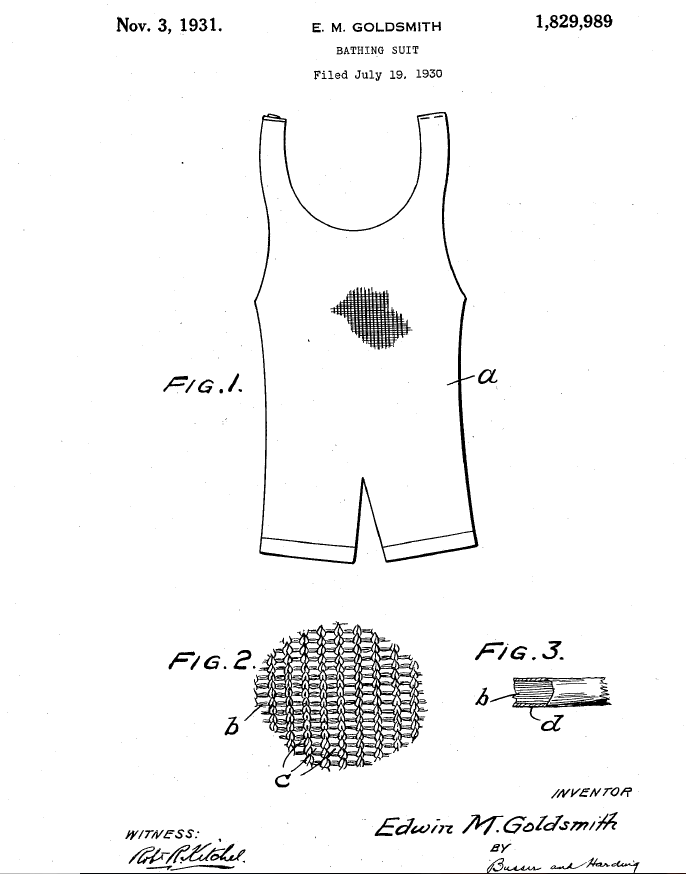
My guess is that Edwin’s interest in this problem stemmed from his experiences at their summer home in Longport, New Jersey. And isn’t it interesting to learn that many people did not wear their own bathing suits but used those belonging to a bathing house?

Edwin’s invention for a faster drying bathing suit involved using a material that was water permeable and “coated or impregnated with a water-repellant material not necessarily different from that used in the treatment of so-called waterproof garments, e.g., raincoats, to render them substantially impermeable to water.” The suit would then have multiple openings to allow the water to flow in and out of the suit like an open mesh.  I am not sure how commercially successful this design would have been as it sounds quite uncomfortable!

Edwin’s other three patents between 1931 and 1933 related to more mundane matters involving the business of Friedberger-Aaron, e.g., buttonhole tape and a means of mounting and display of articles for sale.

But the 1930s soon turned more difficult for the Goldsmith family. On July 14, 1933, Jennie Friedberger Goldsmith, Edwin Sr.’s wife, died from coronary thrombosis; she was 67 years old.
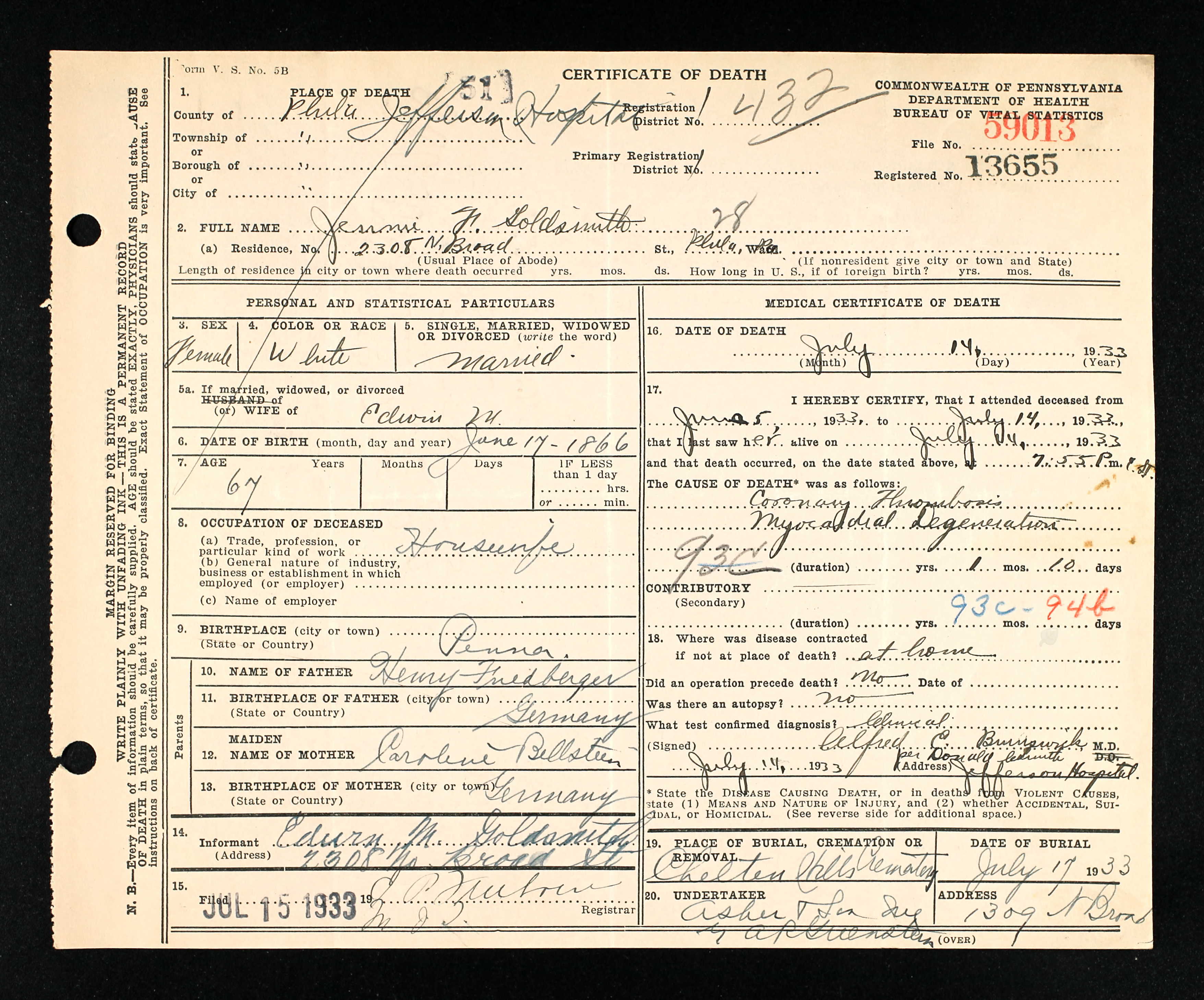
Jennie Friedberger Goldsmith death certificate
Pennsylvania Historic and Museum Commission; Pennsylvania, USA; Certificate Number Range: 059001-062000
Ancestry.com. Pennsylvania, Death Certificates, 1906-1966

After Jennie’s death, Edwin seemed to lose interest in inventing new products as his last patent was issued on October 3, 1933.  In 1940 Edwin was retired and living in the Majestic Hotel in Philadelphia where his younger sister Estelle Goldsmith and brother-in-law Sidney Stern were also living.5 He also continued to spend time in the Atlantic City area or at least continued to be listed in their 1941 directory.6

His older son Henry founded and owned a nylon netting company called Thomas Holmes Manufacturing, presumably named for his son Thomas Holmes Goldsmith. (Holmes was Ida Stryker’s grandmother’s birth name) and perhaps inspired by his father’s bathing suit patent.7  In 1940, Henry and his wife Ida and son Thomas were living with Ida’s parents, George and Ella Stryker.8

Henry’s younger brother Edwin M. Goldsmith, Jr. was also living in Philadelphia in 1940 with his wife Helen and her mother Annie Jacobs. Edwin was working as an industrial engineer.9 But by 1942, Edwin, Jr. and Helen had left Philadelphia and moved to Allentown, Pennsylvania, where Edwin was employed by M.M. Gottlieb, a clock manufacturing company. They are listed in the Allentown directories until 1945.10
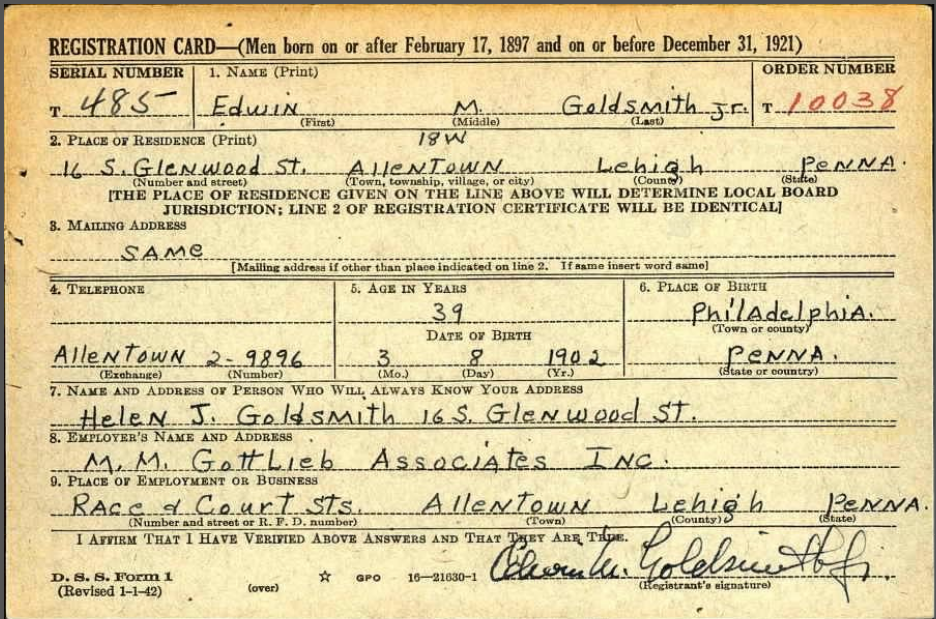
Edwin Goldsmith, Jr. World War II draft registration
Draft Registration Cards for Pennsylvania, 10/16/1940 – 03/31/1947. 2,818 boxes. NAI: 5324575. Records of the Selective Service System, 1926–1975, Record Group 147. National Archives and Records Administration, St Louis, Missouri.

During this time Edwin, Jr. followed in his father’s footsteps and obtained a patent. He was awarded the patent, which he assigned to his employer M.M. Gottlieb, for the invention of a “new and useful ‘numeral clock.’” As described in the patent, “[o]ne of the objects of the present invention is a numeral clock which will be more positive in action and less subject to disturbance by vibrations or accidental jarring, and which may be readily adjusted or “set” whenever necessary, and which may be manufactured and assembled readily and at low cost, and which may be conveniently installed in a casing or housing.”11 Perhaps this was a very early version of a so-called “digital” clock?

Edwin Jr. and Helen also had a child during this decade.

As for Henry and Edwin’s older sister Cecile Goldsmith and her husband Julian Stern Simsohn, I was unable to find them on the 1940 census, but according to Julian’s World War II registration, in 1942 they were living in Elkins Park, a suburb of Philadelphia, and Julian was working as a chemical engineer in his own firm.
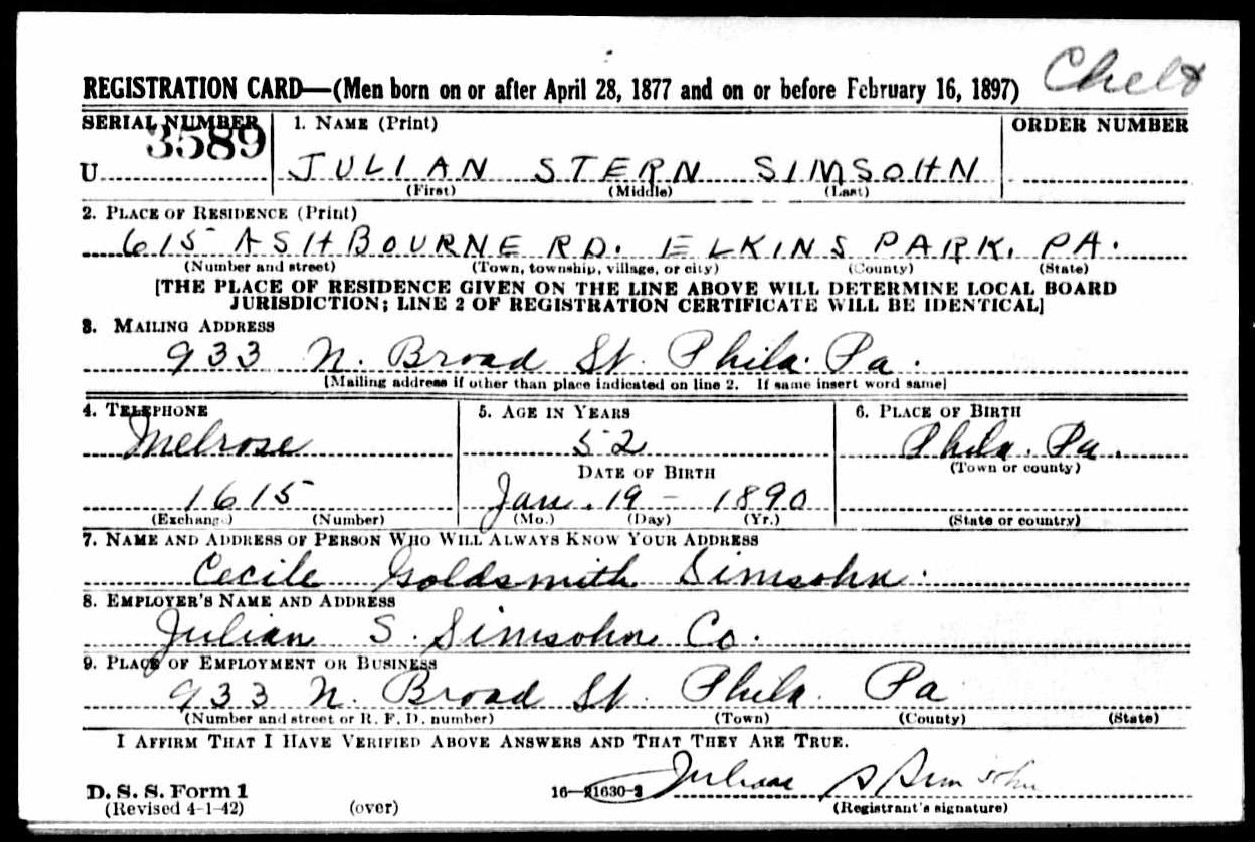
Julian Simsohn, Sr, World War II draft registration
The National Archives at St. Louis; St. Louis, Missouri; World War II draft cards (Fourth Registration) for the State of Pennsylvania; Record Group Title: Records of the Selective Service System, 1926-1975; Record Group Number: 147; Series Number: M1951
Ancestry.com. U.S., World War II Draft Registration Cards, 1942

Their son Julian, Jr., was living at home in Elkins Park in 1940, according to his World War II draft registration, and was working for Thomas Holmes Manufacturing in Philadelphia, the company owned by his uncle Henry. Julian, Jr. served as a corporal in the US Army Air Forces in the Fourth Reconnaissance Group during World War II, including twenty months served overseas.12 I assume that Marjorie, who was still a teenager in 1940, was also living at home.

Julian Simsohn Jr. World War II draft registration
The National Archives in St. Louis, Missouri; St. Louis, Missouri; Record Group: Records of the Selective Service System, 147; Box: 2315
Source Information
Ancestry.com. U.S. WWII Draft Cards Young Men, 1940-1947

Cecile and Julian Simsohn’s older daughter Jean married Vincenzo Savarese on January 4, 1939, in Lenoir County, North Carolina. She was 21, he was 27. According to their marriage record, Vincenzo was born in Naples, Italy, and they were both residents of Philadelphia. In 1940 Jean and Vincenzo were living in Atlanta, Georgia, where Vincent was employed as a traveling salesman for a wholesale gift company.13

Marriage license of Jean Simsohn and Vincenzo Savarese,
Series: Marriage Licenses (1879 – 1961)
Source Information
Ancestry.com. North Carolina, Marriage Records, 1741-2011.

Edwin M. Goldsmith, Sr. died on November 14, 1944, in Philadelphia; he was eighty years old.  According to his death certificate, he had suffered from cardiovascular disease for ten years—that is, dating from around the time that his wife Jennie died. Edwin died from cardiac failure.
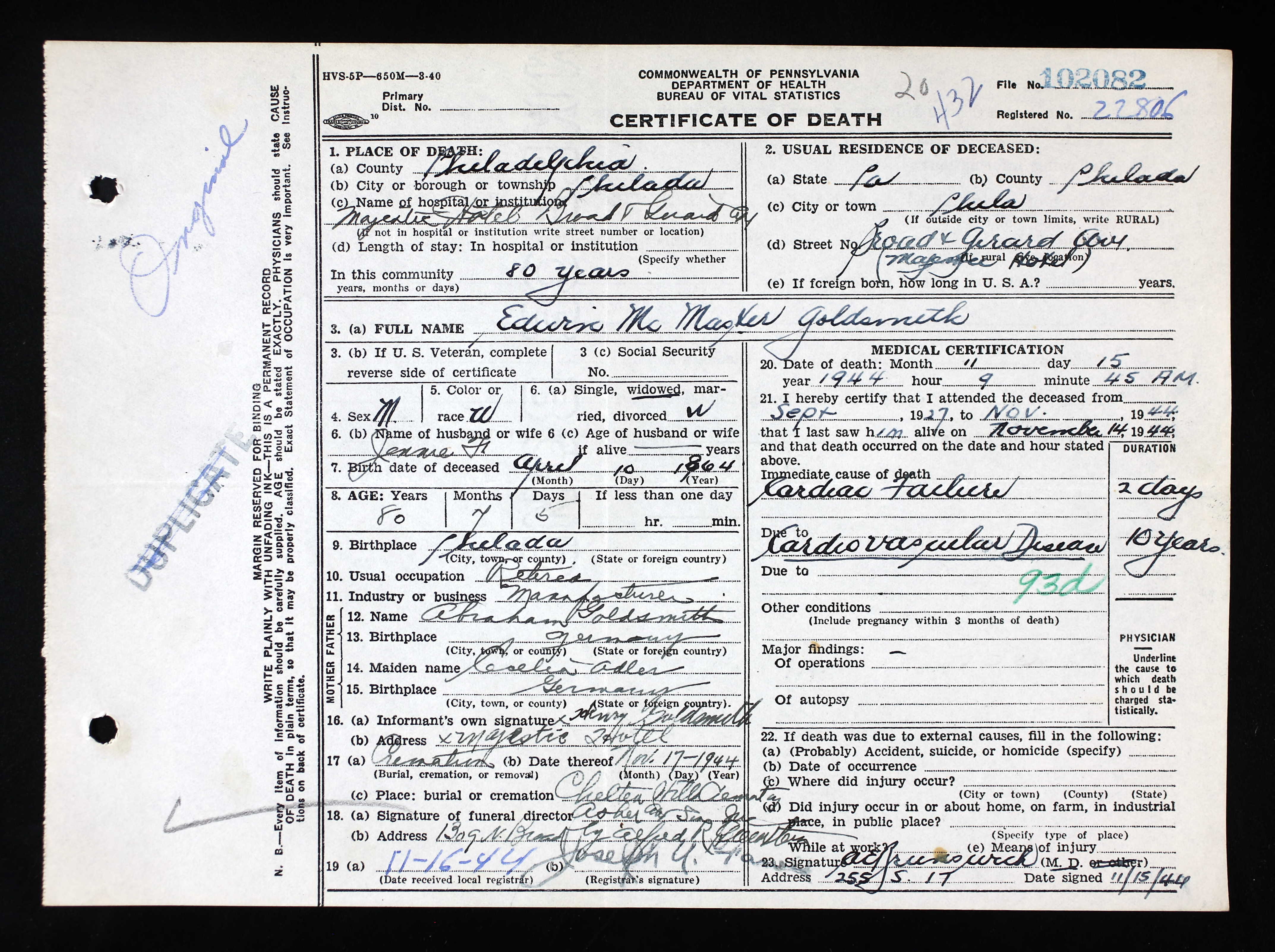
Edwin M Goldsmith, Sr., death certificate
Pennsylvania Historic and Museum Commission; Pennsylvania, USA; Certificate Number Range: 099801-102350
Ancestry.com. Pennsylvania, Death Certificates, 1906-1966

Edwin’s daughter Cecile died on March 30, 1946, less than two years after her father; she was only 57 and died from ovarian cancer. According to her obituary she was a graduate of the Philadelphia High School for Girls and Bryn Mawr College and had founded and directed a day camp for children; she had also been the treasurer and secretary of the Montgomery County branch of the Women’s International League for Peace and Freedom as well as the secretary of the Bamberger Seashore Home for Children in Longport, New Jersey. At the time of her death she was the president of Keneseth Israel Sisterhood. 14

Cecile Goldsmith Simsohn death certificate
Pennsylvania Historic and Museum Commission; Pennsylvania, USA; Certificate Number Range: 026851-029400
Ancestry.com. Pennsylvania, Death Certificates, 1906-1966

Edwin, Sr., would likely have been pleased by the creative endeavors of his granddaughter Jean Simsohn Savarese, daughter of his daughter Cecile Goldsmith Simsohn, and her husband Vincenzo.  In 1950 Jean and Vincenzo (known also as Vincent) developed a line of “oven-to-table” pots and pans.  According to an article in the August 25, 1950, Philadelphia Inquirer, Vincent had studied art appreciation in Italy before emigrating and came up with the design and was helped by another man to bring the design into practice.15

Marcia Strousse, “Coppersmith Puts Art in Kitchenware,” The Philadelphia Inquirer, August 25, 1950, p. 17.

As described in the article, “Fashioned of solid copper lined with pure tin, the varied pieces are distinguished by their clean-cut articulate lines, a combination of old world charm and the effects of modern technology. Each is functionally designed with handles to aid in serving them right to the table.” Jean and Vincent called their company Jenzo, a combination of Jean and Enzo, Vincent’s nickname.  Based on the advertisements I found on newspapers.com, their products were sold all over the US during the 1950s. Here are just two examples.

Ad for Jenzo copperward at Hudson’s Department Store in Detroit
Detroit Free Press, December 14, 1951, p. 7.
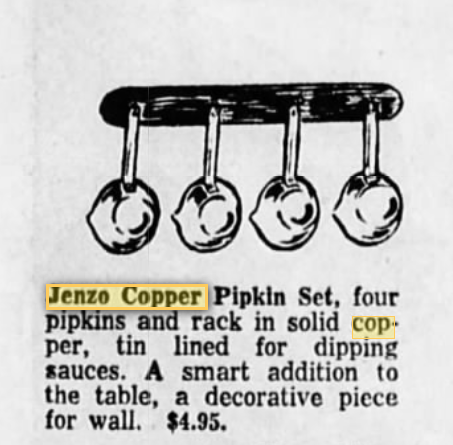
Ad for Jenzo products, Bon Marche store, Asheville, North Carolina
Asheville Citizen, December 12, 1954, p. 40

In 1952 Edwin Goldsmith, Jr. joined his brother Henry at Thomas Holmes Manufacturing where he became vice president; he stayed there until his retirement in 1968.16

The 1960s brought some sad times for the family. Henry Goldsmith died from congestive heart failure on October 27, 1963; he was seventy years old. He was survived by his wife Ida and their son Thomas.
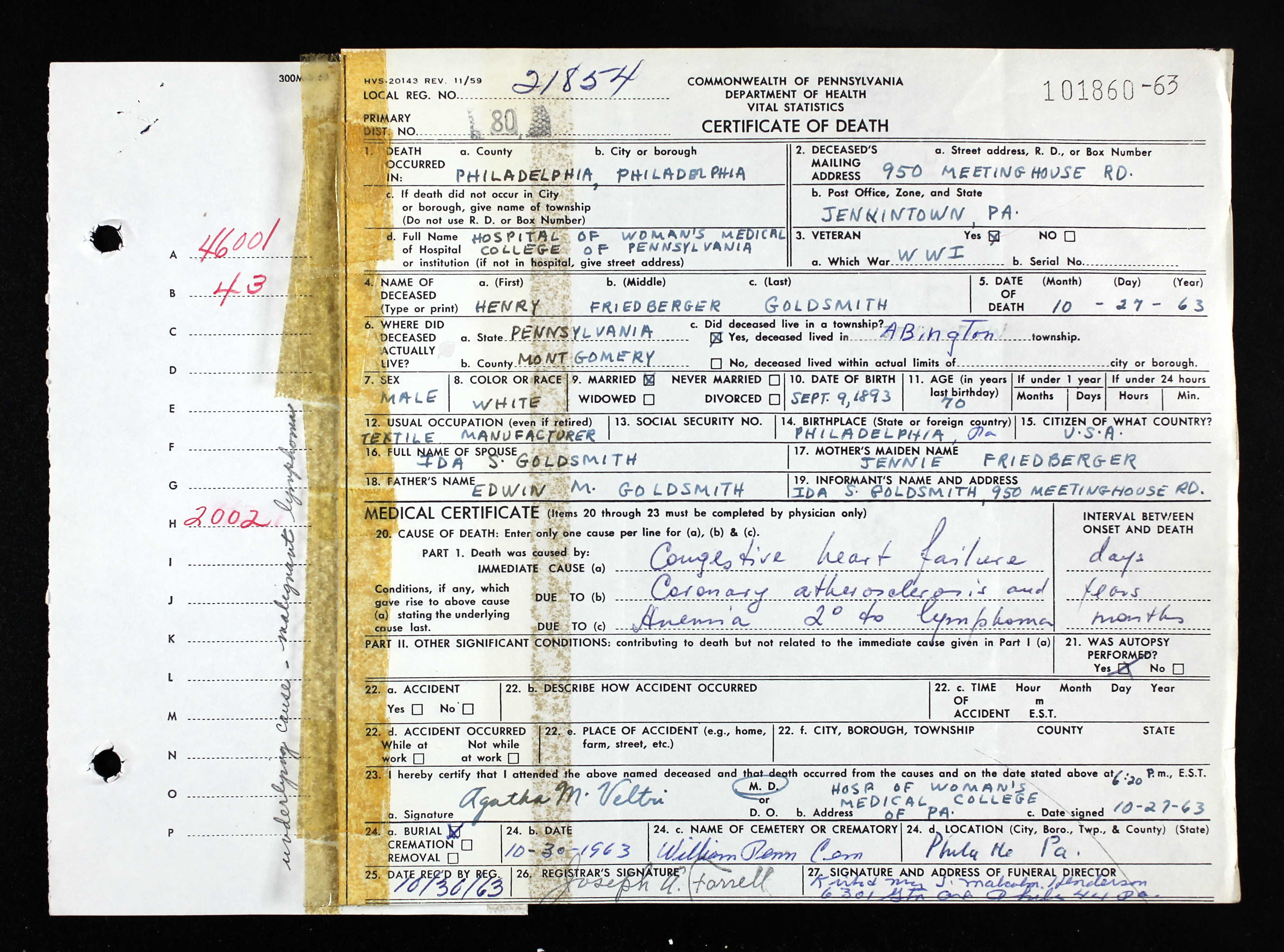
Henry F Goldsmith death certificate
Pennsylvania Historic and Museum Commission; Pennsylvania, USA; Certificate Number Range: 100201-103050
Ancestry.com. Pennsylvania, Death Certificates, 1906-1966

His nephew Julian Stern Simsohn, Jr. followed less than  two years later on February 4, 1965; he was only 46 years old and predeceased his father, Julian, Sr., who outlived his son by six years.17 Julian, Jr. never married; his will created a trust, the income of which was to be paid to his father for life, then to be paid to his two sisters, Jean and Marjorie.18 Jean died in 1999, Marjorie in 2006.  Their uncle Edwin M. Goldsmith, Jr. died in 1991.19

UPDATE: Thank you to my cousin Anthony who let me know that his grandparents Jean Simsohn and Vincent Savarese divorced in the 1960s and that Jean, who had converted to Catholicism, became a Poor Clare nun, living in a cloistered convent in Roswell, New Mexico for the rest of her life. Anthony also shared with me that Jean was able to have her marriage annulled; she took on the name Jane Frances after becoming a nun. Her ex-husband Anthony Savarese remarried, and his second wife was also named Jean, born Jean Gallagher. I had confused the two women in my research and had assigned the wrong birth and death dates to my cousin Jean Simsohn. I am so glad Anthony discovered my error and helped me set the record straight.

It was interesting to study Edwin Goldsmith Sr. and his family after studying his brother Milton and his family.  Two sons of Abraham Goldsmith and Cecelia Adler with such different interests and careers—Milton, the author, and Edwin, the inventor.

It was also interesting to see how Edwin’s children and even grandchildren inherited some of his skills and interest in design and invention. Both sons became engineers, one started a nylon netting company where both ended up working. One son followed in his father’s footsteps and obtained a patent for his invention. Edwin’s son-in-law Julian Simsohn was also an engineer. Edwin’s granddaughter Jean and her husband Vincenzo Savarese designed and developed an improved method of making pots and pans. And more recently, another grandson applied for a patent in 2012 for a benefit payments method, showing that the creative impulses that run through the family DNA have continued to influence and inspire Edwin’s descendants.20


  1.  Ancestry.com. U.S., Social Security Applications and Claims Index, 1936-2007 [database on-line]. Provo, UT, USA: Ancestry.com Operations, Inc., 2015. Original data: Social Security Applications and Claims, 1936-2007. 
  2.  Ancestry.com. Pennsylvania, Marriages, 1852-1968. Original data: Marriage Records. Pennsylvania Marriages. Various County Register of Wills Offices, Pennsylvania. Film Number: 004141719. 
  3.  Ancestry.com. U.S. Public Records Index, 1950-1993, Volume 1 [database on-line]. Provo, UT, USA: Ancestry.com Operations, Inc., 2010. Original data: Voter Registration Lists, Public Record Filings, Historical Residential Records, and Other Household Database Listings. 
  4. E.M. Goldsmith, Bathing suit, U.S. Patent No.1,828,989, November 3, 1931. 
  5. Edwin Goldsmith, 1940 US Census, Philadelphia, Philadelphia, Pennsylvania; Roll: m-t0627-03698; Page: 81A; Enumeration District: 51-384. Source Information
    Ancestry.com. 1940 United States Federal Census [database on-line]. Provo, UT, USA: Ancestry.com Operations, Inc., 2012. 
  6.  Atlantic City, New Jersey, City Directory, 1941. Source Information
    Ancestry.com. U.S. City Directories, 1822-1995 
  7. “H.F. Goldsmith, Nylon Executive,” The Philadelphia Inquirer, October 29, 1963, p. 38. 
  8. Household of George Stryker, 1940 U.S. Census, Philadelphia, Philadelphia, Pennsylvania; Roll: m-t0627-03752; Page: 9A; Enumeration District: 51-2125. Ancestry.com. 1940 United States Federal Census 
  9. Edwin Goldsmith, Jr. and family, 1940 US Census, Philadelphia, Philadelphia, Pennsylvania; Roll: m-t0627-03754; Page: 2A; Enumeration District: 51-2169. Ancestry.com. 1940 United States Federal Census 
  10.  Allentown, Pennsylvania, City Directory, 1942-1945. Source Information
    Ancestry.com. U.S. City Directories, 1822-1995. 
  11. E.M. Goldsmith, Jr., Clock, U.S. Patent No. 2,343,613, March 7, 1944. 
  12.  National Cemetery Administration. U.S. Veterans’ Gravesites, ca.1775-2006. Original data: National Cemetery Administration. Nationwide Gravesite Locator
  13. Vincenzo and Jean Savarese, 1940 US census, Atlanta, Fulton, Georgia; Roll: m-t0627-00732; Page: 85A; Enumeration District: 160-219. Ancestry.com. 1940 United States Federal Census. 
  14. “Mrs. Simsohn Dies, Long Ill,” The Philadelphia Inquirer, March 31, 1946, p. 7/ 
  15. Marcia Strousse, “Coppersmith Puts Art in Kitchenware,” The Philadelphia Inquirer, August 25, 1950, p. 17. 
  16. “Edwin Goldsmith, Retired Engineer,” The Philadelphia Inquirer, May 6, 1991, p. 18. 
  17. Julian Simsohn, Jr.: Number: 164-14-9523; Issue State: Pennsylvania; Issue Date: Before 1951. Ancestry.com. U.S., Social Security Death Index, 1935-2014. Original data: Social Security Administration. Social Security Death Index, Master File. Social Security Administration. Julian Simsohn, Sr.: Number: 183-14-3189; Issue State: Pennsylvania; Issue Date: Before 1951. Ancestry.com. U.S., Social Security Death Index, 1935-2014. Original data: Social Security Administration. Social Security Death Index, Master File. Social Security Administration. 
  18. “Trust Established In Area Man’s Will,” The Mercury (Pottstown, Pennsylvania), February 26, 1965, p. 3. 
  19.  Jean Simsohn aka Jane Frances Savarese death information from her grandson Anthony Savarese and obituary found at https://www.losaltosonline.com/archives/obituaries/article_1b522d2f-f33a-5a34-ab08-ba407f3532e3.html ; Marjorie Gerstle: Ancestry.com. U.S., Social Security Applications and Claims Index, 1936-2007. Original data: Social Security Applications and Claims, 1936-2007. Edwin M. Goldsmith, Jr.: Number: 186-01-0896; Issue State: Pennsylvania; Issue Date: Before 1951. Ancestry.com. U.S., Social Security Death Index, 1935-2014. Original data: Social Security Administration. Social Security Death Index, Master File. Social Security Administration.
  20. Edwin M. Goldsmith, Marcia W. Goldsmith, and Louis M. Heidelberger, Benefit Payment Method and System, U.S. Patent Application No. 13279377, published December 27, 2012 (abandoned). 

Yet Another Small World Story

You know by now that I believe we are all somehow connected—that there truly are only six degrees of separation between any two people. I’ve encountered it many times while doing family history research—my cousins who end up being close friends with either my own friends or with my husband’s cousins, a cousin who once worked at the same JCC where I’ve belonged for over 30 years, cousins with children or grandchildren living in the same town where I now live, and so on.

So here’s another small world story, and although this one does not involve any of my own ancestors or cousins, it nevertheless is more evidence of our interconnectedness.

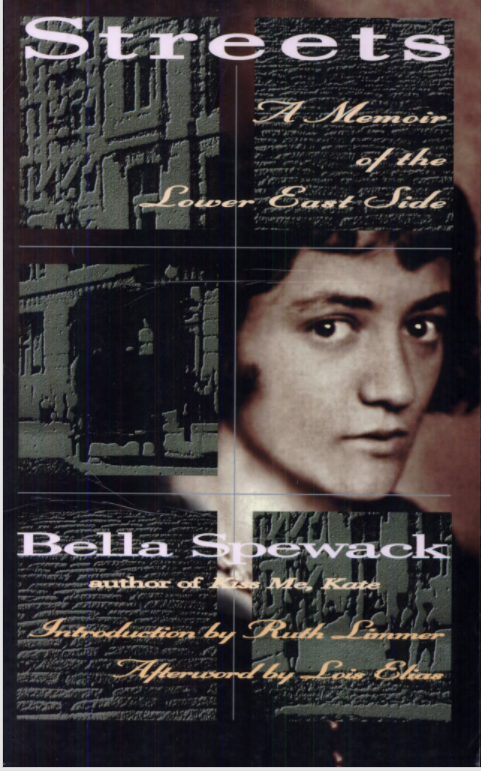
Back in the fall of 2013, I ordered from a third-party seller on Amazon a book entitled Streets: A Memoir of the Lower East Side by Bella Cohen Spewack (Feminist Press at CUNY, 1995). I purchased the book to learn more about life on the Lower East Side in the first two decades of the 20th century when my grandmother, Gussie Brotman, was growing up there. The memoir gave a detailed and, in many ways, harrowing portrayal of Bella Spewack’s life as a child in the Lower East Side.  Despite her poverty-stricken and difficult start in life, she grew up to become a successful journalist and writer, best known for the play and Broadway hit, Kiss Me Kate, which she wrote with her husband Sam Spewack. I devoted three blog posts to summarizing and commenting on what I had learned about the Lower East Side from reading Bella Spewack’s book.

In a footnote to my last post about Spewack’s book, I wrote about the mysterious handwritten note that had been tucked inside the book when I received it.  The note was written to people named Sheila and Alan and read,

At last we have received copies of Bella’s memoirs. We thought they would never come.  This one is for you.  I hope you enjoy it.  I’ll talk to you this weekend.  On to Turkey! Love, Arthur and Lois.

When I found the note in the book, I had wondered whether Sheila and Alan, the addressees, had ever seen it and whether they had meant to leave it in the book when they gave away or sold the book. I also wondered who Arthur and Lois and Sheila and Alan were. I thought about trying to return the note, but without last names I had no way to do that.

I had one clue: there was an afterward to Bella Spewack’s book by a woman named Lois Raeder Elias, who wrote that she had been a longtime friend of Bella Spewack. I wondered whether the note was written by Lois Raeder Elias since it certainly seemed from the content of the note that the person sending it had participated in some way in the publication of Spewack’s book.

So I mentioned the note in my last blog post about Spewack’s book, hoping that Lois Raeder Elias or someone who knew her might somehow find my post and contact me. That was in December of 2013, almost four and half years ago.

Fast forward about two years later to November of 2015. I was now in the process of researching my Schoenthal ancestors and their lives in Washington, Pennsylvania. While researching the history of Jewish life in so-called “Little Washington,” I connected with Marilyn A. Posner, a past president of Beth Israel synagogue in Little Washington as well as the author of the centennial history of the synagogue, The House of Israel, A Home in Washington: 100 Years of Beth Israel Congregation, 1891-1991 / 5652-5752 (1991, Congregation Beth Israel, Washington, Pennsylvania). Marilyn was extremely helpful to me in my research, and I relied on her research and her book extensively in writing about Little Washington’s Jewish history on my blog. We also developed an email friendship and found other areas of common interest.

House of Nathan Samuels in Washiington PA where Beth Israel congregants first met
Photo courtesy of Marilyn Posner from her book, “The House of Israel, A Home in Washington: 100 Years of Beth Israel Congregation, 1891-1991 / 5652-5752

So how do these two things relate? How does a note in a book by Bella Spewack about the Lower East Side of New York City connect to a woman who lives in Washington, Pennsylvania?

Well, fast forward another two and half years to April 2018, about a week ago. Out of the blue I received an email from Marilyn that I had to read several times to absorb and understand completely.  But here’s the essence: Marilyn’s first cousin, once removed, a man named Arthur Elias, had died on April 12, 2018, at age 92.  Marilyn’s son, in Googling his cousin Arthur’s name for information about his life, somehow fell upon the footnote to my blog post from December 15, 2013, and sent it along to his mother, Marilyn.

Marilyn with her great-aunt Bertha Elias, mother of Arthur Elias, 1948

Marilyn immediately recognized my blog and contacted me to share this small world story: Lois Raeder Elias, who had written the afterward to Bella Spewack’s memoirs, was the wife of Marilyn’s recently deceased cousin Arthur Elias. Arthur and Lois were very close friends of Bella Spewack and in fact had inherited the rights to her works when she died, including the rights to Kiss Me Kate, which had been revived and brought back to Broadway in 1999 with the support of Arthur and Lois Raeder Elias.


Marilyn also solved the mystery of the handwritten note I’d found inside the book. She assumed it must have been written by her cousin Arthur and his wife Lois to Arthur’s sister Sheila and her husband Alan.

Marilyn then connected me to her cousin Sheila, who was very excited to hear that I had the note and the book. The next day I mailed the book and the note to Sheila, and she received it last Friday. She was thrilled and so grateful, and I was more than delighted that I could reunite Sheila and Alan with the book and the note that Arthur and Lois had sent to them over twenty years before.

Siblings Sheila and Arthur


I had long ago forgotten about the footnote that I’d left on my blog and never expected at this point to hear from anyone about that handwritten note. And then the forces of six degrees of separation came through, and someone with whom I’d connected almost two years after writing that blog footnote and over two and a half years ago turned out to be the cousin of the author and of the recipient of the note.

How is that for a small world story?!


The Goldschmidts Come to America

I was all set to be logical and sequential and report on each of the children of my three-times great-grandparents Seligmann and Hincka (Alexander) Goldschmidt, starting with their oldest child Sarah Goldschmidt and her husband Abraham Mansbach II. I began their story in this post, but then I realized that I could not tell the rest of the story of the children of Sarah and Abraham without some background regarding the other members of the Goldschmidt family.

What triggered this realization was this ship manifest:

Henry Schoenthal and Helene Lilienfeld with Analie Mansbach on 1872 ship manifest lines 95 to 98
Year: 1872; Arrival: New York, New York; Microfilm Serial: M237, 1820-1897; Microfilm Roll: Roll 359; Line: 1; List Number: 484

Notice that this is the 1872 manifest for Henry Schoenthal, the brother of my great-grandfather Isidore Schoenthal. Henry had settled in Washington, Pennsylvania, in 1866, but then returned to Germany to marry Helen Lilienfeld. Then on May 24, 1872, Henry and Helen returned to the US, as shown on this manifest.

Why am I talking about a Schoenthal in the context of telling the story of the Goldschmidts?

Because on that manifest (lines 6 and 7, above) were two eighteen-year-old women both named Amalie Mansbach who were apparently sailing with Henry and Helen (lines 5 and 8). I believe that one of those two Amalie Mansbachs was Merla Mansbach, the daughter of Sarah Goldschmidt and Abraham Mansbach II. Merla Mansbach was born on December 10, 1853, meaning she would have been eighteen in May, 1872.

Birth record of Merla Mansbach
HHStAW Abt. 365 Nr. 384, p. 55

But why would Merla Mansbach be sailing with Henry Schoenthal? He was from Sielen, his wife Helen was from Gudensberg, and Merla was from Maden—all towns within a reasonable distance of each other in the Hesse region of Germany, with Maden and Gudensberg being very near each other. There had to be a connection.


And that drove me back to my earlier posts about Henry Schoenthal and how he ended up in Washington, Pennsylvania, a small town in western Pennsylvania about 30 miles from Pittsburgh. And those posts reminded me that Henry was not the first Schoenthal to settle in western Pennsylvania—his father Levi’s sister (my three-times great-aunt) Fradchen Schoenthal had preceded him some twenty years before.

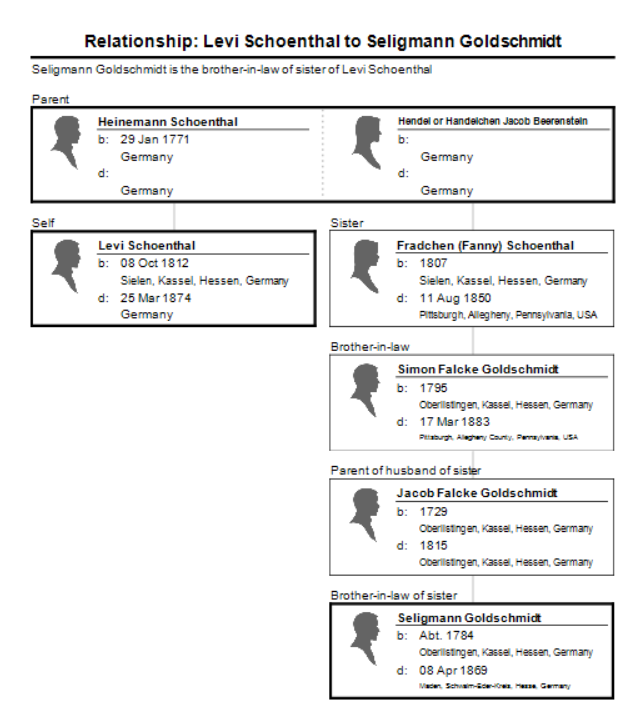
And Fradchen Schoenthal was married to Simon Falcke Goldschmidt, the brother of Seligmann Goldschmidt and great-uncle of Merla/Amalie Mansbach:


So I am going to digress a bit from the story of the family of my three-times great-grandfather Seligmann Goldschmidt to tell the story of his younger brother Simon Falcke Goldschmidt because telling the story of the Goldschmidt’s immigration to the United States has to start with Simon, who was the first to arrive.

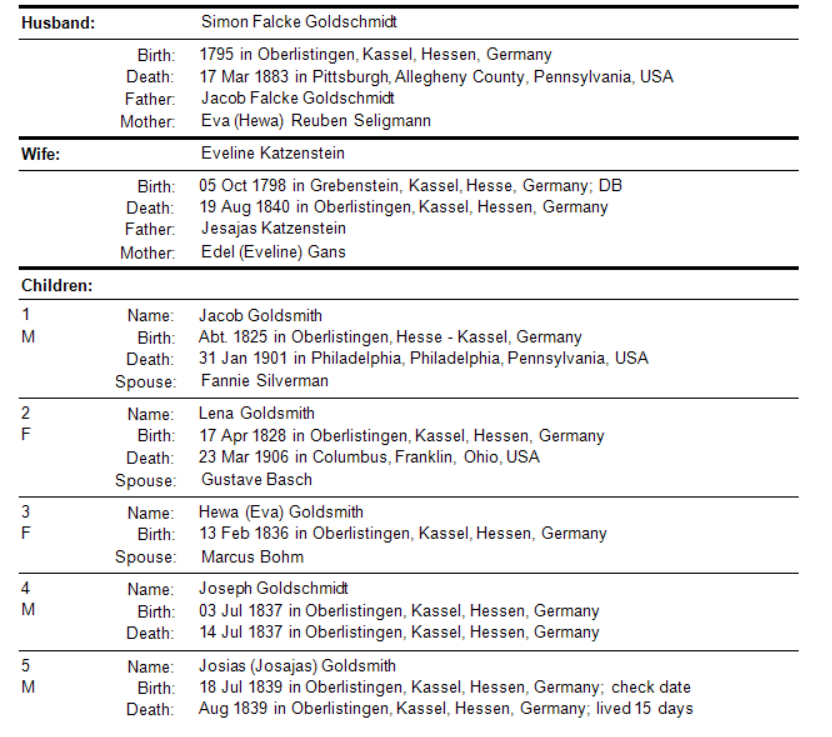
Simon was the youngest of the four sons of Jacob Falcke Goldschmidt and Eva Reuben Seligmann; according to numerous US records, he was born in 1795. In 1822, he married Eveline Katzenstein of Grebenstein (no known familial connection to my Katzensteins). Together they had five children: Jacob (1825), Lena (1828), Hewa “Eva” (1836), Joseph (1837), and Jesajas (1839), all born in Oberlistingen.

Notice the large gap between Lena, born in 1828, and the next child Hewa born in 1836.[1]

David Baron located a record that perhaps provides a reason for that gap; it seems that in 1826 Simon was charged with burglary and attempted robbery. (HStAM Fonds 261 Kriminalakten 1822-1836 No G 40.) I requested a copy of the file from the Marburg archives and learned that the file covers Simon’s appeal of a ten year sentence for his criminal activity. The listing online indicates that the date of appellate decision was December 24, 1830.

The contact person at the Marburg archives did not reveal the outcome of the appeal, so I am now hoping to find someone who might be able to go to Marburg and provide me with a summary (in English) of the judgment. (I could order a copy, but it would be costly and in German. My German has improved, but 130 pages of a legal decision would be too great a challenge!)

Since Simon and Eveline had three more children beginning in 1836, I suppose it’s possible he served some of that ten year sentence. Sadly, Simon and Eveline’s last two babies did not survive. Both Joseph and Jesajas died in infancy.

Joseph Goldschmidt death record
Sterberegister der Juden von Oberlistingen (Breuna) 1827-1852 (HHStAW Abt. 365 Nr. 671), p. 6

Josajas Goldschmidt death record
Sterberegister der Juden von Oberlistingen (Breuna) 1827-1852 (HHStAW Abt. 365 Nr. 671), p. 7

And then Simon lost his wife Eveline as well. She died on August 19, 1840, in Oberlistingen:

Eveline Katzenstein Goldschmidt death record
Sterberegister der Juden von Oberlistingen (Breuna) 1827-1852 (HHStAW Abt. 365 Nr. 671), p. 8

Simon was left on his own to raise his fifteen year old son Jacob, twelve year old daughter Lena, and four year old Hewa/Eva.

Four years after Eveline’s death he married my three-times great-aunt Fradchen Schoenthal on September 10, 1844. Fradchen, the daughter of my three-times great-grandparents Heinemann Schoenthal and Hendel Berenstein, was 37 years old when she married Simon. Thus, as early as 1844, my Schoenthal and Goldschmidt lines had merged, explaining why Merla/Amalia Mansbach would have been sailing with Henry Schoenthal in 1872.

Marriage of Simon Goldschmidt and Fradchen Schoenthal
HHStAW Abt. 365 Nr. 669, S. 11

A year after marrying, Simon and Fradchen left Germany for the United States, arriving in Baltimore with Simon’s youngest daughter Eva on September 20, 1845.

Passenger manifest for Simon Goldschmidt, Fanny Schoenthal and Eva Goldschmidt
Ancestry.com. Baltimore, Passenger Lists, 1820-1964 [database on-line]. Provo, UT, USA: Ancestry.com Operations Inc, 2006.
Original data: Selected Passenger and Crew Lists and Manifests. National Archives, Washington, D.C.

They must have settled first in Baltimore because Simon and Fradchen had two children who were born there, Henry on January 10, 1847, and Hannah on June 5, 1848. I assume that Henry was named for Heinemann Schoenthal and Hannah for Hendel Berenstein Schoenthal, their maternal grandparents and my three-times great-grandparents.

By 1850, Simon and Fradchen (also known as Fanny) were living in Pittsburgh with Henry and Hannah as well as two of Simon’s children from his first marriage, Lena and Eva. Simon was working as a tailor and had Americanized his surname to Goldsmith.[2]

Simon Goldschmidt and family 1850 census
Year: 1850; Census Place: Pittsburgh Ward 3, Allegheny, Pennsylvania; Roll: M432_745; Page: 135A; Image: 274

Simon lost his second wife Fradchen/Fanny soon thereafter; she died on August 11, 1850, at age 43. (The year on the headstone appears to be incorrect; based on the age given on both the marriage record and manifest, Fradchen’s birth year would have been 1807, not 1800. The 1850 census said she was then 39, not 50. Plus it’s unlikely she had children at ages 47 and 48.) She left behind two very young children, Henry and Hannah, as well as her three stepchildren, Jacob, Lena, and Eva, and her husband Simon.


Meanwhile, Simon’s son Jacob from his first marriage had settled in Washington, Pennsylvania, by 1850; he was working as a tailor and living with two other men who were tailors. Like his father Simon, Jacob had changed his surname to Goldsmith.

Jacob Goldsmith (Simon’s son) 1850 US census
Year: 1850; Census Place: Washington, Washington, Pennsylvania; Roll: M432_834; Page: 363A; Image: 244

Sometime after 1850 Jacob married Fannie Silverman. (The 1900 census reports that Jacob, who was then widowed, had been married 51 years, but given that he was still single in 1850, that seems unlikely).

Jacob and Fannie had thirteen children between 1853 and 1871—first, six daughters, then three sons, then another four daughters. Wow. I will report on them in more detail in a later post.  For now, I will only name those born between 1853 and 1860: Ellena (1853), Emma (1854), Anna (1855), Rachel (1857), Leonora (1858), and Celia (1860). Six daughters in seven years.

Sometime after Fradchen died, Simon moved to Washington, Pennsylvania, to be with his son Jacob. In 1860, Simon and his two youngest children, Henry and Hannah, were living with Simon’s son Jacob and Jacob’s wife Fannie and their six daughters. Henry and Hannah were only five and six years older than their oldest nieces, Emma and Anna. I assume that Simon needed Fannie and Jacob’s help in raising Henry and Hannah.

Jacob Goldsmith and family 1860 US census
Year: 1860; Census Place: Washington, Washington, Pennsylvania; Roll: M653_1192; Page: 1188; Image: 627; Family History Library Film: 805192

Simon’s other two children, Lena and Hewa/Eva, were married and on their own by 1860. Lena had married another German immigrant, Gustave Basch in 1856. In 1860, they were living in Connellsville, Pennsylvania, with their first two children, Frank (1858) and Jacob (1859).

Lena Goldschmidt and Gustave Basch and sons 1860 census Year: 1860; Census Place: Connellsville, Fayette, Pennsylvania; Roll: M653_1110; Page: 422; Family History Library Film: 805110


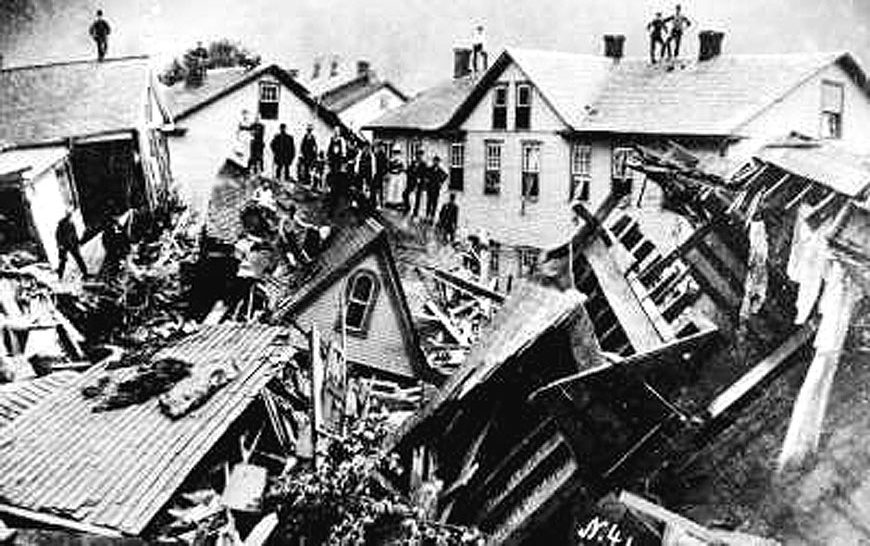
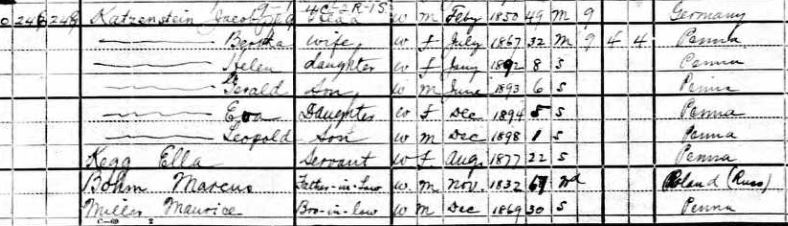
The story of Simon’s other daughter Eva has already been told. She married Marcus Bohm, an immigrant from Warsaw, Poland, and they had a daughter born in 1862 named Ella who married my great-great-uncle Jacob Katzenstein (son of Gerson Katzenstein and Eva Goldschmidt and thus also Ella’s cousin). Ella and one of her sons died in the Johnstown flood in 1889.  With Ella Bohm’s marriage to Jacob Katzenstein, my Goldschmidt and Katzenstein lines had merged.

I won’t repeat the research and story of Eva Goldsmith and Marcus Bohm, but despite further searching, I unfortunately have not yet found any record for either their marriage or Eva’s death. What I have concluded, however, is that Eva had died by 1870 because by then her daughter Ella was living with Eva’s brother Jacob Goldsmith.

Jacob Goldsmith and family on the 1870 census
Year: 1870; Census Place: Philadelphia Ward 12 District 36, Philadelphia, Pennsylvania

Thus, by 1860, all the members of the family of Simon Goldschmidt were living in western Pennsylvania, most of them in Washington, Pennsylvania, where Fradchen’s nephew Henry Schoenthal would arrive six years later, soon followed by his siblings.

By the 1880s, there were thus familial connections between the Goldschmidt family and the Schoenthal family and also between the Goldschmidt family and the Katzenstein family.  These overlapping connections laid the groundwork for the 1888 marriage of my great-grandparents, Isidore Schoenthal and Hilda Katzenstein, whose mother was a Goldschmidt. It’s amazing to see how the many lines in the family came together in the pairing of two of my direct ancestors.

——

[1] I do not have German birth records for Jacob or Lena, only US records. For the last three children, I was able to locate Oberlistingen birth records.

[2] The names on this census are switched around. Simon’s wife was Fanny, not Lena, and his daughter was Eva, not Fanny. Another reminder of how unreliable census records can be.

Rebekka and Regina: Sisters with Intertwined Lives

The last two children of Mina Katzenstein and Wolf Katzenstein were Rebekka and Regina, and because their fates are intertwined in several ways, I will discuss both in this post.

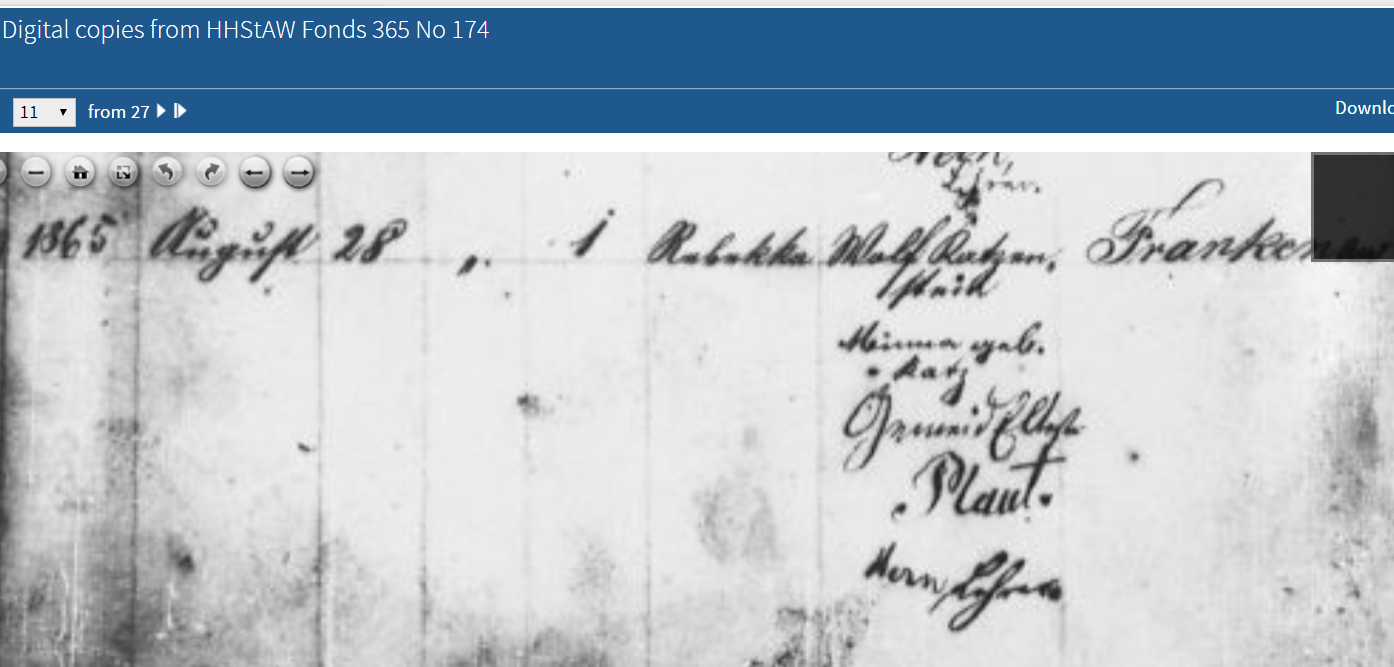
Rebekka was born on August 28, 1865, in Frankenau. Regina was born two years later on September 24, 1867.

Rebekka Katzenstein birth record Arcinsys
HHStAW Fonds 365 No 174

Regina Katzenstein birth record arcinsys
HHStAW Fonds 365 No 174, p. 8

Rebekka married her cousin Salomon Schalom Kneibel Katz (apparently known as Kneibel) on April 30, 1889, as discussed previously.

Marriage of Rebekka Katzenstein and Salomon Kneibel Katz
Hessisches Hauptstaatsarchiv; Wiesbaden, Deutschland; Collection: Personenstandsregister Heiratsregister; Signatur: 920; Laufende Nummer: 3844

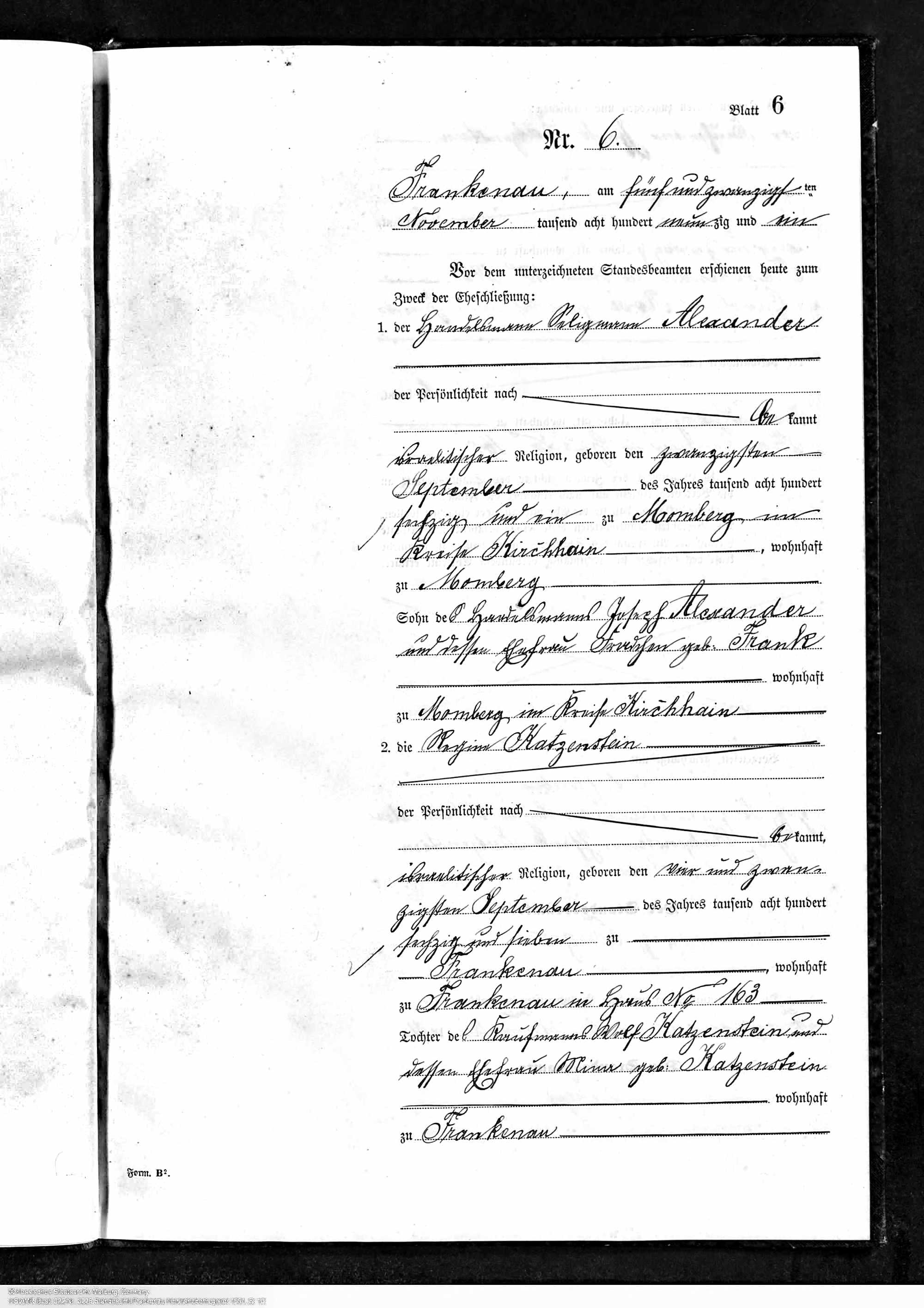
Two and a half years later, on November 25, 1891, Regina Katzenstein married Selig(mann) Alexander in Frankenau. He was born on September 20, 1861, in Momberg, the son of Joseph Alexander and Fradchen Frank.

Marriage of Regina Katzenstein to Selig Alexander
Hessisches Hauptstaatsarchiv; Wiesbaden, Deutschland; Standesamt Frankenau Heiratsnebenregister 1891 (Hstamr Best. 922 Nr. 3226); Collection: Personenstandsregister Heiratsregister; Signatur: 922

Rebekka and Salomon Kneibel Katz had four children, three sons and one daughter. Their first child was Berthold; he was born on May 15, 1890, in Jesberg.

Berthold Katz birth record
HStAMR Best. 920 Nr. 3821 Standesamt Jesberg Geburtsnebenregister 1890, S. 36

Then came Rebekka and Salomon’s only daughter, Therese. She was born November 11, 1891, in Jesberg.

Therese Katz birth record
Hessisches Hauptstaatsarchiv; Wiesbaden, Deutschland; Collection: Personenstandsregister Geburtsregister; Signatur: 920; Laufende Nummer: 3822

Two sons followed Therese. Julius was born May 30, 1893, in Jesberg.

Julius Katz birth record
Hessisches Hauptstaatsarchiv; Wiesbaden, Deutschland; Collection: Personenstandsregister Geburtsregister; Signatur: 920; Laufende Nummer: 3824

And Jakob Katz was born April 14, 1895, in Jesberg.

Jakob Katz birth record
Hessisches Hauptstaatsarchiv; Wiesbaden, Deutschland; Collection: Personenstandsregister Geburtsregister; Signatur: 920; Laufende Nummer: 3826

Meanwhile, Regina and her husband Selig Alexander were also having children in the 1890s. Regina gave birth to seven children, but only four survived infancy. The first child, a girl, was stillborn on January 9, 1893.

Stillborn daughter of Regina Katzenstein and Selig Alexander
Hessisches Hauptstaatsarchiv; Wiesbaden, Deutschland; Personenstandsregister Sterberegister; Bestand: 915; Laufende Nummer: 6560

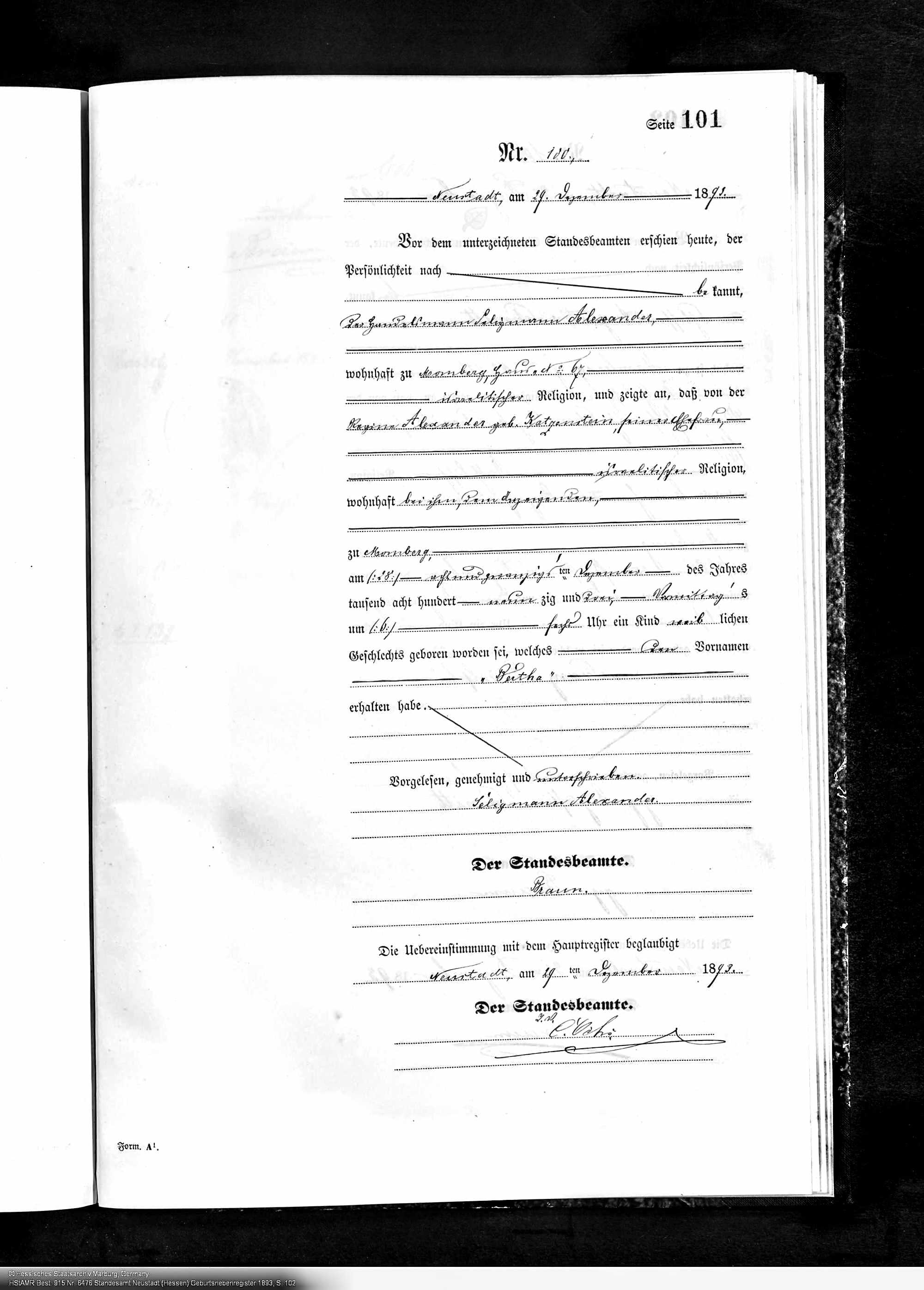
Less than a year later, Regina gave birth to Bertha on December 28, 1893, in Momberg.

Bertha Alexander birth record
Hessisches Hauptstaatsarchiv; Wiesbaden, Deutschland; Collection: Personenstandsregister Geburtsregister; Signatur: 915; Laufende Nummer: 6476

Regina and Selig’s third child was Rosa. She was born in Momberg on January 18, 1896.

Rosa Alexander birth record
Hessisches Hauptstaatsarchiv; Wiesbaden, Deutschland; Collection: Personenstandsregister Geburtsregister; Signatur: 915; Laufende Nummer: 6479

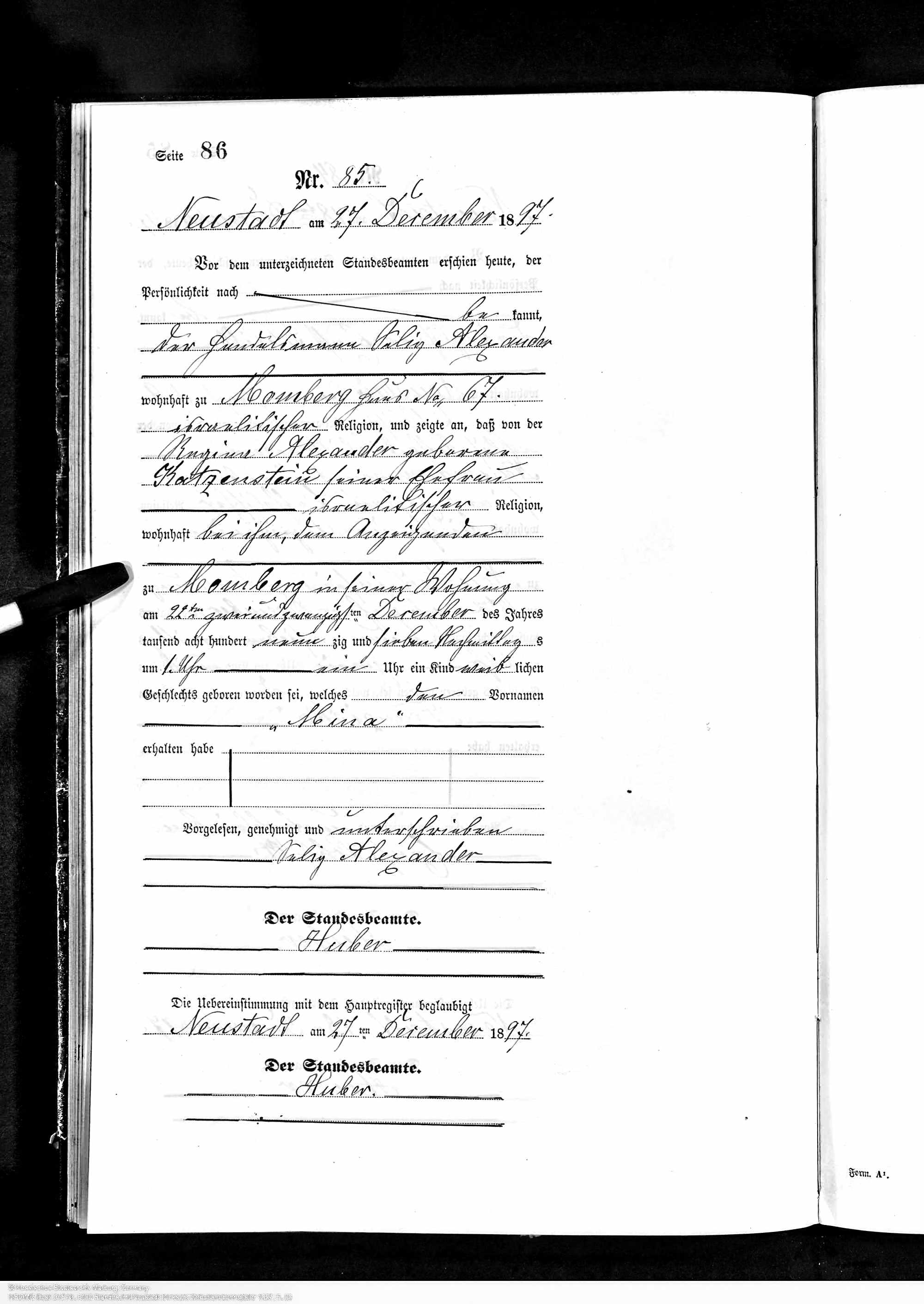
Almost two years after Rosa’s birth, on December 22, 1897, Regina gave birth to her fourth child, Mina, named for Regina’s mother Mina Katzenstein, who had died on September 5, 1896.

Mina Alexander birth record
Hessisches Hauptstaatsarchiv; Wiesbaden, Deutschland; Collection: Personenstandsregister Geburtsregister; Signatur: 915; Laufende Nummer: 6480

After giving birth to Mina, Regina and Selig lost two sons in infancy. Little Joseph Alexander lived only thirteen days, dying on January 24, 1902. His brother Manus lived for two months, dying on March 23, 1903.

Joseph Alexander death record
Hessisches Hauptstaatsarchiv; Wiesbaden, Deutschland; Personenstandsregister Sterberegister; Bestand: 915; Laufende Nummer: 6569

Manus Alexander death record
Hessisches Hauptstaatsarchiv; Wiesbaden, Deutschland; Personenstandsregister Sterberegister; Bestand: 915; Laufende Nummer: 6570

The seventh and last child I have for Regina Katzenstein and Selig Alexander was a son named Samuel, born January 1, 1906, according to a source provided by Barbara Greve, Barbara Haendler-Lachmann’s Schicksale der Juden im alten Landkreis Marburg 1933-1945, Hitzeroth, Marburg 1992, p. 125. Without Barbara Greve’s help, I never would have known about this seventh child as there was no available birth record for him online.

Thus, of the seven children born to Regina and Selig Alexander, only Bertha, Rosa, Mina, and Samuel lived to adulthood.

In many ways the two Katzenstein sisters were following similar paths at the same time, Rebekka in Jesberg, Regina in Momberg, fifteen miles apart. Their lives became even more intertwined on August 21, 1923, when Rebekka’s son Jakob married Regina’s daughter Rosa.

Marriage record of Rosa Alexander and Jakob Katz
Hessisches Hauptstaatsarchiv; Wiesbaden, Deutschland; Collection: Personenstandsregister Heiratsregister; Signatur: 915; Laufende Nummer: 6208

That is, Rosa Alexander married her first cousin, Jakob Katz. They had three daughters who were not only sisters but also second cousins to each other. Rebekka and Regina shared granddaughters who were also their great-nieces. Remember also that Rebekka and her husband Salomon Kneibel were also cousins to each other, so Salomon Kneibel was not only his children’s father but also their cousin and the same for Rebekka.

As for Rebekka and Regina’s other children, they made my life easier by marrying outside of the family.

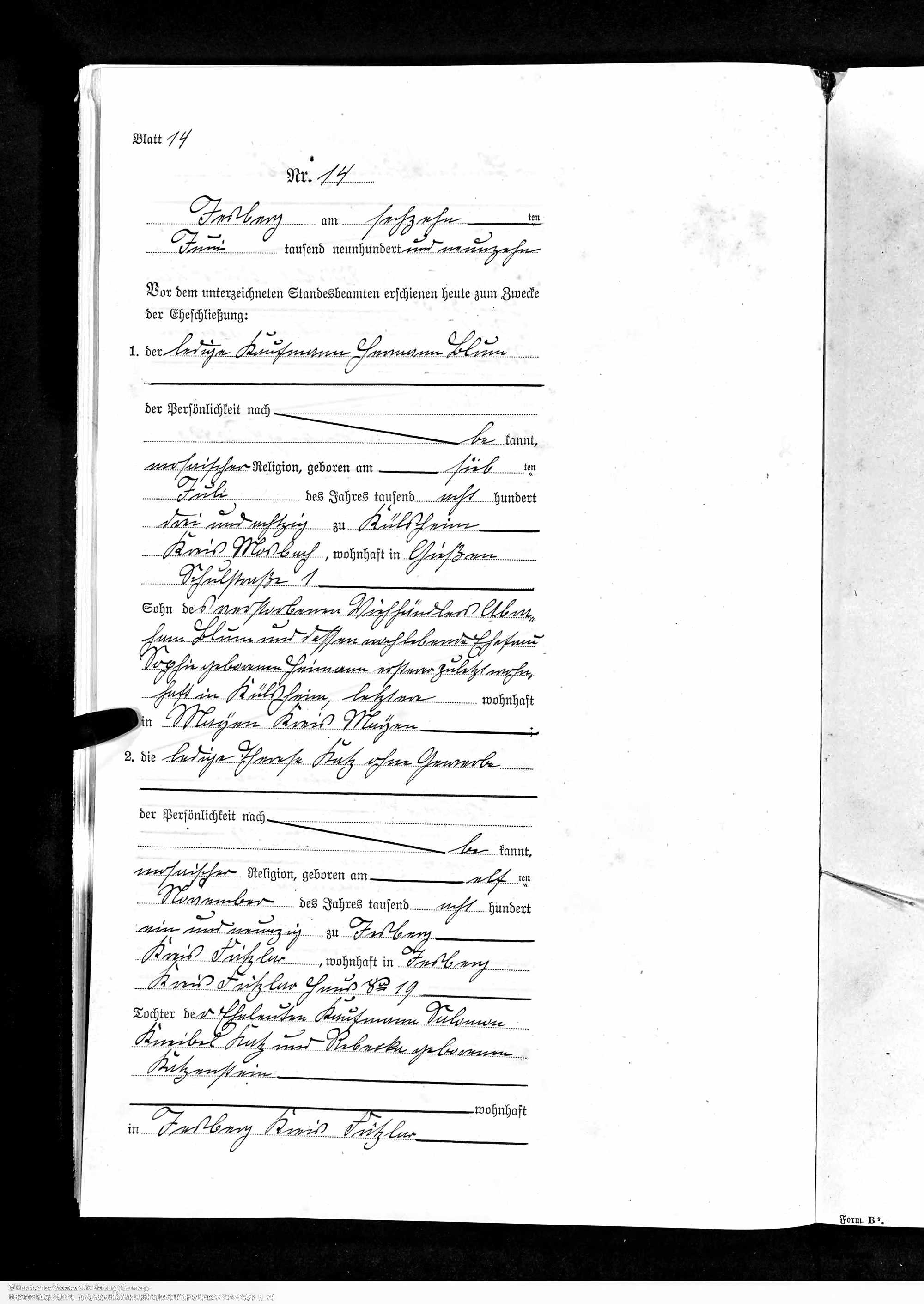
The first to marry was Rebekka’s daughter Therese. On June 16, 1919, she married Hermann Blum, who was born in Kuelsheim on July 7, 1883, son of Abraham and Sophie Blum. I have not been able to identify any children born to Therese and Hermann.

Hessisches Hauptstaatsarchiv; Wiesbaden, Deutschland; Collection: Personenstandsregister Heiratsregister; Signatur: 920; Laufende Nummer: 3872

Rebekka’s oldest son Berthold married Ida Blumenstiel on January 20, 1920. Ida was the daughter of Hugo Blumenstiel and Bertha Weinberg of Mansbach, Germany. She was born July 9, 1893.

Marriage record of Berthold Katz and Ida Blumenstiel
Hessisches Hauptstaatsarchiv; Wiesbaden, Deutschland; Standesamt Hersfeld, Bad Heiratsnebenregister 1920, Eintrags-Nr. 1 – 78; Collection: Personenstandsregister Heiratsregister; Signatur: 907

Berthold and Ida would have two children born in the 1920s, Senta (1921) and Ludwig (1924).

I have not found any marriage record for Rebekka’s son Julius, and, as discussed above, her son Jakob married his cousin Rosa on August 21, 1923, and they had three daughters.

As for Regina’s children, Bertha Alexander married Julius Simon on June 26, 1922, in Momberg. He was the son of Moses Simon and Fanni Katz and was born in Pohl-Goens on May 29, 1891.

Marriage record of Bertha Alexander and Julius Simon
Hessisches Hauptstaatsarchiv; Wiesbaden, Deutschland; Collection: Personenstandsregister Heiratsregister; Signatur: 915; Laufende Nummer: 6207

I have not been able to locate any record of children born to Bertha and Julius, nor do I have any records for them after their marriage, but I am still looking. Thank you to Aaron Knappstein for finding this photograph of Julius Simon on the Vor dem Holocaust – Fotos zum jüdischen Alltagsleben in Hessen website. According to the website, this was taken in 1916 when Julius was a soldier in the Germany army during World War I.

I am still hoping to locate some records that will reveal what happened to Julius Simon and Bertha Alexander.

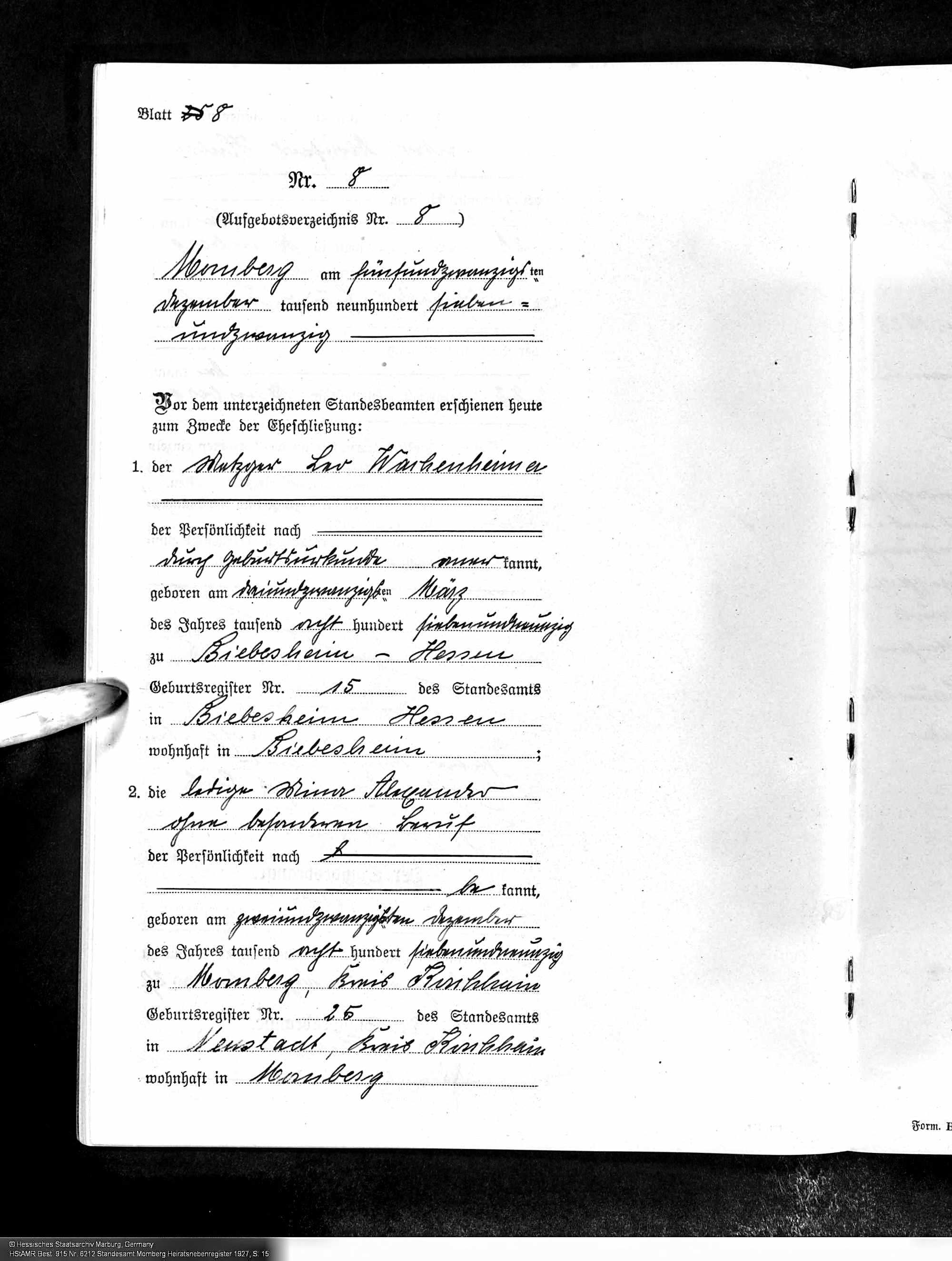
Bertha’s younger sister Rosa Alexander married Jakob Katz, as discussed above. The third sister Mina Alexander married Leo Wachenheimer in Momberg on December 25, 1927. Leo was the son of Meier Wachenheimer and Klara Rothschild; he was born on March 23, 1897, in Biebesheim, Germany. Mina and Leo would have two children.

Marriage record of Mina Alexander and Leo Wacheneimer
Hessisches Hauptstaatsarchiv; Wiesbaden, Deutschland; Collection: Personenstandsregister Heiratsregister; Signatur: 915; Laufende Nummer: 6212

According to Barbara Greve, Regina and Seligmann’s only surviving son, Samuel, married Lottie Weiler in July 1933; Lottie was born in Marburg on January 10, 1913, according to the JOWBR. I do not have names for her parents. Samuel and Lottie had one son, Hans-Joseph Alexander, according to Barbara Greve.

Rebekka Katzenstein Katz died in Jesberg on March 2, 1927; she was only 61 years old. Her husband Salomon Scholum Kneibel Katz died two years later on May 2, 1929.  He was 69.

Death record of Rebekka Katzenstein Katz
Hessisches Hauptstaatsarchiv; Wiesbaden, Deutschland; Personenstandsregister Sterberegister; Bestand: 920; Laufende Nummer: 3918

Here is the photograph I took in the Jesberg cemetery of Rebekka’s grave long before I knew the whole story of their family; sadly, I do not have a photograph of her husband’s gravestone:

The rest of the families of Rebekka and Regina Katzenstein survived into the Nazi era, and it appears that every single one of them left Germany in time—all of Rebekka and Salomon Kneibel’s children and spouses and grandchildren as well as Regina Katzenstein and Selig Alexander and at least three of their four children and spouses and grandchildren. The only couple I’ve been unable to find in any later record or index are Regina’s daughter Bertha and her husband Julius Simon.

Almost all the rest of the families of Rebekka Katzenstein and her sister Regina Katzenstein ended up in Johannesburg, South Africa. Unfortunately, I don’t have any actual records or documents that reveal when the family arrived there or any other information aside from their deaths and burials.

But I was fortunate to connect with John Leach, a relative by marriage of Leo Wachenheimer, husband of Mina Alexander. From John I learned that Leo had been a cattle dealer in Germany and had also worked in his father’s kosher butcher business. Leo was arrested by the Nazis in 1935 for doing business with a non-Jew; when he was released, he escaped from Germany to South Africa, where he opened a kosher butcher shop. Soon many family members followed him, including his wife Mina and their children, his in-laws Regina and Selig Alexander, his sister-in-law Rosa Alexander Katz and her husband Jakob Katz and their three children, and Jakob Katz’s sister Therese Katz and her husband Hermann Blum and Jakob’s brother Julius Katz. They all appear to have spent the rest of their lives in Johannesburg.

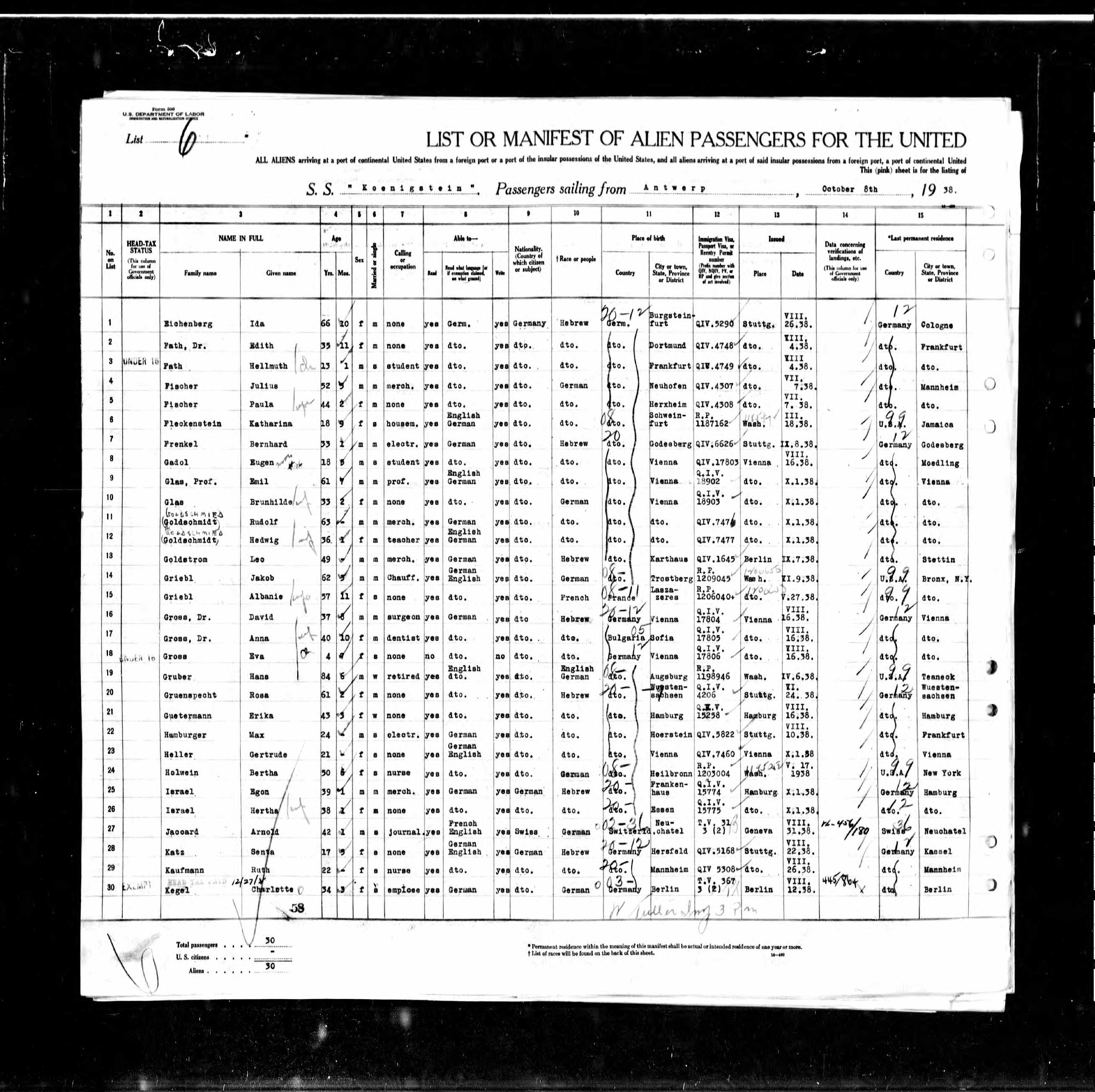
The only descendants of Rebekka or Regina who did not go to South Africa were Rebekka’s son Berthold and his wife Ida and their children, Senta and Ludwig. Instead, they went to the United States. Their daughter Senta arrived first on October 8, 1938, and Berthold, Ida, Ludwig, and Ida’s mother Bertha Blumenstiel arrived on November 25, 1938; they were all going to a cousin, Leo Katzmann in the Bronx:

Senta Katz 1938 passenger manifest
Year: 1938; Arrival: New York, New York; Microfilm Serial: T715, 1897-1957; Microfilm Roll: Roll 6238; Line: 1; Page Number: 176
Ancestry.com. New York, Passenger Lists, 1820-1957

Berthold Katz and family passenger manifest
Year: 1938; Arrival: New York, New York; Microfilm Serial: T715, 1897-1957; Microfilm Roll: Roll 6254; Line: 1; Page Number: 68
Ancestry.com. New York, Passenger Lists, 1820-1957

By 1940, they had settled in Philadelphia where Berthold was working as a salesman for a paper bag company and Senta was working as a packer for a children’s dress company. Bertha’s mother-in-law Bertha Blumenstiel was also living with them.

Berthold Katz and family 1940 US census
Year: 1940; Census Place: Philadelphia, Philadelphia, Pennsylvania; Roll: T627_3733; Page: 1A; Enumeration District: 51-1446

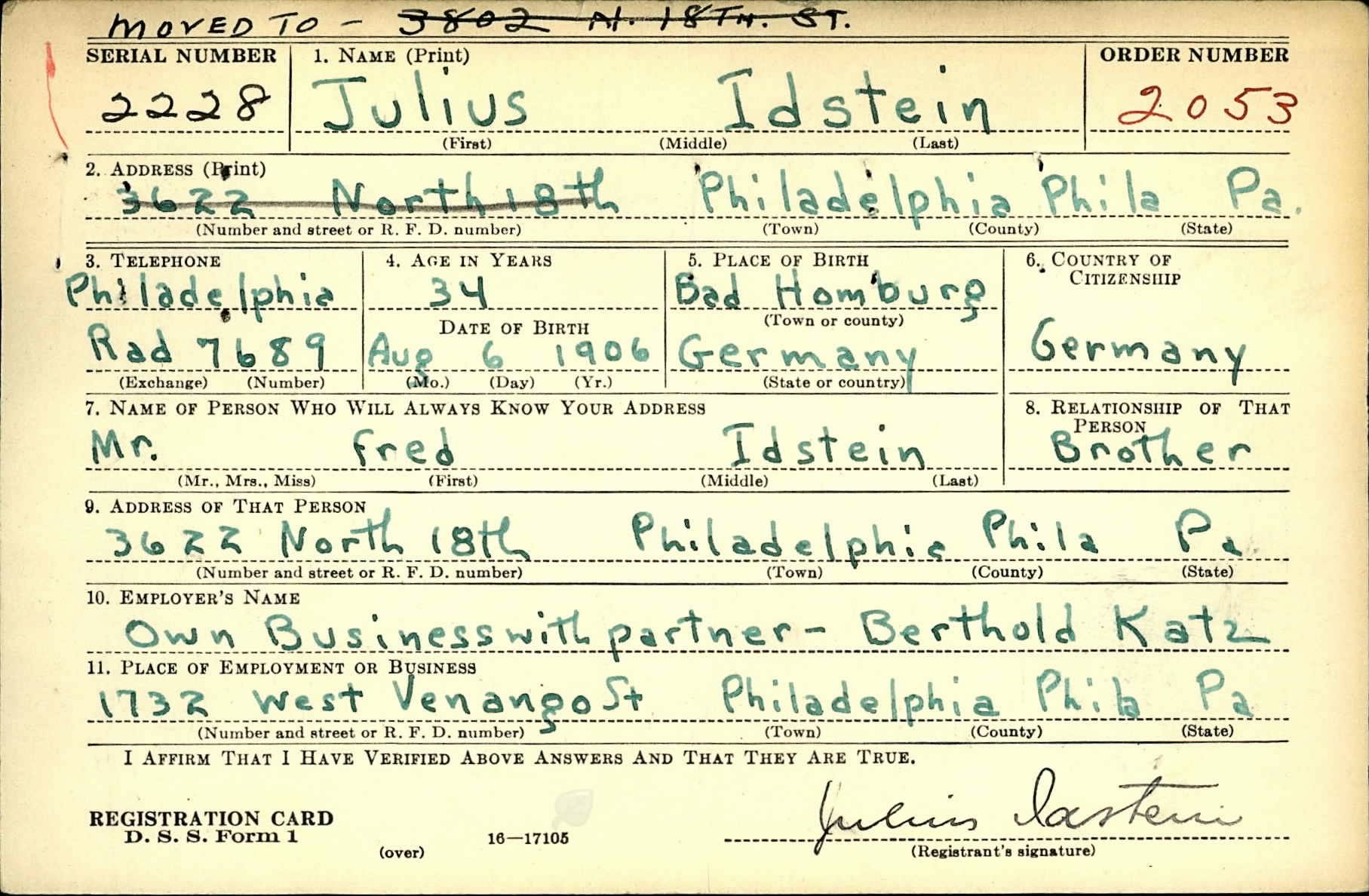
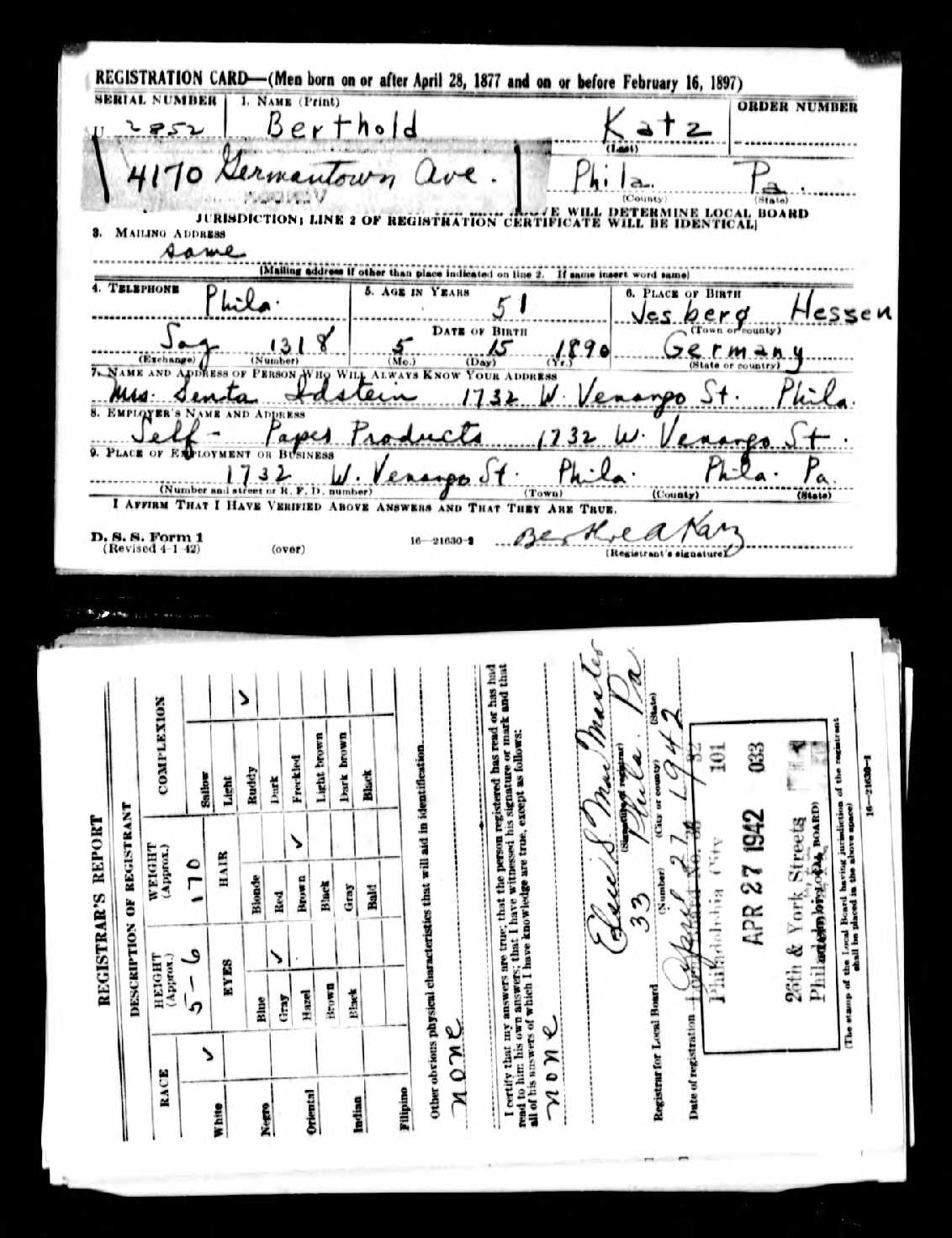
That same year Senta married Julius Idstein, who was also a refugee from Germany. (Philadelphia, Pennsylvania, Marriage Index, 1885-1951)  Julius was born on August 6, 1906, in Bad Homburg, and came to the United States on October 20, 1938. On his World War II draft registration, he reported that he was a partner in business with Berthold Katz, his father-in-law. On Berthold’s registration, he reported that he owned a paper products business. So between his arrival in 1938 and 1942, Berthold had become a business owner in partnership with his son-in-law Julius.

Julius Idstein World War II draft registration
Selective Service Registration Cards, World War II: Multiple Registrations

World War II draft registration for Berthold Katz
The National Archives at St. Louis; St. Louis, Missouri; World War II draft cards (Fourth Registration) for the State of Pennsylvania; Record Group Title: Records of the Selective Service System, 1926-1975; Record Group Number: 147; Series Number: M1951

Sadly, Berthold’s wife Ida died at age 48 of liver cancer on December 29, 1941.

Ida Blumenstiel Katz death certificate
Pennsylvania Historic and Museum Commission; Pennsylvania, USA; Certificate Number Range: 109451-112000

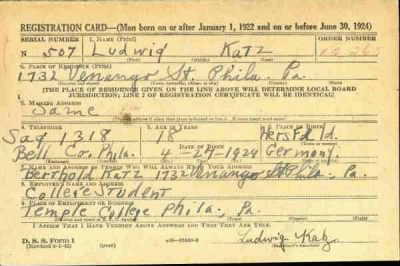
Their son Ludwig was in college at Temple College (now Temple University) in Philadelphia in 1942:

Ludwig Katz World War II draft registration
Selective Service Registration Cards, World War II: Multiple Registrations

In 1943, Berthold remarried; his second wife was Betty Nussbaum, and she also was a German native, born in Mansbach on February 4, 1893. She had come to the US in 1925 on her own; her parents stayed behind where her mother died in 1939 and her father died in the Theriesenstadt concentration camp in 1942. (Philadelphia, Pennsylvania, Marriage Index, 1885-1951)

Berthold died from stomach cancer on March 5, 1959; he was 68 years old; his second wife Betty died in 1977:

Berthold Katz death certificate
Pennsylvania Historic and Museum Commission; Pennsylvania, USA; Certificate Number Range: 026551-029250

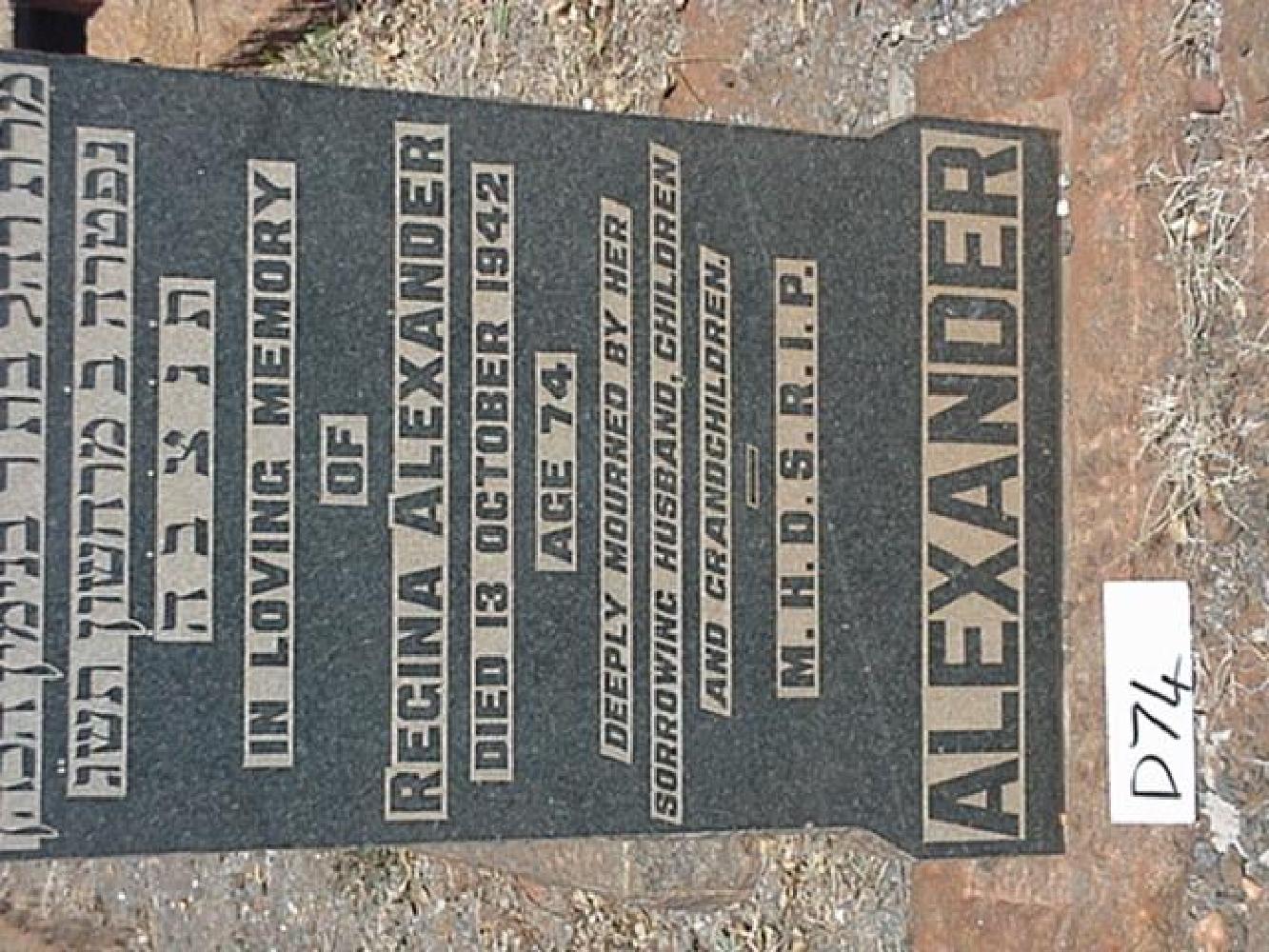
Meanwhile, Berthold’s siblings and first cousins and aunt and uncle were all living in South Africa.  His aunt Regina Katzenstein Alexander died on October 14, 1942, and her husband Selig Alexander died on May 5, 1949; they are buried at West Park Cemetery in Johannesburg. (JewishGen Online World Burial Registry (JOWBR)). Charmaine Rosenberg of the Johannesburg Chevra Kadisha kindly sent me the following photograph of Regina’s headstone:

Headstone of Regina Katzenstein Alexander

Berthold’s daughter Senta and her husband Julius Idstein had five children. Julius died in 1981, and Senta lived until 2003. She was 82 when she died.

Berthold’s son Ludwig became a nuclear physicist and was a senior scientist for Visidyne, Inc. in Burlington, Massachusetts, when he was killed in a car accident on March 18, 1981. He was 57 years old and was survived by his wife and two children. “Ludwig Katz, Swampscott,” Boston Herald (March 25, 1981), p. 40.

As for the family in South Africa, I have no information other than their dates of death and burial place. All those named below are, like Regina Katzenstein and Selig Alexander, buried at the West Park Cemetery in Johannesburg, and all this information comes from the JOWBR on Jewishgen.org and from Charmaine Rosenberg of the Chevra Kadisha in Johannesburg. I am very grateful to Charmaine for providing me with these photographs of the headstones.

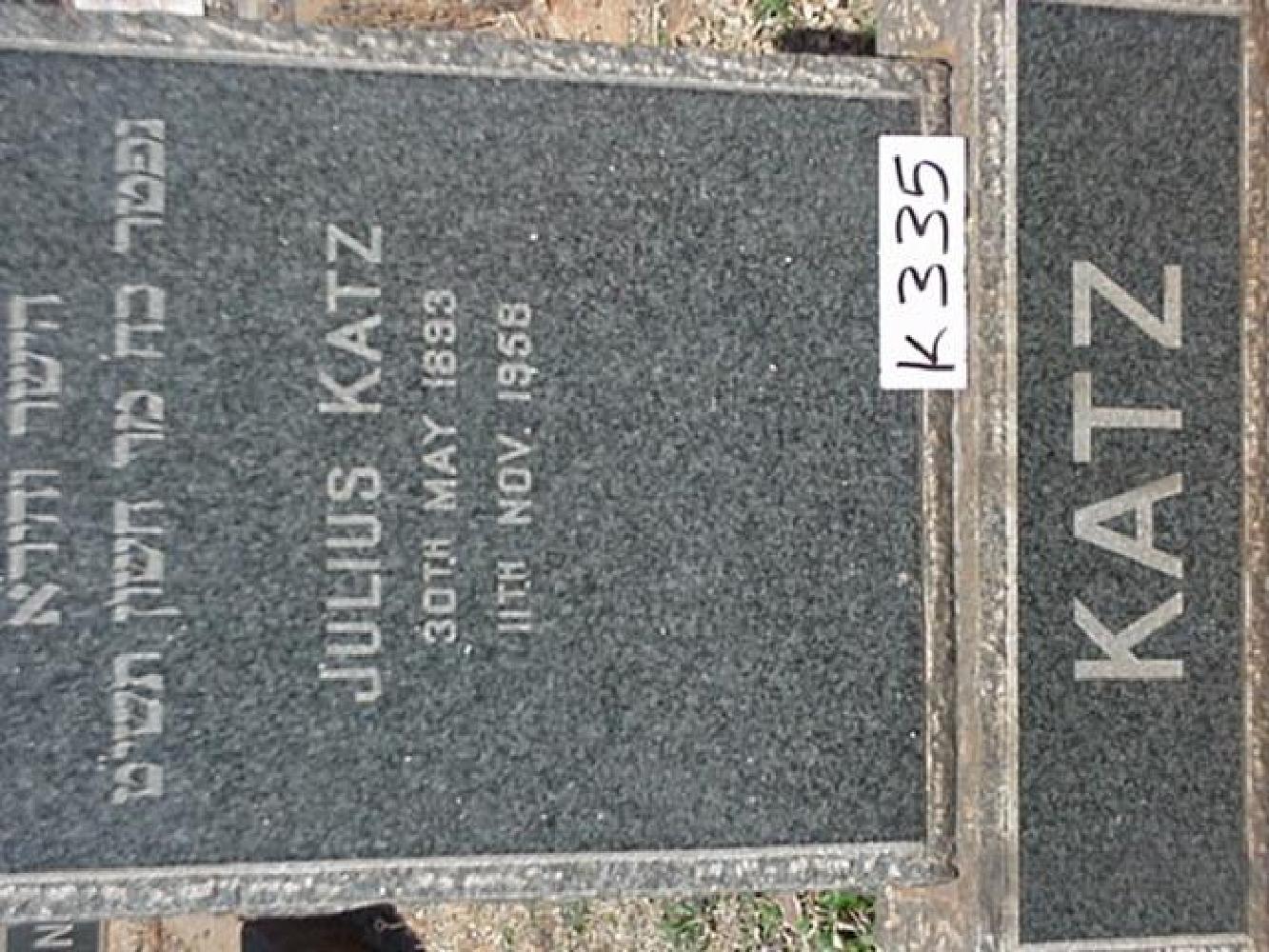
Julius Katz died on November 11, 1958, when he was 65. As far as I know, he never married or had children.

Headstone of Julius Katz

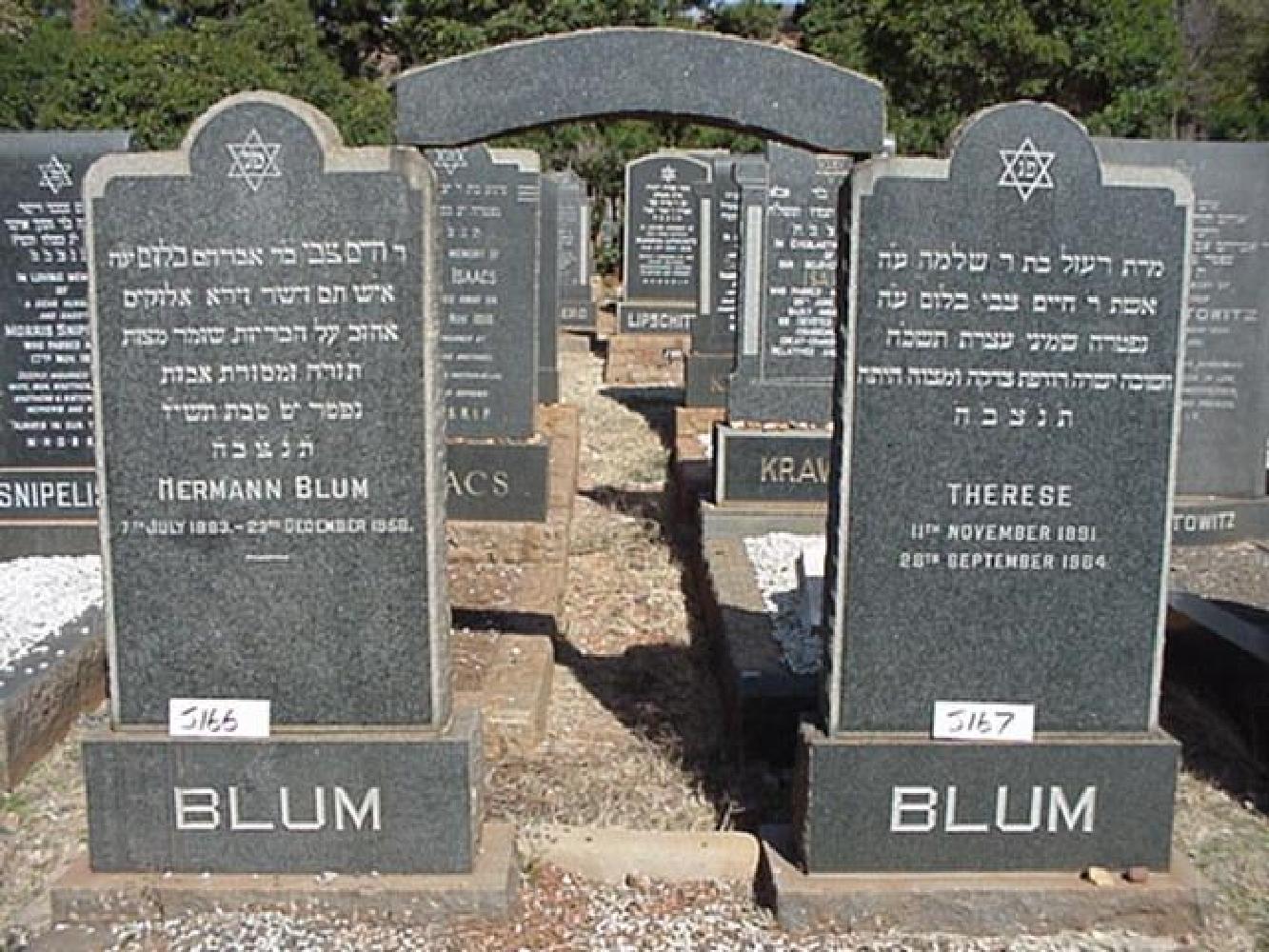
Therese Katz died on September 28, 1964, eight years after her husband Hermann Blum, who died on December 23, 1956. She was 73, he was also 73 when he died. As far as I have been able to determine, they did not have children.

Headstone of Therese Katz Blum and Hermann Blum

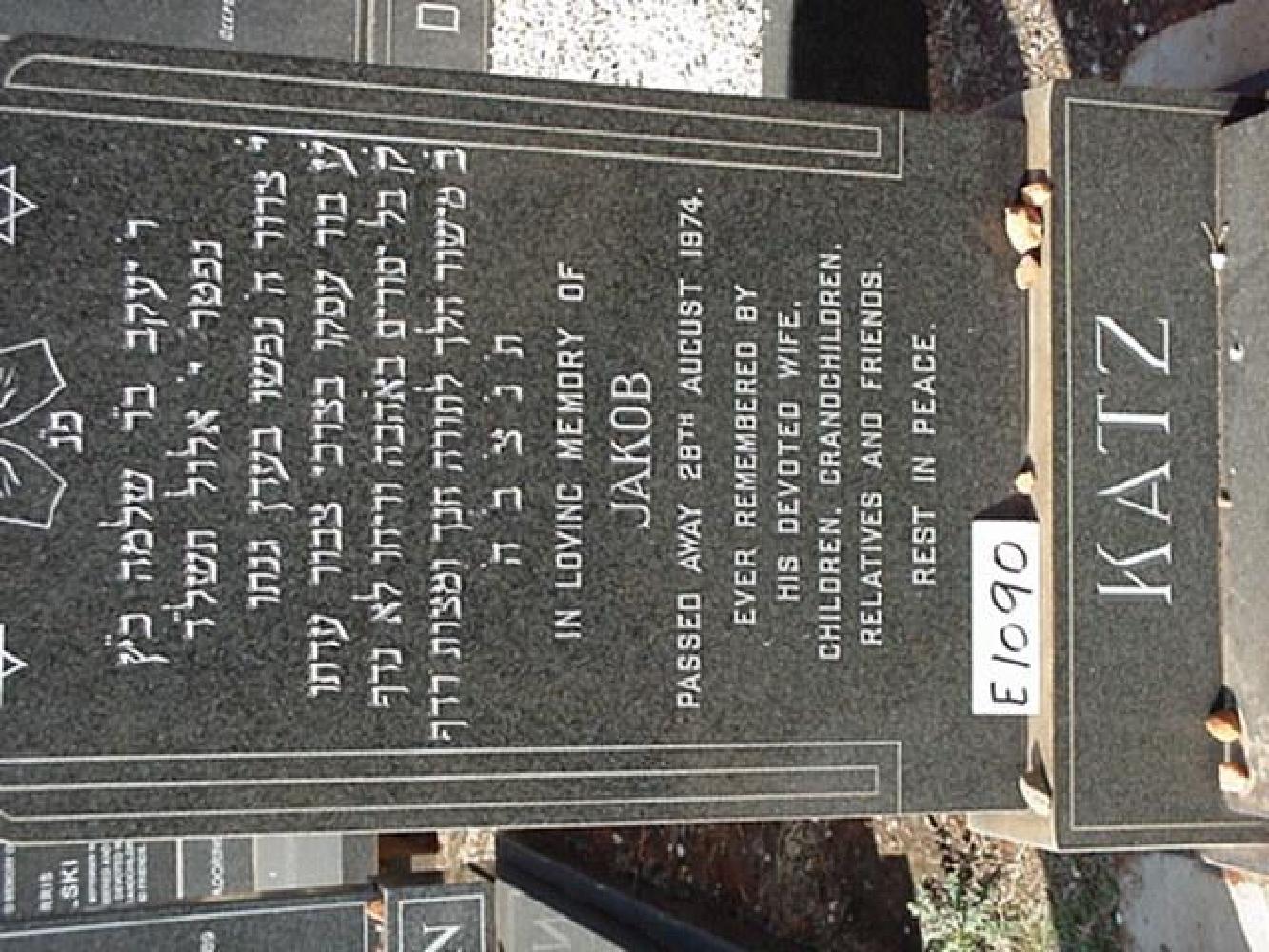
Jakob Katz died on August 24, 1974; he was 79. His wife and first cousin Rosa Alexander Katz outlived him by 23 years. She was almost 101 when she died on June 14, 1997.

Headstone of Jakob Katz

Rosa’s sister Mina Alexander Wachenheimer also outlived her husband by many years. Leo Wachenheimer died on January 23, 1969, when he was 72. Mina survived him by over twenty years, dying on December 23, 1989, when she was 92.

Headstone of Mina (Minna) Alexander Wachenheimer

Headstone of Leo Wachenheimer

Samuel Alexander died on June 21, 1989; he was 83. He had outlived his wife Lotte by seventeen years; she died on January 11, 1972, when she was 59.

Overall, the children of both Rebekka and Regina Katzenstein, daughters of Mina Katzenstein and Wolf Katzenstein, were fortunate to escape from Nazi Germany when they did. Perhaps Leo Wachenheimer’s arrest in 1935 was the key that opened the door to the survival of all of them.


My Great-Grandmother Hilda

I have now written about all of the siblings of my great-grandmother, Hilda Katzenstein Schoenthal, as well as about her parents and some of her aunts, uncles, and cousins.  I still have more of the Katzenstein extended family to discuss, but first I want to look back at the life of my great-grandmother.  Her story has been covered only in bits and pieces through the stories of her husband and children and through the stories of her parents and siblings.  Isn’t that all too often the case with women—that their stories are seen only through the stories of those who surrounded them? Especially since this is Women’s History Month, I wanted to be sure to give my great-grandmother her own page, her own story.

Hilda Katzenstein Schoenthal

Hilda Katzenstein Schoenthal, my great-grandmother

Hilda was the third daughter and sixth and youngest child of her parents, Gerson Katzenstein and Eva Goldschmidt.  She was the third of the six to be born in the United States—in Philadelphia on August 17, 1863.

When Hilda was three years old, her sibling closest in age, Hannah, died at age seven from scarlet fever. Hilda was seven years younger than her brother Perry, who was the second closest to her in age, and so there was a big gap between Hilda and her surviving older siblings. Joe was fifteen years older, Jacob thirteen years older, and Brendena was ten years older than Hilda. My great-grandmother was the baby of the family, and I would imagine that after losing their daughter Hannah, her parents must have been very protective of her.

gerson-katzenstein-1870-census-1

Gerson Katzenstein and family 1870 census, Year: 1870; Census Place: Philadelphia Ward 16 Dist 48 (2nd Enum), Philadelphia, Pennsylvania; Roll: M593_1429; Page: 708B; Image: 96949; Family History Library Film: 552928

Her sister Brendena married Jacob Schlesinger in 1871 when Hilda was just eight years old. By the time Hilda was ten years old in 1873, her oldest brother Joe had moved to Washington, Pennsylvania, and within a few years after that her other two brothers, Jacob and Perry, had also moved to western Pennsylvania.  Thus, Hilda was still quite young when her older siblings left home, leaving her to live with just her parents.

Year: 1880; Census Place: Philadelphia, Philadelphia, Pennsylvania; Roll: 1173; Family History Film: 1255173; Page: 274B; Enumeration District: 219; Image: 0561

Katzenstein family Year: 1880; Census Place: Philadelphia, Philadelphia, Pennsylvania; Roll: 1173; Family History Film: 1255173; Page: 274B; Enumeration District: 219; Image: 0561

But her brother Joe’s move to Washington, Pennsylvania proved fateful for Hilda and for my family as it was there that she met her future husband, my great-grandfather Isidore Schoenthal, who had only arrived in the US a few years earlier from Sielen, Germany.

The Daily Republican
(Monongahela, Pennsylvania)
11 Aug 1887, Thu • Page 4

Hilda married him in 1888 when she was 25 years old and settled with him in Little Washington where he was a china dealer.  Their first son, Lester, was born that same year.

Isidore Schoenthal

Isidore Schoenthal

Then a series of tragic events hit the Katzenstein family. In the spring 1889, Hilda’s brother Jacob lost his wife Ella and both of his sons, one before the Johnstown flood and two as a result of the flood. The following year, my great-grandfather Gerson died at age 75.  Hilda named her second child for her father; Gerson Katzenstein Schoenthal was born on January 20, 1892. A year later Hilda lost her mother, Eva Goldschmidt Katzenstein, on September 6, 1893; she was 66.

Hilda did not have another child until August, 1901, when my great-uncle Harold was born—more than nine years after Gerson.  Just a few months after Harold’s birth, Hilda’s brother Joe died in December, 1901; just over a year and a half later, her brother Perry died in August, 1903.  Hilda was forty years old and had lost her parents and three of her five siblings.  Only Jacob and Brendena remained.

In March, 1904, my great-grandmother Hilda gave birth to her last child and only daughter, my grandmother Eva Schoenthal, named for Hilda’s mother Eva Goldschmidt Katzenstein.

eva-schoenthal-cohen-watermarked

My grandmother, Eva Schoenthal

When my grandmother was just a small child, her parents decided to leave Washington, Pennsylvania, and move to Denver, Colorado, believing that the mountain air would be better for their son Gerson, who had developed asthma.

Thus, Hilda packed up her children and belongings and moved far away from her two remaining siblings: Brendena, who was living with her husband Jacob and family in Philadelphia, and Jacob, who by that time had remarried and was living with his second wife Bertha and their children in Johnstown.  I don’t believe Hilda or Isidore knew anyone in Denver, but somehow they started their lives over in this city far from their families back east.

They remained in Denver for at least twenty years, raising my grandmother and my great-uncles. During the many years that Hilda lived in Denver, her brother Jacob died, and her sister Brendena lost her husband as well as both of her daughters.  It must have been hard to live so far away from all of her family during those painful times.

Isidore, Hilda (Katzenstein), and Eva Schoenthal

Isidore, Hilda (Katzenstein), and Eva Schoenthal in Denver

After many years in Denver, Hilda and Isidore moved back east. Their son Harold had gone back east for college, and my grandmother had moved to Philadelphia after she married my grandfather, John Nusbaum Cohen, in 1923.  She had met him when, after graduating from high school, she’d gone to visit relatives in Philadelphia, probably Brendena’s family.

My father and aunt were born in the 1920s, and they were my great-grandparents’ only grandchildren at that time.  I assume that they were part of the reason that by 1930, my great-grandparents returned to the east and settled in Montclair, New Jersey, where their son Harold lived and not far from my grandmother and my aunt and father.

HIlda (Katzenstein) Schoenthal, Eva (Schoenthal) Cohen, Eva HIlda Cohen, and Harold Schoenthal

HIlda (Katzenstein) Schoenthal, Eva (Schoenthal) Cohen, Eva Hilda Cohen, and Harold Schoenthal

Hilda and Isidore lived in Montclair until 1941 when they moved to Philadelphia so that my grandmother could take care of them, both being elderly and in poor health by that time. Hilda died from pneumonia  on August 17, 1941, just seven months after the move to Philadelphia; she died on her 78th birthday. Her husband Isidore died eleven months later on July 10, 1942.  They were buried at Restland Memorial Park in East Hanover, New Jersey.

Looking back over my great-grandmother’s life, I have several thoughts.  Although she was the baby of the family, she was also the only one who ventured far from where her family lived.  Her brothers left Philadelphia, but never left Pennsylvania; her sister lived in Philadelphia for her entire life after arriving as a child from Germany. Hilda moved across the state to marry Isidore Schoenthal, and Hilda was the only Katzenstein sibling to leave the east, moving with her husband and four children all the way to Colorado.

Her life was also marked by many losses, some quite tragic: a sister died as a young child, her parents died before Hilda was thirty years old, and two of her brothers died before Hilda was forty.  Several nieces and nephews also died prematurely.  Her brother Jacob also predeceased her; she was 52 when he died. So many losses must have had an effect on her perspective on life.

On the other hand, she had a long marriage and four children who grew to adulthood.  She lived to see two of her grandchildren, my father and aunt, grow to be teenagers. My father remembers her as a loving, affectionate, and sweet woman; she loved to cook, and when for a period of time he lived near her in Montclair, she would make lunch for him on school days.

Hilda saw more of America than her parents and siblings, and she lived longer than any of them except for her sister Brendena, who survived her. She endured many losses in her life, but the love she received from her family must have outweighed all that sadness, for my father recalls her as a very loving and positive woman.

Jacob Katzenstein’s Second Family: Conclusion

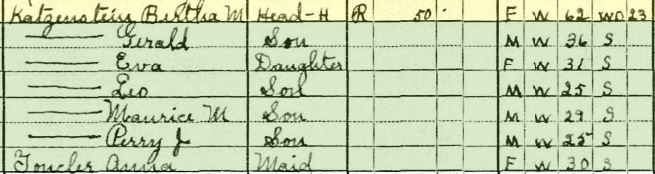
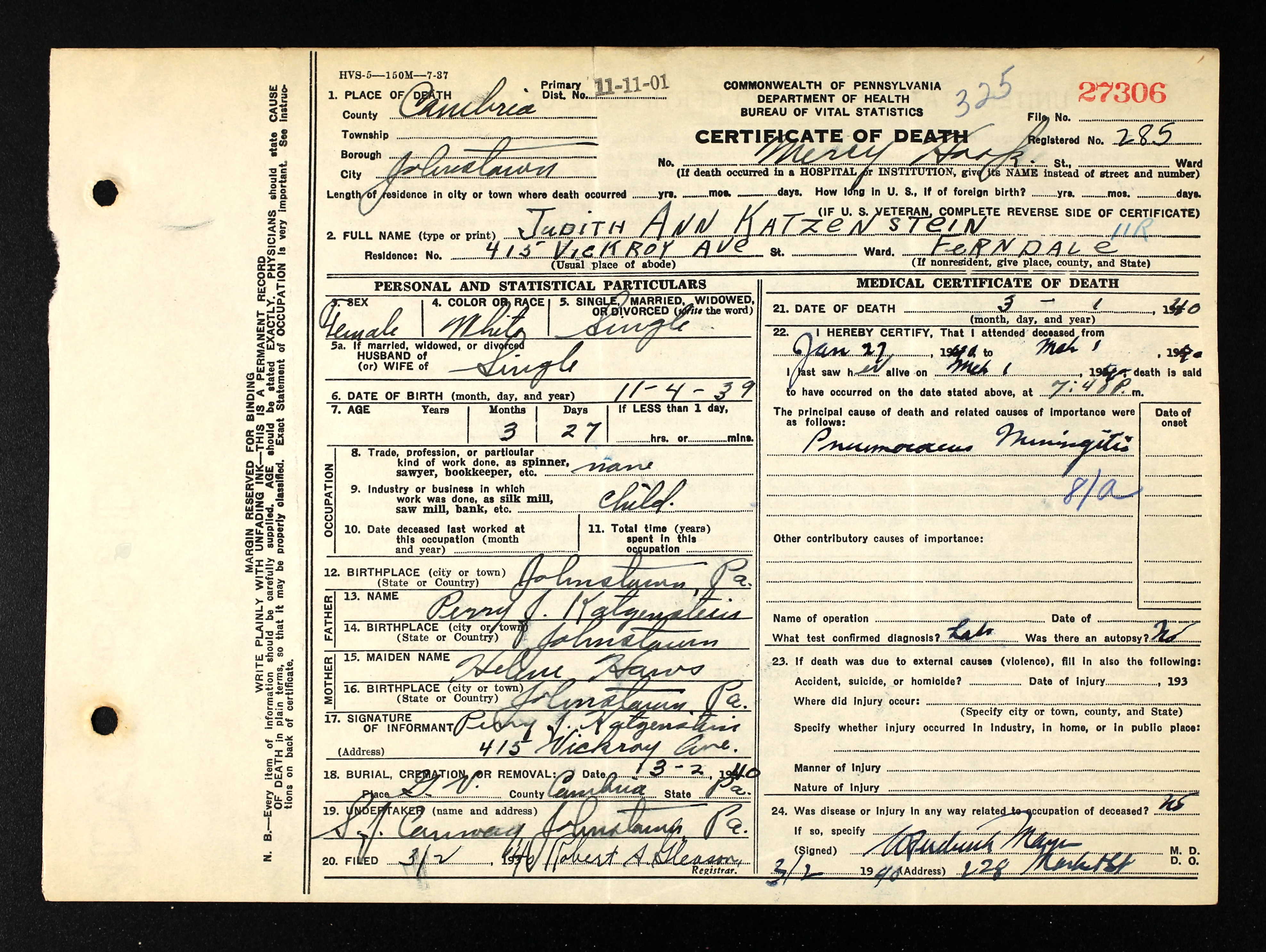
As I wrote in my last post, as of 1940 my great-great uncle Jacob Katzenstein’s second family was still centered in Johnstown, Pennsylvania.  Although his daughter Helen was living in New Rochelle, New York with her husband John A. Rodgers, a career Army officer, and their three children, and his son Maurice and his wife Grace were living in Michigan, Jacob’s widow Bertha and their other four children (who were all in or close to their forties by then)—Gerald, Eva, Leo, and Perry—were all still in Johnstown. Gerald, Eva, and Leo were unmarried and living with their mother Bertha.  Perry was married and had two children; he and his wife lost their almost-four month old daughter Judith in March 1940.

Then on November 10, 1940, Helen Katzenstein Rodgers died; she was only 48 years old and was buried at Arlington National Cemetery where her husband John would later be buried.  I could not find an obituary or a death record for Helen.  She was survived by her husband and three daughters as well as her mother and five siblings.

Ancestry.com. U.S. National Cemetery Interment Control Forms, 1928-1962 [database on-line]. Provo, UT, USA: Ancestry.com Operations, Inc., 2012. Original data: Interment Control Forms, 1928–1962. Interment Control Forms, A1 2110-B. Records of the Office of the Quartermaster General, 1774–1985, Record Group 92. The National Archives at College Park, College Park, Maryland.

Ancestry.com. U.S. National Cemetery Interment Control Forms, 1928-1962 [database on-line]. Provo, UT, USA: Ancestry.com Operations, Inc., 2012.
Original data: Interment Control Forms, 1928–1962. Interment Control Forms, A1 2110-B. Records of the Office of the Quartermaster General, 1774–1985, Record Group 92. The National Archives at College Park, College Park, Maryland.

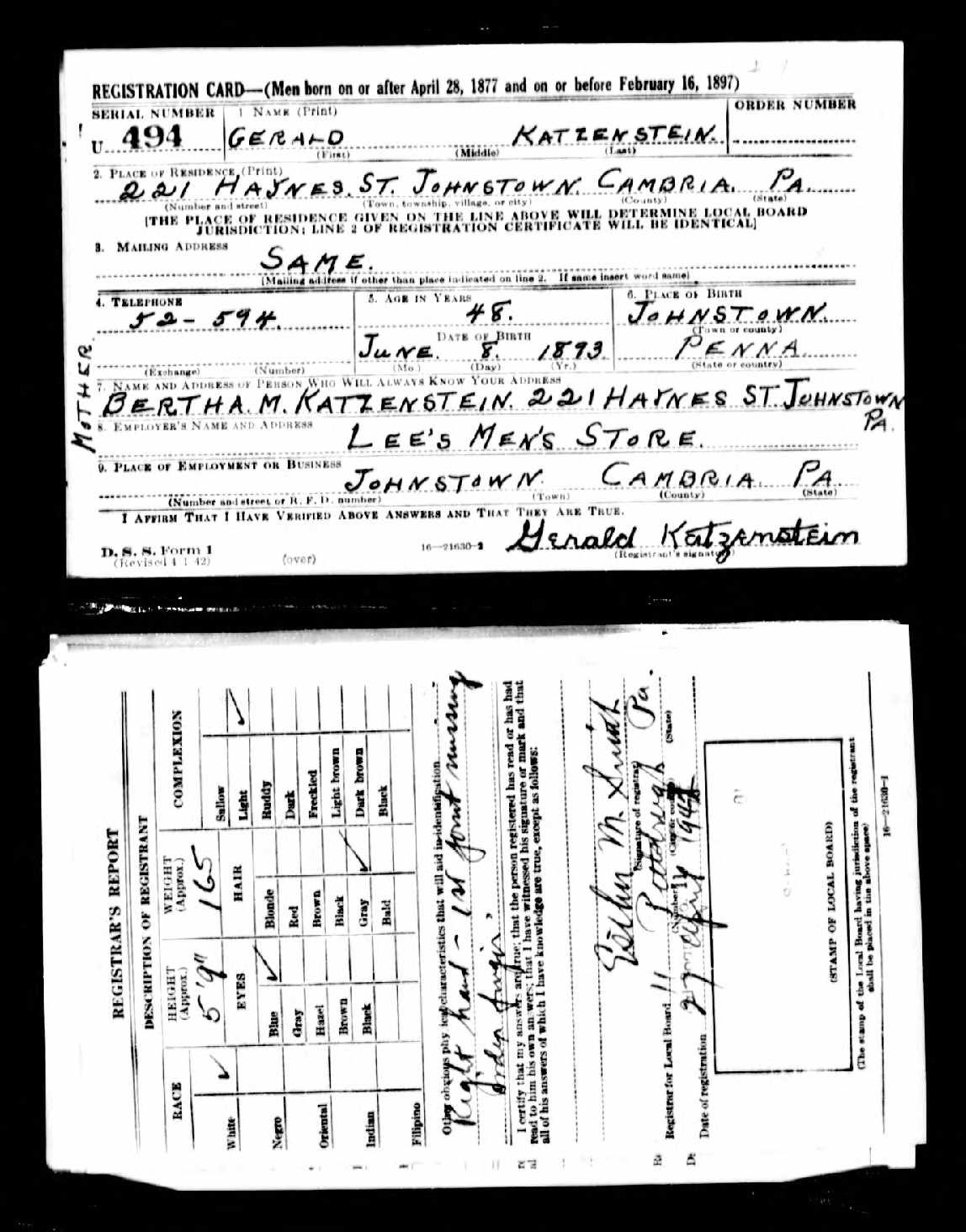
The only Katzenstein brother for whom I found a World War II draft registration was Gerald because the online databases only include the cards for the so-called Old Man’s Draft, i.e., for those born between April 28, 1877 and February 16, 1897. Leo, Maurice, and Perry were all born after February 16, 1897, and so are not in the database.  Gerald’s card shows that he was working at Lee’s Clothing and that he was living at 221 Haynes Street where his mother, his emergency contact, also resided.  Also, the draft card states that Gerald was missing the first joint on the index finger of his right hand.

Gerald Katzenstein World War 2 draft registration The National Archives at St. Louis; St. Louis, Missouri; Draft Registration Cards for Fourth Registration for Pennsylvania, 04/27/1942 - 04/27/1942; NAI Number: 563728; Record Group Title: Records of the Selective Service System; Record Group Number: 147

Gerald Katzenstein World War 2 draft registration
The National Archives at St. Louis; St. Louis, Missouri; Draft Registration Cards for Fourth Registration for Pennsylvania, 04/27/1942 – 04/27/1942; NAI Number: 563728; Record Group Title: Records of the Selective Service System; Record Group Number: 147

On February 12, 1943, Bertha Miller Katzenstein died from a coronary occlusion and generalized arteriosclerosis; she was 75 years old. She was survived by her remaining five children and was buried with her husband Jacob at Grandview cemetery in Johnstown. She had outlived him by 27 years.

Bertha Miller Katzenstein death certificate Pennsylvania Historic and Museum Commission; Pennsylvania, USA; Certificate Number Range: 010551-013400

Bertha Miller Katzenstein death certificate
Pennsylvania Historic and Museum Commission; Pennsylvania, USA; Certificate Number Range: 010551-013400

Headstone for Bertha Miller Katzenstein "courtesy of Find-A-Grave Member Brian J. Ensley (#47190867)

Headstone for Bertha Miller Katzenstein
courtesy of Find-A-Grave Member Brian J. Ensley (#47190867)

Sometime after 1942 when he registered as single for the draft, Gerald Katzenstein married Florence Mae Lint. Gerald would have been in his early fifties; Florence, who was born in 1902, would have been in her forties. Florence was, like Gerald, a native of Johnstown, the daughter of Joseph Lint, who worked as a brakeman in a steel mill, and Eva Ann Thomas, another Johnstown native. Eva Ann Thomas Lint died in 1938, and in 1940 Florence and her father were living with Florence’s sister Gussie Henton and her husband.  Florence was a milliner working in a retail hat store called Keyser-Lint Hats, a business in which she presumably had a partial ownership.

Florence Lint on 1940 census Year: 1940; Census Place: Johnstown, Cambria, Pennsylvania; Roll: T627_3455; Page: 6B; Enumeration District: 11-97

Florence Lint on 1940 census
Year: 1940; Census Place: Johnstown, Cambria, Pennsylvania; Roll: T627_3455; Page: 6B; Enumeration District: 11-97

Gerald and Florence must have married by 1945 because Florence is listed in the Johnstown directory of that year as the wife of Gerald Katzenstein; she was still working at Keyser-Lint Hats.  Her father died March 21, 1945, and Gerald’s mother had died two years before.  Had Florence and Gerald waited until their parents were gone to marry? Gerald was now working as a division manager for Sears, Roebuck and Company.

Katzensteins in the 1945 Johnstown directory Title : Johnstown, Pennsylvania, City Directory, 1945 Source Information Ancestry.com. U.S. City Directories, 1822-1995 [database on-line]. Provo, UT, USA: Ancestry.com Operations, Inc., 2011. Original data: Original sources vary according to directory.

Katzensteins in the 1945 Johnstown directory
Title : Johnstown, Pennsylvania, City Directory, 1945
Source Information
Ancestry.com. U.S. City Directories, 1822-1995 [database on-line]. Provo, UT, USA: Ancestry.com Operations, Inc., 2011.
Original data: Original sources vary according to directory.

Leo Katzenstein was living with Gerald and Florence at 303 Franklin Ave in 1945, and he was working as the manager of P & Q Clothes. Eva Katzenstein continued to work as a bank teller and also continued to live at 221 Haynes Street where her mother and brothers had once lived.  The youngest sibling Perry continued to do advertising sales for the Johnstown Tribune and lived with his wife and family on Vickroy Avenue.  Two years later in 1947, the only change in the listings for any of the Katzenstein siblings was that Leo was now living with Eva at 221 Haynes instead of with Gerald and Florence.

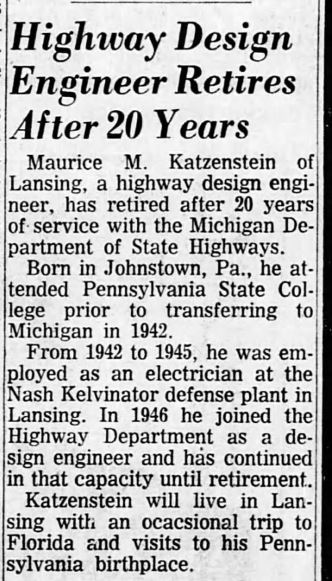
Maurice, the only surviving sibling not living in Johnstown, worked as an electrician for Nash Kelvinator at their defense plant in Lansing, Michigan from 1942 until 1945, and then in 1946 he became a design engineer for the State Highway Department in Lansing, where he lived with his wife Grace.  “Highway Design Engineer Retires After 20 Years,” Lansing State Journal (March 3, 1966, p. 11).

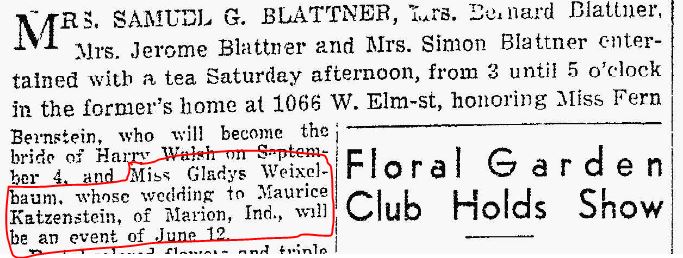
Two years later, Grace died on Christmas Day, 1948; she was 49 years old. She was buried in Mount Hope cemetery in Lansing, Michigan. She had been married to Maurice for only ten years when she died.

Headstone for Gladys Weixenbaum Katzenstein https://billiongraves.com/grave/person/11198057#/

Headstone for Gladys Weixenbaum Katzenstein
https://billiongraves.com/grave/person/11198057#/

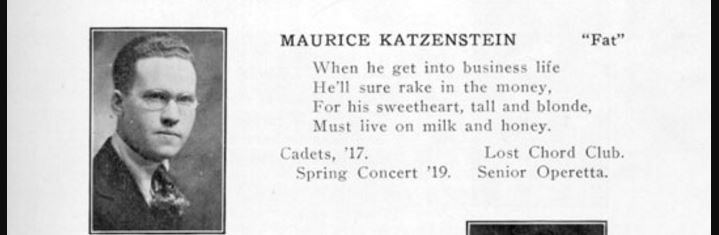
Seven months later, Maurice remarried.  On July 20, 1949, he married Sara Bailey in Angola, Indiana.  Maurice must have gone home to Johnstown to court Sara because she was born in Johnstown and was living there when they married.  She was a school teacher, like Grace had been, and she was the daughter of William Bailey, a plumber, and Harriet Carthew, both of whom were also Johnstown natives.

Indiana marriage record of Maurice Katzenstein and Sara Bailey Ancestry.com. Indiana, Marriages, 1810-2001 [database on-line]. Provo, UT, USA: Ancestry.com Operations, Inc., 2014. Original data: Indiana, Marriages, 1810-2001. Salt Lake City, Utah: FamilySearch, 2013

Indiana marriage record of Maurice Katzenstein and Sara Bailey
Ancestry.com. Indiana, Marriages, 1810-2001 [database on-line]. Provo, UT, USA: Ancestry.com Operations, Inc., 2014.
Original data: Indiana, Marriages, 1810-2001. Salt Lake City, Utah: FamilySearch, 2013

The Johnstown directory for 1949 shows little change for the Katzenstein siblings living there.  Lee was now working for Glosser Brothers, another clothing store, and living with Eva at 221 Haynes; Eva was still a bank teller.  Gerald had no occupation listed, but his wife Florence was still listed as working at Keyser-Lint Hats; they were still living at 303 Franklin.  Perry was still an advertising solicitor for the Johnstown Tribune, living with his family on Vickroy Avenue.

Katzensteins in 1949 Johnstown directory Title : Johnstown, Pennsylvania, City Directory, 1949 Source Information Ancestry.com. U.S. City Directories, 1822-1995 [database on-line]. Provo, UT, USA: Ancestry.com Operations, Inc., 2011. Original data: Original sources vary according to directory

Katzensteins in 1949 Johnstown directory
Title : Johnstown, Pennsylvania, City Directory, 1949
Source Information
Ancestry.com. U.S. City Directories, 1822-1995 [database on-line]. Provo, UT, USA: Ancestry.com Operations, Inc., 2011.
Original data: Original sources vary according to directory

The 1950s brought two major developments. Sometime after 1953 and before 1957, Leo Katzenstein moved from Johnstown to Miami, Florida, and married for the first time; he was in his mid-fifties.  He married Mary Driscoll, who, although born in Kentucky, had spent most of her childhood in Johnstown.  She had been previously married to Henry Rossman Smith, a Johnstown native, who had died in 1951. She had three grown children from her first marriage. I inferred the date range of her marriage to Lee based on the fact that he is last listed in Johnstown in 1953 without a wife’s name and first appears in Miami with Mary as his wife in 1957.  In 1957, Lee (as he is listed there) was working as a branch manager for Wells, which I assume, given his past experience, was a clothing store.

Mary Driscoll and family in Johnstown on the 1910 census Year: 1910; Census Place: Johnstown Ward 7, Cambria, Pennsylvania; Roll: T624_1323; Page: 9B; Enumeration District: 0126; FHL microfilm: 1375336

Mary Driscoll and family in Johnstown on the 1910 census
Year: 1910; Census Place: Johnstown Ward 7, Cambria, Pennsylvania; Roll: T624_1323; Page: 9B; Enumeration District: 0126; FHL microfilm: 1375336

Thus, as of the mid-1950s, only three of the Katzenstein siblings remained in Johnstown: Eva, who continued to work at the bank; Gerald, who is once again listed as a division manager for Sears; and Perry, who still worked for the Johnstown Tribune.

Gerald Katzenstein died on November 9, 1957; he was 64 and had suffered from coronary artery disease for a year before his death from a heart attack.  He was buried at Richland cemetery in Geisland, a town near Johnstown; he was survived by his wife Florence, who was buried beside him when she died in 1991. Gerald and Florence had no descendants.

Gerald Katzenstein death certificate Pennsylvania Historic and Museum Commission; Pennsylvania, USA; Certificate Number Range: 099301-102000

Gerald Katzenstein death certificate
Pennsylvania Historic and Museum Commission; Pennsylvania, USA; Certificate Number Range: 099301-102000

Headstone for Gerald and Florence (Lint) Katzenstein FindAGrave memorial by JM https://www.findagrave.com/cgi-bin/fg.cgi?page=pv&GRid=169359892&PIpi=145414417

Headstone for Gerald and Florence (Lint) Katzenstein
FindAGrave memorial by JM
https://www.findagrave.com/cgi-bin/fg.cgi?page=pv&GRid=169359892&PIpi=145414417

As the 1960s began, the status of remaining two Johnstown Katzenstein siblings was much the same as it had been: Eva was still a bank teller and Perry was still an advertising solicitor for the Johnstown Tribune.  One of his sons was also working in advertising in Johnstown.  Lee Katzenstein and his wife Mary were still living in Miami, where Lee was now a salesman at the Golden Gate Men’s Shop.

Maurice Katzenstein retired from the Michigan State Highway Department in March, 1966, as reported in this article from the Lansing State Journal of March 3, 1966 (p. 11):

Lansing State Journal, March 3, 1966, p. 11

Lansing State Journal, March 3, 1966, p. 11

Perry Katzenstein, the youngest sibling and the first to marry, was the third sibling to die; he died on February 28, 1972.  He was 67 years old and was survived by his wife Helene and their four children. He was buried at Grandview cemetery in Johnstown, where his infant daughter Judith had been buried 32 years before and where his wife Helene would also be buried in 1986, when she died.

That left only Eva, Leo/Lee, and Maurice, all of whom lived into their eighties. Lee died on November 15, 1979, in Miami; he was eighty, and his wife Mary had died the year before. I don’t know where they are buried.

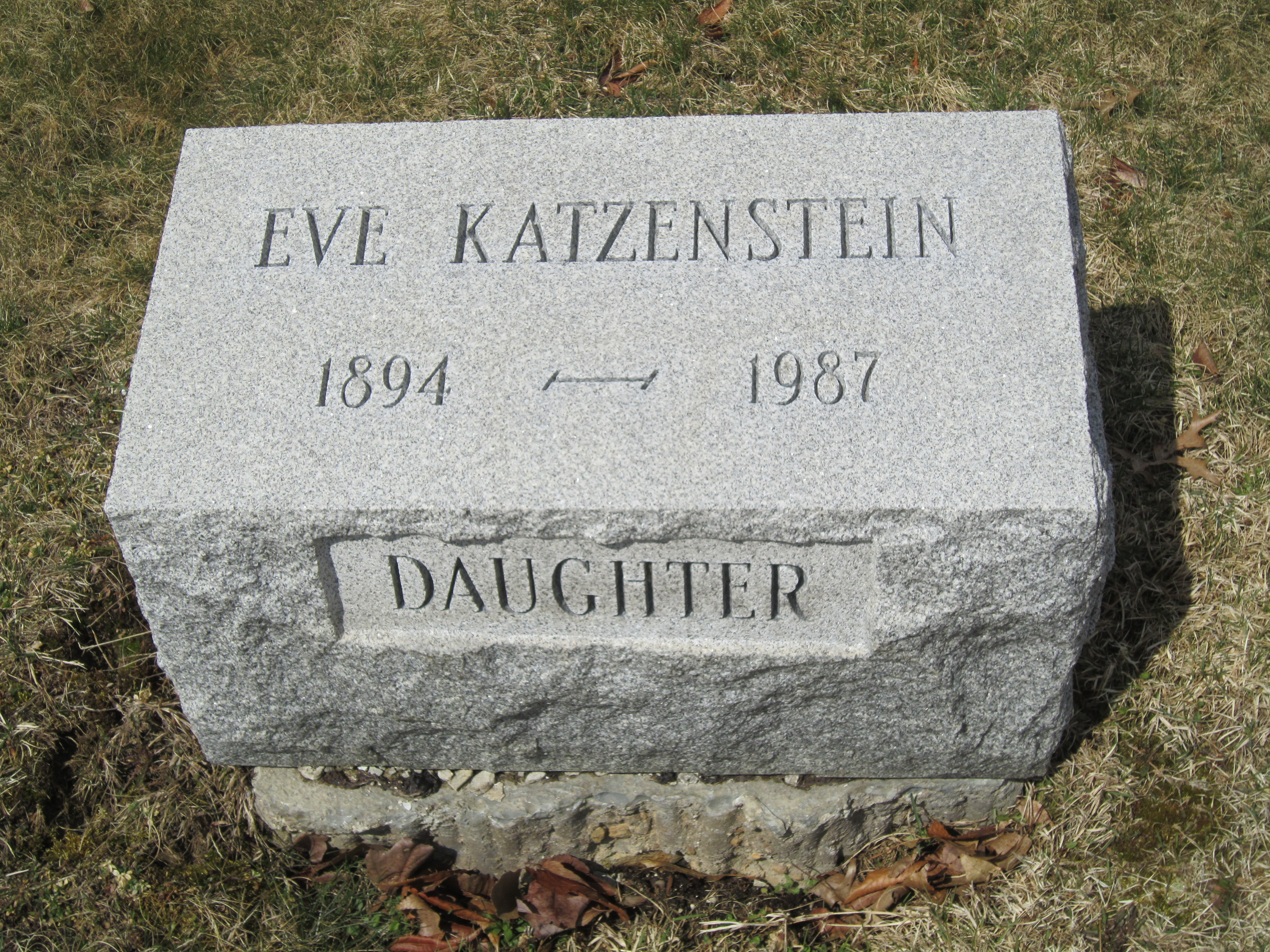
Eva died at age 92 on April 22, 1987, in Johnstown, and is buried with her other family members in Grandview cemetery.  She had never married, but family lore is that she was in a long term relationship with a local man, according to research done by David Baron.

Eva Katzenstein headstone "courtesy of Find-A-Grave Member Brian J. Ensley (#47190867)

Eva Katzenstein headstone
“courtesy of Find-A-Grave Member Brian J. Ensley (#47190867)

Maurice died on May 20, 1990, when he was 89.  He was buried in Miami; his second wife Sara died in 2003.

When I look back on the lives of Jacob Katzenstein’s second family, I am struck by a number of things. One, it is striking how many of his children not only lived in Johnstown for most of their lives, but married people from Johnstown; Helen, Gerald, Lee, Maurice (his second wife) and Perry all married people from Johnstown.  It also appears that not one of the siblings married someone Jewish, except for Maurice’s first wife Grace.

Second, out of six children, only two have descendants. Gerald, Lee, and Maurice married relatively late in life and did not have children; Eva never married. Thus, of the six siblings, only Helen and Perry had children and thus any living descendants.

Finally, all the siblings except Maurice had remarkably consistent jobs throughout their adult lives.  Eva started her career as a bank teller and stayed in that job for over forty years.  Gerald and Lee worked in the clothing business all their lives, following in the footsteps of their father Jacob. Perry started and ended his career selling advertising for the local newspaper. Only Maurice moved around a lot—not only from place to place, but also from job to job.  But he outlived all his siblings, so perhaps that was a healthy thing.

Overall, there is a consistency to the lives of most of the children of Jacob and Bertha (Miller) Katzenstein—in their careers, their personal lives, and their choice of staying in Johnstown for at least a substantial part of their lives.


Jacob Katzenstein’s Second Family

When Jacob Katzenstein died in 1916, he left behind his second wife, Bertha Miller, and their six children: Helen, who was then 24, Gerald (23), Eva (22), Leopold (18), Maurice (16), and Perry (12). His wife Bertha was 49 years old.  As I learned from Leonard Winograd’s book, The Horse Died at Windber: A History of Johnstown’s Jews of Pennsylvania (Wyndham Hall Press, 1988), Bertha’s brother Maurice Miller had been in business with Jacob as owners of a clothing store. That business continued to support the family, as we will see.

In 1917, the oldest child, Helen Katzenstein, married another Johnstown native, John Augustus Rodgers.  John had been the captain of the football team at Greater Johnstown High School in 1909 and went on to Penn State for college, according to the 1909 Greater Johnstown High School yearbook, The Spectator, found on Ancestry.com.

In June 1917 when he registered for the World War I draft, John was a physical training teacher at Stevens Institute of Technology in Hoboken, New Jersey. He was still single at that time, so Helen and he must have married sometime after June.

John Rodgers World War I draft registration Registration State: Pennsylvania; Registration County: Cambria; Roll: 1893244; Draft Board: 1 Description Draft Card : R Source Information Ancestry.com. U.S., World War I Draft Registration Cards, 1917-1918 [database on-line]. Provo, UT, USA: Ancestry.com Operations Inc, 2005.

John Rodgers World War I draft registration
Registration State: Pennsylvania; Registration County: Cambria; Roll: 1893244; Draft Board: 1
Description
Draft Card : R
Source Information
Ancestry.com. U.S., World War I Draft Registration Cards, 1917-1918 [database on-line]. Provo, UT, USA: Ancestry.com Operations Inc, 2005.

He started his service in the US Army in August, 1917, in the Officer Reserve Corps, and was commissioned as a second lieutenant in November, 1917.  He was stationed stateside during World War I, serving at Fort Oglethorpe in Georgia first, then at the Springfield (MA!) Armory, and then in Camp Meade, Maryland.  He was promoted to first lieutenant in September, 1919.

John Rodgers application for Veterans Compensation Ancestry.com. Pennsylvania, WWI Veterans Service and Compensation Files, 1917-1919, 1934-1948 [database on-line]. Provo, UT, USA: Ancestry.com Operations, Inc., 2015. Original data: World War I Veterans Service and Compensation File, 1934–1948. RG 19, Series 19.91. Pennsylvania Historical and Museum Commission, Harrisburg Pennsylvania.

John Rodgers application for Veterans Compensation
Ancestry.com. Pennsylvania, WWI Veterans Service and Compensation Files, 1917-1919, 1934-1948 [database on-line]. Provo, UT, USA: Ancestry.com Operations, Inc., 2015.
Original data: World War I Veterans Service and Compensation File, 1934–1948. RG 19, Series 19.91. Pennsylvania Historical and Museum Commission, Harrisburg Pennsylvania.

Meanwhile, Helen’s younger brothers were also dealing with the impact of World War I. Gerald, the oldest son, was working as a clerk at M.Miller & Son, the store owned by his uncle Maurice Miller and, until his death, his father Jacob Katzenstein.  Gerald claimed an exemption from service because he was supporting his dependent widowed mother, as seen on his draft card.

Gerald Katzenstein World War I draft registration Registration State: Pennsylvania; Registration County: Cambria; Roll: 1893243; Draft Board: 1 Description Draft Card : K Source Information Ancestry.com. U.S., World War I Draft Registration Cards, 1917-1918 [database on-line]. Provo, UT, USA: Ancestry.com Operations Inc, 2005.

Gerald Katzenstein World War I draft registration
Registration State: Pennsylvania; Registration County: Cambria; Roll: 1893243; Draft Board: 1
Description
Draft Card : K
Source Information
Ancestry.com. U.S., World War I Draft Registration Cards, 1917-1918 [database on-line]. Provo, UT, USA: Ancestry.com Operations Inc, 2005.

Leopold or Leo Katzenstein, as he was then known, was in high school in 1917; he was a senior at Greater Johnstown High School and vice-president of his class.

Leo Katzenstein, 1917 Greater Johnstown High School yearbook Ancestry.com. U.S., School Yearbooks, 1880-2012 [database on-line]. Provo, UT, USA: Ancestry.com Operations, Inc., 2010. Original data: Various school yearbooks from across the United States.

Leo Katzenstein, 1917 Greater Johnstown High School yearbook
Ancestry.com. U.S., School Yearbooks, 1880-2012 [database on-line]. Provo, UT, USA: Ancestry.com Operations, Inc., 2010.
Original data: Various school yearbooks from across the United States.

When he registered for the draft in September, 1918, he was a student at Lehigh University, studying to be a metallurgy engineer.  He joined the service on October 2, 1918. He served in the Student Army Training Center at Lehigh until December 11, 1918.  He never served overseas during the war.

Leo Katzenstein World War I draft registration Registration State: Pennsylvania; Registration County: Cambria; Roll: 1893243; Draft Board: 1 Description Draft Card : K Source Information Ancestry.com. U.S., World War I Draft Registration Cards, 1917-1918 [database on-line].

Leo Katzenstein World War I draft registration
Registration State: Pennsylvania; Registration County: Cambria; Roll: 1893243; Draft Board: 1
Description
Draft Card : K
Source Information
Ancestry.com. U.S., World War I Draft Registration Cards, 1917-1918 [database on-line].

Maurice, the third son, was still in high school when he registered for the draft in September, 1918. From his 1919 high school yearbook entry, it seems he was interested in music as he sang in an operetta, was in the spring concert, and was a member of the Lost Chord Club.  As far as I can tell, he never served in the military.

Maurice Katzenstein, 1919 Greater Johnstown High School Yearbook http://usgwarchives.net/pa/cambria/images/spectator-19/p031.jpg

Maurice Katzenstein, 1919 Greater Johnstown High School Yearbook
http://usgwarchives.net/pa/cambria/images/spectator-19/p031.jpg

Maurice Katzenstein World War I draft registration Registration State: Pennsylvania; Registration County: Cambria; Roll: 1893243; Draft Board: 1 Description Draft Card : K Source Information Ancestry.com. U.S., World War I Draft Registration Cards, 1917-1918 [database on-line]

Maurice Katzenstein World War I draft registration
Registration State: Pennsylvania; Registration County: Cambria; Roll: 1893243; Draft Board: 1
Description
Draft Card : K
Source Information
Ancestry.com. U.S., World War I Draft Registration Cards, 1917-1918 [database on-line]

Helen (Katzenstein) and John Rodgers had a baby in November, 1919, but Helen and the baby were not living with John in 1920 when the 1920 census was taken.  At that time he was stationed in Koblenz, Germany, and Helen and her child were living in Johnstown with Helen’s mother and her five younger brothers.

John Rodgers 1920 census Year: 1920; Census Place: Coblenz, Germany, Military and Naval Forces; Roll: T625_2040; Page: 1A; Enumeration District: Infantry Barracks; Image: 304

John Rodgers 1920 census
Year: 1920; Census Place: Coblenz, Germany, Military and Naval Forces; Roll: T625_2040; Page: 1A; Enumeration District: Infantry Barracks; Image: 304

Bertha Miller Katzenstein and children 1920 census Year: 1920; Census Place: Johnstown Ward 6, Cambria, Pennsylvania; Roll: T625_1546; Page: 12B; Enumeration District: 176; Image: 851

Bertha Miller Katzenstein and children 1920 census
Year: 1920; Census Place: Johnstown Ward 6, Cambria, Pennsylvania; Roll: T625_1546; Page: 12B; Enumeration District: 176; Image: 851

As the census report indicates, in 1920 Gerald Katzenstein, the oldest son, was working as a clerk in a clothing store, presumably the store once owned by his father and uncle, M. Miller & Company.  Eva was working as a bookkeeper in a bank.  The other family members, including Helen, were not employed outside the home.

But by 1922, Bertha had taken on an official role in the family business.  She is listed in the Johnstown city directory for that year as the Vice-President and Treasurer of M. Miller & Co; Gerald and Leo were employed as salesman in the store.  Eva was working as a teller in the bank, and Maurice and Perry were in school. (I assume Maurice was in college, but I don’t know where.) They were all living together at 838 Franklin Avenue in Johnstown.

Katzensteins in 1922 Johnstown directory Title : Johnstown, Pennsylvania, City Directory, 1922 Source Information Ancestry.com. U.S. City Directories, 1822-1995 [database on-line]. Provo, UT, USA: Ancestry.com Operations, Inc., 2011.

Katzensteins in 1922 Johnstown directory
Title : Johnstown, Pennsylvania, City Directory, 1922
Source Information
Ancestry.com. U.S. City Directories, 1822-1995 [database on-line]. Provo, UT, USA: Ancestry.com Operations, Inc., 2011.

Helen and her husband John were listed in the same directory as residing at 227 Locust Street, but John was still in the US Army, and according to his obituary, he served in Germany from 1919 until 1923. “Col. Rodgers, 82, Army Veteran of 2 World Wars,” Washington DC Evening Star (August 25, 1972, p. 26).

Perry, the youngest sibling, graduated from Greater Johnstown High School in 1922.  He was on both the varsity football and basketball teams. I wonder how accurately the quote reflects his personality—“Happy I am, from care I am free.”  According to the yearbook, he was known as Puz, was always in a hurry, and had a weakness for “the ladies.”

Perry Katzenstein, 1922 Greater Johnstown High School yearbook Ancestry.com. U.S., School Yearbooks, 1880-2012 [database on-line]. Provo, UT, USA: Ancestry.com Operations, Inc., 2010. Original data: Various school yearbooks from across the United States.

Perry Katzenstein, 1922 Greater Johnstown High School yearbook
Ancestry.com. U.S., School Yearbooks, 1880-2012 [database on-line]. Provo, UT, USA: Ancestry.com Operations, Inc., 2010.
Original data: Various school yearbooks from across the United States.

As listed in the 1925 Johnstown directory, the whole Katzenstein family other than Helen were all still residing together at 838 Franklin Avenue, and they had the same occupations as in 1922, except that Maurice was now working as a window trimmer for a store called Nathan’s.  I assume this means he did the window displays for the storefront.  The 1929 directory also shows no changes, except that Maurice is missing and Perry is now employed as an advertising solicitor for the Johnstown Democrat, a newspaper.

Katzensteins, 1929 Johnstown directory Title : Johnstown, Pennsylvania, City Directory, 1929 Source Information Ancestry.com. U.S. City Directories, 1822-1995 [database on-line]

Katzensteins, 1929 Johnstown directory
Title : Johnstown, Pennsylvania, City Directory, 1929
Source Information
Ancestry.com. U.S. City Directories, 1822-1995 [database on-line]

Helen and John Rodgers were no longer listed in the Johnstown directory in 1925. John had made the Army his career, and in 1930, he was stationed in Haverford, Pennsylvania, and living with Helen and their three children. According to his obituary, John directed the Reserve Officers Training Corps at City College in New York City during the early 1930s.  “Col. Rodgers, 82, Army Veteran of 2 World Wars,” Washington DC Evening Star (August 25, 1972, p. 26)

As for Helen’s siblings and mother, they were all still living together in Johnstown in 1930. Gerald and Leo were salesmen in a clothing store, Eva was a bank teller, Maurice was now working as a salesman for the newspaper, and Perry had no occupation listed. I wonder whether the last two entries are accurate, as Perry was the one working for a paper in 1929 and Maurice had no listing; I think the enumerator must have switched the occupation entries for the two brothers.

Bertha Katzenstein and family 1930 census Year: 1930; Census Place: Johnstown, Cambria, Pennsylvania; Roll: 2012; Page: 20A; Enumeration District: 0056; Image: 201.0; FHL microfilm: 2341746

Bertha Katzenstein and family 1930 census
Year: 1930; Census Place: Johnstown, Cambria, Pennsylvania; Roll: 2012; Page: 20A; Enumeration District: 0056; Image: 201.0; FHL microfilm: 2341746

That is even clearer when the 1931 city directory is examined: Maurice was working as a collector for a clothing store (Eagle Clothing), and Perry was still an advertising solicitor for the Johnstown Democrat. Gerald and Leo were still clothing salesman, and Eva was still a bank teller.

Interestingly, the first of the Katzenstein brothers to marry was Perry, the youngest.  On July 30, 1930, he was engaged to marry Helene Haws, also a Johnstown native.  Although I don’t have a date for their wedding, their first child was born in 1932.

engagement-of-perry-katzenstein

Other changes started to occur as well.  Maurice became the first of the brothers to leave Johnstown.  (Helen had obviously left some years before with her husband John.) In 1931, Maurice is listed in both the Johnstown directory, as noted above, and also in a directory for Springfield, Illinois, which listed him as an advertising manager for the Famous Department Store.  He is also listed in Springfield in 1934 and 1935.  Then in 1936, he is working as a window trimmer again, now in Lima, Ohio.

While working there, he met Gladys Weixelbaum, a Baltimore native who had lived most of her life in Ohio and who was working as a school teacher in Lima in 1930.  Maurice, the second youngest brother, became the second to marry when he married Gladys in Lima in 1938.  He was 38, and she was 39.

Engagement of Maurice Katzenstein and Grace Weixebaum Lima (Ohio) News, June 5, 1938, p. 20

Engagement of Maurice Katzenstein and Grace Weixelbaum
Lima (Ohio) News, June 5, 1938, p. 20

The remaining siblings continued to live in Johnstown.  In 1938, Gerald, Leo, and Eva were living with their mother Bertha at 221 Haynes Street.  Leo was the manager of a store called Lee’s, perhaps his own store, and Gerald was a salesman there; Eva continued to be a bank teller.  The 1940 census report reflects these same facts:

Bertha Katzenstein and family 1940 US census Year: 1940; Census Place: Johnstown, Cambria, Pennsylvania; Roll: T627_3454; Page: 10B; Enumeration District: 11-65

Bertha Katzenstein and family 1940 US census
Year: 1940; Census Place: Johnstown, Cambria, Pennsylvania; Roll: T627_3454; Page: 10B; Enumeration District: 11-65

Perry was also still in Johnstown. Although I cannot find him on the 1940 census, in both 1938 and 1941 he and his family were living at 415 Vickroy Street, and he was working as a clerk and then a solicitor for the Johnstown Tribune.  By 1940, Perry and Helene had had three children, but tragically their daughter Judith died just before she was four months old from pneumococcal meningitis.  She died on March 1, 1940, which might explain why Perry and Helene are not on the 1940 census; perhaps they were out of town, perhaps the enumerator knew they were grieving and skipped their home.

Judith Katzenstein death certificate Pennsylvania Historic and Museum Commission; Pennsylvania, USA; Certificate Number Range: 025901-028900

Judith Katzenstein death certificate
Pennsylvania Historic and Museum Commission; Pennsylvania, USA; Certificate Number Range: 025901-028900

Maurice and Grace were living in Marion, Indiana, in 1940; Grace’s mother was also living with them.  Maurice was working as a display manager for a department store.  A year later they had moved to Flint, Michigan, where Maurice was the advertising manager for a business called The Fair.

Maurice and Grace Katzenstein 1940 census Year: 1940; Census Place: Marion, Grant, Indiana; Roll: T627_1047; Page: 15A; Enumeration District: 27-9

Maurice and Grace Katzenstein 1940 census
Year: 1940; Census Place: Marion, Grant, Indiana; Roll: T627_1047; Page: 15A; Enumeration District: 27-9

Helen and John Rodgers and their children were living in New Rochelle in 1940; John had no occupation listed on the census.  Perhaps by then he had retired from the army.  He would have been fifty years old in 1940.

John and Helen (Katzenstein) Rodgers on 1940 census Year: 1940; Census Place: New Rochelle, Westchester, New York; Roll: T627_2809; Page: 2B; Enumeration District: 60-213B

John and Helen (Katzenstein) Rodgers on 1940 census
Year: 1940; Census Place: New Rochelle, Westchester, New York; Roll: T627_2809; Page: 2B; Enumeration District: 60-213B

Thus, as of 1940, four of Jacob and Bertha (Miller) Katzenstein’s children were still living in Johnstown; three were still unmarried and living with their mother, and two were following in their father and uncle’s footsteps in the clothing business.  Perry was still living in Johnstown, working in newspaper sales, and married with children.  The other two siblings had moved away from Johnstown: Helen had left years before with her husband and children and was living in New Rochelle, New York, and Maurice had moved to the Midwest where he had gone from Illinois to Ohio to Indiana to Michigan.  He and Grace did not have children.

The 1940s would present some changes and some losses.  More on that in my next post.


Jacob Katzenstein: Before, During, and After the Flood

My great-great-uncle Jacob Katzenstein was, like his sister Brendena, a man who faced a great deal of tragedy but managed to survive and, in his case, start all over with a new family.  In 1889, he lost first born child, Milton, at age two and a half, and then both his wife, Ella Bohm, and his other young son Edwin in the devastating Johnstown flood.  I’ve written about Jacob and these events in prior posts.

In one of those posts, I also described my search for more information about Ella Bohm and my hypothesis that she was the daughter of Marcus Bohm and Eva Goldsmith; I assumed Eva was her mother as Ella is listed on the 1880 census as the niece of Jacob Goldsmith, Eva’s brother.  Eva Goldsmith was also my distant cousin—her mother was Fradchen Schoenthal, my great-grandfather Isidore’s sister; her father was Simon Goldschmidt, my great-grandmother Eva Goldschmidt’s uncle.  And if I am right that Ella Bohm was Eva Goldsmith’s daughter, then Ella married her cousin when she married Jacob Katzenstein, as he was Eva Goldschmidt’s son.

jacob-katzenstein-to-jacob-goldsmith

But I had no definitive proof that Eva Goldsmith was Ella’s mother.  I also had not been able to find out when Jacob Katzenstein married Ella or why their first-born son Milton died.  On my cousin Roger’s old genealogy website, he had included a quote about Jacob from a book called The Horse Died at Windber: A History of Johnstown’s Jews of Pennsylvania by Leonard Winograd (Wyndham Hall Press, 1988).  I decided to track down this book to see if it revealed any more information about Jacob Katzenstein and Ella Bohm and their lives.

I was able to borrow a copy of the book through the Interlibrary Loan system from my former employer, Western New England University, and have now read the book.  Unfortunately it did not answer my two principal questions.  I still don’t know for sure who was Ella Bohm’s mother, and I still don’t know what caused the death of little Milton. I did, however, learn more about Ella’s father Marcus Bohm, about Jacob Katzenstein and his second wife Bertha and their children, and about the Johnstown Jewish community at that time and its history.

According to Winograd, in the second half of the 19th century when many Jewish immigrants started arriving from Europe, many made a living as peddlers, as I’ve written about previously. Pittsburgh was a popular hub where these peddlers would obtain their wares and then travel by foot or horse and wagon or train to the various small towns in western Pennsylvania. Winograd states that by 1882 there were 250 to 300 peddlers operating this way out of Pittsburgh. (Winograd, p. 12)

Eventually these peddlers would find a particular town to settle in and would set up store as a merchant in the town. But Pittsburgh remained the center for Jewish life.  These merchants and peddlers would attend synagogue there, participate in Jewish communal life there, and be buried there. Often they would move on from one town to another or return to Pittsburgh itself. (Winograd, p. 12-13)

Johnstown was a bit too far to be part of this greater Pittsburgh community (65 miles away), and although peddlers and merchants did come through there and even settle temporarily there, it was a more isolated location than the towns that became satellites of Pittsburgh.  Thus, its social, economic, and religious life was independent of the Pittsburgh influence.


Winograd reported that Johnstown had a population growth spurt between 1850 and 1860, jumping from 1,260 to 4,185.  In 1856, there were nine churches in Johnstown, but no synagogue (although there was apparently an attempt to start one in 1854).  The Jewish families in the town had services in their homes; there was not a large enough population to support the establishment of a synagogue at that time. (Winograd, p. 26) In 1864, the Jewish merchants in town formed a merchants’ association regulating store hours. Most of these merchants came from the Hesse region of Germany, as did Jacob Katzenstein. (Winograd, p. 48)

Two of those early merchants in the 1860s were Sol and Emanuel Leopold. (Winograd, p.56)  It was their sister Minnie Leopold and her husband Solomon Reineman with whom Marcus Bohm was living in 1910; Solomon Reineman came to Johnstown in 1875. (Winograd, pp. 77-78) Sol and Emanuel Leopold’s other sister Eliza Leopold Miller was Bertha Miller’s mother—that is, Jacob Katzenstein’s mother-in-law when he married Bertha Miller. As Winograd points out in Appendix C to his book (pp. 281-283), many of the Jewish merchants in town were related either directly or through marriage.

According to Winograd, both Marcus Bohm and Jacob Katzenstein came to Johnstown in the 1880s. Here’s what he wrote about Marcus Bohm:

marcus-bohm-in-winograd-book

(Winograd, p. 78)

Winograd wrote that Jacob Katzenstein first came to Johnstown in 1882 as a clerk for another merchant. He married Ella Bohm on March 26, 1883, (Johnstown Daily Tribune, May 16, 1883, p. 4, col. 7).  Winograd even mentioned their wedding.  In discussing what he described as “the first public Jewish wedding” in Johnstown, which took place in 1886, Winograd says, “There had been an earlier Jewish wedding, that of Jacob Katzenstein to Ella Bohm on March 26, 1883, a private ceremony conducted by J.S. Strayer, Esquire.” (Winograd, pp. 93-94)  The implication appears to be that Jacob and Ella might have been the first Jewish couple married in Johnstown. Based on the date, I was able to locate a marriage notice from the May 16, 1883, edition of the Johnstown Daily Tribune (p. 4, col. 7).

According to Winograd, Jacob and Ella lived in rooms over the store of another Johnstown merchant, Sol Hess. Sol Hess was the brother-in-law of Emanuel Leopold, who had married Sol’s sister Hannah. In March 1884, Marcus Bohm moved in with Jacob and Ella and soon thereafter, Marcus lost his own store when an Eastern dealer executed a judgment of $2,625 dollars against him. (Winograd, pp.78-79)

According to Winograd, Jacob moved back to Philadelphia for a few years.  This must have been when Jacob and Ella’s first son Milton was born in 1886, but by June 1887 when Edwin was born, they must have returned to Johnstown. Here is a photograph of Johnstown in 1880s, showing what it must have looked like when Jacob Katzenstein first settled there:

As noted, 1889 was a tragic year for Jacob.  First, there was the tragedy of Milton’s death on April 18, 1889 (Johnstown Daily Tribune (April 18, 1889, p. 4, col. 2), and then the deaths of Ella and Edwin on May 31, 1889, during the flood.  According to Winograd, Ella and little Edwin were in their house on Clinton Street when the flood waters rushed into the city, causing the house to collapse.  After the flood, Jacob lived in one of the temporary structures erected in Johnstown’s Central Park. (Winograd, p. 79)

In March 1891, almost two years after losing his two sons and his first wife, Jacob married Bertha Miller, the daughter of Eliza Leopold and Samuel Miller of Pottstown, Pennsylvania. Jacob and Bertha had six children: Helen (1892), Gerald (1893, presumably named for Jacob’s father Gerson Katzenstein), Eva (1894, presumably named for Jacob’s mother Eva Goldschmidt), Leopold (1898), Maurice (1900), and Perry (1904)(named for Jacob’s brother Perry). Jacob was still a clothing merchant.

Jacob Katzenstein and family 1900 census Year: 1900; Census Place: Johnstown Ward 1, Cambria, Pennsylvania; Roll: 1388; Page: 12A; Enumeration District: 0124; FHL microfilm: 1241388

Jacob Katzenstein and family 1900 census
Year: 1900; Census Place: Johnstown Ward 1, Cambria, Pennsylvania; Roll: 1388; Page: 12A; Enumeration District: 0124; FHL microfilm: 1241388

It was during the 1880 and 1890s that formal, organized Jewish life really developed in Johnstown. Before that time, the primarily German Jewish residents of the town, who came from a Reform background and, as Winograd observed, identified more as German than Jewish in many ways, had services in their private homes and holiday celebrations with their families, but there were no official synagogues or rabbis in the town. (Winograd, pp. 77, 87-88, 103-107)

Then, with an influx of Russian Jewish immigrants in the 1880s who came from a more traditional, Orthodox background, there was a demand for more of the organized elements of Jewish communal life, including a synagogue, Hebrew school, and kosher butcher.  (Winograd, pp. 76-77) In the 1890s, two synagogues were organized: Rodeph Shalom for the more Orthodox Jews in town and Beth Zion for the Reform Jews.

Beth Zion grew out of a Jewish social club, the Progress Club, of which Jacob Katzenstein was an organizer and founding member in 1885. (Winograd, pp. 80, 148). The group used their building (known as the Cohen building) for services, but it was not until 1894 that they had their first Reform High Holiday Service; there was still no full time rabbi, and lay people often led services. (Winograd, pp. 148-151)

Beth Zion synagogue in Johnstown Courtesy of Julian H. Preisler. The Synagogues of Central and Western Pennsylvania: A Visual Journey (Fonthill Media 2014), p. 74 Courtesy of Beth Shalom Synagogue and the Johnstown Area Heritage Association

Beth Zion synagogue in Johnstown
Courtesy of Julian H. Preisler. The Synagogues of Central and Western Pennsylvania: A Visual Journey (Fonthill Media 2014), p. 74
Courtesy of Beth Shalom Synagogue and the Johnstown Area Heritage Association

Jacob was an officer in Beth Zion Temple. (Winograd, pp. 79-80)  In 1905 he donated five dollars to a fund to provide assistance to Jews in Russia who were being persecuted. (Winograd, pp. 114-116) In 1907, his son Gerald celebrated becoming a bar mitzvah the evening before Rosh Hashana; in 1912 when Gerald’s brother Leo became a bar mitzvah, it also was celebrated during the high holidays. Winograd described the Beth Zion congregation at that time as small, but tightly knit.  (Winograd, pp. 150-151) Obviously, Jacob Katzenstein and his family were active members in this community.

By 1910, Jacob and Bertha’s children ranged in age from five to eighteen and were all still living at home. Jacob listed his occupation as a retail merchant, the owner of a clothing store:

Jacob Katzenstein and family 1910 US census Year: 1910; Census Place: Johnstown Ward 1, Cambria, Pennsylvania; Roll: T624_1323; Page: 11A; Enumeration District: 0118; FHL microfilm: 1375336

Jacob Katzenstein and family 1910 US census
Year: 1910; Census Place: Johnstown Ward 1, Cambria, Pennsylvania; Roll: T624_1323; Page: 11A; Enumeration District: 0118; FHL microfilm: 1375336

Six years later on October 4, 1916, Jacob Schlesinger died at age 65 from chronic myocarditis and acute cholecystitis, an inflammation of the gall bladder. Rabbi Max Moll, a rabbi from Rochester, New York who was in Johnstown for the high holidays, presided at Jacob’s funeral. (Winograd, p. 80) Jacob left behind his wife Bertha and his six children ranging in age from 12 (Perry) up to Helen, who was 24.  In his will, executed on September 6, 1916, a month before he died, he appointed his wife Bertha to be his executrix and left his entire estate to her. Jacob was buried at the Grandview Cemetery in Johnstown.

Jacob Katzenstein death certificate Pennsylvania Historic and Museum Commission; Pennsylvania, USA; Certificate Number Range: 102541-105790

Jacob Katzenstein death certificate
Pennsylvania Historic and Museum Commission; Pennsylvania, USA; Certificate Number Range: 102541-105790

My next post will address what happened to his six children.

Jacob Katzenstein headstone courtesy of Find-A-Grave Member Brian J. Ensley (#47190867).

Jacob Katzenstein headstone
courtesy of Find-A-Grave Member Brian J. Ensley (#47190867).

(Does anyone know why that World War I sign would be posted near Jacob’s headstone? He died before the US entered the war so was not a veteran.)


From Katzenstein to Kay: America, the Land of Immigrants

This is the story of how the grandchildren of my great-great-grandparents became assimilated into American society. Their father, S. J. Katzenstein, was born in Germany and came to the US as a young boy; he became a successful business man in Washington, Pennsylvania, where his sister, my great-grandmother Hilda Katzenstein, had also lived after marrying my great-grandfather, Isidore Schoenthal.  His children, born in Washington, Pennsylvania, like my grandmother, grew up to become full-fledged Americans.

S.J. Katzenstein had died in 1901 when he was only 53 years old. He and his wife Henrietta Sigmund had six children: Moynelle (1879), Milton (1881), Howard (1882), Ivan (1884), Earl (1885), and Vernon (1892).  Moynelle, the oldest child, had married Bert Spanye on October 10, 1900, in Washington, Pennsylvania.

Moynelle Katzenstein and Bert Spanye marriage record Ancestry.com. Pennsylvania, Marriages, 1852-1968 [database on-line]. Lehi, UT, USA: Ancestry.com Operations, Inc., 2016. Original data: Marriage Records. Pennsylvania Marriages. FamilySearch, Salt Lake City, UT.

Moynelle Katzenstein and Bert Spanye marriage record
Ancestry.com. Pennsylvania, Marriages, 1852-1968 [database on-line]. Lehi, UT, USA: Ancestry.com Operations, Inc., 2016.
Original data: Marriage Records. Pennsylvania Marriages. FamilySearch, Salt Lake City, UT.

Bert was born September 24, 1868, in what was then a town in Hungary called Giralt. (Today it is known as Giraltovce and is in Slovakia).  According to a family genealogy website, Bert came to the US in 1887 with his uncle, CK Sunshine.  His parents, Emanuel and Rose Sonnenschein, did not emigrate.  Bert changed his surname from Sonnenschein to Spanye, unlike much of the rest of his extended family in the US who changed it to Sunshine.

According to an article written in the December 20, 1924 Cleveland Plain Dealer (p.15), when he first came to the US, Bert taught Latin, Greek, and German at Farmington College in Hiram, Ohio.  Then his uncle started him in business in a small Ohio town, and a few years later in February, 1899, Bert along with his uncle and another partner, Louis Black, started the Bailey & Company department store in Cleveland.  It became very successful.

When he and Moynelle were engaged,  the news was was written up in the June 17, 1900 Cleveland Plain Dealer (p. 10):

to-wed-pennsylvania-girl-mr-b-a-spanye-page-002

to-wed-pennsylvania-girl-mr-b-a-spanye-page-003


Then the company threw a surprise reception in his honor as described in the October 5, 1900 Cleveland Plain Dealer (p. 8):

an-employer-surprised-mr-bert-a-spanye-of-the-bailey-co-page-002

an-employer-surprised-mr-bert-a-spanye-of-the-bailey-co-page-003

After they married, they settled in Cleveland; their first child, Edward, was born on September 19, 1902. On the 1910 census, Bert, Moynelle, and their son Edward were living at 11338 Belleflower Road and Bert’s uncle Charles (CK) and Moynelle’s mother (listed as Hattie here) were living with them as well as two servants.

Bert and Moynelle (Katzenstein) Spanye 1910 census Year: 1910; Census Place: Cleveland Ward 26, Cuyahoga, Ohio; Roll: T624_1176; Page: 13A; Enumeration District: 0388; FHL microfilm: 1375189

Bert and Moynelle (Katzenstein) Spanye 1910 census
Year: 1910; Census Place: Cleveland Ward 26, Cuyahoga, Ohio; Roll: T624_1176; Page: 13A; Enumeration District: 0388; FHL microfilm: 1375189

By that time at least three of Moynelle’s brothers had also relocated to Cleveland. Her brother Earl appears in the 1907 Cleveland directory, listing his occupation as a salesman (perhaps for his brother-in-law’s store).  Ivan Katzenstein is listed in the 1909 Cleveland directory as a department manager, and Earl as a clerk.  They and their mother Henrietta were all living at 11338 Belleflower Road, the home of Moynelle and Bert Spanye.

Katzensteins in 1909 Cleveland directory Title : Cleveland, Ohio, City Directory, 1909 Source Information Ancestry.com. U.S. City Directories, 1822-1995 [database on-line]. Provo, UT, USA: Ancestry.com Operations, Inc., 2011.

Katzensteins in 1909 Cleveland directory
Title : Cleveland, Ohio, City Directory, 1909
Source Information
Ancestry.com. U.S. City Directories, 1822-1995 [database on-line]. Provo, UT, USA: Ancestry.com Operations, Inc., 2011.

In 1910, Vernon, the youngest brother, and Ivan were living together as boarders. According to the 1910 census report, Vernon had no occupation listed (he was 18), and Ivan reported that he was a manager in a department store, again presumably the one owned in part by his brother-in-law Bert.

On June 26, 1911, Moynelle and Bert had their second child, Margaret.

Moynelle’s brother Howard had moved to Cleveland by 1912.  In the 1912 Cleveland directory, Howard is listed as a buyer for Bailey & Company, Earl as a department manager for Bailey & Company, and Ivan as a commercial traveler. They were all living together at 1946 East 71st Street NE in Cleveland.

Katzensteins in 1912 Cleveland directory Title : Cleveland, Ohio, City Directory, 1912 Source Information Ancestry.com. U.S. City Directories, 1822-1995 [database on-line]. Provo, UT, USA: Ancestry.com Operations, Inc., 2011. Original data: Original sources vary according to directory.

Katzensteins in 1912 Cleveland directory
Title : Cleveland, Ohio, City Directory, 1912
Source Information
Ancestry.com. U.S. City Directories, 1822-1995 [database on-line]. Provo, UT, USA: Ancestry.com Operations, Inc., 2011.
Original data: Original sources vary according to directory.

At that time, the youngest brother, Vernon, was a student at the Massachusetts Institute of Technology, Class of 1913. I was able to find this class photo and a legend that helped me find Vernon in the photo:

Massachusetts Institute of Technology Class of 1913 Ancestry.com. U.S., School Yearbooks, 1880-2012 [database on-line]. Provo, UT, USA: Ancestry.com Operations, Inc., 2010. Original data: Various school yearbooks from across the United States.

Massachusetts Institute of Technology Class of 1913
Ancestry.com. U.S., School Yearbooks, 1880-2012 [database on-line]. Provo, UT, USA: Ancestry.com Operations, Inc., 2010.
Original data: Various school yearbooks from across the United States.

vernon-katzenstein-in-mit-photo

Vernon Katzenstein, MIT Class of 1913

The only brother who did not move to Cleveland was the oldest, Milton. Milton was a graduate of Washington & Jefferson College in Washington, Pennsylvania, and a member of the class of 1905 at the University of Pennsylvania Medical School.

Milton Boyd Katzenstein, 1904 yearbook for the UPenn Medical School Ancestry.com. U.S., School Yearbooks, 1880-2012 [database on-line]. Provo, UT, USA: Ancestry.com Operations, Inc., 2010. Original data: Various school yearbooks from across the United States.

Milton Boyd Katzenstein, 1904 yearbook for the UPenn Medical School
Ancestry.com. U.S., School Yearbooks, 1880-2012 [database on-line]. Provo, UT, USA: Ancestry.com Operations, Inc., 2010.
Original data: Various school yearbooks from across the United States.

In 1910, he was practicing medicine in Pittsburgh and boarding with a family there.

Milton enlisted in the US Army in May, 1917, as a first lieutenant.  He served in the medical division from June 5, 1917 until March 28, 1919, including almost two years overseas in France during World War I.  He was promoted twice—to captain on November 24, 1917 and to major on November 19, 1918.

Milton Boyd Katzenstein military record Box Title : Kapp, Edward B - Kauffman, Frank (221) Source Information Ancestry.com. Pennsylvania, WWI Veterans Service and Compensation Files, 1917-1919, 1934-1948 [database on-line]. Provo, UT, USA: Ancestry.com Operations, Inc., 2015. Original data: World War I Veterans Service and Compensation File, 1934–1948. RG 19, Series 19.91. Pennsylvania Historical and Museum Commission, Harrisburg Pennsylvania.

Milton Boyd Katzenstein military record
Box Title : Kapp, Edward B – Kauffman, Frank (221)
Source Information
Ancestry.com. Pennsylvania, WWI Veterans Service and Compensation Files, 1917-1919, 1934-1948 [database on-line]. Provo, UT, USA: Ancestry.com Operations, Inc., 2015.
Original data: World War I Veterans Service and Compensation File, 1934–1948. RG 19, Series 19.91. Pennsylvania Historical and Museum Commission, Harrisburg Pennsylvania.

Box Title : Kapp, Edward B - Kauffman, Frank (221) Source Information Ancestry.com. Pennsylvania, WWI Veterans Service and Compensation Files, 1917-1919, 1934-1948 [database on-line]. Provo, UT, USA: Ancestry.com Operations, Inc., 2015. Original data: World War I Veterans Service and Compensation File, 1934–1948. RG 19, Series 19.91. Pennsylvania Historical and Museum Commission, Harrisburg Pennsylvania.

Box Title : Kapp, Edward B – Kauffman, Frank (221)
Source Information
Ancestry.com. Pennsylvania, WWI Veterans Service and Compensation Files, 1917-1919, 1934-1948 [database on-line]. Provo, UT, USA: Ancestry.com Operations, Inc., 2015.
Original data: World War I Veterans Service and Compensation File, 1934–1948. RG 19, Series 19.91. Pennsylvania Historical and Museum Commission, Harrisburg Pennsylvania.

He was not the only Katzenstein brother to serve in World War I.  According to The Official Roster of Ohio Soldiers, Sailors, and Marines in the World War (Volume 9), Ivan Katzenstein joined the Ohio National Guard on August 13, 1917. He served in the field artillery in the Guard until August 31, 1918.  He then was sent to France where he served in the 135th Field Artillery, Company C, until July 5, 1919, and fought in the Meuse-Argonne offensive.  He was honorably discharged on July 11, 1919.

Title : The Official Roster of Ohio Soldiers, Sailors, and Marines in the World War Volume 9 Source Information Ancestry.com. U.S., Adjutant General Military Records, 1631-1976 [database on-line]. Provo, UT, USA: Ancestry.com Operations, Inc., 2011.

Title : The Official Roster of Ohio Soldiers, Sailors, and Marines in the World War Volume 9
Source Information
Ancestry.com. U.S., Adjutant General Military Records, 1631-1976 [database on-line]. Provo, UT, USA: Ancestry.com Operations, Inc., 2011.

Series II: Questionnaires: Jews; Record Group Description: (A) General Files, Army and Navy (Boxes 2-4); Box #: 3; Folder #: 9; Box Info: (Box 3) Cleveland: Privates, H-P Description Folder Content Description : (Box 3) Cleveland: Privates, H-P

Series II: Questionnaires: Jews; Record Group Description: (A) General Files, Army and Navy (Boxes 2-4); Box #: 3; Folder #: 9; Box Info: (Box 3) Cleveland: Privates, H-P
Description
Folder Content Description : (Box 3) Cleveland: Privates, H-P

Vernon also served during World War I.  He was a first lieutenant in the Officers’ Reserve Corps beginning July 6, 1917, serving in the Ordnance Corps. He served in the American Expeditionary Forces in World War I from December 3, 1917 until June 17, 1919, and was honorably discharged on June 25, 1919.

Title : The Official Roster of Ohio Soldiers, Sailors, and Marines in the World War Volume 9 Source Information Ancestry.com. U.S., Adjutant General Military Records, 1631-1976 [database on-line]. Provo, UT, USA: Ancestry.com Operations, Inc., 2011.

Title : The Official Roster of Ohio Soldiers, Sailors, and Marines in the World War Volume 9
Source Information
Ancestry.com. U.S., Adjutant General Military Records, 1631-1976 [database on-line]. Provo, UT, USA: Ancestry.com Operations, Inc., 2011.

When the US entered World War I, Howard Katzenstein was working as the assistant field director for the American Red Cross at Camp Taylor in Louisville, Kentucky, according to his draft registration card:

Howard Katzenstein World War I draft registration Registration State: Ohio; Registration County: Cuyahoga; Roll: 1831766; Draft Board: 07

Howard Katzenstein World War I draft registration
Registration State: Ohio; Registration County: Cuyahoga; Roll: 1831766; Draft Board: 07

Earl Katzenstein was living in Cleveland and working as a traveling salesman for the S & S Shirt Company of Phillipsburg Center, Pennsylvania, according to his draft registration:

Earl Katzenstein World War I draft registration Registration State: Ohio; Registration County: Cuyahoga; Roll: 1831766; Draft Board: 07

Earl Katzenstein World War I draft registration
Registration State: Ohio; Registration County: Cuyahoga; Roll: 1831766; Draft Board: 07

By 1920, all of the Katzenstein brothers had adopted the surname Kay instead of Katzenstein.  Had they all decided that Katzenstein was too Jewish? Too German sounding after World War I? Too long? I don’t know. But like so many other children of immigrants, they changed their name and shedded part of their original identity.

Three of the Kay brothers were living in Cleveland.  According to the 1920 census, Howard and Vernon were living together in a boarding house at 1946 71st Street; Howard was working as a buyer in a dry goods store, and Vernon was a manager in an electric washing machine manufacturing business.

Howard and Vernon Katzenstein 1920 US census Year: 1920; Census Place: Cleveland Ward 22, Cuyahoga, Ohio; Roll: T625_1371; Page: 2B; Enumeration District: 433; Image: 988

Howard and Vernon Katzenstein 1920 US census
Year: 1920; Census Place: Cleveland Ward 22, Cuyahoga, Ohio; Roll: T625_1371; Page: 2B; Enumeration District: 433; Image: 988

Interestingly, the 1920 Cleveland directory shows both Ivan and Vernon living at 1943 East 107th Street, but Howard is not listed; the 1921 directory lists all three brothers. Ivan and Vernon were both still living at 1943 East 107th Street; Ivan had no occupation listed, and Vernon was the vice-president of the Bell Washer & Wringer Company (a laundry business, I’d assume). Howard was living at 7100 Euclid Avenue; he had no occupation listed. I cannot find Ivan on the 1920 census.

Howard, Ivan, and Vernon Kay 1921 Cleveland directory Title : Cleveland, Ohio, City Directory, 1921 Source Information Ancestry.com. U.S. City Directories, 1822-1995 [database on-line]. Provo, UT, USA: Ancestry.com Operations, Inc., 2011. Original data: Original sources vary according to directory.

Howard, Ivan, and Vernon Kay 1921 Cleveland directory
Title : Cleveland, Ohio, City Directory, 1921
Source Information
Ancestry.com. U.S. City Directories, 1822-1995 [database on-line]. Provo, UT, USA: Ancestry.com Operations, Inc., 2011.
Original data: Original sources vary according to directory.

Meanwhile, in 1920 Earl was living in a boarding house in St. Louis, working as a traveling salesman.

By 1920, Milton was again boarding with a family in Pittsburgh and practicing medicine. Here is his listing from the UPenn alumni magazine for 1922:

1922 Catalog of the University of Pennsylvania Ancestry.com. U.S., College Student Lists, 1763-1924 [database on-line]. Provo, UT, USA: Ancestry.com Operations, Inc., 2012. Original data: College Student Lists. Worcester, Massachusetts: American Antiquarian Society.

1922 Catalog of the University of Pennsylvania
Ancestry.com. U.S., College Student Lists, 1763-1924 [database on-line]. Provo, UT, USA: Ancestry.com Operations, Inc., 2012.
Original data: College Student Lists. Worcester, Massachusetts: American Antiquarian Society.

 As for Moynelle Katzenstein and Bert Spanye, in 1920 they and their children were living with Moynelle’s mother Henrietta and four servants in their home at 11338 Belleflower Road.  Then in 1924, Bert retired from Bailey & Company after 25 years, as reported in the December 20, 1924 Cleveland Plain Dealer (p. 15):

bert-spanye-retires-page-002 bert-spanye-retires-page-003 bert-spanye-retires-page-004

Thus, by 1925, the children of S.J. Katzenstein and Henrietta Sigmund had in many ways achieved and perhaps exceeded the dreams their grandparents Gerson and Eva must have had when they left Germany in the 1850s. Moynelle had married an immigrant who had quickly become a highly successful businessman.   Two of the Kay/Katzenstein sons were graduates of two of America’s elite universities, one an engineer, the other a doctor.  Three had served their country in World War I, fighting against the country where their parents and grandparents were born.

All of them were giving back to America whatever America had given them. As immigrants have always done and will continue to do.

Continued in my next post.

My Grandmother’s Cologne Cousins: More New Records

Aaron Knappstein, our Cologne guide, really pulled the rabbit out of the hat when he found the Schopfloch death records for my four-times great-grandparents, Amson Nussbaum and Voegele Welsch, but his magic tricks did not end there.  He also was able to locate birth records for a number of the children of Jakob Schoenthal and Charlotte Lilienfeld.

My great-grandfather Isidore Schoenthal had two siblings who did not immigrate to America, and his older brother Jakob was one of them.  Jakob married Charlotte Lilienfeld and was a merchant in Cologne.  He and Charlotte had five children: Johanna, Lee, Meyer, Henriette, and Erna. They were my grandmother Eva’s first cousins.

I’ve told their stories in prior posts.  Four of the children survived the Holocaust.  The two sons, Lee and Meyer, immigrated to the US long before Hitler came to power, and Erna escaped with her son Werner during the 1930s.  Johanna and her husband spent time in the Gurs concentration camp and came to the US after the war.  Tragically, Henriette and her husband were murdered by the Nazis.

Thus far Aaron has located birth records for four of the children: Johanna, Lee, Meyer, and Erna.  I hope that he is able to find the record for Henriette as it would indeed be tragic if her record was the only one that did not survive, just as she was the only sibling who did not survive.

Here are the records that Aaron has thus far located:

Birth record of Johanna Schoenthal (Nr. 3030/1880)

father: Jakob Schönthal (tradesman)
mother: Charlotte Lilienfeld
both jewish religion
Köln, Breitestraße 113

June 5, 1880


birth-record-johanna-schoenthal

Birth record of Lee (Leo) Schoenthal (Nr. 5717/1881)

father: Jakob Schönthal (tradesman)
mother: Charlotte Lilienfeld
both jewish religion
Köln, Breitestraße 113

December 6, 1881


birth-record-of-lee-schoenthal

Birth record Meier Schönthal (no. 606/1883)

father: Jakob Schönthal (tradesman)
mother: Charlotte Lilienfeld
both jewish religion
Köln, Breitestraße 113
February 7, 1883
05.15 in the morning


meyer-schoenthal-birth-recod

Birth Record Erna Schönthal (no. 577/1898)

father: Jakob Schönthal (tradesman)
mother: Charlotte Lilienfeld
both jewish religion
Köln, Breitestraße 85
March 27, 1898
08.15 in the morning

erna-schoenthal-birth-record