Simon’s Secret! Now Available on Amazon!

Simon’s Secret is now available on Amazon in e-book, paperback, and hardcover!

My third family history novel, Simon’s Secret, is a story inspired by the lives of two of my Goldschmidt relatives, Simon and his daughter Hannah. Simon came to the US in the 1840s with a secret, one he wanted to hide from his family and his new country. His daughter Hannah never understood why he was such a curmudgeon. What was Simon’s secret? Will Hannah ever find out? And will she understand her father better if she does? Like all children, Hannah struggles to understand her father and his secrets.

This book follows the life of the fictionalized version of Simon Goldschmidt from Germany to America. We see how Simon and his family adapt to their new country while also trying to keep the traditions of Judaism that he brought with him from Germany. The story begins in 1826 and extends over a hundred years as we see what happens to Simon, Hannah, and Hannah’s children and grandchildren.

This is a story about a Jewish family, but its lessons are universal. Every generation has its secrets, and every immigrant brings their strengths and weaknesses to their new country as well as the gifts that will come with their descendants.

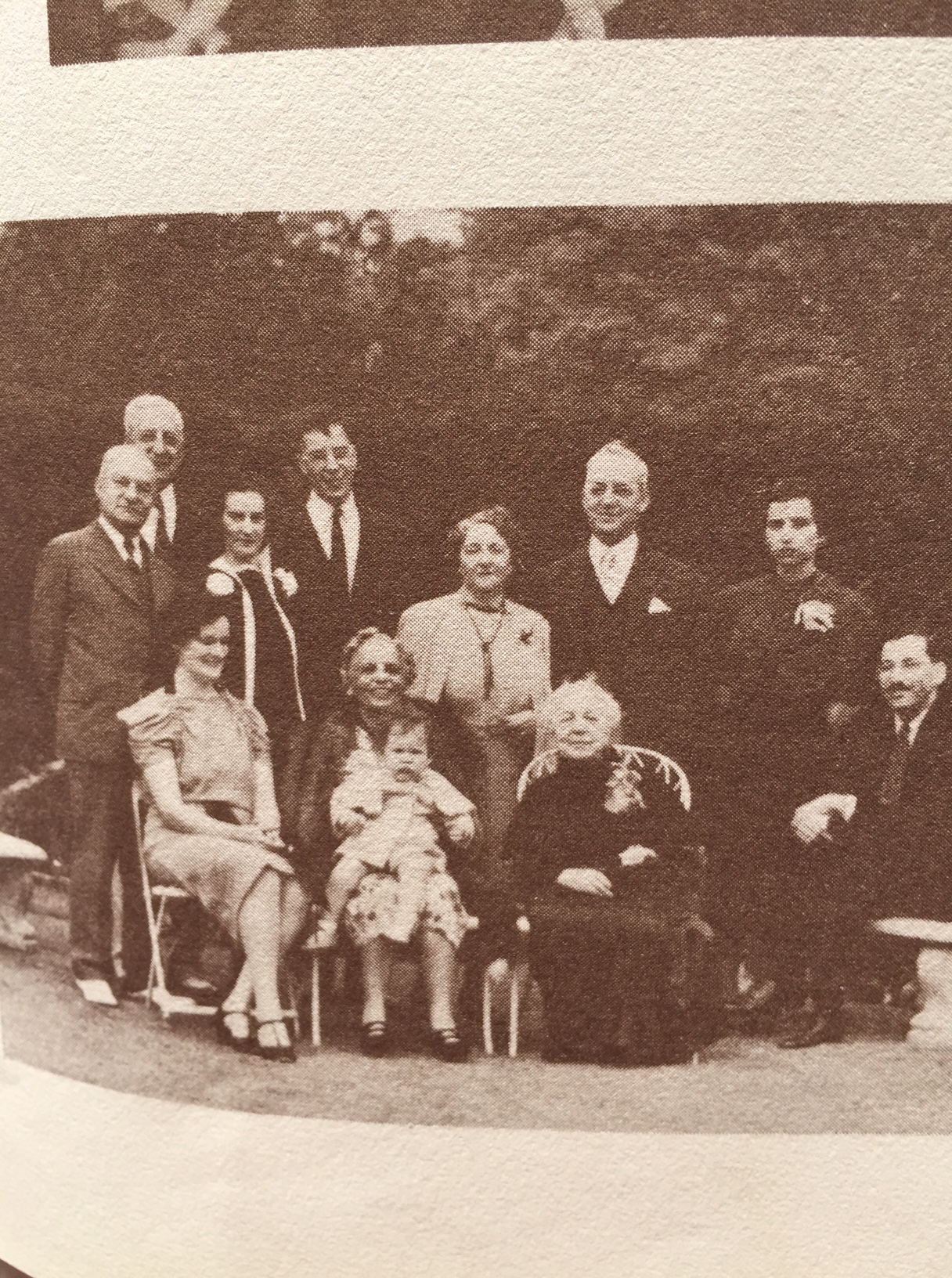
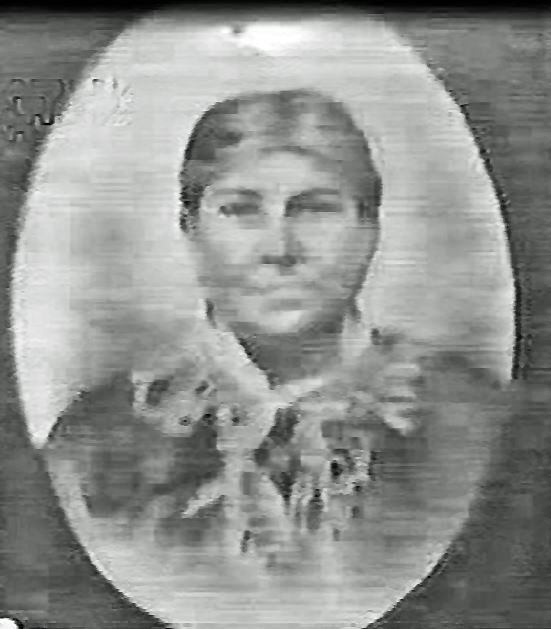
Celebration of the real Hannah Goldsmith Benedict’s 90th birthday in 1938.

You can find Simon’s Secret here on Amazon. I hope you enjoy it, and if so, please tell your friends and family and leave a review on Amazon.

Thank you!!

New for 2025!

Happy New Year to all my friends, family, and readers! I hope you all had a joyful and safe New Year’s Eve.

My first big news of 2025 is that my newest family history novel will be released at the end of January just thirty days from now. It’s titled Simon’s Story and was inspired by the story of my three-times great-grandfather’s younger brother Simon Goldschmidt. Although Simon’s life was the spark that led me to write this novel, the book itself is fiction wrapped around the skeleton of Simon’s life.

As described on Amazon, “Simon … came to the United States from Germany, a poor Jewish man whose first wife had died, leaving him with young children. After he remarried, he and his new wife and the children came to the United States. But Simon had a secret that he kept from his children. His daughter Hannah struggled all her life to understand her mysterious and aloof father. Why was he so cold, so withdrawn? What made him the way he was?”

The book is available for pre-order on Kindle now and you can find the link here. The paperback version will also be sold on Amazon and will be available on January 31, 2025.

I hope you will consider reading Simon’s Story, and if you enjoy it, please let me know and also please leave a review on Amazon.

Good for A Single Journey by Helen Joyce: A Review of A Wonderful New Book and An Interview with the Author

Today I have the great pleasure of sharing my virtual interview with author Helen Joyce. She has recently published a family history novel titled Good for A Single Journey, a moving and beautifully written telling of her maternal family’s story. Joyce’s great-grandparents were living in a small town in what was then Galicia in Eastern Europe in the early 20th century when oppression and poverty forced them to relocate to Vienna, where they hoped to have greater freedom and economic security. And they did find great success there. But like so many Jewish families, they eventually suffered from the horrors of the Holocaust. Although many, including Joyce’s mother, survived, many others were murdered, and all suffered from persecution and financial loss. And those who survived were once again forced to relocate and start all over in a new country.

Joyce has combined what she learned from her mother and other relatives with historical research to create a fascinating and illuminating look at the history of this era and its effect on one Jewish family. The book is a mix of fact and fiction, some parts totally created from her imagination and other parts entirely based on fact. The book reads like a novel. She has created wonderful three-dimensional characters, each with distinctive and memorable personalities and stories. I highly recommend this book to anyone interested in history and in Jewish history in particular. It is appropriate for young adults as well as adults and available for purchase on Amazon and Barnes & Noble here.

Good for a Single Journey has received a finalist’s award in the 2023 Next Generation Indie Book Awards and has also received a highly favorable review from Neville Teller in the June 12, 2023, issue of The Jerusalem Report. You can also learn more about Helen Joyce and her book at her website found here.  And in the interest of full disclosure, I should reveal that she is my fifth cousin on her paternal side; we are both descended from Jacob Falcke Goldschmidt and Eva Seligmann, our mutual four-times great-grandparents.

And now, let me introduce you to Helen Joyce and her wonderful book, Good for a Single Journey..

Thank you so much for agreeing to do this interview with me and to share more about your book, Good for a Single Journey.  Have you ever written a book or other fiction/non-fiction before?

No! I have written the odd article, contributed a chapter to two each of two academic books, and edited a community magazine which often entailed tightening the contributions of others. Otherwise, no formal writing experience.

So what made you decide to write this book at this time?

Old age! I always wanted to write an account of my mother’s life and never found the right time. Work, kids, and life in general always interfered. That and the self-defeating belief that the project was beyond me; that I was deluding myself if I thought I could write an account/memoir/novel of the type I imagined would do justice to her story. Finally, the reality of the fact that I was not getting any younger and triggered by taking our youngest granddaughter on a trip to Vienna where we visited my mother’s birthplace proved to be the catalyst for getting to work.

The author’s parents Max and Klari. Courtesy of Helen Joyce

I really enjoyed reading the book, and it reads like fiction. But I know that the book is based on the real lives of your parents, grandparents, and great-grandparents as well as many aunts, uncles, and cousins. How much of the book is fictionalized and how much is non-fiction?

It would take a long time to unravel fact from fiction but basically, I knew the ‘bare bones’ of the stories of all the characters. In the case of the two brothers, Chiel and Beresh, I knew very little indeed beyond the fact that they made Aliyah to pre-State Israel long around WWI. Therefore, I invented their adventures. I gave them experiences and put them in situations which were factually correct and allowed some of the history of the early Yishuv to come to light. I knew a little about Peppi, my grandmother’s sister, and of course the story of Suzanne became legendary!

Zissel, my other great-uncle, was a closed book to me until I unlocked the memoir of his son Yitzchak. That gave me the details of not only his travels across Europe and today’s Ukraine before reaching the shores of British mandate Palestine, but also revealed the entire saga of his grandparents’ (my great grandparents’) flight from Rozwadów to Ukraine and onwards to Siberia. I knew a great deal about my grandparents from my mother’s tales and, again through her, background details about day-to-day life in Vienna and the market town of Rozwadów, which she visited frequently on trips to her grandparents. The rags to riches story of my grandfather is true. Accounts of the flight from Vienna, the period in Prague, my mother’s experiences in London are also from my mother’s various shared memories.

My independent sources of research (apart from the internet and the cousin’s memoir which I mentioned) were my mother’s diaries and a stash of family letters collated and self-printed by my late uncle which charted the agony of desperation and fear as various members of the family tried to help and find ways to get those still trapped in Europe out. Obviously the most fictionalized accounts are those of the imagined conversations and emotions displayed by the various characters. The best I could do was to try and imagine I was them and put myself in their place at that time. What would I feel? How would I react?

How did you decide where to create fictional elements versus non-fiction?

Honestly, I don’t know! It just sort of flowed seamlessly. I wove elements of drama and fiction around the basic facts I knew. For example, I needed to get the two brothers from Vienna to Palestine during WWI. How would they have gone? What might they have done? WWI was raging so I thought it would be interesting to place them into an Austro-Hungarian unit which ended up in Palestine. When I started researching that possibility, I learned a great deal about the involvement of Jewish soldiers in the army, the unit I put them in was a real one (as was the officer which commanded it). The facts surrounding Aaron Aaronsohn, NILI, and their role in helping the British defeat the Ottomans in
Palestine and how these contributed to the fact of the Balfour Declaration was too good an opportunity to miss including. So, I did! Throughout the book I also wanted to give the lie to the myth that Jews were passive, never fought in armies and were pale scholars led to slaughter like sheep. Jews fought bravely (on all sides) in every theatre of war.

How did you research the parts of the book that are fact-based?

I read several books on WWI, biographies about Aaron Aaronsohn and NILI as well as books about the history of the Middle East. My mother’s cousin’s memoir was also very helpful. The internet is also a phenomenal resource. What was the weather like in Gallipoli in November 1915 – click. What train routes were available on the Chemins de fer Orientaux during WWI – click! What date was Rosh Hashanah in 1914 – click. All there in your hand-held mobile phone!

Your book begins with your great-grandparents leaving Rozwadów. Why did you decide to begin there?

The book begins with a train journey, the journey of my great grandparents fleeing their hometown in Galicia. I decided to start with that train ride as it gave me the opportunity to introduce all the main characters as well as a major theme of the book. Migration and journeys. The entire book is about the journey of individuals, families, and the Jewish people. Trains feature quite prominently. That opening train ride. Greetings and goodbyes at train stations. The brothers’ train ride to war and onwards to Palestine. The train ride carrying my great grandparents and their youngest son to Siberia. The train ride my mother took to Scotland to meet her brother serving in the Jewish Brigade of the British army and of course the final horrific train rides to the death camps.

You include some living people and some recently deceased people in the book. How did you approach the issues of privacy with respect to those people? Were there things you had to change or avoid to protect the interests of your family?

Yes, absolutely. A lot was excluded! However, in discussion with as many of my cousins as I could track down, I realized they were quite happy for me to give details of their stories. I offered each of them drafts so they could check they were happy with what I had written. However, as nearly all the family descendants live in Israel, many of them do not read in English. That said, they were quite happy to know I had written some account and did not mind if it was fictionalized. The Israeli branch is very easy going! I gave my sister an early draft and she enjoyed the first half but did have some comments and suggestions about the second half of the book. I have tried to accommodate her feelings on this but, ultimately, we agreed that the book was a fictionalized novel.

Your family endured many of the challenges and horrors faced by many Jewish families in the 20th century: immigration to new countries (several times), World War I, and Nazi persecution and the Holocaust. What impact do you think that history has had on you and the other living descendants of your great-grandparents?

It’s hard to speak about this in general. The impact is surely quite different for each family and on each individual. For me, knowing what previous generations lived and died for made me want to cling to a Jewish lifestyle replete with the traditions that Hitler tried so hard to erase. I didn’t want to give Hitler any kind of posthumous victory and so I have tried to raise a Jewishly faithful family. Beyond that? I guess a sense of the importance of justice and the need to respect equality of all people regardless of gender, race, or religion.

You ultimately decided to leave England and make Aliyah to Israel. What in your family history contributed to that decision? Have you made connections to the cousins who were refugees to Israel during the Nazi era?

Many factors contributed to that decision. My husband comes from a very ‘English’ Jewish family but his mother, eldest of ten, was the only child left in the UK after the creation of the State of Israel. The rest were all pioneers in Israel (although two had died before that was possible). So, he already has a huge network of family here. Our son made Aliyah twenty years ago and was raising his children here and of course we wanted to be close to them. We have a daughter with special needs and she made Aliyah with us – we couldn’t contemplate leaving her behind and she is so very happy here with excellent care. Our youngest child followed us five years ago and so, to our delight, all our children and grandchildren are here. Yes, I have contact with some of my many cousins, but they are numerous and spread out so we do not meet that often although I do meet my first cousins more frequently.

Your book has many themes and covers many topics: different ways to practice Judaism, antisemitism, Zionism, mental health, marriage, parental love, and so on. Was there a specific point or theme that mattered most to you?

They all mattered and, in a way, I suppose several of them nestle into each other like a set of Russian matryoshka dolls! Parental love leads to stability and contributes to the type of marriage partnership one is likely to create as does a strong sense of community and belonging. Antisemitism and Zionism also have a kind of Yin and Yang partnership! If I had to choose one (you didn’t ask me that!) maybe I would say resilience and survival!

Who did you see as the audience for your book? Your own family and descendants? Young adults? Jewish readers? The entire universe of adult readers?

The entire universe! My family and their descendants were not really the target audience. Had they been, the book would have been far more factual and memoir-based. I hoped it would appeal to young adults and prove educational and am being told that teenagers are totally gripped by the story – which, given the amount of history in it – is great! However, I would dearly love the non-Jewish world to gain insight about a Jewish way of life, the history of persecution and the holocaust but also the historical underpinnings of the State of Israel under international law which was brought about together with the dismantling of previous empires. If Israel is to be accused of being a ‘colonialist enterprise’ then equally so is Syria, Lebanon, Jordan, Saudi Arabia and Iraq. Not to mention the many ‘new’ European countries created in the wake of WWI. Without understanding the impact of WWI, nothing about the modern world makes sense (including current events in Ukraine!)

This book focused on your maternal family. Do you plan to write a book about your paternal side?

Yes! And your blog will be a fantastic resource for me!!! However, marketing this book is taking up a lot of time at the moment. I have been invited to take part in Jewish Book Week School Events for schools around the UK which is fantastic. Events can be online so I can do them from here. This is really part of my dream – to bring the reality of the Jewish experience to a wider audience.

The author, Helen Joyce. Courtesy of Helen Joyce

Thank you again for taking the time to answer my questions, and I look forward to reading your next book and hope that my research will be helpful to you! Best of luck in your marketing efforts—your book deserves a wide and large audience.


Dora Blumenfeld Livingston’s Two Youngest Children Irvin and Harold

We have already traced the stories of the six oldest children of Dora Blumenfeld Livngston and her husband Meyer Livingston, the six who were born in Germany and who came to the US with Dora in 1882 when they were young children. This last post about Dora will discuss her two youngest children, the two who were born in the US, Irvin and Harold.

Irvin Livingston, the seventh of the eight children of Dora Blumenfeld Livingston, was still a practicing lawyer in 1930, living with his wife Helen and their three children in Glencoe, New Trier, Illinois.1

Their daughter Julie married Gustav Freund (“GF”) Baer in Chicago on July 18, 1939.2 Gustav was born in Chicago on July 27, 1916, to Walter Baer and Hennie Freund. He graduated from the University of Michigan in 1938.3 In 1940, they were living in Chicago where Gustav was working as a manager for Universal Wheel & Abrasive Corporation.4 Julie and Gustav had two children.

In 1940 Irvin was still practicing law and living in Chicago with Helen and their two sons. Robert was also a lawyer by that time.5 He married Gertrude Abercrombie later that year on August 29, 1940, in Chicago.6 Gertrude was the daughter of two opera singers, Thomas Abercrombie and Jane “Lulu” Janes. She was born in Austin, Texas, on February 17, 1909.7 Gertrude was already a recognized artist by the time she married Robert. She won first prize at the 1935 Chicago Art Institute Show and had a one-woman show there in 1944.

UPDATE: Thank you to Janice Webster Brown for calling to my attention this essay written by Dina Livingston, Robert and Gertrude’s daughter, about her mother’s art and how she used symbols to reveal her feelings about her marriage to Robert and other relationships.

But her marriage to Robert Livingston did not last. In 1948 she married Francis Sandiford, Jr. Robert also remarried, although I’ve yet to learn when or where or even the full name of his second wife, only that her first name is Virginia.8

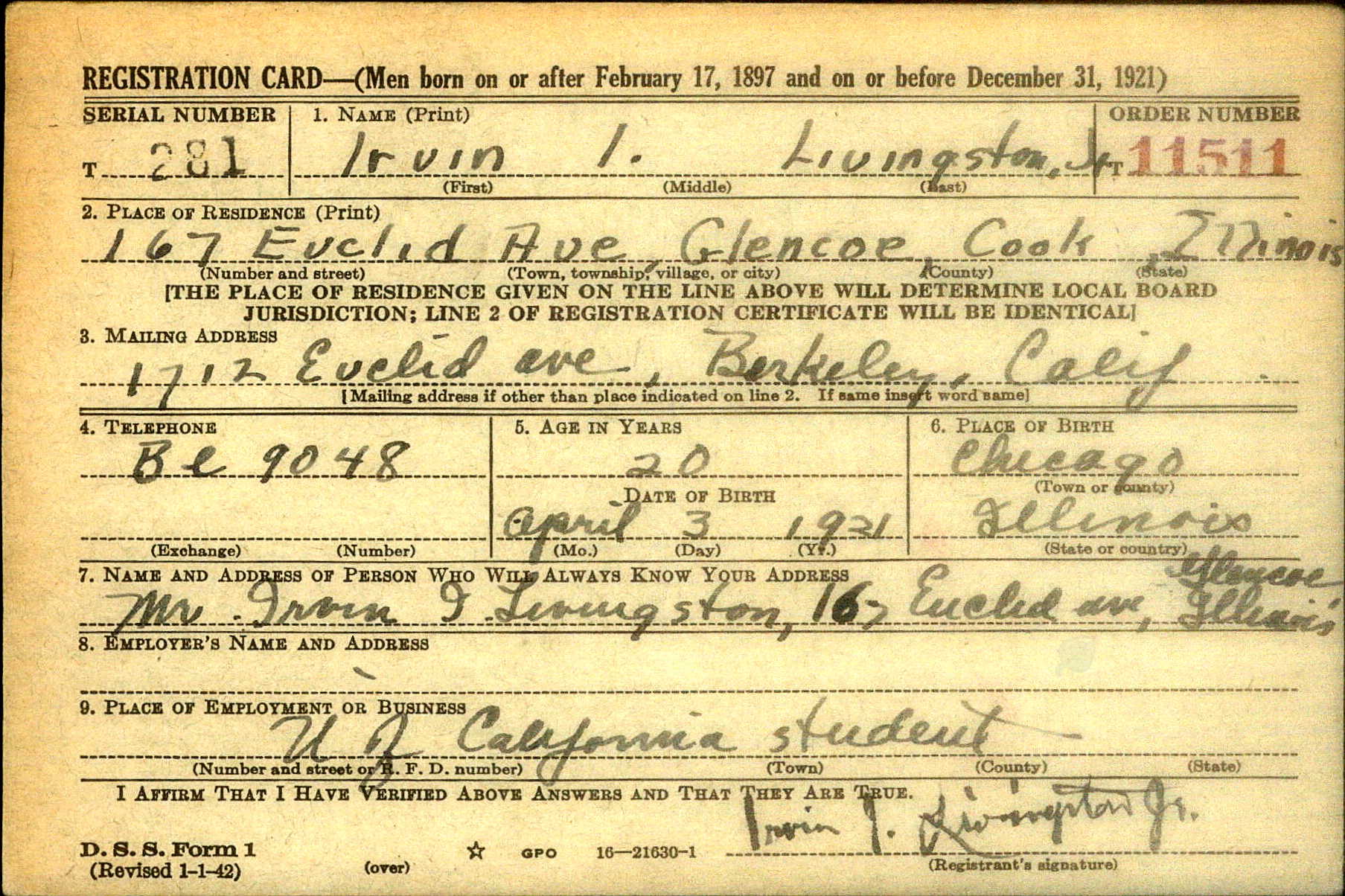
Irvin and Helen’s youngest son Irvin, Jr., was a student at the University of California Berkeley when he registered for the draft on February 14, 1942.

Irvin I Livingston, Jr., World War II draft registration, National Archives at St. Louis; St. Louis, Missouri; WWII Draft Registration Cards for Illinois, 10/16/1940-03/31/1947; Record Group: Records of the Selective Service System, 147; Box: 1071, Ancestry.com. U.S., World War II Draft Cards Young Men, 1940-1947

On July 19, 1947 he married Jean Louise Swarts in Chicago. Jean, the daughter of Charles Eugene Swarts and Louise Friedman, was born in Chicago on January 23, 1923,9 and like her husband Irvin, grew up in Glencoe, New Trier Illinois. Irvin, Jr., and Jean had two children.

Sadly, Irvin, Sr., did not live to see his five grandchildren grow up. He died suddenly on July 10, 1949, at the age of 65,10 just three months after the death of his brother Alfred. Irvin was the fifth sibling to die. He was survived by his wife Helen, his three children, and his remaining siblings: Herman, Gussie, and Harold.

His son Robert also was not blessed with longevity. He was only 52 when he died on August 1, 1967, in New York City. Robert had been a lawyer like his father and had been general counsel and then president of Walter E. Heller & Company, at that time the fourth largest commercial financing company in the US. He was survived by his mother and siblings as well as his wife Virginia and daughter.11

Robert’s mother Helen outlived him fifteen years; she was 91 when she died in June 1982.12 Her younger son Irvin, Jr., died on May 6, 1995, in California; he was 74.13 His sister Julie was blessed with her mother’s longevity; she was 93 when she died on October 25, 2012.14

The youngest child of Dora Blumenfeld Livingston was her son Harold Livingston. He was one of the two siblings still in Bloomington, Illinois, in 1930, along with his brother Herman. He was living with his wife Marion and son Ralph and continued to own the family department store at that time.15 In 1938, he had switched businesses and was now the owner of The House of Flowers in Bloomington. He is also listed there in 1940 with Marion listed as his wife, but by 1941, there is no listing for Harold in the Bloomington directory.16

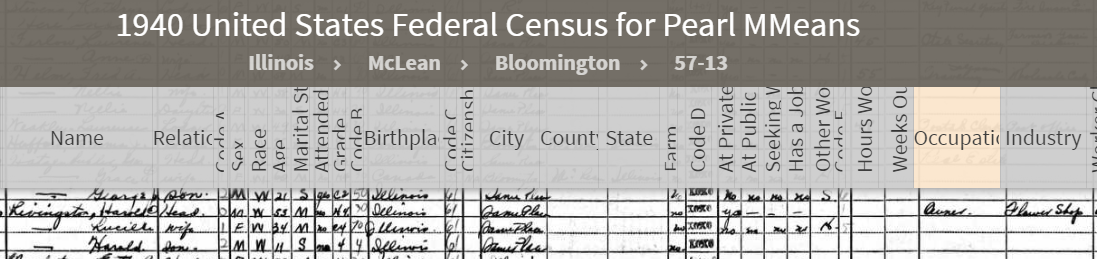
The 1940 census record for Harold is rather confusing. It shows Harold as the owner of the flower shop living at the same address in Bloomington, but lists his wife as Lucille and son as Harold. At first I thought this was a different Harold Livingston, but given that he was the flower shop owner, I think the census record is just wrong.

Harold Livingston, 1940 US census, Year: 1940; Census Place: Bloomington, McLean, Illinois; Roll: m-t0627-00841; Page: 5B; Enumeration District: 57-13, Ancestry.com. 1940 United States Federal Census

In any event, Harold did not stay in Bloomington much longer. By the time he registered for the World War II draft in 1942, he had relocated to Chicago and was self-employed.

Harold H Livingston, World War II draft registration, The National Archives at St. Louis; St. Louis, Missouri; World War II Draft Cards (Fourth Registration), for The State of Illinois; Record Group Title: Records of the Selective Service System; Record Group Number: 147; Series Number: M2097, Ancestry.com. U.S., World War II Draft Registration Cards, 1942

By 1944 his marriage had ended and Marion had remarried.17 Harold died in Chicago on July 2, 1950; he was 62.18 He was survived by his son Ralph and his two remaining siblings, Gussie and Herman. Ralph married in 195719 and had two sons. He died February 23, 2008, in California, at age 79.20

As we saw, Herman died a year after Harold in 1951, and Gussie, the last remaining sibling, died in 1957. Not one of the siblings made it to eighty years old, though most lived into their seventies. They are survived today by their many descendants.

Thus ends the story of Dora Blumenfeld Livingston, born in 1847 in Momberg, Germany, the fourth child of Abraham Blumenfeld II and Gidel Straus, the mother of eight children, a woman who uprooted herself from her homeland, sailing with six of her eight children to America, and who lived to see all eight reach adulthood and attain prosperity in her new country. Dora left Germany in 1882 and by doing so changed the fate of her children and their descendants.

Next we turn to her younger brother Moses Blumenfeld IIA and his story.


  1. Irvin Livingston and family, 1930 US census, Year: 1930; Census Place: New Trier, Cook, Illinois; Page: 18A; Enumeration District: 2207; FHL microfilm: 2340238, Ancestry.com. 1930 United States Federal Census 
  2. “Livingston-Baer,” Hyde Park Herald, August 24, 1939, p. 2 
  3. Gustav Freund Baer, Gender: Male, Race: White, Birth Date: 27 Jul 1916, Birth Place: Chicago, Illinois, Death Date: 2 Jun 2001, Father: Walter S Baer, Mother:
    Hennie Freund, SSN: 322186356, Ancestry.com. U.S., Social Security Applications and Claims Index, 1936-2007. Gustav Baer, “U.S., School Yearbooks, 1880-2012”; School Name: University of Michigan; Year: 1938, Ancestry.com. U.S., School Yearbooks, 1900-1999 
  4. Gustav and Julie Baer, 1940 US census, Year: 1940; Census Place: Chicago, Cook, Illinois; Roll: m-t0627-00928; Page: 3B; Enumeration District: 103-240, Ancestry.com. 1940 United States Federal Census 
  5. Irvin Livingston, Sr., and family, 1940 US census, Year: 1940; Census Place: New Trier, Cook, Illinois; Roll: m-t0627-00783; Page: 63B; Enumeration District: 16-311, Ancestry.com. 1940 United States Federal Census 
  6. Robert I. Livingston, Marriage Date: 29 Aug 1940, Spouse: Gertrude Abercrombic
    Marriage Location: Cook County, IL,Marriage license: {4DDD0318-39EE-48C2-81D8-0E8A8EB63F37}, File Number: 1651842,Archive collection name: Cook County Genealogy Records (Marriages),Archive repository location: Chicago, IL
    Archive repository name: Cook County Clerk,Ancestry.com. Cook County, Illinois Marriage Index, 1930-1960 
  7. Gertrude Abercrombie, Birth Date: 17 Feb 1909, Gender: Female, Birth Place: Austin, Travis, Texas, USA, Father: Thomas Abercrombie, Mother: Lula M James
    Mother Residence: Chicago, Illinois, Ancestry.com. Texas, U.S., Birth Certificates, 1903-1932 
  8. “R. Livingston Services To Be Held Here,” Chicago Tribune, Chicago, Illinois, 03 Aug 1967, Thu • Page 60 
  9. “Wedding July 19, ” Chicago Daily News, June 25, 1947, p. 26. Jean S. Livingston
    Maiden Name: Swarts, Gender: Female, Death Age: 86, Birth Date: 23 Jan 1923, Birth Place: Chicago, Marriage Date: 19 Jul 1947, Residence Place: Danville, Death Date: 10 Jul 2009, Death Place: Danville, Calif, Father: Charles E. Swarts, Mother:Louise Swarts
    Spouse: Irvin Livingston, Mercer Island Reporter; Publication Place: California, USA; URL: http://obituaries.blackpress.ca/obits.new.php?cmpRegion=&paper=201&paperSelect=0&submit=&name=&skip=630, Ancestry.com. U.S., Obituary Collection, 1930-Current 
  10. Death notice, Chicago Tribune, Chicago, Illinois, 11 Jul 1949, Mon • Page 46. Find a Grave, database and images (https://www.findagrave.com/memorial/195693240/irvin-i-livingston : accessed 04 November 2021), memorial page for Irvin I. Livingston (1884–1949), Find a Grave Memorial ID 195693240, citing Rosehill Cemetery and Mausoleum, Chicago, Cook County, Illinois, USA ; Maintained by Jim Craig (contributor 46551563) . 
  11. See Note 8. 
  12.  Helen Livingston, Social Security Number: 357-38-5531, Birth Date: 1 Aug 1890
    Issue Year: 1963, Issue State: Illinois, Last Residence: 60022, Glencoe, Cook, Illinois, USA, Death Date: Jun 1982, Social Security Administration; Washington D.C., USA; Social Security Death Index, Master File, Ancestry.com. U.S., Social Security Death Index, 1935-2014 
  13. Irvin I Livingston Jr, Gender: Male, Race: White, Birth Date: 3 Apr 1921, Birth Place: Chicago, Illinois, Death Date: 6 May 1995, Father: Irvin I Livingston,
    Mother: Helen Baer, SSN: 322166988, Ancestry.com. U.S., Social Security Applications and Claims Index, 1936-2007 
  14.  Julie L Baer, Social Security Number: 334-38-8021, Birth Date: 7 Jan 1919, Issue Year: 1962, Issue State: Illinois, Death Date: 25 Oct 2012, Social Security Administration; Washington D.C., USA; Social Security Death Index, Master File, Ancestry.com. U.S., Social Security Death Index, 1935-2014 
  15. Harold Livingston and family, 1930 US census, Year: 1930; Census Place: Bloomington, McLean, Illinois; Page: 12A; Enumeration District: 0011; FHL microfilm: 2340270, Ancestry.com. 1930 United States Federal Census 
  16. Harold H Livingston, Bloomington City Directories, 1938, 1940, 1941, Ancestry.com. U.S., City Directories, 1822-1995 
  17. Marion K. Livingston, Marriage Date: 19 Jun 1944, Spouse: Murray S. Mahler
    Marriage Location: Cook County, IL, Marriage license: {DDB7A346-6764-42A1-AAF7-F746F4DB826F}, File Number: 1818237, Archive collection name: Cook County Genealogy Records (Marriages), Archive repository location: Chicago, IL
    Archive repository name: Cook County Clerk, Ancestry.com. Cook County, Illinois Marriage Index, 1930-1960. 
  18. Harold Livingston, Death Date: 2 Jul 1950, Death Location: Cook County, IL, File Number: 6048068, Archive collection name: Cook County Genealogy Records (Deaths)
    Archive repository location: Chicago, IL, Archive repository name: Cook County Clerk,
    Ancestry.com. Cook County, Illinois Death Index, 1908-1988 
  19. Ralph Livingston, Marriage Date: 1 Apr 1957, Spouse: Joan M. Aubineau, Marriage Location: Cook County, IL, Marriage license: {DE63F65C-99FC-44CB-AC2C-F9A71E20936A}, File Number: 2436286, Archive collection name: Cook County Genealogy Records (Marriages), Archive repository location: Chicago, IL, Archive repository name: Cook County Clerk, Ancestry.com. Cook County, Illinois Marriage Index, 1930-1960 
  20. Ralph H Livingston, Gender: Male, Birth Date: 17 Nov 1928, Death Date: 23 Feb 2008, SSN: 351202225, Enlistment Branch: A, Enlistment Date: 16 Jun 1951, Discharge Date: 27 Jan 1953, Page number: 1, Ancestry.com. U.S., Department of Veterans Affairs BIRLS Death File, 1850-2010 

Santa Fe Love Song: A Family History Novel

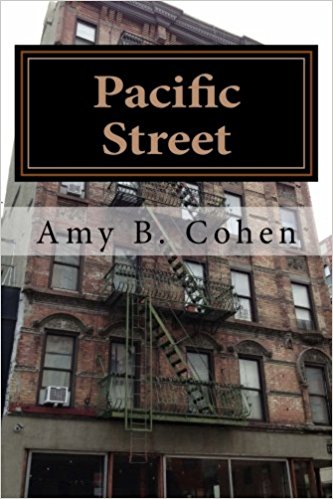
I am delighted to announce that my newest novel, Santa Fe Love Song, has been published and is available in both paperback and e-book format on Amazon here. Like my first novel, Pacific Street, Santa Fe Love Song was inspired by the lives of real people—in this case, my great-great-grandparents Bernard Seligman and Frances Nusbaum—and informed by my family history research. But as with my first book, Santa Fe Love Song is first and foremost a work of fiction.

Bernard Seligman, my great-great-grandfather

Frances Nusbaum Seligman, my great-great-grandmother

It is a double love story—a story of Bernard’s passion for his newly adopted home in New Mexico and of his deep love for a young woman in Philadelphia. How will he resolve the conflict between those two loves? That is the heart of the novel.

But this is also an adventure story because the first part of the book tells of Bernard’s arrival from Gau-Algesheim, Germany, his adjustment to life in Philadelphia, and then his challenging and exciting trip on the Santa Fe Trail when he moves out west to work with his brother Sigmund. On that trip Bernard faces many different obstacles and learns to love the American landscape. He transforms from a German Jewish immigrant into an American pioneer and businessman.

Upper left, Bernard Seligman with other merchants and Indians on the Santa Fe Trail

As with Pacific Street, I wrote Santa Fe Love Song with my children and grandchildren in mind. This time I also decided to get my grandsons involved in the project. Nate, 10, and Remy, 6, became my illustrators. As I told them stories about Bernard and Frances, they created drawings that told those stories visually. I am ever so grateful to my two wonderful grandsons for their work, and I hope that someday their grandchildren will cherish these books and the illustrations and honor the memories of their ancestors Bernard and Frances.

I hope that you also will find Santa Fe Love Song a worthwhile and enjoyable read. If you do, please leave a review on Amazon. Thank you! I appreciate all your support.

Four Years of Learning German

Just about four years ago in the summer of 2016, I decided to learn German. It’s been an interesting and mostly enjoyable challenge. First, I used the app Duolingo for almost a year. I learned a fair amount of German vocabulary. I was disciplined and practiced every day. It was fun.

But then I tried to read some simple texts written in German, and I realized Duolingo was fine for vocabulary building, but it wasn’t enough if I really want to read, write, and speak German.  We were going to Germany in the spring of 2017 and I wanted to be able to speak to the people in their own language, so I bought a few German textbooks to learn how to conjugate verbs and some other basic grammar.

But that also wasn’t enough. That became glaringly obvious when I tried to speak German on our trip. I couldn’t string together a grammatically correct sentence, and often I would get blank stares when I tried to ask a simple question in a German store or restaurant. And if someone answered me in German? I had no idea what they were saying. So in the fall of 2017, I signed up for a German class offered by a local adult education program.

That course was good for grammar. Lots of grammar. Lots and lots of grammar. Rules, rules, rules. But no conversation and no opportunities to read texts or ask questions. So I formed a German conversation group with people from the class. That’s been lots of fun, but I remain the worst German speaker in the group. My reading has improved, my writing is coming along (with help from Google Translate), but it still is very hard for me to speak or understand spoken German. Mark Twain was right. Learning German is not for the faint of heart.

Mark Twain By Mathew Brady [Public domain], via Wikimedia Commons

Why am I writing about this now, you may wonder?

Well, I’ve had reason recently to reminisce about why I started learning German. Why did I want to learn German? Of course, it was related to genealogy. My paternal roots in Germany are deep and wide. Knowing German would therefore be helpful. But to be honest, most of what I need to know for genealogy purposes can be reduced to some very basic terms: geboren (born), heiratet (married), gestorben (died). Really, you don’t need to know much more than that to read German vital records for basic information. And even knowing those terms won’t help much unless you can also read German script. Which I can’t.

No, it wasn’t a desire to read German vital records or even longer letters or texts that motivated me to learn German. It was rather a particular book that I very much wanted to read: Die Alte und Die Neu Welt, written by my cousin Mathilde Gross Mayer in 1951, as I discussed here.

Mathilde was born in Bingen, Germany, in April 1869. Mathilde’s grandmother Martha Seligmann and my three-time great-grandfather Moritz Seligmann were sister and brother, so we were second cousins, three times removed, both being direct descendants of Jacob Seligmann and Martha Mayer. Mathilde left Germany in 1937 to escape from Nazi persecution when she was almost 68 years old and a grandmother; she lived over thirty years in the United States after leaving Germany, dying in September, 1969, when she was a hundred years old.  I was fascinated by her life and wanted to read her book. So I started learning German.

But despite studying for four years and having a fairly decent basic German vocabulary, every time I picked up Mathilde’s book, I got frustrated. I still had to look up so many words that I could not just read this book. It was exhausting and too time consuming. Using Google Translate to translate one letter is one thing, but a whole book? So I gave up.

And then? Then my cousin Elizabeth found me this spring. Elizabeth is Mathilde Mayer’s great-granddaughter. She found my blog and contacted me. We exchanged a number of emails, finding many common interests and places in our lives as well as our shared family roots. And in the course of those emails Elizabeth shared with me that she had an ENGLISH version of Mathilde’s book in pdf format. And that she would send it to me. Which she did.

So one day a couple of weeks ago I sat at my computer and read Mathilde’s book in English. And I am so glad that I did rather than ruining it by trying to read it in German. It is just a wonderfully touching book—full of colorful portraits of many of my Seligmann cousins and warm and loving anecdotes about Mathilde’s life growing up in Bingen and then raising a family in Bingen. She shares the tragedies and challenges her family suffered as well as many of their joys and successes. I never would have been able to get the feel for her personality if I’d suffered through reading her book in German.

Sure, if I were fluent in German, that would have been even better—to read it as she wrote it. But to butcher it by reading it all chopped up would have been a terrible mistake. Elizabeth has asked me not to share the book on the blog, and so, of course, I am respecting her wishes. But I am so grateful that she shared the English version with me. Mathilde’s story will now always be with me.

So do I regret four years of struggling to learn German? Not one bit! I will continue studying it as best I can, and maybe someday I will actually be able to read Mathilde’s story in her native tongue.


Anna Segher’s The Seventh Cross: A Story of Moral Choices

Back on May 1, I wrote about my cousin Netti Reiling, who under the pseudonym Anna Seghers became a well-known leftist intellectual, activist, and author. I wrote about her best-known book, The Seventh Cross, published both in German and in English while she and her family were living in Mexico in 1942. Two years later it was made into a film starring Spencer Tracy, Hume Cronyn, Jessica Tandy, and others.

I’ve just finished reading the book. It took me quite a while to read in part because I seem to read in short spurts these days, often when I am sleepy. It also was a difficult book to read—both in terms of the painfulness of the subject matter and in the way it was written. But when I got to the second half, I couldn’t put it down as it turned from a slow-moving set of character studies to a suspenseful escape and chase.

It is an extremely well-written book. Seghers takes you into the minds of her characters so that you see their psychological development as well as their actions. The basic plot is simple: a man named George along with six others escapes from a German prison camp where political prisoners are kept, and the Gestapo and SS chase them down. Various people living in the nearby towns get involved in different ways with the escape and the chase. I won’t spoil the story more than that, but it’s not really the story that is Segher’s dominant focus. Rather, her focus is on how this story affects and, in some ways, reveals and changes the inner thinking and moral choices of the numerous characters.

The structure of the book is what makes it difficult to read at first. Seghers introduces numerous characters without linking them to each other or to the main character, George. Both the number of characters and the fact that the reader has no idea why they matter to the story made the first half of the book a struggle for me. I couldn’t keep the characters straight. Who was Ernst the shepherd and why did I care about him? Why do I care about this boy named Fritz and his girlfriend? What role does Franz have in this whole story? Who are all these various Nazis working at the prison camp? And so on. Perhaps if I’d read the book faster and not just one short segment at a time, I’d more quickly would have seen the forest and not just each individual tree. But at the pace I was reading, I’d forget who Franz or Fritz or Ernst was and have to flip back a few chapters to refresh my memory.

But once I reached the middle of the book and was able to read more quickly, I realized what a brilliant work this is and well worth the struggle to get to know the various characters. Seghers’ ability to get into the heads of the characters and see how they struggle to choose between their own safety and what they know is right is masterful. As you read, you wonder whether Fritz and Franz and all the others will do what’s needed to be done to help George or to save themselves. That’s what makes the book suspenseful. It’s not a typical crime or war story where the suspense lies in finding clues or in watching the bad guys get closer to the good guy while the good guy uses his brain to find a new way to get away. No, the suspense lies inside the minds of the characters and their personal moral codes. Frankly, I still have no idea what role Ernst the shepherd has in the story. Maybe someone who’s read the book will have an explanation. But overall each character does in the end become three-dimensional and integral to the overall story.

One thing that I did find odd about the book is that aside from one very brief mention of the mistreatment of a Jewish man, Seghers does not at all address the Nazi persecution and slaughter of Jews; she does not refer to the Nuremberg Laws or the concentration camps or Kristallnacht. Seghers was, after all, Jewish. Yet she wrote a book about Nazi Germany that is only about political prisoners, not about the way the Nazis treated Jews. Did she do that to reach a broader audience? Or did she perhaps recognize that although ordinary Germans might assist a fellow German who escaped from a camp for political prisoners, they would not have had made the same choices if it had been a Jewish person who’d escaped from a concentration camp?

I’ve not yet seen the film, and unfortunately it’s not available on any streaming service. I could buy a DVD from Amazon, but alas—I no longer have a DVD player. Damn modern technology! Do I invest in a DVD player just to watch one movie? I am debating it. But usually I find that movies based on books are not nearly as good as the books themselves, and it was my cousin Netti’s writing that I was most interested in.

As I wrote about in my post about Netti/Anna, The New York Times review of the movie, which was overall a very positive review, made one unusual comment at the end.1 I will quote it again here:

Without in the least overlooking the bestiality of the Nazi brutes nor the miserable self-surrender of German citizens to their black regime, this film … visions a burning zeal for freedom in some German rebels and a core of decency in common folk. …[T]he basic theme…is that in men—even in Germans—there is an instinct for good that cannot be destroyed.….

The big reservation which this writer holds with regard to this film is that regarding the discretion of its theme at this particular time. Without any question, it creates a human sympathy for the people of a nation with whom we are at war and it tends, as have others, to load Germany’s crimes on Nazi backs. Obviously this film can make sentiment for a “soft” peace. It looks as though we are getting a dandy “thriller” at a pretty high price.

It is true that the book (and apparently the film) portrays many of the characters in ways that reveal their basic morality although it also certainly portrays those who worked at and led the prison camp as inhumane and lacking in moral decency and many of the minor characters as spineless and complicit with the Nazis. But I can understand why in 1944 when the US was fighting Germany in World War II a reviewer might have objected to a film that portrayed any German in a flattering light.

But with the perspective of hindsight, that seems less objectionable. Seghers was at heart an optimist about human nature and perhaps she needed some hope in 1942 that many ordinary Germans would make the right choices and act morally. She had fled from Germany and then from France, seen her husband arrested and then released, and would ultimately learn that her own mother, Hedwig Fuld Reiling, had been murdered by the Nazis. She was not naïve; she was not sympathetic to the Nazis or those who supported their cause or their actions. She was just a human being holding out hope that other human beings would do the right thing. Sadly, not enough of them did. Most Germans were too afraid to resist the Nazis or had been coopted and persuaded to adopt the Nazi cause, and thus far too many people were not saved from their murderous captors.

But Seghers’ point was that when good and brave people do stand up for what is right, evil can be defeated. We need that lesson today in 2020 as much as people did in 1942.

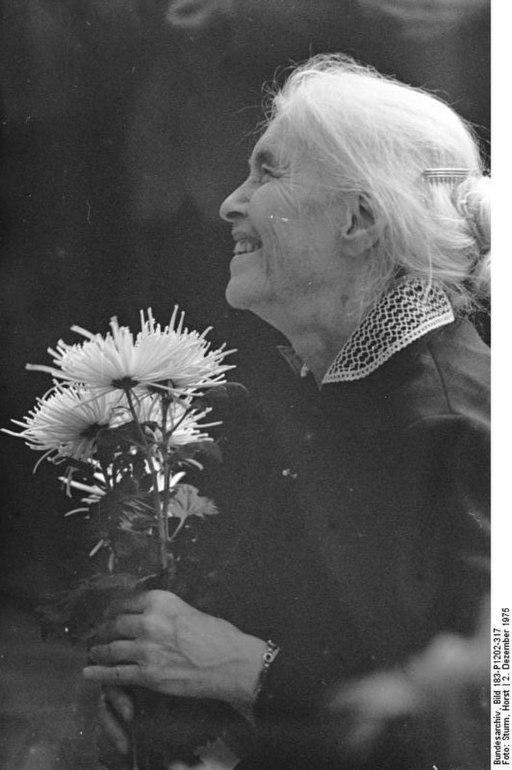
Anna Seghers (Netti Reiling) Bundesarchiv, Bild 183-P1202-317 / Sturm, Horst / CC-BY-SA 3.0 / CC BY-SA 3.0 DE (https://creativecommons.org/licenses/by-sa/3.0/de/deed.en)


  1. Bosley Crowther, “The Seventh Cross, Anti-Nazi Drama, with Spencer Tracy, at Capitol,” The New York Times, September 29, 1944, p. 18. 

Milton Goldsmith’s Family Album, Part III: Finding Hettie Steele

Before my father died, I had started posting images from the pages of Milton Goldsmith’s family album. Because my father had a memory of Milton—he was his first cousin, twice removed, his grandmother Hilda’s first cousin—this project was and is special to me. So today I will return to my Monday postings about Milton’s album.

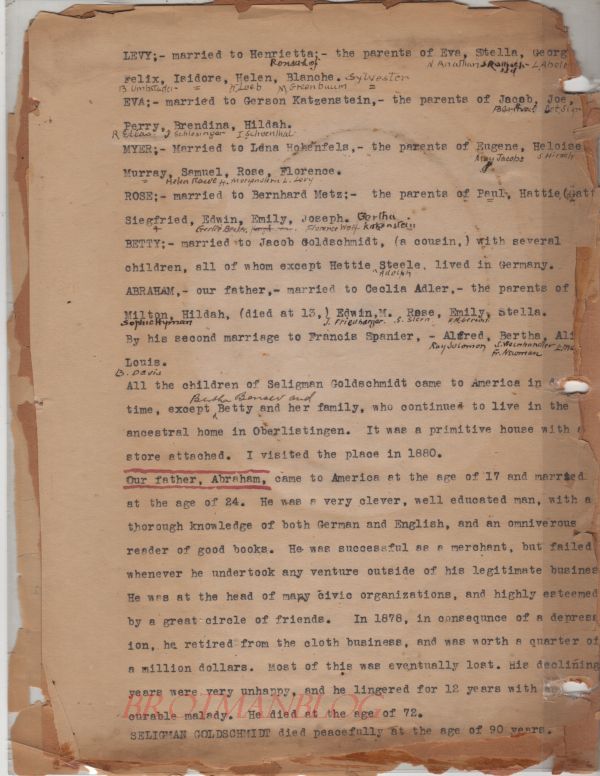
In my last post about Milton Goldsmith’s album, I highlighted this sentence from his family report about his aunt Betty Goldschmidt because it led me to the discovery of a new cousin:

BETTY: married to Jacob Goldschmidt, (a cousin,) with several children, all of whom except Hettie Steele lived in Germany

In my research of Betty and Jacob Goldschmidt, I had not found any living descendants. Their story was among the saddest I’d researched. Betty and Jacob had eight children, but I’d only been able to find adult records for one of those eight, their son Berthold. Berthold and his first wife Mathilde had seven children, and all but one of those children died before reaching adulthood. Only their son Siegfried lived to adulthood, and he and his wife Frieda Fanny Pless were murdered in the Holocaust. Their only child Max survived, but Max died without descendants. In addition, Berthold had a second wife, Rickchen Geissberg, with whom he had two more children and a grandson. All were killed in the Holocaust.1

So I was excited to read in Milton’s family report that Betty and Jacob had had a child—Hettie Steele—who had left Germany and presumably survived. But who was she?

I looked back at my posts and notes on Betty Goldschmidt and Jacob Goldschmidt (Lehmann’s son) and saw that they’d had a daughter named Hedwig for whom I had a birth record, but no subsequent records. She was born on August 21, 1868, in Oberlistingen  Could this be Hettie Steele?

BIrth record of Hedwig Goldschmidt, Abschrift der Geburts-, Trau- und Sterberegister der Juden von Oberlistingen (Breuna) 1826-1890 (1937) (HHStAW Abt. 365 Nr. 673)AutorHessisches Hauptstaatsarchiv, Wiesbaden, p. 18

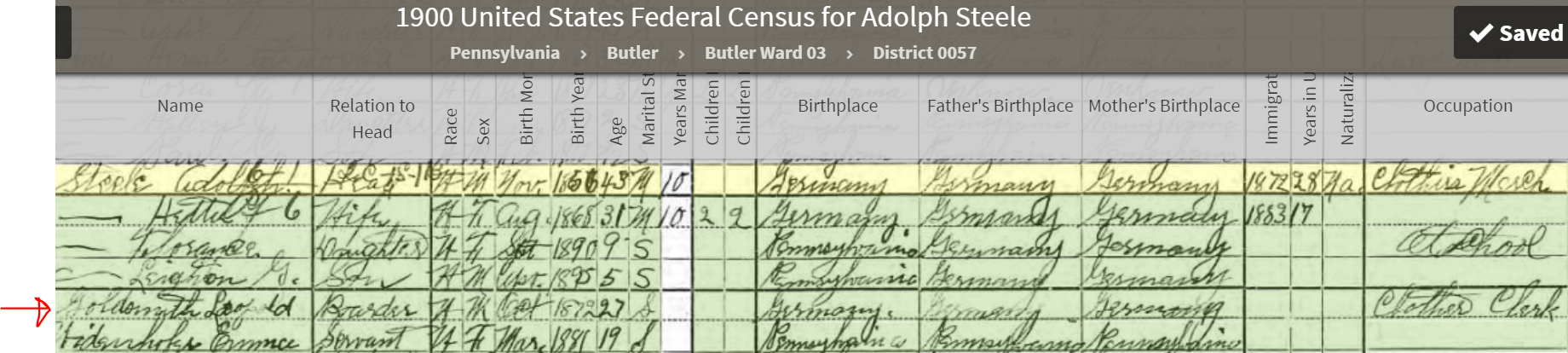
Milton had written under Hettie Steele the name “Adolph,” so I set off to research Adolph and Hettie Steele and found a couple with those names on the 1900 census living in Butler, Pennsylvania. From there I was able to work forwards and backwards in time to learn a great deal about Hettie.

According to the 1900 census, Hettie arrived in the US in 1883, when she was only fifteen years old.2 A number of her mother Betty’s siblings were then living in Philadelphia, including my great-great-grandmother Eva Goldschmidt Katzenstein. Presumably that is where young Hettie was headed, though I have no record of her living in Philadelphia after she arrived.

Hettie married Adolph Steele in Philadelphia in 1889.3 He was born in Germany in November, 1856. Records conflict as to when he immigrated, but the 1900 census as well as the 1930 census say he arrived in 1872, and the 1920 census says 1877, so my guess is that he arrived sometime in the 1870s.4 (The 1910 census says 1864, but that seems less likely to be reliable.) It appears that Adolph settled in Baltimore and lived and worked with his brother Louis, a clothing merchant.5

Adolph and Hettie’s first child Florence was born on September 23, 1890, in Washington, Pennsylvania. 6 Their son Leighton was also born in Washington; he was born on April 15, 1895. 7

Prospect Avenue, Washington, PA 1890
http://www.washingtonpa.us/washingtons-past/

Of course, several other members of the Goldschmidt/Goldsmith clan had lived in Washington, but in 1890, the only member of Hettie’s extended family who was still living there was my great-grandmother, Hilda Katzenstein Schoenthal. Hilda was Eva Goldschmidt’s daughter, Betty’s Goldschmidt’s niece, and thus Hilda and Hettie were first cousins living in the same small town together in the 1890s.  They were also having children at the same time; my great-uncle Lester was born in Washington, Pennsylvania in 1888, his brother Gerson in 1892. These cousins were thus all close in age. They must have known each other, and yet I had never known of Hettie until I read Milton’s family report in his album.

Hilda Katzenstein Schoenthal, my great-grandmother

But by 1900, Hettie and Adolph and their two children had left Washington and moved about sixty miles north to Butler, Pennsylvania, where Adolph was working as a clothing merchant. A boarder named Leopold Goldsmith was living with them, but I wasn’t sure whether he was connected to the family.

Adolph Steele and family, 1900 US census, Census Place: Butler Ward 3, Butler, Pennsylvania; Page: 12; Enumeration District: 0057; FHL microfilm: 1241386
Ancestry.com. 1900 United States Federal Census

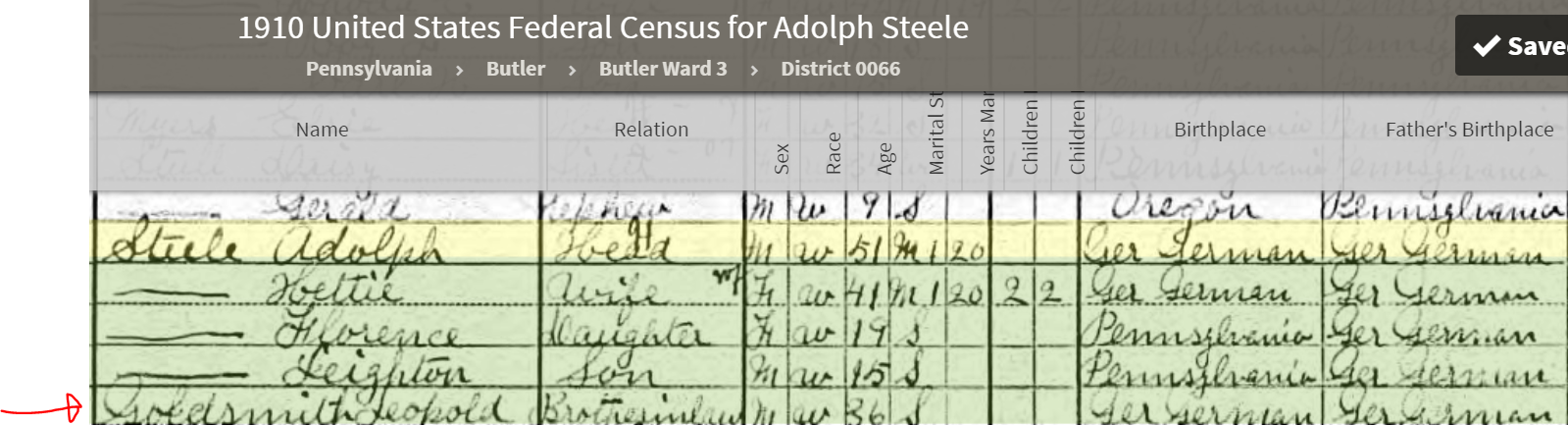
On the 1910 census, Adolph and Hettie were still living in Butler, and Adolph continued to work as a merchant. Their daughter Florence, now nineteen, was working as a public school teacher. Leopold Goldsmith was still living with them, and this time he was identified as Adolph’s brother-in-law. My eyes lit up. Leopold Goldsmith had to be Hettie’s brother, meaning another child of Betty and Jacob Goldschmidt had made it to adulthood.

Adolph Steele, 1910 US census, Census Place: Butler Ward 3, Butler, Pennsylvania; Roll: T624_1321; Page: 10B; Enumeration District: 0066; FHL microfilm: 1375334
Ancestry.com. 1910 United States Federal Census

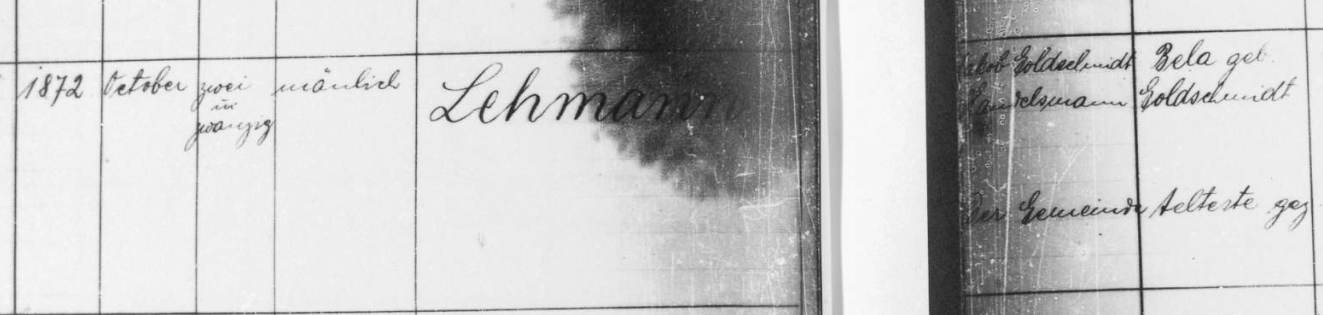
Betty and Jacob’s youngest child was named Lehmann on his birth record, and he was born on October 22, 1872. I looked back at the 1900 census and saw that on that census Leopold Goldsmith reported a birth date of October 1872. Leopold had to be Betty and Jacob’s son who was born Lehmann.

Birth record of Lehmann Goldschmidt aka Leopold Goldsmith, Abschrift der Geburts-, Trau- und Sterberegister der Juden von Oberlistingen (Breuna) 1826-1890 (1937) (HHStAW Abt. 365 Nr. 673)AutorHessisches Hauptstaatsarchiv, Wiesbaden, p. 19

I searched a bit more and found Leopold living in 1897 with Hettie and Adolph in Washington, Pennsylvania, where he was working for Adolph.8

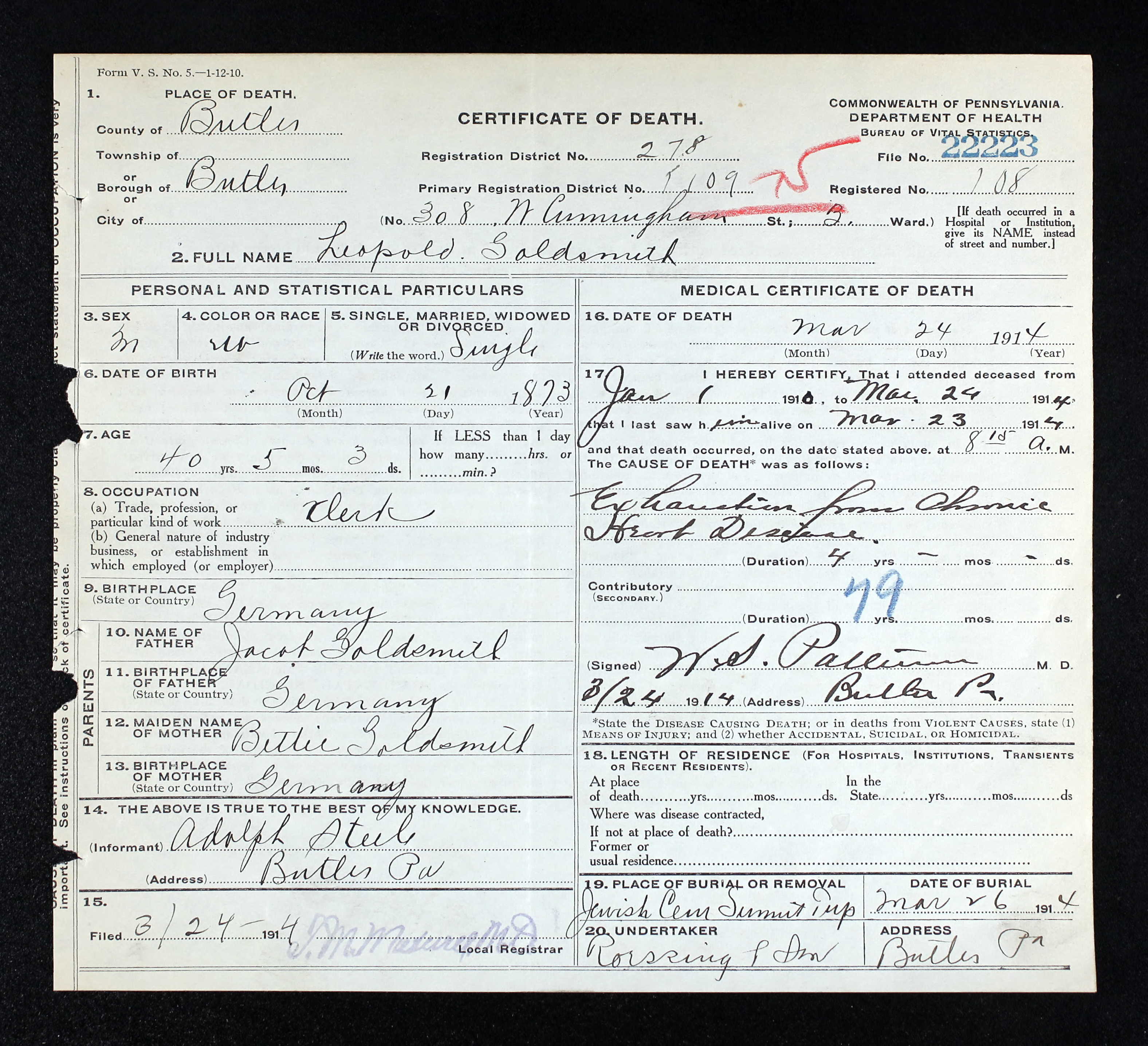
But alas, Leopold’s life was cut short like so many of his siblings. He died on March 24, 1914, in Butler, Pennsylvania, at the age of 40. According to his death certificate he died from exhaustion from chronic heart disease. His brother-in-law Adolph Steele was the informant on his death certificate.

Leopold Goldsmith, death certificate, Pennsylvania Historic and Museum Commission; Pennsylvania, USA; Pennsylvania, Death Certificates, 1906-1965; Certificate Number Range: 020581-024050, Ancestry.com. Pennsylvania, Death Certificates, 1906-1966

The Butler (PA) Citizen published this lovely obituary on March 25, 1914 (p.3):

Seeing the mention of only Hettie and “a brother in Germany” as survivors confirmed my conclusion that all of Betty and Jacob Goldschmidt’s five other children had died. The brother in Germany must refer to Berthold.

But Hettie’s family survived and grew. On February 15, 1915, Hettie’s daughter Florence married Herman Wise, a German immigrant born on July 1, 1878, making him twelve years older than Florence.9 Herman had immigrated in the 1890s and was working as a clothing merchant in Ottawa, Ohio, when he married Florence. Florence and Herman settled in Ottawa, where their first child Martha was born on February 22, 1916. 10 In 1920, they continued to live in Ottawa, where Herman was still a clothing merchant.11

Butler (PA) Citizen, February 16, 1915, p. 5

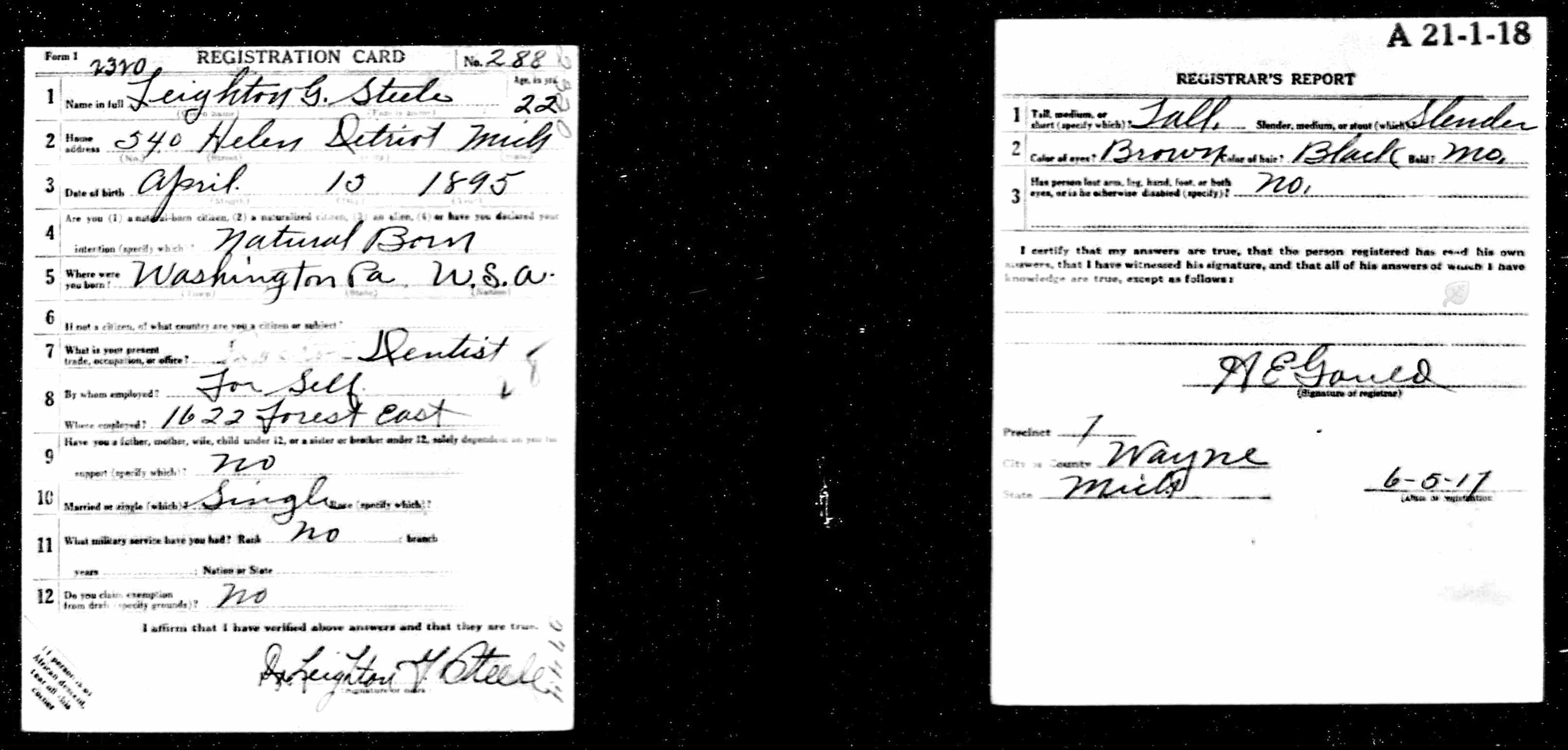
Hettie and Adolph’s son Leighton graduated from the dental school at the University of Michigan in 1916. In 1917 when he registered for the draft in World War I, he was a self-employed dentist working in Detroit, Michigan. The 1923 University of Michigan alumni directory lists Leighton as a first lieutenant “D.R.C. 1918-1919;” D.R.C. stands for Dental Reserve Corps. In 1920 he was practicing dentistry in Detroit.12

Leighton Steele, World War I draft registration, Registration State: Michigan; Registration County: Wayne; Roll: 2032496; Draft Board: 18
Source Information
Ancestry.com. U.S., World War I Draft Registration Cards, 1917-1918

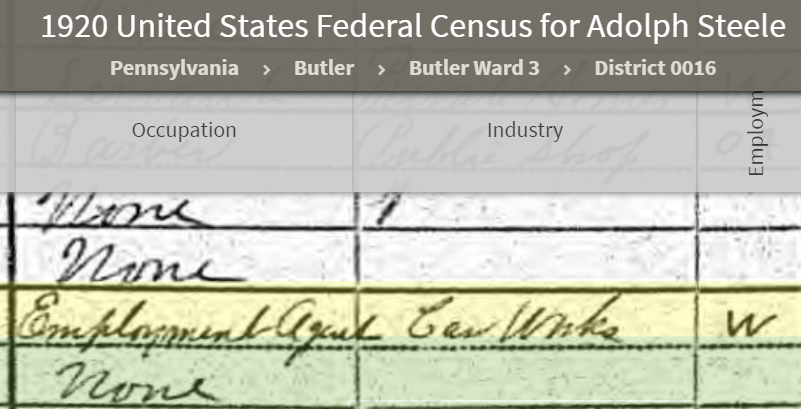
Hettie and Adolph were still living in Butler, Pennsylvania, in 1920, but Adolph was no longer a clothing merchant. It looks like it says he was an employment agent for “car works” or maybe “gas works.” Anyone have any idea what that means?

Adolph and Hettie Steele, 1920 US census, Census Place: Butler Ward 3, Butler, Pennsylvania; Roll: T625_1543; Page: 3A; Enumeration District: 16
Ancestry.com. 1920 United States Federal Census

In 1923, Hettie’s daughter Florence had a second child, a son Robert born on September 9 in Ottawa, Ohio.13 Hettie’s son Leighton married Rae Finsterwald on December 27, 1924, in Detroit. She was born in Marion, Wisconsin, on November 8, 1897, to Charles Finsterwald and Selma Goldberg. She grew up in Wisconsin, but in 1920, she was living with her parents and siblings in Detroit where she must have met Leighton. Leighton and Rae would have two children, one born in 1926 and another in 1935.14

By 1930, Hettie and Adolph had moved from Butler, Pennsylvania, to Highland Park, Michigan. Adolph was now 73, but still working, now as a storekeeper for a carpet business.15 He died just three years later on January 18, 1933, in Ottawa, Ohio, where their daughter Florence was living. According to his death certificate, he died from acute pulmonary edema after suffering from chronic hypertension and myocarditis since 1931. He was 77.

“Ohio Deaths, 1908-1953,” database with images, FamilySearch (https://familysearch.org/ark:/61903/3:1:33S7-9PKD-9HFM?cc=1307272&wc=MD96-VTG%3A287599601%2C291650202 : 21 May 2014), 1933 > 06001-09000 > image 1083 of 3247.

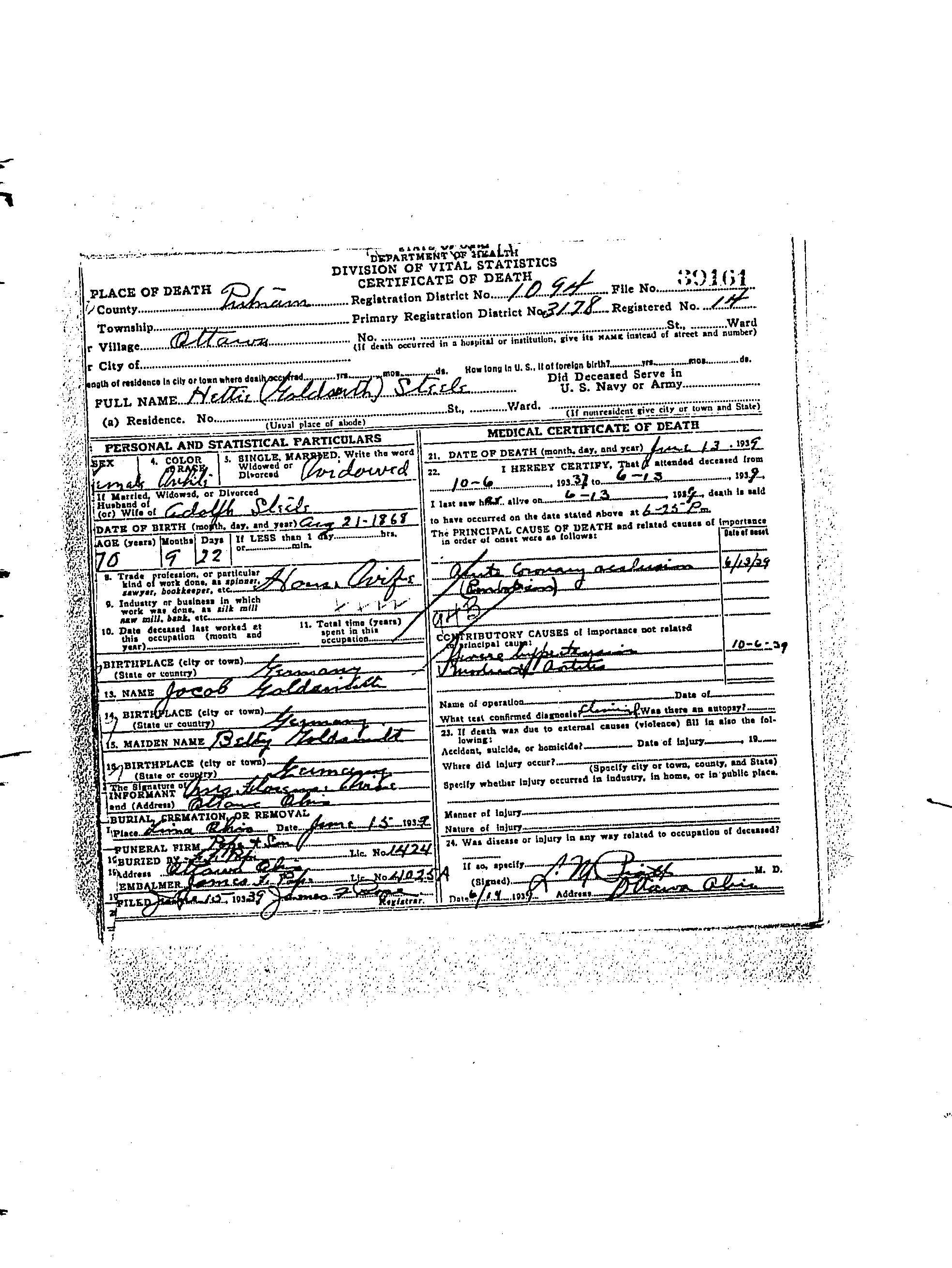
Hettie died six and a half years later on June 13, 1939, in Ottawa, from acute coronary occlusion; she was seventy. She was the longest surviving child of Betty and Jacob Goldschmidt. And she was survived by her children Florence and Leighton and four grandchildren.

“Ohio Deaths, 1908-1953,” database with images, FamilySearch (https://familysearch.org/ark:/61903/3:1:33S7-9PTC-3C1?cc=1307272&wc=MD9X-BP8%3A287601801%2C294559601 : 21 May 2014), 1939 > 38901-41800 > image 298 of 3242.

Florence continued to live in Ohio with her husband Herman Wise, until his death there on October 23, 1954.16 Her brother Leighton lived in the Detroit area and practiced dentistry there until about 1952 when he moved to Los Angeles, where he died in 1956.17 His wife Rae died in 1986, as did his sister Florence.18

Florence was 95 when she died on April 9, 1986.19 She and her brother Leighton were survived by their children and grandchildren and have a number of living descendants today.

How grateful I am for that one little comment on Milton Goldsmith’s family report mentioning Hettie and Adolph Steele. It led to the addition of a whole new branch on my Goldschmidt family tree. More importantly, I learned that Betty and Jacob Goldschmidt have living descendants, contrary to what I’d thought before Milton’s report enlightened me.


  1. Death record of Rickchen Geissberg Goldschmidt, Personenstandsregister Sterberegister; Signatur: 8196, Ancestry.com. Hesse, Germany, Deaths, 1851-1958. Hedwig Goldschmidt Starksy, Yad Vashem entry, https://yvng.yadvashem.org/nameDetails.html?language=en&itemId=11507302&ind=0. Jacob Julius Goldschmidt, Yad Vashem entry, https://yvng.yadvashem.org/nameDetails.html?language=en&itemId=11507410&ind=0 
  2. Hettie Steele, 1900 US census, Census Place: Butler Ward 3, Butler, Pennsylvania; Page: 12; Enumeration District: 0057; FHL microfilm: 1241386, Ancestry.com. 1900 United States Federal Census. 
  3. Film Number: 004141925, Ancestry.com. Pennsylvania, Marriages, 1852-1968 
  4. Adolph Steele, see census records depicted below. 
  5. Adolph Steele, 1880 US census, Census Place: Baltimore, Baltimore (Independent City), Maryland; Roll: 498; Page: 105B; Enumeration District: 047, Ancestry.com and The Church of Jesus Christ of Latter-day Saints. 1880 United States Federal Census. 
  6. Florence Steele Wise, Number: 295-40-7386; Issue State: Ohio; Issue Date: 1962,
    Ancestry.com. U.S., Social Security Death Index, 1935-2014. “Florence Wise,” Lima (OH) News, April 11, 1986, p. A4 
  7. Leighton G. Steele, World War I draft registration, Registration State: Michigan; Registration County: Wayne; Roll: 2032496; Draft Board: 18, Ancestry.com. U.S., World War I Draft Registration Cards, 1917-1918 
  8. Washington, Pennsylvania, City Directory, 1897, Ancestry.com. U.S. City Directories, 1822-1995 
  9. Herman Wise, World War I draft registration, Registration State: Ohio; Registration County: Putnam; Roll: 1851085, Ancestry.com. U.S., World War I Draft Registration Cards, 1917-1918 
  10.  FHL Film Number: 915768, Ancestry.com. Ohio, Births and Christenings Index, 1774-1973 
  11. Herman Wise and family, 1920 US census, Census Place: Ottawa, Putnam, Ohio; Roll: T625_1429; Page: 4B; Enumeration District: 107, Ancestry.com. 1920 United States Federal Census 
  12.  Catalogue of graduates, non-graduates, officers, and members of the faculties, 1837-1921. University of Michigan, Ancestry.com. U.S., College Student Lists, 1763-1924; Leighton Steele, 1920 US census, Census Place: Detroit Ward 4, Wayne, Michigan; Roll: T625_805; Page: 8A; Enumeration District: 138, Ancestry.com. 1920 United States Federal Census 
  13. State File Number: 1923091889, Ancestry.com. Ohio, Birth Index, 1908-1964 
  14. Michigan Department of Community Health, Division of Vital Records and Health Statistics; Lansing, MI, USA; Michigan, Marriage Records, 1867-1952; Film: 180; Film Description: 1924 Wayne – 1925 Calhoun, Ancestry.com. Michigan, Marriage Records, 1867-1952; Name: Ray Finsterwald, Birth Date: 8 Nov 1897, Birth Place: Waupaca, Wisconsin, USA, Reel: 0304, Record: 000972, Ancestry.com. Wisconsin, Birth Index, 1820-1907; Finsterwald family, 1920 US census, Census Place: Detroit Ward 4, Wayne, Michigan; Roll: T625_805; Page: 4B; Enumeration District: 158, Ancestry.com. 1920 United States Federal Census 
  15. Adolph and Hettie Steele, 1930 US census, Census Place: Highland Park, Wayne, Michigan; Page: 15B; Enumeration District: 0983; FHL microfilm: 2340809, Ancestry.com. 1930 United States Federal Census 
  16. “Herman Wise Dies in Lima Hospital,” Washington C.H. Record-Herald, 25 Oct 1954, Mon, Page 10. 
  17. Ancestry.com. California, Death Index, 1940-1997. “Dr. Leighton Steele,” Detroit Times Monday, Mar 12, 1956 Detroit, MI Page: 16. 
  18. Ancestry.com. California, Death Index, 1940-1997 
  19.  Michigan Department of Vital and Health Records. Michigan, Death Index, 1971-1996. “Florence Wise,” Lima (OH) News, April 11, 1986, p. A4 

Interview on Pioneer Valley Radio

I was recently interviewed by Bernadette Duncan on Pioneer Valley Radio about my novel Pacific Street and about genealogy research in general. I hope you find it interesting.

You can find it here.

pacific street

You can buy my book here.

At the Sign of the Sparrow: The Legacy of Alfred Goldsmith

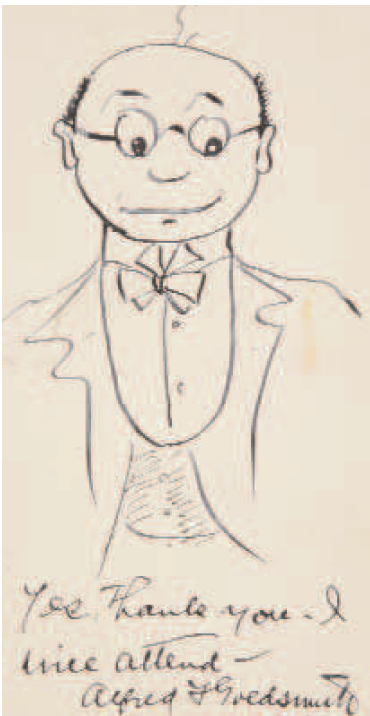
As I noted at the end of my last post, Joseph J. Felcone, the author of The Old Book Table. A Record of its First Seventy-Five Years, 1931–2005 (New York: The Old Book Table, 2006), helped me learn more about my cousin Alfred Goldsmith and his famous bookstore, At the Sign of the Sparrow. He also gave me permission to use some of the images from his book.  I am deeply grateful to Mr. Felcone for his generosity and all his help. With his permission, I can share this wonderful self-portrait that my cousin Alfred drew as his response to an invitation to dinner with the Old Book Table, the antiquarian book club to which he belonged:

Courtesy of Joseph J. Felcone, The Old Book Table. A Record of its First Seventy-Five Years, 1931–2005 (New York: The Old Book Table, 2006), p. 5.

From Mr. Felcone, I also learned about three other sources with information about Alfred Goldsmith, including accounts from two men who knew him personally, Walter Goldwater, a fellow bookseller,  and Edward Naumberg, Jr., a patron of the arts and book collector. The third source is a book published in 2003 by Marvin Mondlin and Roy Meader entitled Book Row: An Anecdotal and Pictorial History of the Antiquarian Book Trade (Carroll & Graf Publishers, New York, 2003).1

Although I still don’t have a photograph that I can post of Alfred’s store, the descriptions I found create a vivid picture. The New York Times provided this description in its obituary of Alfred:2

With its entrance a few steps below street level, the shop reflected the intimacy of its owner; it was small, laden with all kinds of books and enmeshed with cobwebs. A mecca for theatrical personalities, the shop specialized in books on the stage, pictures of famous actors and old programs.

Mondlin and Meader describe the store in similar terms in Book Row:3

The entrance to the small, quaint (as some said) shop at 42 Lexington Avenue required walking down steps from street level.….Inside, the shop presented a diverse congregation of books, rather jumbled, and a hint of age, cobwebs, benign neglect, and intimate charm. The faux Gothic ambiance fit the proprietor, who typically stood waiting, book in hand, smiling in welcome.

Edward Naumburg, Jr., who knew Alfred well, provided these details:4

Outside was a wobbly bookstand offering 10-cent and 25-cent bargains. The shop was dimly lighted, warmed by a gas stove, lined of course with bookshelves, and divided by a flimsy partition beyond which was the inner sanctum where rarities were kept.  The average customer was not invited to enter.

The store was allegedly the setting of two mystery books: Christopher Morley’s The Haunted Bookshop5 and Carolyn Wells’ Murder in the Bookshop. Carolyn Wells, as previously noted, was Alfred’s collaborator on works about Walt Whitman, and according to Naumburg, Alfred told him that Wells did in fact visualize his store as the setting for her novel.6 Perhaps then the illustration from the cover of her book conveys some sense of the appearance of the exterior of Alfred’s store.

Naumberg’s essay includes two photographs of Alfred inside the store, but I’ve been unable to find someone who can give me permission to use them; however, if you go to the link for his article here, you can see them.

I also found this old photograph of Lexington Avenue looking north from 24th Street, so although Alfred’s store is not in this photograph, it does depict the neighborhood where he worked and lived.

Irma and Paul Milstein Division of United States History, Local History and Genealogy, The New York Public Library. “Manhattan: Lexington Avenue – 24th Street (East)” The New York Public Library Digital Collections. 1931. http://digitalcollections.nypl.org/items/510d47dd-4410-a3d9-e040-e00a18064a99

But what happened inside the store is more important than its appearance. Naumburg said it “was often the scene of quite wonderful arguments and discussions.” 7 Mondlin and Meader noted that “Customers, scouts, collectors, bibliographers, writers, and librarians … made the Sparrow a friendly hangout at the outer border of Book Row.”8   In addition, they observed that “[h]is shop became a theatrical oasis specializing in stage books and ephemera. Broadway enthusiasts and personalities browsed at the Sign of the Sparrow for books, theater programs, and pictures of actors.”9 Serious historians, book collectors, and theater fans all shopped together in the little store.

What I most enjoyed learning from these sources were the insights into Alfred’s personality. Walter Goldwater described him this way:10

Goldsmith never sat down; he always stood behind his little counter and made cute remarks to people who came in, usually the kind of things where you’d have to say, “When you say that, smile.” He always did smile, so nobody took it quite to heart….He said it in such a sweet way that nobody could really believe that he really meant those terrible things that he said.

Naumburg shared this humorous story, which exemplifies Goldwater’s comment:11

One of my favorite stories concerns the time a rather shabby man entered the shop and said, “Mr. Goldsmith, you are the Whitman expert.  I have here Whitman’s eyeglasses and his cane which I’m sure you’d like to buy.” Alfred didn’t reply.  He took a scissors from his desk drawer, reached down and clipped a few hairs from his pet dog, Chris, who was lying at his feet, handed them to the man, and said, “And here are clippings from Walt’s beard. They’ll go well with the eyeglasses.”

Walt Whitman, 1872.
By Photographer: G. Frank E. Pearsall (1860-1899) (NYPL Digital Gallery) [Public domain], via Wikimedia Commons

Mondlin and Meader wrote that “his knowledge, amiability, probity, humor, and punctilio made him such a congenial square shooter that he elevated the hospitality tone of Book Row all by himself.” 12

The one characteristic that all the sources commented on was Alfred’s lack of entrepreneurial drive. Mondin and Meader said that he was “more interested in having a leisurely talk about books than a chance for monetary gain.”13 Goldwater commented:14

Most of us knew that, at some price or another, Goldsmith would buy a book. How in the world he could do it, since it didn’t seem to us he ever sold anything and he certainly was very cheap in price, we never could understand. But he always would buy a book at some price or other. If we were broke during those early thirties, we would go to Goldsmith and be able to get fifty cents or a dollar, because he would buy.

Goldwater said that Alfred was known for coining the statement that “the book business is a very pleasant way of making a very little money.”15 Mondlin and Meader quote book collector John T. Winterich, who wrote this about Alfred:16

How Alfred Goldsmith contrived to convert the mutually effacing principles of buying high and selling low into anything resembling the profit motive is beyond my economic comprehension.  But I am sure he had a good time in the process….And although he lived by selling books, he was about the poorest—or possibly the best—bookseller of my acquaintance. He never talked up a book.  He never priced up a book.

His financial burdens were amusingly depicted in this cartoon he drew:

Courtesy of Joseph J. Felcone, from The Old Book Table. A Record of its First Seventy-Five Years, 1931–2005 (New York: The Old Book Table, 2006), p. 5.

In addition to his book collecting and selling activities, Alfred was active in the Old Book Table from its earliest days in the 1930s. His financial challenges were described in his tongue-in-cheek comments and in a cartoon he drew in March 1933, humorously depicting his intended means of raising three dollars, the charge for attending the monthly club dinner:16

Today I made a neat little barrow holding a small oil stove and a tin tray and tomorrow I start out at 7 A.M. selling hot hamburger sandwiches at 5 cents each. If I do not make three dollars at this, I will pawn a first edition of Leaves of Grass to make up the difference….

Joseph J. Felcone, The Old Book Table. A Record of its First Seventy-Five Years, 1931–2005 (New York: The Old Book Table, 2006), p. 7

According to Naumburg, in addition to his drawings, Alfred was also known for the short poems he often read at the Old Book Table meetings.17

Here is the one photograph I have of Alfred that I can share on this page, thanks to the generosity of Joseph Felcone. Alfred is standing, fourth from our right.

Alfred F. Goldsmith (fourth from right) and other members of the Old Book Table. Courtesy of Joseph J. Felcone, from The Old Book Table. A Record of its First Seventy-Five Years, 1931–2005 (New York: The Old Book Table, 2006), p. 15.

Alfred’s wife Ray joined him in his work in the Sparrow; the 1940 US census lists her occupation as “saleswoman, bookstore.” (Alfred himself was identified as “storekeeper, bookstore.”)18 Goldwater and Naumburg had conflicting views on her role in the store and her personality. Goldwater’s assessment was rather harsh: “His wife was an Englishwoman who was Cerberus sitting at the door, hating everybody who came in and trying to keep them for fear they might bother her husband.”19

Naumburg was much kinder in his view of Ray:20

Alfred’s wife, Ray, was almost always present.  She was British with a charming London accent and a shrewd, intuitive sense for sizing up browsers. On first acquaintance she seemed a bit aloof; later one found her warm and understanding. Ray was a splendid cook, and her own collection of cookbooks was an appropriate hobby for the wife of an antiquarian bookseller.

Alfred Francis Goldsmith died on July 28, 1947.21 Goldwater recalled seeing him “grimacing in pain” from what Alfred believed was sciatica, but what was in fact cancer. 22 According to Alfred’s obituary in The New York Times, the day after he died was “the first time since it was opened [that] At the Sign of the Sparrow was closed to its frequenters.”23

Mondlin and Meader wrote that after Alfred’s death, his widow Ray asked a friend, Frederick Lightfoot, if he wanted to take over the store, but Lightfoot declined because he did not think it would be financially viable. Ray kept the store open for a few months, “But without Alfred Goldsmith, the spirit of the store was gone.” The store closed, and the inventory was sold to Swann Auction Galleries.24 According to Walter Goldwater, that inventory proved to be less valuable than expected, as Alfred did not in fact own as many valuable books as had been assumed.25

Alfred was only 66 when he died and was survived by his wife Ray and four of his siblings: his younger siblings Bertha, Alice, and Louis, and his oldest (half) brother, Milton Goldsmith. He certainly lived an interesting life and made his mark on the book world. He is another Goldsmith I wish I could invite to dinner.  Not only would I enjoy his humor and his intelligence, I would love to hear the stories he had about his family and his life.

Thank you again to Joe Felcone for his invaluable assistance and generosity.



  1. “Book Row” refers to section of New York City on and near Fourth Avenue south of Fourteenth Street which was once the location of numerous stores selling secondhand and rare books. Although Alfred’s store, which was located about ten blocks north of Fourteenth Street, was outside the section known as Book Row, his role as a bookseller was so well-known and so well-regarded that he and his store are included in Mondlin and Meader’s book.  Mondlin and Meader’s book will be referred to hereinafter as Mondlin and Meader. 
  2. “A.F. Goldsmith, 66, Book Dealer, Dies,” The New York Times, July 30, 1947, p. 17. 
  3. Mondlin and Meader, p. 52. 
  4.  Edward J. Naumburg, Jr., “My Favorite Bookseller,” Princeton University Library Chronicle, Volume 48, No. 2, Winter 1987, p. 183. Hereinafter referred to as Naumburg. 
  5. Ralph Dumain, The Autodidact Project: “New York City Bookshops in the 1930s and 1940s: The Recollections of Walter Goldwater,” (audiotape interview with Walter Goldwater by unnamed interviewer), p. 144,  found at http://www.autodidactproject.org/other/goldwat1.html  Hereinafter referred to as Goldwater, p. 144. 
  6. Naumburg, p, 181. 
  7. Naumburg, p, 186. 
  8. Mondlin and Meader, p. 51. 
  9. Mondlin and Meader, p. 54. 
  10. Goldwater, p. 144. 
  11. Naumburg, p. 185. 
  12. Mondlin and Meader, p. 50 
  13. Mondlin and Meader, p. 51 
  14. Goldwater, p. 144. 
  15. Goldwater, p. 144. 
  16. Joseph J. Felcone, The Old Book Table. A Record of its First Seventy-Five Years, 1931–2005 (New York: The Old Book Table, 2006), p. 7. 
  17. Naumburg, p.187. 
  18. Alfred and Ray Goldsmith, 1940 US Census, Census Place: New York, New York, New York; Roll: m-t0627-02649; Page: 5A; Enumeration District: 31-1066. Ancestry.com. 1940 United States Federal Census 
  19. Goldwater, p. 144. 
  20. Naumburg, p. 183. 
  21.  New York, New York City Municipal Deaths, 1795-1949,” database, FamilySearch (https://familysearch.org/ark:/61903/1:1:2WPP-8JB : 10 February 2018), Alfred Goldsmith, 28 Jul 1947; citing Death, Manhattan, New York, New York, United States, New York Municipal Archives, New York; FHL microfilm 2,133,778. 
  22. Goldwater, p. 144 
  23.  “A.F. Goldsmith, 66, Book Dealer, Dies,” The New York Times, July 30, 1947, p. 17. 
  24. Mondlin and Meader, p.55-56. 
  25. Goldwater, p. 144.