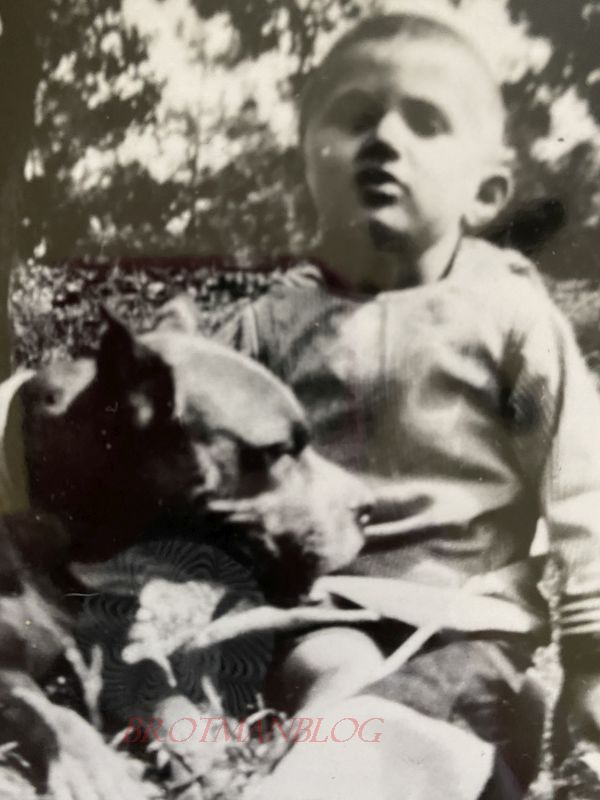
The Memoir of Julius Loewenthal, Part V: Leaving Germany

This is the final chapter in the memoir of my cousin Julius Loewenthal. We saw in the prior chapter how his life began to fall apart after the Nazis took control of Germany and their persecution of the Jews began in 1933. Then the family suffered a great personal tragedy in October 1937 when Julius and Elsa’s daughter Ruth and her husband Leonhard Fulda were killed in a terrible car accident after traveling to Switzerland to find a sanitorium for Herbert Loewenthal, who was struggling with mental illness and was soon after confined to a sanitorium in Zurich.

In this last section of his memoir, Julius writes about the decision to leave Germany and their ultimate departure in December 1938.


Eventually the life of the German Jew became impossible. No longer could we travel. Our passports were taken away. Thus, we finally decided to sell the business. It was a very difficult decision. Our life blood and that of our ancestors was sentimentally involved in this enterprise, its buildings, its history.

If my departure from my desk after 45 years was difficult and slow, my departure from my homeland, however, was made brutally swift and final by the following events. During the night from the 9th to the 10th of November [1938], approximately 30 Nazi Storm Troopers broke into our home in Eschwege. They destroyed everything they could get their hands on. Furniture was broken. Upholstery was cut to shreds, china was broken, even paintings of internationally known artists were cut up. Even the marble window sills were broken in two.  My wife and our servant…had taken refuge in the upstairs bedroom as I was out of town on this night. They [the Nazis] broke into the bedroom, and my wife and [servant] took refuge on the outside balcony where they remained all night because had they been discovered, they would have been killed. It was a very cold and lonely frightful night.

I was reached by phone and came back to Eschwege to find my home in shambles and my wife frightened to the marrow of her bones. On the evening of my return, the Gestapo arrived at my home and told me that on order from higher authority, my life and that of my wife was not in danger. At that time I did not understand in full the meaning of this communication because it was not until later that I found out that nearly all the members of the Jewish congregation were arrested on that day, brutally mistreated, and shipped to the Concentration Camp at Buchenwald. Many, very many, never came back. I, however, had a guardian angel, as I was to find out later.

At night we drove to the Schlosshotel in Kassel where we were accepted and could stay, as in those days no Hotel accepted Jews anymore. We remained there two nights and obtained the necessary papers to emigrate from Germany….

It was the unbelievable energy and presence of mind of my dear wife that brought us through these hours, as it was she who arranged for the damaged silver and furniture to be repaired, arranged the travel papers, and supervised the packing of that which was possible to be taken with us. Thus, we were later able to sell a lot of these items in the USA in order to obtain some money and survive. …

During the second night of our stay in the Hotel in Kassel, the Hotel was checked by the Gestapo. We were not bothered this time, but preferred to move to Frankfurt where no Hotel accepted us. We took refuge in the empty Apartment of my niece Lotte Posen, my brother Siegfried’s daughter. Her husband had been arrested, and she had moved to her parents.

We had arrived on Friday afternoon, and our cousin Sitta Mainz sent us some fish and bread to eat; it was very nice of her. On Saturday morning my niece Lotte came to me and told me I could no longer stay in her Apartment as I resembled her father too much. My wife was at the English Consulate. What could I do? In spite of it being Shabbos, I took a taxi and drove to the English Consul in order to meet my wife. She became very upset when she saw me with my luggage, but she managed to take us to my cousin Selma Frankel, who took us with much love and cooperation and helped us in a very difficult situation. …

We returned once more to Eschwege for the final packing for just a few days and then back to Frankfurt where we stayed at the house of my aunt Hana Stern. [This must refer to Johanna Goldschmidt, wife of Abraham Stern, who was the brother of Julius’ mother Kiele Stern. Johanna was also, however, Kiele Stern’s first cousin, as Kiele’s mother Sarah Goldschmidt was the sister of Johanna’s father Selig Goldschmidt.] The house was occupied by her son-in-law who fled for his life in the middle of the night. [This must refer to Siegfried Oppenheimer, the husband of Alice Stern, as I wrote about here.] It was a terrible feeling as everyone around you took steps to save his naked life. Still living in the house upstairs lived the other son-in-law of my aunt, Albert Mainz [husband of Sitta Stern]. We had a last supper together, and the following morning we travelled to Stuttgart to ask at the American Consul for our visa. When we returned that same night, Albert Mainz and family also had fled. Our fright increased; we were very shaken and terrified. We decided to cross the Border that night. This move was long overdue.

We had just obtained the necessary railroad tickets and travel papers when 3 Gestapo Agents arrived and confiscated all my wife’s jewelry, even though we had received permission on a prior occasion to retain the same and take it with us. Now what? It was my last possession as I knew that none of the money I had left in the Bank would ever be transferred.

At that terrible moment I made a dangerous decision, unheard of in those days and beyond imagination. I called the head of the Internal Revenue for the State of Hessen, the top authority in the State, and requested his intervention. … My guardian angel who had protected me in the past so visibly also protected me now, and the Gestapo Agents were ordered to return the jewelry, which they did with much reluctance. Of course, this individual knew me as the seat of his Bureau was in Kassel and knew very well who I was, as in the past we were the largest taxpayers in the county of Eschwege.

We took the train to Holland. At the Border, the town of Emmrich, the passport control came through. After they had inspected us, the customs inspectors came through. In this sleeping car only people who were emigrating into Holland were travelling. All had to open their luggage and all had to surrender their jewelry and watches. When the inspectors came to me, they read my name and passed on. I did not have to open my bags nor did I have to surrender anything. My wife and myself looked at each other. We could not believe it. Fright was still deep in our bones. In a few minutes we were in Holland and finally able to sleep again. Our guardian angel was indeed a guardian to us.

It was the 8th of December, a dark and rainy day, but a happy day. We were only allowed to take with us 10 Marks in Dutch currency. Thus, I who had left Millions behind was happy to find a room on the third floor of a Pension where we could rest as now we were in a free land, and we were able to eat meat again. We were saved, but unfortunately without our Grandchild Margot. She eventually was brought out by her Grandfather Fulda, who even then still liked it in Germany. At this writing she is still in Amsterdam. I hope and with God’s help I will see her again. …

Thus, our lives’ work, our homes, our fortunes, absolutely everything went to nothing. I cannot express in this writing the feelings in my heart of how they have influenced my views on life itself. However, let me say that this is a Jewish destiny, which has not swayed me one iota in my faith in the Lord of our forefathers.


Julius Loewenthal and his wife Elsa left Holland for England and then immigrated to New York City in May, 1939, where their daughter Hilda and son-in-law Max Stern lived. When Julius wrote this memoir in 1940, his son Garry Warner was enlisted in the British Army. Garry immigrated to New York City a year after the end of World War II.

Garry Warner-Loewenthal, born Karl Werner Loewenthal.
Courtesy of Joanne Warner-Loewenthal

Julius died of a heart attack in Manhattan on November 26, 1946, at the age of 72. I assume he knew before he died that his beloved granddaughter Margot had been murdered by the Nazis at Sobibor along with her other grandparents. Elsa died in 1961, also in New York City.

According to Garry’s notes after his translation of the memoir, the firm of L.S Brinkmann, the knitwear company owned by Levi Brinkmann and later by Julius and his brother-in-law/second cousin Moritz Werner, was re-established after the war by Moritz and Garry and resumed business in 1949. It was once again a very successful business for many years, closing down in 1974.

Garry also commented on the fate of his brother Herbert, who was a patient in a sanitorium in Zurich during the war. He was released in 1953 and cared for by a Swiss guardian. He worked and was well liked and respected in the community. He was “an extremely intelligent and cultured person, a man of many abilities, the least of which was to become a painter.” Herbert died of a heart attack in Zurich in 1962. Garry and his wife and five year old daughter were in Europe at that time and on their way to visit him when he died.

According to his daughter Joanne, Garry continued to work in the knitwear business until 1969. He then moved to West Palm Beach, Florida. He died March 1, 2005, when he was 87. I am so grateful to him for translating his father’s memoir and to Joanne for sharing it with me.

Garry Warner-Loewenthal
Courtesy of Joanne Warner-Loewenthal

These are stories that must be shared. We must never, ever forget what these people endured or their courage and resilience in carrying on after surviving Nazi Germany and the Holocaust.


The Memoir of Julius Loewenthal, Part IV: Tragedy Strikes

When we last left Julius Loewenthal, he was still a successful businessman, living in Eschwege, Germany, with his wife Elsa, but he was worried about the dark clouds of anti-Semitism and the economic disasters that were feeding it.

In this next section, Julius writes about the period between 1933, when the Nazis took control of Germany, and the death of his daughter Ruth and son-in-law Leonhard Fulda in October 1937. This section was obviously painful for him to write, and I had to do a bit of reorganizing to tell his story in chronological order. The text is so powerful that it needs no images, which would only detract from it.


When I look back today on my life, I must say that I made every effort, spared no money to give my children the opportunity to learn and obtain an education in some trade. My daughter Ruth went to business college, Herbert went to other plants in Germany and England, Hilde went to the famous Art College in Berlin and Basel, Switzerland, and Karl Werner [Garry] went to the Textile College in Leicester, England as well as having served an apprenticeship in our factory for some years. The small town we lived in forced us to send our children away at an early age as they did not have the opportunity in Eschwege.

To describe the time between 1933 and our final departure from Germany causes my hand to hesitate. The wounds are too deep. Only an expert writer could describe the torture and the poison with which the German Fuhrer persecuted the Jews wherever they were. It started already in 1933 and the events were such and so often and so horrible that I will not recount the same here, and they are and will be well documented in the time to come. Little by little the personal life, the business activity was choked off with rules, laws and regulations that in the end nothing was left, and no Jew could work. The congregations which existed for 1000 years became mere shadows. … No one in the beginning was able to understand or to comprehend. After all we were descendants of people who had lived in the communities throughout Germany for 1000 years.

… When I traveled to Palestine (Israel) in the year of 1933, I received news of the Nazi takeover of Germany. Our business still operated, and the profit was no smaller. However, the political events cast a very dark shadow. At first the peace between employer and employees was being disturbed by a daily dose of stories of the unmoral character of the Jews. One would think that mature men who had been with us for long times, many 40 years, were mature enough to form their own opinions. It was, however, different. Little by little the whole German nation was saturated with the antisemitic poison, a steady unrelenting barrage. Thus, we were eventually forced to sell our business as we no longer were masters in our own house.

….[In 1933] I was forced to sell my home in Bad Sooden. It was a sad hour for me as I had spent many happy hours there. We rented a small house in Frankfurt where we spent many happy hours in seclusion. However, the pressure of the German Internal Revenue was such that we were forced to give up the house in 1937. Frankfurt had become a disappointment for me. The many once well established relatives, the many wealthy and substantial families had become poor, and many lived in worse than pleasant circumstances. Many had left or wanted but did not have the funds to do so as the tax levied on leaving the country meant leaving absolutely everything behind.

…We made the salient mistake of not leaving Germany in 1933. It was a most difficult decision, and no one anticipated the murderous and vicious intentions and its consequences in a Nation of such high culture. In 1934, I fell [and broke both legs] and was confined to a hospital for better than one year and that also contributed in not making a decision. We bought property, land, and a house, in Israel in order to have some possibility of having funds or roots abroad, but as it turned out the Company who sold us the land was operated by Jews abroad who would prey on the adversity of others, and the whole huge amounts of money were fleeced except for the land itself. It was later sold.

… In 1935 my son Herbert left Germany. He recognized the situation better than we did. It was a blow because I had hoped that some day he would take over the reins of the business. He went to New York where he became active in the business world at once. Unfortunately [he was afflicted by] a lingering ever progressing sickness which might have been overlooked because of the troubled and unstable times with its unbelievable personal and survival problems, together with the limited medical knowledge which was available at the time….

[In October 1937, My daughter Ruth, her husband Leonhard Fuld and I] traveled together to Muensingen in Switzerland in order to find a Sanitorium for Herbert. …. We arrived in Zurich, where we stayed over, then on to Muensingen, then Interlaken, and after Shabbos we started back to Germany…. We remained in our room because the place was full of Nazis.

The following morning on October 2nd, 1937, we continued the trip toward Rottweil when a Truck with an empty trailer came toward us, and it was speeding. The trailer swung around like a huge baseball bat and hit us. Ruth, who was driving, and Leonard, who was sitting behind her, had both their heads crashed in. Ruth fell dead in my arms, and Leonard died on October 4, 1937, in the hospital in Rottweil. … The death of my beloved children was a terrible blow to all of us and to the Jewish community of Germany…. …. We were forced to travel to America in January 1938 and escort [Herbert] to Switzerland where he was confined to a Sanitorium….

The world had grown dark for us. We had to bear this burden and much more what was to come toward us. Today when I write this almost 3 years have passed, and I am convinced that the good Lord arranged it so, as much pain and suffering was spared my children as the destiny of the Jew in Germany was to end in tragedy.


It was not long after the tragic deaths of Ruth and Leonhard and the commitment of Herbert to a sanitorium in Switzerland that Julius and Elsa made the heart-wrenching decision to leave Germany. More about that in the next post.


The Memoir of Julius Loewenthal, Part III: World War I and Its Aftermath of Darkening Clouds

By the turn of the 20th century, Julius Loewenthal was a young man in his late twenties who was making his mark as a business leader in his uncle’s knitwear business in Eschwege, Germany. The first three decades of the new century would provide him with many personal and professional challenges, as we will see.


In 1903 I married my second cousin Elsa Werner. I was 29 years old, and she was 20. We lived in the Reichensachser Strasse in an small apartment. In 1905 my daughter Ruth was born. Our happiness was great… Now that I had become a family man I was happy in a time before the 1st World War. The record player was invented and we were able to sit and listen to records. It was a monumental experience, to sit and listen to the latest opera and concerts. Guests came, and everybody was enchanted by the quiet life we were leading and the good food. In 1909 my son Herbert was born. He was a good son but had later on many problems, some of which were hard for me to understand.

Julius and Elsa (Werner) Loewenthal.
Courtesy of Joanne Warner-Loewenthal

In 1907 my dear uncle Levy died. The sorrow was great.

[Julius then described the growth of the family knitwear business in Eschwege after Levy Brinkmann’s death.]

The outbreak of the war changed everything. Jobs which had been done by men were now being done by women. There was great shortage of every imaginable item. Regulations came down which made life impossible and business worse. We worked full blast for the Army making sweaters and underwear. We were very strictly controlled and regulated, and one had one foot always in jail. German industries were not at all prepared for war, and chaos prevailed….

There were great shortages of raw materials, and we started to manufacture underwear from paper yarns which stood up well considering….Food was very short. My dear wife ran around the surrounding villages begging for a few eggs, milk, and butter. Our Matzoh on Passover was black like coal. Butter and meat could only be bought on the black market.

During the third year of the war I received prisoners from Belgium….They unfortunately all died of different diseases they contracted in the war zone. I lived between the living and the dead. I had to empty bed pans and play nurse, Doctor, Business Manager, etc. Doctors were not available because they were all at the front.

I was unable to have a free minute. I yearned for a vacation spot and a place of recreation. Thus, I got the idea to buy a house in Bad Sooden near Eschwege where we could vacation and spend the weekends. We called it Villa Elsa. It had a beautiful view of the forests and surroundings, and we owned the house from 1917 to 1933. …We spent as much time as we could in Bad Sooden. We kept 2 horses in Eschwege, which were used by the factory for hauling cases to and from the Station. On weekends we used them to take us to Sooden in a Landau, which was an experience in itself to travel the 10 miles by horse drawn carriage.

Bad Sooden, Germany
Jörg Braukmann / CC BY-SA (https://creativecommons.org/licenses/by-sa/3.0)

In 1920 a lot of refugees came to Eschwege and in particular to Sooden… One of the outstanding events of those days was the fact that already Antisemitism reared its ugly head. It became very widespread in Sooden. Our friendly relations with our neighbors became more and more strained because people lived from hand to mouth. Taxes were very high, and there existed sorrow and desperation among most people.

The stories were spread that the Jews were the cause of all that sorrow and were the cause of the War when the truth was that the Jews participated equally in the war and made their own bloody sacrifices as well as participated in the rebuilding of the country…. We were of the belief that this had all disappeared with the middles ages; however, we were wrong. … The hate remained and had nothing to do with reason. The seeds which were planted already then throughout the country were to blossom out in full during Hitler’s time.  We did not recognize the depth of all this and were subsequently taught a terrible lesson.

With the occupation of the Ruhr district by the French Army came the Inflation. Nobody knew what it was, nobody understood what it was, and subsequently poor were made out of the wealthy overnight and turned the whole nation into beggars and brought sorrow and desperation to each and every household. The wealth of my own family and that of my relations were gone overnight. Only a few ever recovered in their lifetime. Only those who had a business were able to recover and pull themselves out of the poorhouse.

In spite of that, the house in Sooden became a beautiful escape spot even though we no longer spoke with the neighbors. We lived alone for us. We were still respected and tolerated, but the Sun had grown darker.

Ruth had married Dr. Leonard Fulda from Mainz. He was a wonderful kind man, and the two were very happy with each other….

Already before the 1st World war was it our intention to build ourselves a house in Eschwege. The houses which were available were old, old-fashioned, and many without gas or electric. ….[w]ith the outbreak of the war we postponed the building. I was not called to the colors as my work was considered more important.

In 1926 we started to build…It was a house that was the talk of many throughout Europe as it incorporated many features which at that time were new, modern, unheard of, and the house remains just as modern today as it was at that time. [What follows is a detailed description of the house.] My daughter Hilde was married in the house, and the ceremony as well as the set table for more than 30 guests did not interfere with each other. We lived in this house from 1926 until 1938. We lived there happily until we were chased out of Germany by the Nazis. At this moment [1940] the Nazis have converted the house into a temporary hospital.

Home of Julius and Elsa (Werner) Loewnethal in Eschwege Courtesy of Joanne Warner-Loewenthal

[In the next section of his memoir, Julius described how despite the economic conditions in Germany generally, he was able to make extensive expansions in the family business including the construction of a new factory.]

The years 1924 through 1933 passed with growing political and unemployment tensions. …and the Jews became a very convenient place to heap the blame …[i]n spite of the fact that the German Jews were through their activity still one of the stable areas in the floundering economy. There were many Jewish owned businesses of different sizes throughout Germany, and nearly all commanded the respect of the business world including my own fine reputation, which reached far beyond the borders of Germany. This, while other non-Jewish businesses went bankrupt, contributed to the hate and jealousy of those unfortunate and unemployed. It was a vicious circle.


Somehow despite the awful economic suffering experienced throughout Germany after World War I, Julius Loewenthal managed to continue to expand his business and live comfortably both in Eschwege and in their vacation home in Bad Sooden. But he and his family were already experiencing the growth of anti-Semitism. They likely, however, had no idea just how bad things were going to get.

More in the next segment of Julius Loewenthal’s memoir in my next post. I will be taking a short break this week, but will post Parts IV and V next week.


Arthur Rapp and Family: From Germany to England to Brazil to New York

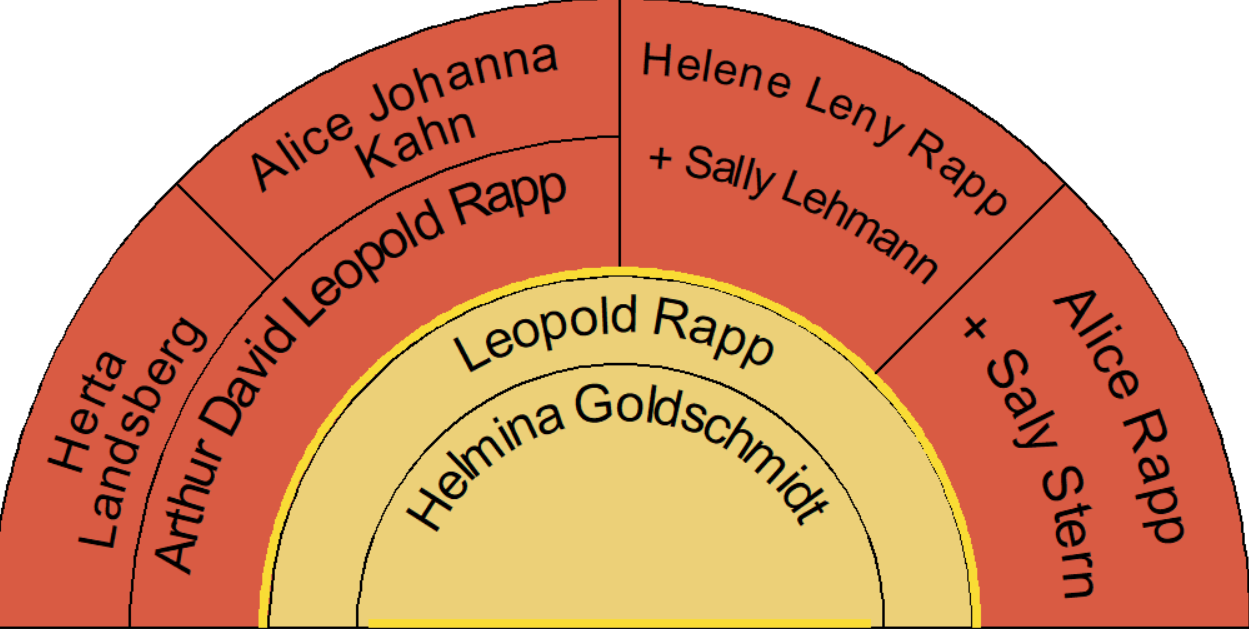
In my last post, we saw that Helmina Goldschmidt Rapp and her daughter Alice Rapp Stern, son-in-law Saly Stern, and their daughters Elizabeth and Grete had first escaped to England from Nazi Germany, with Alice, Saly, and Elizabeth later immigrating to the US where their son Walter had already settled. Today’s post is about Helmina Goldschmidt Rapp’s son Arthur Rapp and his family.

Arthur and his wife Alice and their sons Helmut and Gunther also were in England by 1939. Arthur reported on the 1939 England and Wales Register that he was a retired telephone salesman. (The two black lines are presumably for Helmut/Harold and Gunther/Gordon, who must still have been living when the document was scanned.)

Arthur Rapp and Family,The National Archives; Kew, London, England; 1939 Register; Reference: RG 101/6823F, Enumeration District: WFQC, Ancestry.com. 1939 England and Wales Register

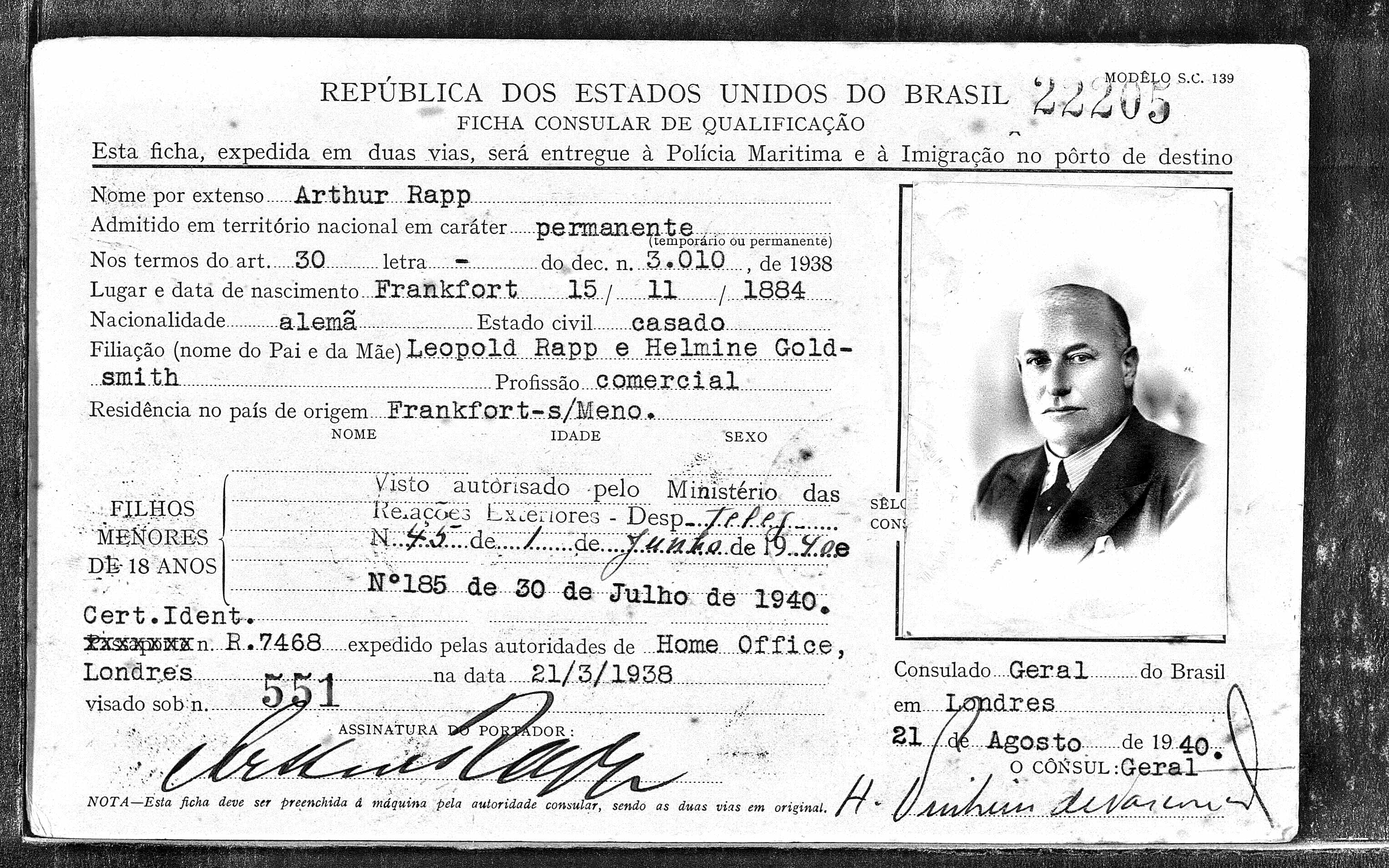
But like his sister Alice, Arthur did not stay in England. First, in 1940, he and his family immigrated to Brazil. I love having these photographs of Arthur and his family. Gunther is particularly adorable. But then I remember that these people had to leave their home in Frankfurt and then uproot themselves again to go from England to Brazil.

Arthur Rapp, Digital GS Number: 004816338, Ancestry.com. Rio de Janeiro, Brazil, Immigration Cards, 1900-1965

Alice Kahn Rapp, Digital GS Number: 004911328, Ancestry.com. Rio de Janeiro, Brazil, Immigration Cards, 1900-1965

Helmut Rapp, Digital GS Number: 004871140, Ancestry.com. Rio de Janeiro, Brazil, Immigration Cards, 1900-1965

Gunther Rapp, Digital GS Number: 004911328, Ancestry.com. Rio de Janeiro, Brazil, Immigration Cards, 1900-1965

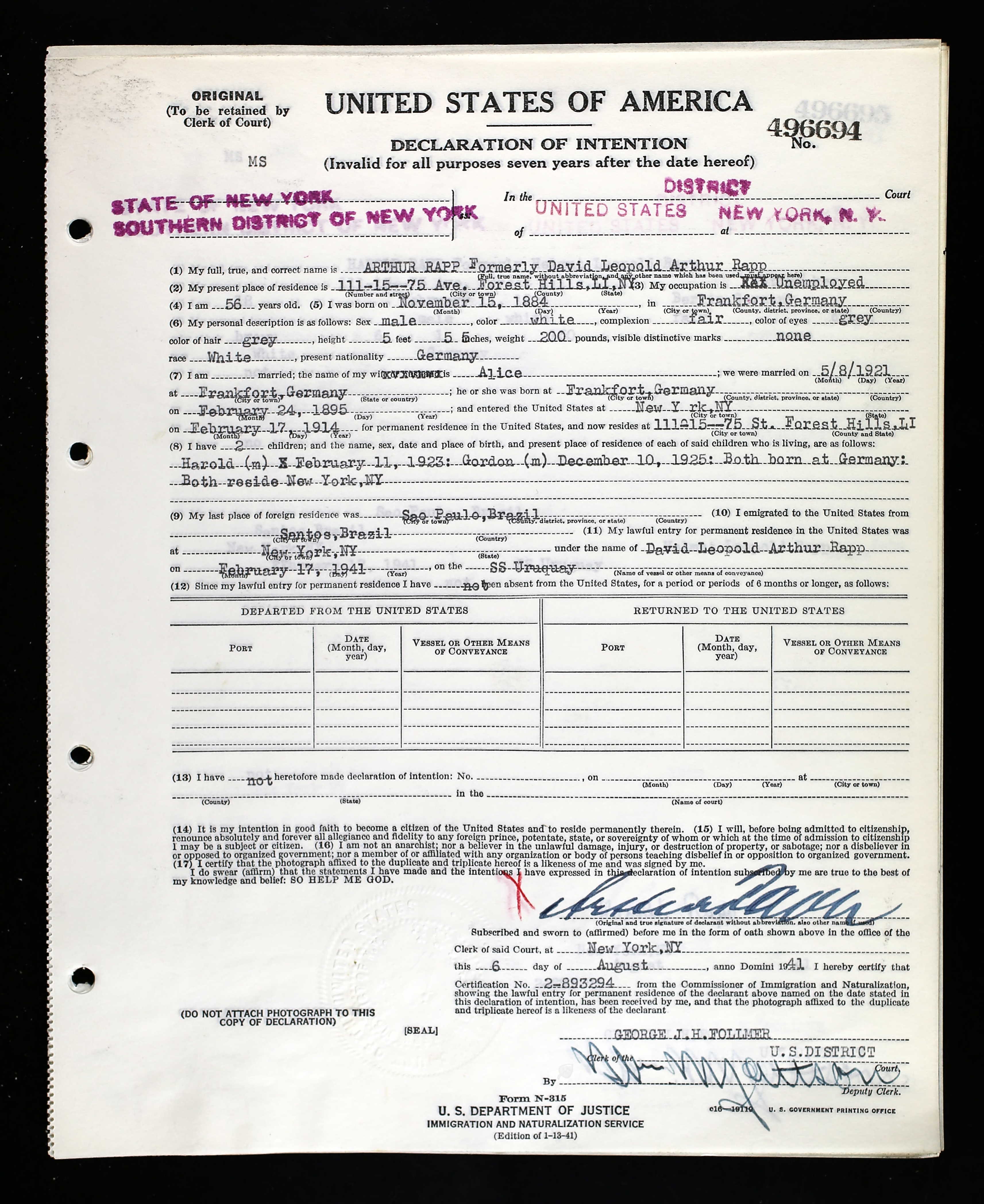
But a year later on February 27, 1941, they uprooted themselves again and left Brazil for New York where they settled in Forest Hills, New York, as seen on Arthur’s declaration of intention to become a US citizen.

Arthur Rapp, declaration of intention, The National Archives at Philadelphia; Philadelphia, Pennsylvania; NAI Title: Declarations of Intention for Citizenship, 1/19/1842 – 10/29/1959; NAI Number: 4713410; Record Group Title: Records of District Courts of the United States, 1685-2009; Record Group Number: 21, Description: (Roll 626) Declarations of Intention for Citizenship, 1842-1959 (No 496501-497400), Ancestry.com. New York, State and Federal Naturalization Records, 1794-1943

Arthur reported on his declaration of intention that he was unemployed, but his son Helmut, now using the name Harold, reported on his declaration that he was a watchmaker.

Harold (Helmut) Rapp, declaration of intention, The National Archives at Philadelphia; Philadelphia, Pennsylvania; NAI Title: Declarations of Intention for Citizenship, 1/19/1842 – 10/29/1959; NAI Number: 4713410; Record Group Title: Records of District Courts of the United States, 1685-2009; Record Group Number: 21, Description: (Roll 626) Declarations of Intention for Citizenship, 1842-1959 (No 496501-497400), Ancestry.com. New York, State and Federal Naturalization Records, 1794-1943

Arthur and Alice’s younger son Gunther, who became Gordon, was sixteen when they immigrated; on his World War II draft registration in 1943, he was living in Monmouth, New Jersey, working for Modern Farms.

Gordon (Gunther) Rapp, World War II draft registration, The National Archives in St. Louis, Missouri; St. Louis, Missouri; WWII Draft Registration Cards for New Jersey, 10/16/1940-03/31/1947; Record Group: Records of the Selective Service System, 147; Box: 539
Ancestry.com. U.S. WWII Draft Cards Young Men, 1940-1947

Arthur’s daughter from his first marriage, Henriette Rapp, also ended up in the US. She had married Siegmund Schwarz in Berlin on May 6, 1929, and they were living in Kirtof, Germany, in 1935.

Henriette Rapp marriage record to Siegmund Schwarz, Landesarchiv Berlin; Berlin, Deutschland; Personenstandsregister Heiratsregister; Laufendenummer: 189, 1929 (Erstregister)
Ancestry.com. Berlin, Germany, Marriages, 1874-1936

They immigrated to the US in 1937 and in June 1938 when Henriette, now using Rita, filed her declaration of intention to become a US citizen, they were living in San Francisco.

National Archives at Riverside; Riverside, California; NAI Number: 594890; Record Group Title: 21; Record Group Number: Records of District Courts of the United States, 1685-2009
Description: Petitions, 1943 (Box 0247), Ancestry.com. California, Federal Naturalization Records, 1843-1999

On the 1940 census, Rita and Siegmund, now going by Henry, were living in Los Angeles, and Henry reported no occupation, but Rita reported that she was a dressmaker.1 When Henry filed his World War II draft registration in 1942, he was still living in Los Angeles, but listed Alfred Kahn, not Rita, as  the person who would always know where he was, so perhaps they were no longer together.2 Rita did remarry on April 14, 1956, in Los Angeles, to Max Altura.3

Arthur Rapp died in New York on January 10, 1951, at the age of 66.4 He was survived by his wife Alice and his three children, Rita, Harold, and Gordon. Alice survived him by 26 years; she died in May 1977 at 82 years old.5

Rita died in Los Angeles on June 10, 2003; she was 94. According to her obituary in the June 13, 2003 The Los Angeles Times, Rita was a “life member and generous benefactor of Hadassah, Rita was devoted to Israel and the Jewish people.”6

Arthur Rapp’s two sons also lived long lives. Harold Rapp, who had started his career as a watchmaker, became the president of Bulova International in Basel, Switzerland, for many years and was 93 when he died on February 11, 2016.7

His brother Gordon died the following year at 92. According to his obituary, he graduated from Cornell University and received a master’s degree from Purdue University. His early interest in agriculture stayed with him. He had a career in poulty genetics before spending twenty years as a product and marketing manager with Corn Products Corporation . His obituary described him as follows: “He was known for his kindness, creativity, humor, wisdom, and talent as a prolific artist, photographer and writer. He was a Renaissance man of many interests, including tennis, tai chi and chess. He enjoyed museums and classical music concerts in New York City and later in Chapel Hill, NC.”8

I was struck by the fact that Harold and Gordon both continued to work in the same fields where they had started as young men, Harold in watches, Gordon in agriculture. Harold Rapp and Gordon Rapp were survived by their widows, children, and grandchildren.

Although Arthur Rapp did not have the blessing of a life as long as those of his three children, he was blessed with the good fortune of escaping with them from Nazi Germany and thus giving them the security and safety to live those long lives, during which they each made important contributions to their new homeland and left a legacy of their accomplishments and future generations to carry on the Rapp name.


  1. Rita and Henry Schwarz, 1940 US census, Census Place: Los Angeles, Los Angeles, California; Roll: m-t0627-00403; Page: 10B; Enumeration District: 60-828, Ancestry.com. 1940 United States Federal Census ↩
  2. Henry Schwarz, World War II draft registration, The National Archives in St. Louis, Missouri; St. Louis, Missouri; WWII Draft Registration Cards for California, 10/16/1940-03/31/1947; Record Group: Records of the Selective Service System, 147; Box: 1619,
    Ancestry.com. U.S. WWII Draft Cards Young Men, 1940-1947 ↩
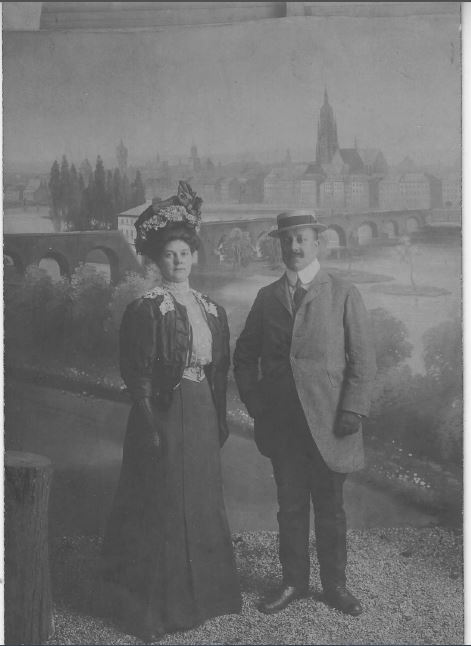
  3. Rita H Rapp, Estimated birth year: abt 1909, Age: 47, Marriage Date: 14 Apr 1956
    Marriage Place: Los Angeles, California, USA, Spouse: Max D Altura, Spouse Age: 55
    Ancestry.com. California, Marriage Index, 1949-1959 ↩
  4. Arthur Rapp, Age: 66, Birth Date: abt 1885, Death Date: 10 Jan 1951
    Death Place: Queens, New York, New York, USA, Certificate Number: 481
    Ancestry.com. New York, New York, Death Index, 1949-1965 ↩
  5.  Alice Rapp, Social Security Number: 105-36-2290, Birth Date: 24 Feb 1895
    Issue Year: 1962, Issue State: New York, Last Residence: 10028, New York, New York, New York, USA, Death Date: May 1977, Social Security Administration; Washington D.C., USA; Social Security Death Index, Master File, Ancestry.com. U.S., Social Security Death Index, 1935-2014 ↩
  6.  Rita H. Altura, Social Security Number: 555-16-5231, Birth Date: 21 Sep 1908
    Issue Year: Before 1951, Issue State: California, Last Residence: 91335, Reseda, Los Angeles, California, USA, Death Date: 10 Jun 2003, Social Security Administration; Washington D.C., USA; Social Security Death Index, Master File, Ancestry.com. U.S., Social Security Death Index, 1935-2014. Obituary can be seen at https://www.legacy.com/obituaries/latimes/obituary.aspx?n=rita-altura&pid=1083894 ↩
  7. I could not find Harold Rapp in the SSDI or any obituary, just this listing on FindAGrave. https://www.findagrave.com/memorial/159069023 However, I found numerous articles about his work at Bulova, and this wedding announcement for his son that mentions his career at Bulova. https://www.nytimes.com/2005/05/15/fashion/weddings/shelley-grubb-and-kenneth-rapp.html?searchResultPosition=2 ↩
  8. Gordon Rapp, The New York Times, December 26, 2017, found at https://www.legacy.com/obituaries/nytimes/obituary.aspx?n=gordon-d-rapp&pid=187633991 ↩

Helmina Goldschmidt Rapp, Part II: Leaving Germany with Alice Rapp Stern

As we saw, Jacob Meier Goldschmidt’s youngest child Helmina was widowed as a young woman and raised her three children alone from an early age. By the 1920s all three of those children were married and had children of their own.

When the Nazis came to power, Helmina and her family were among the fortunate ones who left Germany before it was too late. Today’s post will look at Helmina and her youngest child Alice and their escape from Germany.

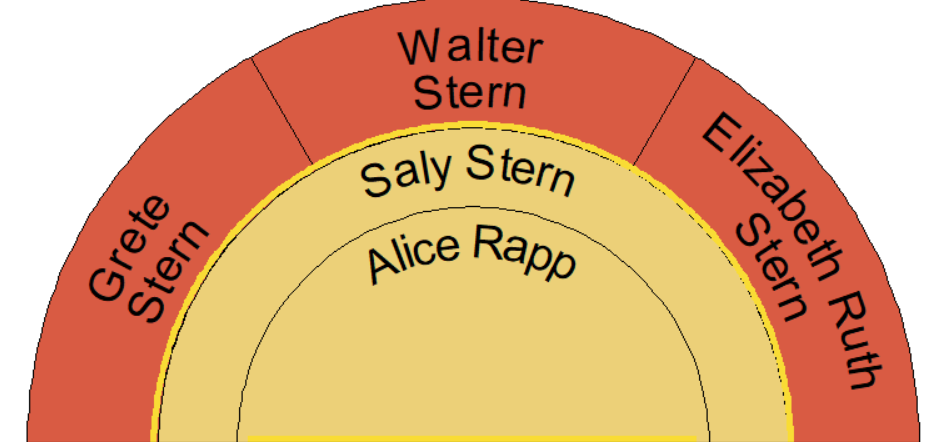
By 1939, Helmina, her daughter Alice and son-in-law Saly and their daughter Grete were living in Harrow, Middlesex, England. Saly reported on the 1939 England and Wales Register that he was a refugee and thus not allowed to do business. Grete was a secretary for a leather goods manufacturer. All four family members were living in one household along with a housemaid.

The National Archives; Kew, London, England; 1939 Register; Reference: RG 101/799H
Enumeration District: BIHB, Ancestry.com. 1939 England and Wales Register

Alice and Saly Stern’s son Walter Stern had instead immigrated to the United States. According to his declaration of intention to become a US citizen, he arrived from Germany to New York on May 16, 1938, and was working as a shipping clerk when he filed his declaration on August 2, 1938.  He was living on Wadsworth Avenue in New York City in the Washington Heights neighborhood where so many German Jewish refugees settled in the 1930s and 1940s. (In yet another small world coincidence, my husband lived on Wadsworth Avenue in his early childhood, although his parents were not German Jewish refugees.)

The National Archives at Philadelphia; Philadelphia, Pennsylvania; NAI Title: Declarations of Intention for Citizenship, 1/19/1842 – 10/29/1959; NAI Number: 4713410; Record Group Title: Records of District Courts of the United States, 1685-2009; Record Group Number: 21
Description: (Roll 539) Declarations of Intention for Citizenship, 1842-1959 (No 417601-418600)
Ancestry.com. New York, State and Federal Naturalization Records, 1794-1943

Although I cannot find any record showing that Alice and Saly’s daughter Elizabeth was with them in England, I believe she must have been living there because on March 27, 1940, Alice, Saly, and Elizabeth all joined Walter in the United States. Strangely, this ship manifest shows all three sailing to New York, but Saly is listed separately and with a different English address.

Ancestry.com. UK and Ireland, Outward Passenger Lists, 1890-1960

On their US ship manifest, Alice and her daughter Elizabeth are again listed together, but Saly is listed on a different page. They all, however, were on the same ship arriving at the same time. And Alice’s declaration of intention shows that she and Saly arrived together and were residing together in New York on Ft. Washington Avenue, in the Washington Heights neighborhood where Walter had been residing in 1938.

Alice Stern, declaration of intention, The National Archives at Philadelphia; Philadelphia, Pennsylvania; NAI Title: Declarations of Intention for Citizenship, 1/19/1842 – 10/29/1959; NAI Number: 4713410; Record Group Title: Records of District Courts of the United States, 1685-2009; Record Group Number: 21,  (Roll 590) Declarations of Intention for Citizenship, 1842-1959 (No 463201-464100), Ancestry.com. New York, State and Federal Naturalization Records, 1794-1943

But the ship manifests for Alice, Elizabeth, and Saly report that by the time of their arrival in the spring of 1940, Walter was living in Washington DC.

However, when Walter registered for the World War II draft in October 1940, he was back living in New York. His registration card has three New York City addresses, all crossed out, but lists his father Saly as his contact person, residing on Ft. Washington Avenue.

Walter Stern, World War II draft registration, Ancestry.com. U.S. WWII Draft Cards Young Men, 1940-1947

Saly Stern’s draft registration, filed on April 26, 1942, two years after that of Walter, shows that he was then self-employed as a salesman and living at 612 West 188th Street in New York with his wife Alice.

Saly Stern, World War II draft registration, The National Archives at St. Louis; St. Louis, Missouri; Record Group Title: Records of the Selective Service System; Record Group Number: 147
Ancestry.com. U.S., World War II Draft Registration Cards, 1942

The following year their younger daughter Elizabeth Stern married Gerhard Hirsch, another German Jewish refugee, on March 28, 1943, in New York. Gerhard was born on September 24, 1908, in Berlin, and immigrated to the US in 1938.1

Meanwhile, Saly and Alice’s older daughter Grete Stern remained in England, as Alice reported on her naturalization papers, as did Alice’s mother Helmina Goldschmidt Rapp. Helmina died in England in July 1941, not long after her children in England had all left for the US.  She was 77 years old.2

Saly Stern died in New York on December 7, 1946.3 He was 69 years old. He had lived long enough to see most of his family settle safely in the US, except for his daughter Grete, who’d remained in England. Unfortunately he did not live to see Grete’s wedding. In 1948, Grete Stern married Kurt Lissauer, who was also a German Jewish refugee. He was born in Luebeck, Germany, on January 10, 1909. They were married in England.4

Elizabeth Stern’s marriage to Gerhard Hirsch did not last very long. She remarried in 1973 when she was 54; her second husband was Paul Dannheisser, a widower who was also a refugee from Germany.

Alice Rapp Stern outlived her husband by almost thirty years. She died in New York on January 28, 1974, at the age of 83.5 She was survived by her three children, Grete, Walter, and Elizabeth, all of whom died within a year of each other. Grete and Walter both died in October 1996; Grete was 85,6 Walter was almost 79.7 Their younger sister Elizabeth died just four months later on February 13, 1997.8 She had just turned 78. None of the three siblings had children, so there are no descendants.

The next post will tell the story of Alice Rapp Stern’s brother and Helmina Goldschmidt Rapp’s son, Arthur David Leopold Rapp, and his family.


  1.  Elizabeth Stern, Marriage License Date: 24 Mar 1943
    Marriage License Place: Manhattan, New York City, New York, USA
    Spouse: Gerhard Hirsch, License Number: 5751, New York City Municipal Archives; New York, New York; Borough: Manhattan; Volume Number: 3, Source Information
    Ancestry.com. New York, New York, Marriage License Indexes, 1907-2018. Also, Elizabeth’s declaration of intention, “New York, Southern District, U.S District Court Naturalization Records, 1824-1946,” database with images, FamilySearch (https://familysearch.org/ark:/61903/3:1:3QS7-99HD-2S59?cc=2060123&wc=M5P7-PTY%3A351618501 : 14 August 2019), Petitions for naturalization and petition evidence 1945 box 1026, no 515801-516050 > image 728 of 983; citing NARA microfilm publication M1972, Southern District of New York Petitions for Naturalization, 1897-1944. Records of District Courts of the United States, 1685 – 2009, RG 21. National Archives at New York. ↩
  2.  Helmina Rapp, Death Age: 78, Birth Date: abt 1863, Registration Date: Jul 1941
    Registration Quarter: Jul-Aug-Sep, Registration district: Hendon, Inferred County: Middlesex, Volume: 3a, Page: 656, General Register Office; United Kingdom; Volume: 3a; Page: 656, Ancestry.com. England & Wales, Civil Registration Death Index, 1916-2007 ↩
  3.  Saly Stern, Marital status: Married, Age: 69, Birth Date: 26 Nov 1877, Birth Place: Germany, Residence Street Address: 612 W 188 St, Residence Place: New York
    Death Date: 7 Dec 1946, Death Street Address: 612 W 188th St, Death Place: New York City, Manhattan, New York, USA, Occupation: Clerk Stock’s, Father’s Birth Place: Germany, Mother’s Birth Place: Germany, Father: Marcus Stern, Mother: Francisca Stern, Spouse: Alice, Informant: Alice Stern, Informant Relationship: Wife
    Executor: Alice Stern, Executor Relationship: Wife, Certificate Number: 25862
    New York City Department of Records & Information Services; New York City, New York; New York City Death Certificates; Borough: Manhattan; Year: 1946, Ancestry.com. New York, New York, Index to Death Certificates, 1862-1948 ↩
  4. Greta Stern, Registration Date: Apr 1948, Registration Quarter: Apr-May-Jun
    Registration district: Hendon, Inferred County: Middlesex, Spouse: Kurt Lissauer
    Volume Number: 5e, Page Number: 1260, General Register Office; United Kingdom; Volume: 5e; Page: 1260, Ancestry.com. England & Wales, Civil Registration Marriage Index, 1916-2005. Kurt Lissauer, Enemy Alien Registration, The National Archives; Kew, London, England; HO 396 WW2 Internees (Aliens) Index Cards 1939-1947; Reference Number: HO 396/56, Piece Number Description: 056: Internees at Liberty in UK 1939-1942: Lir-Lov, Ancestry.com. UK, WWII Alien Internees, 1939-1945 ↩
  5.  Alice Stern, Social Security Number: 051-18-8391, Birth Date: 4 Oct 1890
    Issue Year: Before 1951, Issue State: New York,Last Residence: 10040, New York, New York, New York, USA, Death Date: Jan 1974, Social Security Administration; Washington D.C., USA; Social Security Death Index, Master File, Ancestry.com. U.S., Social Security Death Index, 1935-2014 ↩
  6.  Grete Lissauer, Death Age: 85, Birth Date: 16 Sep 1911, Registration Date: Oct 1996, Registration district: Hendon, Inferred County: Greater London, Register Number: A41C, District and Subdistrict: 2351A, Entry Number: 108, General Register Office; United Kingdom, Ancestry.com. England & Wales, Civil Registration Death Index, 1916-2007 ↩
  7. Walter Stern, Gender: Male, Birth Date: 1918, Death Date: 9 Oct 1996
    Claim Date: 2 Dec 1970, SSN: 056162574, Death Certificate Number: 350302
    Ancestry.com. U.S., Social Security Applications and Claims Index, 1936-2007 ↩
  8. Elizabeth Ruth Stern, [Elizabeth Ruthhenrietta Hirsch], [Elizabeth Dannheisser]
    Gender: Female, Race: White, Birth Date: 21 Jan 1919, Birth Place: Frankfurt A, Federal Republic of Germany, Death Date: 13 Feb 1997, Father: Sally Stern
    Mother: Alice Rapp, SSN: 127144714, Ancestry.com. U.S., Social Security Applications and Claims Index, 1936-2007 ↩

How The Nazis Destroyed My Cousin Moritz Oppenheimer

Last time I shared the documents my cousin Wolfgang Seligmann found at the Wiesbaden archives about our mutual cousin Martha Oppenheimer Florsheimer. Today I want to share the documents Wolfgang found about Martha’s brother Moritz James Oppenheimer. Martha and Moritz were my great-grandmother Eva Seligman Cohen’s first cousins; they were the children of Pauline Seligmann, the sister of my great-great-grandfather Bernard Seligman.

As I’ve previously written, Moritz Oppenheimer was born on June 10, 1879, in Butzbach, Germany. Sometime before 1902, Moritz married Emma Katherina Neuhoff, who was not Jewish. Moritz and Emma had two children: Paula (1902) and Walter (1904). Moritz owned a paper factory in Frankfurt before the war as well as a large and very successful horse stud farm where thoroughbred horses were raised and sold. As his granddaughter Angelika reported to me, Moritz was a member of the board of directors of several companies throughout Germany. He was a very successful and wealthy man.

Emma Neuhoff and Moritz James Oppenheimer
photo courtesy of Angelika Oppenheimer

Moritz was arrested in the autumn of 1933. His marriage to Emma was dissolved because mixed marriages were not legal under the Nazi regime. Then his assets including his horse farm were confiscated and put into the hands of an administrator, who sold them at far below their market value. According to his son Walter, Moritz had been in good health up to this time, but these actions caused him to become quite ill. After being visited by Gestapo, he reportedly took his own life on May 4, 1941.

Wolfgang found three documents that illustrate just how desperate Moritz’s situation was. I am deeply grateful to Cathy Meder-Dempsey of the blog, Opening Doors in Brick Walls, who translated all three of these documents.

The first is a letter written by Moritz in early 1941 regarding his taxes for the year 1940.

Letter by Moritz James Oppenheimer 1941

Transcribing and translating this letter presented some real challenges because, as you can see, the first several letters of the first word on the left side of the letter were not visible, but somehow Cathy was able to make sense of it all.

Here is her transcription and her translation of the letter:

[…] 10.6.1879 in Butzbach (Hessen)

[…]kenkarte H 0240/39

An das Finanzamt Wiesbaden

Im Jahre 1933 wurde über mein Vermögen das Konkurs

[verfahren] eröffnet (Frankfurt a. Main)

[Ich] besitze weder irgend welches Vermögen noch Wertgegen-

[stande], noch Möbel, Wäsche, etc.

Im Jahre 1934 wurde ich in Folge schwerer Erkrankung,

[…Er]weiterung und Verlagerung, Wasserbildung, Angina pektoris

[…auf]störungen, Kopfbeschwerden etc. nach Bad-Nanheim

[…] Dort war ich bis vergangenes Jahr in ärztlicher

behandlung und Aufsicht.

[…] schwerer Gelenkrheumatismus hinzutrat, kam ich

[ein art]ztliche Verordnung nach Wiesbaden zur Kur.

[Einko]mmen aus irgend welchen Möglichkeiten habe ich

[nicht]. Ich wohne möbliert.

[…]welche Neuanschaffungen habe nicht seit 1933 in Folge

meiner Mittellosigkeit nicht gemacht.

[Meine]Lebensunterhalt sowie Arzt, Apotheke, Zimmer und Kur

hatte ich aus Unterstützungen von ?200 Mk (monatlich)

[nur] von Verwandten gegeben werden.

[Diese] Zuwendungen stammen aus bereits versteuerten

[…]gen, Einkünfte meiner Verwandten.

Nach wie vor bin ich schwer erkrankt

[Meine] Ehe was Mischehe, Frau Arierin. Meine Kinder sind

[…]ft, konfirmiert und gelten nicht als Juden.

[…] ich eine andere Steuerklärung abgeben müssen,

[…] um Zusendung eines Formulares.

Moritz Israel Oppenheimer

Weisbaden

Pagenstecherstrasse 4 (?? Marx)

Zur Abgabe einer (Einkommen) Eink. Erklarung

fur 1940 aufgefordert.

Translation:

To the tax office in Wiesbaden

In 1933, bankruptcy was declared on my assets (Frankfurt a. Main). I have neither assets nor other things of value, furniture, laundry, etc. In 1934, as a result of serious illness, (enlargement and relocation – ??), water retention, angina pectoris, (other) disorders, headache etc. I was sent to Bad-Nanheim. Until last year I was there under medical treatment and supervision. As severe rheumatoid arthritis set in, I received medical orders to take a cure in Wiesbaden. I don’t have any income possibilities and live in a furnished place. No new acquisitions have been made since 1933 as I am penniless. My livelihood as well as doctor, pharmacy, room and spa expenses have been supported with [?] 200 Mk (monthly) from my relatives. This support came from already taxed income of my relatives. I am still seriously ill.

My marriage was a mixed marriage, my wife was Aryan. My children are ____, confirmed and are not considered Jews. [I assume that the word that we cannot see was Mischling.]

I have to file another tax return, and request a form be sent.

Signature and address

Notation in pencil: He was asked to submit a declaration of income for the year 1940.

Cathy thought he was writing to get the correct tax form for someone in his financial position.

Although I had read his son Walter’s description of Moritz’s financial and medical condition, reading this letter written by Moritz himself was just heartbreaking. Here was a man who had found incredible success in business brought down to being very sick and penniless.

The second document I received from Wolfgang was a letter written by Walter Oppenheimer, Moritz’s son.

Letter by Walter Oppenheimer 1941

Cathy translated the typed section, written by Walter, as follows:

In an immediate polite reply to your letter of the 15th of this month that I received only today, I inform you that my father died on May 4th, 1941. Who the legal heirs are now I am not able to tell you as the two children, my sister and I, refused the inheritance in a publicly certified declaration before the local court.

Heil Hitler!

Walter Georg Oppenheimer

I was very disturbed to see that Walter had used “Heil Hitler” in this letter, but Cathy explained that that was to be expected in a letter to officials during Hitler’s reign. Nevertheless, it made the hair on my arms stand to see a relative of mine use that expression.

I wondered why Walter and his sister Paula would have refused the inheritance, and Cathy suggested that it was a means of avoiding taking on their father’s debts since there were apparently no assets to inherit.

The handwritten notes on the bottom of the letter appear to have been made by some official commenting on the status of Moritz’s inheritance, as transcribed and translated by Cathy:

Anfrage beim Amtsgericht Frankfurt am Main

wer Nachlassverwalter ist, und

wer die gesetzlichen Erben sind,

nachdem die Kinder ausgeschlagen

haben.

Translation:

Inquiry to the district court Frankfurt am Main

who is administrator, and who are the legal heirs, after the children refused inheritance.


An das Amtsgericht ffm (Frankfurt am Main)

Der fruher dort wohnhaft gewesene Moritz Israel Oppenheimer

geb. am 10.6.1879 ist hier am 4.5.41 verstorben.

Der Sohn des selbend Dr. Walter Georg Oppenheimer ffm. Schumannstr. 47 wohnhaft, hat mitgeteilt daß seine Schwester und er ? haben.

Ich bitte nur ____ von 2 zu 4 Wochen.

Translation

To the district court Frankfurt am Main

Moritz Israel Oppenheimer, who previously lived there, born on June 10, 1879 died here on May 4, 1941. The son of the same, Dr. Walter Georg Oppenheimer, a resident of Frankfurt am Main, Schumannstrasse 47, announced that his sister and he (symbols? probably mean disclaimed inheritance). I only ask ____ from 2 to 4 weeks.

Finally, the third document Wolfgang found in the Wiesbaden archives about Moritz is this handwritten page of notes about Moritz’s “income” for the first few months of 1941 before his death:

Oppenheimer ist am 4.5.41 gestorben.

Eink. 41 wurde geschätzt und wie folgt errechnet: freiwillige zuwandungen seines Sohnes 1940 = 4060 Rm : 12 = 338

von 1.1 – 30.4.41 je 338 Rm = 1352 Rm

                                       4x

./. Sondereingaben 4 x 15   =       60                                                1292

                                                   -60         1432 Rm

angaben des Nachlasspflegers Spring:  Bl. 22

__                                    

Translation

Oppenheimer died on 4.5.41. Income for 1941 was estimated and calculated as follows: voluntary contributions of his son 1940 = 4060 Rm : 12 = 338 per monthfrom 1.1 – 30.4.41 338 Rm = 1352 Rm

                                    4x

./. Special income 4 x 15           – 60

                                                 1292

                                                    -60      1432 Rm 

information from the estate administrator Spring: Bl. 22

I’m not really sure what to make of all the numbers or the value in today’s money. I also have no idea what were the practical consequences of these calculations. Did Moritz (or his estate) owe taxes based on the money he was getting from his son?

What I think I can safely infer from these last two documents is that even after seizing all of the assets of Moritz Oppenheimer and driving him into bankruptcy, poor health, and ultimately suicide, the German government was still looking for some way to collect more money from his family.

Thank you again to Cathy Meder-Dempsey for her hard work in transcribing and translating these difficult to read documents. They add insights into the awful suffering of my cousin Moritz Oppenheimer.

Moritz Oppenheimer

UPDATE: A few readers asked me what I know about Emma Neuhoff-Oppenheimer’s life after Moritz died in 1941. I asked Angelika, Emma’s granddaughter, and she sent me this article:

Emma Neuhoff article-page-001

Most of it is about her life as a horseback rider, but the last part of the article addresses her life during and after the Nazi era. I will translate just that section:

“Ms. Emma never lost her dignity and discipline. Even in the bitter years of the ghost, when the beloved man fell victim to the Nazi regime, when her life became dark, often lonely. A courage deeply rooted in her and the quiet cheerfulness accompanied her to the age that she now enjoys with good reading with the two children and children-in-law, the two grandchildren, and many loyal friends.”

Emma Neuhoff-Oppenheimer died on February 2, 1968, at the age of 86, three years after this article was written. Angelika also told me that her grandmother owned a shop in Frankfurt and played the piano.


Seligmann Updates: Martha Oppenheimer Florsheimer

Turning for a bit from the Goldschmidt family, I need to discuss some updates involving the Seligmann family. Some of this information came from my cousin Wolfgang, some from Aaron Knappstein.  In this post I will look at some documents that Wolfgang located about Martha Oppenheimer Florsheimer, and then in the next post some relating to her brother Moritz Oppenheimer.

Martha and Moritz were the children of Pauline Seligmann and Maier Oppenheimer. Pauline was the sister of my great-great-grandfather Bernard Seligman and Wolfgang’s great-grandfather August Seligmann. So Martha and Moritz were my first cousins, three times removed, or the first cousins of my great-grandmother Eva Seligman Cohen. I’ve written about them both before.

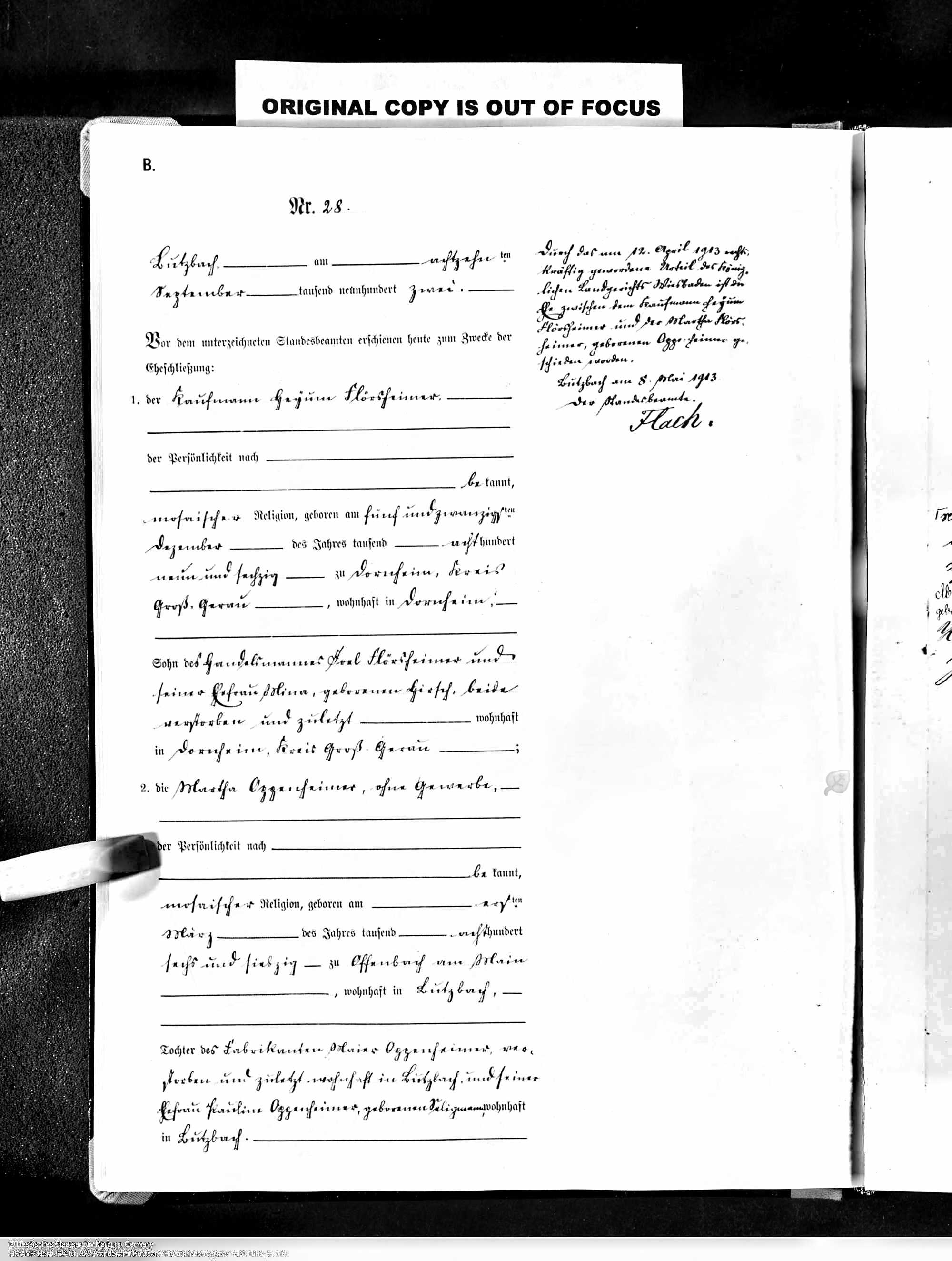
Martha married Heinrich Florsheimer on September 18, 1902, in Butzbach, Germany. They had two children, Gertrud and Paul. Martha and Heinrich were divorced on April 12, 1913. Martha was sent to the concentration camp at Theriesenstadt on September 2, 1942, and was released from there on July 8, 1945. She returned to Wiesbaden, where she’d been living before the Holocaust, only to learn that both of her children had been murdered by the Nazis, Gertrud at Sobibor and Paul at Majdanek.

The earliest of the new documents that Wolfgang located at the archives in Wiesbaden about Martha was dated March 7, 1940, and appears to be a form Martha submitted to report her assets and expenses. She appears to have reported no assets, and under expenses she reported 78.50 Reich Marks a month (I’m not sure what the 65 refers to) for rent, heat, gas, electricity, and water.

On page 2 of this document, Martha wrote the following note:

Ich werde unterstützt von meiner bis jetzt beschäftigte Tochter und meinem beschäftigt gewesenen Sohn.

Matthias Steinke of the German Genealogy group kindly translated this for me as, “I am supported by my still working daughter and my formerly employed son.”


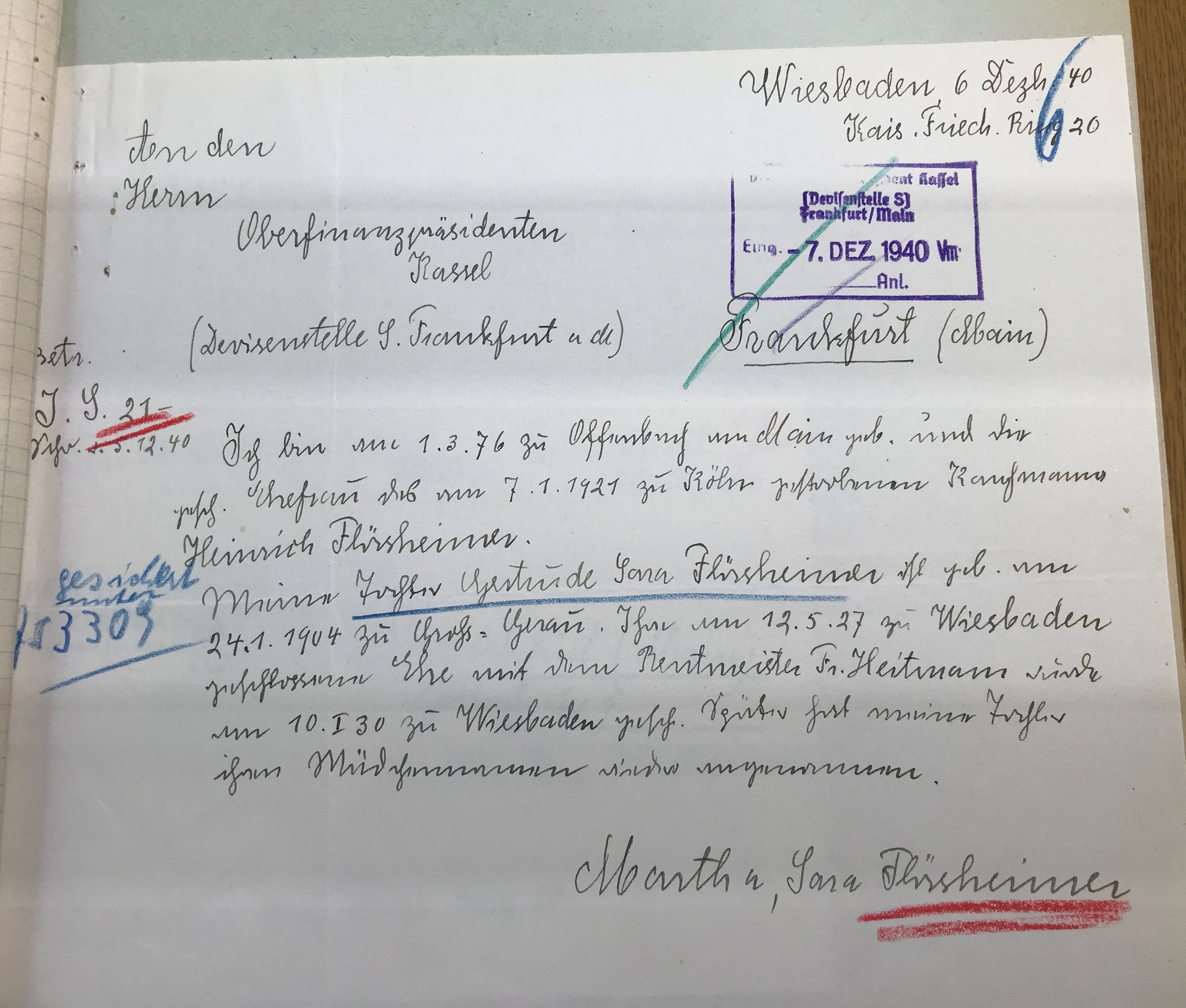
On December 6, 1940, Martha wrote this note in Wiesbaden:

Thank you to the members of the German Genealogy group who worked to decipher this difficult handwriting. This was the translation done by Matthias Steinke:

Wiesbaden, 6th December 40

Kaiser Friedrich Ring 20

I am at the 1st march 1876 in Offenbach/Main born and the wife of the at the 7th January 1921 in Cologne deceased merchant Heinrich Flörsheimer.

My daughter Gertrude Sara Flörsheimer was born at the 24th january 1904 in Gross Gerau. Her at the 12th May 1927 in Wiesbaden happened matrimony with the administrator Fr. Heitmann was at the 10th January 1930 in Wiesbaden divorced. My daughter took her maiden-name back later.

Martha Sara Flörsheimer

I am not sure who this note was written to or for what purpose, except perhaps to register their names and marital status with the officials in Wiesbaden. Or perhaps it was a follow-up to the earlier document seen above.

This typewritten letter is dated March 23, 1943, three years later:

We hereby indicate that the aforementioned Jewish woman has been restricted due to your security order from 9 14 40 to 25 8 42, because she expected the receipt of a larger payment, coming from furniture sales. On 4 9 42, the only entry received the amount of RM 594. Due to the disposition of the Governmental Practitioner Wiesbaden from 27 8 42 I 9-337 / 42, the fortune of this Jewish woman has been confiscated in favor of the Reich. We have therefore transferred the above amount to Finanzkasse Wiesbaden under file number O. 5205/494. Heil Hitler.

I am not sure what all of this means, but I got the gist of this—that all of Martha’s assets had been confiscated by the Nazis.

Aaron Knappstein located Martha’s death record:

One thing of note on these forms is that Martha is identified as a widow, not as a divorcee, even though her marriage record records the divorce:

Martha Oppenheimer marriage and divorce record, Hessisches Hauptstaatsarchiv; Wiesbaden, Deutschland; Bestand: 924; Laufende Nummer: 323
Source Information
Ancestry.com. Hesse, Germany, Marriages, 1849-1930

And interestingly she did not hide her daughter’s status as a divorcee, as seen above. So why hide hers?

Finally, Aaron also sent me a photograph of Heinrich Florsheimer’s headstone, which confirms the date of death reported by his ex-wife Martha in 1940:

These extra documents fill in some of the gaps in Martha’s life. The documents from the Nazi era are particularly poignant. Martha lost so much. Of course, losing her children was the most horrific loss, but she also lost all her property to the Nazis.


A Photo Essay of the Family of Selma Loewenthal Schwabacher

Another cousin who found my blog during these pandemic days is my fifth cousin, once removed, Carrie Schwabacher. She is the granddaughter of Gerhard Schwabacher, the great-granddaughter of Selma Loewenthal Schwabacher, great-great-granddaughter of Kiele Stern Loewenthal, three times great granddaughter of Sarah Goldschmidt Stern, and four-times great-granddaughter of Meyer Goldschmidt.

Carrie kindly shared with me these wonderful photographs as well as some heartwarming stories about her family. They start with her great-great-grandmother, Kiele (Caroline) Stern Loewenthal, the daughter of Sarah Goldschmidt and Salomon Stern, wife of Abraham Loewenthal. I wrote about Kiele here and here.

Kiele Stern Loewenthal.
Courtesy of her family

Here is a lovely photograph of Kiele and Abraham Loewenthal’s daughter, Selma, as a young woman; I see a strong resemblance to her mother.

Selma Loewenthal
Courtesy of her family

Selma married Nathan Schwabacher:

Nathan Schwabacher Courtesy of the Schwabacher family

And they had three children. Their daughter Alice was the oldest:

Alice Schwabacher Courtesy of the Schwabacher family

Alice was followed by Julius Alfred Schwabacher:

Julius Alfred Schwabacher Courtesy of the Schwabacher family

Gerhard Schwabacher, Carrie’s grandfather, was Selma and Nathan’s youngest child:

Gerhard Schwabacher
Courtesy of the family

The two sons look remarkably similar to each other and to their father Nathan.

Alice Schwabacher married David Weinstein (later Wenten) and had one child, Wolfgang, depicted here as a young boy with his dog:

Wolfgang Weinstein and dog

Julius Schwabacher married Margaret Wuertenberg and had one child, Eva Lore, the adorable little girl shown here:

Eva Lore Schwabacher
Courtesy of the family

This photograph of Selma Loewenthal Schwabacher and her brother Julius Loewenthal is undated, but must have been taken before 1936 when Julius left for the United States. Selma died in 1937 in Berlin.

Selma Loewenthal Schwabacher and brother Julius Loewenthal
Courtesy of the family

Here is a closer one of Selma, probably taken around the same time:

The remaining photographs that Carrie shared with me appear to have been taken after the family immigrated to the United States. Their full story has been told here, so I won’t tell it again, but will share these photographs of the Schwabacher family in their new country and some of Carrie’s memories of her extended family.

She has wonderful memories of her grandparents, as she shared with me: “I have such great memories of my grand parents even though they died when I was 7. Christmas was a very special time – like a scene from the Nutcracker. As children, we celebrated Hanukkah, Christmas and Epiphany ( my mom’s side of the family is Russian Orthodox). We got presents for months, or it seemed like it.” She also wrote that her Opa, Gerhard Schwabacher, always gave each of his grandchildren a quarter every time he saw them.

Other holidays were spent with her great-uncle Julius Schwabacher, who became Fred Wenten in the US, and his wife Else in Proctor, Vermont: Fred and Elsa owned an Inn in Proctor Vt. The entire family spent a few holidays there as well. The toasts would go on for so long that someone would finally say “let the children eat their fruit cocktails before they fall asleep”. And then, dinner would start.”

Here’s a photograph of Fred Wenten in the US:

Fred Wenten (born Julius Alfred Schwabacher)
Courtesy of the family

Fred’s daughter Eva Lore was also a favorite of Carrie. Eva Lore married Henry Corton in 1951. Carrie wrote this about them:

“Henry was a fabulous dancer and would sometimes break into buck and wing ( tap dancing) in the kitchen even when he was old. We visited then often when they lived in Jamaica, Queens. We always went out for walks. We met Bella Abzug at the Cloisters in NY. He was very fond of Pavorotti and considered him a “distant cousin“. It got him back stage at the Met many times. Eva and Henri took us to Ringling Bro’s. And Barnum & Bailey Circus and the Ice Capades when we were little. We visited Eva Lore in LaGuna Hills, helped her pack and move to Baltimore, and took her to her first McDonalds meal. The “Apple Strudel “ was her favorite. Apple Pie. Even at 79, she was booking her own travel on her computer. They never had children, but spoiled us.”

Here are some of the photographs of Eva Lore and Henry that Carrie shared with me:

Eva Lore Schwabacher and Henry Corton Courtesy of the family

Eva Lore Schwabacher Corton Courtesy of the family

Eva Lore Schwabacher Corton Courtesy of the family

Eva Lore and Henry Corton Courtesy of the family

Carrie also has warm memories of her great-aunt Alice Schwabacher Weinstein (Wenten in the US):

“We went to visit Tanta Alice for the holidays every year in Washington Heights, NY. I always wanted to take a nap, because I loved the big square Feather pillows on the bed. She always had such great treats for us, German delicacies. She was extremely socially active. Wolf would remark that he had to make an appointment just to visit his mother. We had her 90 th birthday party at window on the worlds – top of the World Trade Center. It was incredible to meet so many people originally named Schwabacher.”

This photograph shows Alice with her son Wolfgang and his wife Ruth.

Alice Schwabacher Wenten Kingsley, Wolfgang Wenten, Ruth Pollinger Wenten
Courtesy of the family

Finally, this is a photograph of the three Schwabacher siblings and their spouses taken in the US:

Arthur Kingsley, Alice Schwabacher Kingsley, Julius (Fred Wenten) Schwabacher, Else Wenten, Alice Ferron Schwabacher, Gerhard Schwabacher
Courtesy of the family

I am extremely grateful to my cousin Carrie for sharing her memories and these photographs. She really has brought to life this strong and loving family who escaped from Germany and started a wonderful new life in the United States.

Hermann Gutmann Becomes Dennis Goodman: An Oral History, Part II

By the spring of 1940, Hermann Gutmann was seventeen years old and had been in England and separated from his parents since the fall of 1936.  He had completed his secondary education and had been working at a leather factory in Lancashire in the north of England since February 1940 and moved to London that May.1

On July 2, 1940, at 6 am he heard a knock on his door. The police told him to pack his bags and come with them to the police station. He protested, but to no avail, and along with many other German Jewish “enemy aliens,” he was taken to a camp, Huyton Camp, and housed in a tent with other young refugees from Nazi Germany. All those who were under eighteen, including Hermann, were told they were being taken out of England. He again protested and was told by the commanding officer that those leaving England would have the best chance of survival because England was likely to lose the war.

As the internees boarded the HMT Dunera on July 10, 1940, all their personal possessions were taken and never returned. The Jewish internees were placed in the hold in the rear of the ship and kept there by barbed wire fencing. They were only allowed up on the deck for thirty minutes a day for exercise where they were barefooted and often stepping on the broken beer bottles left behind by the guards, whom Hermann described as “football hooligans.” The internees slept on the hard floor and had open toilet stalls that he described as “awful.”  Hermann described the morale of the younger internees as fairly good, but said that those who were older had a much harder time and that there were even a few suicides during their voyage. There were also Nazi and Italian internees on the ship, but they were kept in a different location.

HMT Dunera. Not stated in the AWM record / Public domain

The internees had no idea where they were going until they arrived in Australia on September 6, 1940. Once in Australia, they were sent to New South Wales and housed at the Hay Internment Camp. There were about two thousand internees kept there, many of whom had been successful professionals—doctors, lawyers, professors, and so on. They formed their own government and even printed their own money. Hermann distributed newspapers and even started a Boy Scout group that was officially recognized by the London headquarters of the Boy Scouts.

They lived in huts, about forty to a hut, and conditions were good. Hermann noted several times that as a young man (he was seventeen), he was not as uncomfortable as those who were older, and he didn’t mind some of the living conditions. When asked whether he now resented having been interned during this time, he said no—that he understood it was done without much thought based on fear when the war started and that it was an awful waste of time and money, but that he did not feel any resentment towards the British for their actions.

In the fall of 1941, Hermann volunteered to join the British military as a means of getting out of the internment camp. He left Austrialia on October 13, 1941, and arrived back in England on November 28, 1941, just over a week before Pearl Harbor. He and other Jewish refugees were given no choice as to where to serve and were assigned to the Pioneer Corps, a corps assigned “light engineering tasks [that] included building anti-aircraft emplacements on the Home Front, working on the Mulberry harbours for D-Day, and serving during beach assaults in France and Italy. Pioneers also carried stretchers, built airfields, repaired railways, and moved stores and supplies.”

Pioneer Corps clearing rubble, Ministry of Information Photo Division Photographer / Public domain

It was during this time that his commanding officer asked him to change his name to something less German-sounding. Hermann chose the name Dennis John Goodman, his first name for a friend who had been killed in the war and Goodman as an Anglicized version of Gutmann. In the interview, he commented that he now regretted that he never returned to his birth name Hermann Gutmann as it had a very long history in his family.

Dennis was not content being in the Pioneer Corps because he wanted to be fighting the Nazis. In 1943, British policy changed, and Jewish German refugees like Dennis were allowed to serve more directly in combat. Dennis joined a tank unit and was on the beach at Normandy three days after D-Day, that is, on June 9, 1944. He ended up fighting in France, Belgium, the Netherlands, and finally in Germany. He was involved in many difficult and dangerous battles, made more dangerous by the fact that the English tanks were outmatched by the German Tiger Tanks they were facing. He experienced some very close encounters with death or capture by the Germans.

The interviewer asked him how he felt when he entered Germany, his country of birth, and fought on German soil. Dennis commented that “by that time I felt more English than German” and that he had no difficulty facing his former countrymen in battle. When the war ended, he was in Berlin for the British Victory Parade on July 21, 1945.

British Victory Parade in Berlin, National Archives and Records Administration / Public domain

By that time he already knew about the concentration camps.  He was given compassionate leave to go to Amsterdam to learn what had happened to his parents and learned of the deportation to and murder at Sobibor. In the interview, Dennis mentioned that at that time he learned that his grandmother had been hidden in the northern part of Holland and had survived.

I checked to see which grandmother, and it had to be his maternal grandmother, Hedwig Goldschmidt, because his paternal grandmother had died in 1932. I have no wartime records for Hedwig after March 15, 1938, when she was a passenger coming to England from Amsterdam.2 I initially thought that meant that she had moved to England at that time, but it appears from Hermann’s information that she had returned to Amsterdam, perhaps after visiting him in England.

Dennis remained in Germany after the war and joined the Review and Interrogation staff in Neuengamme, near Hamburg, where he was involved in interrogating Nazis about war crimes. He was struck by the ordinariness of the people who committed these crimes and their weak excuses for what they did. He also found some of them very arrogant. Several times during the interview, Dennis made the point that it was well known throughout Germany that Jews were being persecuted and that those who afterwards claimed that they hadn’t been aware of what was happening were either lying or repressing what they’d known.

In 1947, Dennis was discharged from the military and returned to England. He married a Polish-born Holocaust survivor after the war and had three children. I don’t know much about his life after the war, but did find several immigration documents from Brazil, starting in 1949, suggesting he might have been involved in international business or perhaps visiting family members who had immigrated to Brazil.

Ancestry.com. Rio de Janeiro, Brazil, Immigration Cards, 1900-1965. Original data: “Rio de Janeiro Brazil, Immigration Cards, 1900-1965”. FamilySearch, Salt Lake City, Utah, 2013.

Dennis John Goodman, born Hermann Gutmann, died in England in 2007. He had lived an extraordinary life, leaving his parents and homeland as a thirteen year old boy, being interned for over a year in Australia as an “enemy alien,” and then fighting valiantly against the Nazis for several years including post-war interrogation of war criminals. His parents had been murdered at Sobibor. He had every right to be an angry, resentful man.

But listening to his voice in the oral history interview, I detected no resentment towards his adopted country, despite the internment. Certainly he harbored anger with the Nazis for what they did to his parents and all the Jews in Europe and continuing bewilderment over the German citizenry’s acquiescence to it all. But I did not come away from the interview thinking of him as bitter or defeated; instead I heard a then 72 year old man who looked back on his life with pride in his ability to endure and succeed against all odds and in his strength and independence even as a young man. His story will stay with me forever.


  1. These facts come almost entirely from the oral history interview of Dennis Goodman, aka Hermann Gutmann, found on the Imperial War Museum website. Some of the dates in this post were found in an article written by his daughter, Naomi Levy, and published in the AJR [Association of Jewish Refugees] Journal of December 2018, on page 11, and found here. ↩
  2.  Hedwig Goldschmidt, Arrival Age: 61, Birth Date: abt 1877, Port of Departure: New York, New York, United States, Arrival Date: 15 Mar 1938, Port of Arrival: Plymouth, England, Ports of Voyage: New York, Ship Name: Washington, Shipping Line: United States Line, Official Number: 232210, The National Archives of the UK; Kew, Surrey, England; Board of Trade: Commercial and Statistical Department and successors: Inwards Passenger Lists.; Class: BT26; Piece: 1158, Ancestry.com. UK and Ireland, Incoming Passenger Lists, 1878-1960 ↩

Hermann Gutmann, Child Refugee from the Nazis: An Oral History

As we saw last time, my cousin Else Goldschmidt Gutmann, daughter of Marcel Goldschmidt and Hedwig Goldschmidt, was murdered by the Nazis in 1943 at the Sobibor concentration camp along with her husband Siegfried Gutmann. They were, however, survived by their son, Hermann Gutmann. His story is captured in a moving and detailed oral history interview that was recorded for the British Imperial War Museums in 1995 and available online here.

The oral history interview is two hours long, and I listened to it in the course of one afternoon. If anyone has the time and the interest to listen, even if just to the first thirty minutes, it will provide insights into the strength and courage of those who escaped Nazi Germany as children. My words cannot possibly capture the emotion and the personality expressed by this man in retelling his life story fifty to sixty years after these tumultuous events. When you listen, the clarity of his memory, his composure, and his strength come shining through. Despite living in England since 1936, he still had the traces of a German accent. I will try and do justice to his story, but again, if you have time, listen to at least some of this interview.

One other editorial explanation. Hermann Gutmann changed his name in 1943 to Dennis John Goodman. I will refer to him as Hermann in discussing the years before that change and then as Dennis for the years after the name change. I hope that’s not too confusing.

All the facts in this post come directly from the oral history interview with Dennis John Goodman at the Imperial War Museum, Catalogue 15101.


Hermann Gutmann’s father Siegfried Gutmann was from a family of bankers in Stuttgart, and after the Stuttgart bank was taken over by a larger bank, Siegfried moved to Frankfurt to work for a bank in that city where he met and married Else Goldschmidt. Their only child Hermann Gutmann was born in Frankfurt on February 28, 1923. Hermann believed that the economic circumstances experienced in Germany in the 1920s made his parents reluctant to have more than one child. He described his childhood as a happy middle-class childhood in Frankfurt where his family was actively involved in the Jewish community as well as the general community.

Frankfurt, Germany, 1918,Carl Andreas Abt / Public domain

Hermann experienced anti-Semitism as early as 1931 when he was eight years old and saw people carrying anti-Semitic political posters while marching in the streets of Frankfurt. But things grew much worse after 1933 when Hitler was elected Chancellor. Hermann described himself as an outspoken and opinionated boy who fought back when he was attacked by students for being Jewish. When he finished primary school, his parents could no longer send him to a general secondary school because Jews were banned. Instead they sent him to an excellent Jewish day school where he was one of several hundred students.

But by 1936, his parents were concerned that Hermann would not be able to receive a quality education, and they decided that the best thing to do for their son was to send him to boarding school in England. His father spoke to young Hermann, expressing his fears, given how Hitler had perverted Germany and how their non-Jewish friends had drifted away out of fear.  When asked by the oral history interviewer how he felt about leaving his parents and his home, Hermann responded that he “just had to face it.” His acceptance of this reality seemed remarkable to me, especially given that he was only thirteen at the time.

So on October 5, 1936, thirteen year old Hermann Gutmann traveled to England with a family friend who happened also to be heading to England.  When they arrived in London, a relative met him at the station and made sure he boarded the right train to Brighton, where his new school, a Jewish boarding school called Whittinghame College, was located. He described his first year there as very lonely. He knew just a little English when he arrived, and there were only one or two other German students at the school. More German refugees had arrived by the time he left in 1939.

Thank you to the alumni association of Whittinghame College for permission to use these two photographs.

Hermann is probably in this photograph, but I don’t know which young man he is.

Whitinghame College students, 1939

His parents left Germany for Amsterdam in 1937. The interviewer asked him why his parents hadn’t come to England instead of Amsterdam, and he explained that his father had been offered a job in Amsterdam and that his parents believed they would be safe there. He said that no one anticipated in 1937 that Hitler would later invade the Netherlands and deport Jews to concentration camps. Hermann was able to visit his parents in Amsterdam during this time, and he said that although it was a big adjustment for them and especially for his father, whose new job was not in the banking field, they were reasonably happy living there.

Although Hermann said that he did not enjoy the “monastic existence” of the all-boys boarding school, he stated that he received an excellent education and that he even qualified to matriculate at Cambridge University for the fall of 1939, but “events intervened,” that is, the start of World War II. Once the war started, Hermann also was no longer able to visit his parents.

He finished his time at Whittinghame and obtained a job in a leather manufacturing factory in Lancashire, England, where he worked from February, 1940 until May, 1940. He had been in England for more than three years at that point. He had coped with adjusting to a new country, learning a new language, completing his secondary education at a Jewish boarding school, and enduring the long separation from his parents. In the interview, he commented that he had experienced no hostility in England based on his German background and that people had been very friendly.

But his life was about to change in the spring of 1940.