
We spent our first day and a half in Germany in the beautiful and ancient city of Mainz, a city with a population of about 200,000 people and a city that was once an important center for Jewish learning and culture. Our visit there created some cognitive dissonance for me as we experienced such incredible beauty and also memories of such horrific ugliness.
We flew into Frankfurt Airport on May 2 and found the train to Mainz. Once on the train, we were not entirely sure that we’d gotten on the right train. Despite a full year of learning German online, I could not make out one word of the train announcements. Fortunately, a very kind man sitting across from us realized we were confused and reassured us that we were on the right train and that he would tell us when to get off. From the start, we were favorably impressed with the people in Germany.
Our hotel, the Mainz Hilton, was right on the Rhine; it is a large American-style hotel with large rooms and all the amenities.

The Rhine
We were exhausted after the overnight flight and took a short rest before meeting Wolfgang at 1:30. And the adrenaline kept us going. I had so anticipated meeting my cousin Wolfgang. We had been emailing each other for over two years on a regular basis, at first mostly about family history, but as time went on more often exchanging current information—about our families, our lives, politics, German and English, and life in general. Meeting him in person for the first time, I felt as if I must have already met him and spent time with him. The connection was immediate, and he was just as I imagined based on his emails. A warm and open person, sensitive and kind, intelligent and perceptive. And with a delightful sense of humor.

My cousin Wolfgang and me
Wolfgang had planned a walk through the sights closest to our hotel and then a tram tour around the city to see some of the sites that were further out. We strolled along the Rhine for a bit. The weather was rainy and quite cool, but it did not put a damper on my spirits. We passed a sculpture reflecting the division of Germany after World War II and its reunification in 1990.

We walked past a 15th century watch tower known as the Holzturm (“wooden tower); it was destroyed by bombing in World War II but reconstructed and restored to its original appearance.

Then Wolfgang showed us the house where Johanna Seligmann and Alfred Bielefeld had lived. Johanna was my first cousin, three times removed. She was the daughter of Hyronimus Seligmann, brother of my great-great-grandfather Bernard Seligman. Alfred, her husband, was a wine merchant in Mainz. Both were killed in the Holocaust. They were deported to Terezin first, where Alfred died in 1945; Johanna was then sent to Auschwitz, where she was killed in 1945. Their children, Hans and Lily, survived and lived in the United States. I wrote about Johanna and her family here and here.

Johanna Bielefeld nee Seligmann


Bielelfed house in Mainz
Just around the corner from where the Bielefelds lived was the so-called “Jew House” where the Nazis moved Jewish families before deporting them. Although the house itself no longer exists, this is where it was located:

We then visited a beautiful 18th century church, St. Augustine, with an elaborately decorated interior:

St Augustine church in Mainz


Perhaps my favorite spot in Mainz was the Kirschgarten—a small square framed by several half-timber houses, some now restaurants. This little square captured exactly what I expected an old German city or town to look like—something out of Hansel and Gretel or some other fairy tale. The oldest house in Mainz is located in the Kirschgarten:
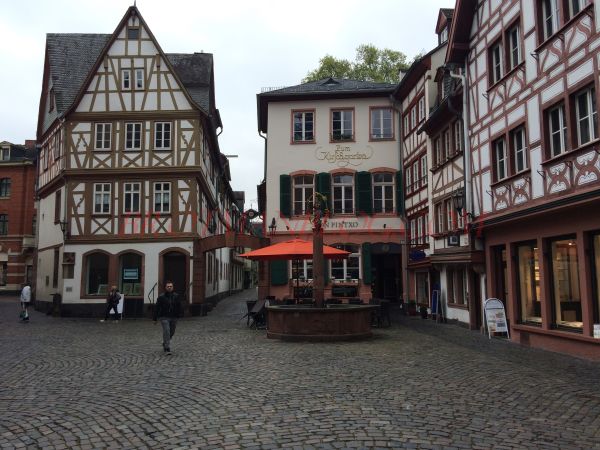
Kirschgarten in Mainz
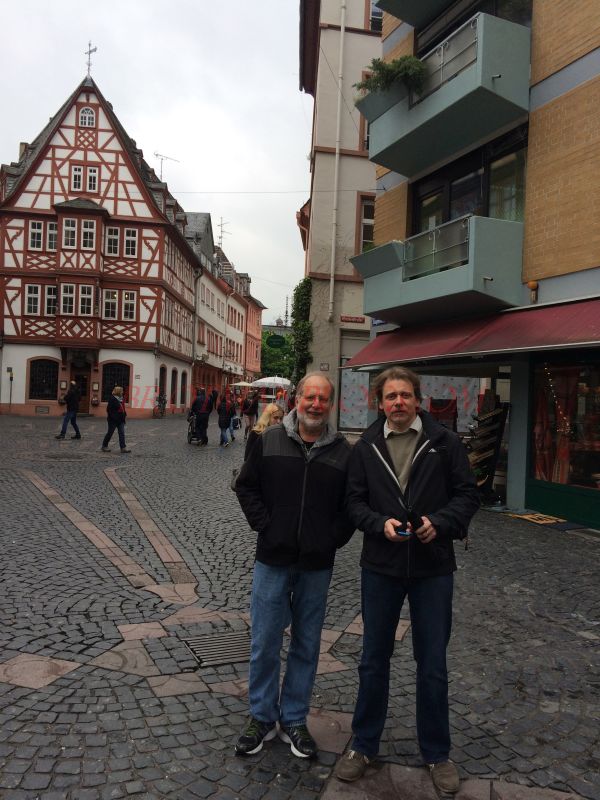
Everywhere we turned there were beautiful half-timber buildings, sometimes right next to a post-war building.

We then visited the Dom, or cathedral, a large Romanesque sandstone structure located on the main market square in Mainz. The cathedral’s oldest sections are a thousand years old with later additions over the years. It was damaged by bombing in World War II, but restored afterwards. The cloister is a peaceful place for contemplation, and the high vaulted ceiling in the main part of the cathedral forces you to look upwards. It is an impressive and inspiring building.

Mainz Marktplatz
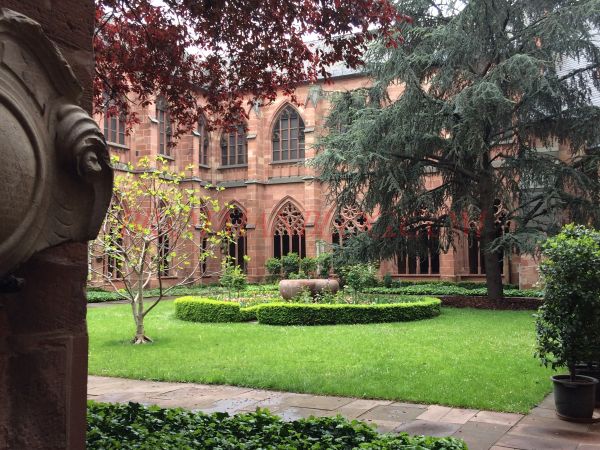
Cloister at the cathedral in Mainz


At this point we caught the little tram that took us on a tour around other parts of the city, passing the Rathaus (town hall), the Schloss (a palace more than a castle), the new synagogue, and the building where the Gestapo was housed during World War II. I couldn’t get any photos of these sites as we were moving too fast, but I was glad to be seated and not walking at that point. I asked Wolfgang if we could come back the next day to see the synagogue.
As I wrote here, our first stop on Wednesday was our visit with Wolfgang’s mother Annlis, a time I will never forget.
Then we continued our tour of Mainz. We passed the location where Fritz/Fred Michel once owned a store. Fred Michel was the son of Franzeska Seligmann and the grandson of August Seligmann, Wolfgang’s great-grandfather and another brother of my great-great-grandfather Bernard. Fred and his wife Ilse came to the US in the 1930s and settled in Scranton, Pennsylvania. I wrote about Fred, his mother, and his family here.

Fred Michel and Franziska Seligmann Michel
Courtesy of the Family of Fred and Ilse Michel

Location of Fred Michel’s store in Mainz
We then walked up the steep hill to St. Stephen’s church, where there are a number of windows designed by Marc Chagall. The contrast between the thousand year old medieval structure and the gorgeous blue Chagall windows is striking. Like so many other buildings in Mainz, this church was damaged by bombing during World War II. According to Wikipedia, the priest at St. Stephens, Monsignor Klaus Mayer, was a friend of Marc Chagall and approached him in the 1970s to design new windows. This is the only church in Germany for which Chagall designed windows, and he saw it as a way of expressing his hope for peace between Christians and Jews. To see the work of a Jewish artist and his depictions of figures from the Jewish bible inside a medieval Catholic church was very moving.

St Stephen’s church in Mainz with Chagall windows


We then walked back to the hotel to pick up our luggage and Wolfgang drove us to see the new synagogue. I knew before coming that Mainz had a long and very important history as a Jewish community. According to several sources, Mainz had a Jewish community at least as early as the tenth century. Rabbi Gershom ben Judah, known as “the light of the diaspora,” was an early important leader of the Mainz Jewish community, and his codification of Jewish law was accepted in many other communities in Europe as well.
The Jews, however, were expelled from the city in the eleventh century; they returned later, but then a thousand were killed during the first Crusade during the twelfth century. Later, many died from the Black Death and from persecution. For several centuries there was not much of a Jewish community in Mainz. The community began to grow again in the 18th and 19th centuries. Synagogues were constructed, and Jews for some time lived in peace in the community. By 1900, there were 3000 Jews living in Mainz, according to JewishGen.org
On November 9, 1938, the Mainz synagogues were attacked as part of Kristallnacht and burnt and in some cases destroyed; there were over 200 synagogues at that time in Mainz, including the largest synagogue, Neue Synagogue, which was completely destroyed. Most of the Jews who remained in Mainz, including my Bielefeld cousins, were eventually deported and killed.
But today there is hope. A new synagogue was built on the site of the former Neue Synagogue in 2010, and it is an imposing structure. As this article describes, it was consider a symbol of hope for the revival of Jewish life in Germany. Outside the synagogue stand pillars from the original synagogue, a permanent reminder of what had existed and what was destroyed. The city now has about a thousand Jews who are affiliated with the synagogue as well as many others who are not.

The website of Manuel Herz, the architect who designed the new synagogue, provides a great deal of information about the history and about the reasons for the choices made in naming and designing this new building. The synagogue is called Meor Hagolah, which means “Light of the Diaspora,” the name used to refer to Gershom ben Judah because of his wisdom and his broad-reaching influence on the practice of Judaism. The Hebrew words on the door to the synagogue are translated as “Light of the Diaspora Synagogue Mainz.”

Meor Hagodah Synagogue Mainz
The building’s shape is supposed to evoke the Hebrew word Kedushah, meaning holiness and referring to one of the sections of the Amidah prayer. I must admit I could not see the letters no matter where I stood outside the building, but I like the concept. The building overall is quite imposing and, in my opinion, not very welcoming. It looks more like a fortress than a house of prayer. Maybe that is in part the point: that this is a safe place that will not be destroyed again.

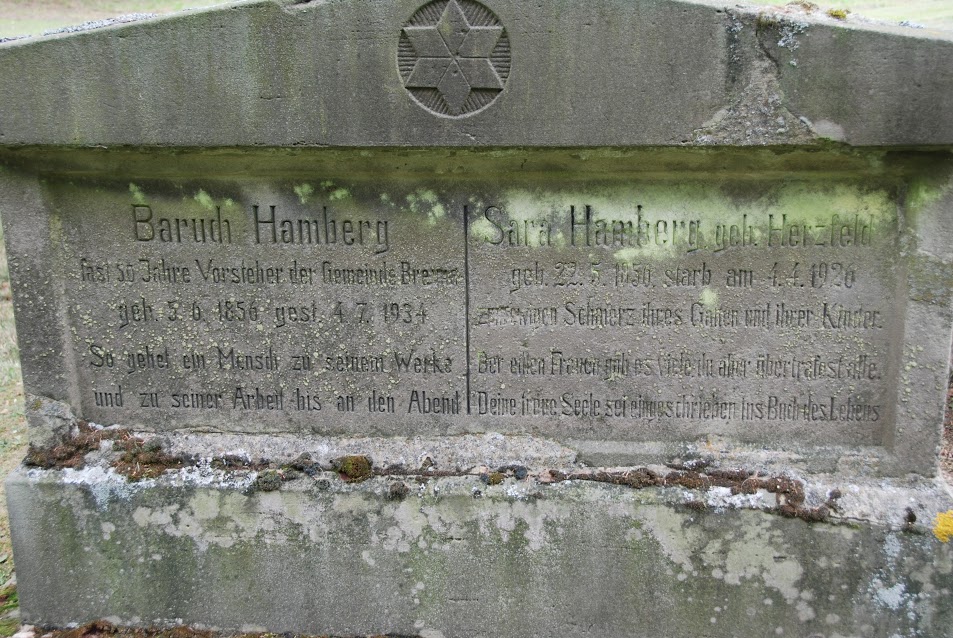
We stopped at the historic Mainz cemetery on our way out of town. I have no known family members there, and we could not go inside, but the age and number of the gravestones there are another reminder that there was once a large and important Jewish community there.

Mainz Jewish cemetery
Mainz is truly a beautiful city, and despite all the damage inflicted during the war, it retains its charm, its character, and its architectural beauty. It is hard to imagine, amidst all that beauty and all those churches, how the Jewish community that lived there so long could have been destroyed. But it is also important to look forward. I left the city feeling hopeful, knowing that a new synagogue and a growing new Jewish community exist in the city of Mainz.













![Lionel Heymann 1911 UK census Ancestry.com. 1911 England Census [database on-line]. Provo, UT, USA: Ancestry.com Operations, Inc., 2011. Original data: Census Returns of England and Wales, 1911. Kew, Surrey, England: The National Archives of the UK (TNA), 1911. Data imaged from the National Archives, London, England.](https://brotmanblog.com/wp-content/uploads/2016/03/lionel-heymann-1911-uk-census.jpg)
![Lionel Heymann 1912 passenger manifest Ancestry.com. UK, Outward Passenger Lists, 1890-1960 [database on-line]. Provo, UT, USA: Ancestry.com Operations, Inc., 2012. Original data: Board of Trade: Commercial and Statistical Department and successors: Outwards Passenger Lists. BT27. Records of the Commercial, Companies, Labour, Railways and Statistics Departments. Records of the Board of Trade and of successor and related bodies. The National Archives, Kew, Richmond, Surrey, England.](https://brotmanblog.com/wp-content/uploads/2016/03/lionel-heymann-1912-passenger-manifest.jpg)
![Lionel Heymann 1924 passenger manifest Ancestry.com. New York, Passenger Lists, 1820-1957 [database on-line]. Provo, UT, USA: Ancestry.com Operations, Inc., 2010. Original data: Passenger Lists of Vessels Arriving at New York, New York, 1820-1897. Microfilm Publication M237, 675 rolls. NAI: 6256867.](https://brotmanblog.com/wp-content/uploads/2016/03/lionel-heymann-1924-passenger-manifest.jpg)
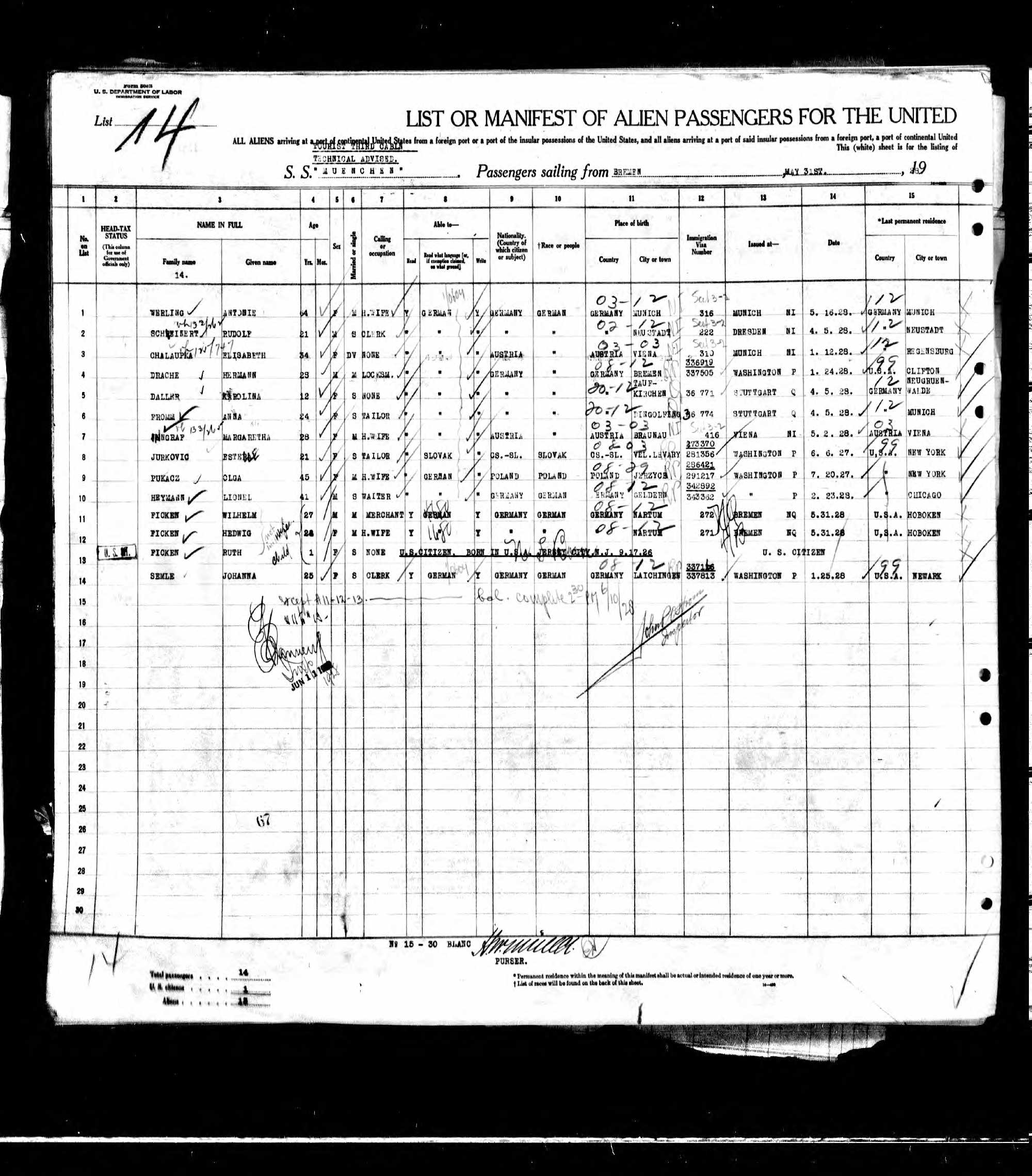

![Ancestry.com. U.S. Naturalization Record Indexes, 1791-1992 (Indexed in World Archives Project) [database on-line]. Provo, UT, USA: Ancestry.com Operations, Inc., 2010.](https://brotmanblog.com/wp-content/uploads/2016/03/lionel-heymann-1933-naturalization.jpg)

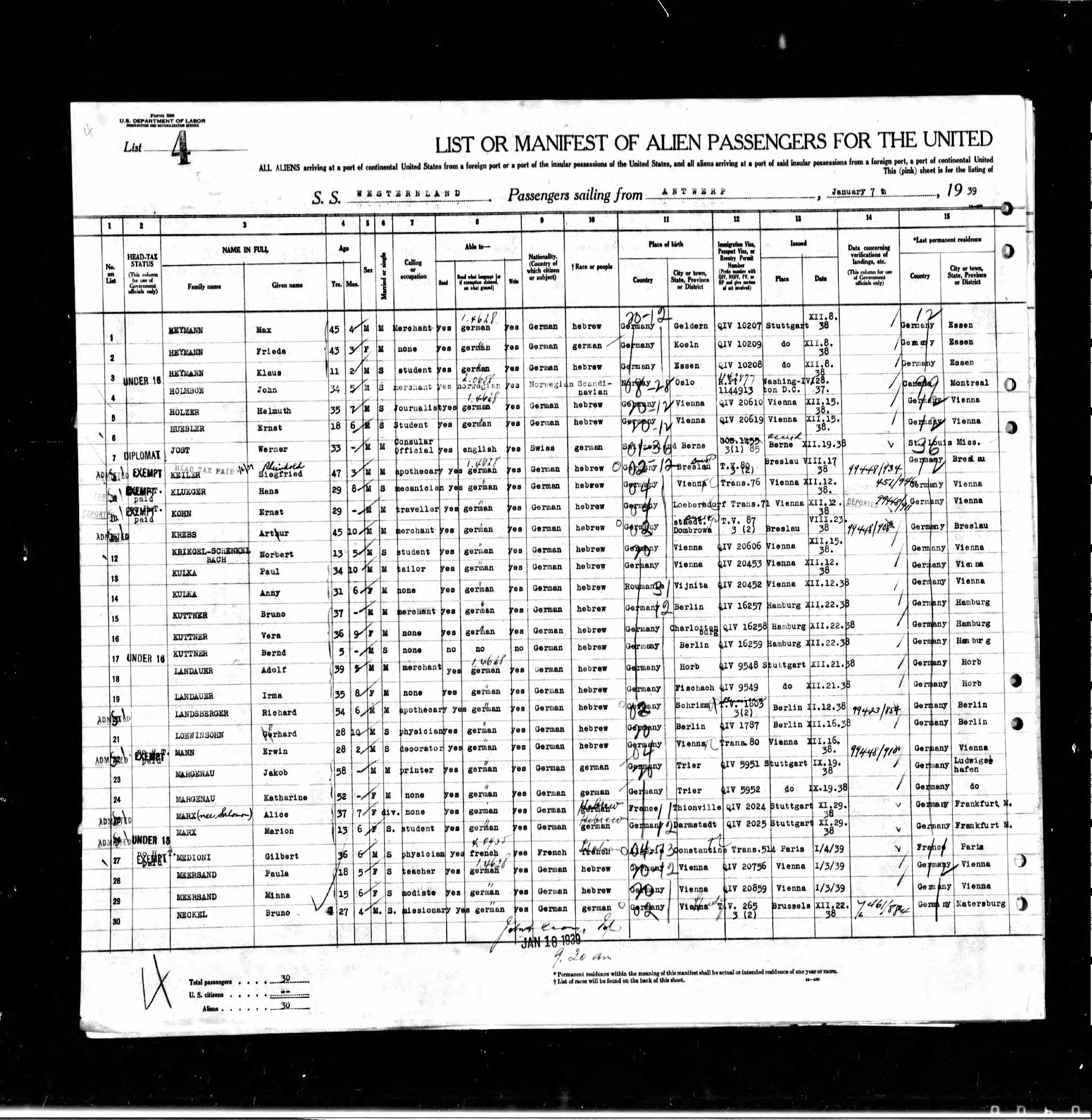
![Lionel Heymann World War II draft registration Ancestry.com. U.S., World War II Draft Registration Cards, 1942 [database on-line]. Provo, UT, USA: Ancestry.com Operations, Inc., 2010. Original data: United States, Selective Service System. Selective Service Registration Cards, World War II: Fourth Registration.](https://brotmanblog.com/wp-content/uploads/2016/03/lionel-heymann-ww2-draft-reg.jpg)
![Max Heymann World War II draft registration Ancestry.com. U.S., World War II Draft Registration Cards, 1942 [database on-line]. Provo, UT, USA: Ancestry.com Operations, Inc., 2010. Original data: United States, Selective Service System. Selective Service Registration Cards, World War II: Fourth Registration](https://brotmanblog.com/wp-content/uploads/2016/03/max-heymann-ww2-draft-registration.jpg)
![Walter Heymann World War II draft registration Ancestry.com. U.S., World War II Draft Registration Cards, 1942 [database on-line]. Provo, UT, USA: Ancestry.com Operations, Inc., 2010. Original data: United States, Selective Service System. Selective Service Registration Cards, World War II: Fourth Registrati](https://brotmanblog.com/wp-content/uploads/2016/03/walter-heymann-world-war-2-draft-reg.jpg)
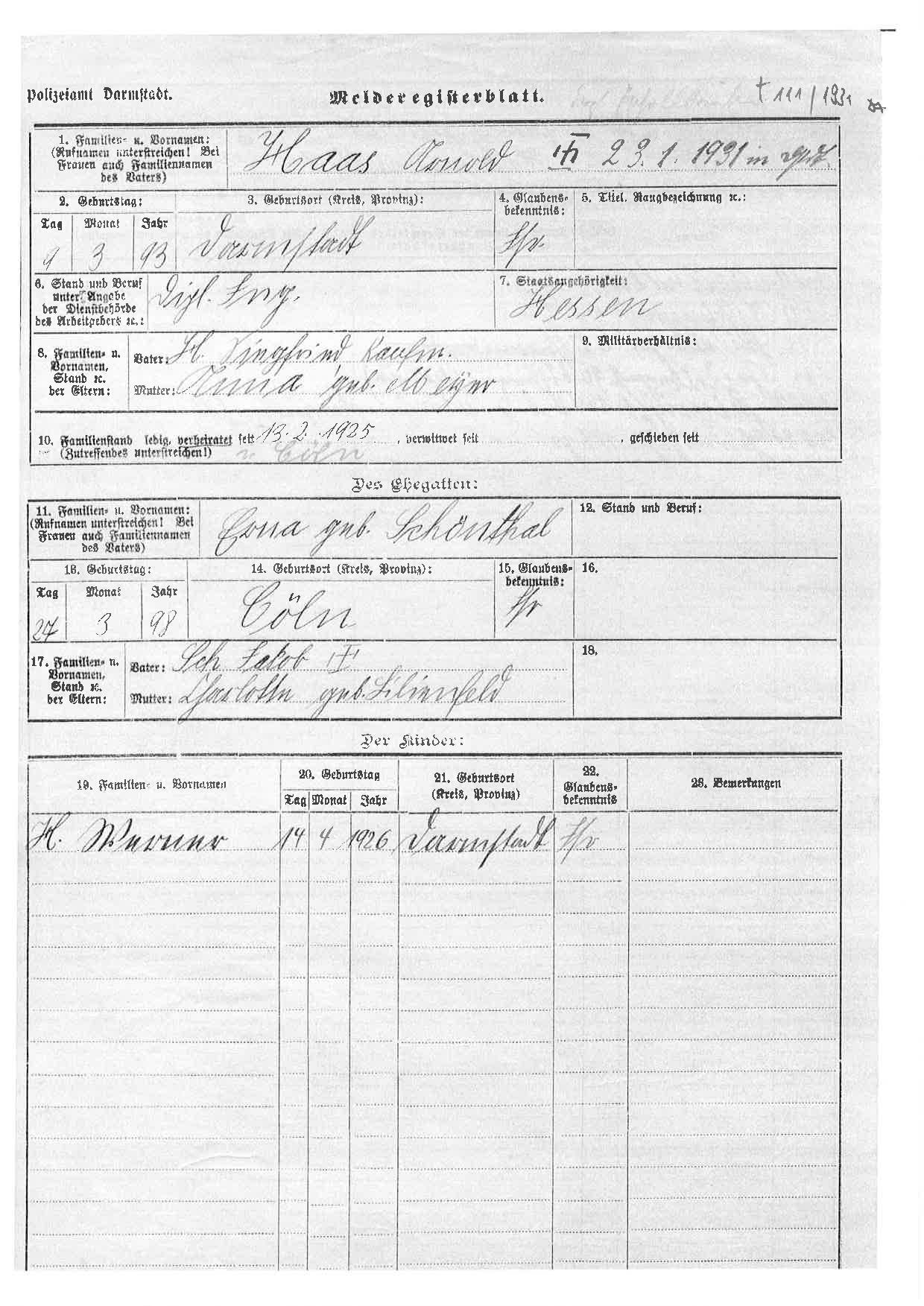


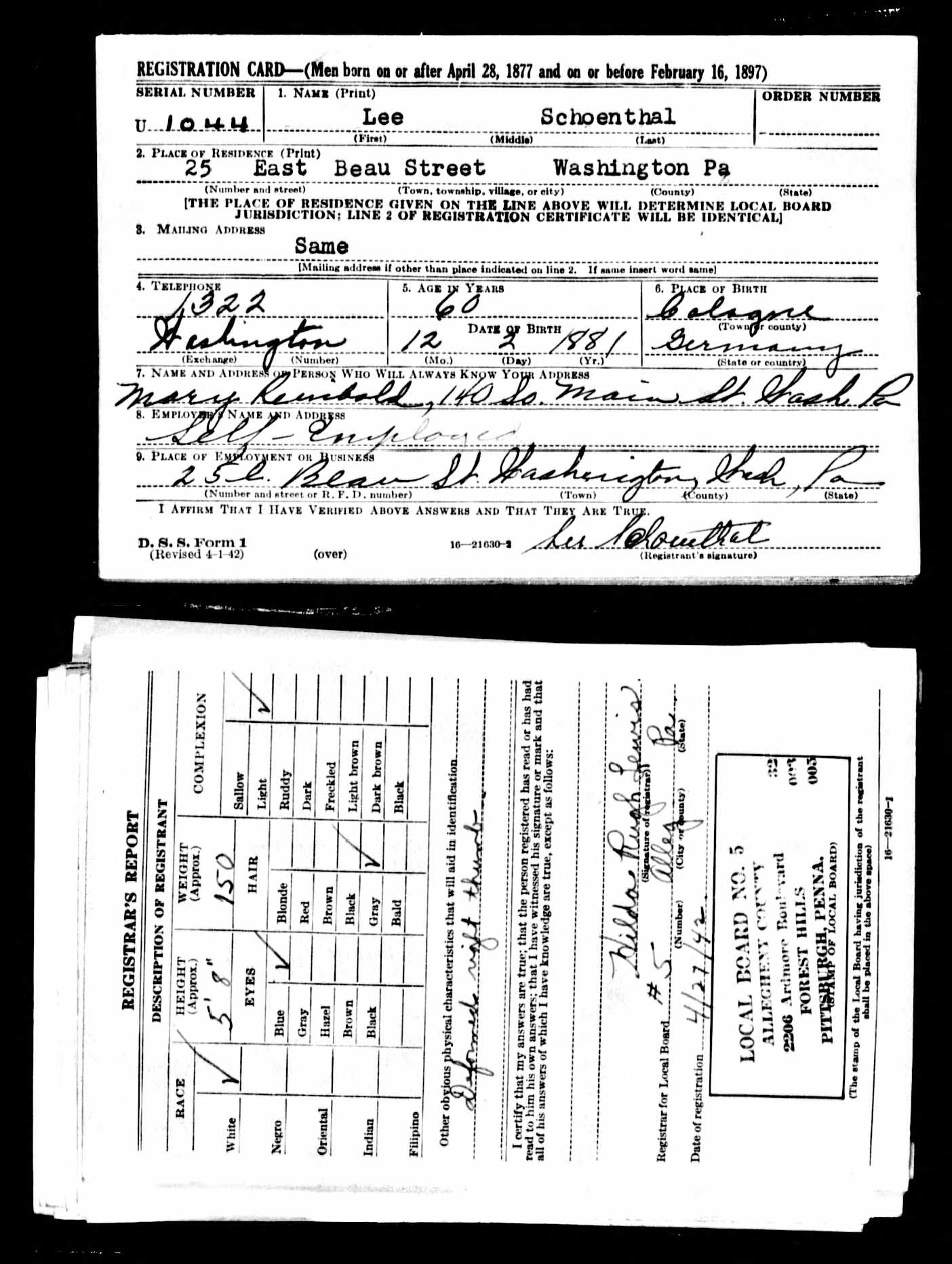
![Meyer N Schoenthal World War II draft registration Ancestry.com. U.S., World War II Draft Registration Cards, 1942 [database on-line]. Provo, UT, USA: Ancestry.com Operations, Inc., 2010.](https://brotmanblog.com/wp-content/uploads/2016/03/meyer-n-schoenthal-ww2-draft-registration.jpg)


![Helmut Levi change of name to Henry Lyons Ancestry.com. U.S. Naturalization Record Indexes, 1791-1992 (Indexed in World Archives Project) [database on-line]. Provo, UT, USA: Ancestry.com](https://brotmanblog.com/wp-content/uploads/2016/02/helmut-levi-military-card-with-name-change-to-henry-lyons.jpg)

![By U.S. Department of Defense. Department of the Army. Office of the Chief Signal Officer. [2] [Public domain], via Wikimedia Commons](https://brotmanblog.com/wp-content/uploads/2016/03/1024px-koeln_1945.jpg)




 Brotmanblog: A Family Journey

