Unknown's avatar

About Amy

I am interested in genealogy and family research, books, movies, cats, dogs, and baseball.

The Crazy Quilt of Selig Goldschmidt’s Family

As I move on now to the next child of my four-times great-uncle Meyer Goldschmidt, his fifth child and second son Selig Goldschmidt, I admit to some trepidation. I’ve been working on my Goldschmidt line for almost three years now, and Selig has one of the biggest branches.

The overall Goldschmidt clan is so large and so entangled. There are eleven men named Jacob Goldschmidt/Jacob Goldsmith on my tree, six named Meyer Goldschmidt/Goldsmith, six women named Helene/Helena/Helen Goldschmidt/Goldsmith, six named Hedwig Goldschmidt, and nine women named Clementine (including three named Clementine Fuld) within the Goldschmidt family. And then there are all the cousins who married cousins, adding more confusion and twists to the family tree.

And Selig Goldschmidt’s family only adds to all that entanglement. Just a quick overview to give you a sense of what I mean by entanglement. Sources and details to follow.

Selig Goldschmidt married Clementine Fuld. She was the sister of Salomon Fuld, the husband of Selig’s niece Helene Goldschmidt, daughter of Selig’s brother Jacob Meier Goldschmidt.

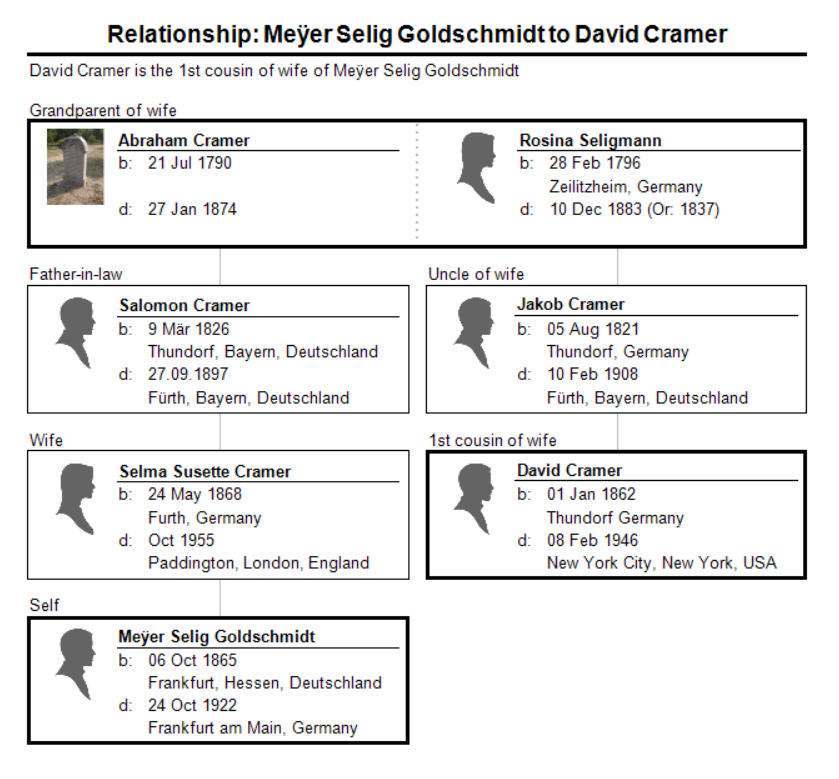
Salomon Fuld and Helene Goldschmidt’s daughter, also named Clementine Fuld like her aunt, married David Cramer, the son of Jakob Cramer. Selig’s daughter Hedwig Goldschmidt married David Cramer’s brother Hirsch Cramer. And Selig’s son, Meyer Selig Goldschmidt, married Selma Suzette Cramer, a first cousin of Hirsch and David Cramer.

Two of Selig’s other children, Flora and Recha, married men with the surname Schwarzschild. I’ve not yet found records establishing a connection between the two Schwarzschild husbands, but I bet there was one.

Finally, Selig’s youngest and sixth child, Johanna Goldschmidt, married Abraham Stern, the son of Sarah Goldschmidt, Selig’s older sister, or Johanna’s first cousin. Fortunately I’ve already told the story of Johanna and Abraham when I wrote about Sarah Goldschmidt’s family so that particular web has already been untangled. I hope.

But as you can see, of Selig’s six children, one married a first cousin, two married spouses who were related to each other (first cousins), and two may have married spouses who were related in some way. Only Selig’s oldest child, Helene (yes, another Helene Goldschmidt) married someone who seems otherwise unconnected to someone else in the family.

And so, with that introduction to the family of Selig Goldschmidt and Clementine Fuld, I now will turn to this next branch of my Goldschmidt family tree. Once I finish Selig’s branch, there will be only one more Goldschmidt branch to cover, that of Selig’s brother Falk Goldschmidt. His line is also a crazy patchwork of intrafamily marriages, but I’ll address that when I get to that branch of the tree.

A Survivor’s Story

Regina Goldschmidt Rosenberger, the daughter of Julius Goldschmidt, granddaughter of Jacob Meier Goldschmidt, and great-granddaughter of Meyer Goldschmidt, was my third cousin, twice removed, and I first wrote about her here and here, but now need to update those posts.

The earlier post established that Regina was born in Frankfurt on March 7, 1900, and married Siegfried Rosenberger on March 10, 1921, in Frankfurt, and had two children in the 1920s. In my second post about Regina, I wrote:

I don’t know a great deal about what happened to Regina, her husband Siegfried Rosenberger, and their two children during the Holocaust. It appears that at least until 1937 they were still living in Frankfurt and that after the war, according to Roger Cibella and David Baron, their two children were both married in the Netherlands and had children born there. Eventually they all immigrated to Canada where Regina died in February 1992…

And that was all I knew. Until a couple of weeks ago when I received an email from a sixth cousin named Mark Isenberg. I had first heard from Mark a few years back when he contacted David and Roger regarding his research establishing that his paternal four-times great-grandfather Joseph Falk Neuwahl and Roger’s and my four-times great-grandfather Jacob Falk Goldschmidt were probably brothers.

This time Mark was writing about his relationship to Siegfried Rosenberger, husband of Regina Goldschmidt. Siegfried was Mark’s third cousin, once removed, on his maternal side. Mark had seen my blog post quoted above and kindly alerted me to the fact that Siegfried and Regina’s daughter Ruth had done an interview with the Shoah Foundation in 1997. I’ve now watched the two and a half hours of her testimony and can report in much greater detail what happened to Regina, Siegfried, and their two daughters Ruth and Margo during the Holocaust. All the information below except where otherwise noted comes from that testimony of Ruth Rosenberger Steinert.1

Ruth Rosenberger was born in Frankfurt on December 6, 1922. Her sister Margo was born almost exactly two years later on December 19, 1924. Ruth described their childhood in Frankfurt in idyllic terms. They lived in a very large apartment with a nanny, cook, and other servants, and were surrounded by their Goldschmidt grandparents, aunt, uncle, and cousins, having regular shabbat dinners with the extended family as well as holidays. Their father Siegfried was a successful stockbroker. He was very proud of being a German and of his service to Germany in World War I, for which he was awarded the Iron Cross.  Their mother Regina lived a good life, playing tennis daily, socializing with friends, and overseeing the household staff. The family was very observant, and Ruth and Margo went to an Orthodox day school in Frankfurt. Watching Ruth talk about her childhood was very moving; she so well expressed how safe and loved she felt.

Khal Adath Jeshurun synagogue in Frankfurt, the synagogue attended by the Goldschmidt family. https://www.kajinc.org/about/history

Everything was destroyed once the Nazis came to power. Ruth said that until 1936, she and her sister were fairly unaware of what was happening because the adults did not talk about the Nazis in front of the children. She knew that there were restrictions, mentioning as an example that they were not allowed to sit on the park benches, but she nevertheless felt safe.

But after 1936, it became impossible to hide what was happening from the children. Her father lost his stockbroker business because Jews were no longer allowed to engage in business. Ruth talked about how devastated her father was when they came and stripped away the telephones he needed for the business. The nanny, cook, and other servants had to leave the household because non-Jews were no longer allowed to work for Jews. Their mother Regina became terribly depressed.

Fortunately, Siegfried was able to secure another job with an international metals company called Lissauer. The position required him to travel to France and to Holland and enabled the family to continue to live fairly comfortably. As Ruth described it, this job ultimately saved their lives. Siegfried would never have left Germany despite all the oppression and fear. But in September 1938 while traveling for work in Paris, he was unable to return to Germany. Finally he agreed that the family should leave Germany, and through his business connections, he was able to obtain papers for them to immigrate to the Netherlands.

Ruth, not yet sixteen years old, took charge of packing and getting them ready to leave. They took a train to Paris, and Ruth put on lipstick so that she would look older. When they got to the French-German border at Emmerich, the German border guards gave them trouble with their papers, but fortunately a cousin was able to straighten matters out, and the next day they arrived in Paris. They remained in Paris for a few days, and then the whole family spent about ten days at the beach in the Netherlands. Ruth remembered it as a wonderful time and one of the very last times all four of them were together as a family.

Siegfried returned to Paris for work and would travel back and forth to Amsterdam. Regina and her daughters were living in a very nice apartment on the canal in Amsterdam. Margo attended high school, and Ruth spent a year at an art academy, learning design.  For a year life was fairly normal.

As one uncle had said to the family when they arrived in Paris, they had, however, gone from “the rain into the storm” because war was brewing, and no place was really safe. After the war started in September 1939 and then Holland and France were occupied by the Nazis in the spring of 1940, Siegfried could no longer travel to Amsterdam. From that point on, things went downhill.

Ruth recalled standing on a corner in Amsterdam with a crowd of other people from the neighborhood as the Germans marched into Amsterdam.
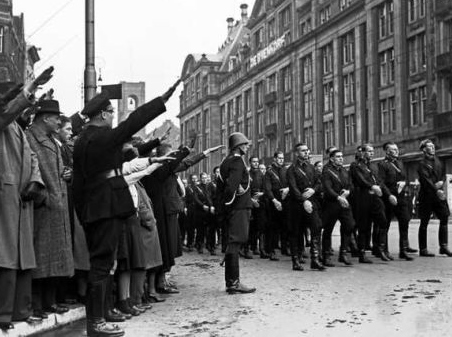
Nazi troops and supporters in front of De Bijenkorf, Dam Square, Amsterdam, The Netherlands, 1941 (crop of original 1941 public domain photo). 47thPennVols, CC0, via Wikimedia Commons

But even on that dark day, the family found a silver lining. A man named Benot Hess was also standing on that corner and engaged Regina and daughters in conversation. Hess was married to a non-Jewish Swedish woman, and because Sweden was neutral during the war, he was given some extra protection based on that marriage. Hess and his wife became close friends with the Rosenberger women—like family, according to Ruth. He made sure that they had enough money by helping Ruth obtain work, sewing and then manufacturing travel kits and other items. The products sold well, giving the family an economic cushion.

By 1942, however, conditions worsened. Jews were required to wear the yellow stars with Jood to mark them as Jews. Ruth said that they lived in a constant state of angst for all their waking hours. Eventually they were forced to move into what Ruth described as a ghetto where all Jews were forced to live, and SS men on trucks barreled through the neighborhood every night, coming to arrest people and take them to Westerbork, the detention camp outside of Amsterdam.

At that point, they had to make a choice: stay and see what would happen or go into hiding. Ruth favored going into hiding, but her mother was not willing, and Margo did not want to leave their mother. For some time they remained safe from deportation as both Ruth and Margo had positions assigned by the Judenrat (the Jewish council) that kept them protected. Once the SS came to their apartment, and Ruth managed to convince them that they were not Jewish. She claimed that because of her light hair and coloring and straight nose, she was able to fool them.

But when the SS arrived a second time, Ruth was not successful, and in March 1943, Regina Goldschmidt Rosenberger was arrested and taken to Westerbork. Ruth described it as the worst moment in her life, watching her mother being taken away. She said that at that time they did not know about the death camps, only about what were being referred to as work camps. Soon thereafter Margo lost her position with the Judenrat and was also taken to Westerbork where she joined her mother.

Ruth contacted her father to see if he could arrange false identification papers for her, which he was able to accomplish, and Ruth went to Bussum, a town in Holland, and hid with a family there for the duration of the war. She was almost caught once when the SS came to look for hidden Jews, but again was smart enough and lucky enough to convince them that she was not Jewish.

Meanwhile, Regina and Margo had been taken from Westerbork to Terezin. Once again, Benot Hess came to their rescue. He also was imprisoned at Terezin, and when he learned that Regina and Margo were to be placed on the next train to Auschwitz, he intervened, using the Honduran passports that Siegfried had obtained for them, and Regina and Margo were taken off the list.

Jewish prisoners’ cell, Terezin (c) A Cohen 2015

When the war ended in Europe in April 1945, Ruth was reunited with her mother and sister, and they all moved to Bussum. Margo married her fiancé, Robert Engel, who had been at Westerbork throughout the war period, and Ruth met and married Otto Steinert. In 1950, Otto was offered a job in Canada through the family’s connections to another family, and Ruth and Otto and soon thereafter Regina, Margo, and her husband all moved to Canada.

Siegfried was never reunited with the family. He remained in Paris, where he died not long after the war. Regina Goldschmidt Rosenberger lived a long life, dying in Canada in February 1992 when she was almost 92 years old.

Her two daughters also lived long lives. Ruth Rosenberger Steinert died at the age of 93 on December 22, 2013, in Montreal. Her sister Margo Rosenberger Engel died just this past June 30, 2020, in Toronto; she was 95. They are survived by their children and grandchildren and great-grandchildren.

Watching Ruth’s testimony was a moving, inspiring, and heartbreaking experience. Despite everything she had experienced—all the losses, the fear, the separation, the loneliness—she remained a strong, optimistic, and loving woman who spoke about her parents, her husband, her sister, her children and grandchildren with so much affection and warmth. She was not going to be defeated by what happened around her—not while it was happening and not afterwards. How blessed we are to have this testimony to remember what happened and to inspire us all.


  1. Steinert, Ruth. Interview 35432. Visual History Archive, USC Shoah Foundation, 1997. Accessed 1 October 2020. 

Was Moritz Oppenheimer Forced by the Nazis to Divorce His Wife and Declare Bankruptcy?

I have written several posts about my cousin, Moritz Oppenheimer, the nephew of my great-great-grandfather Bernard Seligman. Moritz was an extremely successful business owner and also racehorse breeder and owner who ended up committing suicide as a result of the persecution he experienced by the Nazis.

Emma Neuhoff and Moritz James Oppenheimer
photo courtesy of Angelika Oppenheimer

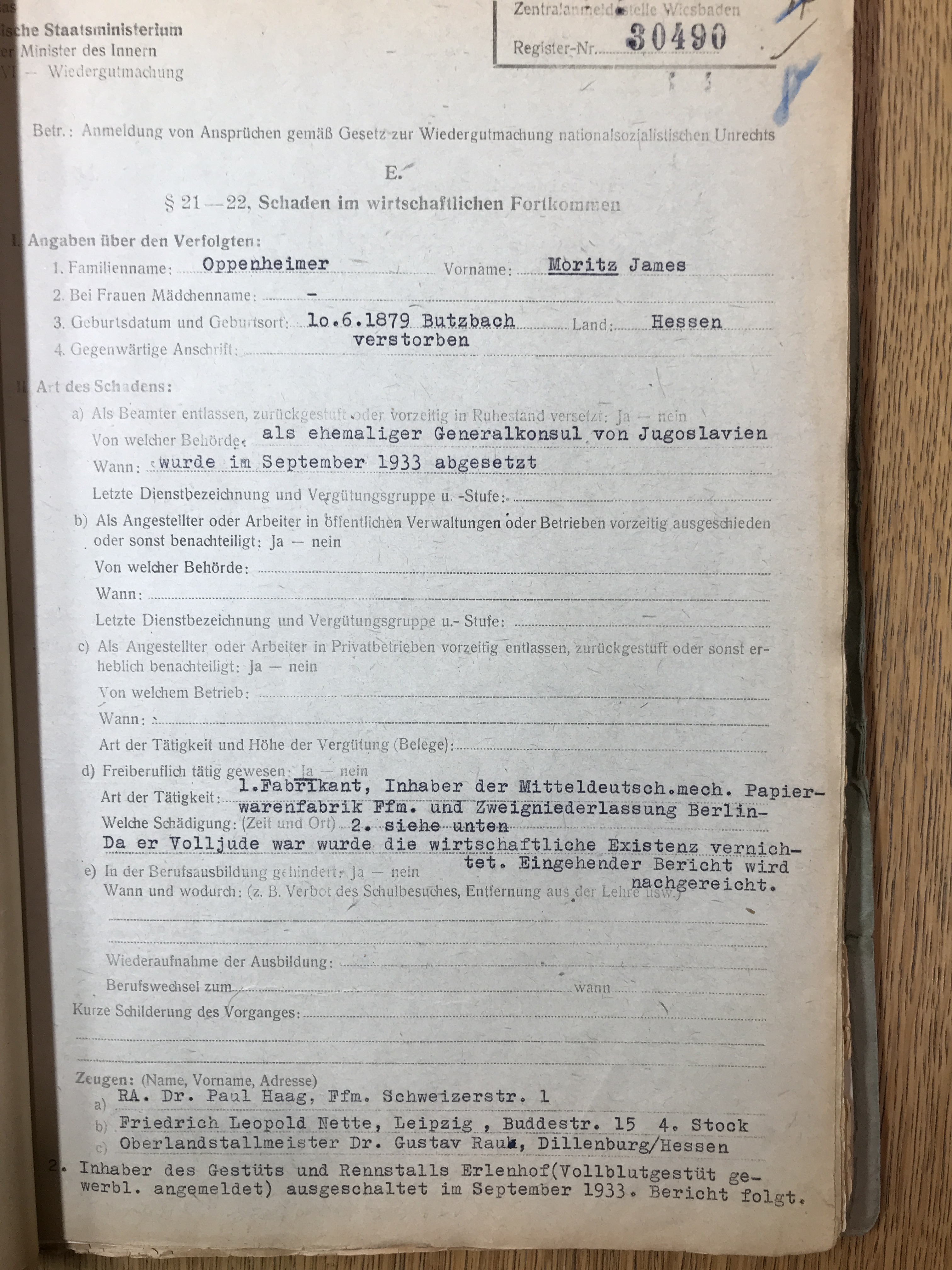
My cousin Wolfgang Seligmann recently discovered additional information about Moritz and his family, including an application filed in 1966 in Wiesbaden by Moritz Oppenheimer’s widow Emma Neuhoff, seeking compensation for the harm done to her husband and the financial losses suffered.

Emma Neuhoff Oppenheimer 1966 application for reparations

In reviewing those documents (with invaluable help from Wolfgang), I focused on two questions that had been raised by readers who commented on my earlier posts about Moritz Oppenheimer. First, were Moritz and his non-Jewish wife Emma forced to divorce by the Nazis in 1936, or did they choose to divorce? Second, was Moritz forced into bankruptcy by the Nazis in 1933, or were his businesses already failing before the Nazis came to power?

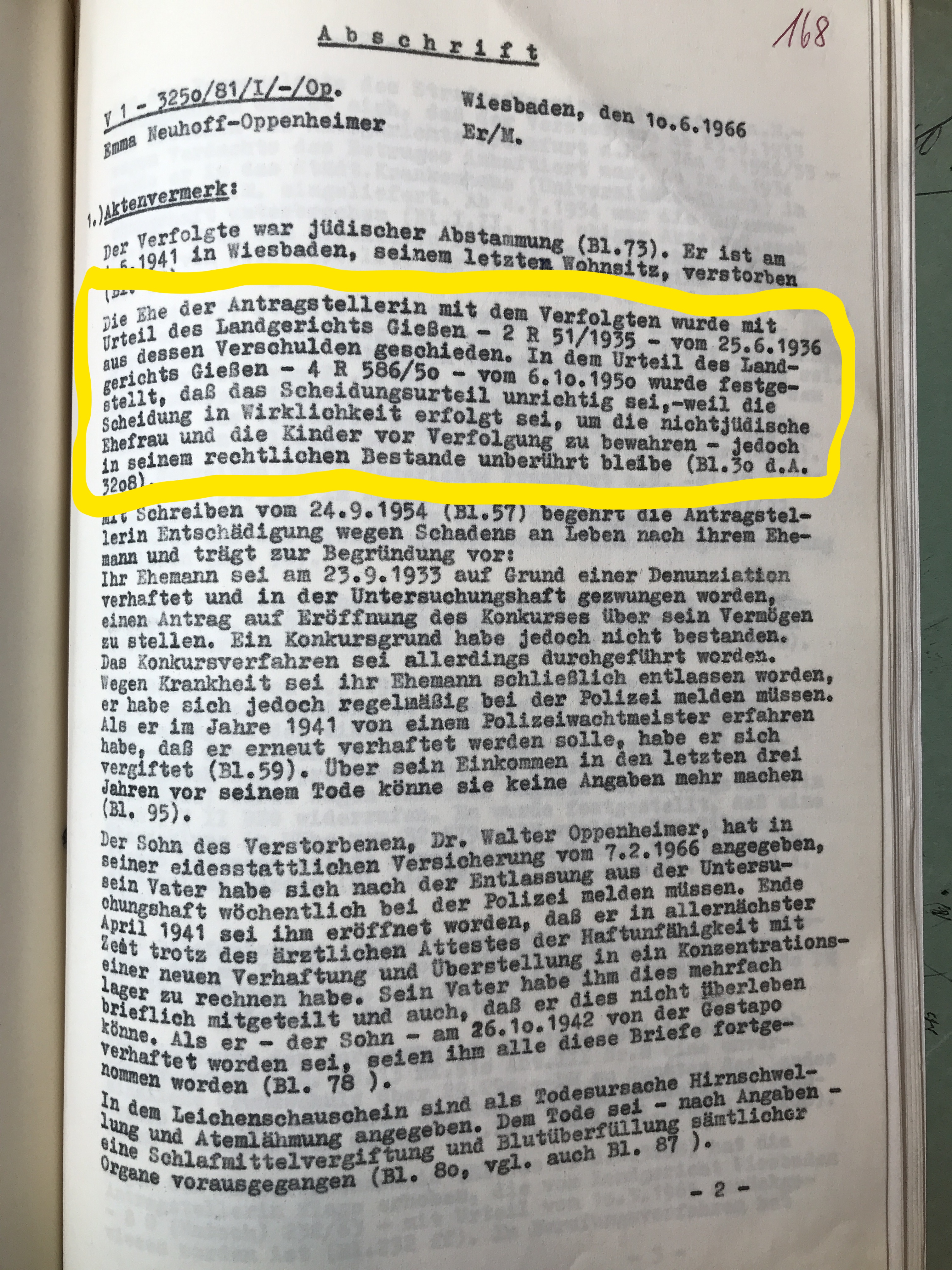
The first question is addressed by the court in its opinion approving the settlement between Emma and the government. The court recognized that Emma and Moritz had only divorced to protect Emma and their two children, who were not Jewish.

Court notes on divorce of Emma and Moritz Oppenheimer in decision approving settlement of Oppenheimer 1966 reparations claim

I used DeepL to translate this language and for the other translations in this post:

The marriage of the applicant with the persecuted person was divorced by judgment of the regional court Giessen 2 R 51/1935 of June 25, 1936 through his fault. In the judgment of the regional court Giessen 4 R 585/50 dated 6 October 1950 it was determined that the divorce judgment was incorrect because the divorce had actually taken place in order to protect the non-Jewish wife and children from persecution — but its legal validity remained unaffected.

With respect to Emma’s application for compensation, the court concluded that even if Emma was no longer legally married to Moritz at the time of his death and thus not technically his widow, she was nevertheless entitled to pursue her claim for compensation for the harm done to her husband and her family.

The applicant is entitled to claim. It can be left open whether she is the widow of the deceased, … or this is treated as a blameless divorced wife.

Thus, Emma and Moritz chose to divorce to protect Emma and their two children. It was a decision based on love, not a lack of it.  Although the Nazis did not require the Oppenheimers to divorce, the circumstances the Nazis created compelled the couple to divorce.

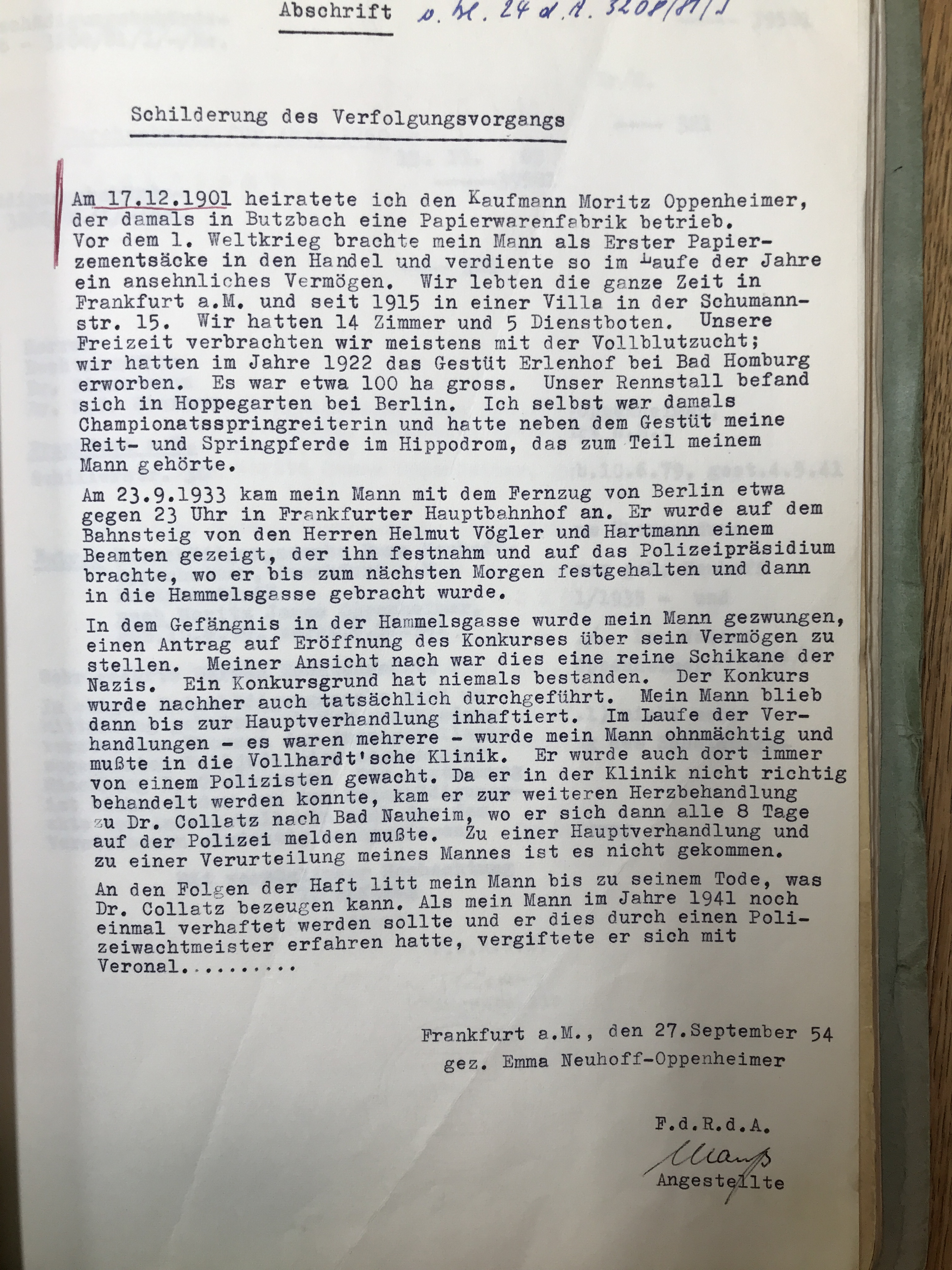
The question regarding the bankruptcy is more complicated. Emma contended that Moritz was forced into bankruptcy by the Nazis when he was arrested in September, 1933, the first of many arrests that eventually drove him to suicide in 1941, as has been described in earlier posts. Emma wrote in the third paragraph of her statement in support of her application for compensation in 1966:

Emma Neuhoff Oppenheimer statement filed in support of her 1966 application for reparations

In the prison in Hammelgasse, my husband was forced to file for bankruptcy on his property. In my opinion, this was pure Nazi harassment. There was never a reason for bankruptcy. The bankruptcy was actually carried out afterwards.

But a man named August Hartmann filed an accusation against Moritz with the Nazi party in which he claimed that Moritz had defrauded a family from Frankfurt out of almost one and a half million Reich Marks;  these fraud claims were never fully litigated because Moritz died before that could happen. Hartmann also claimed that the businesses owned by Moritz were heavily in debt and that Moritz was a flight risk.

Statement of August Hartmann regarding claims against Moritz Oppenheimer

Here is the DeepL translation of Hartmann’s statement:

The well-known industrialist and racing stable owner Consul Moritz Oppenheimer has lived for many years only on credit fraud. In the years 1931 and 1932 he swindled a very respectable Frankfurt family out of the round sum of one and three-quarter million Reichsmark in cash under false pretences. This case is all the more blatant because this amount of money came from assets confiscated during the war in America. That was only released at the end of 1929 and taken to Germany by the family, out of national interest in making this large amount of money available to the ailing German economy.  Despite the fact that this fraudulently damaged creditor has known for half a year now how the finances of Consul Oppenheimer are, he has now refrained from taking radical steps which were in his personal interest, in order not to make more than 250 German workers unemployed. But because of the great expenses of Mr. Consul O., for example maintenance of the Erlenhof Stud Farm, which requires a monthly subsidy of about 15,000, financial conditions have deteriorated to such an extent that bankruptcy is only a question of time, the strong suspicion arises that this Jew wants to run off to a foreign country where he in all probability has stashed a considerable fortune.

It was this letter from August Hartmann that led to the arrest of Moritz Oppenheimer in September 1933 and then to his alleged forced bankruptcy. Thus, Moritz may have been pushed into bankruptcy proceedings, but if Hartmann’s letter is true, Moritz was already in serious financial trouble.

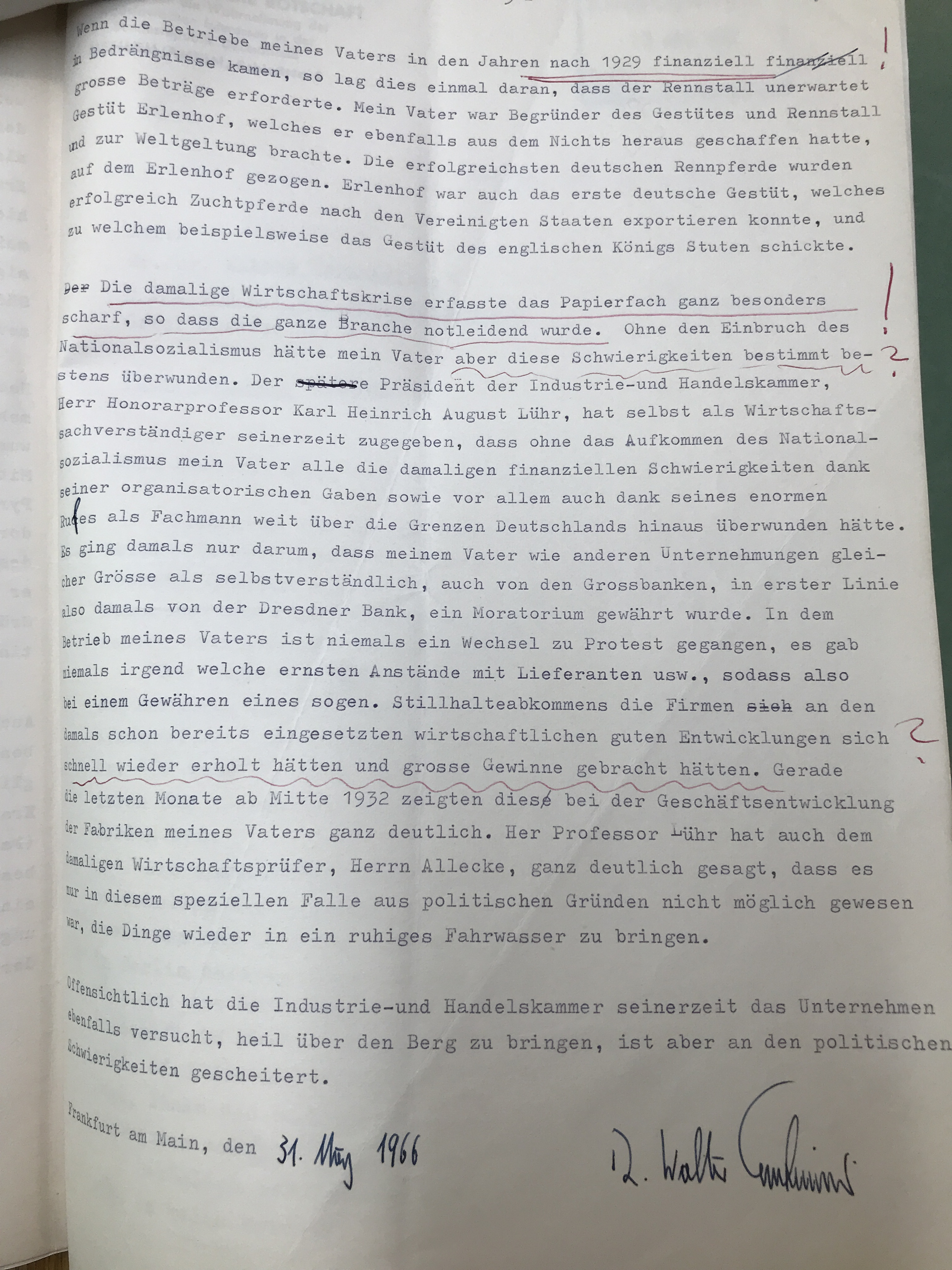
Moritz’s son Walter Oppenheimer, in his affidavit in 1966, admitted that his father had incurred a great deal of debt by 1929, but argued that he would have been able to overcome these financial reversals but for the Nazis. He wrote in part (and translated as best I could, with help from DeepL and Google Translate):

Portion of the letter Walter Oppenheimer filed in support of 1966 reparations claim

If my father’s business got into financial difficulties in the years after 1929, it was because the racing stable required unexpectedly large sums. My father was the founder of the stud and racing stable Erlenhof, which he had also created out of nothing and brought to world fame. The most successful German racehorses were bred at Erlenhof. Erlenhof was also the first German stud farm which was able to export breeding horses to the United States, and to which, for example, the stud farm of the English king sent mares.

The economic crisis at that time hit the paper trade particularly hard, so that the whole industry was in dire straits. But without the advent of National Socialism, my father could have certainly overcome these difficulties perfectly. The President of the Chamber of Industry and Commerce, Honorary Professor Karl Heinrich August Luhr, himself an economic expert of his time, admitted that without the advent of National Socialism, my father could have overcome all the financial difficulties of the time far beyond the borders of Germany, thanks to his organizational gifts and, above all, thanks to his enormous expertise. … So that if a so-called standstill agreement was maintained, the companies could have recovered quickly from the good economic developments that had already begun and had brought large profits. Especially the last months from the middle of 1932 onwards showed this very clearly in the business development of my father’s factories. Professor Luhr also told Mr. Allecke, who was an accountant at the time, very clearly that it was only for political reasons that it became impossible to put things back on a level playing field.

Where the truth lies is impossible to determine. It certainly appears that Moritz was having serious financial troubles before 1933, but were they serious enough to require bankruptcy? Would the business have recovered if he had not been arrested and persecuted by the Nazis? If he had been given more time, could he have turned around his companies’ financial situation?

In the end, the 1966 court approved a settlement that provided Emma with some compensation for the loss of her husband and the suffering he endured as well as for her own economic losses. It was less than what she wanted, but it did recognize that despite the divorce, she was entitled to compensation, implicitly recognizing that they had not freely chosen to divorce. But the settlement did not compensate her for the failure of her husband’s businesses.

Almost twenty years later in 1984, the descendants of Moritz and Emma Oppenheimer filed another claim, this time with the District President in Darmstadt, seeking compensation for the economic damage sustained to the business of Moritz Oppenheimer, according to another set of documents that Wolfgang discovered in the Wiesbaden archives. As Wolfgang explained to me, the Germany government adopted new laws over time that updated the process for obtaining reparations by those who suffered harm because of the Nazis. This new claim was presented under a statute called Bundesentschadeugungsgesetz-Schlussgesetz or Federal Compensation Act-Final Act.

1984 decision on the application for reparations by the heirs of Moritz and Emma Oppenheimer

As with the claim filed back in 1966, this claim for compensation for the financial losses suffered by Moritz’s business was rejected. The district president found that Moritz would not have been able to sell the stables or racehorses to cover his business losses, given the economic conditions of that period and the extent of his business liabiltiies.  Thus, he concluded that the economic damage was not the result of Nazi persecution. In addition, the district president concluded that Moritz’s medical condition disabled him from seeking other employment, not the Nazis, so there would be no compensation for lost income from such potential employment.

Of course, Moritz’s medical condition could very well have been and probably was caused by or at least exacerbated by his arrest and persecution. And no one can know with absolute certainty that he would not have been able to rescue his business but for that arrest and persecution. But at least two different decision-making bodies concluded otherwise and rejected the family’s claims.

The Cohen Family Photograph: Who Are These People?

Ordinarily finding a large collection of photographs would be cause for much celebration, but when almost none of those photographs is labeled, it can be cause for much frustration.

That is the case with the collection of photographs my cousin Ken inherited from his great-grandparents, Lilian Katz and Isaac S. Cohen. Isaac S. Cohen was my grandfather’s first cousin. Isaac’s father Joseph Cohen was my great-grandfather Emanuel Cohen’s older brother. Thus, Ken and I are third cousins, once removed, both descended from Jacob Cohen and Sarah Jacobs, my great-great-grandparents. (All photos in this post are courtesy of my cousin Ken except where noted.)

Fortunately, some of the photographs in Ken’s collection were labeled. Most important to me was this photograph labeled “Cohen Family.” Ken and I assumed that the couple sitting second and third from the left  in the front row are Joseph Cohen and his wife Caroline Snellenburg Cohen, parents of Isaac S. Cohen, and that Isaac was one of the other men in the photograph.

Joseph Cohen and Family c. 1915-1917

“Cohen Family” Courtesy of Ken Newbury

To help us identify the people in the photograph, I once again retained the services of Ava Cohn a/k/a Sherlock Cohn, the Photogenealogist. She concluded that the Cohen Family photograph was likely taken around 1915-1916 based on the clothing. Joseph Cohen would have been 67 in 1915, and the man who is sitting second from the left in the front row could be in that age range.

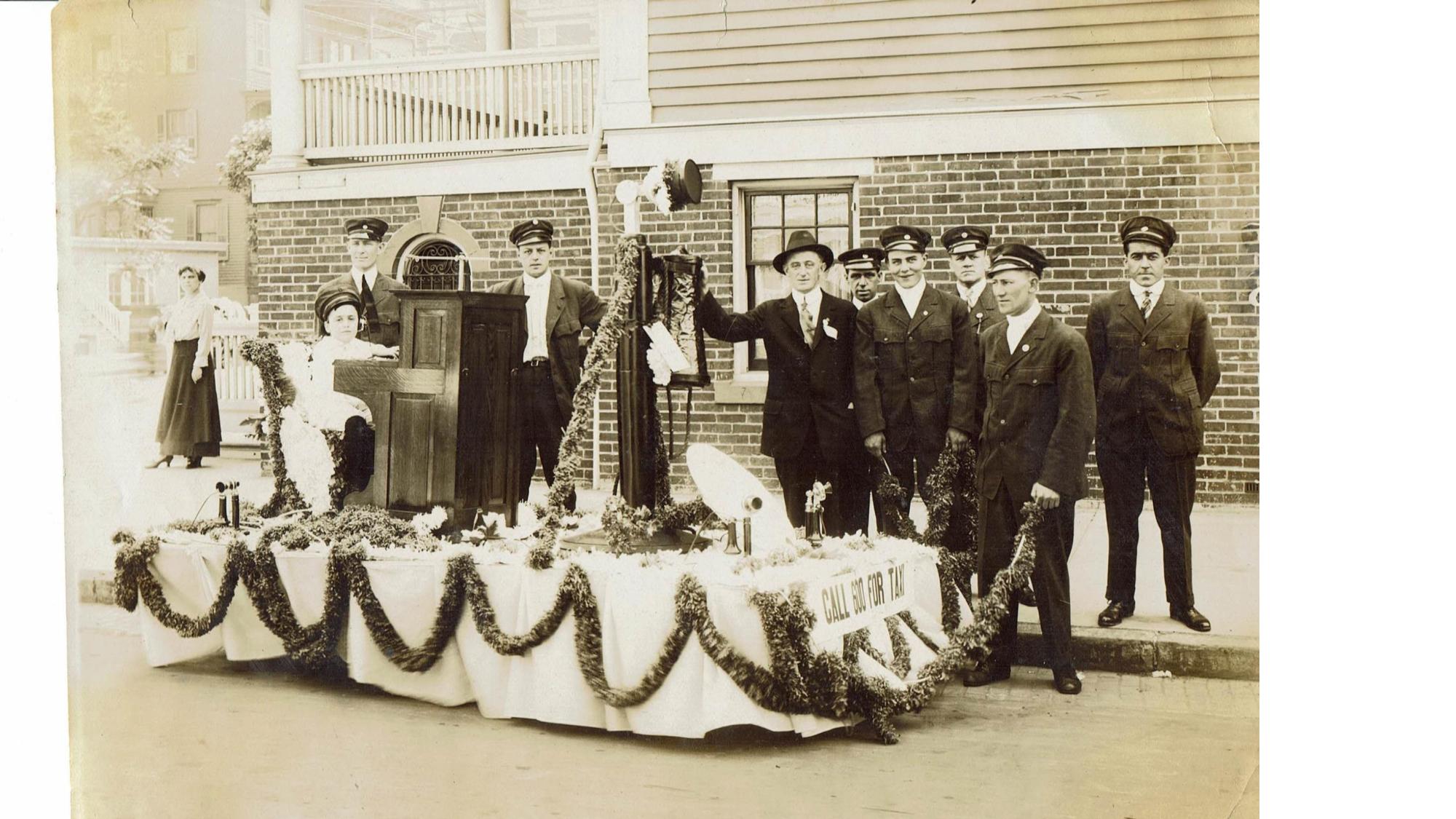
The other three men in the Cohen Family photograph all resemble each other, but who are they? Here are closeups of those three. You can see that they all have similar hairlines, long noses, and similar mouths and ears. To me, they look like brothers, although the third looks much younger than the first two, who have graying hair.

My hunch was that these three men were three of Joseph Cohen’s five sons who were still living in 1915. In 1915 the five living sons were Jacob, who would have been 43, Isaac, who would have been 41, Nathan, who would have been 39, and Samuel and Morris (the twins), who would have been 28.

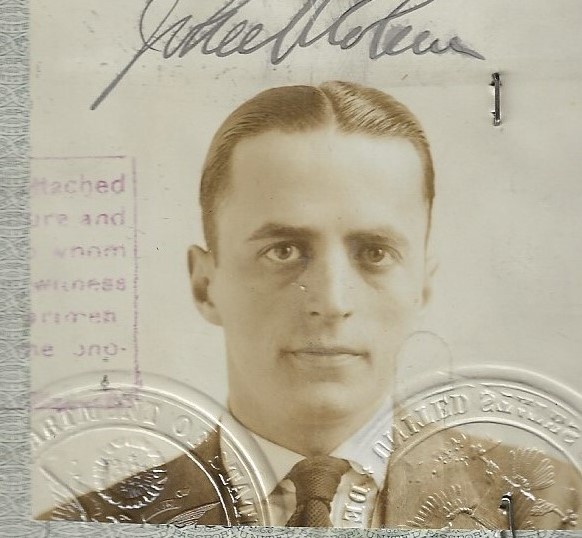
I found a passport photograph of Jacob Cohen taken in 1922 when he was 51, and I do not see a resemblance to the men in the photograph. He has more hair and a different shaped head. Ava agreed that Jacob is not in the Cohen Family photograph.

So that leaves Isaac, Nathan, and the two twins Samuel and Morris. Since the photograph was in Isaac’s possession, Ken and I assumed that Isaac was in the photograph, and we knew what Isaac looked like from other photographs in Ken’s collection.

For example, this photograph is of Isaac S. Cohen and Lilian Katz and their son Jac, Ken’s grandfather, who was born in April 1907. Ava estimated that this photograph was taken in about 1908, when Isaac would have been about 34.

Isaac, Jack, and Lillian Cohen, c. 1908

Isaac, Jac, and Lillian Cohen, c. 1908

Ava opined that Jac was about nine years old in this photograph of Isaac, Lillian and Jac, meaning it was taken in about 1916.

Isaac S., Jac, and Lillian Katz Cohen. c. 1917

Jac is also in this photograph, sitting at the piano, and Ava thought he  was about six or seven when it was taken, meaning it dates to about 1913. A closeup of Isaac from this photograph appears below it.

Isaac S Cohen, c. 1913

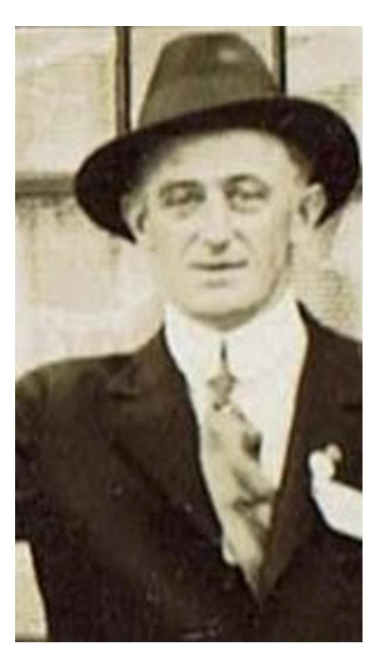
These two profile shots were snipped from two other photographs also taken around the same time. One was from a large photograph of men promoting the sale of war bonds for World War I; the other from a photograph that Ava dated as about 1915  of Isaac with Lillian and Jac and Lillian’s father Leo Katz.

Here’s a lineup of three of the photographs of Isaac and the closeup of the man on the left in the second row in the Cohen Family photograph. Based on all the above photographs, Ava concluded that the man on the left in the second row of the Cohen Family photograph was Isaac S. Cohen, Ken’s great-grandfather.

But who are the other two men in the family photo? Ava did not have enough information to reach a conclusion on that question. I have no photographs of Joseph’s son Nathan, so we have no way to identify him in the photograph. And I have no photographs of Morris, one of the twins, so cannot identify him either.

I was able to obtain two photographs of Samuel Cohen from his grandson Sam, but they were taken when Samuel was older. Even so, Ava and I both concluded that Samuel Cohen had ears that were closer to his head than any of the men in the Cohen Family photograph as well as a different shaped nose and thus was not in this photograph.

So without photographs of Joseph’s other sons, it’s impossible to make any identifcation of the other two men in the Cohen Family photograph.

And what about the women in the photograph? Assuming that Caroline Snellenburg Cohen is sitting next to Joseph, who are the other four women? They certainly appear to be much younger than Caroline. Joseph and Caroline Cohen had four daughters, and Ava thought it was likely that the four women are their daughters. In 1915 Bertha would have been 42, Sallye 38, Fannie 33, and Julia 31. The woman seated on the far right is the spitting image of Caroline. I’d be shocked if she was not her daughter.  So this could be a photograph of Joseph and Caroline, their four daughters, and three of their five sons. But we can’t be certain.

The other mystery is….who was cut out of the photograph?  Ava focused on the sleeves and the size of the hands and concluded that it was a woman. But who could she have been?

One possibility is that it was Lillian Katz, Isaac S. Cohen’s wife. Why, you ask, would she have been cut out of the picture?

Well, it appears that sometime between 1915, when they were living together in Atlantic City, and 1919, Isaac and Lillian separated and then filed for divorce in Allegheny County, Pennsylvania, in April 1919. They were divorced on February 20, 1920, on grounds of desertion. In 1920 Lillian was living with her parents in Pittsburgh with her son Jac (incorrectly listed here as John) and listed as divorced, and Isaac was living in Philadelphia with his sister Julia and her husband.1

Lillian Katz Cohen, 1920 US census, Census Place: Pittsburgh Ward 14, Allegheny, Pennsylvania; Roll: T625_1522; Page: 20B; Enumeration District: 550
Ancestry.com. 1920 United States Federal Census

Isaac Cohen 1920 US census, Census Place: Philadelphia Ward 38, Philadelphia, Pennsylvania; Roll: T625_1635; Page: 7A; Enumeration District: 1328
Ancestry.com. 1920 United States Federal Census

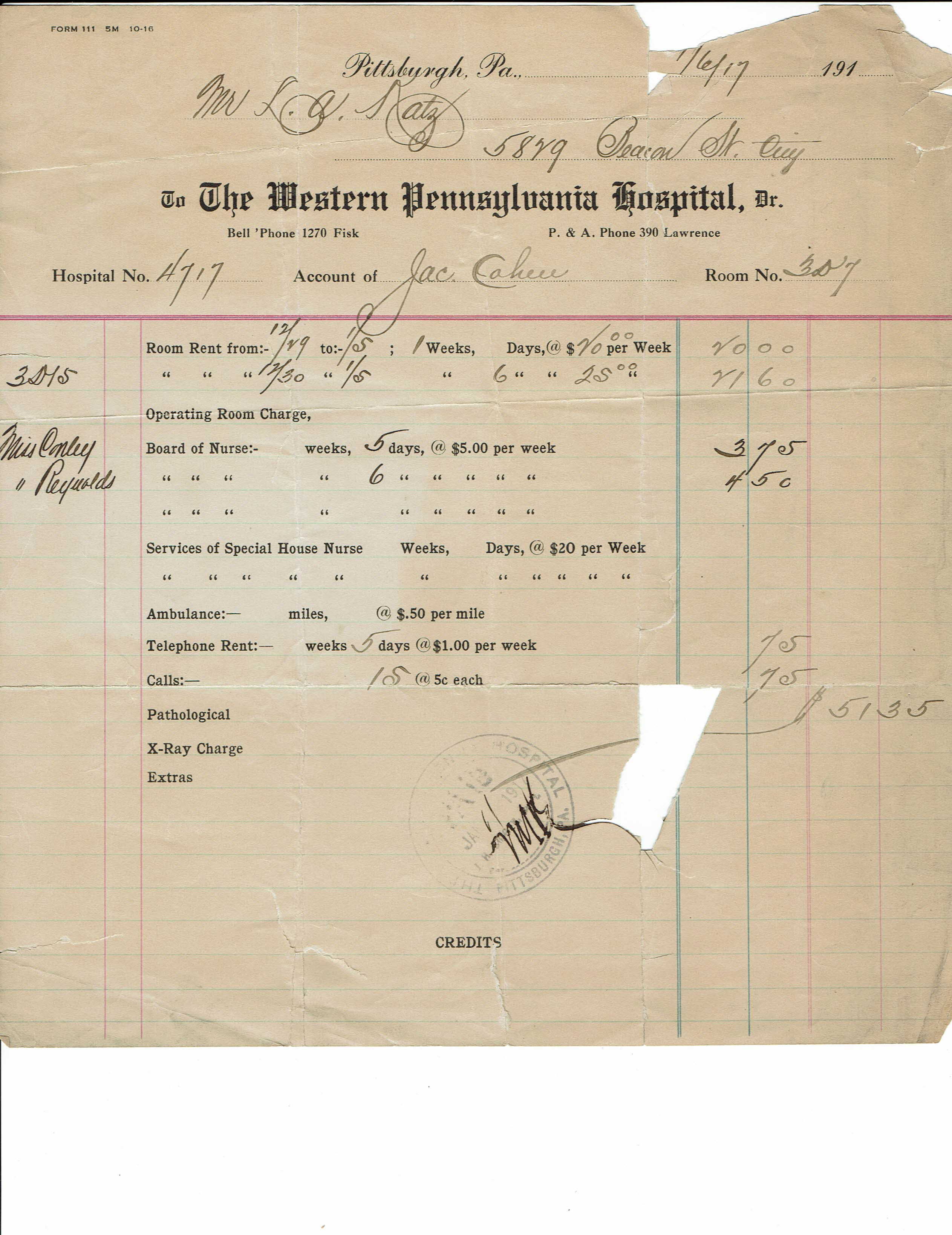
Ken told me that  when his grandfather Jac was a boy, he was run over by a trolley car while sledding; as a result, he lost an arm. We have the hospital record from Jac’s accident, and it’s dated January 6, 1917.  Ken wondered whether the injury to their son caused a rift between Isaac and Lillian, as sadly often happens when a child is seriously sick or injured and upset parents find it difficult to deal with the tragedy.

But the story has a happy ending. On August 12, 1921, Isaac and Lillian applied for a marriage license in Philadelphia and were remarried:

And records suggest that they remained married for the rest of their lives.

But maybe someone cut Lillian out of the family picture during the brief period when she and Isaac were divorced. It would seem odd that Lillian saved a photograph from which she had been removed, but stranger things have happened. But as Ava said, we really have no idea who was cut out or why. It’s just speculation.

In the end, we still have many questions but at least a few answers about the Cohen Family photograph. It’s a good reminder that I really should do my descendants a favor and go label all those photos from my own life.

Thank you to my cousin Ken for sharing the photographs and to Ava Cohn, aka Sherlock Cohn the Photogenealogist for her invaluable insights and her determination to get this right!


  1. Isaac listed his marital status as married; the divorce didn’t take effect until February 20, 1920, and the census was enumerated on January 17, 1920. Obviously Lillian was already considering herself divorced. 

The “Disappearance” of Arthur Cohen, My Grandfather’s First Cousin

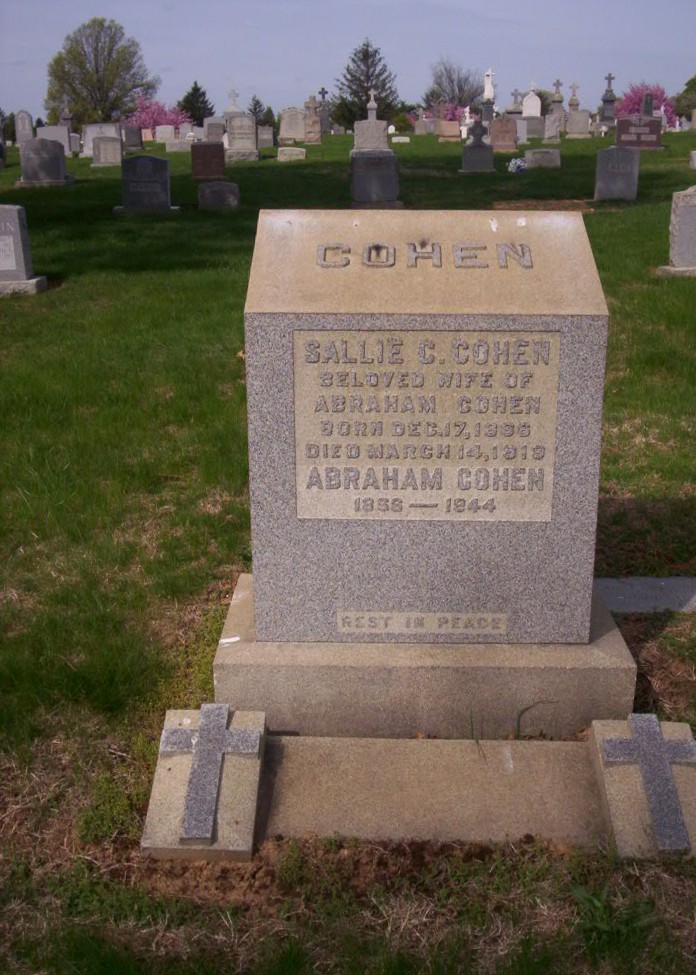
Way back in July, 2014, I wrote about my great-grandfather Emanuel Cohen’s youngest sibling, his brother Abraham, the thirteenth child of my great-great-grandparents Jacob Cohen and Sarah Jacobs. What I reported was that Abraham, born in Philadelphia on March 29, 1866, had married Sallie McGonigal in 1886, and they had five children, but three of those children died in childhood. Only two children survived—their son Leslie, their second child, and their son Arthur, their fifth and youngest child. There were almost twenty years between the two boys: Leslie was born in 1889, Arthur in 1907.  They lost their mother Sallie to the dreadful flu epidemic on March 14, 1919.

Gravestone for Sallie and Abraham Cohen, courtesy of Michael DeVane

Abraham Cohen remarried in 1920, and I was able to trace Abraham and his son Leslie up through their deaths, as described here.

But Arthur’s story was unfinished. The last record I had for him was the 1930 census when he was living with his father Abraham and stepmother Elizabeth in Philadelphia and working in a gas station. He was 23 at the time. After that, he disappeared. I could find other Arthur Cohens who matched in some ways, but not in others. Thus, I was unable to find anything after 1930 that was definitely about my Arthur Cohen.

Abe Cohen and family, 1930 US census, Year: 1930; Census Place: Philadelphia, Philadelphia, Pennsylvania; Page: 13A; Enumeration District: 0505; FHL microfilm: 2341874
Ancestry.com. 1930 United States Federal Censu

Until, that is, about a month ago when I received a comment on the blog from someone named Michael DeVane, who wrote, “I came across your blog while searching for information on Abraham Cohen, my grandfather. My father was Arthur Cohen. You really helped me fill in some of the missing information on my family. If you want to reach out to me, I will gladly help fill in some missing information to our family tree.” I immediately wrote back to Michael, and we arranged to chat by telephone a few days later.

To prepare for the conversation, I went back to all the research I’d done about Abraham and his family. One thing puzzled me. If Michael’s father was Arthur Cohen, why was his surname DeVane? Well, that clue led me to find more information, and then my conversation with Michael confirmed what I’d uncovered and added more insights. There was a very good reason that I’d not been able to find Arthur Cohen after 1930. By 1931, he’d changed his name to Arthur DeVane.

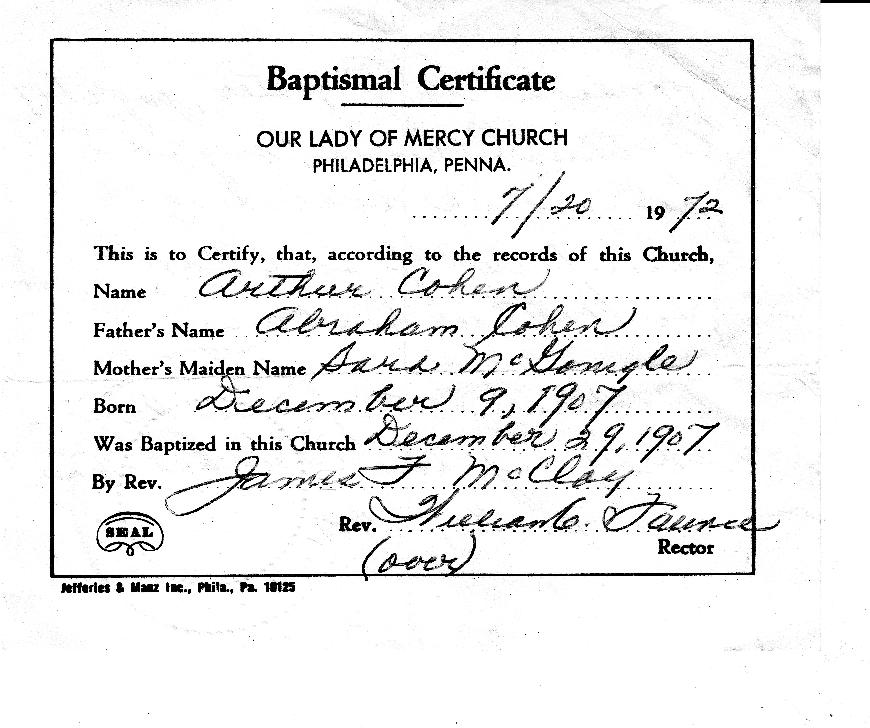
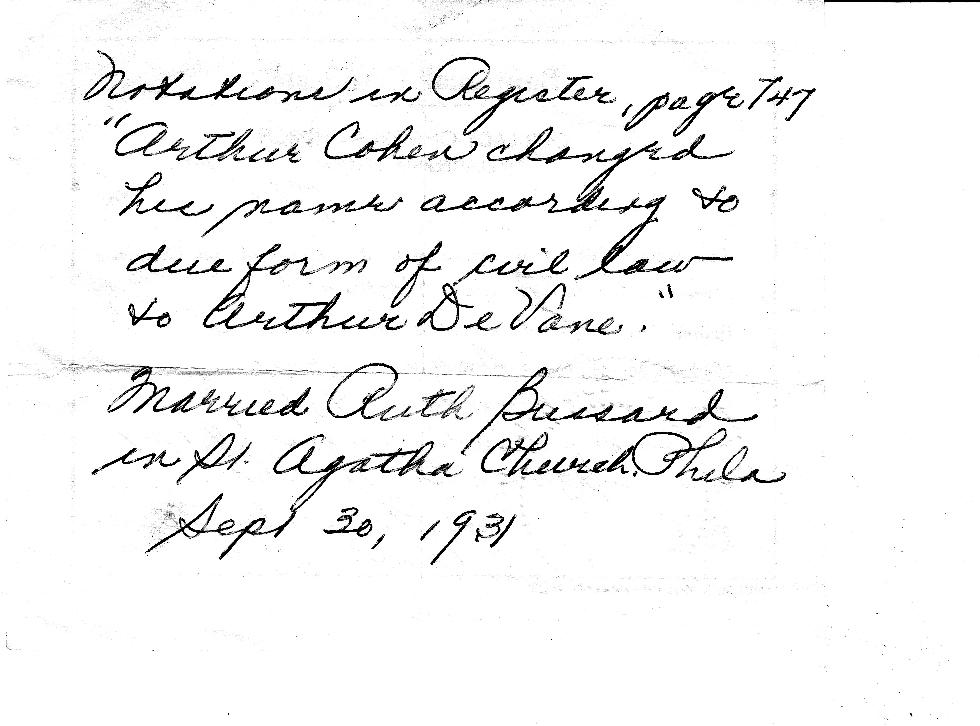
Once I knew that Arthur had in fact changed his name to DeVane, I located a marriage in the Philadelphia marriage index for Arthur DeVane and Ruth Bussard dated 1931. 1 Michael found in his family records the following document that confirmed that this marriage record was indeed for his father, born Arthur Cohen. It is his father’s baptismal certificate under the name Arthur Cohen with his parents identified.

On the reverse, it notes that Arthur changed his name to DeVane and that he married Ruth Bussard on September 30, 1931, at St. Agnes Church in Philadelphia. Michael thought he might contact the church authorities to see if the record for the name change can be located.

Michael had understood that his father changed his name from Cohen to avoid anti-Semitism, but now we both wonder whether it also had to do with the marriage to Ruth Bussard. Perhaps she didn’t want to take on such an obviously Jewish name. As you can see from the headstone above, both of Arthur’s parents identified as Catholic and are buried in a Catholic cemetery, so Arthur was neither raised Jewish nor identified himself as Jewish.

In any event, the marriage to Ruth did not last. In September 1939, Ruth filed for divorce, and in February 1940, divorce was granted.2 Ruth remarried later that year.3

On the 1940 census, Arthur was living as a lodger with a family, listing his marital status as single and his occupation as a signal man for the railroad.4

On January 8, 1942, Arthur DeVane enlisted in the US armed services and served during World War II until September 5, 1945, including almost two and a half years serving overseas.5 During that time, while stationed in England , he met his second wife, Nellie Keep. Nellie was born April 1, 1917, in Oxford, England to Edward Keep and Nellie Massey. She and Arthur were married in New Hampshire on December 18, 1947. Like Arthur, Nellie had been previously married and divorced.

Marriage record of Arthur Devane and Nellie Keep, New England Historical Genealogical Society; New Hampshire Bureau of Vital Records, Concord, New Hampshire, Ancestry,com. New Hampshire, Marriage and Divorce Records, 1659-1947

The record for their marriage is interesting. Arthur reported that his father’s name was Leslie DeVane, not Abraham Cohen, the true name of his father. He also reported that his father had been a jeweler, when in truth, like so many of my Cohen relatives, Abraham had been a pawnbroker. Michael wasn’t sure whether Arthur did this to hide his background from his new wife or for some other reason, but Nellie did at some point know the truth of Arthur’s family background because she revealed it to Michael.

Part of the family lore is that Arthur had hoped to take over his father’s pawnbroker business, but that his father Abraham lost the business when his second wife Elizabeth died in 1939 and her family acquired it and apparently pushed Abraham out. That is why, as noted in my earlier post, Abraham’s death certificate in 1944 listed his occupation as elevator operator—a job he’d had to take after losing his business.

Abraham Cohen death certificate.

That meant Arthur also lost the business. Instead, Arthur ended up rejoining the military and spent most of his career serving his country in the US Air Force, as has his son Michael. Arthur was stationed over the years in England, Massachusetts, and New Jersey. He retired as a master sergeant in the Air Force after twenty years of service.

Arthur DeVane, born Arthur Cohen, died on April 16, 1976, in Burlington, New Jersey. He was sixty-eight years old.6  He was survived by his wife Nellie, who died in 2005, 7 and their three children and their grandchildren.

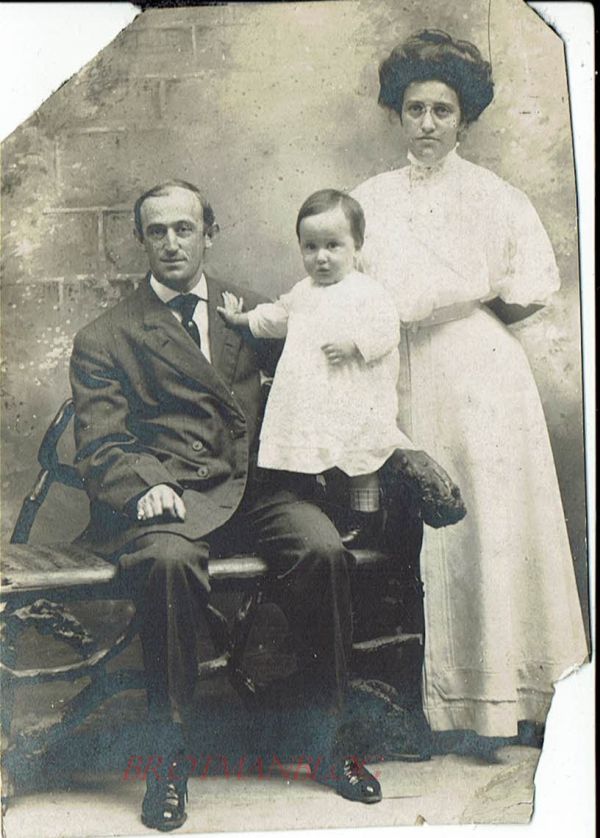
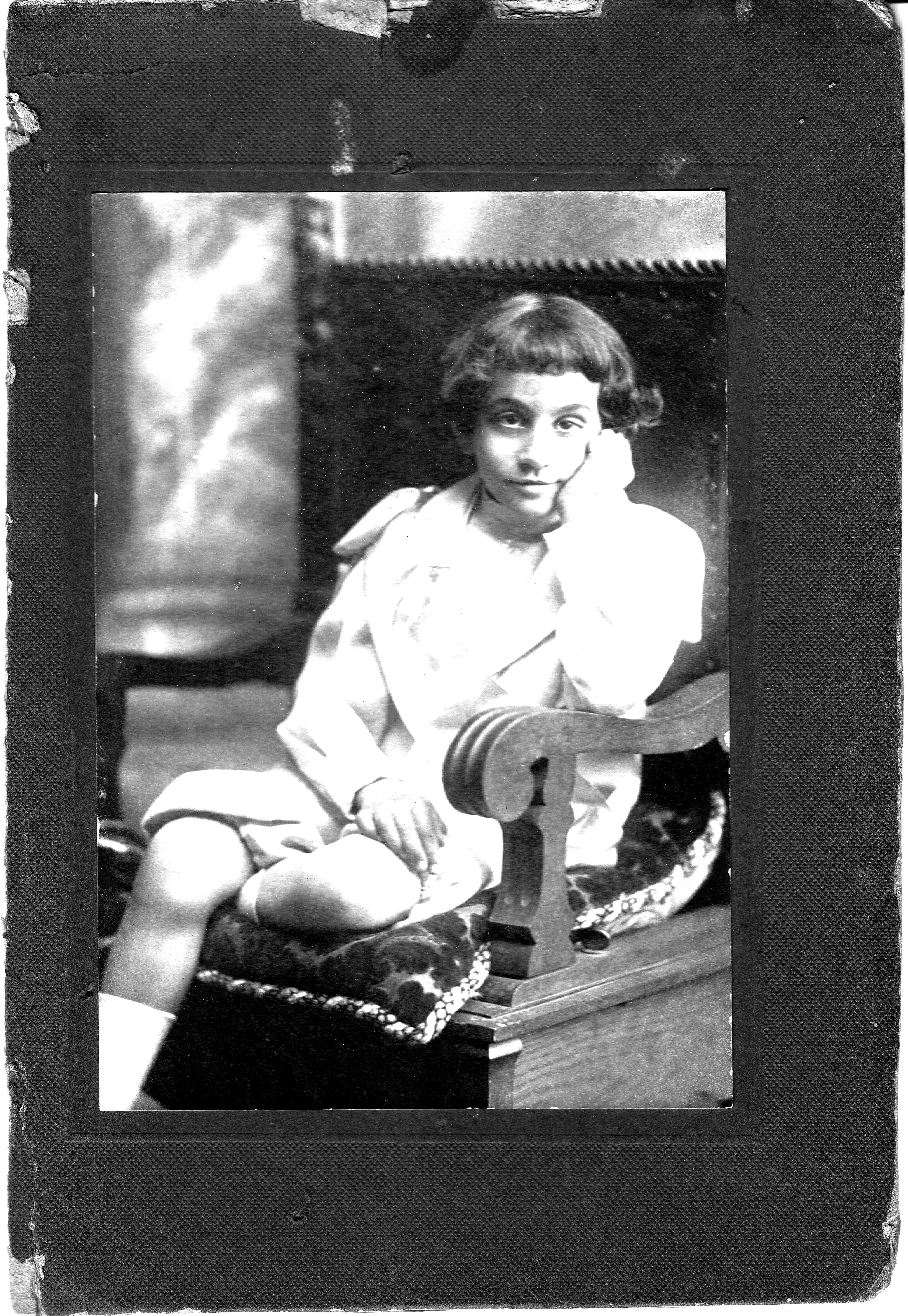
Michael kindly shared with me the following photograph of his father as a boy.

Arthur Cohen (later DeVane). Courtesy of Michael DeVane

I saw some similarity between young Arthur and his first cousin, once removed, my grandfather John Nusbaum Cohen, Sr., as a little boy, but it could just be the haircut.

John Cohen Sr as a baby

Michael also shared the following photograph of his father Arthur in 1948:

Arthur DeVane, 1948. Courtesy of Michael DeVane

I don’t see many resemblances here to either my father or my grandfather, except perhaps around the mouth and the large forehead.

John N. Cohen, Sr., 1921

John N. Cohen, Jr. c. 1945

I am so grateful to my cousin Michael, my father’s second cousin, for finding me and sharing his father’s story and photographs with me.


  1. Arthur J DeVane, Gender: Male, Spouse: Ruth H Bussard, Spouse Gender: Female
    Marriage Place: Philadelphia, Pennsylvania, United States, Marriage Year: 1931
    Marriage License Number: 606549, Digital GSU Number: 4141671, Ancestry.com. Philadelphia, Pennsylvania, Marriage Index, 1885-1951 
  2. The Philadelphia Inquirer – 27 Feb 1940 – Page 11, found at https://www.newspapers.com/clip/59928918/divorce-granted/?xid=637&_ga=2.20757178.305149426.1602707833-2106877110.1599576721 
  3. Ruth Devane, Gender: Female, Spouse: Marturano, Spouse Gender: Male
    Marriage Place: Philadelphia, Pennsylvania, United States, Marriage Year: 1940
    Marriage License Number: 716706, Digital GSU Number: 4141873, Ancestry.com. Philadelphia, Pennsylvania, Marriage Index, 1885-1951 
  4.  Year: 1940; Census Place: Philadelphia, Philadelphia, Pennsylvania; Roll: m-t0627-03723; Page: 61B; Enumeration District: 51-1118, Ancestry.com. 1940 United States Federal Census 
  5. Arthur J DeVane, Birth Date: 9 Dec 1907, Birth Place: Philadelphia, Philadelphia, Pennsylvania, USA, Gender: Male, Residence Date: 2 May 1950, Residence Place: Upper Darby, Delaware, Pennsylvania, USA, Ancestry.com. Pennsylvania, World War II Veteran Compensation Application Files, 1950-1966 
  6. Arthur Devane, Social Security Number: 182-10-8245, Birth Date: 9 Dec 1907
    Issue Year: Before 1951, Issue State: Pennsylvania, Last Residence: 08016, Burlington, Burlington, New Jersey, USA, Death Date: Apr 1976, Social Security Administration; Washington D.C., USA; Social Security Death Index, Master File, Ancestry.com. U.S., Social Security Death Index, 1935-2014 
  7.  Nellie A Devane, Social Security Number: 144-38-3406, Birth Date: 1 Apr 1917
    Issue Year: 1963, Issue State: New Jersey, Death Date: 26 Jun 2005, Social Security Administration; Washington D.C., USA; Social Security Death Index, Master File, Ancestry.com. U.S., Social Security Death Index, 1935-2014 

My Three-Times Great-Grandfather Hart Cohen, Witness for the Prosecution

Imagine being able to read the testimony your ancestor gave in a case back in 1831. Thanks to Teresa of the Writing My Past blog, I found a case where my three-times great-grandfather Hart Levy Cohen was a critical eyewitness to a crime.

Teresa wrote on her blog about the Proceedings of Old Bailey Online Project. As described on the project website, “The Proceedings of the Old Bailey, 1674-1913 [is a] fully searchable edition of the largest body of texts detailing the lives of non-elite people ever published, containing 197,745 criminal trials held at London’s central criminal court.”1 Teresa had found a number of interesting cases involving her English ancestors, and on a lark, I decided to search to see if I could find any references to my Cohen relatives who lived in London from about 1800 until 1851.

Old Bailey, photograph by Ben Sutherland from Crystal Palace, London, UK / CC BY (https://creativecommons.org/licenses/by/2.0)

Lo and behold, I found one case—an 1831 case in which Hart Cohen was a witness, not the defendant or the victim, fortunately.2  The case involved an alleged theft of money from a man named Michael Hart by a man named Isaac Isaacs. As described in the testimony recorded in the transcript of the trial, Michael Hart was a recent immigrant to England from Amsterdam and was courting Isaac Isaacs’ sister. According to Michael Hart, Isaacs grabbed Dutch notes worth 500 guilders from his hand and ran off with the money.

My three-times great-grandparents were present in the room when Isaacs took Michael Hart’s money, and Hart Cohen testified to the fact that he saw Isaacs snatch the notes. One witness, Mary Isaac (not a relative of the accused) testified that Michael Hart willingly gave the money to Isaacs. But the court found Isaacs guilty and sentenced him to “transportation for life,” meaning he was permanently exiled from England. I don’t know where Isaacs ended up, nor do I know where Michael Hart ended up.

UPDATE: Thank you to Teresa for pointing me to this site, which reveals that Isaac Isaacs was shipped of to what was then Van Diemen’s Island, now known as Tasmania. https://www.digitalpanopticon.org/life?id=obpt18311020-149-defend1043

In the testimony, Isaac Isaacs is referred to as “the prisoner” and Michael Hart is referred to either as “the prosecutor” or by his surname Hart. In the brief excerpt from the transcript below, I have added “the prosecutor” to any references to Michael Hart to prevent any confusion with my 3x-great-grandfather Hart Cohen. I also have highlighted a few relevant portions that I comment on below.

MICHAEL HART (through an interpreter.) I am a native of Amsterdam; I came to England nine or ten weeks ago, …. – I became acquainted with the prisoner, slightly, about a fortnight after I came to this country; I was courting his sister, and do so now. On a Monday morning, about eight o’clock, I met the prisoner in the neighbourhood, and went with him up the street to Whitechapel; we went into a public-house, and there had two quarterns of gin together- we then went back to the prisoner’s lodging: before we got there he asked me if I had my notes about me, and asked why I did not change them, as I could get English money for them; I said that at present I was not in need of money, and thought of saving them a little longer – I had them in my pocket at the time; they were two Amsterdam notes, for three hundred and two hundred guilders- he asked me to come home, and I went to his lodgings in Goulston-street, Whitechapel – when we got up stairs he asked me to let him look at the notes; I took them out of my pocket, intending to show them to him – I held them in my own hand; the prisoner took them out of my hand with one hand, and gave me a blow with his other hand – he went down stairs; I did not follow him immediately –[Hart] Cohen, his wife, and the prisoner’s wife and sister were in the room…. I went that evening to the Police-station, and told the inspector, who sent a Policeman with me, and he took the prisoner; I had a man with me, who interpreted for me – I have not seen or heard of my notes since – a guilder is worth 20d.

[Goulston Street was the street where my Cohen relatives were living on the 1841 English census. I tried to find a familial connection between Isaac Isaacs and my relatives but was unable to do so. I believe he was just a neighbor.]

New Goulston Street today

HART COHEN . I was in the prisoner’s room when he and the prosecutor came in, between eight and half-past eight o’clock in the morning – they spoke in Hebrew, which I understood, but did not notice what they were talking about; I saw [the prosecutor] Hart open his pocket-book, and take out some papers – the prisoner snatched them out of his hand, gave him a push, and ran down stairs; I could not see what the papers were, but [the prosecutor] Hart called out in Hebrew, “I have lost five hundred guilders;” I had seen him in possession of a three hundred and two hundred guilders Amsterdam notes; I have not seen them since.

[I found it interesting that Hart understood Hebrew—an indication that he was connected to Judaism and Jewish traditions.]

[Cross-examination of Hart Cohen]:  Who was in the room? A. My wife, the prisoner’s wife, his sister, and children: he being an intended brother-in-law, I did not like to interfere – I did not call Stop thief! my wife was alarmed – the prosecutor was standing up; he could have followed him down stairs if he chose – I had merely called there because the children were ill with the measles; I saw two men carrying the prisoner home, drunk, about two o’clock; the prosecutor went to Brighton, and my son went with him as an interpreter, and I wrote to him, directing my letters “Lewis Cohen,” which was my son’s name – the prisoner was to inquire at the post-office for a letter in that name; my wife is too ill to be here.

[When Hart testified “he being an intended brother-in-law,” I at first thought he meant that Isaacs was to be married to either his sister or his wife Rachel’s sister, but Isaacs was already married. On rereading, it was clear to me that Hart Cohen was referring to the fact that Michael Hart was courting Isaacs’ sister and thus was his intended brother-in-law.” It’s clear from this comment and the one that follows that Hart had not wanted to get involved in this dispute.]

[It was the mention of his son Lewis that helped to convince me that this was my Hart Cohen. Lewis would have been eleven years old at that time.]

[Witness for Isaacs] MARY ISAAC . I was at the prisoner’s house, between eight and nine o’clock, when this gentleman came up stairs, and he gave Mr. Isaacs the notes – I live there as servant to the prisoner; I am not related to him; Mr. and Mrs. Cohen. Mr. and Mrs. Isaacs, and I were in the room, nobody else – I cannot speak Hebrew; I saw the prosecutor give the prisoner the notes; he put them into his pocket, had his breakfast, shaved himself, and went down – before he went down the prosecutor took out his pocket-book, and wrote down on a piece of paper, how many guilders there were, and how much they would come to – I did not read the paper; he wrote it in numbers – I understand numbers; the prisoner then went down – Mr. Cohen went down directly after.

….

HART COHEN . I did not notice [Mary] Isaac there, and do not suppose that she was – it is a middling sized room, and has a bed in it.3

[This testimony effectively undercut Mary Isaac’s testimony. Hart made it clear that there was no way that he would not have seen her if she were in the room, given the size of the room.]

There were other witnesses and testimony, but I was primarily interested in the role my relative played in this dispute. And what did I learn? That my three-times great-grandfather was a man who did not initially want to get involved, but did his civic duty and testified to the facts he observed, that he knew Hebrew, and that my great-grandparents were neighbors who would come check on sick children. Given that I’d known nothing about his personality beforehand, these are wonderful insights.

Take a look at the Old Bailey project website if you ever had relatives living in London. It could provide interesting insights into their lives.


  1. Tim Hitchcock, Robert Shoemaker, Clive Emsley, Sharon Howard, and Jamie McLaughlin, et al., “Home page.” The Old Bailey Proceedings Online, 1674-1913 (www.oldbaileyonline.org, version 7.0, 24 March 2012).
  2. Old Bailey Proceedings Online (www.oldbaileyonline.org, version 8.0, 04 October 2020), October 1831, trial of ISAAC ISAACS (t18311020-149. 
  3. Ibid. Emphasis and annotations added. 

Meier Katzenstein: The One Who Left Home

Having discussed the three daughters of Amalie Goldschmidt and Juda Katzenstein—Helene, Fredericke, and Henriette—and their families, we now finally reach their last child and only son, Meier Katzenstein.1  And his story is far different from that of his sisters, all of whom lived almost all their lives in Germany, not far from where they were born in Eschwege, and whose descendants either were killed by or escaped from the Nazis.

Meier was born on August 6, 1860, in Eschwege, as we have seen, but in 1888 he immigrated to the United States, changing the path of his life as well as that of his descendants. According to his passport application (depicted below), he arrived in New York on October 10, 1888, and settled there.

Meier Katzenstein, 1903 passport application, National Archives and Records Administration (NARA); Washington D.C.; Roll #: 623; Volume #: Roll 623 – 13 May 1903-18 May 1903
Ancestry.com. U.S. Passport Applications, 1795-1925

I love the physical description of Meier on his application: five foot seven inches tall, high forehead, light blue eyes, straight nose, small mouth, round chin, blond hair, florid complexion, and a round face. He sounds quite adorable.

Meier married Emma Bacharach in New York on October 27, 1891.2 Emma, the daughter of Jakob Bacharach and Sophia Pfann, was also a recent immigrant. She was born in Mainz, Germany, on July 5, 1869,3 and came to the US on November 5, 1889, accompanied by someone named Isaac Bachrach who was 48 years old. I’ve not been able to identify Isaac’s connection to Emma, but presumably he was an uncle or cousin.4

Emma and Meier had one child, a daughter Sophia (presumably named for Emma’s mother Sophia Pfann), born on August 19, 1892, in New York.5 Emma must have taken little Sophia back to Germany during her first year to meet her family because I found a ship manifest showing them sailing together from Hamburg to New York in the summer of 1893.

Sophia and Emma Katzenstein, ship manifest, Staatsarchiv Hamburg; Hamburg, Deutschland; Hamburger Passagierlisten; Volume: 373-7 I, VIII A 1 Band 085; Page: 958; Microfilm No.: K_1750, Month: Direkt Band 085 (1 Jul 1893 – 31 Aug 1893), Staatsarchiv Hamburg. Hamburg Passenger Lists, 1850-1934

Meier became a naturalized citizen of the United States on May 4, 1894.

“New York Naturalization Index (Soundex), 1792-1906,” database with images, FamilySearch (https://familysearch.org/ark:/61903/3:1:3QSQ-G937-NSGK-M?cc=2043782&wc=SFCB-HZ9%3A1399296801 : 4 February 2015), Roll 128, K324-K400 (Kutzelmann, Adam J-Klee, Johannes) > image 348 of 5224; citing NARA microfilm publication M1674 (Washington, D.C.: National Archives and Records Administration, n.d.).

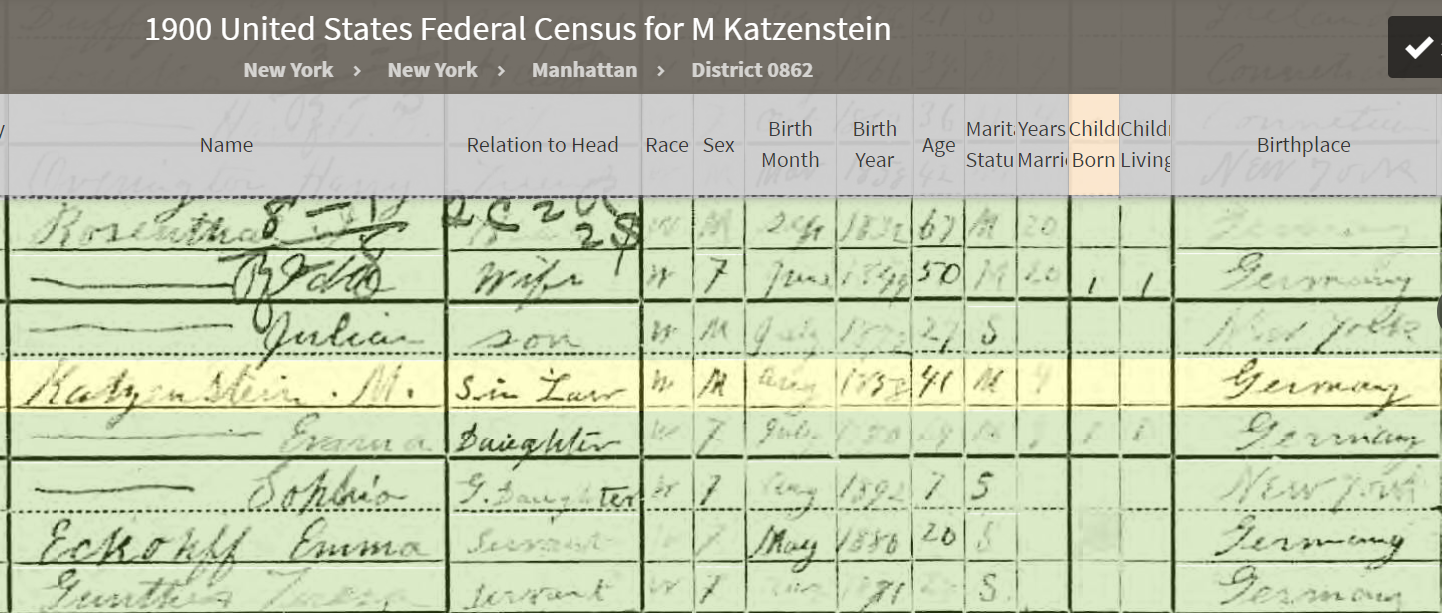
In 1900, Meier, Emma, and Sophia were living in New York City with another family. The head of household was Rosenthal (first name not legible); living with him was his wife Ida Rosenthal and their son Julian Rosenthal, two servants, and Meier, Emma, and Sophia.

Meier Katzenstein, 1900 US census, Year: 1900; Census Place: Manhattan, New York, New York; Page: 7; Enumeration District: 0862; FHL microfilm: 1241119, Enumeration District: 0862; Description: City of New York, 31st Assembly Dist; 22nd Election District (pt) bounded by E 129th, Park Ave, E 126th, Madison Ave, Ancestry.com. 1900 United States Federal Census

I was thrown off by this census record because it identifies Emma as the daughter, Sophia as the granddaughter, and Meier as the son-in-law of the head of household.  If Emma’s birth name was Bacharach and her parents were Jakob and Sophia, how could she be the daughter of Ida Rosenthal and her husband? It took a couple of hours to sort out that Ida Rosenthal was born Ida Pfann and was the sister of Sophia Pfann, Emma’s mother. Thus, Emma was Ida Rosenthal’s niece, not her daughter.

Meier’s occupation on the 1900 census is extremely hard to read as it is very faint, but I think I can discern the word “Sales” and perhaps “Linens,” the same occupation listed above for Emma’s cousin Julian Rosenthal. His passport application in 1903, depicted above, is more specific. He listed his occupation there as “manufacturer and importer of embroideries.”

By 1910, Meier and his wife and daughter had their own home in Manhattan, and Meier’s occupation this time is easily read as Manager, Fancy Linens. They also had a servant living with them.

Meier Katzenstein, 1910 US census, Year: 1910; Census Place: Manhattan Ward 12, New York, New York; Roll: T624_1024; Page: 3A; Enumeration District: 0622; FHL microfilm: 1375037
Ancestry.com. 1910 United States Federal Census

The family did some traveling in 1911—to Hong Kong and to Hawaii. Meier must have been doing well in his business, having a servant and traveling to exotic locations.6

His daughter and only child Sophia Katzenstein married Elias Lustig on February 19, 1914, in New York.7 Like Sophia, Elias was a native of New York City, born there on May 31, 1890, and the son of David and Rachel Lustig.8 Elias and Sophia’s first child David Miles Lustig was born on August 22, 1916, in New York.9

Unfortunately, Meier Katzenstein did not live to see the birth of his grandson; on February 20, 1916, at the age of 55, he died in New York City, just six months before his grandson’s birth. My guess is that his grandson’s middle name Miles was in Meier’s memory.10

In his will, Meier left everything to his wife Emma and then to his daughter Sophia in the event Emma did not survive him. Interestingly, he provided that in the event that Emma predeceased him and Sophia was still a minor, his “brother-in-law Max Werner of Eschwege” was to be her guardian. Max was married to Meier’s older sister Helene Katzenstein Werner. But why would Meier have appointed someone living in Germany to be the guardian of his daughter in New York? Imagine how Sophia’s life would have been different if in fact her parents had both died before she reached adulthood and she had moved to Germany?

Meier Katzenstein’s will, Record of Wills, 1665-1916; Index to Wills, 1662-1923 (New York County); Author: New York. Surrogate’s Court (New York County); Probate Place: New York, New York, Notes: Wills, 1021-1023, 1915-1916, Ancestry.com. New York, Wills and Probate Records, 1659-1999

Of course, it all was irrelevant since Emma did not predecease Meier, and Sophia was already an adult when Meier died. In 1920, Emma was living with Sophia and Elias and their son David Miles (listed here as Miles) in New York City. Elias was working as a merchant. 11 In 1921, Sophia and Elias had a second child.

I could not find Emma on the 1930 or 1940 census, but in 1930 Sophia and Elias were living in Queens in 1930 with their children, and Elias was the owner of a hat factory.12 Sometime thereafter, the marriage between Sophia and Elias ended, and in 1936 she married Saul Baron, with whom she and her children were living in New York in 1940. Saul was an attorney in private practice.13

Emma Bacharach Katzenstein died on February 18, 1941, in New York; she was 71.14

Meier Katzenstein’s choice to leave Germany for the United States back in 1888 spared his family the tragedies endured by so many of his relatives back in Europe during the Holocaust, but in one way the actions of Hitler still indirectly inflicted tragedy on his descendants. His grandson David Miles Lustig, named in his memory, was killed during World War II. While returning from a mission over China in early 1945, his plane was shot down, and David drowned in a small river after bailing out of the plane. He was 28 years old and a graduate of Princeton University.15

His mother Sophia Katzenstein Lustig Baron died just nine years later at the age of 58 on November 9, 1950.16  She was survived by her husband Saul Baron, her daughter and grandchild.


Having now covered all the children of Amalie Goldschmidt Katzenstein, I have a few updates to other relatives to write about before turning to Amalie’s younger brothers, Selig and Falk Goldschmidt, the last two children of my 4x-great-uncle, Meyer Goldschmidt.


  1. The spellings of his name vary on different documents between Meyer and Meier,  but I’ve opted to use Meier. 
  2. “New York, New York City Marriage Records, 1829-1940,” database, FamilySearch (https://familysearch.org/ark:/61903/1:1:24HL-R32 : 10 February 2018), Meier Katzenstein and Emma Bacharach, 27 Oct 1891; citing Marriage, Manhattan, New York, New York, United States, New York City Municipal Archives, New York; FHL microfilm 1,452,198. 
  3. Emma Bacharach birth record, Stadtarchiv Mainz; Mainz, Deutschland; Zivilstandsregister, 1798-1875; Signatur: 50 / 72, Year Range: 1869, Ancestry.com. Mainz, Germany, Births, Marriages and Deaths, 1798-1875 
  4. Emma Bacharach, passenger manifest, Year: 1889; Arrival: New York, New York, USA; Microfilm Serial: M237, 1820-1897; Line: 15; List Number: 1524, Ancestry.com. New York, Passenger and Crew Lists (including Castle Garden and Ellis Island), 1820-1957 
  5. New York, New York City Births, 1846-1909,” database, FamilySearch (https://familysearch.org/ark:/61903/1:1:2W9D-B77 : 11 February 2018), Sophia Katzenstein, 19 Aug 1892; citing Manhattan, New York, New York, United States, reference cn 32010 New York Municipal Archives, New York; FHL microfilm 1,322,266. 
  6.  National Archives and Records Administration (NARA); Washington, D.C.; Passenger Lists of Vessels Arriving at Honolulu, Hawaii, compiled 02/13/1900 – 12/30/1953; National Archives Microfilm Publication: A3422; Roll: 031; Record Group Title: Records of the Immigration and Naturalization Service, 1787 – 2004; Record Group Number: RG 85, Ancestry.com. Honolulu, Hawaii, Passenger and Crew Lists, 1900-1959. 
  7.  Sophie Katzenstein, Gender: Female, Marriage License Date: 9 Feb 1914, Marriage License Place: Manhattan, New York City, New York, USA, Spouse: Elias Lustig, License Number: 4135, New York City Municipal Archives; New York, New York; Borough: Manhattan, Ancestry.com. New York, New York, Marriage License Indexes, 1907-2018; Sophie Katzenstein, Gender: Female, Marriage Date: 19 Feb 1914, Marriage Place: Manhattan, New York, USA, Spouse: Elias S Lustig, Certificate Number: 5033, Ancestry.com. New York, New York, Extracted Marriage Index, 1866-1937 
  8.  Elias Lustig, Marital status: Married, Birth Date: 31 May 1890, Birth Place: New York, USA, Street Address: 601 W 162, Residence Place: Manhattan, New York, New York, USA, Registration State: New York; Registration County: New York; Roll: 1786806; Draft Board: 147, Ancestry.com. U.S., World War I Draft Registration Cards, 1917-1918 
  9. David Miles Lustig, Birth Date: 22 Aug 1916, Birth Place: New York City, New York
    Registration Date: 16 Oct 1940, Registration Place: New York City, New York, New York
    Next of Kin: Elias Lustig, Ancestry.com. U.S., World War II Draft Cards Young Men, 1940-1947 
  10. Meier Katzenstein, Age: 57, Birth Year: abt 1859, Death Date: 20 Feb 1916
    Death Place: Manhattan, New York, USA, Certificate Number: 5960, Ancestry.com. New York, New York, Extracted Death Index, 1862-1948 
  11. Elias Lustig and family, 1920 US census, Year: 1920; Census Place: Manhattan Assembly District 23, New York, New York; Roll: T625_1226; Page: 41B; Enumeration District: 1489, Enumeration District: 1489; Ancestry.com. 1920 United States Federal Census 
  12. Elias Lustig and family, 1930 US census, Year: 1930; Census Place: Queens, Queens, New York; Page: 5B; Enumeration District: 0296; FHL microfilm: 2341330,
    Ancestry.com. 1930 United States Federal Census 
  13.  Sophie K Lustig, Gender: Female, Marriage License Date: 22 May 1936, Marriage License Place: Manhattan, New York City, New York, USA, Spouse: Saul J Baron
    License Number: 10611, New York City Municipal Archives; New York, New York; Borough: Manhattan; Volume Number: 5, Ancestry.com. New York, New York, Marriage License Indexes, 1907-2018. Saul Baron and family, 1940 US census, Year: 1940; Census Place: New York, New York, New York; Roll: m-t0627-02656; Page: 5B; Enumeration District: 31-1351, Ancestry.com. 1940 United States Federal Census 
  14.  New York City Department of Records & Information Services; New York City, New York; New York City Death Certificates; Borough: Manhattan; Year: 1941, Ancestry.com. New York, New York, Index to Death Certificates, 1862-1948 
  15. David Miles Lustig obituary, Daily News, New York, New York
    07 Mar 1945, Wed • Page 352 
  16. Sophie Baron, Age: 58, Birth Date: abt 1892, Death Date: 9 Nov 1950
    Death Place: Manhattan, New York, New York, USA, Certificate Number: 23658
    Ancestry.com. New York, New York, Death Index, 1949-1965 

The Tragedy of Bennie Cohen, Betty Schnadig Cohen’s Grandson

Betty Schnadig and Bernard Arie Cohen and two of their four children were murdered in the Nazi concentration camps. Their oldest child Arnold survived, but his story is also terribly tragic. Thank you once again to my cousin Betty, Arnold’s daughter, for sharing their story and the family photographs posted here.

Arnold was a traveling salesman, and he married Saartje Odenwald in Groningen, Holland, on October 18, 1936.1

Wedding of Saartje Odenwald and Arnold Cohen, 1936. Courtesy of Betty de Liever

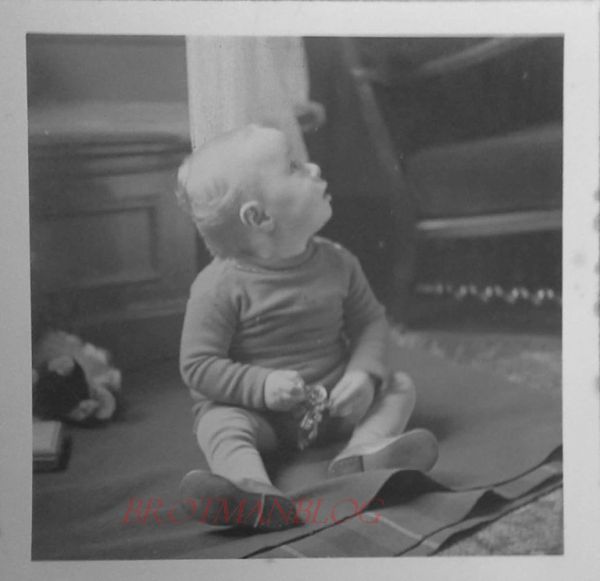
Their son, Bernard Arie, known as Bennie, was born a year later on November 15, 1937, in Den Bosch, where Arnold and Saartje had settled after marrying. Den Bosch is about 150 miles southwest of Groningen. Bennie was named in honor of his paternal grandfather, who was, however, still living at that time. Here are some photographs of Arnold, Saartje, and Bennie:

Bernard Arie “Bennie” Cohen. Courtesy of Betty de Liever

Bernard Arie “Bennie” Cohen Courtesy of Betty de Liever

Saartje, Bennie, and Arnold Cohen. Courtesy of Betty de Liever

When I started to search for what happened to Arnold and his family during the Holocaust, I was perplexed. Arnold and his wife Saartje both survived, but their son Bennie did not. He was only six years old. How could it be that he was murdered at Auschwitz and both his parents survived?

Researching that question led me to a truly devastating story that is recorded on the Stolpersteine website devoted to this family. Arnold and Saartje knew a couple who were active in the Resistance movement, Piet Toxopeus and Ellen Dwars, who arranged for a man named Geevers to take little Bennie into hiding. Geevers took three thousand guilders from the Cohens, but never in fact took Bennie into his home. Somehow instead Bennie ended up in a town called Dordrecht with a woman named Els van As, who took many Jews into her house to hide them from the Nazis. Dordrecht is 40 miles west of Den Bosch, and Bennie’s parents had no idea that that was where he had been taken.

Meanwhile, Piet and Ellen hid Arnold and Saartje in Bennekom. That placed them about 57 miles northeast of Dordrecht where their son was being hidden. In August 1942, Arnold and Saartje were then placed with an older couple, the Laars, in Ede, a town near Bennekom, where they stayed safely until after the war.

But their son Bennie was not as fortunate, as told in the Stolpersteine website:

It happened on Monday evening, October 25, 1943: the insensitive police officer Herman Gerard Feodor Wolsink from Dordrecht pulled 5-year-old Bennie Cohen into the horror of the war.

Here and there in Dordrecht, Jewish hunters had been working all day long at addresses where people might be in hiding…..In the house of the Van As family on the Vlietweg, they find a radio set and a money box with twenty thousand guilders in it. …. The Jew hunters suspect that a Jewish child is also hiding at this address. The Hague detective Cornelis Johannes Kaptein therefore orders Wolsink to take a closer look at the children who are sleeping in the attic. And then this happens, according to a maternity nurse who lived in rooms with the Van As family, and who told it after the war.

Bennie was impressed to always say his name was De Koning, and not Cohen. When Wolsink asked the boy for his name, he said: “Bennie de Koning.”

“Wolsink then asked,” said the nurse, “what his mother’s name was and then the poor child said: ‘Saartje’. To which Wolsink said: “Haha, a Jew after all!” Then he pulled down the little boy’s pajama bottoms and said, “It’s a Jew.” This child had to come along then. 

About 3.5 months later this child was dead: deported to Auschwitz via camp Westerbork and exterminated there on 11 February 1944. His life had already ended at the age of six.

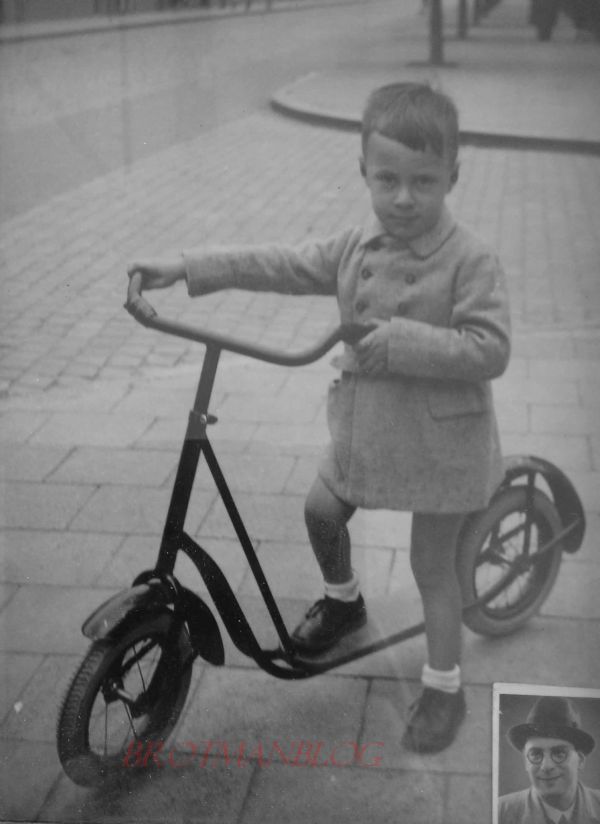
I ask you to look at these photographs of this beautiful little boy. How could anyone do this to anyone, let alone a six year old child?

Bernard “Bennie” Arie Cohen. Courtesy of Betty de Liever

Bernard “Bennie” Arie Cohen Courtesy of Betty de Liever

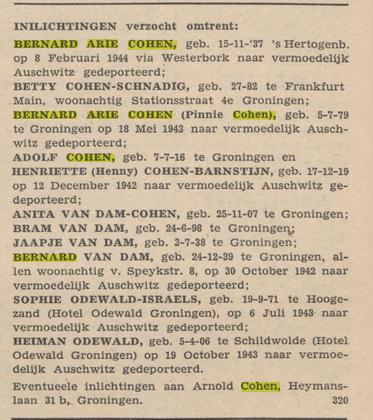
On November 9, 1945, Arnold Cohen posted this heartbreaking notice in the Nieuw Israelietisch Weekblad, asking for information about his missing family members, including his son, his parents, his siblings, his nephews, and his in-laws, all of whom had been murdered by the Nazis:

Nieuw Israelietisch weekblad, November 9, 1945, found at https://tinyurl.com/yy2fyql6
09-11-1945

Arnold and Saartje somehow found the strength to go on. They had two daughters born after the war, and Arnold became a wholesaler of paper products in Groningen. Arnold died on December 15, 1967,2 and his wife Saartje on April 19, 1978.3 It’s hard to imagine how anyone finds hope after what they experienced, but having more children is certainly evidence that Arnold and Saartje believed that goodness and love can still exist and can prevail in this world.

De Telegraaf
December 16, 1967, found at https://tinyurl.com/y69tkn89

Thank you again to Bert de Jong and Rob Ruijs for all their help and especially to my cousin Betty for sharing these precious photographs and her family’s heartbreaking story. Betty lost her grandparents, her aunts and uncles and cousins, and her brother Bennie in the Holocaust.


  1. Arnold Cohen, Gender: Mannelijk (Male), Age: 32, Birth Date: abt 1904, Marriage Date: 15 okt 1936 (15 Oct 1936), Marriage Place: Groningen, Father: Bernard Arie Cohen, Mother: Betty Schnadig, Spouse: Saartje Odewald, BS Marriage, Ancestry.com. Netherlands, Civil Marriage Index, 1795-1950. Original data: BS Huwelijk. WieWasWie. https://www.wiewaswie.nl/: accessed 24 May 2016. 
  2. Arnold Cohen, Age: 63, Birth Date: abt 1904, Birth Place: Groningen, Death Date: 15 dec 1967, Death Place: Groningen, Father: Bernard Arie Cohen, Mother: Betty Schnadig, AlleGroningers; Den Haag, Nederland; Burgerlijke stand (overlijdensakten),Ancestry.com. Netherlands, Death Index, 1795-1969. Original data: BS Overlijden. WieWasWie. https://www.wiewaswie.nl/: accessed 24 May 2016. 
  3. Death notice, Nieuw Israelietisch weekblad, April 21, 1978, found at https://tinyurl.com/yxdljtf7 

Betty Schnadig Cohen’s Heartbreaking Story, Part I

As we saw, Betty Schnadig married Bernard Arie Cohen from Holland, and they had four children born in Groningen in Holland: Arnold, Anita, Simona Hedda, and Adolf. Bernard Arie Cohen was a merchant in the rag, scrap metal, and paper business in Groningen.

I was very fortunate to connect with my fifth cousin Betty, Betty Schnadig Cohen’s granddaughter and namesake, who kindly shared the family photographs I’ve included in this blog post. Thank you also once again to Bert de Jong and also to Rob Ruijs who found many of the notices from Dutch newspapers and introduced me to the Delpher.nl website for Dutch research.

Here, for example, is a May 7, 1903, wedding announcement for Betty and Bernard, thanking everyone for their kind wishes.

Nieuwsblad van het Noorden 07-05-1903 (May 7, 1903), 
found at https://tinyurl.com/y6enc386

In this photograph, Betty and Bernard are dressed in costume to celebrate Purim:

Betty Schnadig and Bernard Arie Cohen. Courtesy of Betty de Liever

This adorable little boy in the sailor outfit is their first-born child, Arnold, probably taken in Groningen when he was about three or four, or in about 1908:

Arnold Cohen c. 1908 Courtesy of Betty de Liever

This is a newspaper notice announcing Arnold’s bar mitzvah in February, 1917.

Centraal blad voor Israëlieten in Nederland
02-02-1917
found at https://tinyurl.com/y6fl8gsa

This is a lovely photograph of all  four children probably taken in the early 1920s.

Arnold, Anita, Adolf, and Simona Cohen. Courtesy of Betty de Liever

And here is an announcement of Adolf Cohen’s bar mitzvah in 1929:

Nieuw Israelietisch weekblad
August 9, 1929 found at https://tinyurl.com/y66damno

The family that celebrated these joyous occasions was destroyed just fifteen years after Adolf’s bar mitzvah.

According to a Stolpersteine website devoted to the Cohen family, when World War II started in 1939, Bernard very quickly realized the dangers ahead. After a swastika was painted on the front of their home in Groningen along with the word “Jood,” he knew they had to go into hiding.

House of Bernard and Betty Cohen in Groningen. Courtesy of Betty de Liever

But their efforts to hide were not ultimately successful. Betty Schnadig and Bernard Arie Cohen did not survive; they were arrested on November 11, 1942, and sent to the detention camp at Westerbork, from which they were then deported to Sobibor on May 18, 1943, and immediately gassed to death upon arrival.

Betty Schnadig Cohen. Courtesy of Betty de Liever

Bernard Arie Cohen. Courtesy of Betty de Liever

Of their four children, only two survived. One was their older daughter Simona Hedda. I located a card for her in the Arolsen Archives showing she was registered with the Judenrat in Amsterdam. The card has very little information other than Simona’s name, birth date, and address, and it’s not dated, but it appears that Simona was living in Amsterdam during the Nazi occupation of the Netherlands.

1 Incarceration Documents / 1.2 Miscellaneous / 1.2.4 Various Organizations /
1.2.4.2 Index cards from the Judenrat (Jewish council) file in Amsterdam /
Reference Code 124200009/ ITS Digital Archive, Arolsen Archives

Somehow Simona avoided deportation and survived the war. On August 29, 1946, in Groningen, Simona married Jan de Jong, who was born on March 22, 1914, in Ooststellingwerf. Simona (apparently known as Mona) and Jan had a son Bernard de Jong (presumably named for Simona’s father) born November 4, 1948, but he died two and half months later on January 12, 1949.1 Sadly, Simona’s marriage to Jan did not long survive the loss of their child. They were divorced on April 28, 1950, in Groningen.

Thank you so much to Rob Ruijs, who found most of this information about Simona and her family, including these two newspaper notices for the birth and death of Simona and Jan’s infant son Bernard.

De waarheid 08-11-1948

Thanks to Rob, I also know that Simona moved to Amsterdam after her divorce and worked for the city, eventually becoming the bureau chief. She died on February 5, 2005, in Amsterdam at the age of 93. As far as I can tell, she did not remarry or have more children. Simona was blessed with a long life.

UPDATE: Another reader, N. Aronson, found Simona’s Amsterdam residency card, which showed that she lived in Groningen until 1953, then in Nunspeet, and then in 1954 she moved to Amsterdam. Thank you!!

But Betty and Bernard’s other daughter Anita Cohen did not survive. She married Abraham Jacob van Dam on December 23, 1935, in Groningen, Netherlands.2 Abraham was born in Groningen on June 24, 1898, the son of Jakob van Dam and Netje Kisch.3 Abraham and Anita had two children, a son Jacob Abraham van Dam, born on July 3, 1938, and a son Bernard, born December 24, 1939. The photo below depicts Anita and her two little sons probably in 1941.

Jakob van Dam, Bernard van Dam, and Anita Cohen van Dam c. 1941. Courtesy of Betty de Liever

Anita, Abraham, and those two little boys in this photograph were murdered by the Nazis.

Just stop and think about that. Little Jacob van Dam was four years old, his brother Bernard not yet three. They and their mother Anita were murdered at Auschwitz on November 2, 1942. Their father Abraham survived until March 31, 1944, when he also died at the hands of the Nazis. Although it always takes my breath away when I discover yet another family member who was killed in the Holocaust, finding the Pages of Testimony for my cousins Jacob and Bernard, sweet innocent little boys, just sent me reeling.

Betty Schnadig and Bernard Cohen’s son Adolf married Henriette Sara Barnstijn on March 12, 1942.4 They both were murdered at Auschwitz before their first anniversary. Henriette was killed on December 15, 1942; Adolf was killed two months after his new bride on February 28, 1943. Henriette was 22, Adolf was 26.

Thus, Betty Schnadig and Bernard Arie Cohen and two of their children, Anita and Adolf, were murdered by the Nazis as were Anita and Adolf’s spouses and Anita’s two little boys. Betty and Bernard’s first born child Arnold survived, but not without tragedy. His story merits a separate post.


  1.  Bernard de Jong, Age: 2/12, Birth Date: abt 1948, Birth Place: Groningen
    Death Date: 12 jan 1949, Death Place: Groningen, Father: Jan de Jong, Mother: Simona Hedda Cohen, AlleGroningers; Den Haag, Nederland; Burgerlijke stand (overlijdensakten), Ancestry.com. Netherlands, Death Index, 1795-1969. Original data: BS Overlijden. WieWasWie. https://www.wiewaswie.nl/: accessed 24 May 2016. 
  2.  Anita Cohen, Gender: Vrouwelijk (Female), Age: 28, Birth Date: abt 1907
    Marriage Date: 23 dec 1935, Marriage Place: Groningen, Father: Bernard Arie Cohen
    Mother: Bettij Schnadig, Spouse: Abraham Jakob van Dam, BS Marriage,
    Ancestry.com. Netherlands, Civil Marriage Index, 1795-1950. Original data: BS Huwelijk. WieWasWie. https://www.wiewaswie.nl/: accessed 24 May 2016. 
  3.  Abraham Jakob van Dam, Gender: Mannelijk (Male), Age: 37
    Birth Date: abt 1898, Marriage Date: 23 dec 1935, Marriage Place: Groningen
    Father: Jakob van Dam, Mother: Netje Kisch, Spouse: Anita Cohen
    BS Marriage, Ancestry.com. Netherlands, Civil Marriage Index, 1795-1950. Original data: BS Huwelijk. WieWasWie. https://www.wiewaswie.nl/: accessed 24 May 2016. 
  4.  Adolf Cohen, Gender: Mannelijk (Male), Age: 25, Birth Date: abt 1917
    Marriage Date: 12 mrt 1942 (12 Mar 1942), Marriage Place: Groningen, Father: Bernard Arie Cohen, Mother: Betty Schnadig, Spouse: Henriëtte Sara Barnstijn
    BS Marriage, Ancestry.com. Netherlands, Civil Marriage Index, 1795-1950. Original data: BS Huwelijk. WieWasWie. https://www.wiewaswie.nl/: accessed 24 May 2016. 

Tragedy and Escape: The Story of Helene Schnadig Cohn and Her Children

We saw in the last post that Henriette Katzenstein Schnadig’s youngest child Elsa survived the Holocaust as did her husband Salomon Cats and their two sons. Elsa’s two older sisters Helene and Betty were not as fortunate.

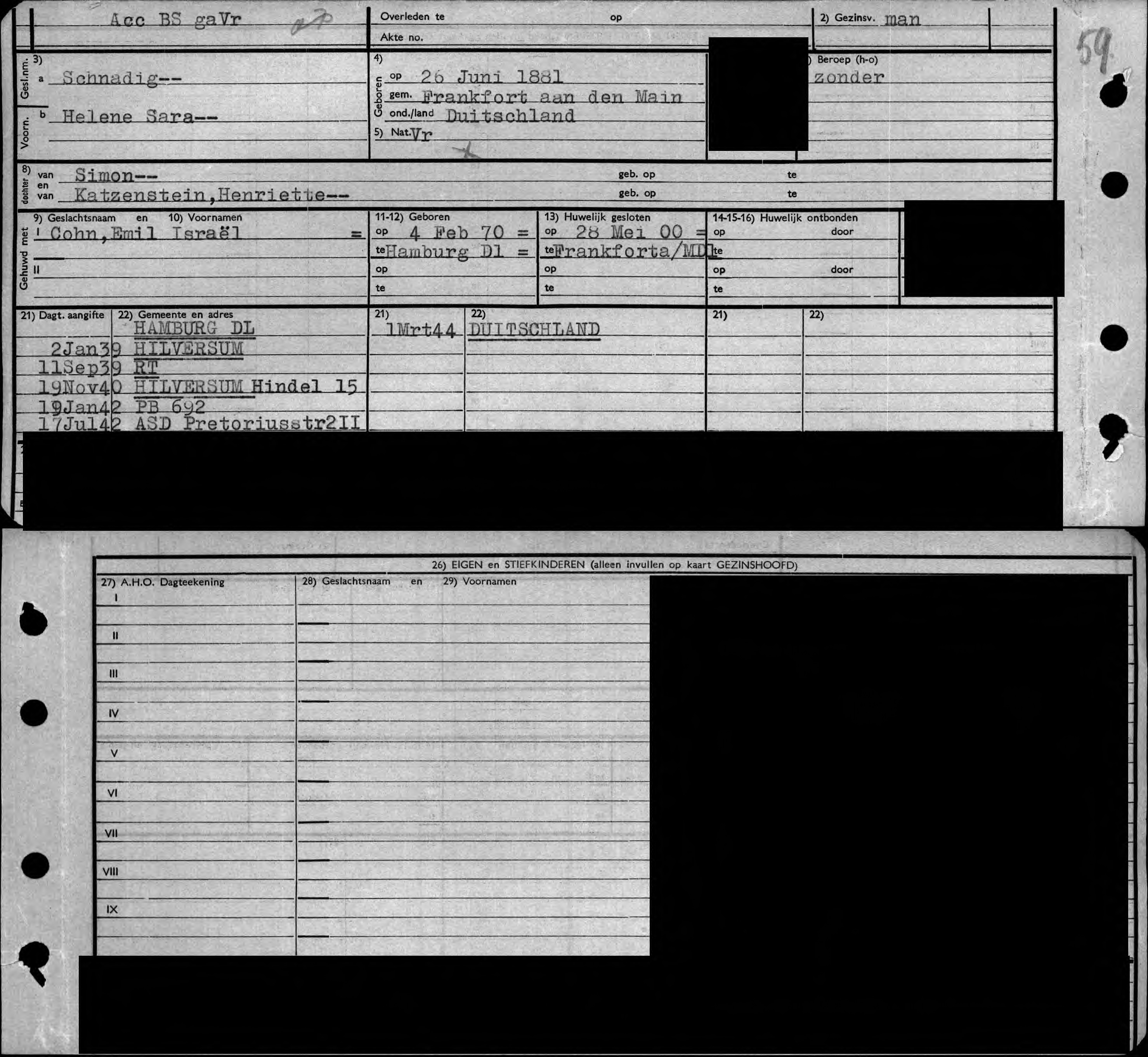
Elsa’s sister Helene Schnadig and her husband Emil Cohn were both murdered by the Nazis. According to their residency registration cards at the Amsterdam archives, Helene and Emil moved from Hamburg to Hilversum in the Netherlands on January 2, 1939, and then to Rotterdam on September 11, 1939, ten days after the start of World War II. They then returned to Hilversum on November 9, 1940. Eventually they returned to Amsterdam on July 17, 1942.

Source reference Archive cards , archive number 30238 , inventory number 721 Municipality : Amsterdam Period : 1939-1960, https://archief.amsterdam/indexen/persons?ss=%7B%22q%22:%22schnadig%22%7D, Amsterdam Archives Gemeente Amsterdam Stadsarchiev

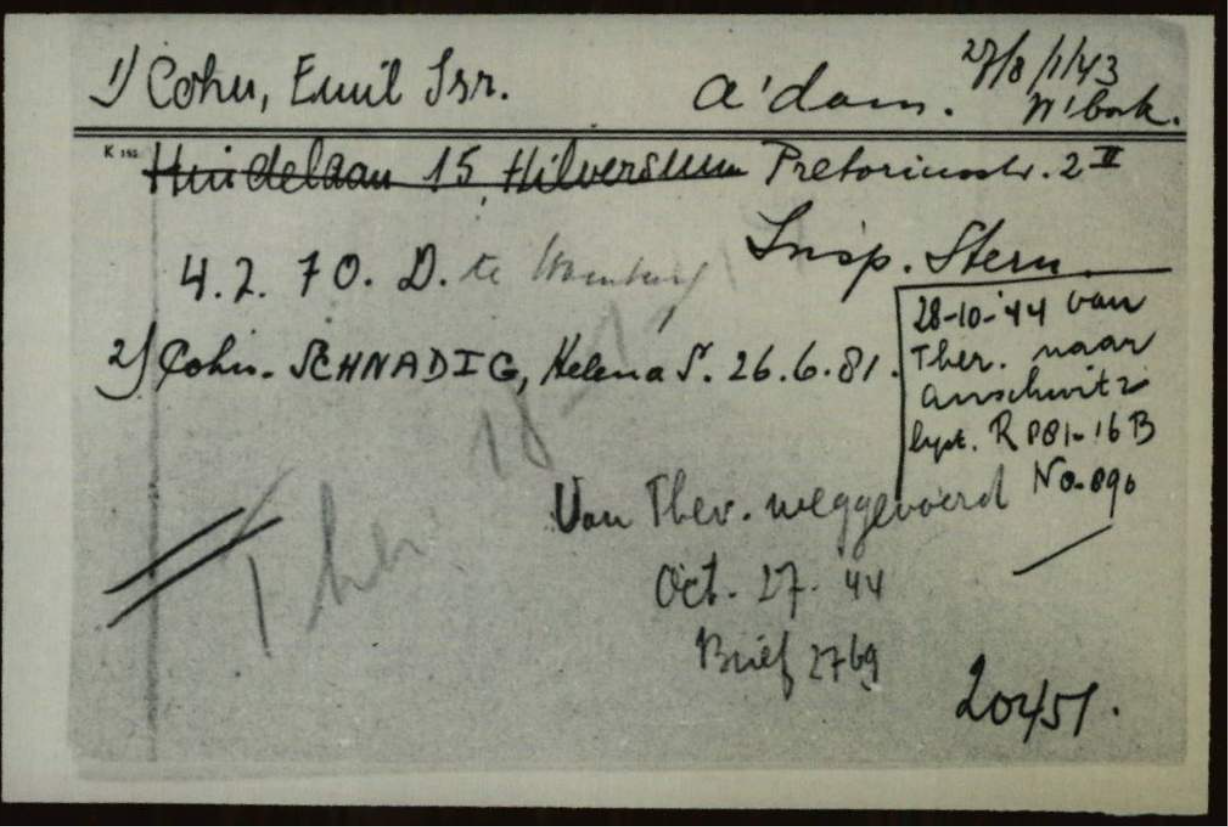
According to a Judenrat card found in the Arolsen Archives, Emil and Helene were taken to the detention camp at Westerbork on January 8, 1943. From there they were taken to the concentration camp in Terezin, Czechoslovakia, on January 20, 1944. Then on October 28, 1944, they were taken from Terezin to the death camp at Auschwitz, where they were murdered. Emil was 74, Helene 63.

1 Incarceration Documents / 1.1 Camps and Ghettos / 1.1.42 Theresienstadt Ghetto /
1.1.42.2 Card File Theresienstadt / 4966533/ITS Digital Archive, Arolsen Archives

Miraculously, however, Helene and Emil Cohn’s four children all survived, although my information about them is somewhat limited. Meta, their oldest child, was married to Salomon Pregers, who was born in Rotterdam on October 8, 1885, son of Salomon Pregers and Isabelle Therese de Groot.1 Meta and Salomon were married in Hamburg on May 14, 1926, according to their Amsterdam residency card.

Source reference Archive cards , archive number 30238 , inventory number 159 Municipality : Amsterdam Period : 1939-1960, https://archief.amsterdam/indexen/persons?ss=%7B%22q%22:%22meta%20cohn%22%7D, Amsterdam Archives Gemeente Amsterdam Stadsarchiev

That residency card indicates that Salomon and Meta came from Hamburg to Hilversum on June 3, 1926, a few weeks after their wedding. They remained in the Netherlands, eventually moving to Amsterdam in February 1943, not long after Meta’s parents were taken to Westerbork.

Salomon and Meta were registered with the Judenrat in Amsterdam, as reflected on these three cards. It appears that Salomon had been a teacher at a Jewish school. I can’t decipher much more than that.

1 Incarceration Documents / 1.2 Miscellaneous / 1.2.4 Various Organizations / 1.2.4.2 Index cards from the Judenrat (Jewish council) file in Amsterdam / Reference Code 124200008/ITS Digital Archive, Arolsen Archives

1 Incarceration Documents / 1.2 Miscellaneous / 1.2.4 Various Organizations / 1.2.4.2 Index cards from the Judenrat (Jewish council) file in Amsterdam / Reference Code 124200008/ITS Digital Archive, Arolsen Archives

1 Incarceration Documents / 1.2 Miscellaneous / 1.2.4 Various Organizations / 1.2.4.2 Index cards from the Judenrat (Jewish council) file in Amsterdam / Reference Code 124200008/ITS Digital Archive, Arolsen Archives

UPDATE: Bert de Jong pointed out that both these cards have the designation “gesperrt,” meaning that Meta and Salomon had been marked as exempt from deportation by the Judenrat, Salomon because of his former occupation as a teacher and his education, and Meta based on her husband’s exemption.

UPDATE from Rob Ruijs: Rob examined these three cards very carefully and provided some analysis. One interesting observation he made about Salomon Pregers was that he may have grown up in poverty and achieved success through higher education.  Rob also deciphered much of that third card with three entries for February 2, 1943. It appears that Salomon (and presumably Meta) were moving between Amsterdam and the town of Den Bosch, which is about an hour south of Amsterdam or that there was some confusion about where they were living.

The Amsterdam residency cards above indicate that both Meta and Salomon left for Germany (Duitschland) in March 1945. I would think that means they were deported then since I cannot imagine that any Jew would have gone to Germany willingly in March, 1945, but I have no record of any deportation, and I know that they survived the war.  Meta was listed as a person searching for relatives in an article in the June 15, 1945, issue of Aufbau. The words at the top translate as:

“The following list which we have received from the ITA [the International Tracing Agency] only reveals a part of the Jews found in Holland after the final liberation who are looking for relatives. In cases in which a closer address of the searcher is not given, they can be reached through the Red Cross.”

Meta Cohn Pregers in Aufbau June 15, 1945, p. 25, http://archive.org/stream/aufbau111945germ#page/n387/mode/1up

Although Meta and Salomon thus survived the war, it was not for very many years. Meta Cohn Pregers died on March 21, 1952, in Hilversum.2 Her husband Salomon Pregers died a month later on April 22, 1952, in Hilversum.3 He was 66 when he died, Meta was only 51. I have been unable to find a record of any children.

UPDATE: Thanks to Rob Ruijs for alerting me to the fact that there were death notices for Meta and Salomon that I could find on Delpher.nl. Given that neither death notice mentioned children, it appears that they did not have any.

New Israelite weekly
28-03-1952

New Israelite weekly
April 25, 1952

Meta’s younger brother Siegbert immigrated to Brazil in 1939; he arrived with his four-year-old daughter Ursula. I could not locate a woman traveling with him who might have been his wife, nor I have I yet found any further records for Siegbert or Ursula.

Siegbert Cohn, Digital GS Number: 004542471, Ancestry.com. Rio de Janeiro, Brazil, Immigration Cards, 1900-1965

The third child of Helene and Emil Cohn, their daughter Hertha Johanna, married James Horwitz, a kosher butcher, on February 21, 1928, in Hamburg. James was born on November 10, 1895, in Hamburg, the son of Hermann Horwitz and Johanna Tannenberg.4 James and Hertha immigrated to Rotterdam inthe Netherlands from Berlin on March 15, 1939, and to Amsterdam in March of 1940.

Source reference Archive cards , archive number 30238 , inventory number 367 Municipality : Amsterdam Period : 1939-1960, https://archief.amsterdam/indexen/persons?ss=%7B%22q%22:%22james%20horwitz%22%7D, Amsterdam Archives Gemeente Amsterdam Stadsarchiev

On July 17, 1940, they were both taken to the detention camp in Westerbork. According to entries in the Terezin Memorial database, both James and Hertha were deported to the Terezin concentration camp on September 4, 1944. James was then taken from Terezin to Auschwitz on September 29, 1944, but Hertha was not. The Terezin Memorial entry indicates that she was liberated from Terezin and survived.

1 Incarceration Documents / 1.1 Camps and Ghettos / 1.1.42 Theresienstadt Ghetto /
1.1.42.2 Card File Theresienstadt /Ghetto Theresienstadt Card File
Reference Code 11422001/ITS Digital Archive, Arolsen Archives

As for James’ fate, the records conflict. Some say he was killed at the death camp in Mauthausen in Austria on April 6, 1945.5 One nephew filed a Page of Testimony saying he was shot near Berlin in March 1945 as the camp inmates were being marched out of Auschwitz.  In either event, James Horwitz was murdered by the Nazis in the spring of 1945 right before the war ended.

In 1957, Hertha was living in Rotterdam when she traveled to Brazil, presumably to visit her brother Siegbert. She listed her marital status as “casada” or married, and the surname Van Thijn was added to her name, so Hertha must have remarried after the war. That is the only information I’ve found about her at this point.

UPDATE: Thank you to Rob Ruijs for reminding me to check Delpher.nl where I found a death notice for Salomon van Thijn published by H. J. van Thijn-Cohen, obviously Hertha. The death notice reads in part, “With sadness I announce the passing of my beloved caring husband Salomon van Thijn in his 87th year, March 18, 1982.” This death notice does not mention children or refer to Salomon as a father so I assume they, like Meta and Salomon Pregers, did not have children.

NRC Handelsblad
20-03-1982

Digital GS Number: 004916498, Ancestry.com. Rio de Janeiro, Brazil, Immigration Cards, 1900-1965

Lissy Sitta Cohn, the fourth and youngest of the Cohn siblings, ended up in England during the war. In 1939 she was living in Birmingham, working as a domestic servant.

Lissy Cohn, The National Archives; Kew, London, England; 1939 Register; Reference: RG 101/5600D, Enumeration District: QBUI, Ancestry.com. 1939 England and Wales Register

Lissy Cohn, enemy alien registration, The National Archives; Kew, London, England; HO 396 WW2 Internees (Aliens) Index Cards 1939-1947; Reference Number: HO 396/14
Piece Number Description: 014: Internees at Liberty in UK 1939-1942: Cohn-Cz
Ancestry.com. UK, World War II Alien Internees, 1939-1945

She may have returned to Germany after the war because in 1946 she immigrated to Brazil and listed her last residence as Hamburg and her nationality as Alema or German. However, her passport was issued from London. She indicated that her intention was to stay in Brazil permanently and that she was a nurse (enfermeira). As with her siblings, I have no further details about Lissy’s life.

Digital GS Number: 004542185
Source Information
Ancestry.com. Rio de Janeiro, Brazil, Immigration Cards, 1900-1965

Thus, although the Nazis murdered Helene Schnadig and Emil Cohn, they did not murder any of their four children. But the stories of those four children are not entirely complete. I do not know whether there are living descendants of Helene and Emil, so there is still much work to be done.


  1.  Salomon Pregers, Birth Date: 1885, Birth Place: Rotterdam, Father: Salomon Pregers, Mother: Isabelle Therese de Groot, Stadsarchief Rotterdam; Den Haag, Nederland; BS Birth, Ancestry.com. Netherlands, Birth Index, 1784-1917. Original data: BS Geboorte. WieWasWie. https://www.wiewaswie.nl/: accessed 24 May 2016. Child:
    Salomon Pregers, Mother: Isabelle Therese de Groot Father: Salomon Pregers
    Date of birth: 8-10-1885, Birthplace:  Rotterdam Access number: 999-01 Civil Registry Rotterdam, birth certificates, Inventory number: 1885D, Folio number: d045v Deed number: 1885.3822 
  2.  Meta Cohn, Age: 50, Birth Date: abt 1902, Birth Place: Hamburg, Death Date: 21 mrt 1952 (21 Mar 1952), Death Place: Hilversum, Father: Emil Cohn, Mother: Helene Schnadig, Noord-Hollands Archief; Den Haag, Nederland; Burgerlijke stand (overlijdensakten), Ancestry.com. Netherlands, Death Index, 1795-1969. Original data: BS Overlijden. WieWasWie. https://www.wiewaswie.nl/: accessed 24 May 2016. 
  3.  Salomon Pregers, Age: 66, Birth Date: abt 1886, Birth Place: Rotterdam, Death Date: 22 apr 1952, Death Place: Hilversum, Father: Salomon Pregers, Mother: Isabella Therese de Groot, Noord-Hollands Archief; Den Haag, Nederland; Burgerlijke stand (overlijdensakten), Ancestry.com. Netherlands, Death Index, 1795-1969. Original data: BS Overlijden. WieWasWie. https://www.wiewaswie.nl/: accessed 24 May 2016. 
  4. James Horwitz birth record, Year Range and Volume: 1895 Band 06, Ancestry.com. Hamburg, Germany, Births, 1874-1901. Original data:Best. 332-5 Standesämter, Personenstandsregister, Sterberegister, 1876-1950, Staatsarchiv Hamburg, Hamburg, Deutschland. 
  5. James Israel Horwitz, Birth Date: 10 Nov 1895, Birth Place: Hamburg, Mauthaus #: 134330, Nationality: staatenlos (Stateless), Arrest Reason: Jude (Jew), Night and Fog: No, Profession: Fleischer (Butcher), Death Date: 6 Apr 1945, Arrival Date: 26-Feb-45
    Source: AMM E/13/12/9; Y/36;Mauthausen Gedenkstätte. Austria, Mauthausen/Gusen Concentration Camp Death Record Books , 1938-1945. The National Archives at College Park; College Park, Maryland; Microfilm: A3355; ARC: 596972; Title: Lists and Registers of German Concentration Camp Inmates, 1946 – 1958; Record Group: 242; Record Group Title: National Archives Collection of Foreign Records Seized, 1675 – 1958, Record Description: Records on Prisoners, Gat-Ji, Source Information
    Ancestry.com. Germany, Concentration Camp Records, 1946-1958. Also, some records at Yad Vashem show that James Horwitz was at Mauthausen. His Stolpersteine in Berlin also says that he died at Mauthausen.